Artwork
My Uncle Daniel and his Family
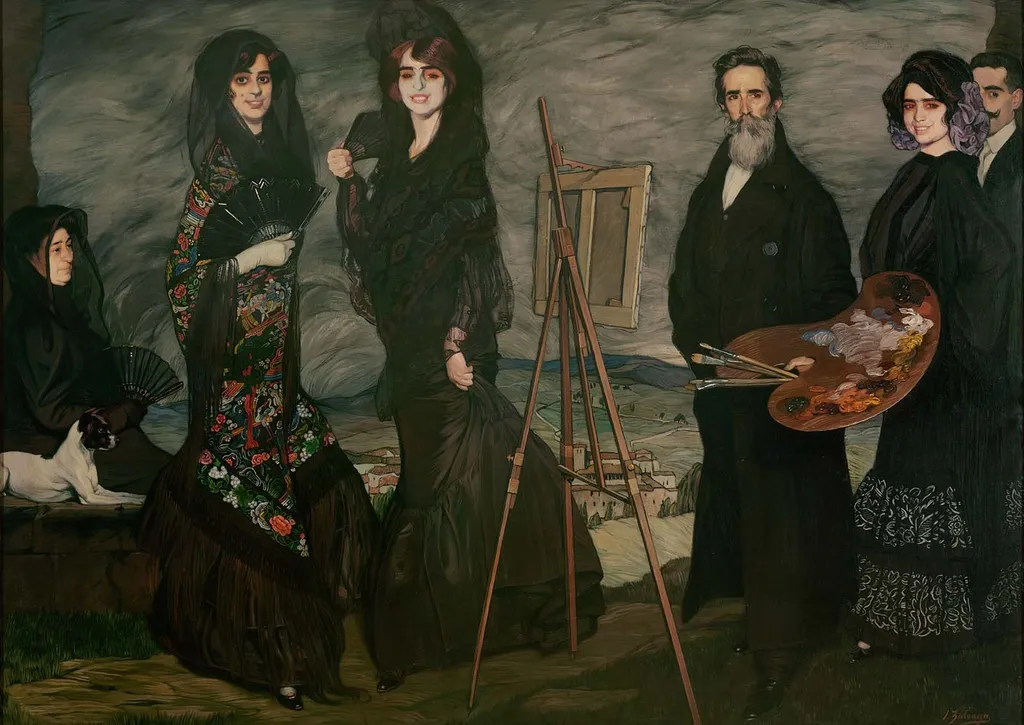
My Uncle Daniel and his Family is an oil painting by the Post-Impressionist artist Ignacio Zuloaga. It dates from 1910 and is held in the collection of the Museum of Fine Arts Boston.
About this work
Overview
5 cm, the work is held in the collection of the Museum of Fine Arts, Boston, where it is identified by accession number 17.
My Uncle Daniel and his Family is a large oil on canvas painting by the Spanish artist Ignacio Zuloaga, completed in 1910. Measuring 205.1 by 289.5 cm, the work is held in the collection of the Museum of Fine Arts, Boston, where it is identified by accession number 17.1598. The painting stands as one of Zuloaga's most ambitious family portraits, synthesizing his Spanish realist heritage with post-impressionist influences absorbed during his formative years in Paris. It exemplifies the artist's characteristic combination of earthy tonalities, attention to traditional costume and textile, and a haunting atmospheric quality that distinguishes his approach to portraiture in the early twentieth century.
Subject & Meaning
The painting depicts six figures and a dog arranged before a wooden easel that holds a blank canvas, set against a landscape with a town and distant hills under a cloudy sky. At center right stands the bearded Daniel Zuloaga, the artist's uncle, identified as the main subject, holding a painter's palette loaded with paint and several brushes. Beside him is a woman with purple flowers in her hair, wearing a black dress with white embroidery at the hem, while a young man in formal attire appears partially visible behind her. To the left of the easel, a woman in a dark dress with a lace mantilla holds a fan near her face, and next to her another woman wears an elaborately embroidered shawl with floral and figural patterns in red, green, and gold, also holding an open fan. At far left, a seated woman in black holds a fan, with a small white and black dog resting beside her. The blank canvas on the easel introduces a self-reflexive element, suggesting the act of painting itself and the artist's presence within the familial constellation. The preponderance of fans and the elaborate shawl signal Spanish sartorial tradition, while the collective grouping emphasizes both social status and intimate kinship. The subdued palette and frontal, even lighting create a solemn, commemorative tone rather than a casual domestic scene.
Technique & Style
Zuloaga executed the work in oil on canvas, employing a technique that varies across the surface. The brushwork appears smooth in the faces, lending the figures a polished, almost enamelled finish, while it becomes more textured in the fabrics and sky. The overall palette is dominated by blacks, browns, and grays, with strategic touches of color concentrated in the embroidered shawl and the painter's palette itself. This restrained chromatic range aligns with Zuloaga's broader preference for earth or muted tones including maroon, black, and grey. The even, frontal lighting with minimal strong shadows flattens the pictorial space and contributes to the work's haunting atmosphere. The "stained glass" quality of the oriental shawl reflects the cloisonné technique that Zuloaga learned from his friend Émile Bernard, a method that emphasizes bold outlines and flat areas of color reminiscent of leaded glass. This technique, combined with swirling brushstrokes in the sky and landscape, reveals the synthesis of Spanish realist tradition with post-impressionist innovations that Zuloaga absorbed from his contacts with French painters.
History & Provenance
The painting was created in 1910, by which time Zuloaga had established himself as a significant figure in Spanish art following his Parisian training and subsequent return to Spain. The work entered the collection of the Museum of Fine Arts, Boston, where it is currently held, and was sufficiently notable to be discussed in the Museum of Fine Arts Bulletin, Volume 15, indicating early scholarly attention. The painting's large scale and complex multi-figure composition suggest it was conceived as a major statement rather than a casual commission. Its accession number 17.1598 indicates acquisition by 1917, placing it among the earlier works by Zuloaga to enter an American museum collection. The work has been reproduced and distributed through digital platforms, with photographic documentation dating to digitization in 2006 and subsequent upload to Wikimedia Commons in 2019.
Context
Ignacio Zuloaga y Zabaleta was born in Eibar, Guipuzcoa, near the monastery of Loyola, into a family with deep roots in Spanish craftsmanship. His father Plácido was a respected metalworker and damascener, and his great-grandfather had been royal armourer and a contemporary of Goya. After moving to Paris at age eighteen and living in Montmartre from 1889, Zuloaga associated with post-impressionists including Gauguin and Toulouse-Lautrec, though his thematic focus remained resolutely ethnic and Spanish. His early mentors and colleagues also included Degas, and he later befriended Émile Bernard, from whom he learned the cloisonné technique evident in this painting. By 1910, Zuloaga had already achieved significant recognition: he had exhibited at the Paris Salon in 1890, seen work purchased for the Luxembourg Palace in 1899, participated in the Venice Biennale in 1901 and 1903, and displayed 34 canvases at the Barcelona International Exposition of 1907. The critical reception of his work often emphasized its honest representation of Spain, what Miguel de Unamuno praised as a "Spain religious and tragic, a black Spain." My Uncle Daniel and his Family belongs to a period when Zuloaga was consolidating his reputation through large-scale portraits that combined family subjects with broader cultural symbolism, positioning him within a Spanish realist tradition that recalled Velázquez and Murillo while incorporating modern technical innovations.
Legacy
The painting has maintained its significance as a key work in Zuloaga's oeuvre and in the collection of the Museum of Fine Arts, Boston. Its reproduction and circulation through digital platforms, including Google Arts & Culture and Wikimedia Commons, has extended its visibility beyond the museum context. The work's public domain status has facilitated widespread reproduction, including commercial hand-painted copies marketed for private collection. Within Zuloaga's broader legacy, the painting exemplifies his commitment to Spanish subject matter filtered through technically sophisticated means, a combination that influenced perceptions of Spanish identity in art during the early twentieth century. The artist's later career saw him align with the Nationalist faction during the Spanish Civil War, paint Franco's portrait in 1940, and achieve the distinction of appearing on Spain's 500 peseta banknote in 1954, with Toledo depicted on the reverse. His death in 1945 marked the end of a career that had bridged fin-de-siècle Parisian modernism and Franco-era cultural nationalism. My Uncle Daniel and his Family remains a touchstone for understanding how Zuloaga negotiated family portraiture, artistic self-consciousness, and national tradition in a single monumental canvas.
Artist & collection
Artist
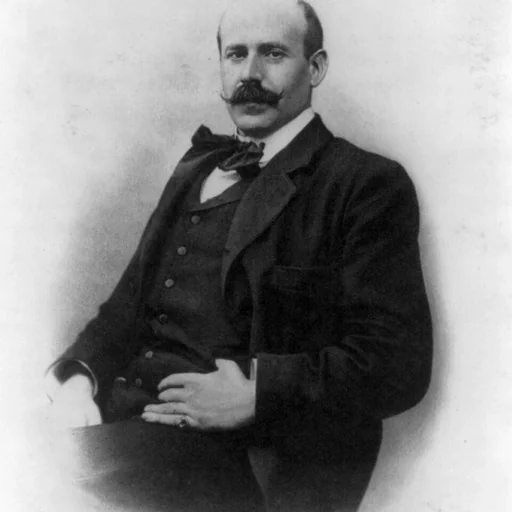
Ignacio Zuloaga y Zabaleta (July 26, 1870 – October 31, 1945) was a Spanish painter, born in Eibar, Guipuzcoa, near the monastery of Loyola.

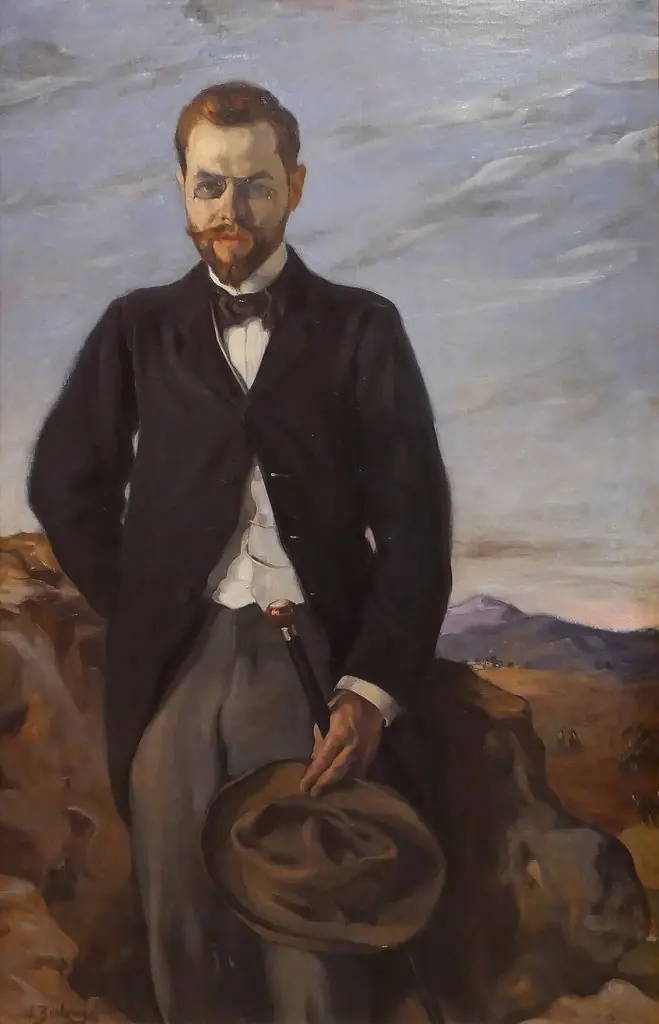
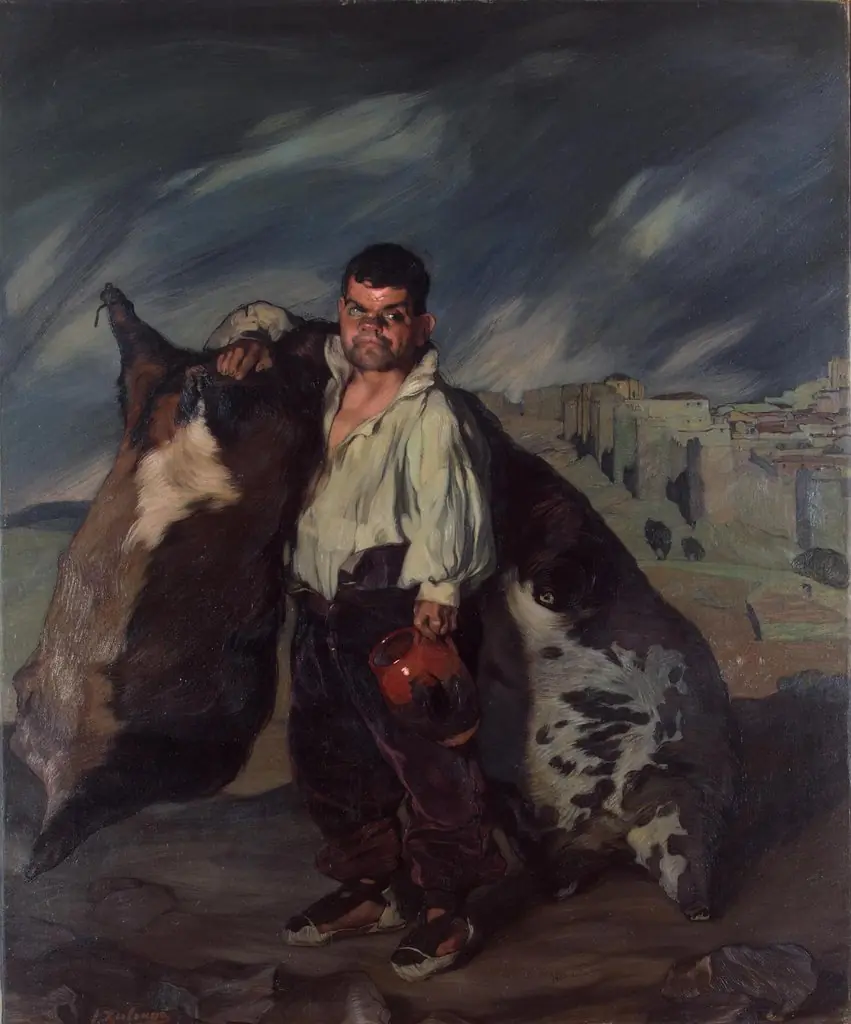
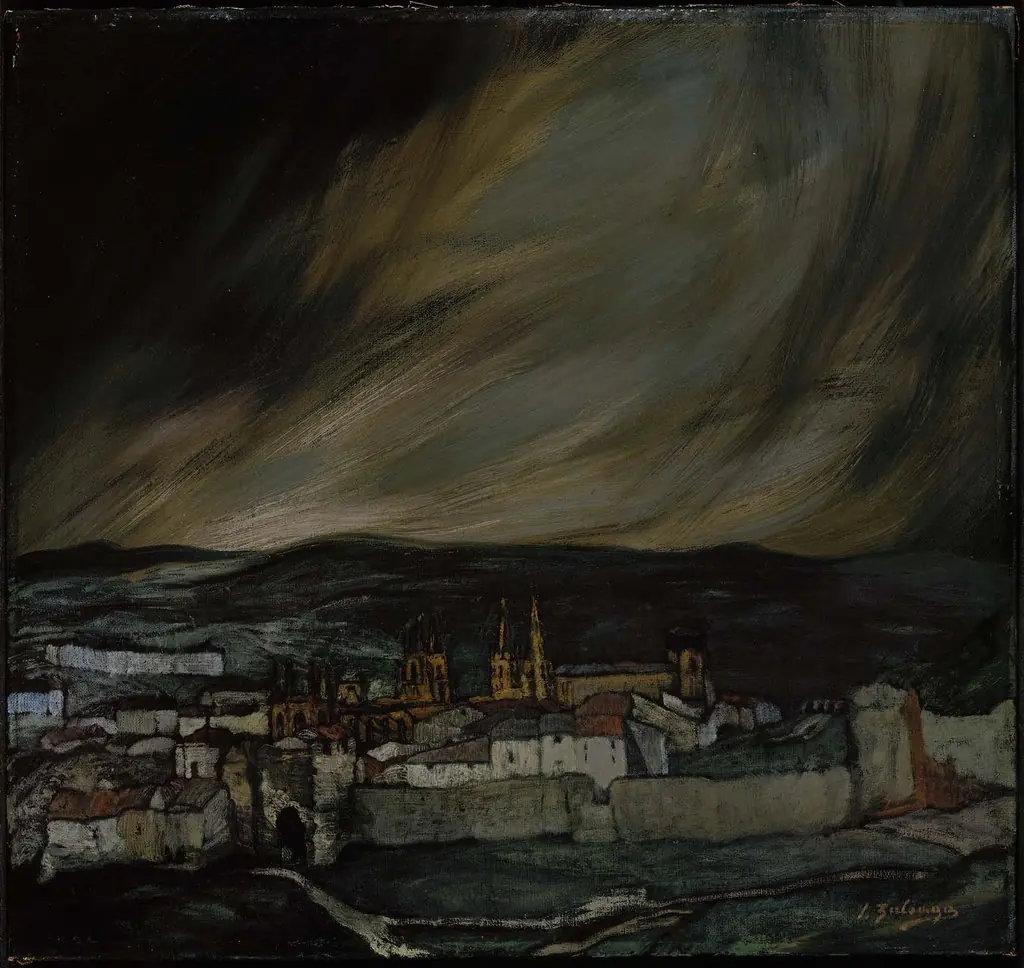
- In the painter's studio
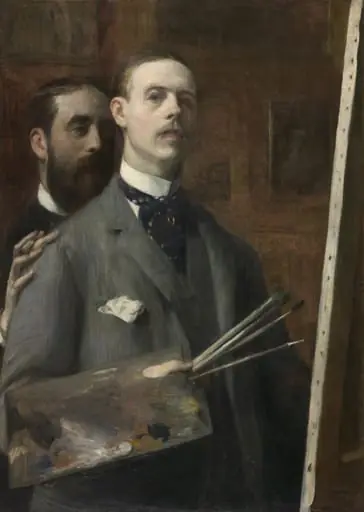 Self-Portrait with Raphael de Ochoa
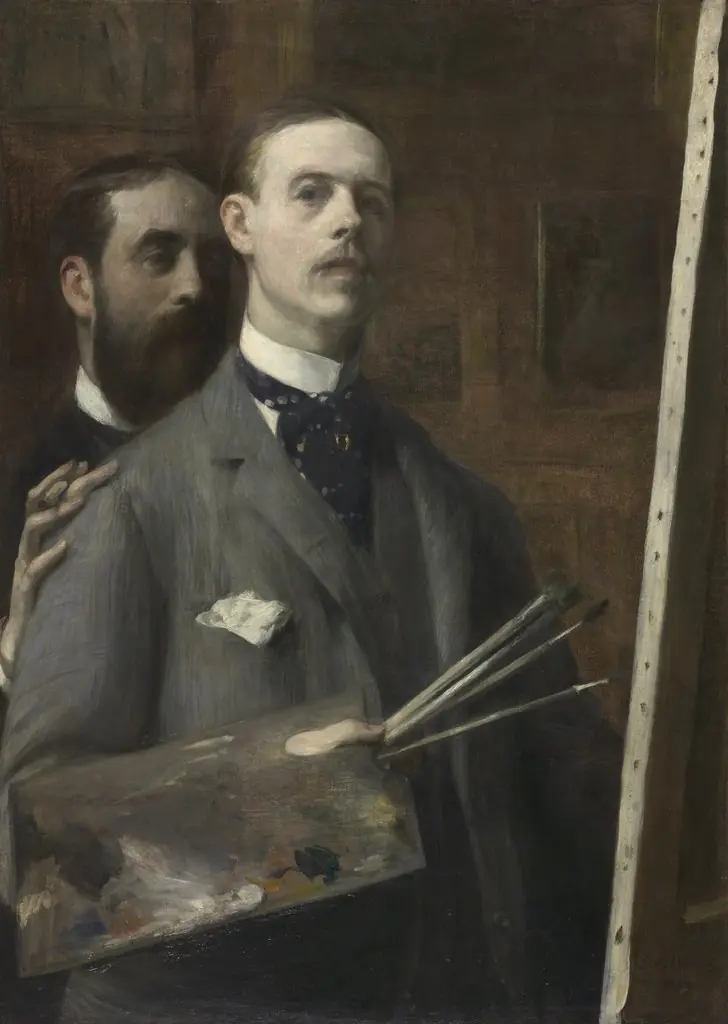 Self-Portrait with Raphael de Ochoa
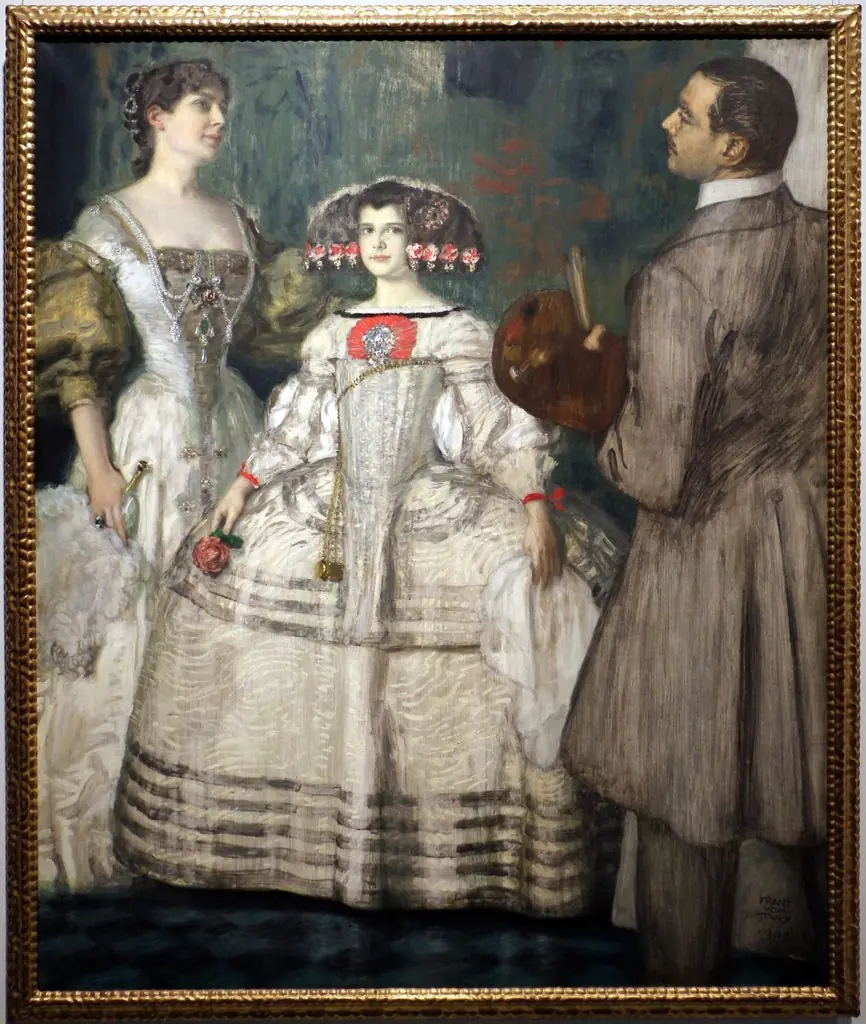 Family portrait
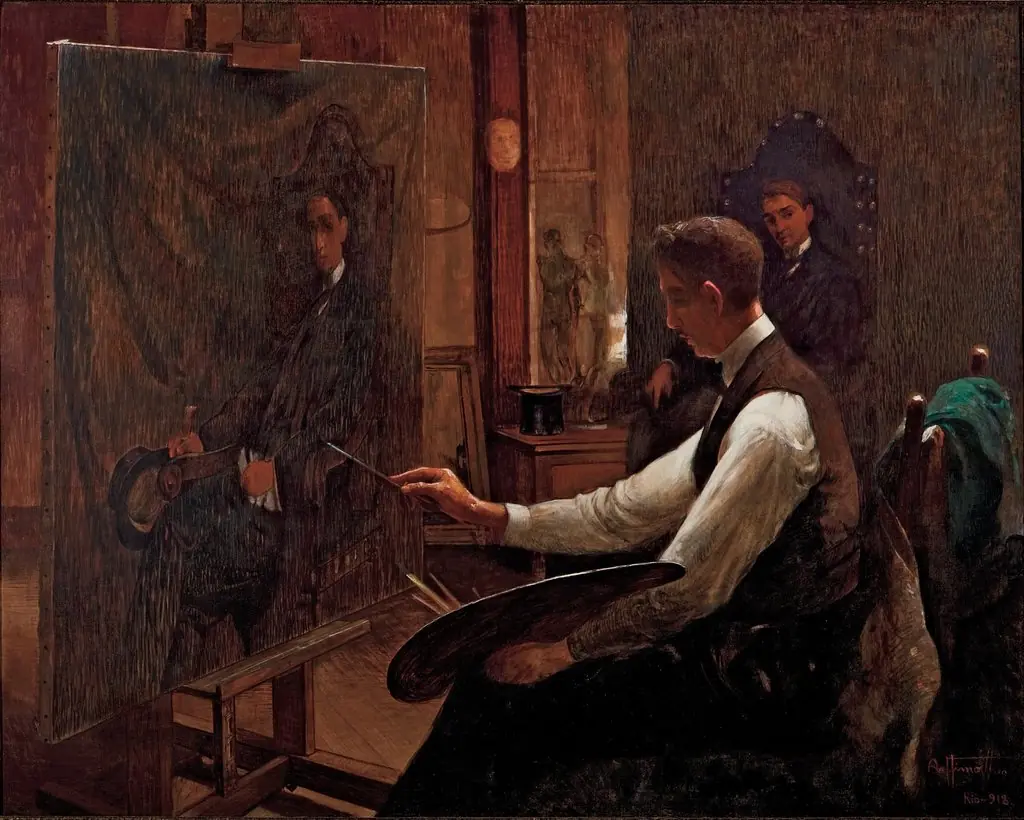 In the Studio
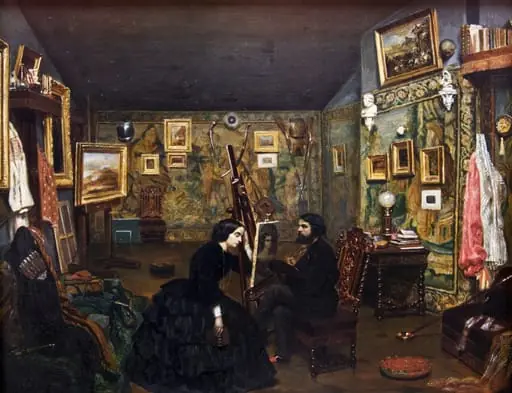 Al doilea atelier al artistului la Paris
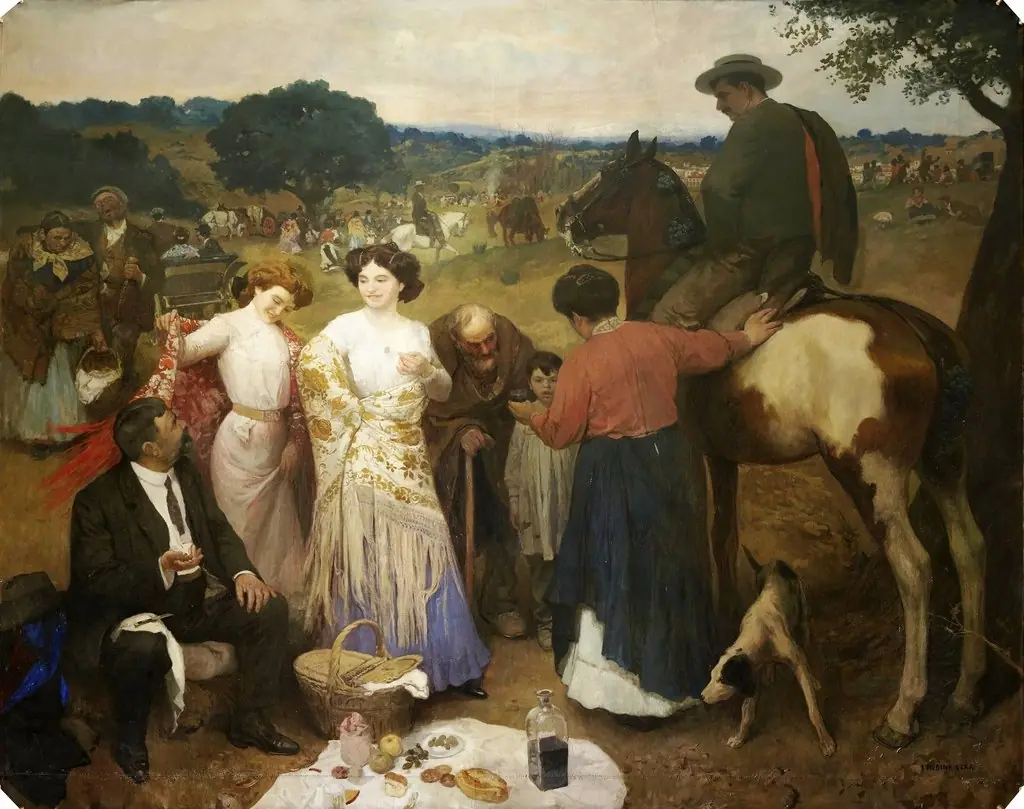 La Romería de San Eugenio
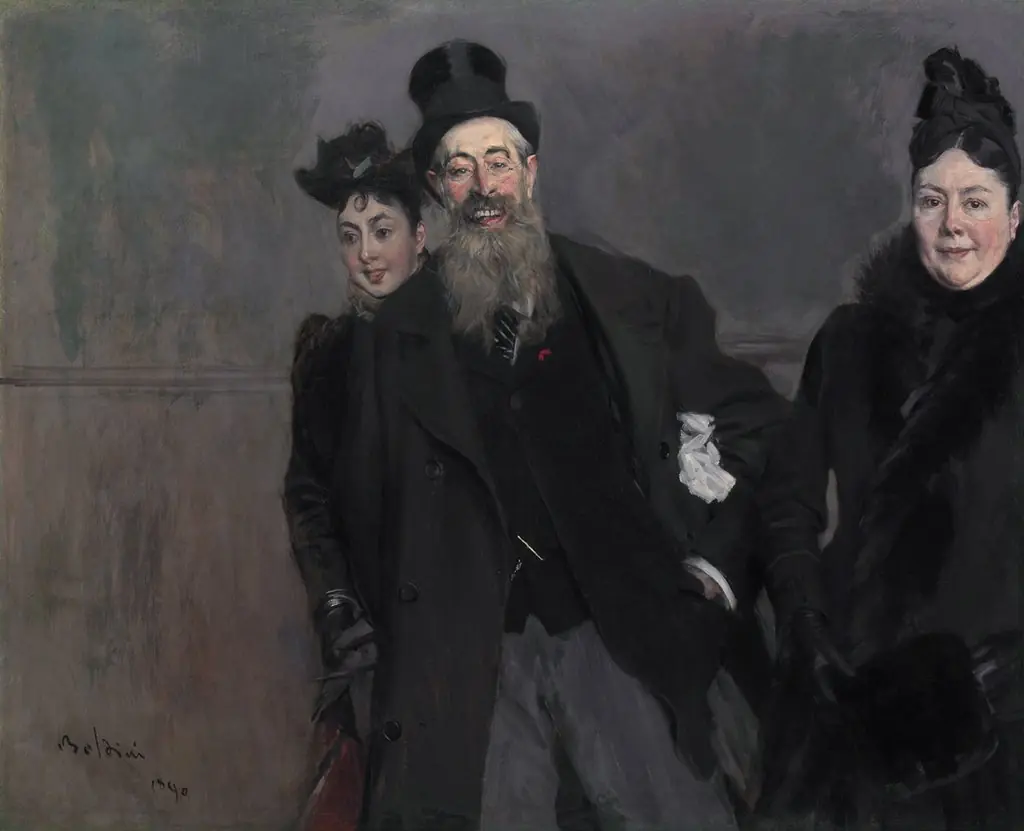 John Lewis Brown with Wife and Daughter
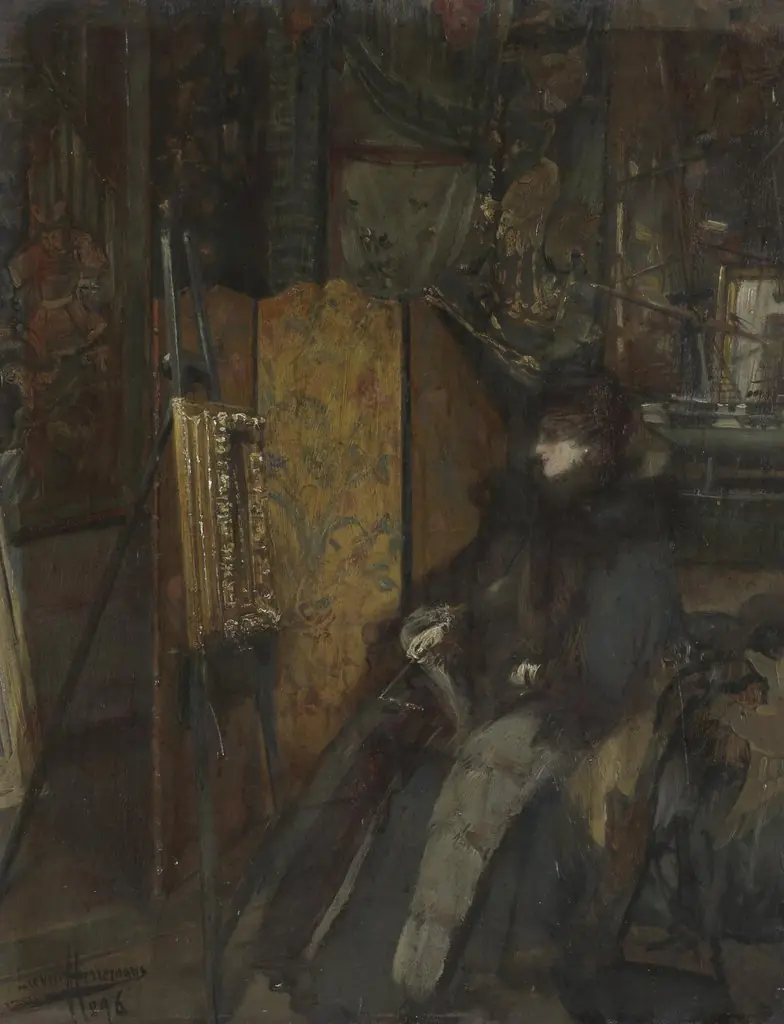 Visit to a Studio
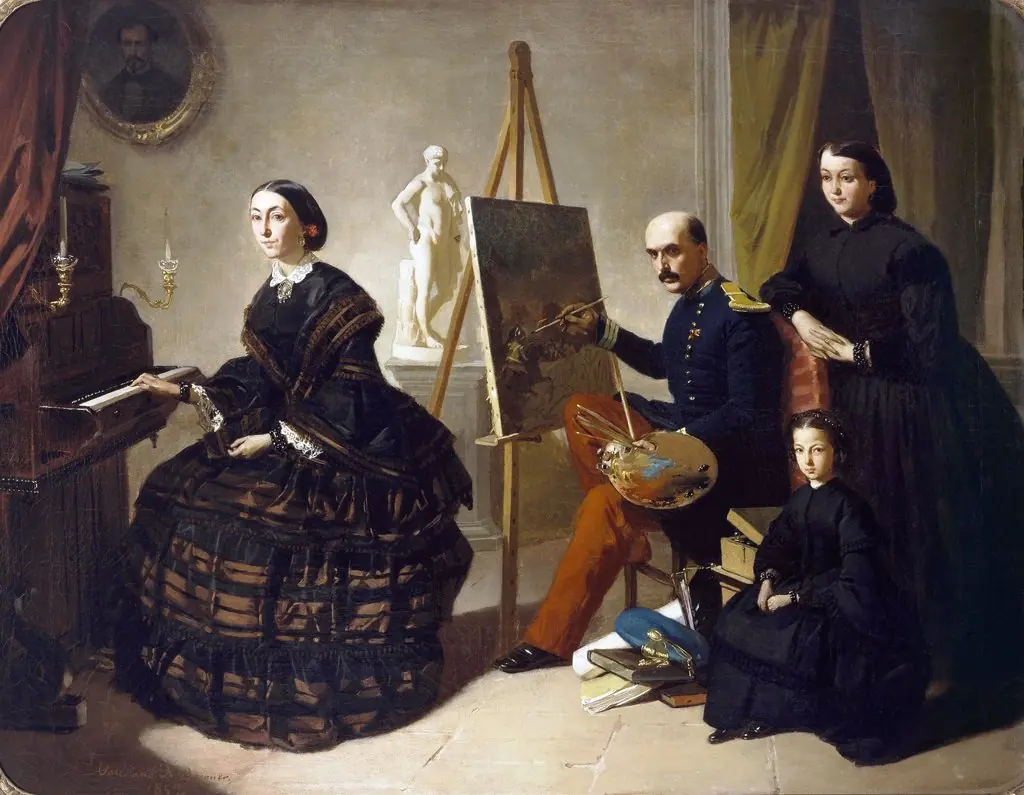 El pintor carlista y su familia
 Drawing lesson in the workshop
 Portrait of the Artist and his Family