Artwork
Portrait of a Wounded KNIL Soldier
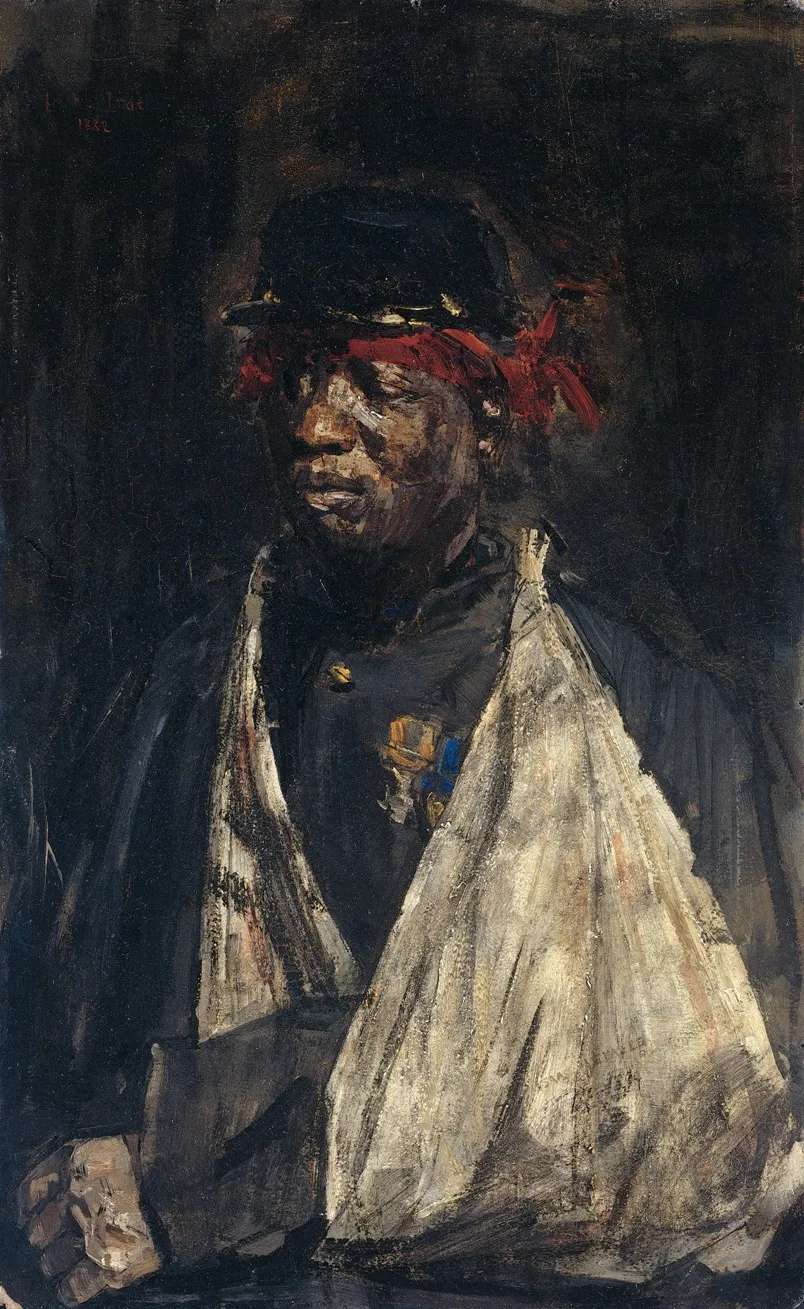
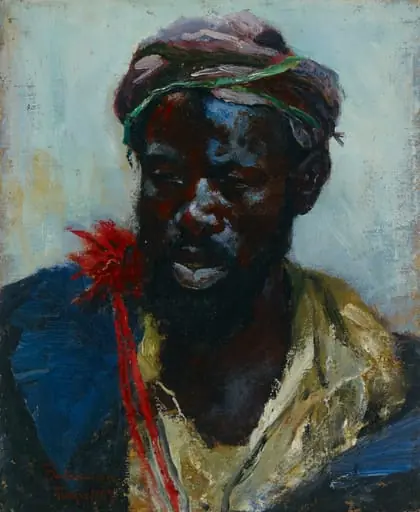
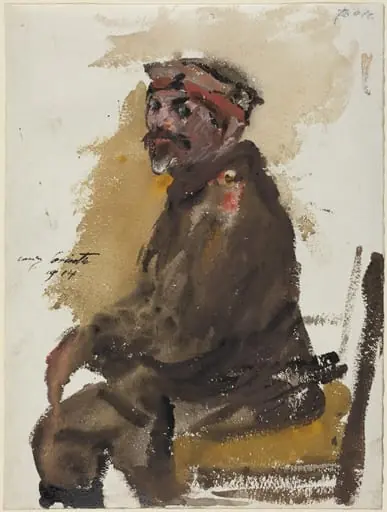
Portrait of a Wounded KNIL Soldier is an oil painting by the Impressionist artist Isaac Israëls. It dates from 1892 and is held in the collection of the Rijksmuseum.
About this work
This painting is called Portrait of a Wounded KNIL Soldier. It was made by Isaac Israëls in 1882. The painting is now at the Rijksmuseum, which is a museum in the Netherlands, and it has been there since 2000, giving people a chance to see it up close and learn about the artist and his work, and you can look up more about the Rijksmuseum.
Subject & Meaning
The painting depicts Kees Pop, an African soldier of the Royal Netherlands East Indies Army (KNIL), identified in 2000 by researcher Eveline Sint Nicolaas.
The painting depicts Kees Pop, an African soldier of the Royal Netherlands East Indies Army (KNIL), identified in 2000 by researcher Eveline Sint Nicolaas. Recruited as a "Zwarte Hollander" likely from Elmina or surrounding West African regions, Pop served twelve years in the Aceh War. Visually, the work emphasizes the physical toll of his service; he wears a mitella (arm sling) that partially obscures his Expedition Cross and Aceh Medal.
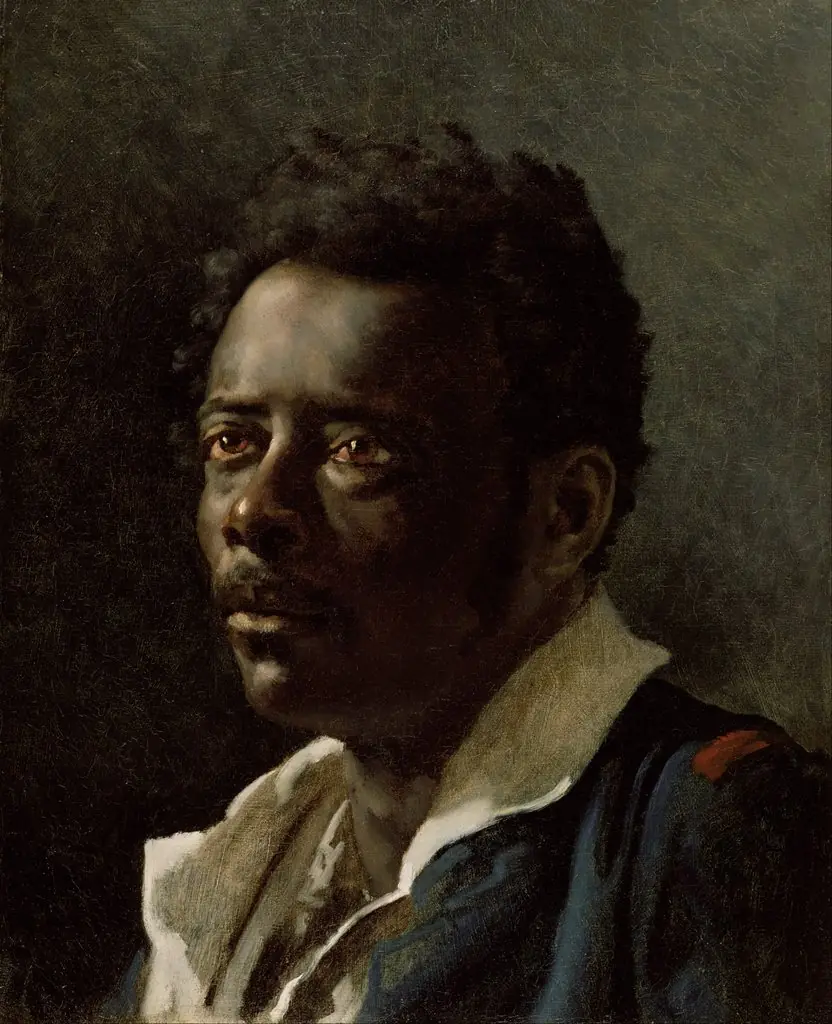
Unlike the heroic, realistic portrayal of Pop's comrade Jan Kooi by J.C. Leich, Isaac Israëls focused on the personal drama and human cost of a military career spent in a foreign land among linguistically diverse comrades. The portrait represents the complex history of African soldiers in Dutch service and has sparked modern discourse regarding the Indo-African community, notably during the 2008 "Black is Beautiful" exhibition.
Technique & Style
Executed in oil paint on hardboard, the work measures 37 cm in height and 23 cm in width.
The handling emphasizes fluid, impressionistic brushwork to capture the sitter’s face and bandaged head, while the background remains broadly sketched. A subdued palette focuses attention on the soldier’s weary expression and the visible medals beneath the mitella, conveying both personal endurance and colonial service. The canvas’s small scale and direct, unidealized portrayal align with Israëls’ late-nineteenth-century Amsterdam impressionist style, foregrounding individual presence over heroic narrative.
History & Provenance
Isaac Israëls created this oil painting on hardboard in 1882, signing and dating the work in that year. The sitter was identified in 2000 by researcher Eveline Sint Nicolaas as Kees Pop, an African soldier recruited for the Royal Netherlands East Indies Army (KNIL) between 1831 and 1872. Pop likely originated from Elmina, Burkina Faso, or Nigeria and served twelve years in the Aceh War, with his Expedition Cross and Aceh Medal visible beneath his sling.
The artwork entered the collection of the Rijksmuseum in 2000. Its modern recognition was bolstered by inclusion in the 2008 exhibition "Black is Beautiful: Rubens to Dumas" held at the Nieuwe Kerk in Amsterdam.
The painting has been in the collection of the Rijksmuseum since 2000. Its documented exhibition history centers on a 2008 presentation at the Amsterdam Nieuwe Kerk in the show "Black is Beautiful: Rubens to Dumas," where it was shown alongside the companion portrait of Jan Kooi by J.C. Leich. The inclusion of the work in that exhibition prompted a national conversation in the Netherlands about the Indo-African community.
The sitter's identification as Kees Pop was established in 2000 by Eveline Sint Nicolaas in an article published in the Rijksmuseum bulletin, titled "Een Afrikaan in dienst van het KNIL: een zoektocht naar de naam bij het gezicht," which accompanied the work's entry into the museum's holdings.
Context
Classified as an Amsterdam Impressionist portrait, the work contrasts sharply with the heroic realism of J.C. Leich's contemporary depiction of fellow soldier Jan Kooi. While Leich emphasized military grandeur, Isaac Israëls focused on the personal drama and the psychological effects of a long foreign military career on the sitter, Kees Pop. This approach reflects Israëls' broader fascination with the Dutch East Indies, a theme later expanded during his own two-year stay in the region in 1921.
The painting's historical significance was revitalized in 2000 when the sitter was identified, leading to its inclusion in the 2008 exhibition "Black is beautiful: Rubens to Dumas." This showcase sparked national discourse regarding the Indo-African community and influenced contemporary artists, such as Pieter Hugo, who created photographic works referencing both this impressionist piece and Leich's realistic counterpart.
Legacy
The painting has become a focal point in discussions of colonial memory and representation. Its inclusion in the 2008 Amsterdam exhibition Black is Beautiful alongside the portrait of Jan Kooi sparked a national conversation about the Indo-African community that later arrived from Indonesia after World War II, some of whose members may be descendants of these soldiers. Contemporary artists such as Pieter Hugo have referenced the work in their own portrait photography, creating visual dialogues between the impressionist original and later interpretations.
The work continues to shape scholarly and public understanding of the KNIL and the lives of African soldiers in Dutch service.
Overview
Isaac Israëls painted an oil portrait in 1882 that depicts a soldier of the Royal Netherlands East Indies Army. The work entered the Rijksmuseum’s collection in 2000, where it is displayed as part of the museum’s Dutch 19th‑century holdings.
Artist & collection
Artist
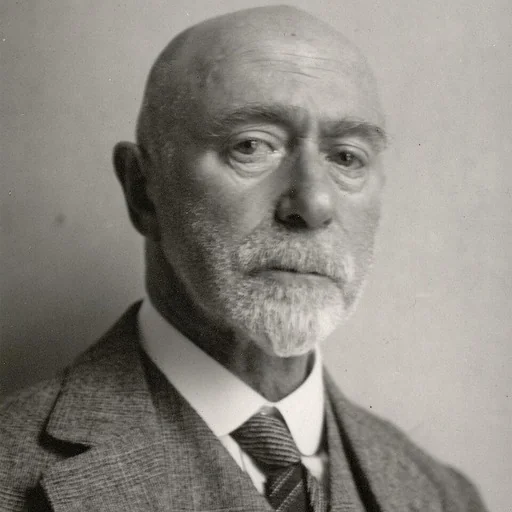
Isaac Lazarus Israëls (Dutch pronunciation:; 3 February 1865 – 7 October 1934) was a Dutch painter associated with the Amsterdam Impressionism movement.