Artwork
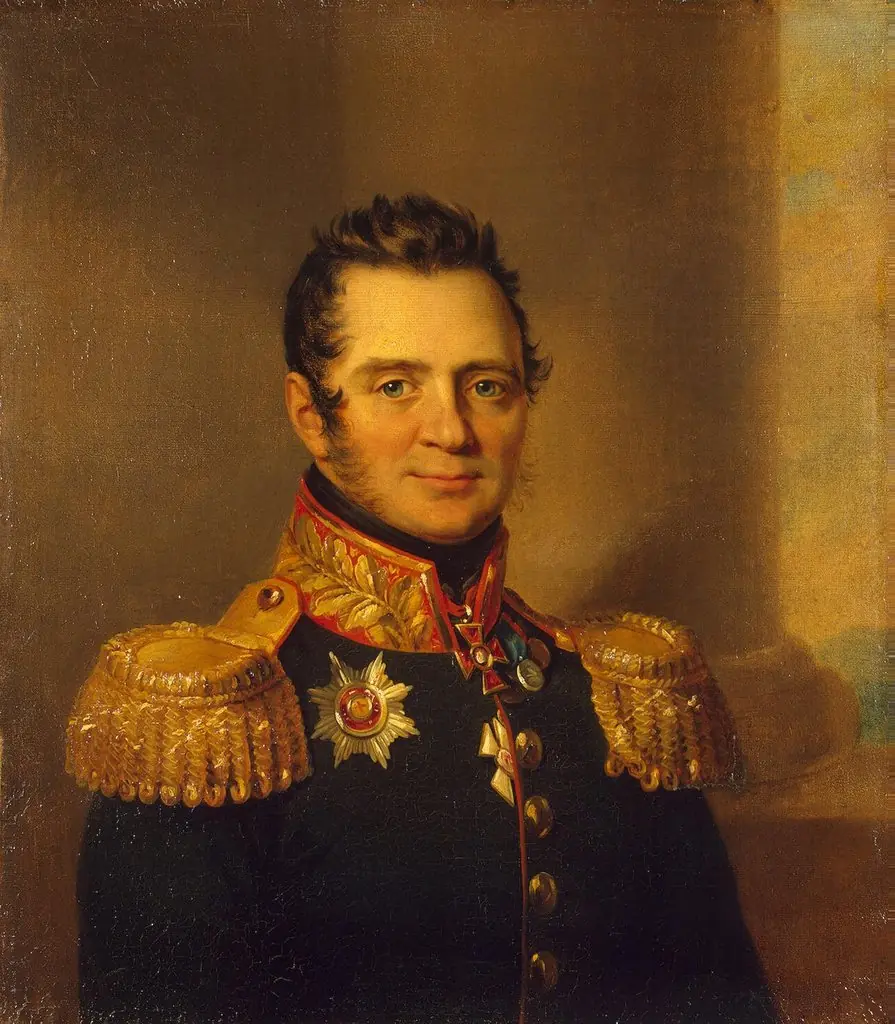
Portrait of Major General I.I. Sabir
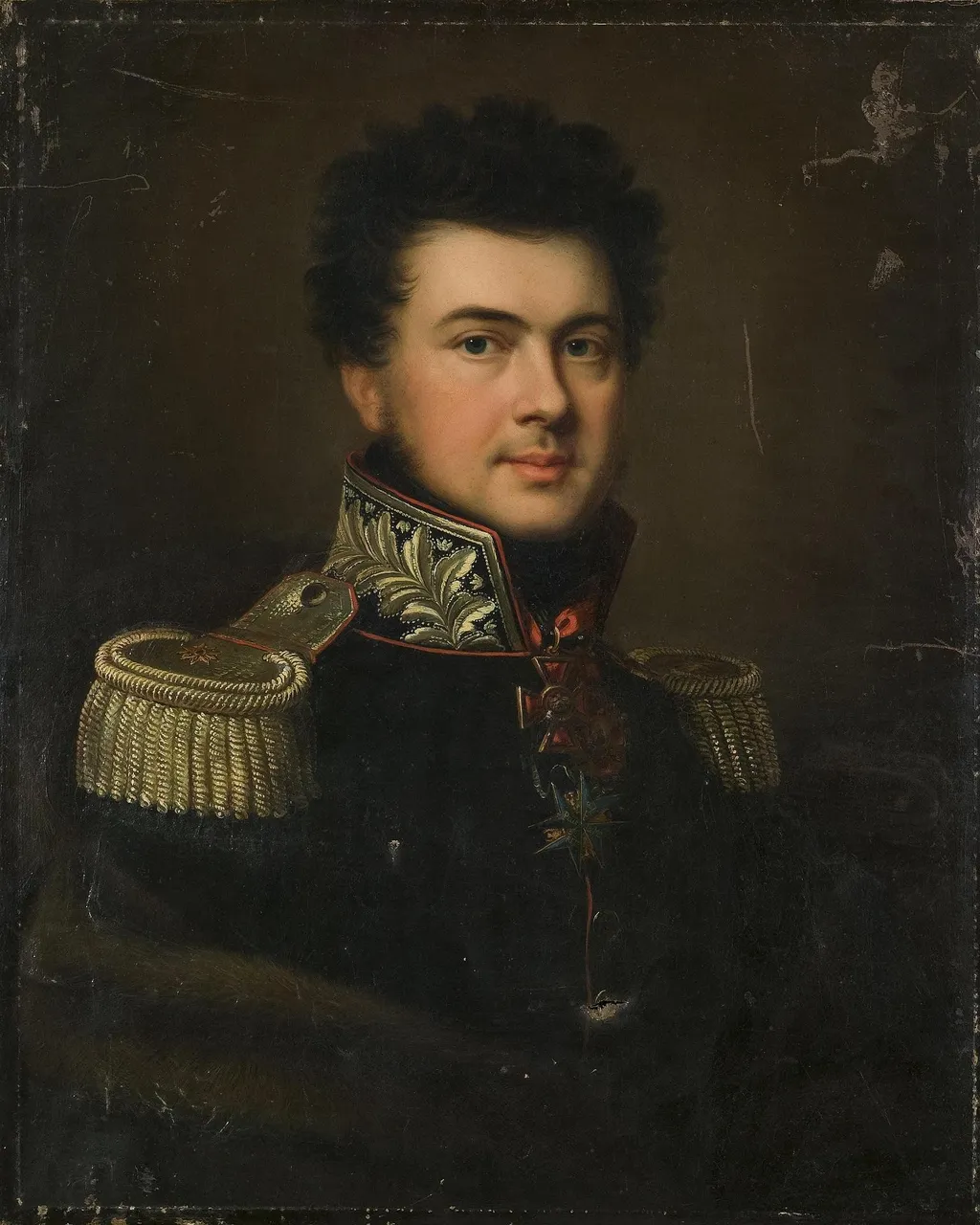
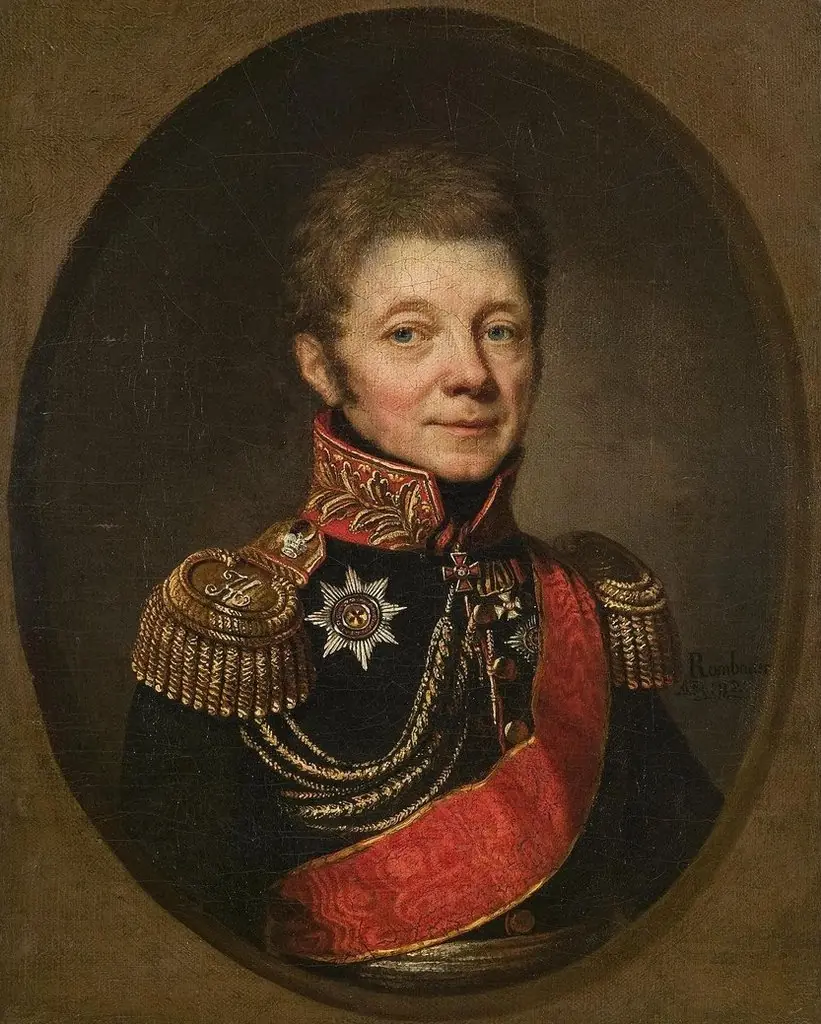
Portrait of Major General I.I. Sabir is an oil painting by the Biedermeier artist János Rombauer. It dates from 1814 and is held in the collection of the Hermitage Museum. Portrait of Major General I.
About this work
Overview
Measuring 72 by 58 cm, the work depicts a Russian major general in formal military attire and is held in the collection of the State Hermitage Museum in St.
Portrait of Major General I.I. Sabir is an oil on canvas painting by the Hungarian artist János Rombauer (1782-1849), executed in 1814 in Russia. Measuring 72 by 58 cm, the work depicts a Russian major general in formal military attire and is held in the collection of the State Hermitage Museum in St. Petersburg. The painting exemplifies Rombauer's activity as a portraitist working in the Russian Empire during the early nineteenth century, a period when foreign artists frequently supplied the growing demand for official and military portraiture among the Russian elite. The work is catalogued under Hermitage Museum work ID 522231.
Subject & Meaning
The portrait represents Major General I.I. Sabir, identified in Russian sources as Ivan Ivanovich Sabir. The sitter is presented in a half-length format, positioned slightly off-center and facing three-quarters toward the viewer. His dark navy or black uniform features an elaborate standing collar embroidered with silver or gold foliate patterns and trimmed with red piping. Heavy gold bullion epaulettes with fringed tassels rest on each shoulder, while several medals and orders hang from ribbons on the left side of his chest, including a cross-shaped decoration. These insignia of rank and honor serve the conventional function of military portraiture, asserting the subject's status, service, and loyalty to the state. The sitter's composed expression, with closed lips and direct gaze, projects the restrained dignity expected of a senior officer. The plain, muted brownish-gray background, devoid of setting or landscape, focuses attention entirely on the figure and his regalia, a compositional choice that underscores the portrait's official, commemorative purpose rather than personal or psychological revelation.
Technique & Style
The painting is executed in oil on canvas, with dimensions of 72 cm in height and 58 cm in width. Light falls from the upper left, illuminating the face, collar, and left epaulette while casting the right side of the figure into softer shadow, creating a subtle modeling of form. The brushwork is smooth and refined on the face, transitioning to more textured, deliberate strokes in the decorative embroidery and the furled object visible in the lower left corner. The palette is dominated by dark tones, blacks, deep blues, and warm browns, with the metallic gold of the epaulettes and collar embroidery providing the primary contrast. The overall finish is polished and formal, consistent with academic portraiture of the period. The paint surface shows some age cracks and minor abrasions, particularly near the edges, indicating the work's historical passage. This combination of meticulous facial rendering with more painterly handling of costume details reflects the conventions of early nineteenth-century European portraiture, balancing likeness with the representation of material wealth and status.
History & Provenance
The painting was created in 1814 in Russia, during a period when János Rombauer was active as a portraitist in the Russian Empire. The work's provenance prior to its acquisition by the State Hermitage Museum is not documented in the available sources. It is currently held in the collection of the State Hermitage Museum in St. Petersburg, with the Hermitage Museum work ID 522231. The specific accession date and prior ownership chain remain unrecorded in accessible sources. No exhibition history is documented in the provided materials.
Context
János Rombauer was a Hungarian painter who lived from 1782 to 1849 and worked across Central Europe and the Russian Empire. His known oeuvre includes portraits, landscapes, and genre scenes, with surviving works held in institutions such as the Hungarian Academy of Sciences in Budapest, the Hungarian National Museum, and the National Gallery in Bratislava. The portrait of Major General I.I. Sabir belongs to a broader body of military and noble portraiture that Rombauer produced during his time in Russia, a market that attracted numerous foreign artists in the early nineteenth century. The painting's creation in 1814 places it in the immediate aftermath of the Napoleonic Wars, a period of heightened military prestige in the Russian Empire that stimulated demand for portraits of decorated officers. Rombauer's activity in Russia forms part of a larger pattern of Central European artists seeking patronage in the imperial capital, contributing to the cosmopolitan character of Russian artistic culture in this era. The work's place in Rombauer's broader career is difficult to assess given the limited scholarly attention to his Russian period, though it represents a documented example of his engagement with official portraiture.
Legacy
The portrait's afterlife is primarily institutional, preserved as part of the State Hermitage Museum's holdings and made accessible through digital reproductions on platforms including Wikimedia Commons. The work has entered the public domain, with photographic reproductions distributed under open access policies by the Hermitage and subsequently by aggregators. Its visibility in scholarly and public contexts remains limited by the relative obscurity of both artist and sitter in Western art historical literature. The painting serves as a documentary record of Rombauer's Russian period, which lacks the extensive critical attention given to his Hungarian oeuvre. No significant influence on later artists or movements has been documented, and the work's cultural afterlife consists mainly in bearing witness to the conventions of early nineteenth-century Russian military portraiture and to the participation of Central European painters in the visual culture of the Russian Empire.
Own this work as a print
Artist & collection
Artist
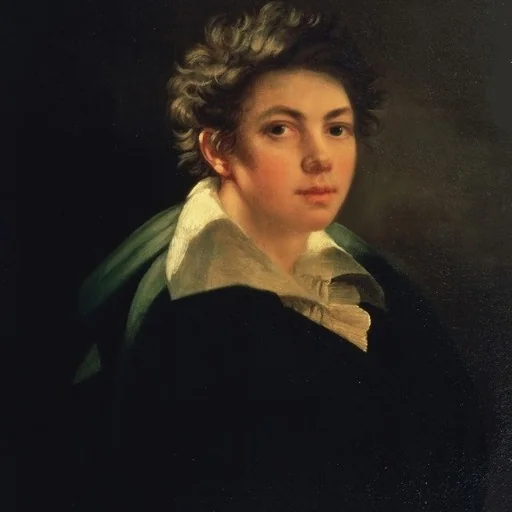
Johann Rombauer (Hungarian: Rombauer János, Slovak: Ján Rombauer; 28 May 1782 – 12 February 1849) was a portrait painter in the Kingdom of Hungary.

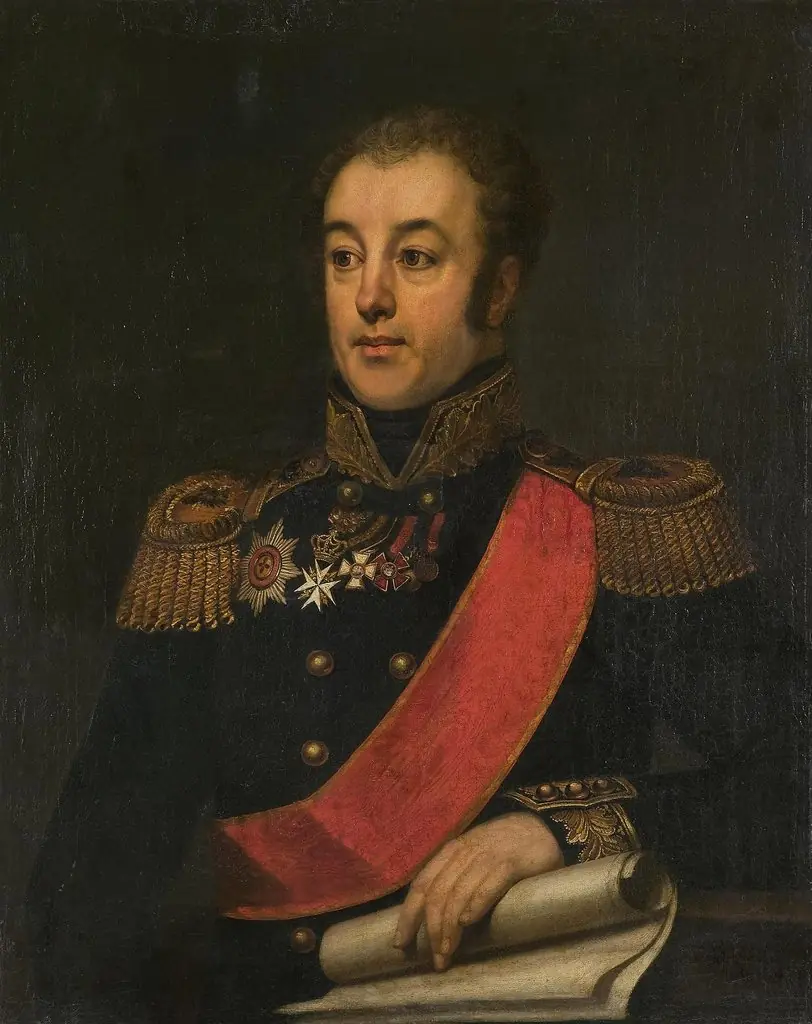
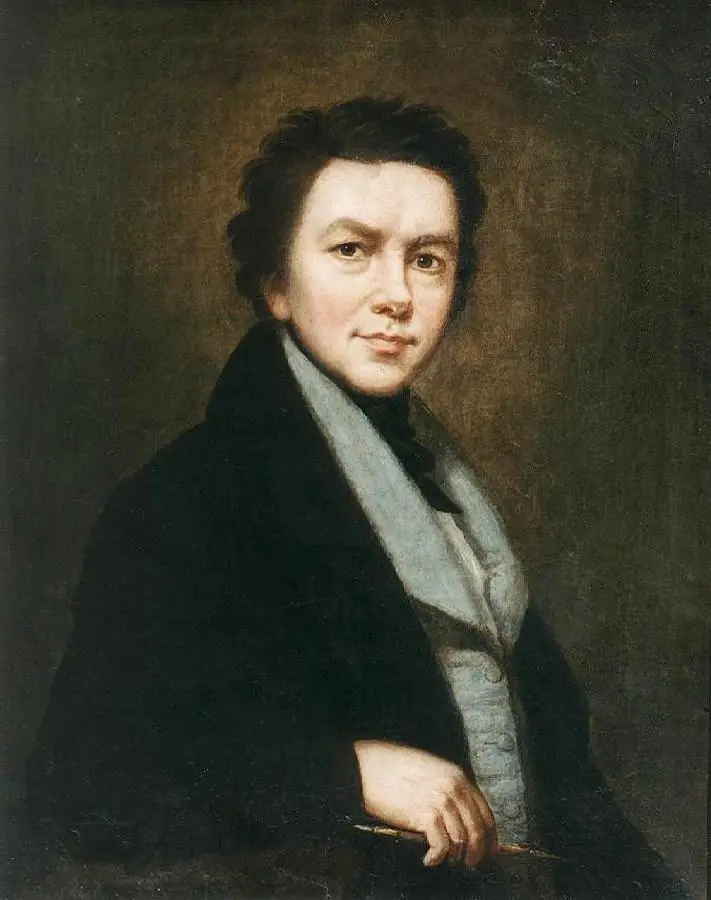
- Portrait of Paisy S. Kaisarov (1783-1844)
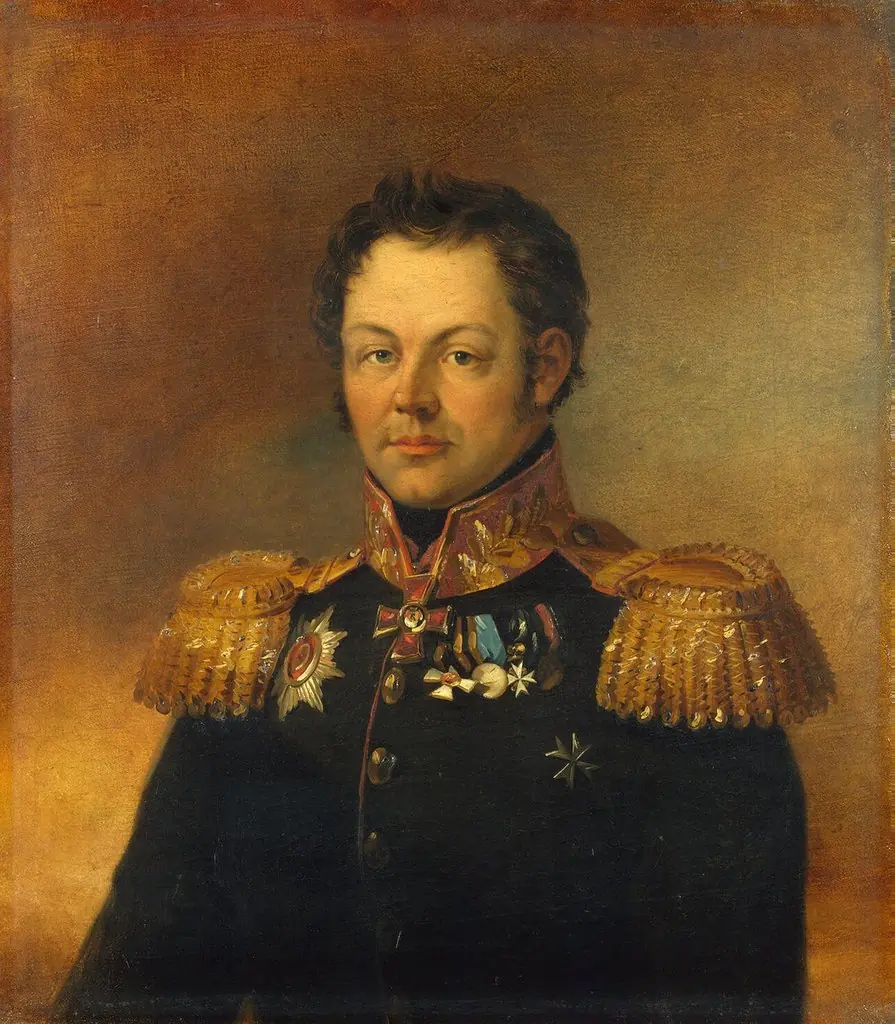 Portrait of Alexander E. Pyker (1776-1834)
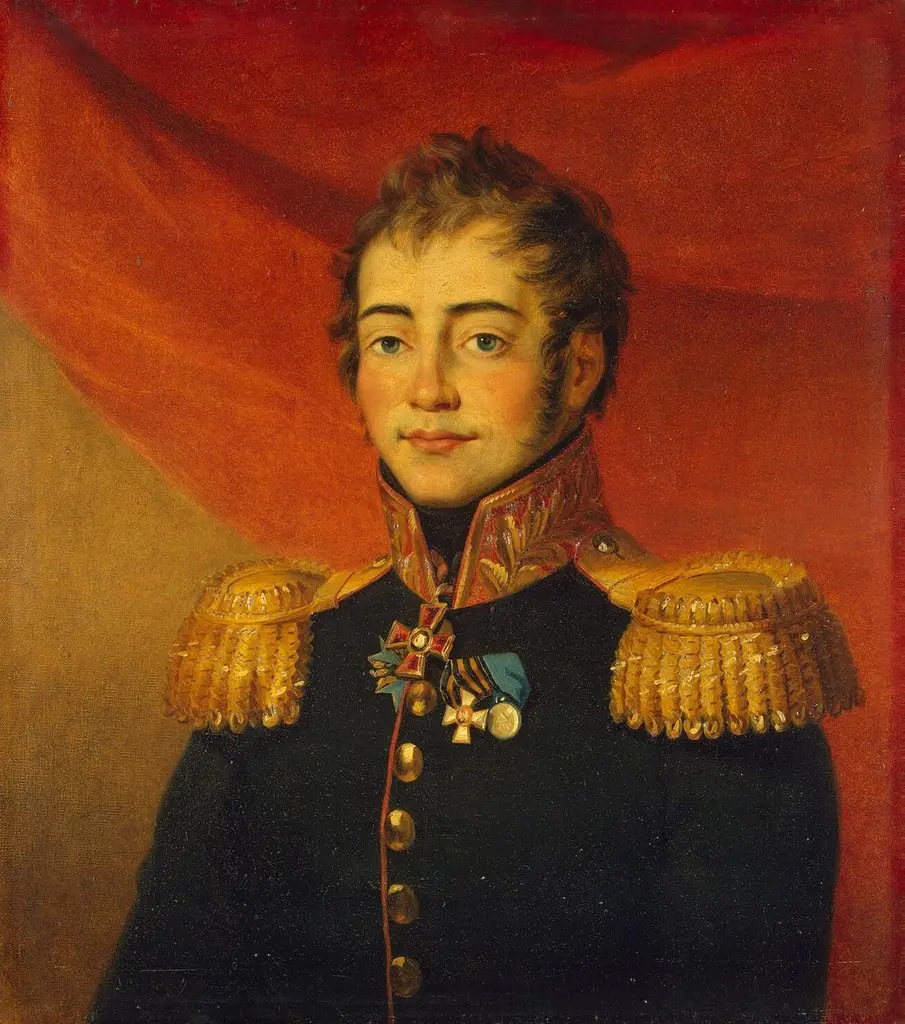 Portrait of Dmitry P. Lyapunov (1775-1821)
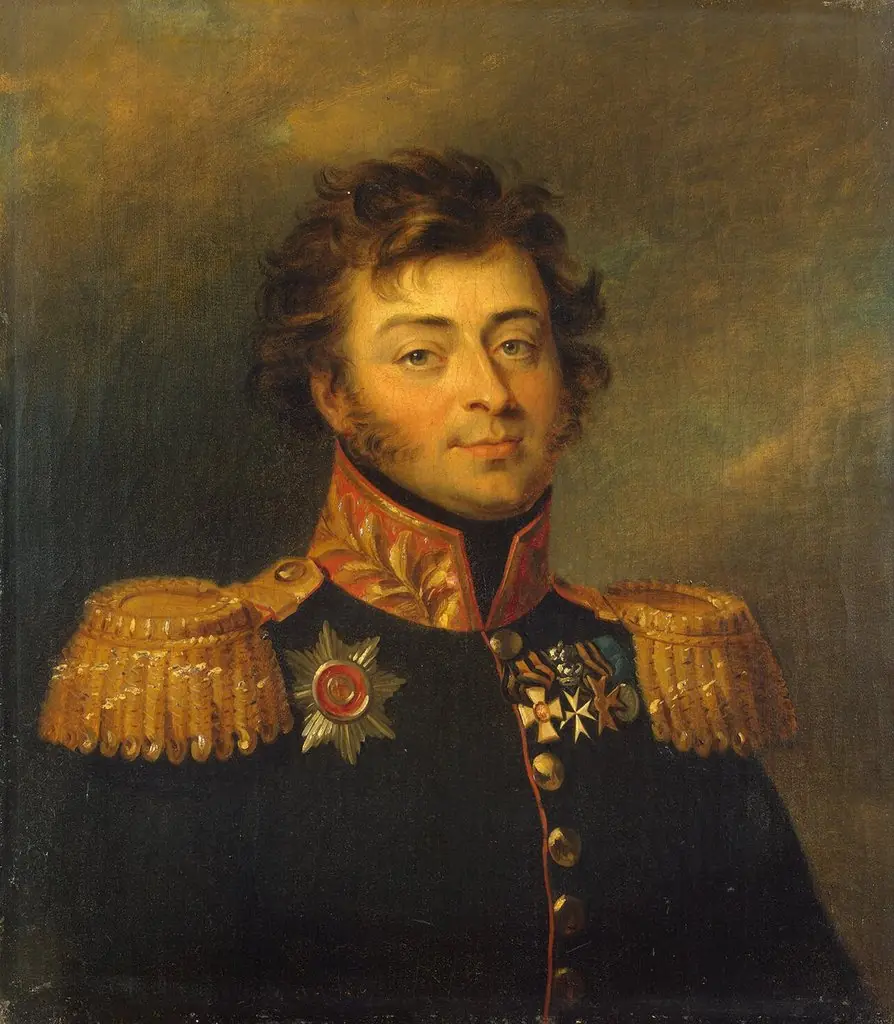 Portrait of Alexander A. Bashilov (1777-1847/49)
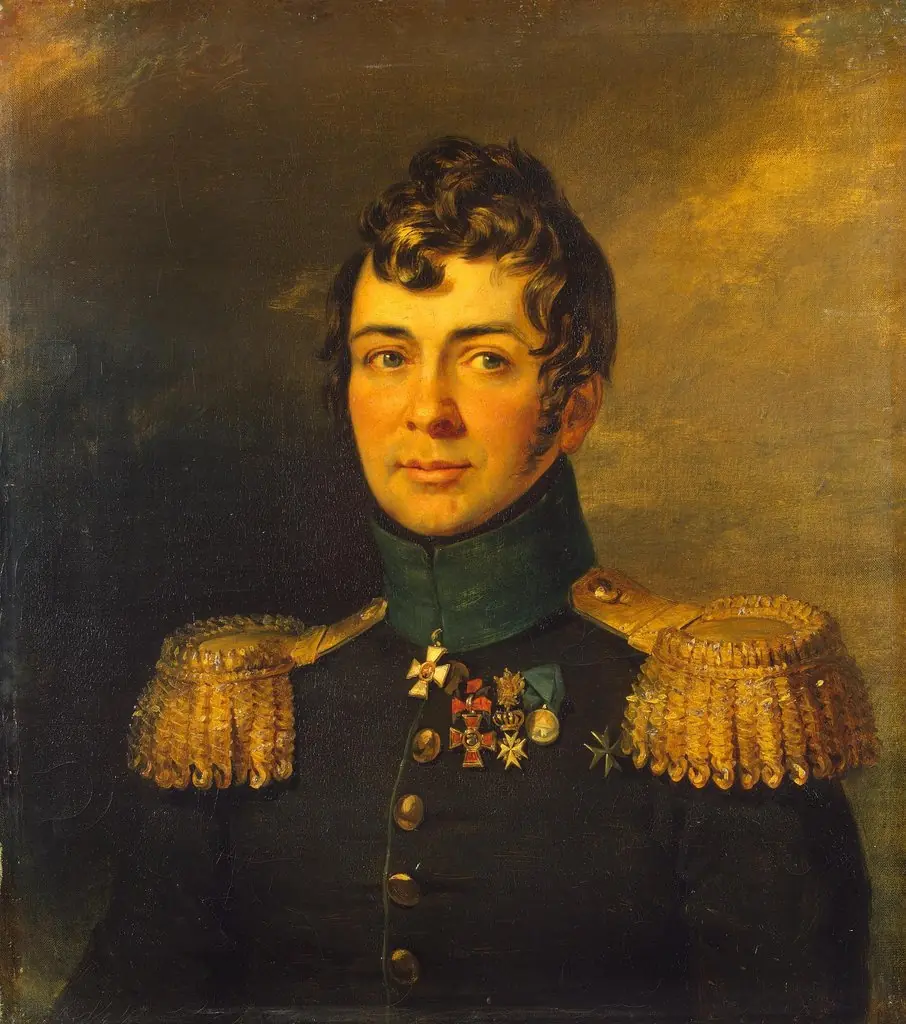 Portrait of Sergey N. Ushakov (1776-1814) (2nd)
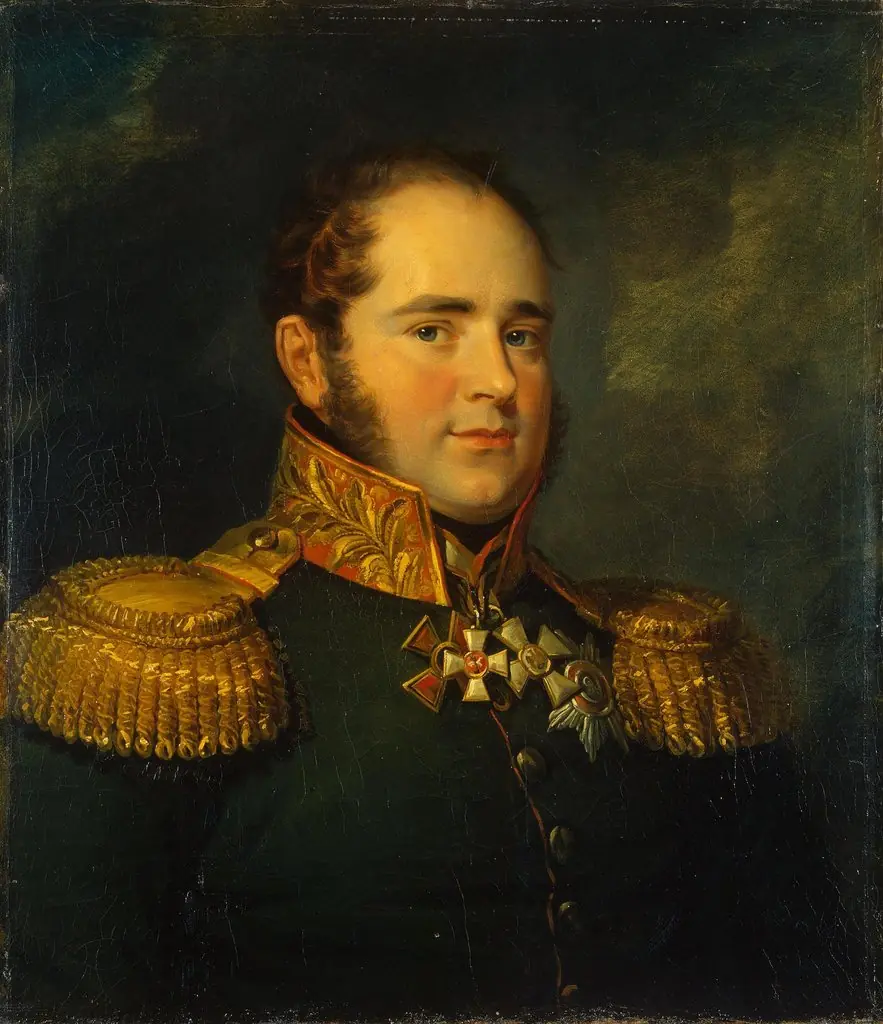 Portrait of Karl F. Baggowut (1761-1812)
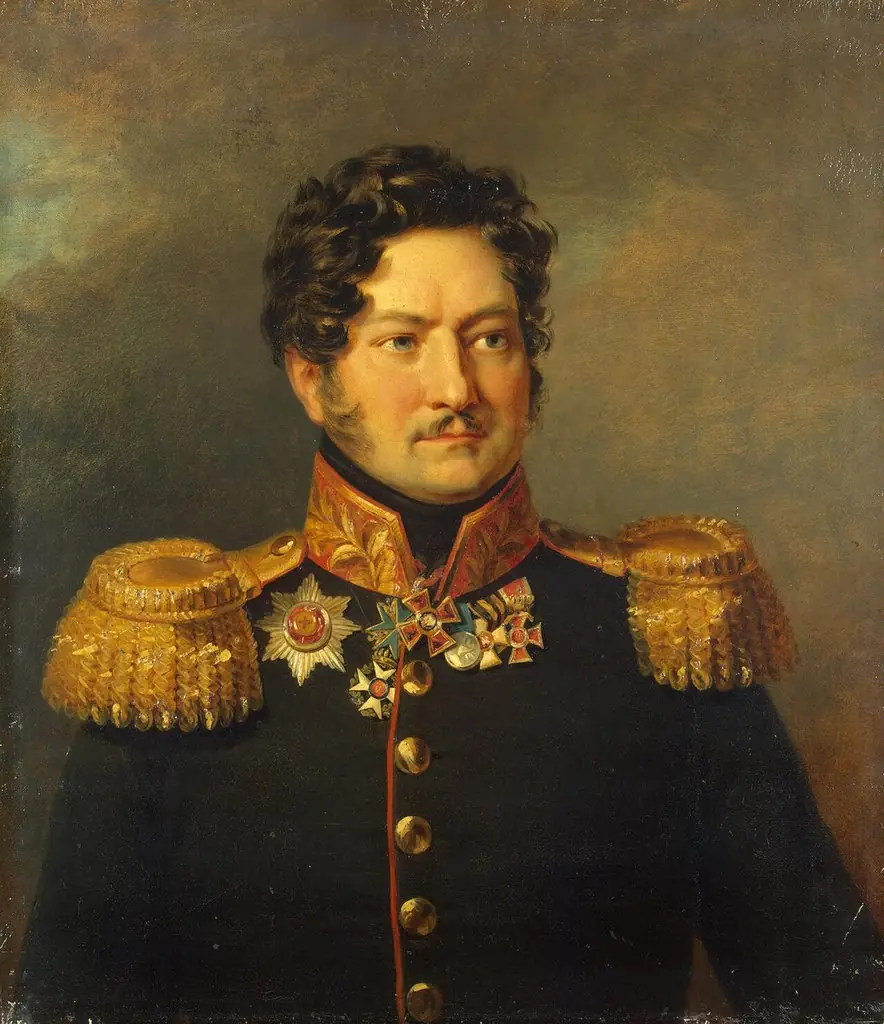 Portrait of Dmitry L. Ignatyev (1771-1833)
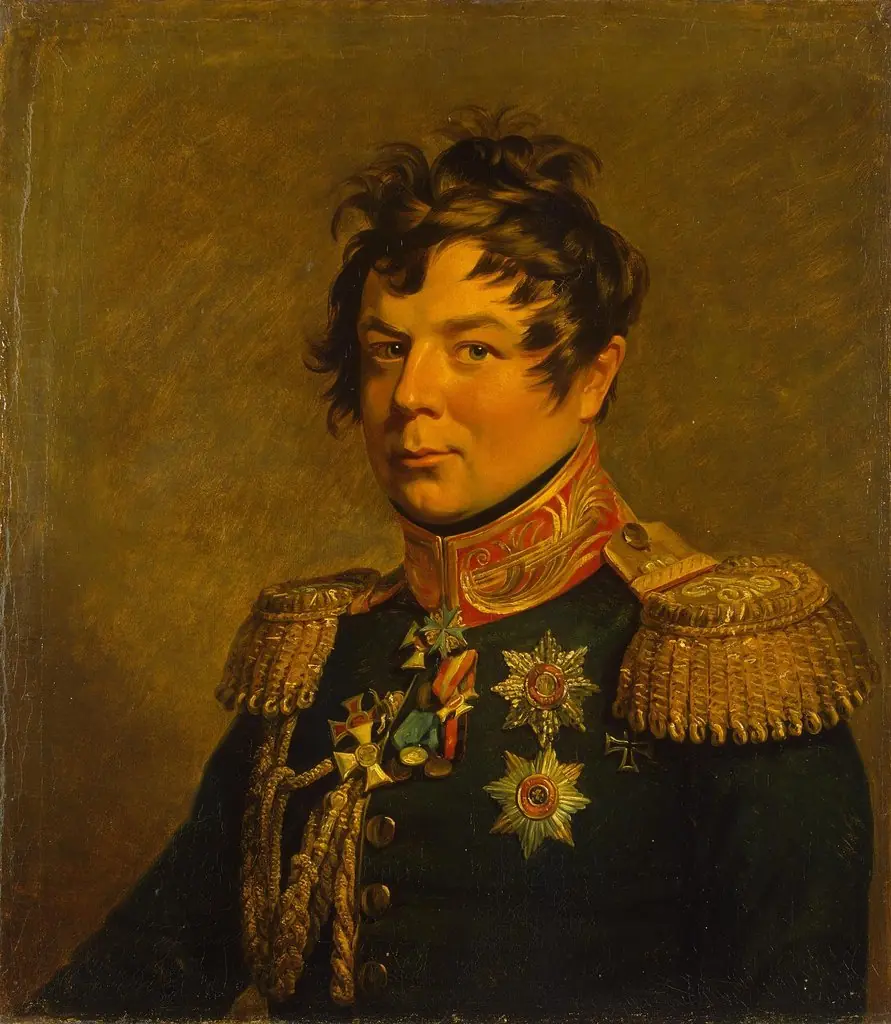 Portrait of Ivan I. Diebitsch-Zabalkansky (1785-1831)
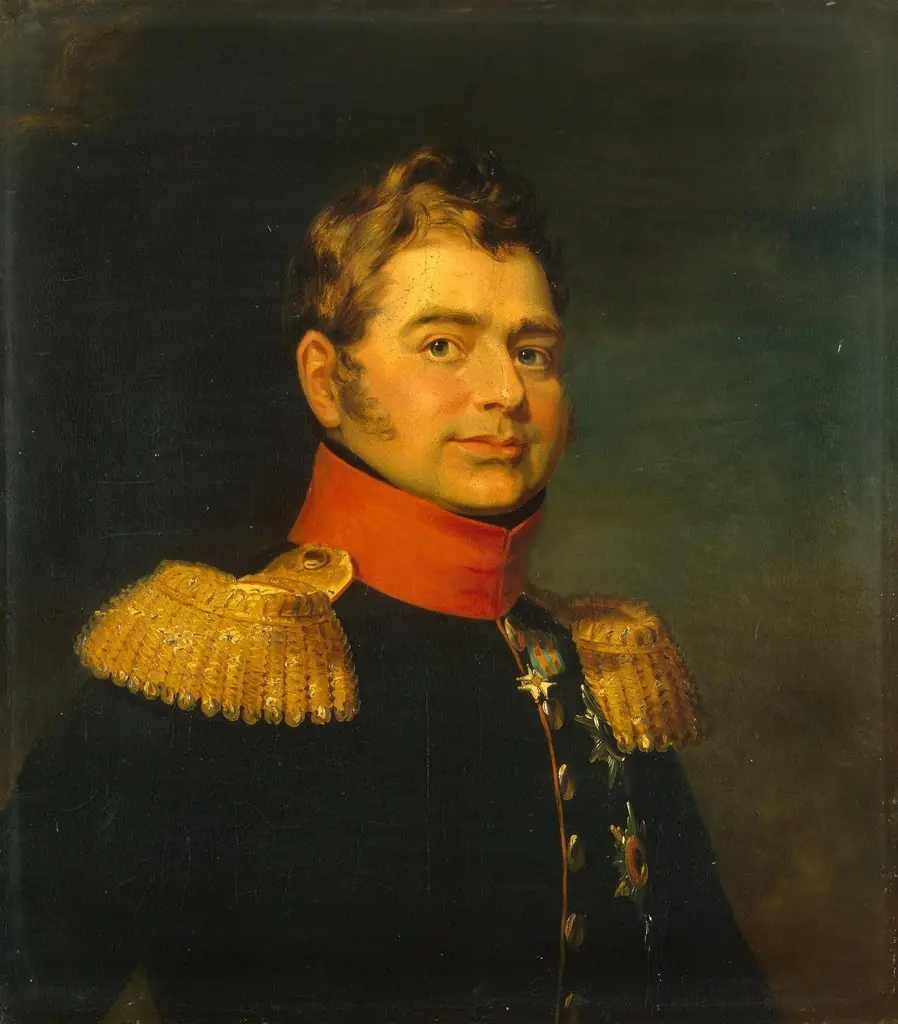 Portrait of Sergey Ya. Repninsky (1775-1818) (2nd)
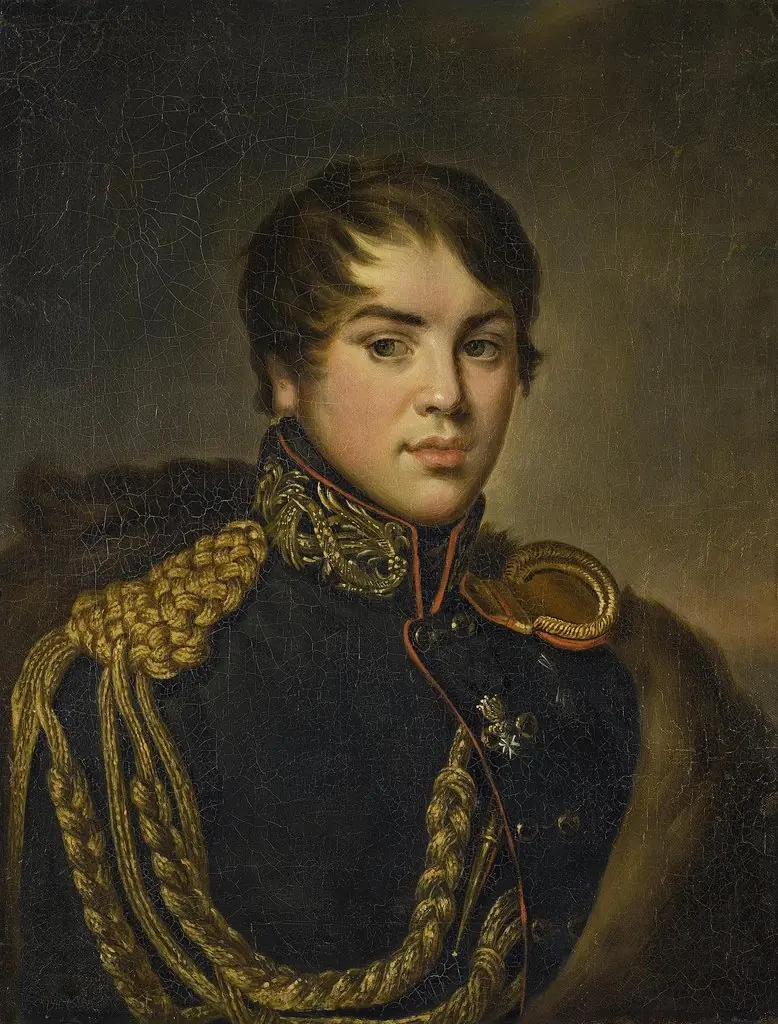 Vladimir Stepanovich Apraksin
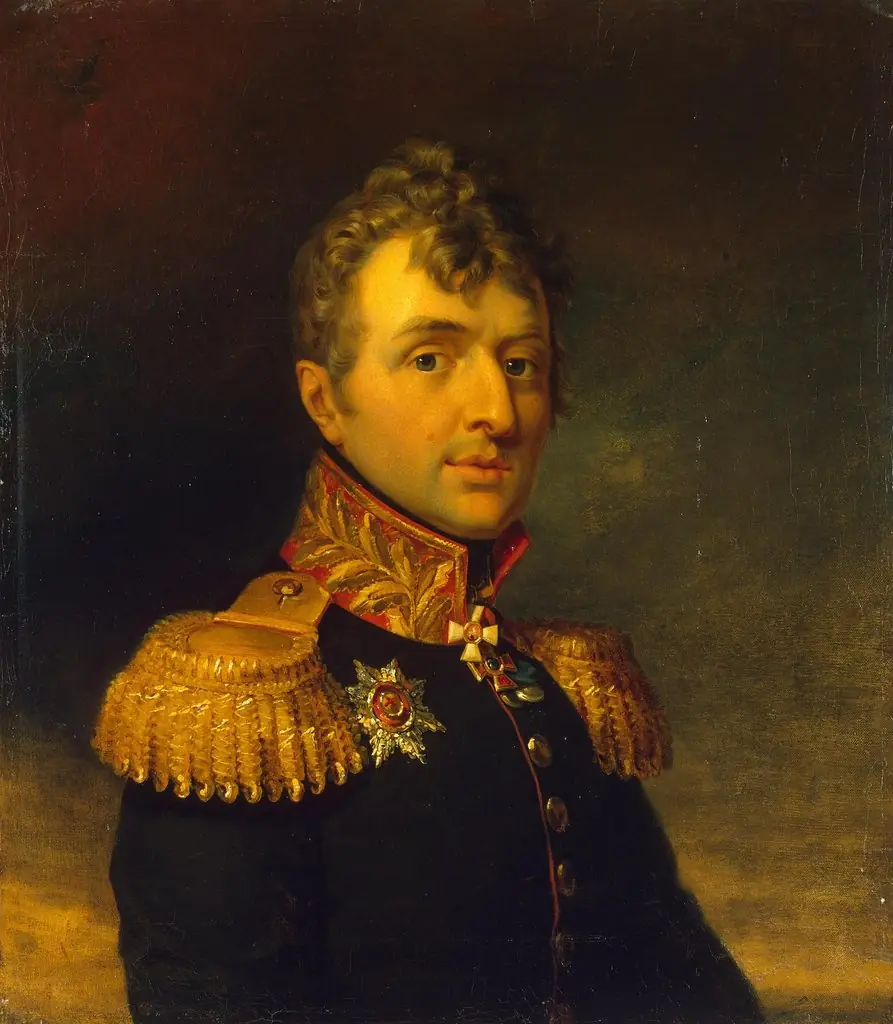 Portrait of Ivan V. Manteuffel (1771-1813)
 Portrait of Alexander P. Urusov (1768-1835)