Artwork
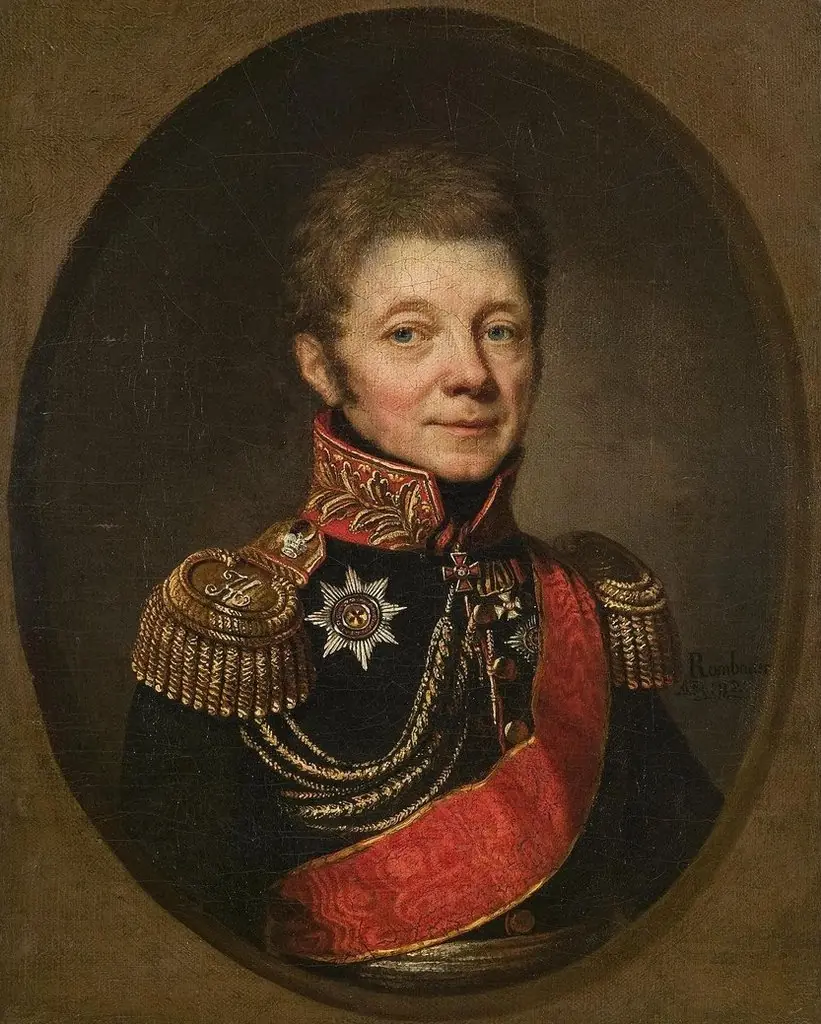
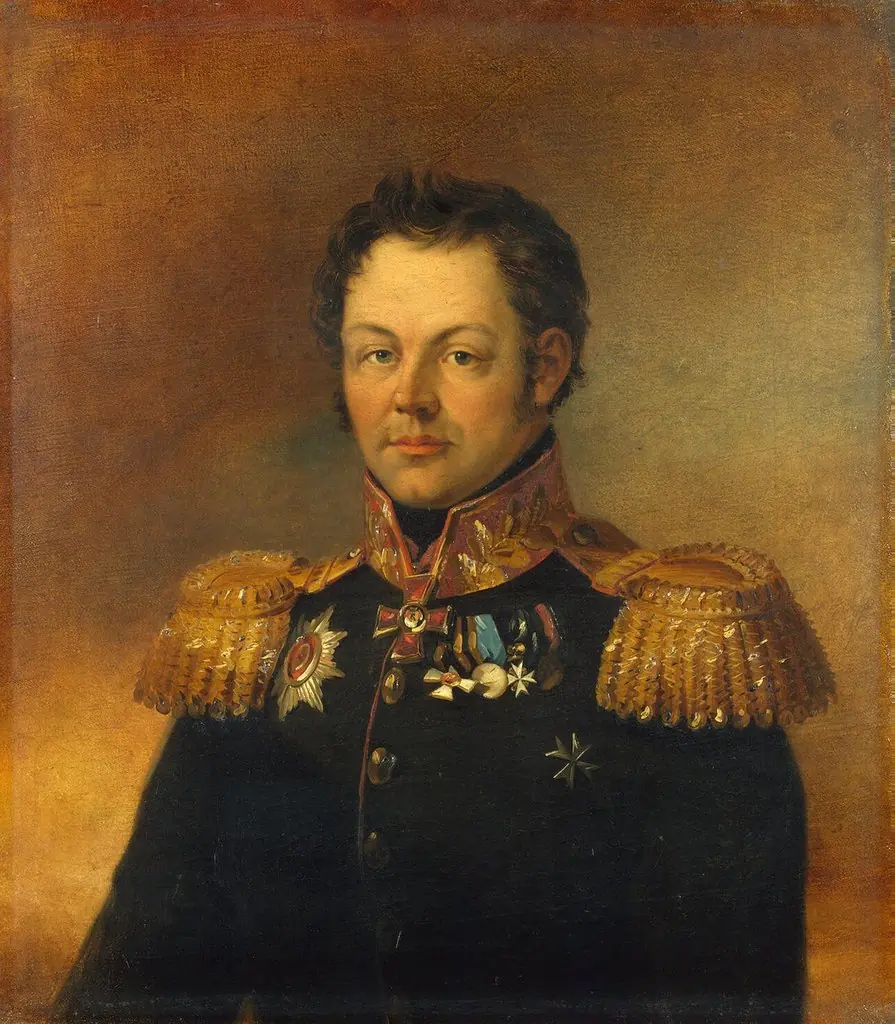
Portrait of A.F. Klokachev
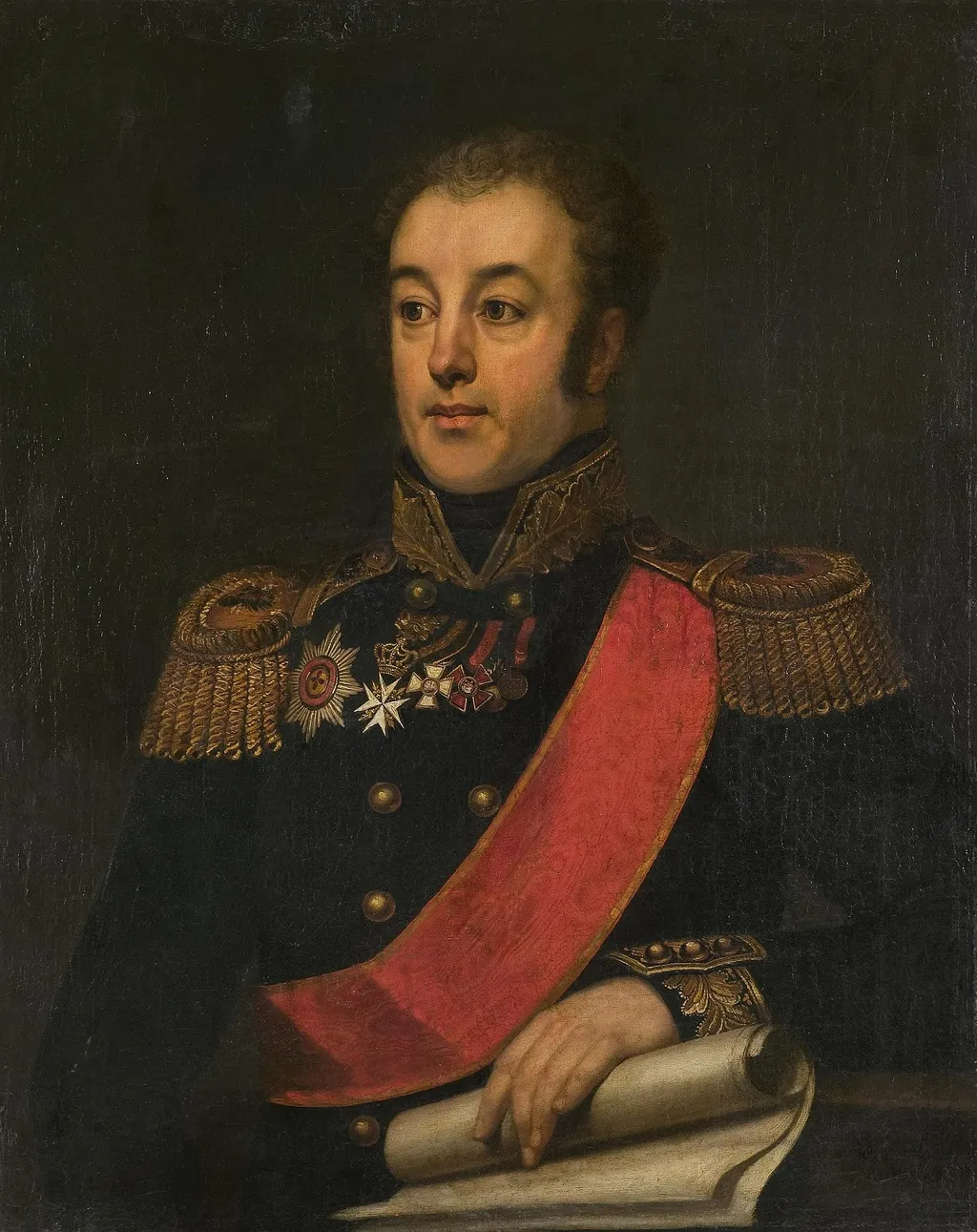
Portrait of A.F. Klokachev is an oil painting by the Biedermeier artist János Rombauer. It dates from 1825 and is held in the collection of the Hermitage Museum. Created in 1825, this oil on canvas portrait presents Alexey Fedotovich Klokachev in a formal military uniform.
About this work
Overview
It stands as a significant document of Biedermeier-era portraiture and of the cultural exchange between Hungarian and Russian artistic circles.
The Portrait of A.F. Klokachev is an oil-on-canvas painting by János Rombauer, dated 1825, depicting the Russian military figure Alexey Fedotovich Klokachev. Measuring 89 by 71 centimetres, the work is held in the collection of the State Hermitage Museum in St. Petersburg, where it remains on public view. Painted during Rombauer's extended sojourn in Russia, the portrait exemplifies the artist's mature style and his position as a leading portraitist working in the Russian Empire during the early nineteenth century. It stands as a significant document of Biedermeier-era portraiture and of the cultural exchange between Hungarian and Russian artistic circles.
Subject & Meaning
The sitter, Alexey Fedotovich Klokachev, is presented as a military officer of evident rank and distinction. Rombauer depicts him in a dark navy or black military coat with a high collar, trimmed with gold embroidery and brass buttons, with heavy gold epaulettes bearing bullion fringe on both shoulders. A wide crimson sash crosses his chest, while several medals and orders, including a star-shaped badge and a cross, are pinned to his left breast. These insignia function as markers of service and honour, situating Klokachev within the hierarchy of the Russian military establishment. His right hand rests upon a rolled document or scroll placed on a flat surface at the lower edge of the composition, suggesting administrative or command responsibilities and imbuing the portrait with connotations of authority and official duty. The three-quarter pose, with the head turned toward the viewer while the body angles left, creates a sense of direct engagement while maintaining formal decorum. The overall iconography adheres to conventions of state portraiture, where the subject's social and professional identity is rendered through meticulously detailed regalia.
Technique & Style
Rombauer executed the portrait in oil on canvas, employing a smooth and controlled brushwork that yields a polished finish throughout. The palette is dominated by deep blacks, rich reds, and gold, offset by warm flesh tones. Light enters strongly from the left, illuminating the face, the hand, and the bright crimson sash, while the background recedes into shadow, a compositional strategy that focuses attention upon the figure and creates pronounced tonal contrast. Fine detail is reserved for the embroidery and medals, demonstrating Rombauer's technical precision in rendering textiles and metallic surfaces. The dark, neutral background and the formal, dignified mood align the work with the conventions of European academic portraiture, while the handling of light and the psychological directness of the sitter's gaze reflect the influence of Russian portrait traditions, particularly that of Vladimir Borovikovsky and Orest Kiprensky, whom Rombauer is known to have studied. The overall effect is one of restrained elegance and authoritative presence.
History & Provenance
The portrait was painted in 1825 in Russia, during the period when Rombauer was resident in Saint Petersburg. Having arrived in the Russian capital by 1806, Rombauer had established himself as a portraitist and teacher, becoming a member of the Imperial Academy of Arts and participating in its exhibitions. He married Amalie Baumann, a Baltic German, in 1818, and the couple remained in Russia until their return to Hungary in 1824, though this portrait's 1825 date suggests either a slightly later departure or a work completed from existing arrangements. The painting subsequently entered the collection of the State Hermitage Museum in St. Petersburg, where it is currently held. Its accession history within the museum has not been specified in available sources. The work has been documented in museum publications and is listed in commercial image archives with full attribution.
Context
János Rombauer (1782-1849) was a central figure in Hungarian Biedermeier painting, though his career was substantially shaped by his two decades in Russia. Born in Lőcse, Upper Hungary (present-day Levoča, Slovakia), into an ethnic German family, he began his career in Pest before travelling to Saint Petersburg at the invitation of the Polish aristocrat Józef August Iliński. His Russian period proved formative; exposure to the work of Borovikovsky and Kiprensky refined his approach to [portraiture], and he painted numerous members of the Russian nobility and prominent citizens. The Portrait of A.F. Klokachev belongs to this Russian phase and shares affinities with other portraits of military and aristocratic subjects from the same period. Rombauer's eventual return to Hungary in 1824, settling in Eperjes (Prešov), marked a shift in his clientele toward Hungarian nobility and civic leaders, though works such as this one continued to circulate and consolidate his international reputation. The Hermitage holding testifies to the museum's systematic acquisition of Russian-period portraiture and Rombauer's standing within that milieu.
Legacy
The Portrait of A.F. Klokachev remains in the State Hermitage Museum, where it contributes to the institution's comprehensive holdings of early nineteenth-century portraiture. Rombauer's broader legacy rests on a corpus of 248 known works, of which many have been lost; surviving paintings are distributed among the Hermitage, the Tretyakov Gallery, the Hungarian National Gallery, and the Slovak National Gallery. This portrait, in particular, serves as a significant example of his Russian-period output and of the cross-cultural currents between Hungarian and Russian art during the Biedermeier era. The work continues to be reproduced and cited in scholarly and commercial contexts, underscoring its persistent value as both an artistic document and a historical record of Russian military portraiture.
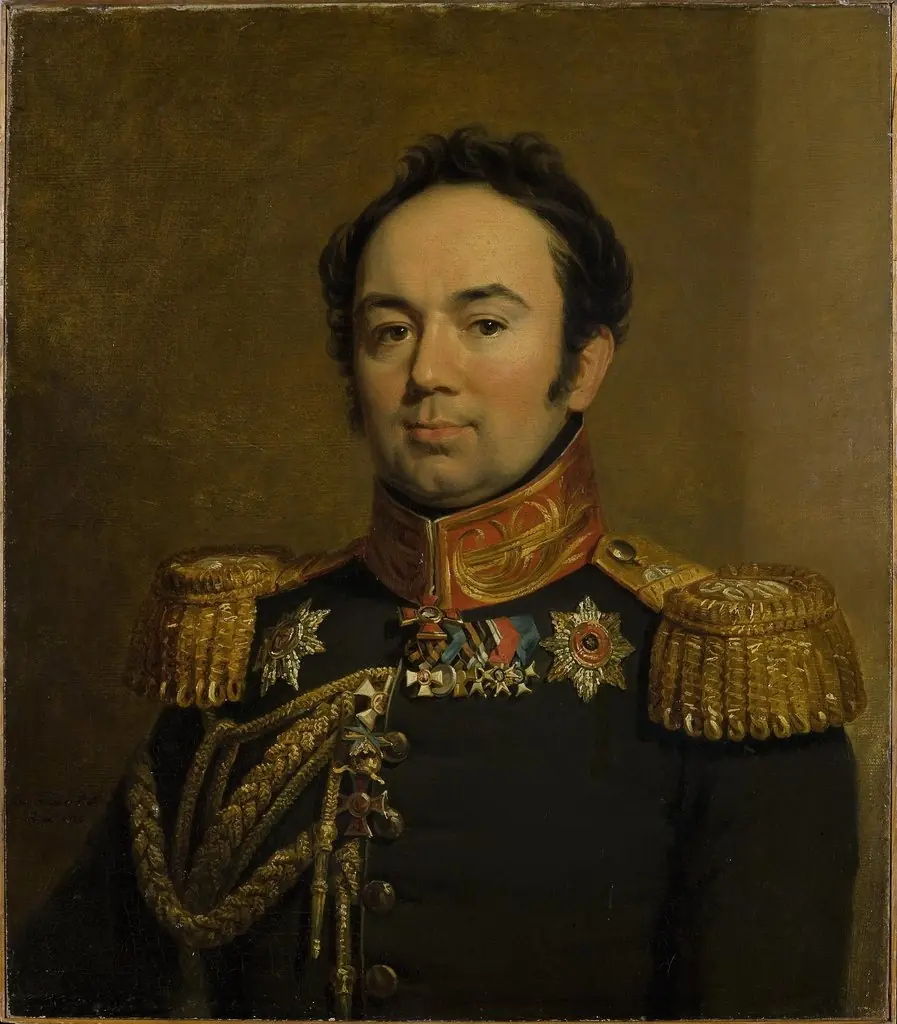
Own this work as a print
Artist & collection
Artist
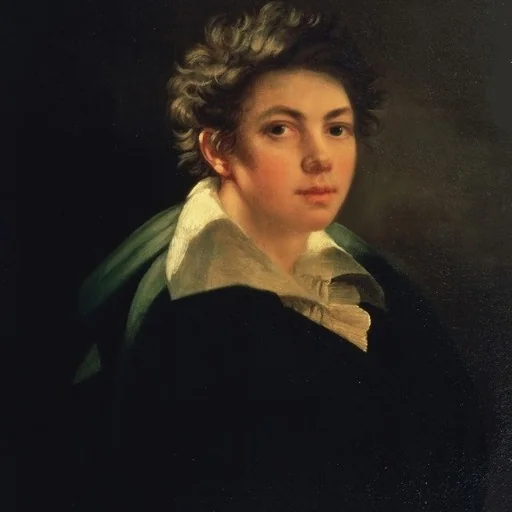
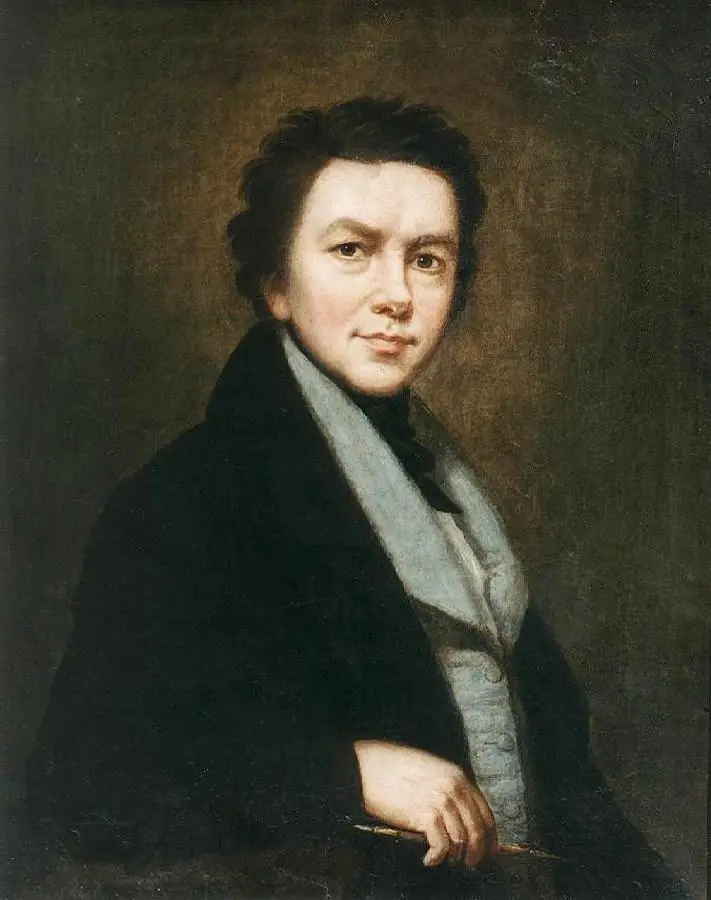
Johann Rombauer (Hungarian: Rombauer János, Slovak: Ján Rombauer; 28 May 1782 – 12 February 1849) was a portrait painter in the Kingdom of Hungary.

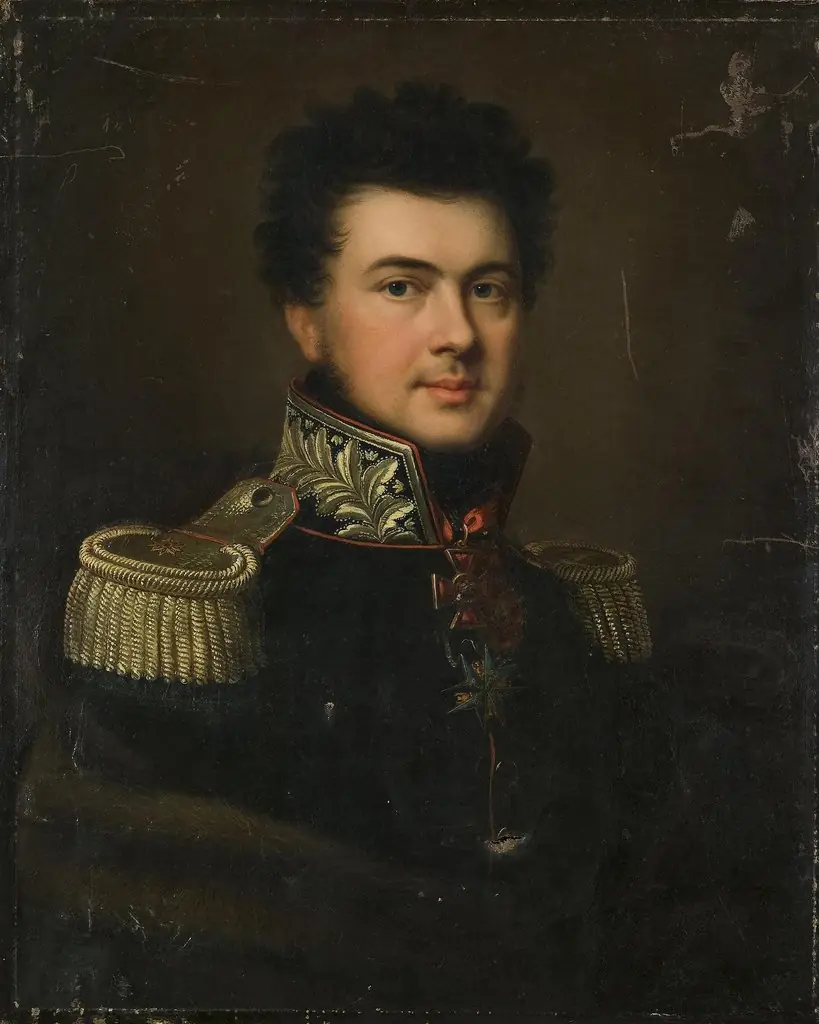
- Portrait of Arseny A. Zakrevsky (1783-1865)
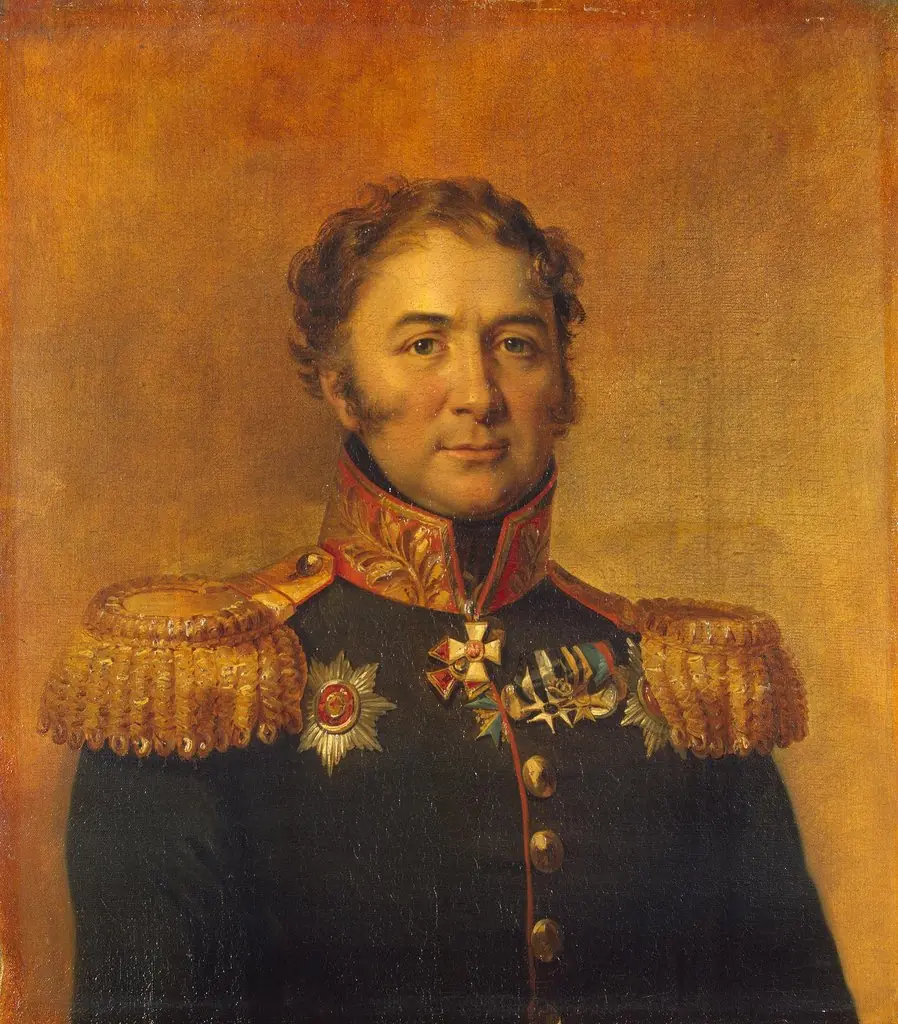 Portrait of Nikolai V. Dekhteryov (1775-1831)
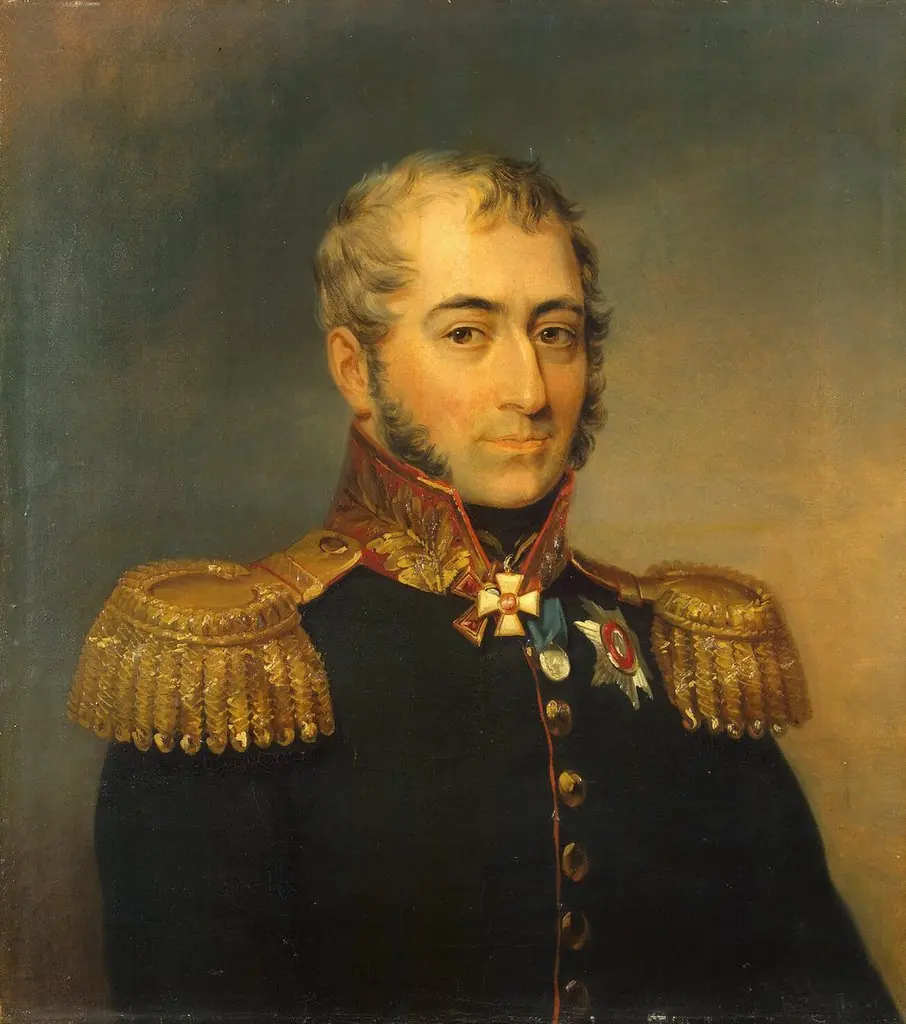 Portrait of Andrey P. Zass (1753-1816) (1st))
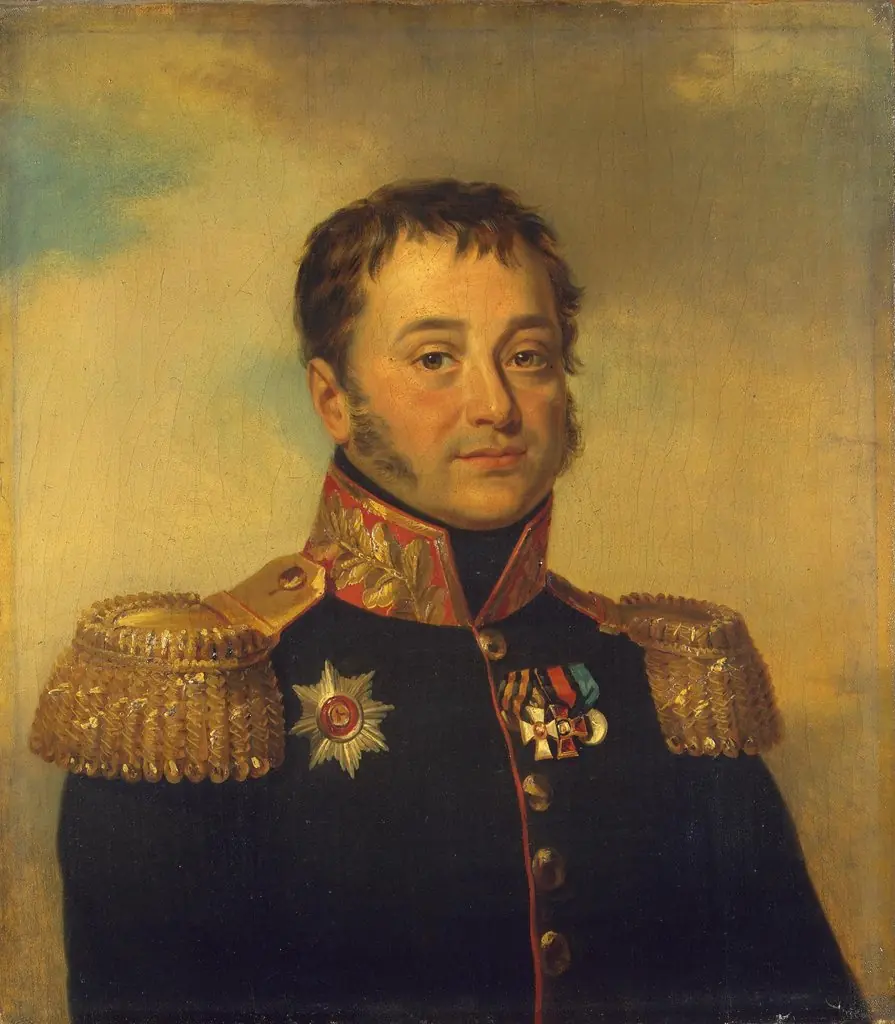 Portrait of Pyotr V. Denisyev (1766-1849)
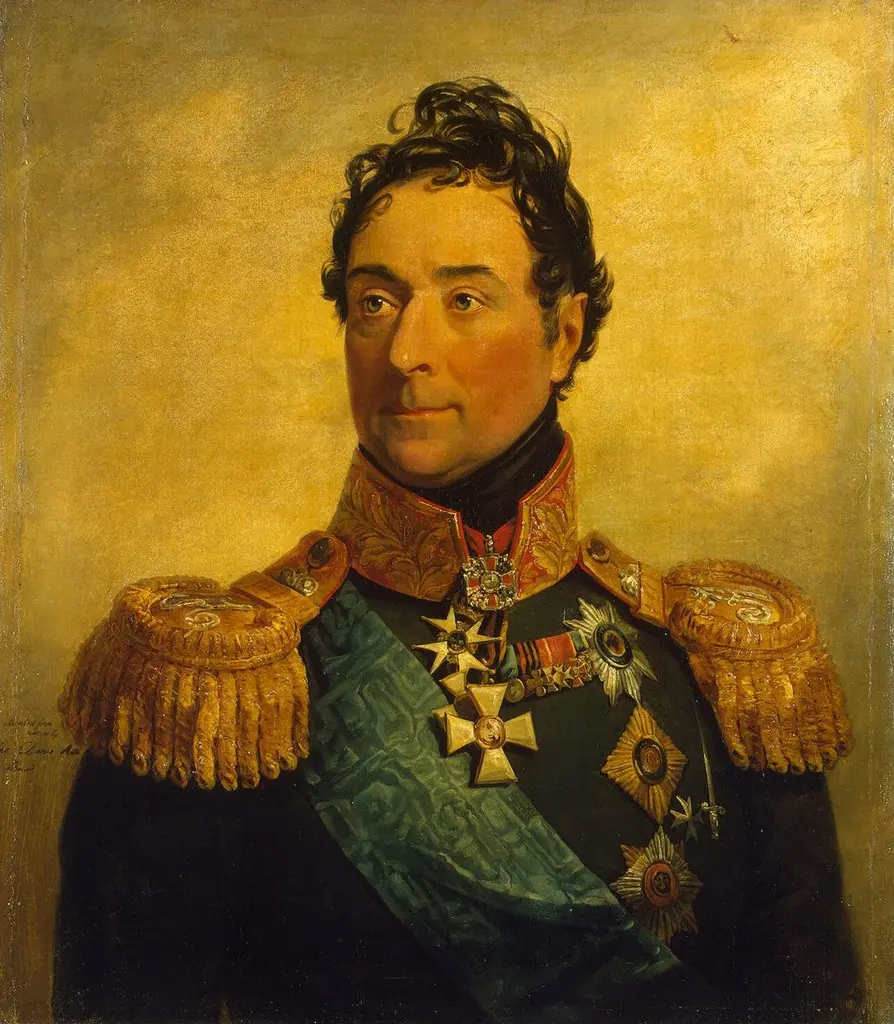 Portrait of Alexander F. Langeron (1763-1831)
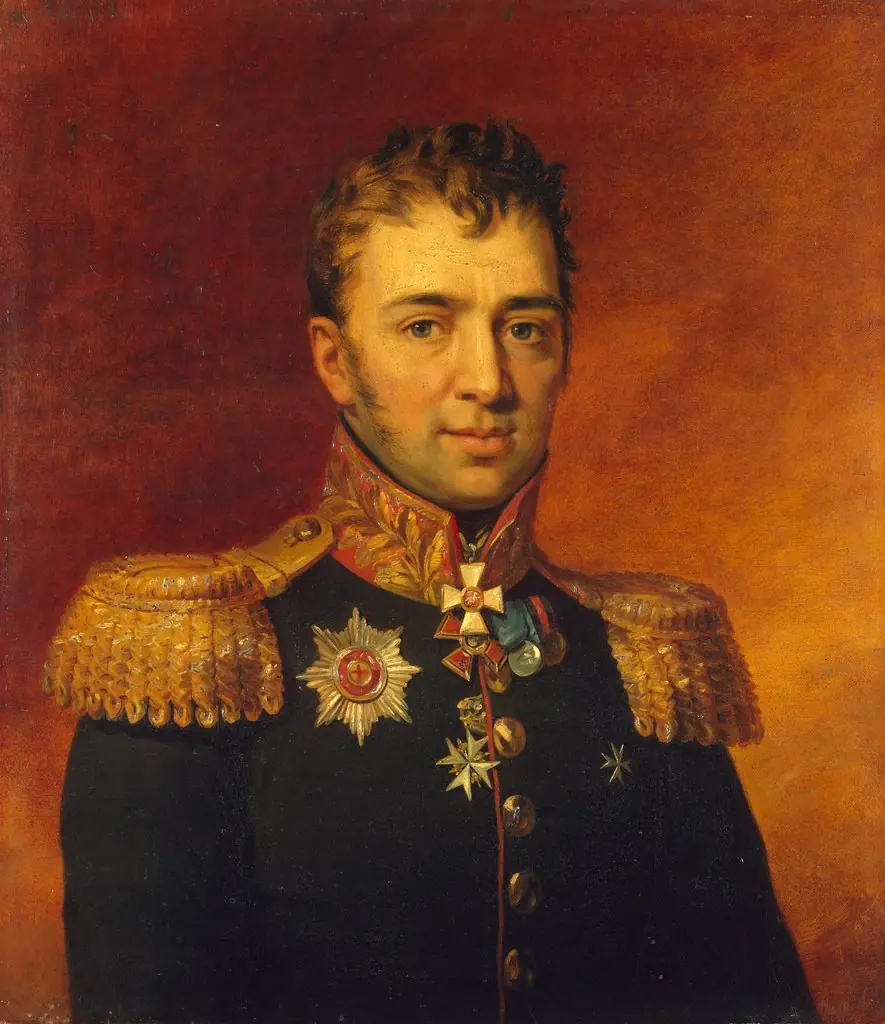 Portrait of Pyotr G. Likhachov (1758-1813)
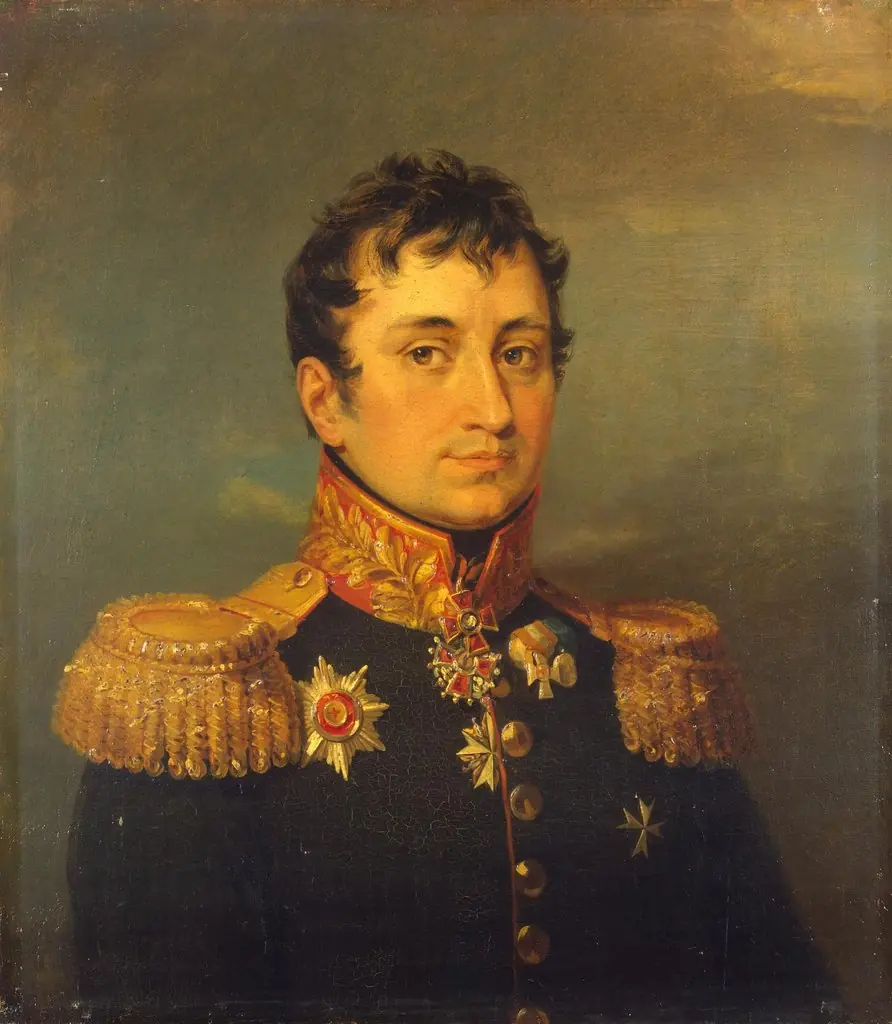 Portrait of Pavel A. Filisov (1769-1821)
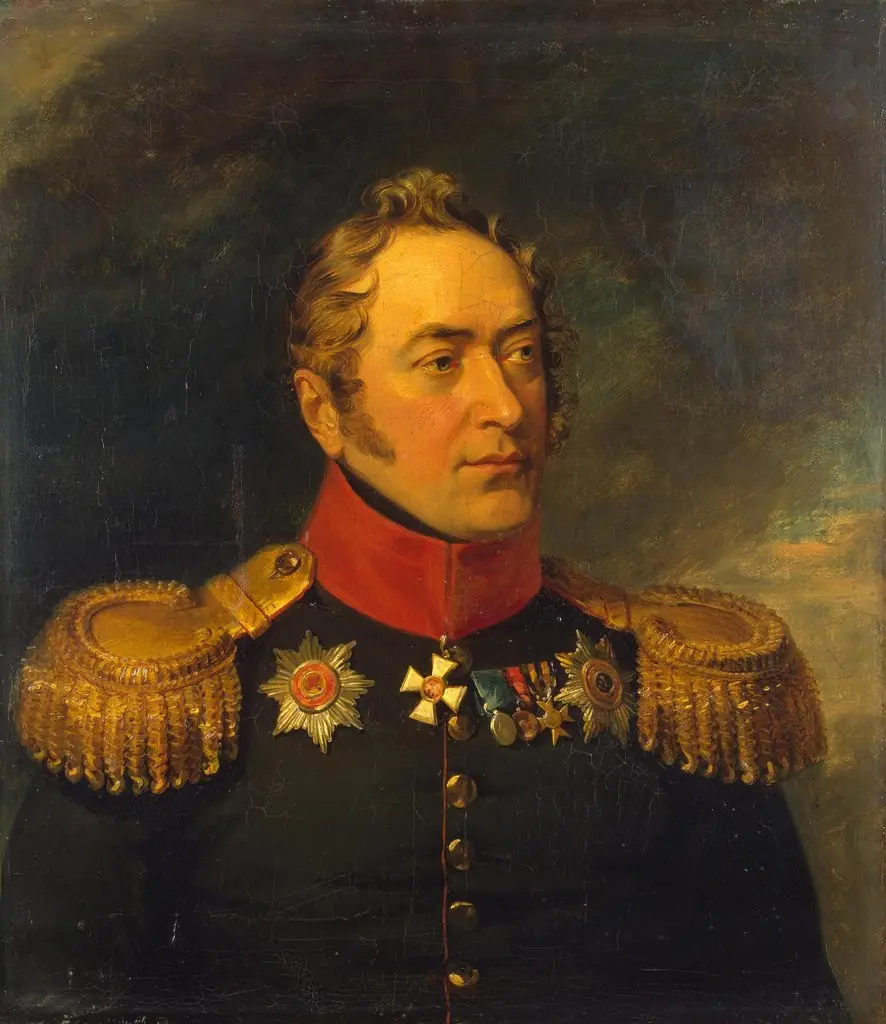 Portrait of Nikolai N. Khovansky (1777-1837)
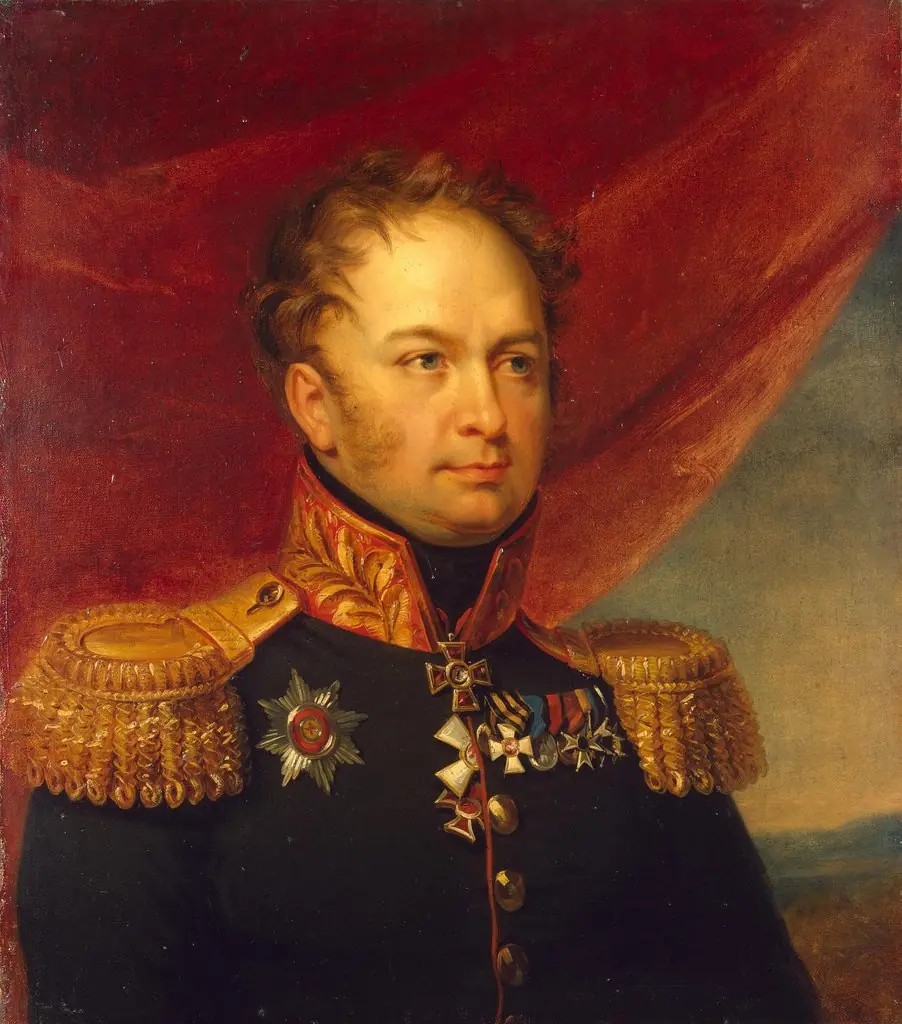 Portrait of Mikhail F. Vlodek (1780-1849)
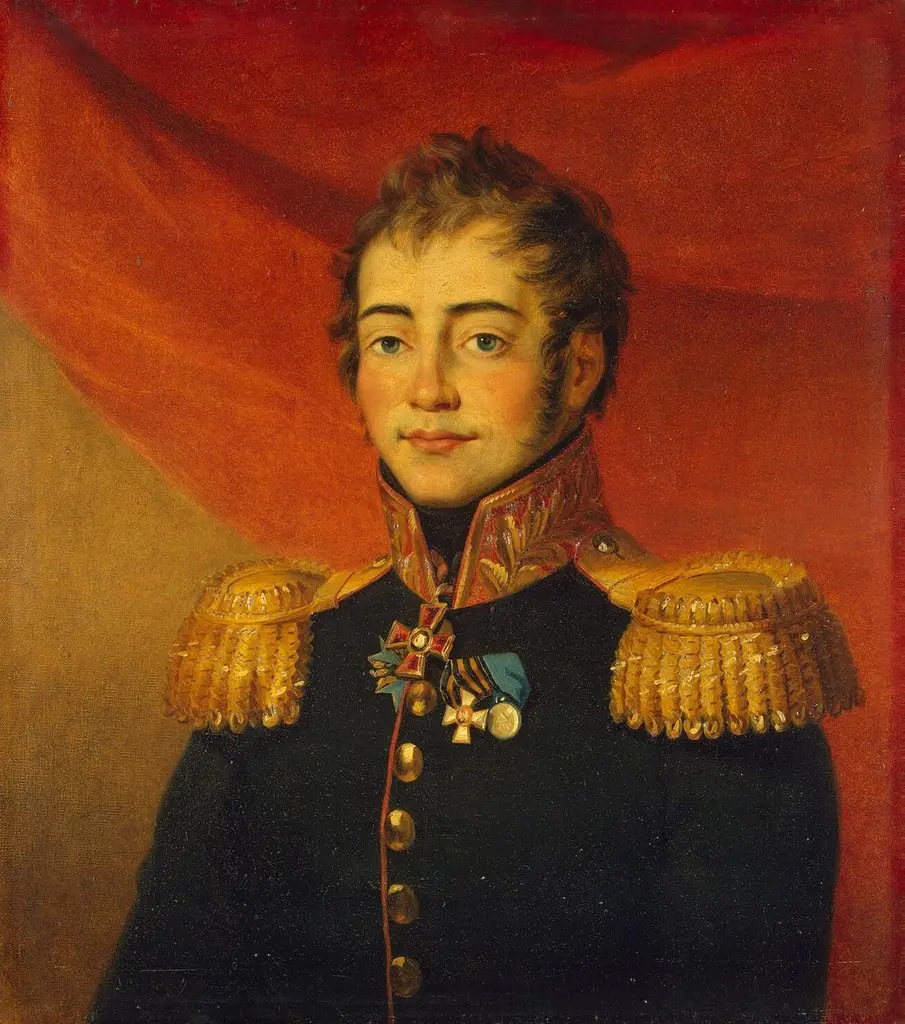 Portrait of Dmitry P. Lyapunov (1775-1821)
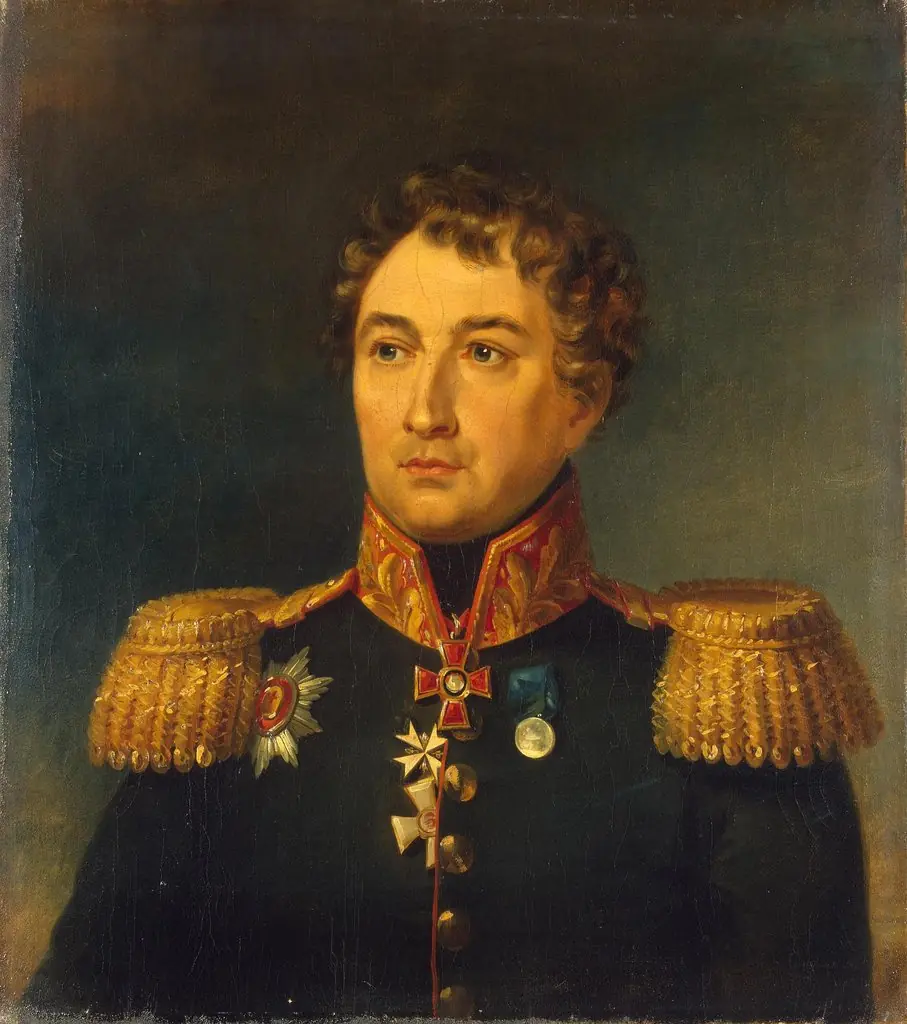 Portrait of Pyotr M. Kolyubakin (1763 - after 1849)
 Portrait of Alexander E. Pyker (1776-1834)