Artwork
Spanish Warhorse
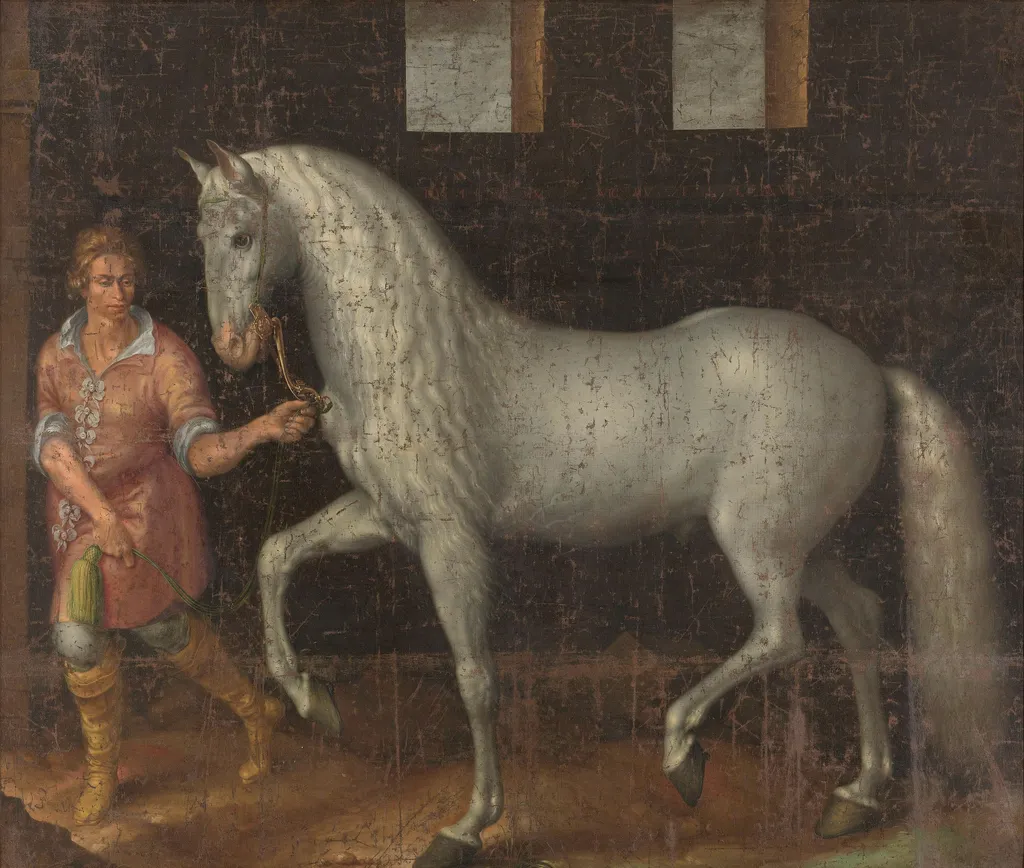
Spanish Warhorse is an oil painting by the Dutch Golden Age artist Jacob de Gheyn II. It dates from 1603 and is held in the collection of the Rijksmuseum.
About this work
Subject & Meaning
The painting's monumental scale, 228 by 269 cm, elevates the horse to a commanding presence, suggesting symbolic weight beyond mere naturalistic representation.
Spanish Warhorse depicts a single horse as its sole subject, presented in the tradition of animal painting. The work belongs to the genre of animal art, a category in which Jacob de Gheyn II specialized during his career. The painting's monumental scale, 228 by 269 cm, elevates the horse to a commanding presence, suggesting symbolic weight beyond mere naturalistic representation.
Horses in Netherlandish art of this period often carried associations of power, nobility, and military might, particularly in the context of Spanish horses, which were highly prized across Europe for their strength and status as elite cavalry mounts. The straightforward title emphasizes the animal's regional identity, potentially alluding to contemporary political and military tensions between the Spanish Netherlands and the Dutch Republic.
Technique & Style
Executed in oil on canvas in 1603, the painting is characterized by meticulous handling typical of Jacob de Gheyn II’s draftsmanship. The horse’s musculature and stance are rendered with anatomical precision, combining detailed observation with a restrained, linear approach. The subdued palette and careful modeling emphasize form over coloristic effects, aligning with the artist’s practice of integrating scientific observation into artistic representation.
The support is a medium-weight canvas, prepared with a white ground, onto which fine brushwork delineates the contours and textures of the animal. The surface shows minimal abrasion, suggesting the painting has remained in stable condition since its creation.
History & Provenance
Jacob de Gheyn II’s Spanish Warhorse is dated 1603 and is painted in oil on canvas with dimensions of 228 cm in height and 269 cm in width.
The work entered the collection of the Rijksmuseum, where it remains held. By 2024 the museum records list Willem Louis Benjamin van Panhuys as the owner of the painting.
The painting Spanish Warhorse is held in the collection of the Rijksmuseum. Created in 1603 by Jacob de Gheyn II, the work depicts a horse and is executed in oil on canvas. Historical records indicate that the piece was once owned by Willem Louis Benjamin van Panhuys before entering the museum's holdings. The provided sources do not list specific inventory numbers or details regarding the work's exhibition history.
Overview
Jacob de Gheyn II’s 1603 canvas entitled Spanish Warhorse presents a solitary rider beside a striking white horse. The composition is set against a muted brick wall bearing faint, unevenly hung paintings. Currently, the work belongs to the collection of the Rijksmuseum in Amsterdam, where it is displayed as an example of early‑17th‑century Dutch portraiture of equestrian subjects.
Own this work as a print
Artist & collection

Artist
Jacob de Gheyn II was a Dutch painter and engraver, whose work shows the transition from Northern Mannerism to Dutch realism over the course of his career.

- Horse and dog in landscape
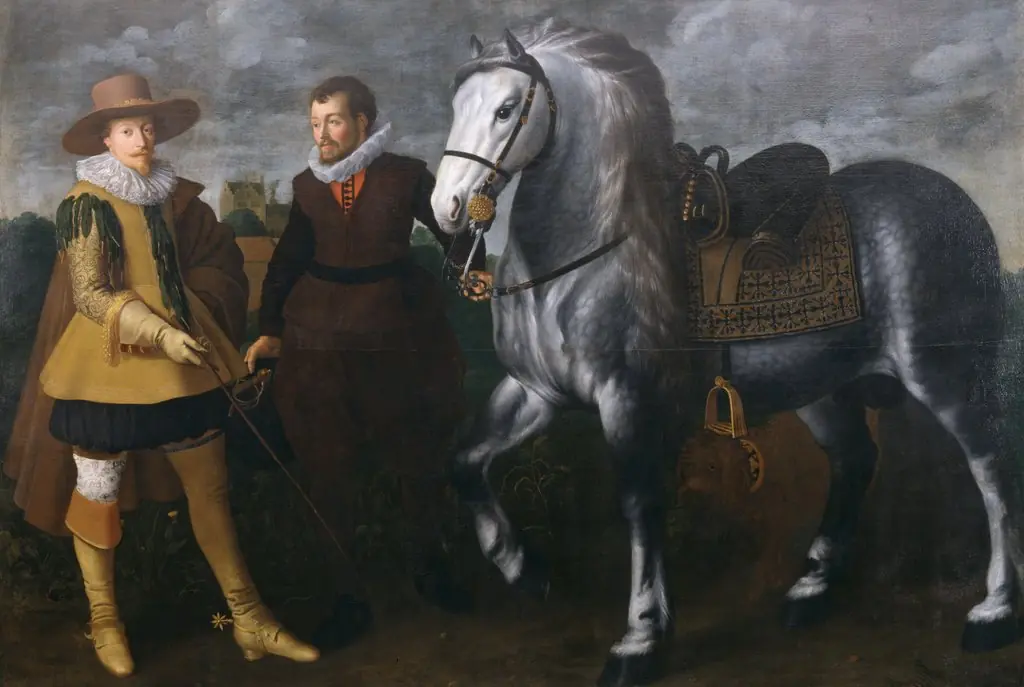 Prince Maurits with His Horse and Groom
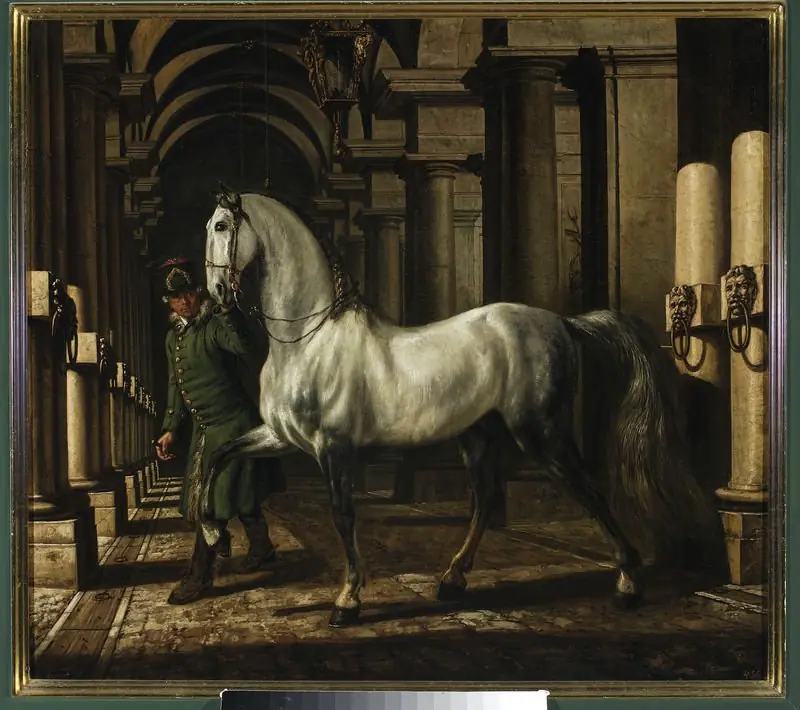 Stable boy leading a horse
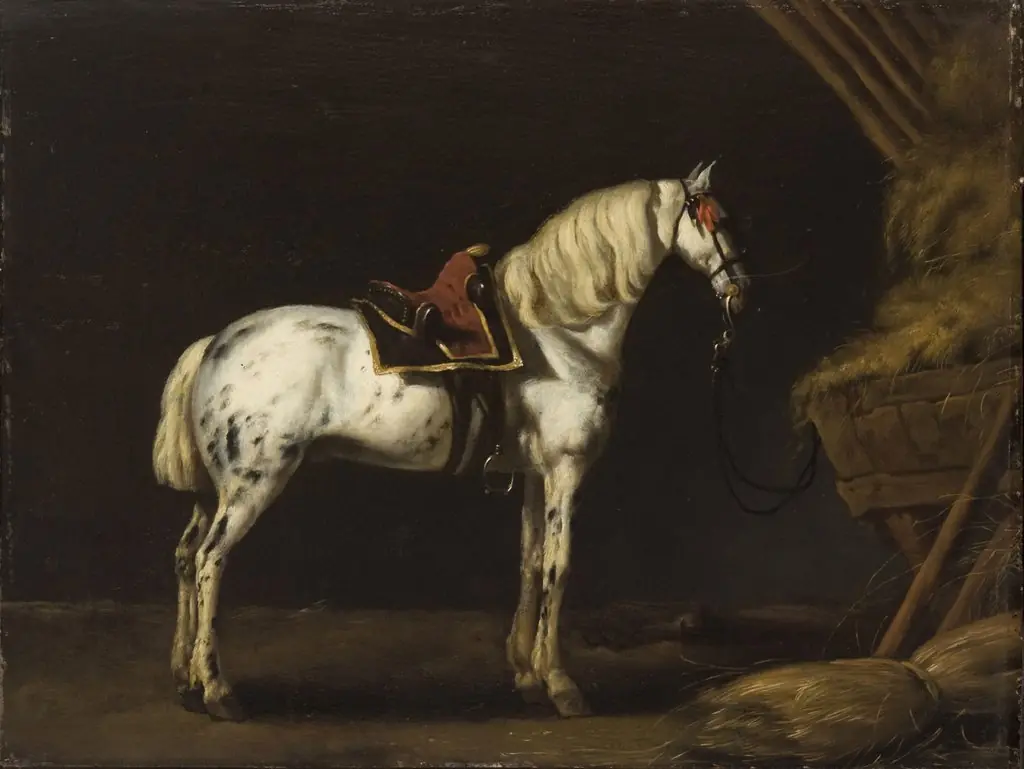 White Horse in a Stable
 Zwart paard door een stalknecht geleid
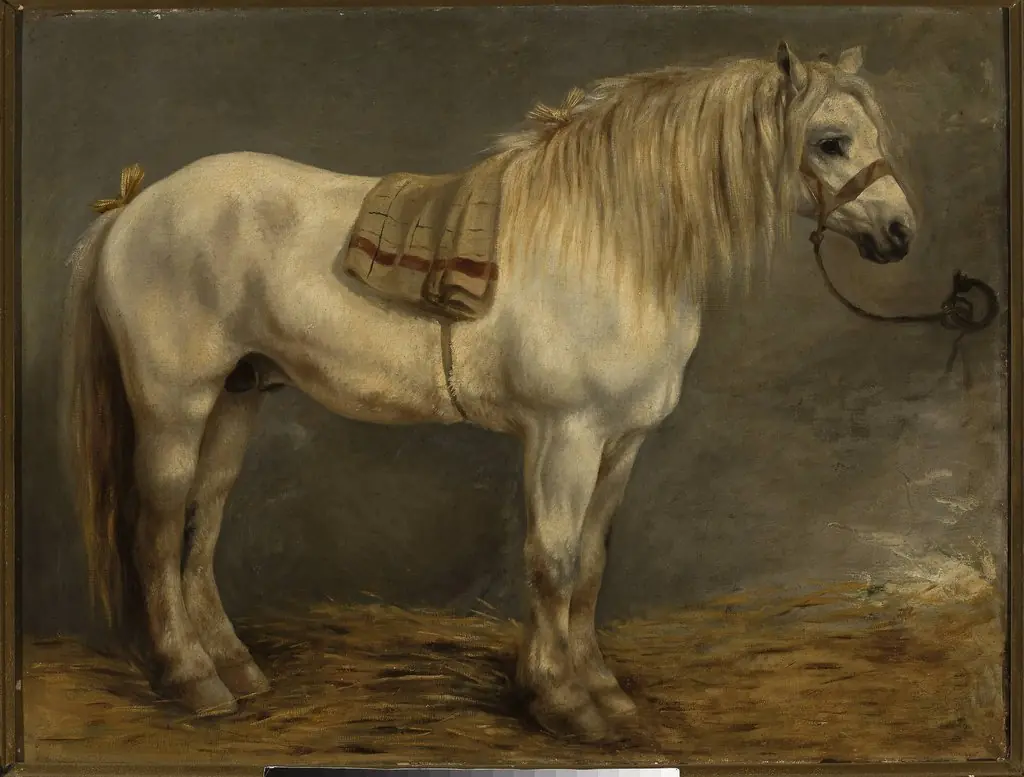 Horse in the stables
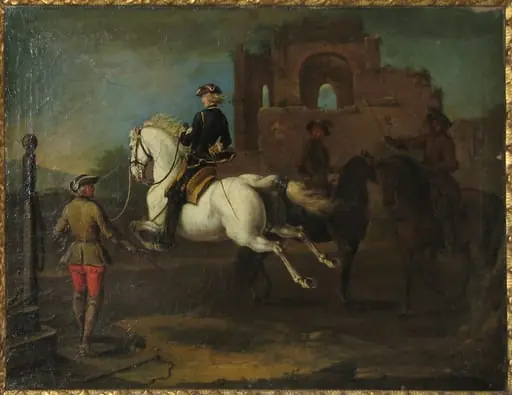 Manej
Manej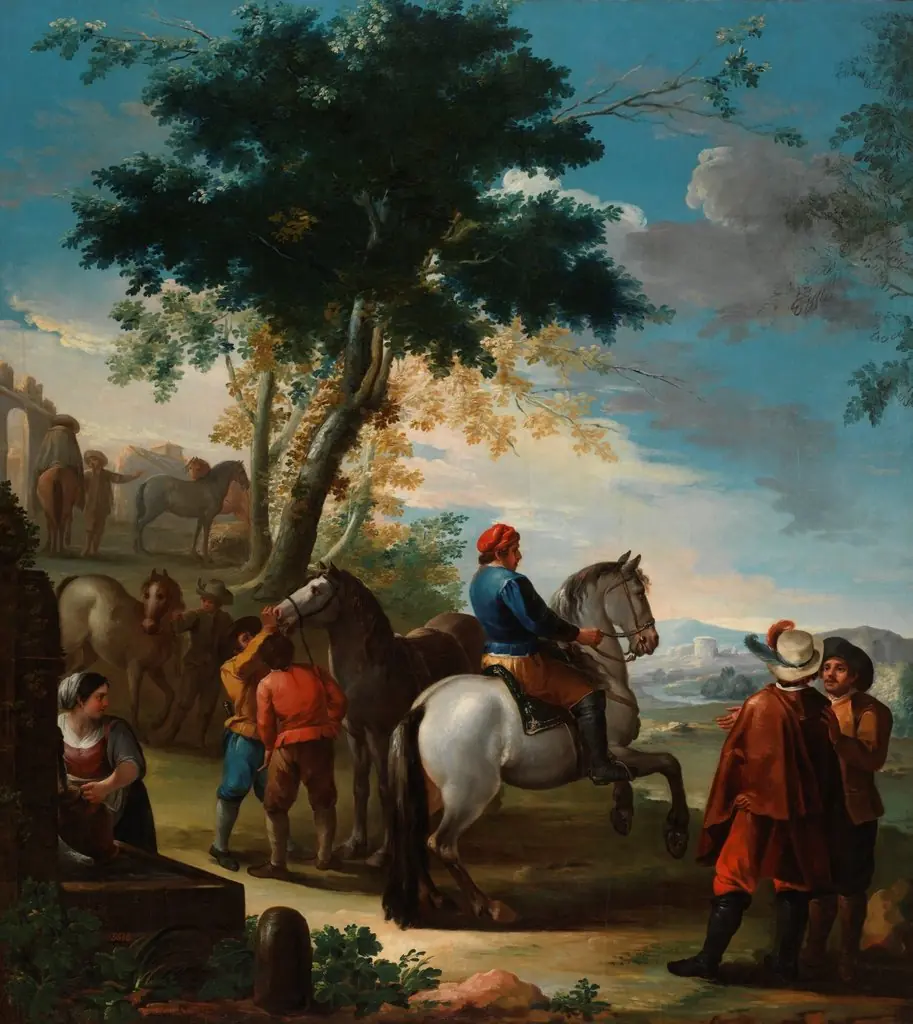 Un mercado de caballos
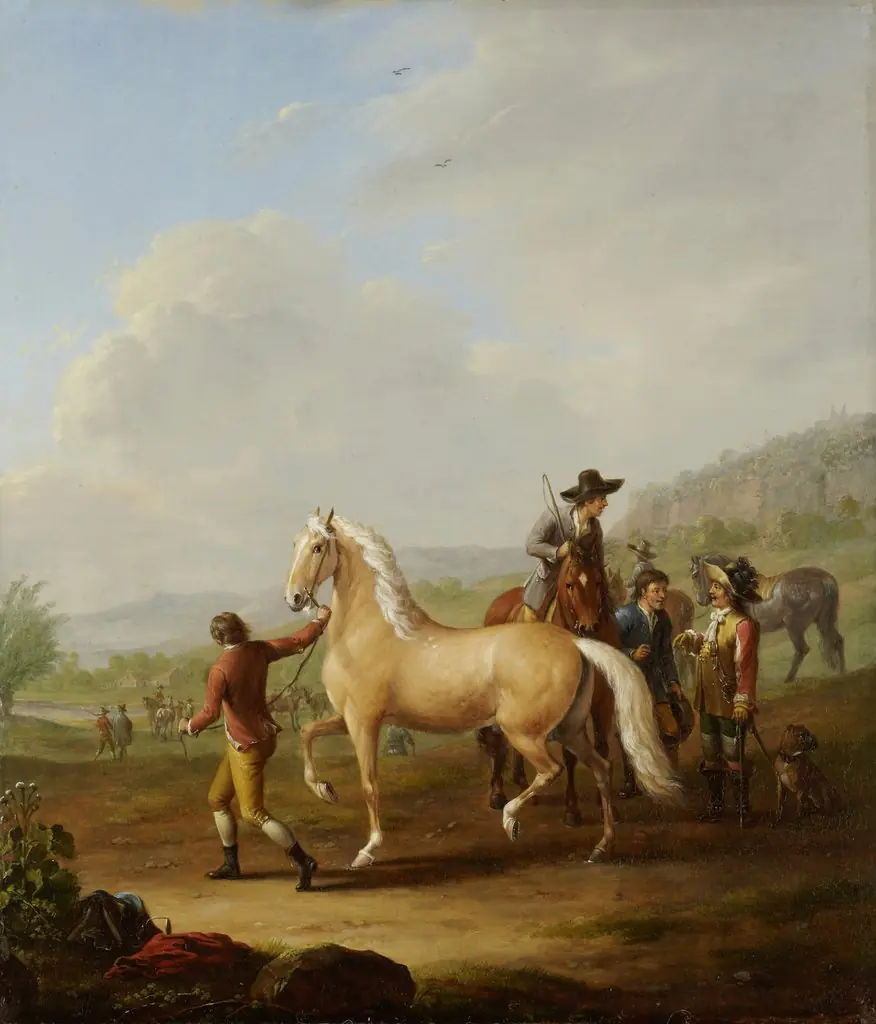 Horse Market
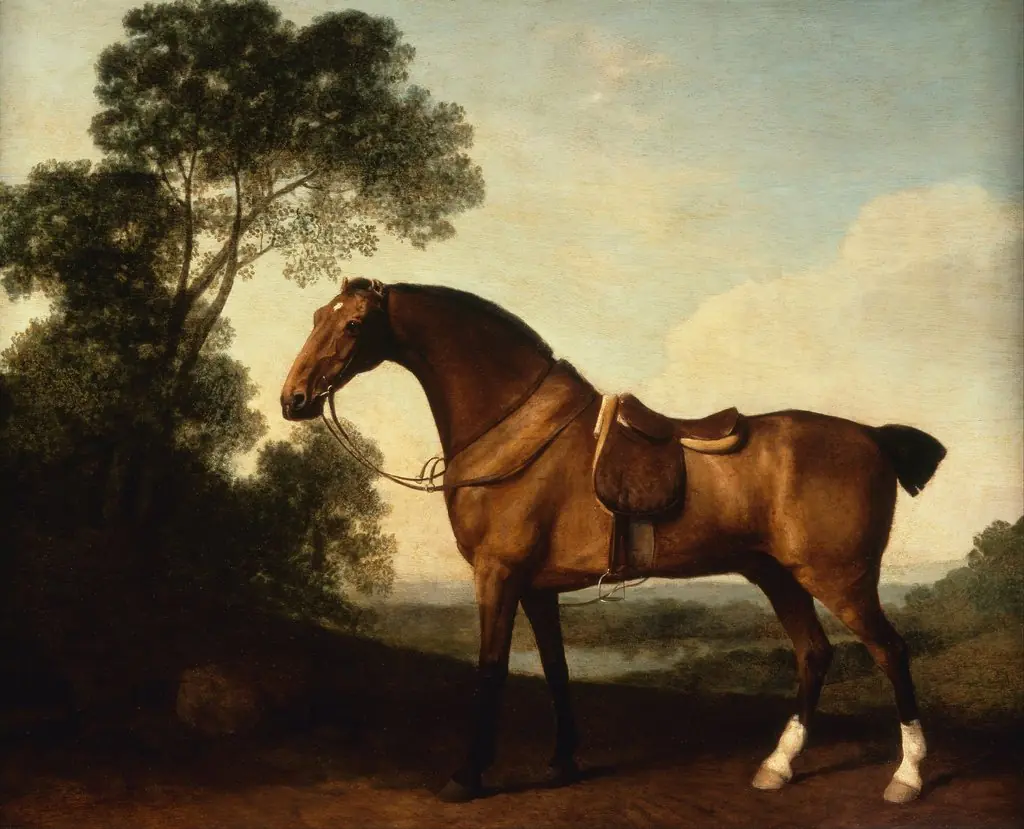 A Saddled Bay Hunter
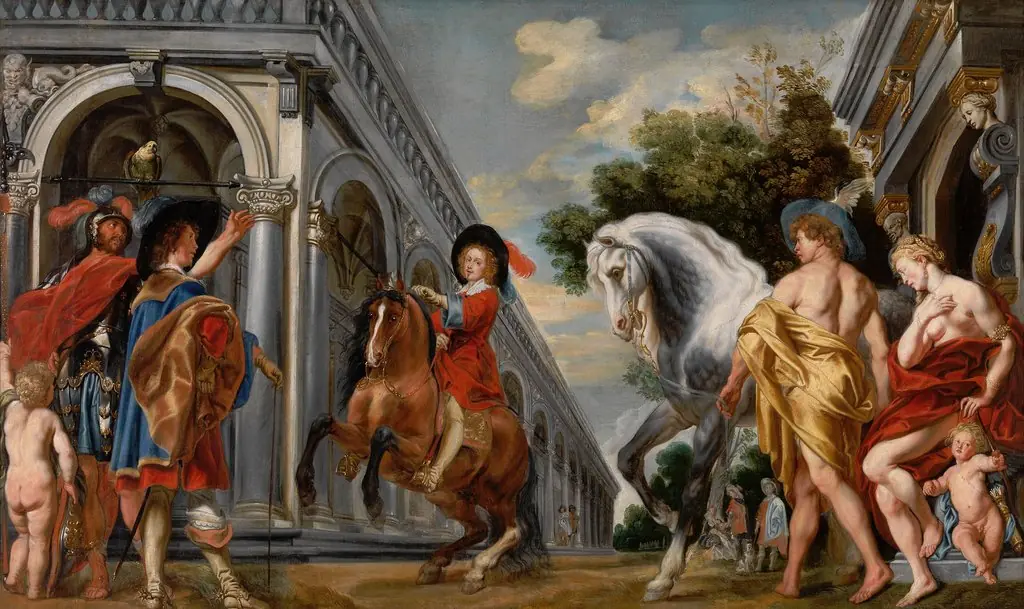 A levade executed under the watchful eye of Mercury, Venus and a riding master
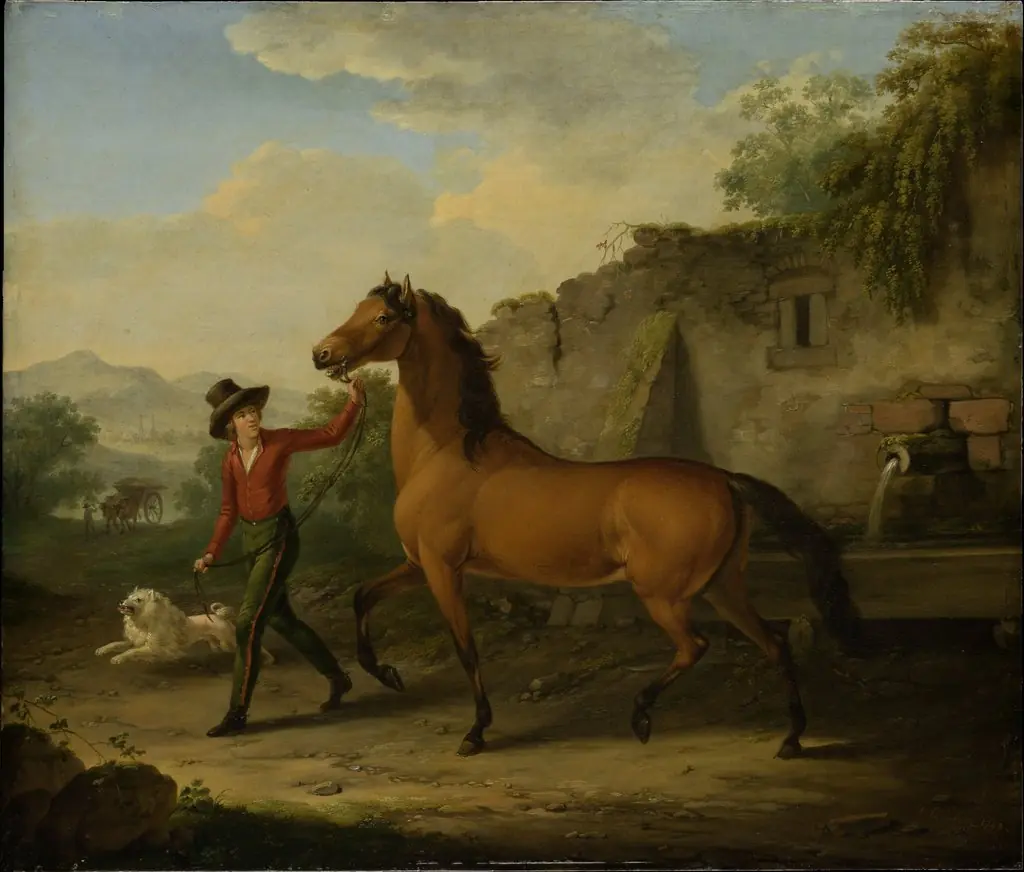 A Groom Leading a Stallion from the Drinking Trough