Artwork
Souvenirs de voyage (Travel Souvenirs)
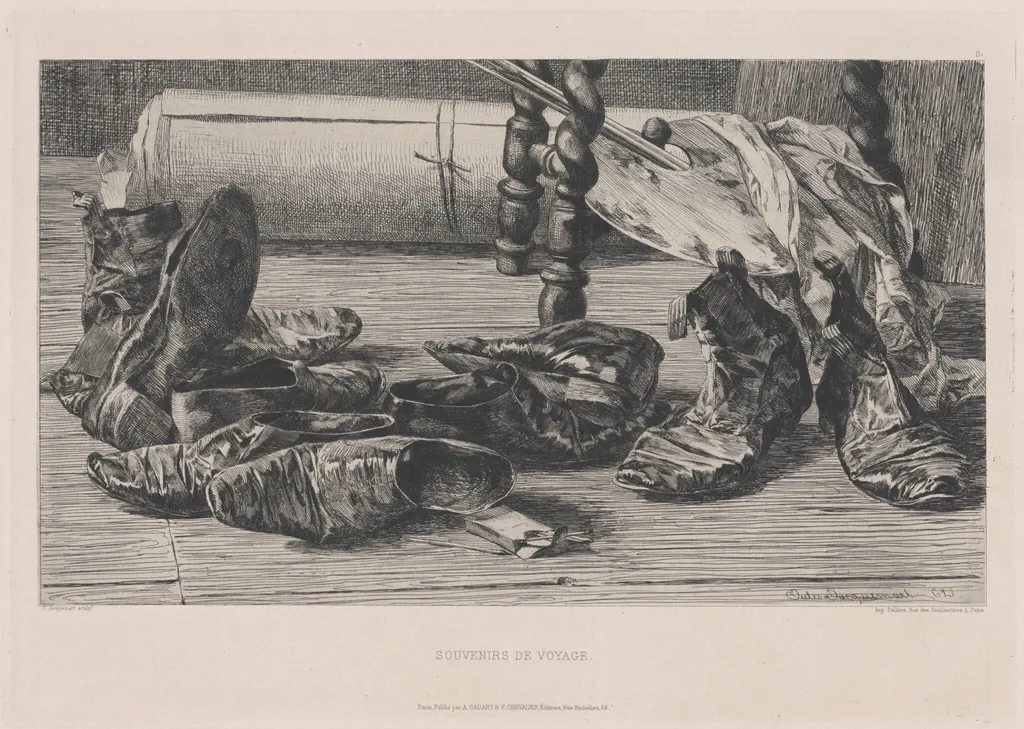
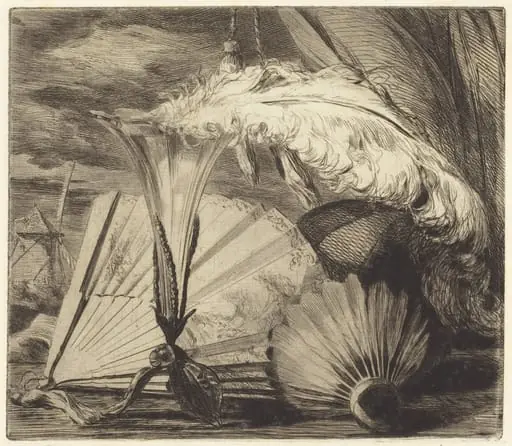
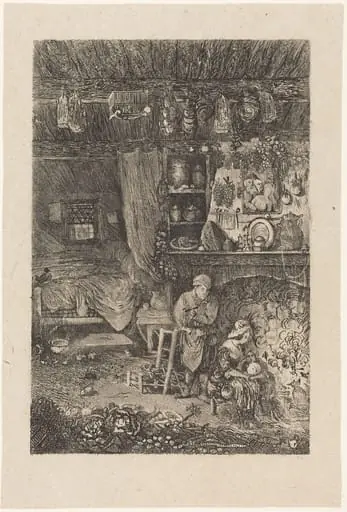
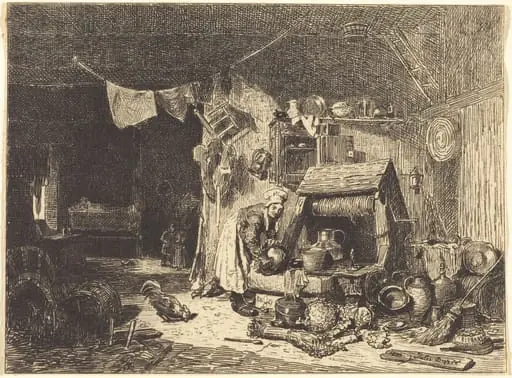
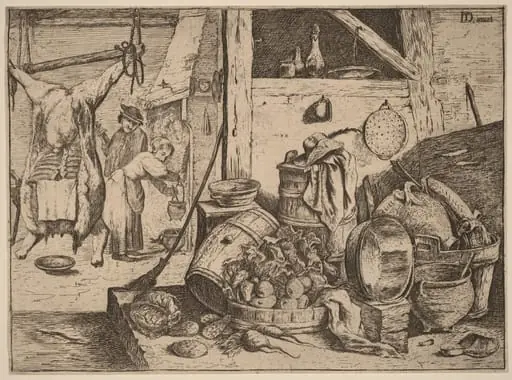
Souvenirs de voyage (Travel Souvenirs) is an ink print by the Impressionist artist Jules-Ferdinand Jacquemart. It dates from 1862 and is held in the collection of the National Gallery of Art. Jules‑Ferdinand Jacquemart’s 1862 etching Souvenirs de voyage depicts a modest still‑life of travel paraphernalia.
- Inscription
- Inscribed:upper right above image: 8.; lower right in image: Jules Jacquemart 62; in plate below image: J. Jacquemart sculpt. Imp. Delâtre, Rue des Feuillantines, 4 Paris / SOUVENIRS DE VOYAGE / Paris, Publié par A CADART & F. CHEVALIER, Éditeurs, Rue Richelieu, 66
- Markings
- Marked:blindstamp of Cadart & Chevalier
About this work
Overview
Jules‑Ferdinand Jacquemart’s 1862 etching Souvenirs de voyage depicts a modest still‑life of travel paraphernalia. Rendered on laid paper, the print presents a disordered collection of shoes, a hat, a cane, and a partially opened suitcase, arranged as if left on a floor after a journey.
Subject & Meaning
The assemblage of worn footwear, a tipped hat and a leaning cane suggests the remnants of a traveler’s passage, while the half‑opened suitcase hints at unfinished departure. The title underscores the notion that these objects function as tangible memories of a trip, inviting contemplation of movement and return.
Technique & Style
Jacquemart employed traditional intaglio methods, incising the design into a copper plate with a burin. The resulting lines are deliberately rough and scratchy, conveying the texture of aged leather and fabric. The tonal variation achieved through varied pressure and acid biting gives the scene a tactile, lived‑in quality.
Context
Created in the mid‑nineteenth century, the work reflects a period when printmaking was increasingly used to document everyday scenes. Etching allowed artists like Jacquemart to explore the visual language of travel, a theme resonant with the expanding mobility of the era.
Own this work as a print
Artist & collection