Artwork
Divers fleurs mises en boucquets: No. 1 - Hollyhocks and Narcissus
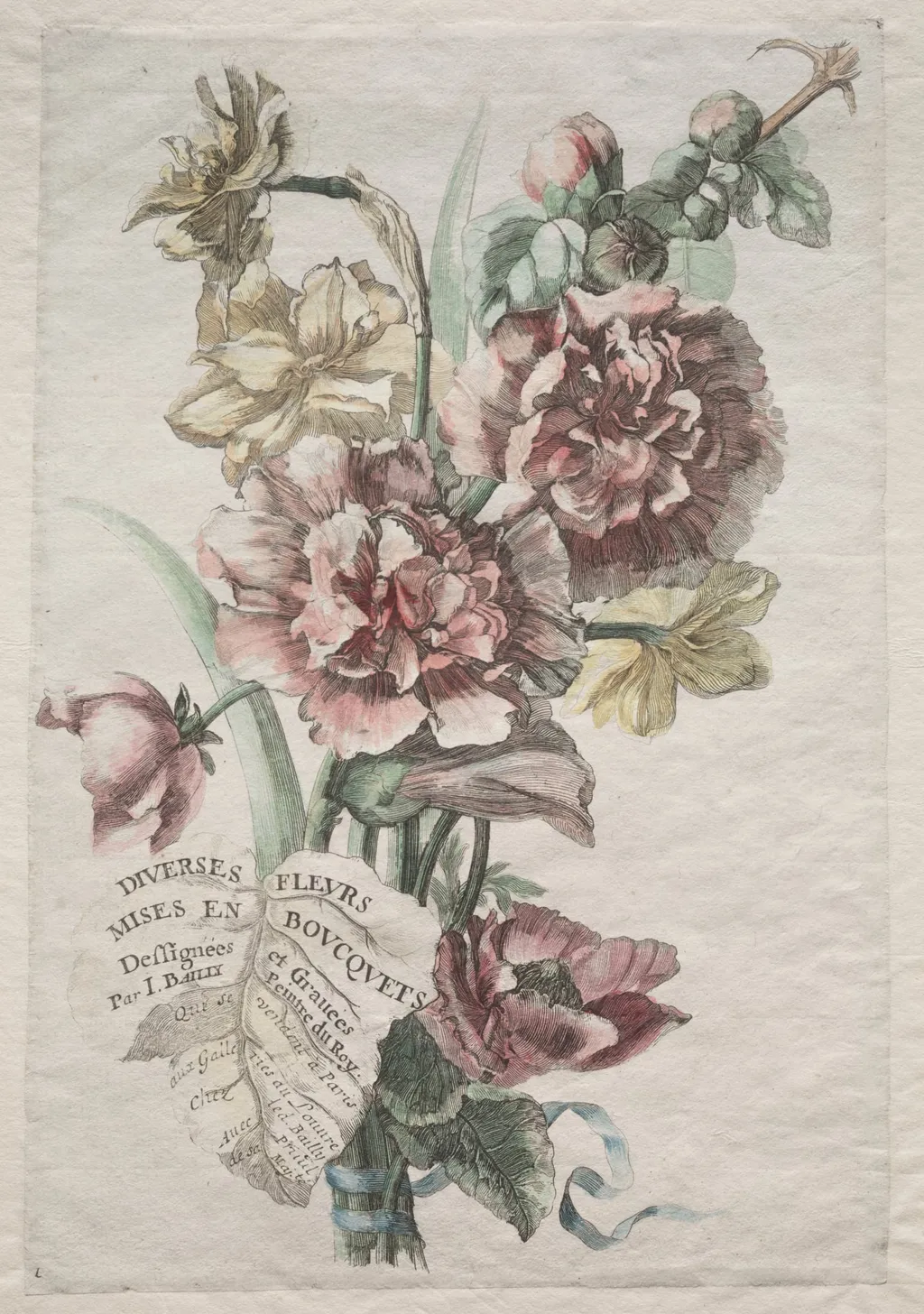
Divers fleurs mises en boucquets: No. 1 - Hollyhocks and Narcissus is a print by the Baroque artist Jacques I Bailly. It dates from 1670 and is held in the collection of the Cleveland Museum of Art. Divers fleurs mises en boucquets: No.
- Accession no.
- 1955.455
About this work
Overview
Created during the height of Bailly's career, the work exemplifies his specialization in botanical illustration and decorative floral art.
Divers fleurs mises en boucquets: No. 1 - Hollyhocks and Narcissus is a 1670 floral still life by the French artist Jacques I Bailly. The composition features a dense, vertical arrangement of blooms set against a neutral, dark background, a format typical of 17th-century Dutch and French flower painting. Central to the bouquet are three prominent hollyhocks: one white with pink edges, one deep red, and one pale yellow.
These are surrounded by smaller white narcissus and detailed foliage rendered with precise green and brown strokes. A blue ribbon binds the stems, adding a decorative element that unifies the disparate colors. Created during the height of Bailly's career, the work exemplifies his specialization in botanical illustration and decorative floral art.
The painting reflects the period's scientific interest in botany alongside the aesthetic appreciation of nature's variety. Bailly, known for his meticulous attention to detail, captures the textures of petals and leaves with a clarity that serves both artistic and documentary purposes. This piece stands as a representative example of his contribution to the genre of flower painting in late 17th-century France.
Subject & Meaning
The composition centers on three prominent blossoms, a white flower edged in pink, a deep‑red bloom, and a pale‑yellow flower, surrounded by hollyhocks and clusters of narcissus. The flowers are bound together with a blue ribbon, creating a study of natural variety and the transient beauty of garden specimens.
Technique & Style
Executed as a hand‑drawn print, the image displays fine line work that renders leaves with layered green and brown strokes. Soft shadows and overlapping petals convey a three‑dimensional sense, reflecting the artist’s attention to realistic texture within the decorative conventions of the late‑Baroque period.
History & Provenance
Created circa 1670, the print was likely produced for a market interested in botanical illustration and decorative prints. It entered the Cleveland Museum of Art’s holdings through acquisition, joining other works that document the era’s fascination with detailed natural subjects.
Own this work as a print
Artist & collection

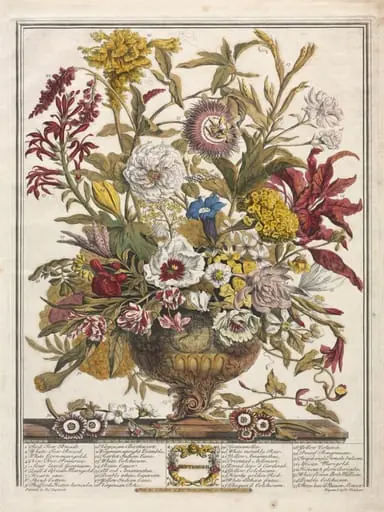 Twelve Months of Flowers: September
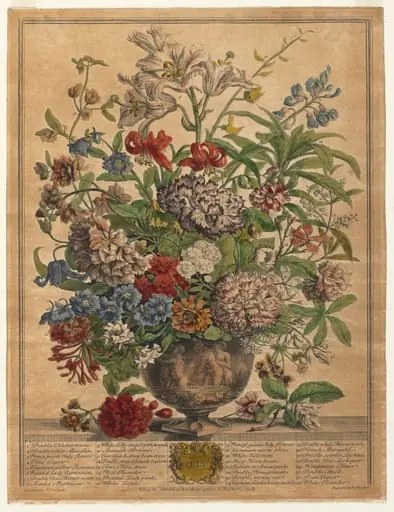 Twelve Months of Flowers: July
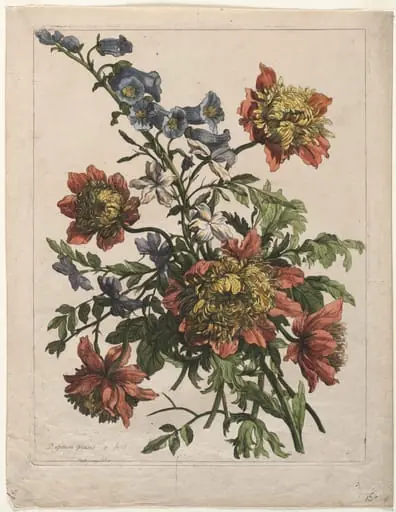 Bouquet
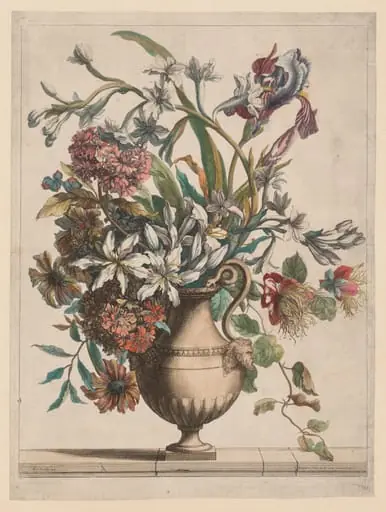 Liure de Toutes Sortes de fleurs d'après nature: Vase of Flowers
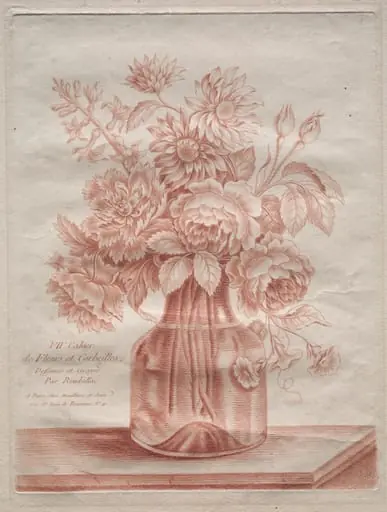 Bouquet in a Glass Bottle
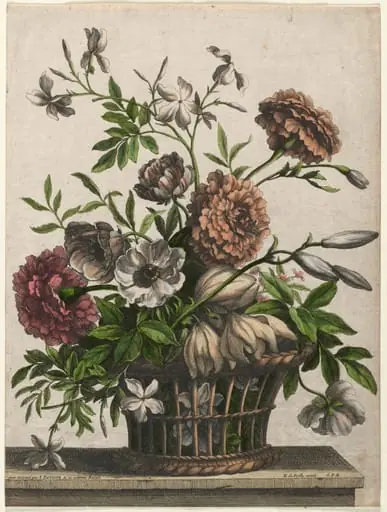 Marigolds, single Anemone, Jasmine...
 Untitled
 Studies of Roses and other Flowers
 Tulips
 Eight Beautiful Groups of Natural Flowers in Outlines by de la Cour: Tulips
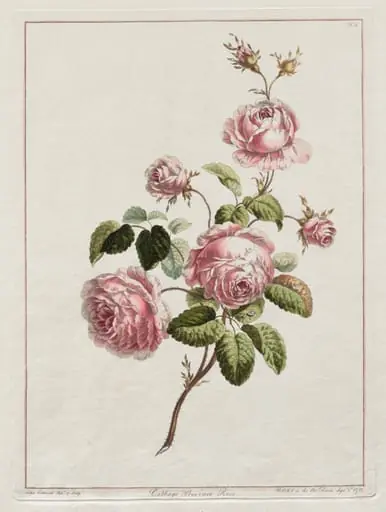 A Collection of Flowers Drawn after Nature - Cabbage Province Rose
- Hollyhocks