Artwork
Samuel Barber Clark
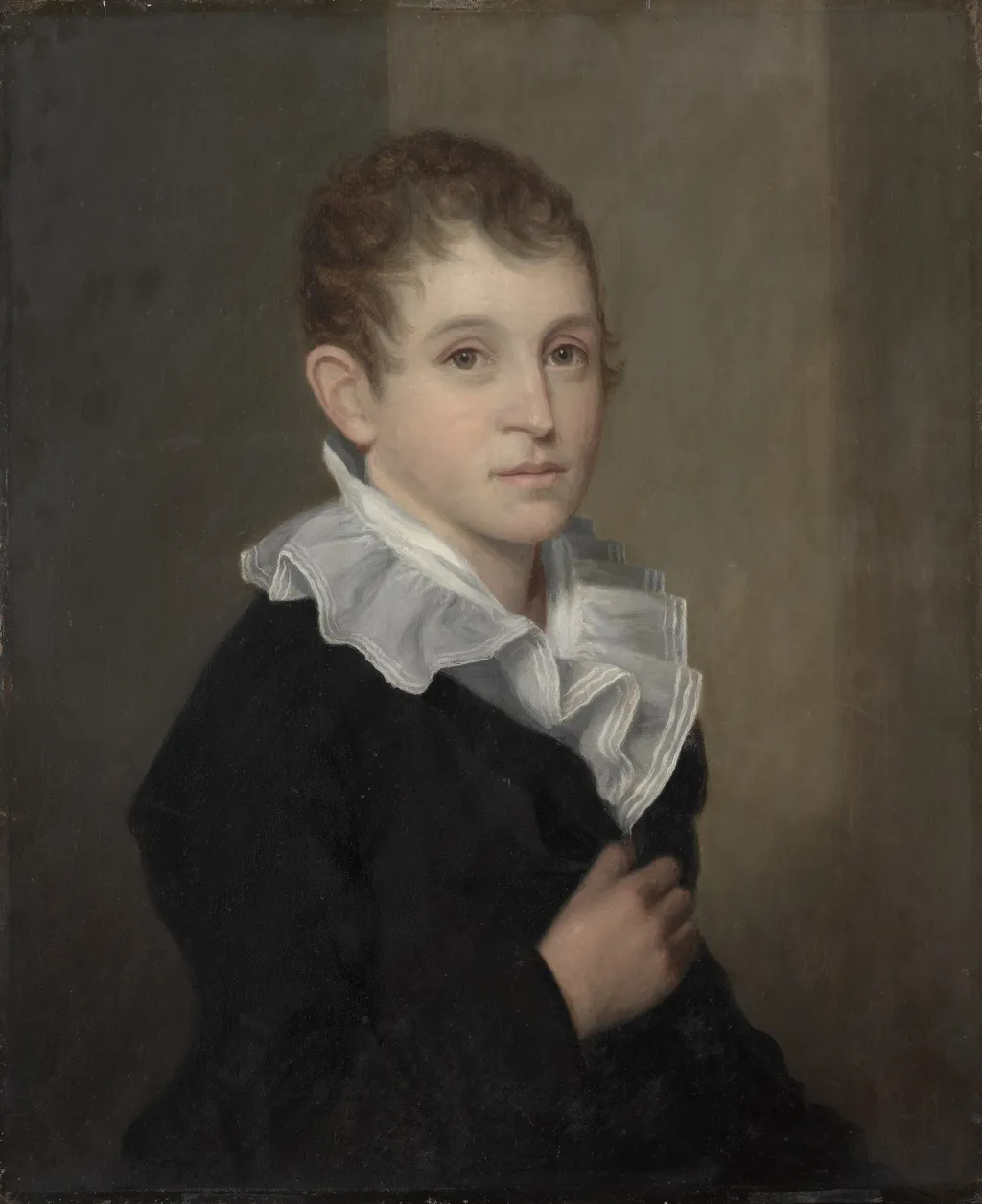
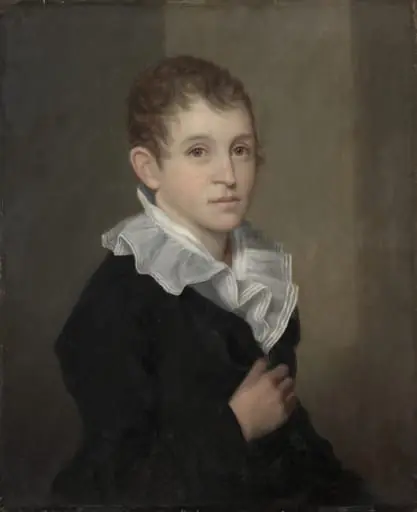
Samuel Barber Clark is an oil painting by the Realist artist James Frothingham. It dates from 1810 and is held in the collection of the Cleveland Museum of Art.
About this work
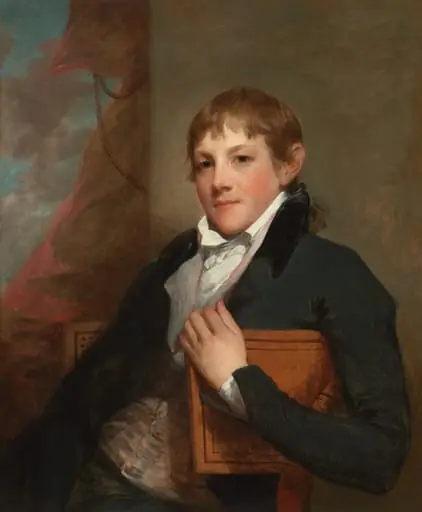
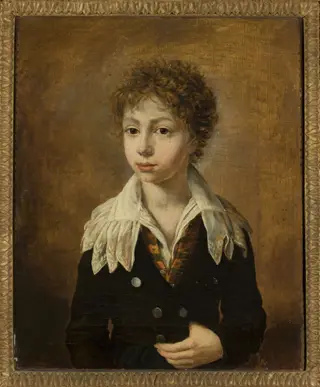
The painting depicts a young boy with short, curly brown hair, wearing a black jacket with a white ruffled collar.
The painting depicts a young boy with short, curly brown hair, wearing a black jacket with a white ruffled collar. His right hand is tucked into his jacket, and he gazes directly at the viewer with a neutral expression. The background of the painting is a muted brown color.
The boy's attire and hairstyle suggest that the painting was created during the early 19th century. The artist's use of oil paint and the painting's overall style are consistent with the period.
For more information on the artist behind this portrait, look up James Frothingham.
Technique & Style
The work is an oil painting executed on a wooden panel, measuring 63.9 cm in height by 52.5 cm in width. It was created in the United States in 1810 and is cataloged in the collection of the Cleveland Museum of Art. The painting exemplifies Federal‑era portraiture with a restrained palette and precise brushwork that emphasizes the sitter’s dignified presence.
History & Provenance
The portrait Samuel Barber Clark was painted in 1810 by James Frothingham. The work is an oil on panel and was acquired by the Cleveland Museum of Art, where it is currently held as accession 1919.1017. The museum records list its dimensions as 63.9 cm in height and 52.5 cm in width, and identify the subject as Samuel Barber Clark, an American figure from the early 19th century.
The portrait of Samuel Barber Clark, painted by James Frothingham in 1810, is held in the collection of the Cleveland Museum of Art in Cleveland, United States. The work is cataloged under the accession number 1919.1017. Executed in oil paint on a panel support, the painting measures 63.9 cm in height and 52.5 cm in width. The available records do not list specific exhibition history for this piece.
Legacy
Samuel Barber Clark's legacy is anchored by its inclusion in the Cleveland Museum of Art's collection, where it has been part of the museum's holdings since 1919. The work, painted by James Frothingham, is recognized as an early example of American portraiture and continues to be referenced in studies of early 19th-century New England art. Its presence in a major public collection has contributed to ongoing scholarly interest in Frothingham's role in shaping early American visual culture.
Overview
Created in 1810, this oil portrait presents a young boy named Samuel Barber Clark. Rendered in a realistic manner, the work is part of the collection at the Cleveland Museum of Art and exemplifies early‑19th‑century American portraiture.
Subject & Meaning
The sitter is depicted with short, curly brown hair, dressed in a black jacket featuring a white ruffled collar. His right hand rests within the jacket, and his steady gaze meets the viewer without overt expression, suggesting a straightforward, dignified representation typical of the era.
Context
Frothingham worked during a period when American artists were adopting European realist techniques to document local individuals. The clothing and hairstyle of the boy reflect contemporary fashions of the early 1800s, situating the work within its historical moment.
Own this work as a print
Artist & collection
Artist
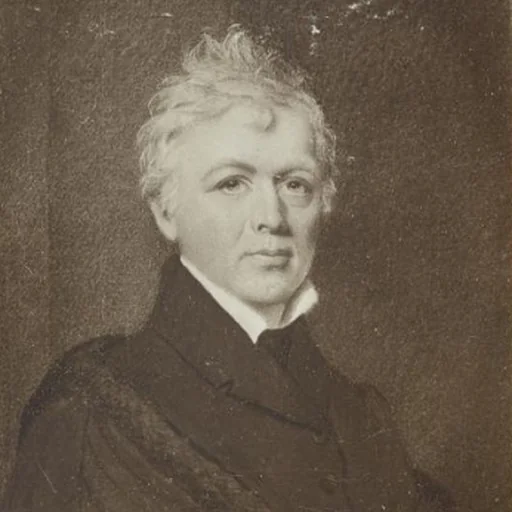
James Frothingham (1786–1864) was an American portrait painter in Massachusetts and New York. He was the father of the painter Sarah C. Frothingham.