Artwork
View of the Dam in Amsterdam
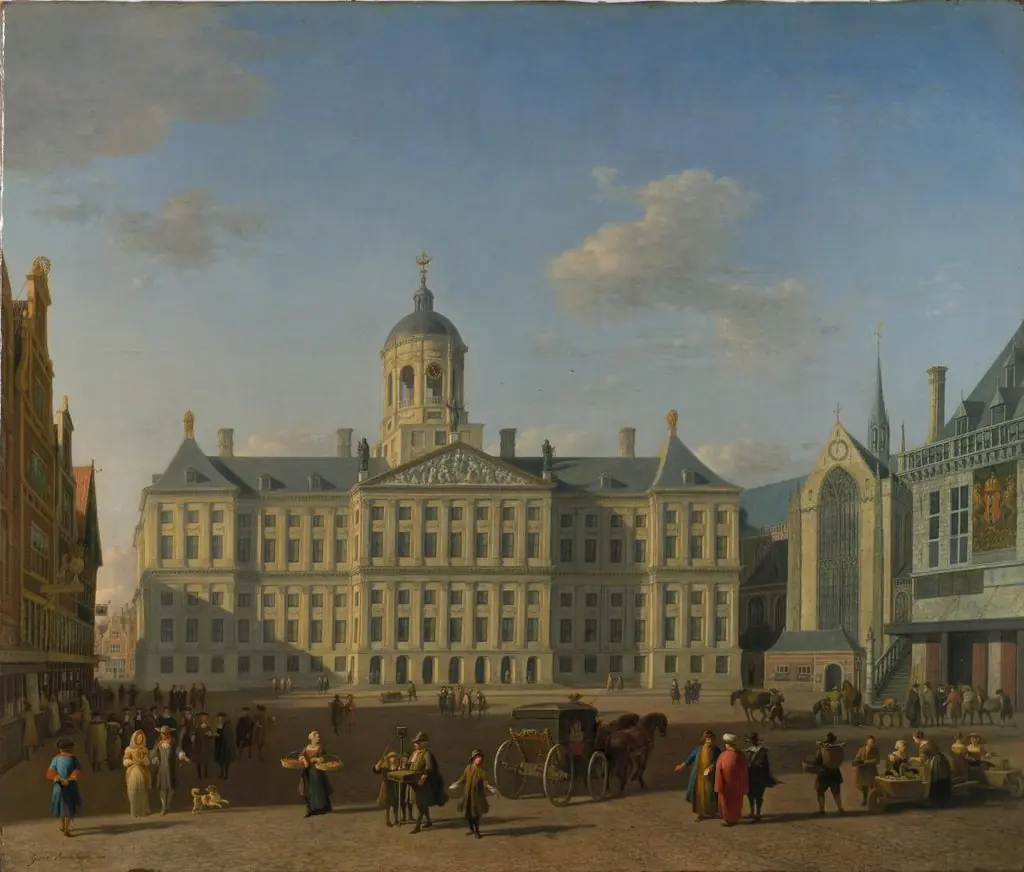
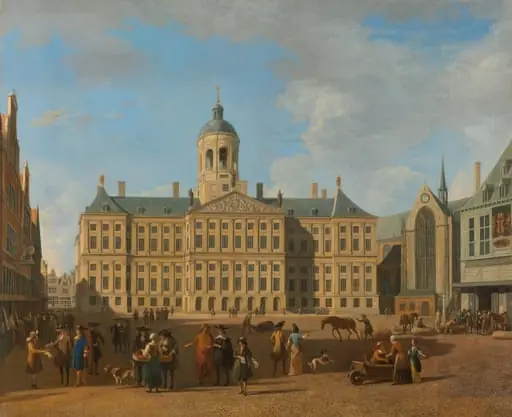
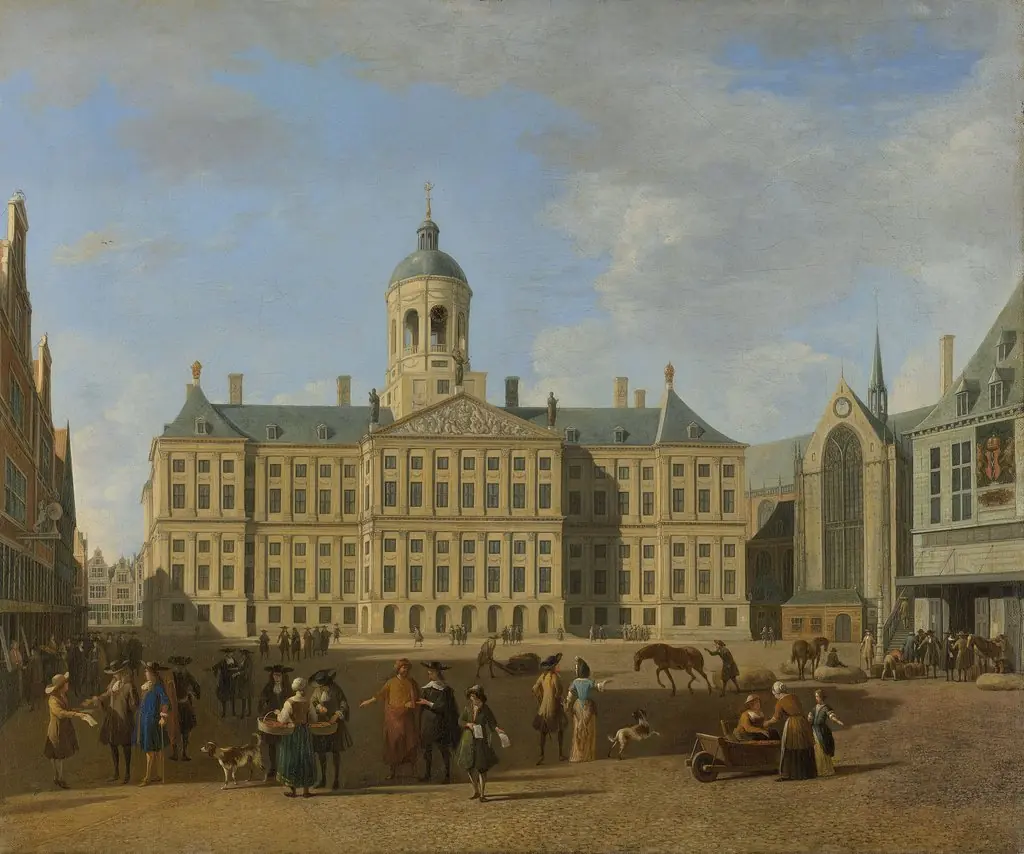
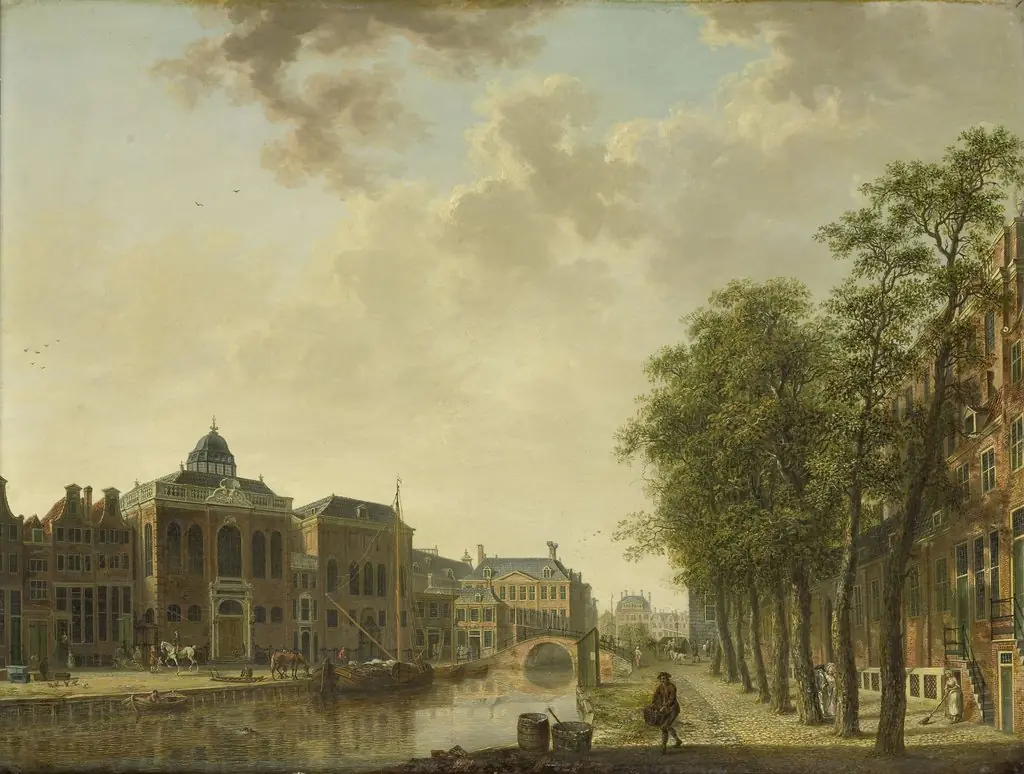
View of the Dam in Amsterdam is an oil painting by the Rococo painting artist Jan Ekels the Elder. It dates from 1750 and is held in the collection of the Rijksmuseum.
About this work
Subject & Meaning
The painting presents a cityscape view of Dam Square in Amsterdam, the historic central plaza that gave the city much of its civic and commercial identity.
The painting presents a cityscape view of Dam Square in Amsterdam, the historic central plaza that gave the city much of its civic and commercial identity. By focusing on this specific urban site, the work situates itself within the long Dutch tradition of topographically accurate city views that documented the appearance of the capital.
As a cityscape, the image functions as both a descriptive record and a celebration of Amsterdam's built environment, capturing the character of the Dam rather than illustrating a narrative or allegorical theme. The choice of subject reflects the eighteenth-century interest in preserving visual records of the city's landmarks and public spaces.
Technique & Style
The painting employs oil on panel, a common support for Dutch eighteenth-century cityscapes. Handling appears smooth and linear, with careful delineation of architectural features and a restrained palette dominated by muted greens and ochres that convey the overcast atmosphere of the scene. Formal qualities emphasize topographical clarity, arranging the Dam’s buildings and figures along a shallow, almost stage-like recession, while a low horizon and high vantage point organize the composition into a broad, panoramic view of the square.
The style aligns with the Dutch classical tradition, prioritizing architectural precision and measured recession over atmospheric effects or painterly brushwork.
History & Provenance
Jan Ekels the Elder created the oil painting View of the Dam in Amsterdam in 1750. Executed on a panel measuring 48 cm by 62.5 cm, the work depicts Dam Square in Amsterdam. Historical records indicate that the painting was owned by Jacobus Salomon Hendrik van de Poll. The artwork is currently held in the collection of the Rijksmuseum.
Overview
Jan Ekels the Elder, an Amsterdam‑born painter active in the mid‑18th century, rendered a detailed view of the city’s central Dam Square around 1750. Executed in oil on a modestly sized panel, the work captures the bustling yet orderly atmosphere of the square, framed by the imposing municipal building, the town hall dome, and the spired church that dominate the composition.
Context
Dam Square served as the political and commercial heart of Amsterdam, surrounded by the town hall (now the Royal Palace) and the Nieuwe Kerk. Ekels’ depiction aligns with a broader Dutch tradition of topographical painting that documented the city’s architecture and public spaces for both local patrons and foreign audiences.
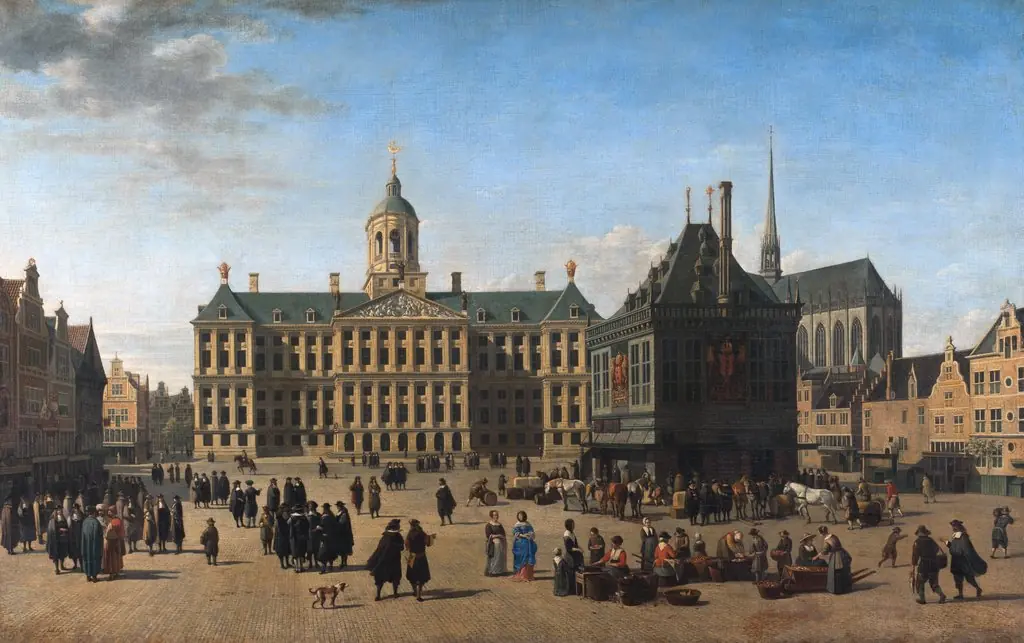
Own this work as a print
Artist & collection
Artist
Jan Ekels the Elder (1725–1780) was a Dutch painter of vedute. His pictures are generally of a small size, and are highly finished, with a good effect of light and shade. He was born near Oude Kerk, Amsterdam at…

- The Dam in Amsterdam
 The town hall on the Dam in Amsterdam
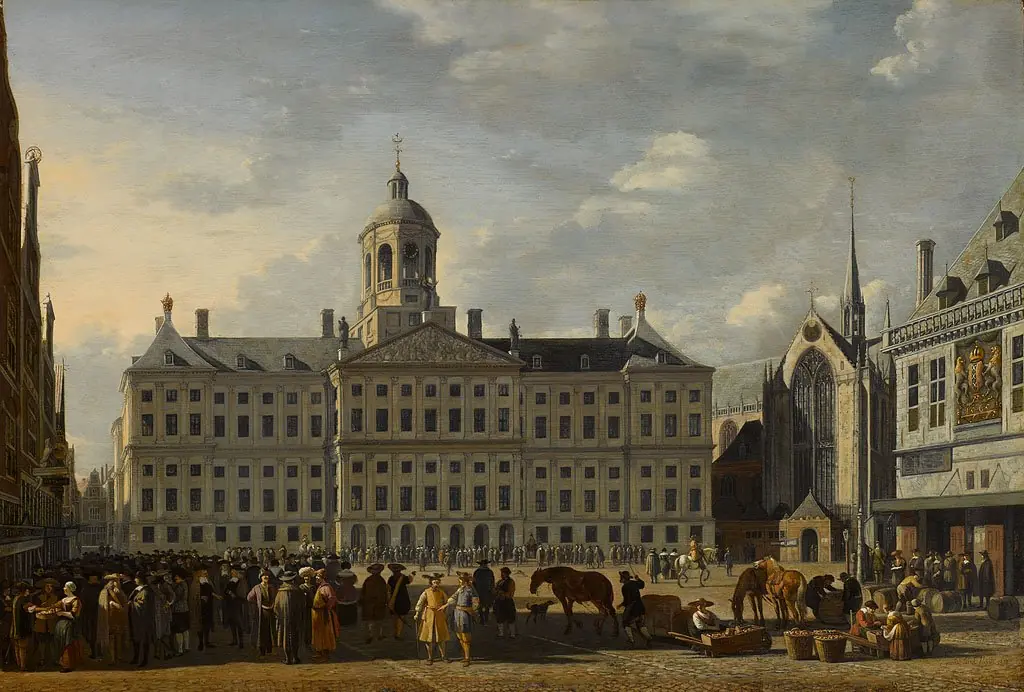 The Town Hall on the Dam in Amsterdam
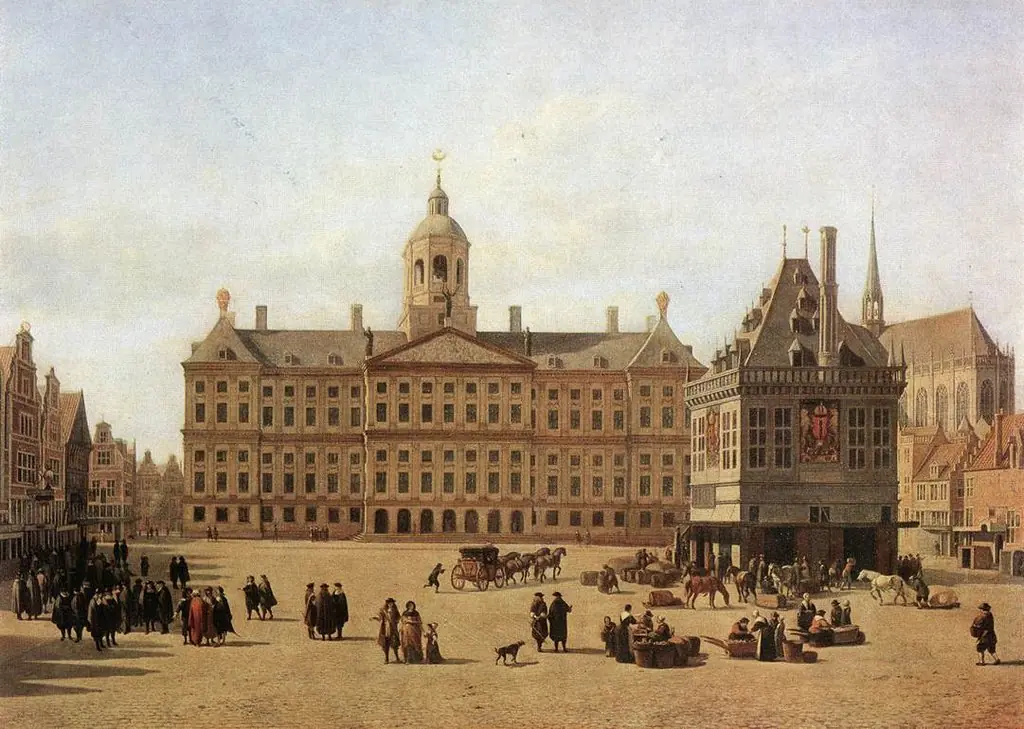 View of the Amsterdam Town Hall
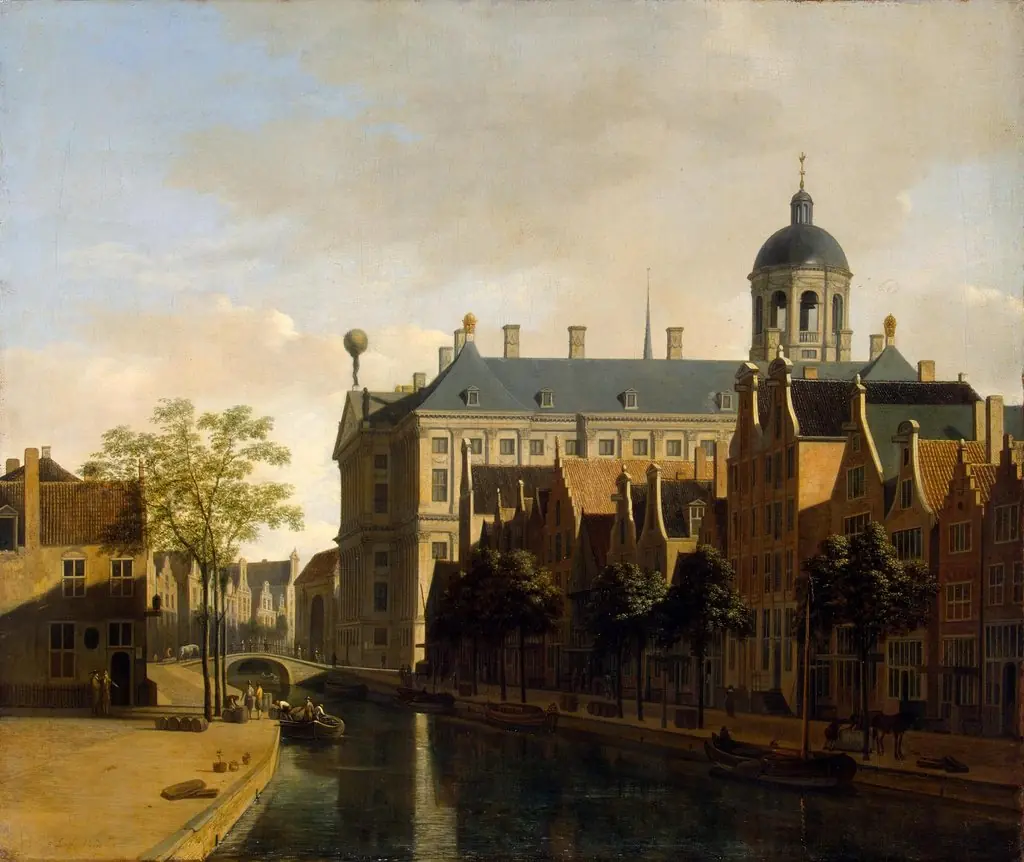 View of the Ratshuis in Amsterdam
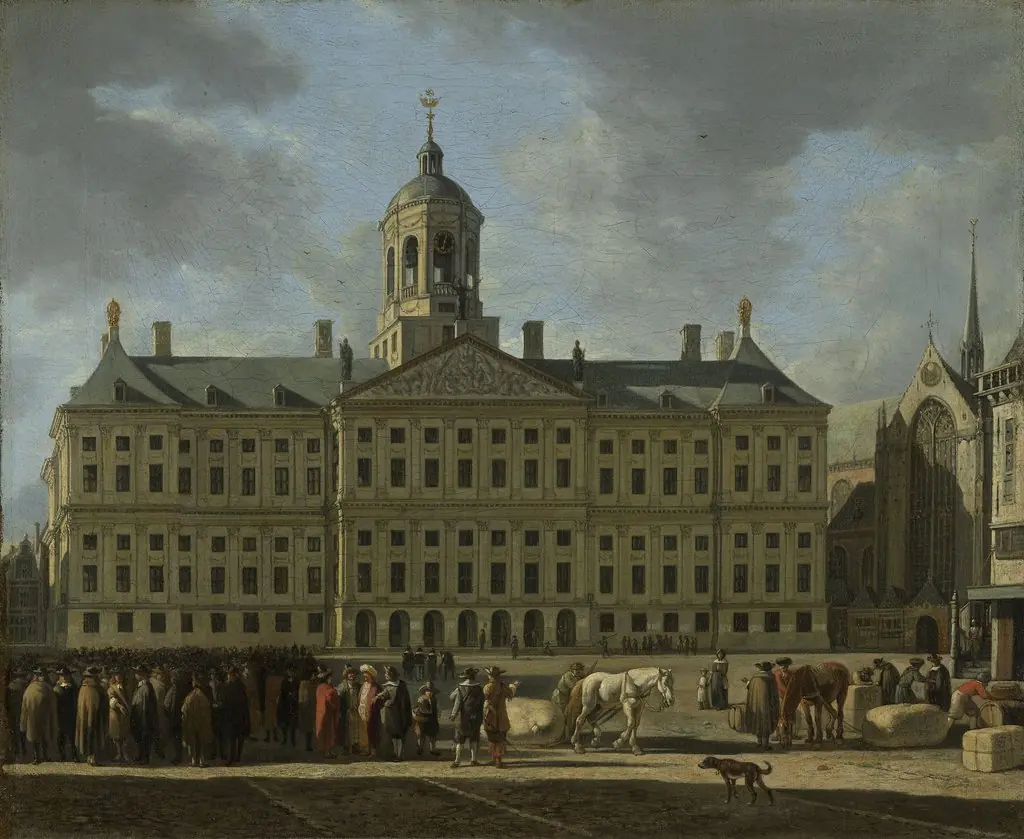 The town hall on Dam Square in Amsterdam
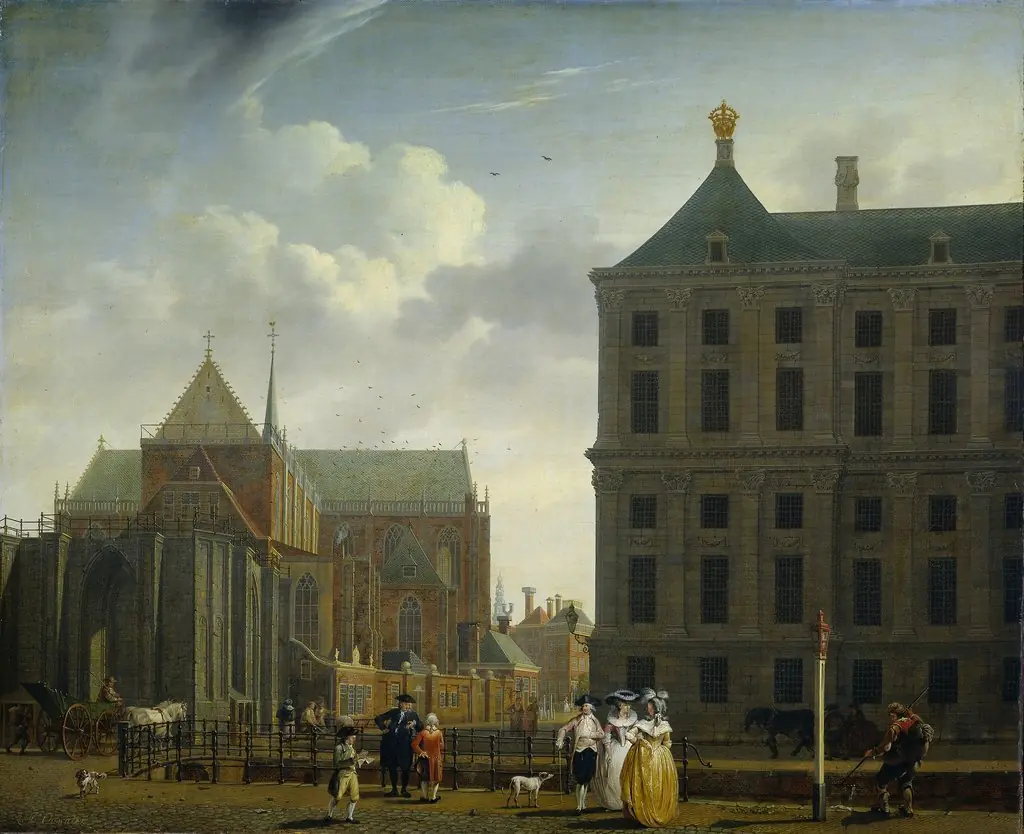 The Nieuwe Kerk and the Town Hall on the Dam in Amsterdam
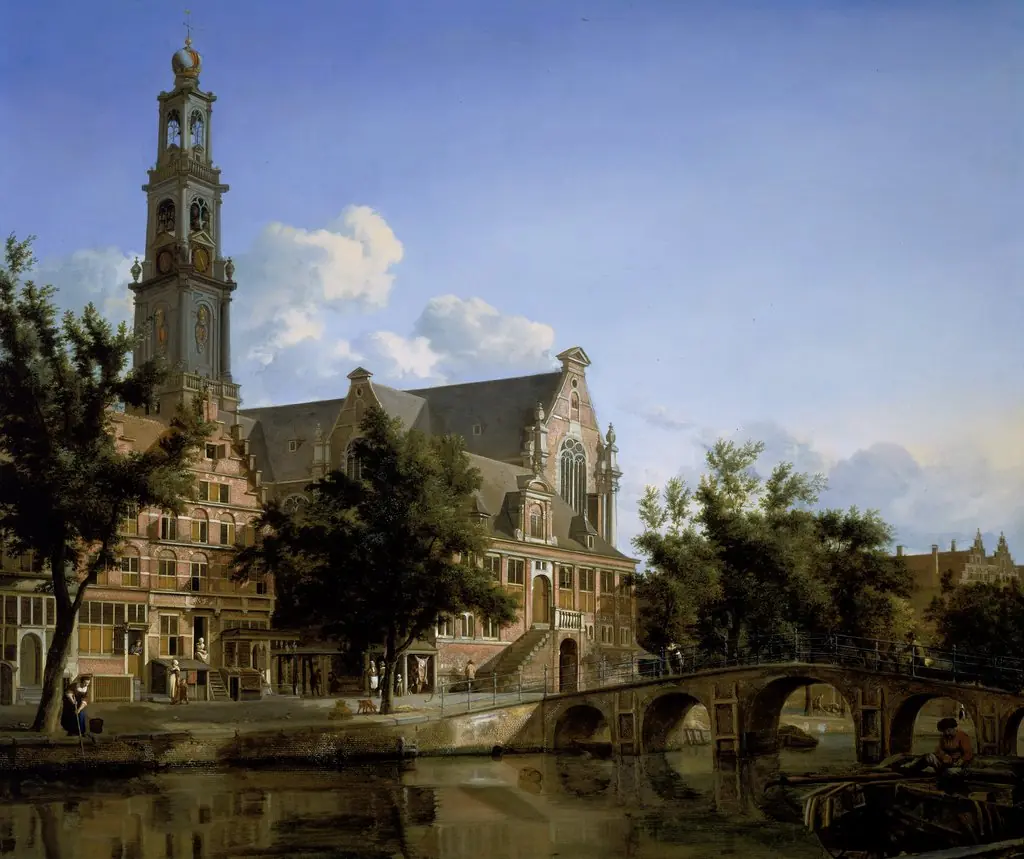 View of the Westerkerk, Amsterdam
 View of the Houtmarkt in Amsterdam