Artwork
Still Life with Fruit and Parrot
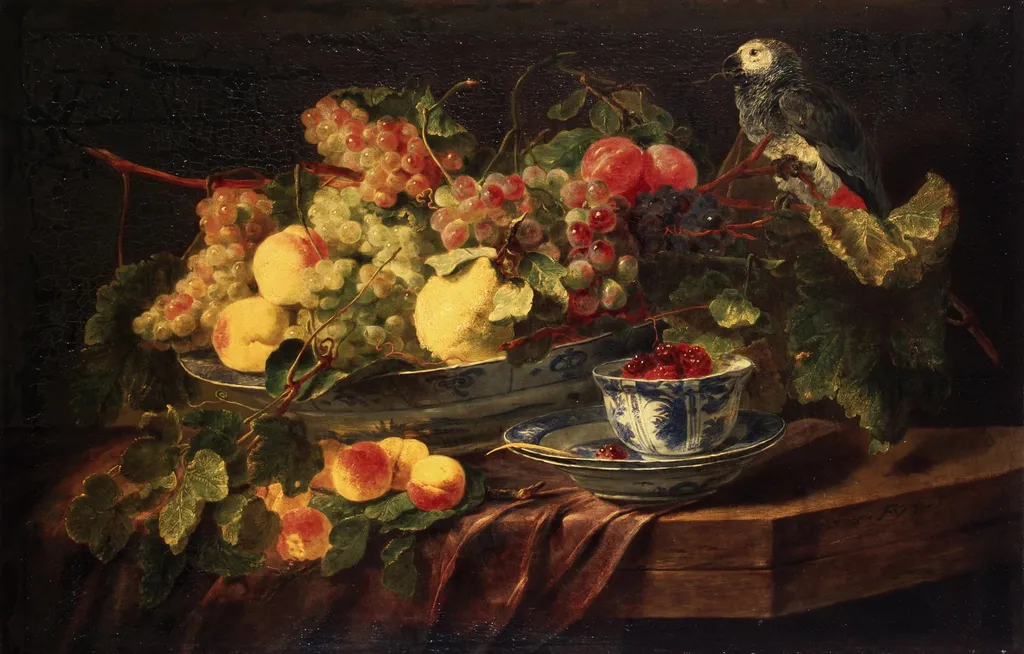
Still Life with Fruit and Parrot is an oil painting by the Flemish Baroque painting artist Jan Fyt. It dates from 1645 and is held in the collection of the Hermitage Museum.
About this work
Overview
Still Life with Fruit and Parrot is a 1645 oil on canvas painting by the Flemish Baroque artist Jan Fyt.
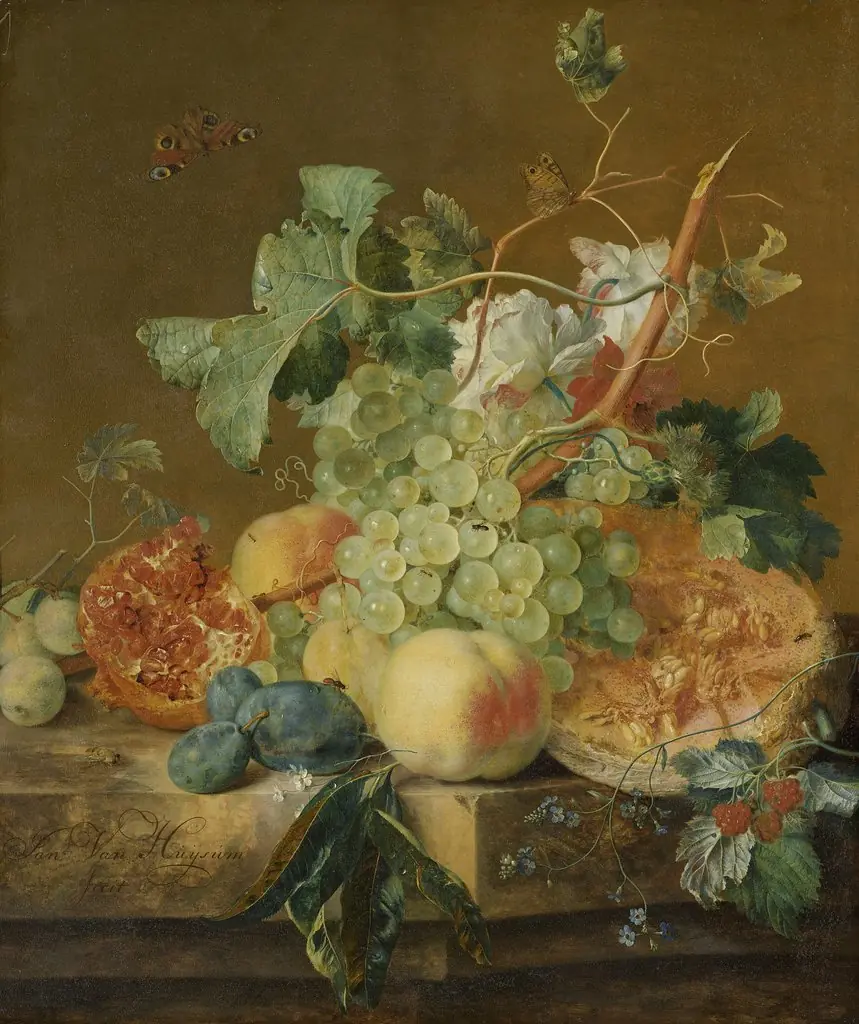
Still Life with Fruit and Parrot is a 1645 oil on canvas painting by the Flemish Baroque artist Jan Fyt. Measuring 58.3 by 90.7 centimeters, the work was created in Flanders and is presently held in the Hermitage Museum. The painting exemplifies Fyt's specialization in lavish still lifes combining flora and fauna, depicting an abundant arrangement of fruit alongside an exotic bird. It is a significant example of mid-seventeenth-century Antwerp still life painting, demonstrating the artist's skill in rendering varied textures and his interest in combining luxury items with natural subjects.
Subject & Meaning
The composition features a wooden table draped with a brown cloth, bearing a large blue-and-white porcelain bowl overflowing with grapes, peaches, and pears. A smaller matching teacup and saucer containing red currants sits in front, while additional peaches and grapevines spill across the table's edge. A gray parrot with white facial markings perches on a branch to the right, partially obscured by leaves. The exotic parrot, a common symbol of luxury in Flemish still lifes, introduces a living element into the arrangement of harvested fruit. The combination of the costly porcelain, the imported bird, and the ripe fruit serves as a display of material wealth and the abundance of nature, while the dark, undefined background focuses the viewer's attention entirely on the illuminated objects.
Technique & Style
Fyt executed the work in oil on canvas, employing a smooth and detailed brushwork that captures the distinct surfaces of the various elements. Light enters from the left, casting soft shadows and highlighting the glossy skins of the grapes and the velvety surfaces of the peaches. The palette contrasts deep greens and warm yellows and pinks with the cobalt blue of the porcelain and the dark, undefined background. This strong chiaroscuro creates a theatrical effect typical of the Baroque period. The painting currently shows visible craquelure across the dark background and painted surfaces. Fyt signed the work in the lower right corner.
History & Provenance
Created in Flanders in 1645, the painting was subsequently owned by Dmitry Tatishchev before entering the collection of the Hermitage Museum, where it remains today. The work reflects the broader market for Antwerp still lifes among international collectors during the seventeenth century. Fyt was highly prolific during this period, having returned to Antwerp by 1641 after travels through Paris and Italy, and his studio produced numerous works to meet the demands of a wealthy clientele.
Context
Jan Fyt was a leading Flemish still life and animal painter of the seventeenth century, having trained under Frans Snyders in Antwerp before traveling to Paris and Italy. By the time he painted this work in 1645, he had returned to Antwerp and established a successful studio. While Fyt is perhaps best known for innovating the hunting piece genre by displaying dead game in outdoor landscapes rather than as kitchen food, he also produced refined fruit and flower still lifes that catered primarily to aristocratic tastes. His style in these works is characterized by a dynamic, painterly manner and a striking palette likely influenced by his exposure to Italian art, distinguishing his work from the more rigid compositions of his teacher Snyders.
Own this work as a print
Artist & collection
Artist
Jan Fijt, Jan Fijt or Johannes Fijt (or Fyt) (19 August 1609 – 11 September 1661) was a Flemish Baroque painter, draughtsman and etcher.