Artwork
Still Life with Fruit
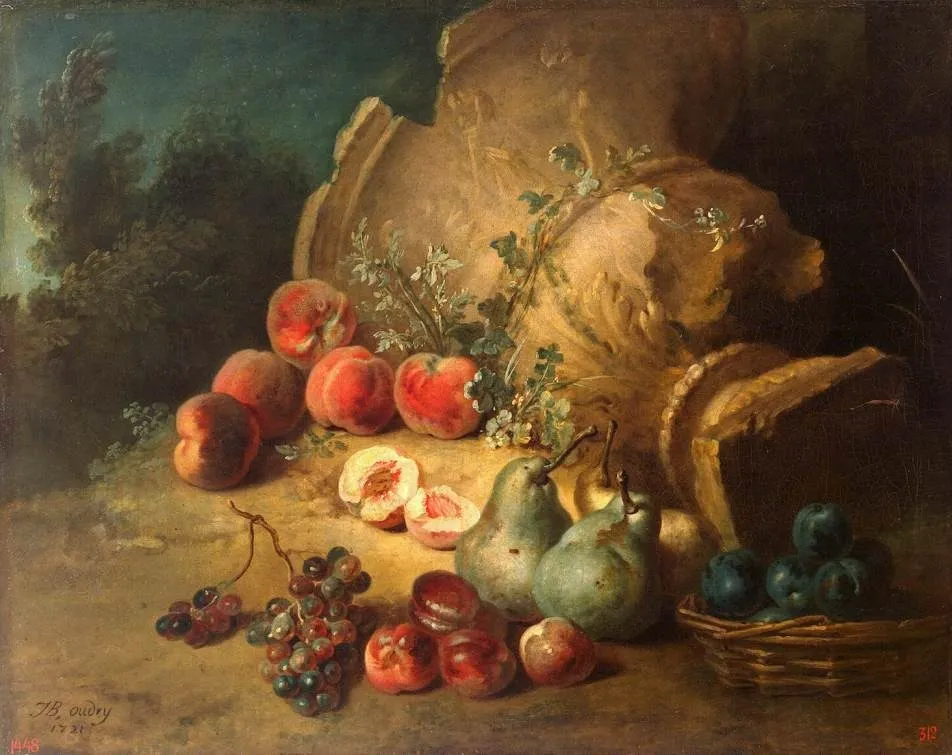
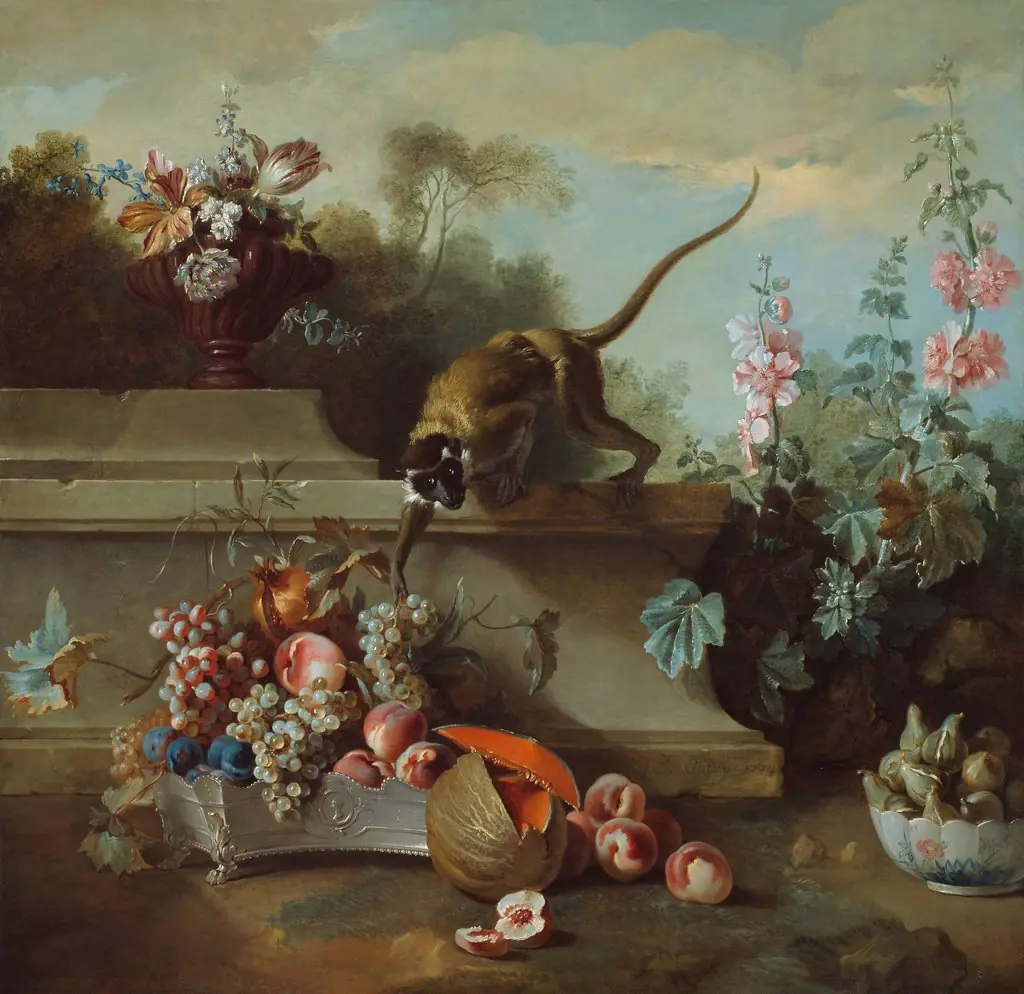
Still Life with Fruit is an oil painting by the Rococo painting artist Jean-Baptiste Oudry. It dates from 1721 and is held in the collection of the Hermitage Museum.
About this work
Overview
It is currently held in the collection of the Hermitage Museum in Saint Petersburg, where it is catalogued under inventory number GE-1121.
Still Life with Fruit is an oil on canvas painting by the French Rococo artist Jean-Baptiste Oudry, dated 1721. Measuring 74 by 92 centimeters, the work is signed and dated by the artist in the lower left corner. It is currently held in the collection of the Hermitage Museum in Saint Petersburg, where it is catalogued under inventory number GE-1121. The painting represents an important example of Oudry's early still life production, created during a pivotal period when the artist was transitioning from portraiture to the naturalistic depictions of animals, fruit, and game that would ultimately define his reputation. Its presence in one of the world's major museums attests to its significance within Oudry's oeuvre and within the broader history of eighteenth-century French painting.
Technique & Style
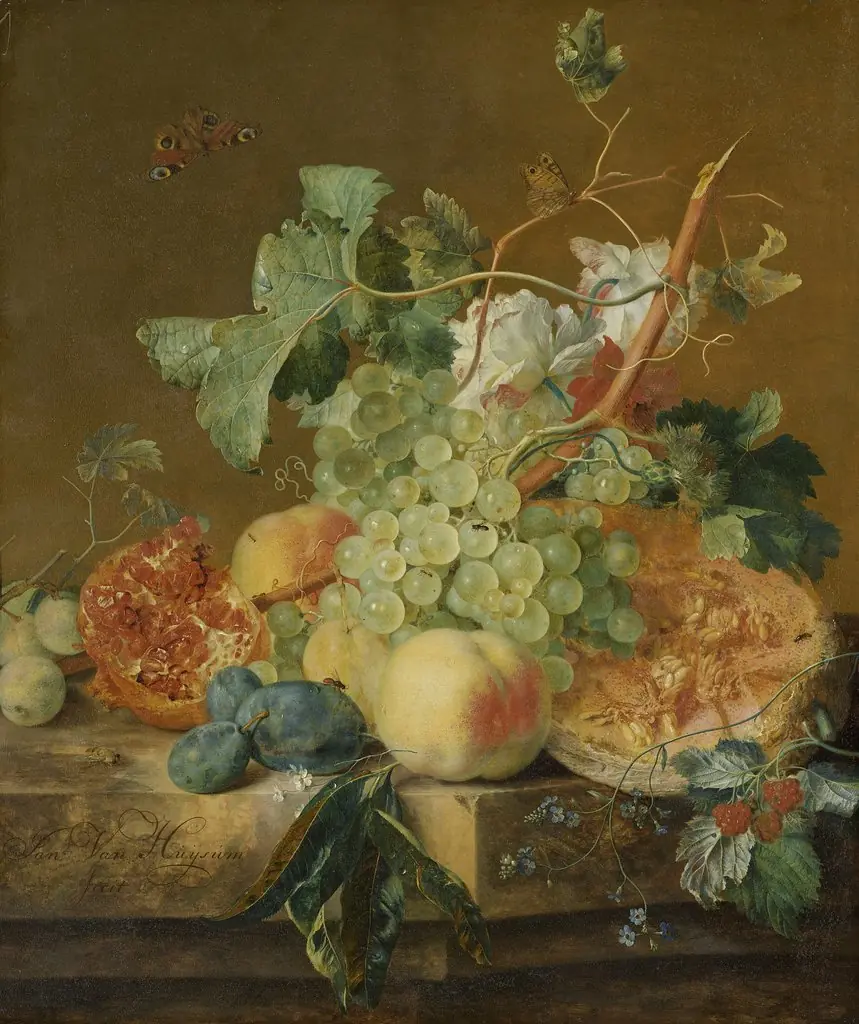
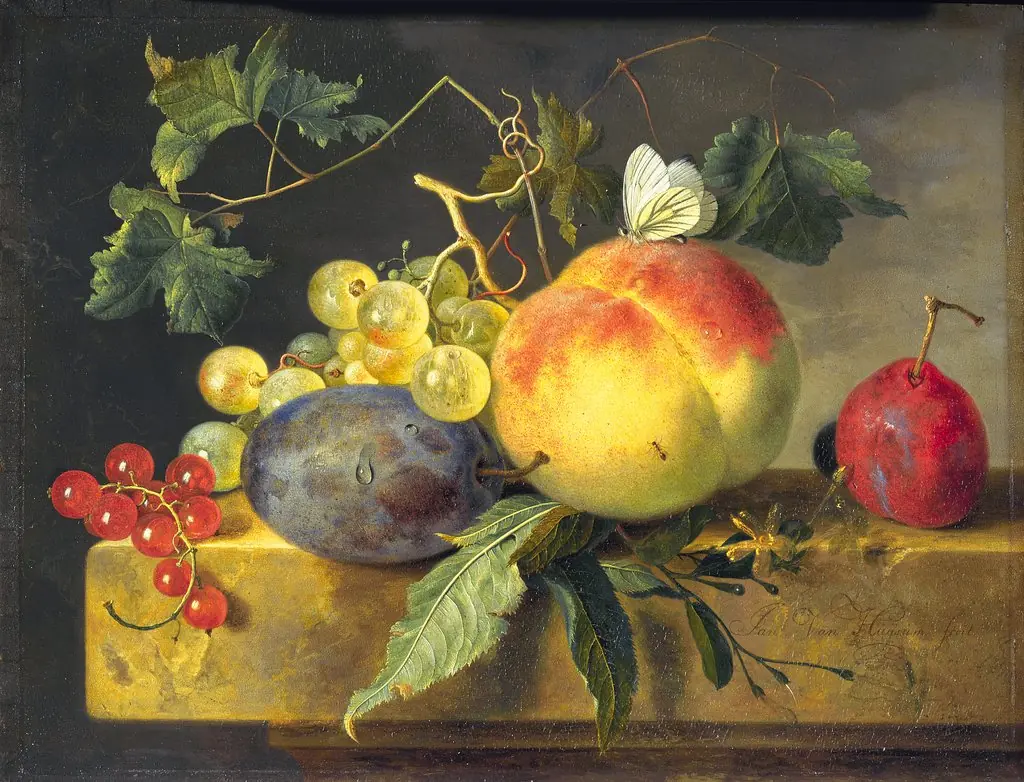
Oudry executed the work in oil on canvas, employing a smooth and blended brushwork technique that renders textures with particular precision. Light enters from the left, casting soft shadows that model the forms and create a sense of three-dimensional presence. The palette consists of warm ochres, russet reds, soft greens, and deep browns, harmoniously balanced against the blue-green of the sky. The artist paid careful attention to surface qualities, distinguishing the fuzzy texture of peaches from the glossy surfaces of grapes. The composition forms a stable diagonal from lower left to upper right, creating a dynamic yet balanced arrangement. This handling demonstrates Oudry's early mastery of naturalistic representation and his ability to merge striking realism with the ornamental grace that characterized the Rococo movement. The work's condition and the clarity of its signature and date suggest it has been well preserved, allowing modern viewers to appreciate the technical refinement that distinguished Oudry from many of his contemporaries.
History & Provenance
The painting is signed and dated in the lower left: "J. B. Oudray 1721." Its provenance includes ownership in the former collection of the English Palace at Peterhof, the imperial residence complex near Saint Petersburg. The work was later transferred to the Hermitage Museum, where it remains today with the inventory number GE-1121 and a past identification number of A5554. The painting's journey from the English Palace at Peterhof to the Hermitage reflects the broader pattern of imperial Russian collecting of French art during the eighteenth and nineteenth centuries. No specific commission history or exhibition record prior to its museum acquisition has been documented in the available sources. The work has been subject to image documentation and web publication by the museum, with reference images edited for online display.
Context
Jean-Baptiste Oudry was born in Paris in 1686, the son of painter and art dealer Jacques Oudry. He trained at the Académie de Saint-Luc, where his father served as director, and became a pupil of Nicolas de Largillière from 1707 to 1712. He graduated in 1708 and was inducted into the Académie royale de peinture et de sculpture in 1719. The creation of Still Life with Fruit in 1721 falls precisely in the period when Oudry was shifting his focus from portraiture to still life and animal subjects. This transition proved decisive for his career. In the following decade, he received the commission for The Pastoral Amusements tapestry series from the Royal Beauvais Tapestry Manufactory, and by 1730 he had produced the royal hunting portrait of Louis XV that secured his appointment as Painter-in-Ordinary of the Royal Hunt. The still life thus represents a foundational moment in Oudry's development, demonstrating the naturalistic technique that would serve him in his later, more famous animal and hunt paintings. Critical reception of his work has consistently emphasized this naturalism, distinguishing him from contemporaries who favored more stylized or decorative approaches. Scholarship on Oudry has focused on his role in elevating animal painting and tapestry design to prestigious artistic categories within the French academic system.
Legacy
Still Life with Fruit occupies a significant place in Oudry's legacy as an early testament to the naturalistic approach that would define his most celebrated works. While he achieved his greatest fame through animal paintings, hunt scenes, and tapestry designs, this painting demonstrates that his commitment to lifelike representation was already fully formed in 1721. The work's preservation in the Hermitage Museum ensures its accessibility to scholars and the public, contributing to ongoing understanding of Oudry's artistic development. His broader legacy encompasses not only paintings but also his influential role as inspector at the Gobelins manufactory from 1736 and his designs for the Chasses Royales series. Oudry's impact on eighteenth-century French art extended through his teaching positions and his large studio of assistants. The continued reproduction and study of works like Still Life with Fruit attest to his enduring importance as a bridge between the still life traditions of the Dutch Golden Age and the decorative programs of French Rococo patronage. His works remain in major museum collections across Europe, with the Hermitage holding a particularly significant concentration of his early production.
Artist & collection

Artist
Jean-Baptiste Oudry was a French Rococo painter, engraver, and tapestry designer. He is particularly well known for his naturalistic pictures of animals and his hunt pieces depicting game. His son, Jacques-Charles Oudry, was also a painter.