Artwork
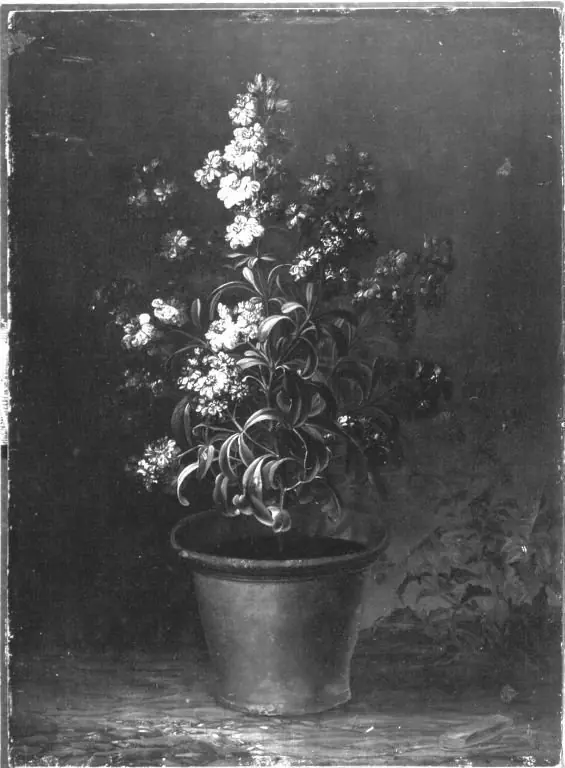
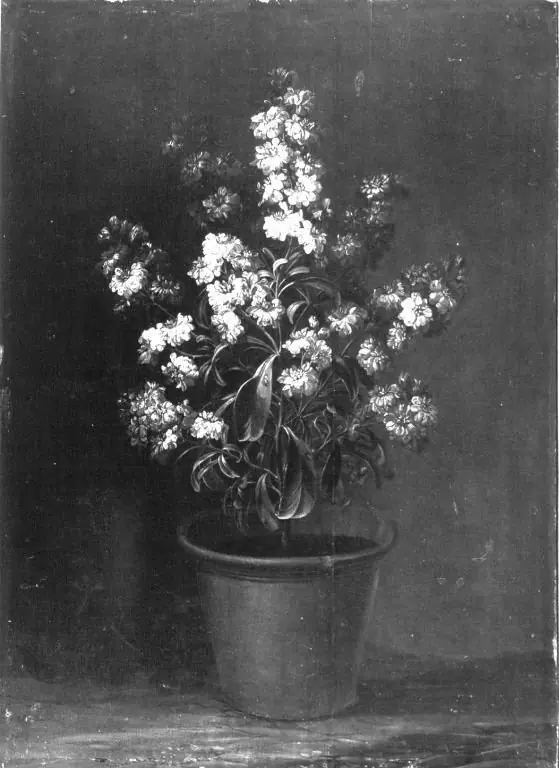
Blumenstück
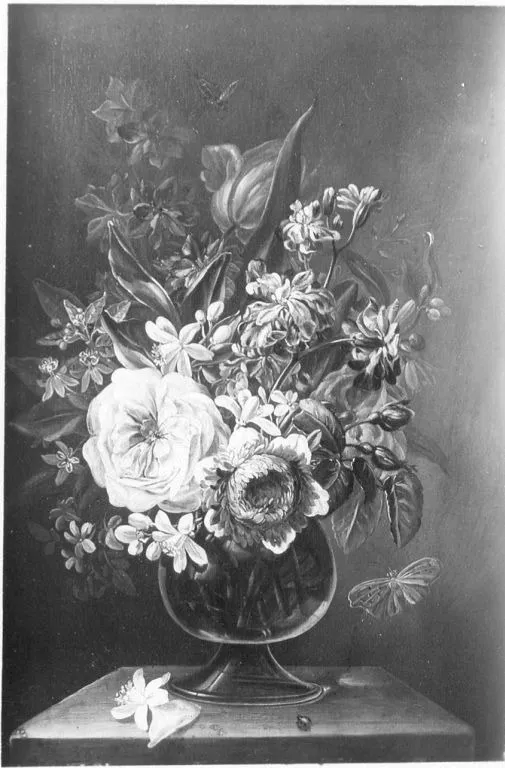
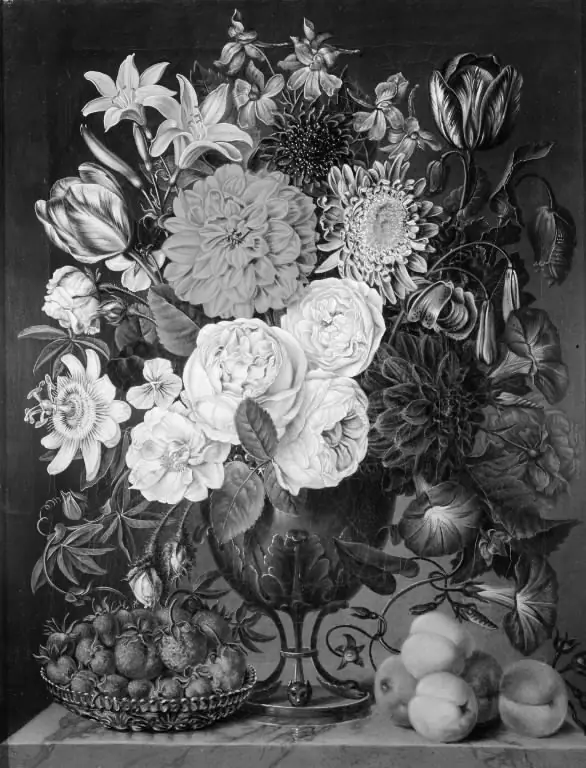
Blumenstück is an unspecified painting by the Rococo painting artist Jan Kašpar Hirschely. It dates from 1719 and is held in the collection of the Bavarian State Painting Collections.
About this work
Subject & Meaning
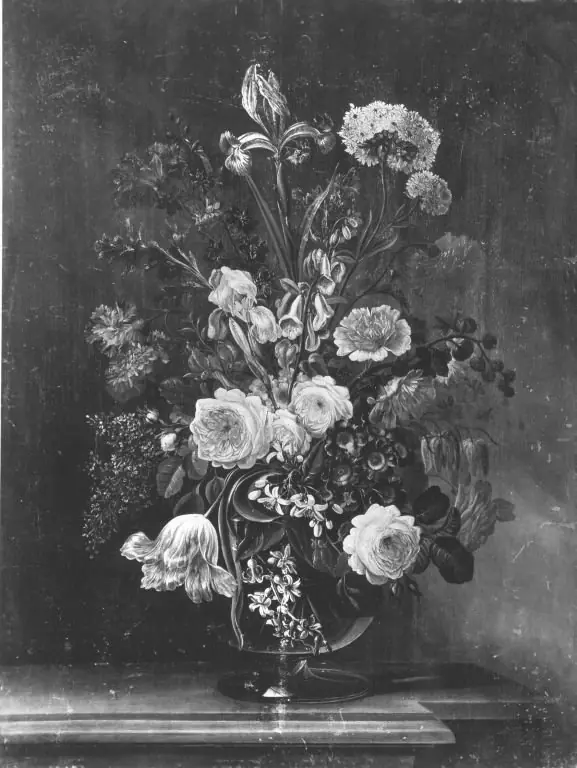
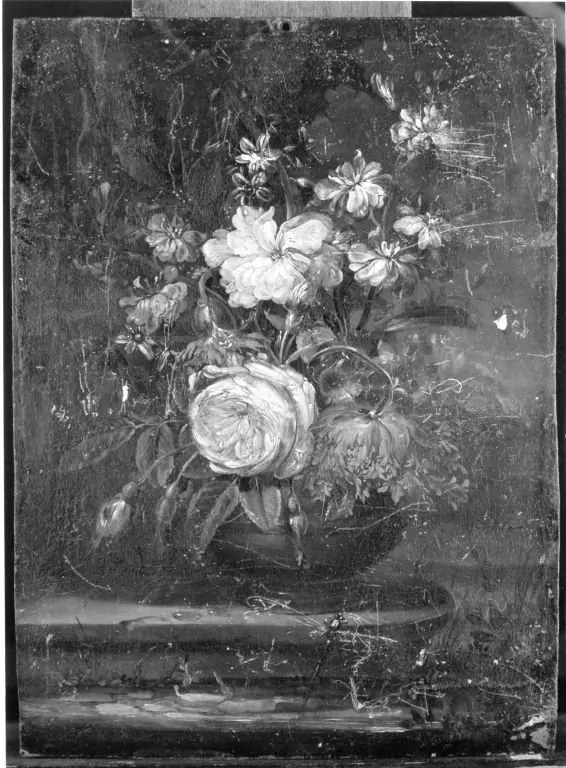
The work depicts a flower arrangement, adhering to the conventions of the genre where botanical subjects are the primary focus.
Jan Kašpar Hirschely's 1719 painting, titled Blumenstück, is classified as a still life. The work depicts a flower arrangement, adhering to the conventions of the genre where botanical subjects are the primary focus. As a Blumenstück (German for "flower piece"), the subject matter centers entirely on the floral composition itself. The painting is held within the Bavarian State Painting Collections at the Alte Pinakothek.
Technique & Style
The work is an oil painting on canvas executed in 1719 by Jan Kašpar Hirschely, a still-life specialist noted for his precise botanical renderings.
The composition is small in scale, measuring 25.9 cm in height and 19.1 cm in width. Hirschely employs fine, controlled brushwork to delineate individual petals, leaves, and stems, producing a crisp, almost illustrative realism. Stylistically, the painting belongs to the Northern European still-life tradition, emphasizing naturalistic detail and restrained tonality rather than dramatic light or exaggerated color contrasts.
History & Provenance
The still life painting Blumenstück was created by Jan Kašpar Hirschely in 1719. The work depicts a floral arrangement and is currently held within the Bavarian State Painting Collections at the Alte Pinakothek. While the specific commission details are not recorded in the available data, the creation is firmly dated to January 1, 1719. The piece measures 25.9 cm in height and 19.1 cm in width.
Overview
Blumenstück, a still‑life canvas executed in 1719 by Jan Kašpar Hirschely, presents a solitary floral arrangement within a tall glass vessel. The work is part of the collection of the Alte Pinakothek in Munich, where it is displayed among other Baroque period pieces.
Context
During the early 1700s, still‑life works often served both decorative and symbolic purposes, celebrating the transience of beauty. Hirschely’s choice of a simple vase and natural elements aligns with contemporary trends that emphasized realism and the study of light over elaborate allegory.
Artist & collection

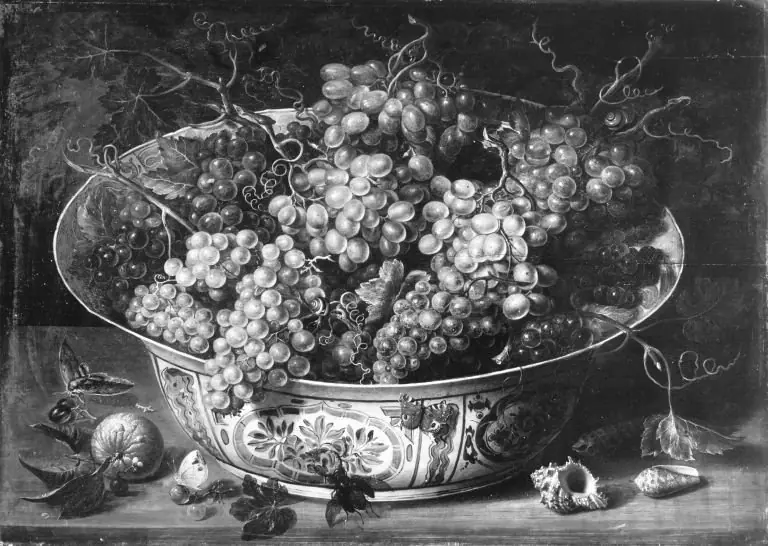
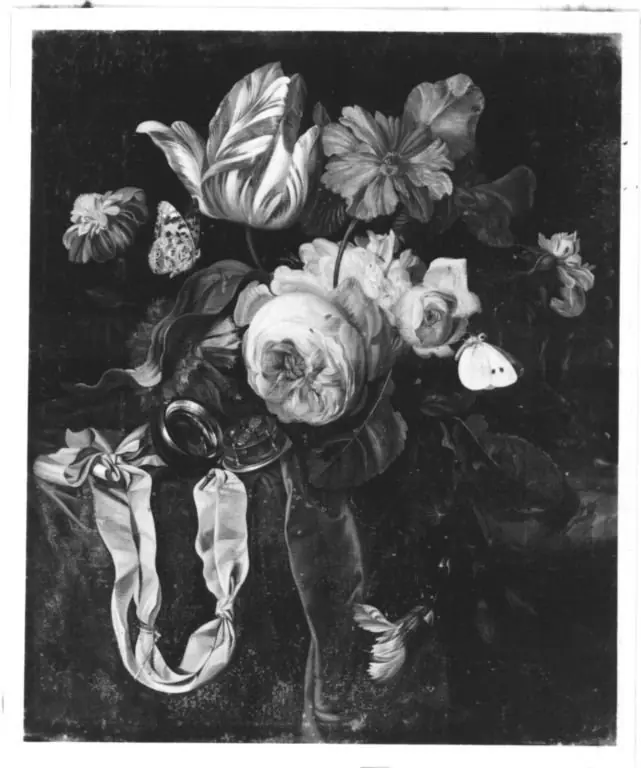 Flower still life with a watch on a partly draped marble ledge
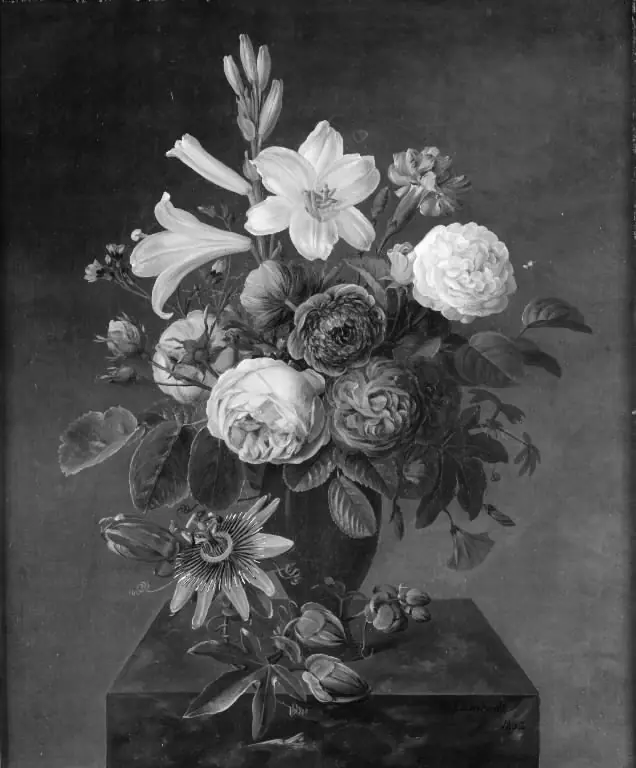 En vase med blomster
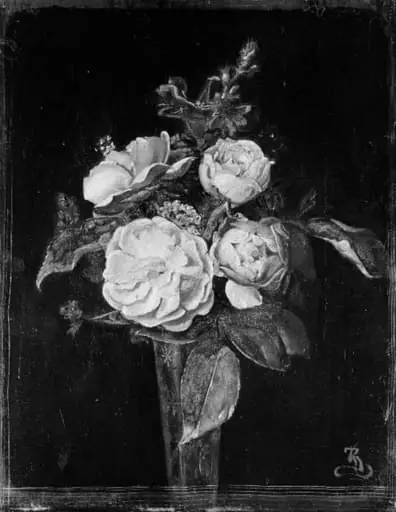 Roser og reseda i et blomsterglas
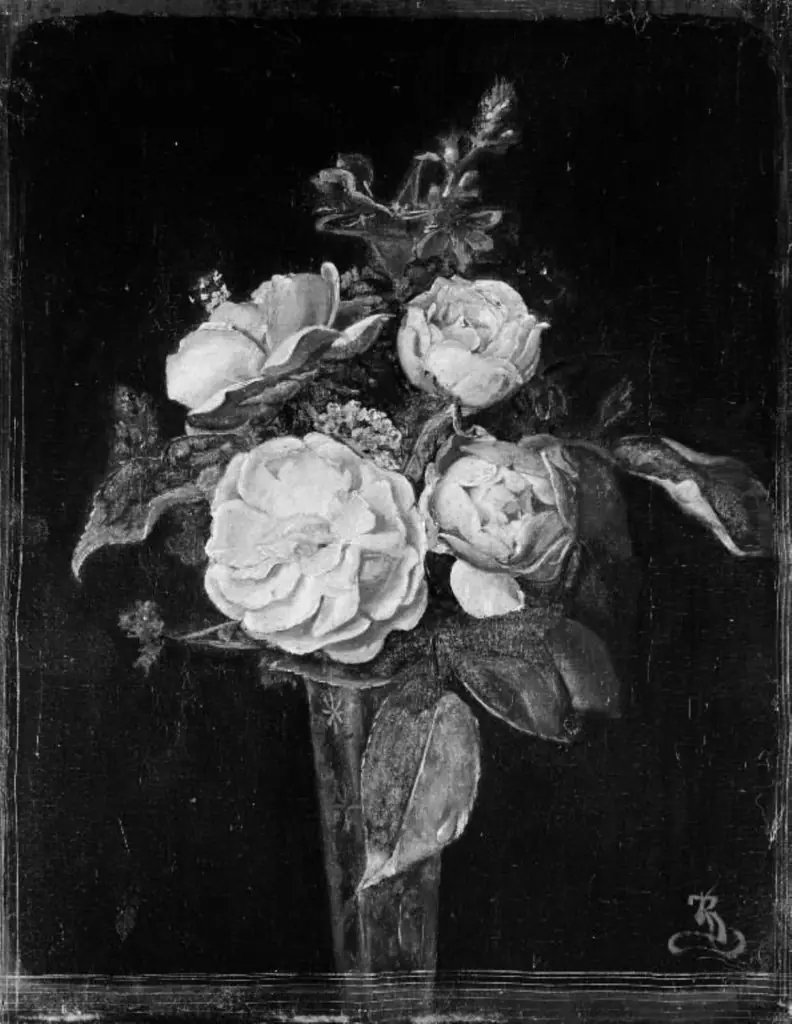 Roser og reseda i et blomsterglas
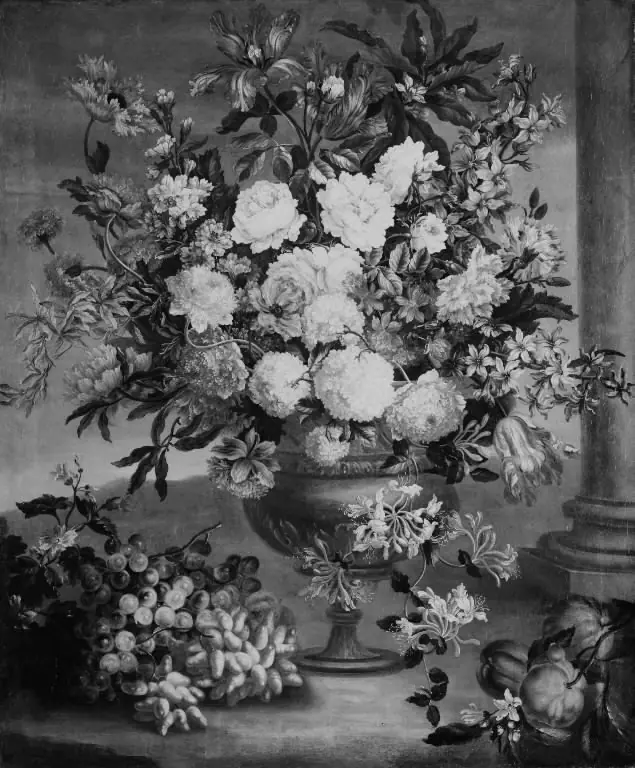 Stor blomsterbuket i en vase. I forgrunden frugter
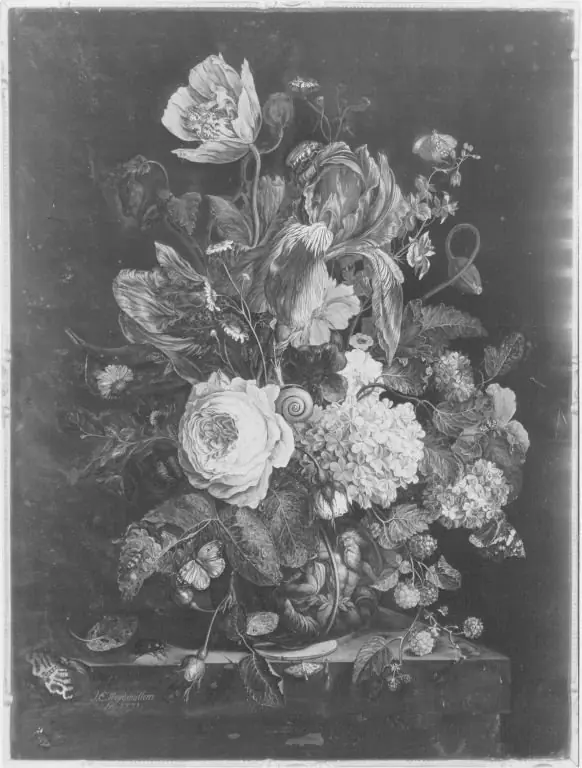 Blumenstillleben
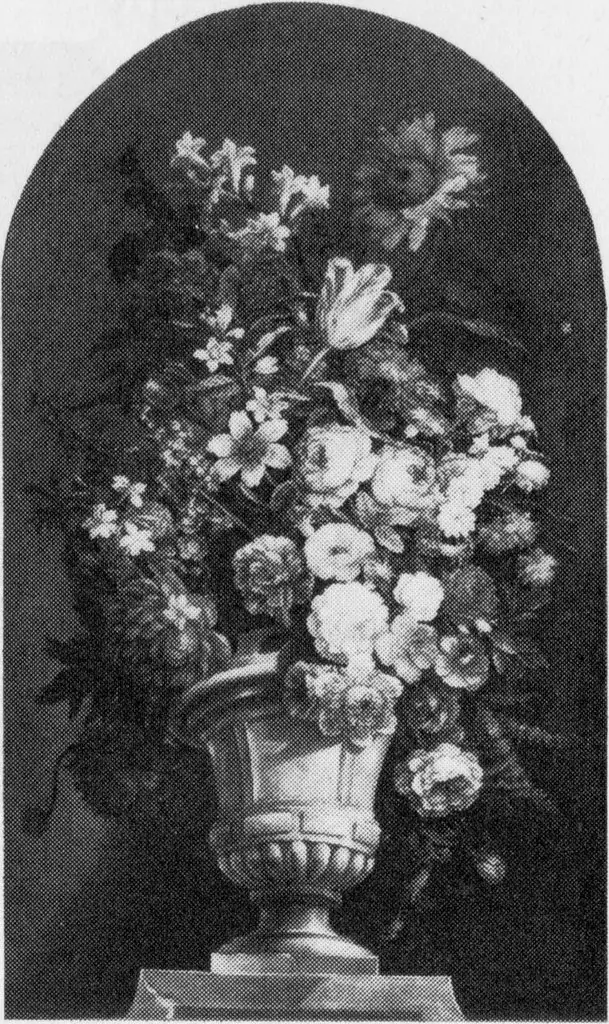 Schoorsteenstuk met bloemen in een vaas
 Blomster i en trefodet vase og en skål med jordbær