Artwork
Blumenstück (Weiße Levkojen)
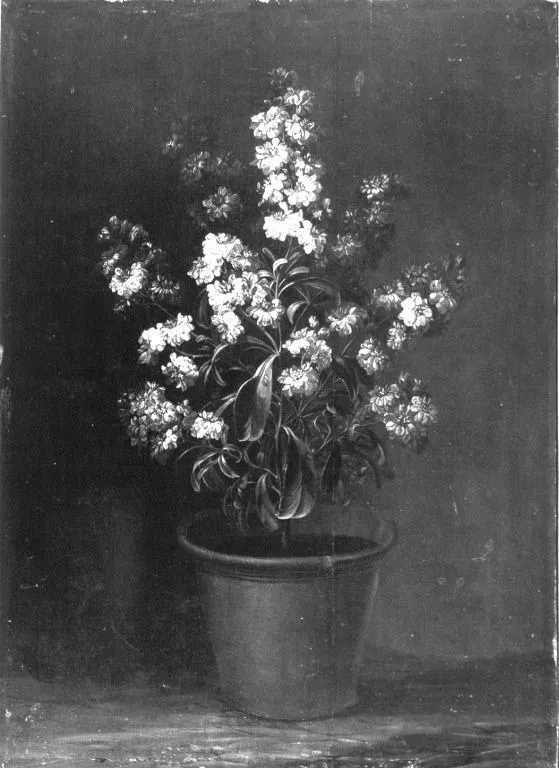
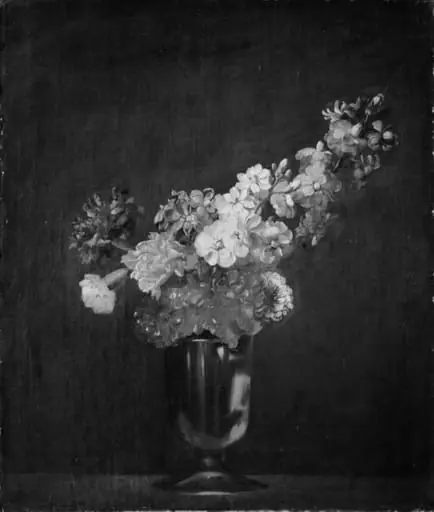
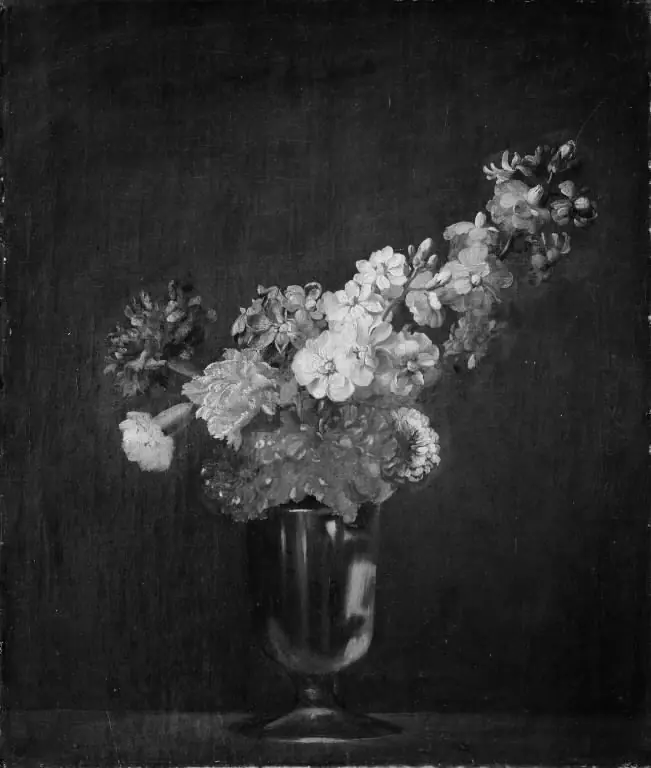
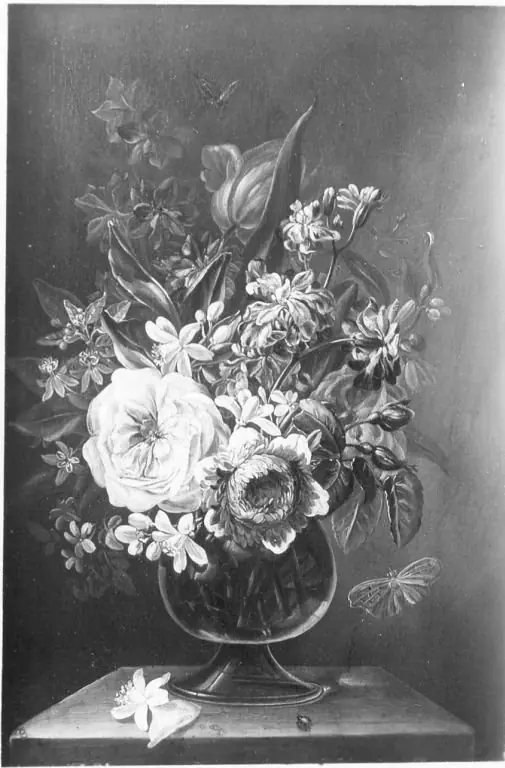
Blumenstück (Weiße Levkojen) is an unspecified painting by the Rococo painting artist Jan Kašpar Hirschely. It dates from 1719 and is held in the collection of the Bavarian State Painting Collections.
About this work
Subject & Meaning
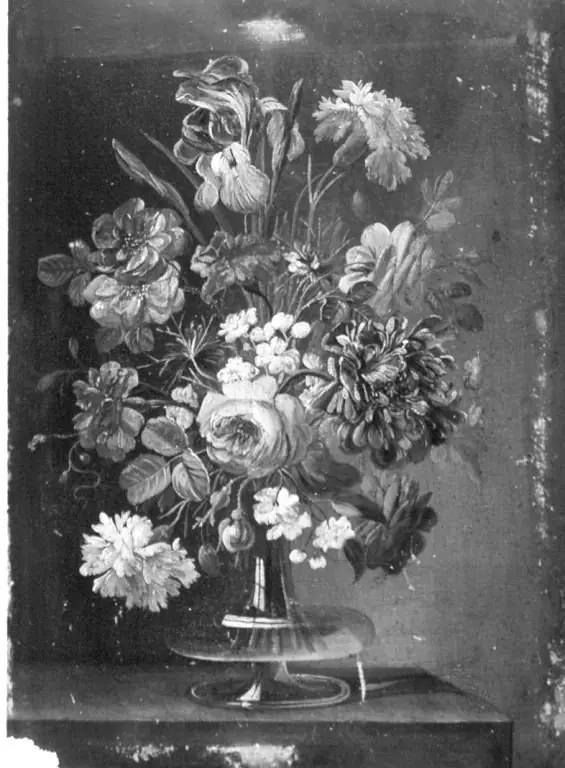
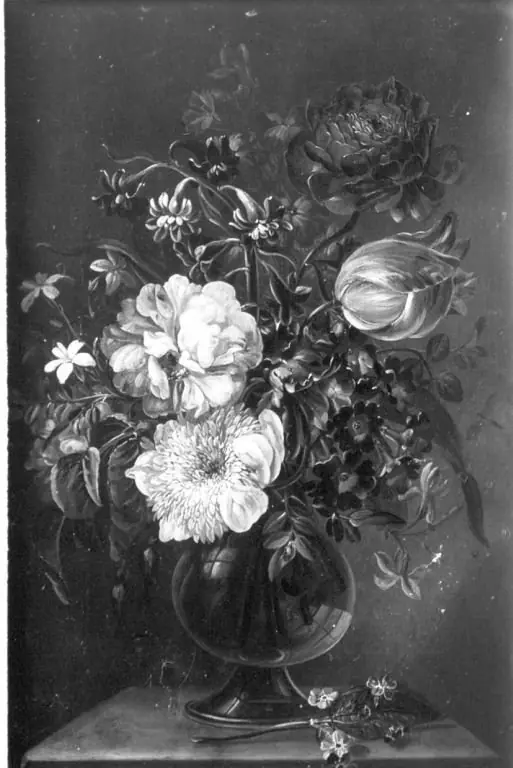
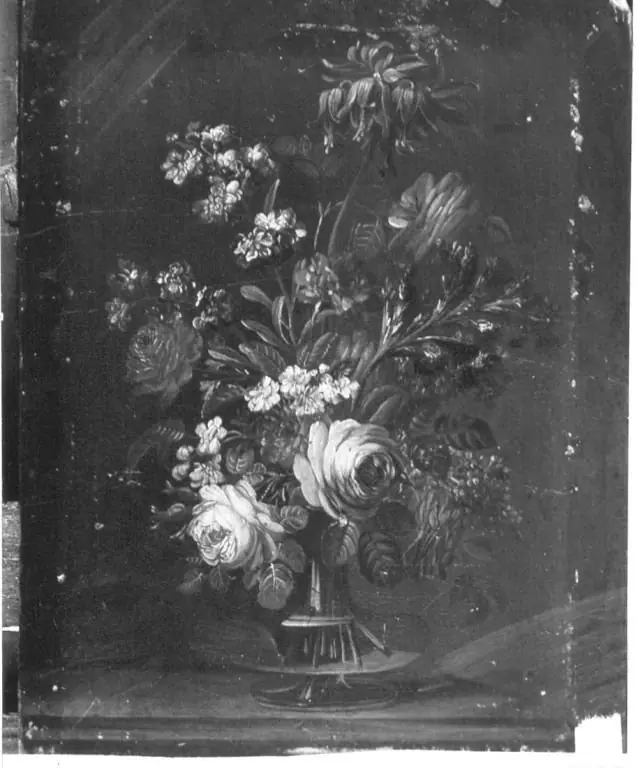
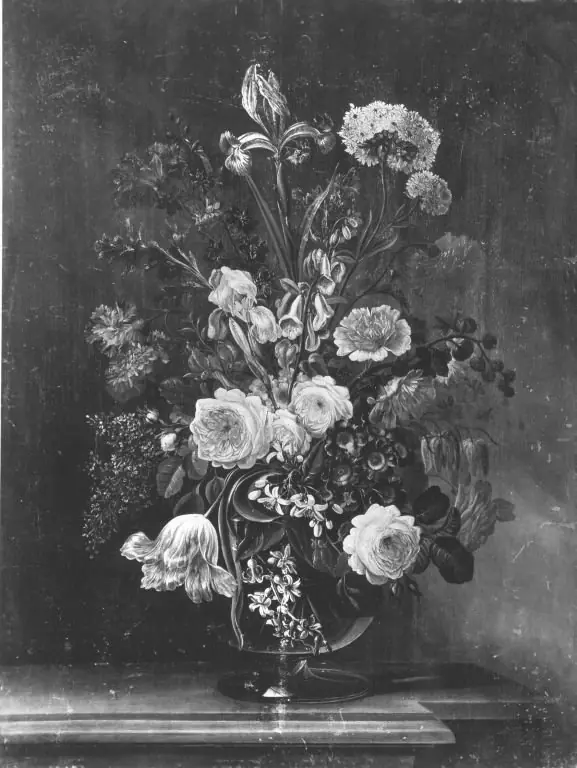
The painting depicts a bouquet of white lilies arranged in a glass vase against a dark background, a subject typical of early 18th‑century still‑life painting.
The painting depicts a bouquet of white lilies arranged in a glass vase against a dark background, a subject typical of early 18th‑century still‑life painting. Lilies carried connotations of purity and the Virgin Mary in contemporary iconography, suggesting a religious or devotional undertone. The work was created by Jan Kašpar Hirschely in 1719 and is housed in the Alte Pinakothek, where it forms part of the Bavarian State Painting Collections. Its precise dimensions are 58.8 cm by 43.6 cm.
Technique & Style
The work is executed in oil on canvas, a standard medium for European still-life painting of the early 18th century. The support measures 58.8 cm in height by 43.6 cm in width.
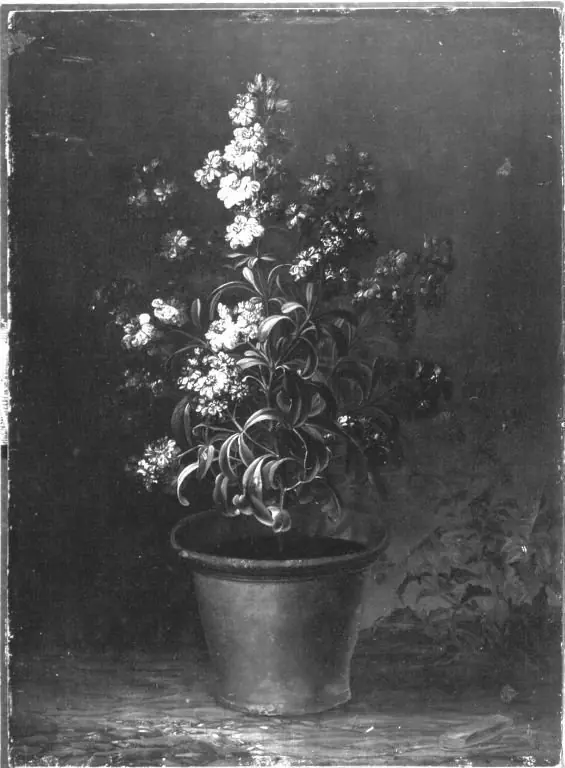
Handling aligns with the period’s precise, linear approach to botanical representation, using controlled brushwork to render petals and leaves with crisp edges and smooth transitions. Stylistically, the composition adheres to the Baroque still-life tradition, organizing the white stock flowers in a symmetrical, upward-facing arrangement against a neutral background to emphasize clarity and detail.
History & Provenance
The painting Blumenstück (Weiße Levkojen) was created in 1719 by Jan Kašpar Hirschely. It is part of the Bavarian State Painting Collections and is housed in the Alte Pinakothek in Munich. The work measures 58.8 cm in height and 43.6 cm in width.
Hirschely painted this still life in his capacity as court painter to the Elector of Bavaria, documenting his activity in Munich during this period. The painting's provenance is recorded through its inclusion in the Bavarian State Painting Collections, indicating continuous ownership by the state institution since its creation.
Jan Kašpar Hirschely's 1719 still life Blumenstück (Weiße Levkojen) is held by the Bavarian State Painting Collections. The work resides in the Alte Pinakothek in Munich. The provided sources do not list a specific inventory or accession number for this painting. Additionally, no exhibition history is documented in the available records.
Context
The painting Blumenstück (Weiße Levkojen) by Jan Kašpar Hirschely was created in 1719 and is classified as a still life within the Alte Pinakothek's collection in Munich. It depicts white levkoje flowers and measures 58.8 cm in height by 43.6 cm in width. The work is held by the Bavarian State Painting Collections and was accessioned on January 1, 1719, according to its provenance in major institutional records.
Scholars have examined its floral subject matter as part of early 18th-century European still life traditions, situating it within the artist's broader oeuvre of botanical paintings.
Legacy
The painting's early prominence within German Baroque still-life circles contributed to renewed scholarly interest in the 20th century, particularly regarding its role in shaping floral still-life conventions. Its composition influenced subsequent artists working in the genre, as documented in studies of 18th-century German decorative painting. The work remains part of the Bavarian State Painting Collections, continuing to be displayed at the Alte Pinakothek in Munich.
Overview
Jan Kašpar Hirschely’s 1719 still‑life, titled Blumenstück (Weiße Levkojen), presents a solitary potted plant rendered with meticulous care. The composition is dominated by a cluster of white blossoms atop slender, airy stems, set against a muted, shadowed backdrop that emphasizes the subject’s delicate form.
Artist & collection