Artwork
A vase of flowers
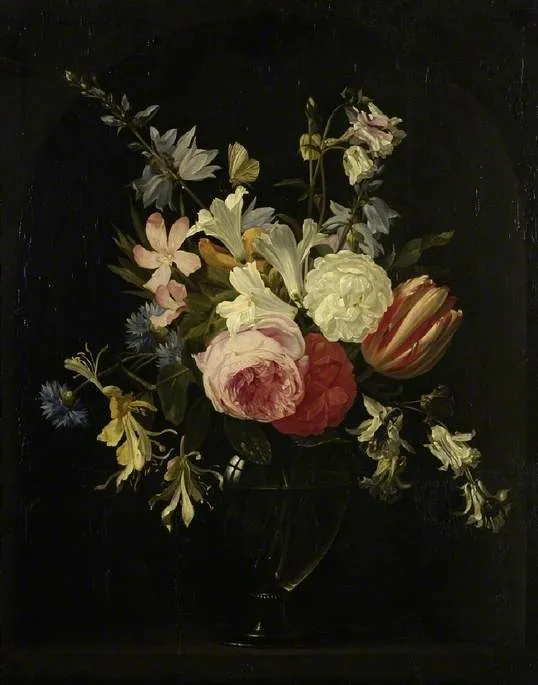
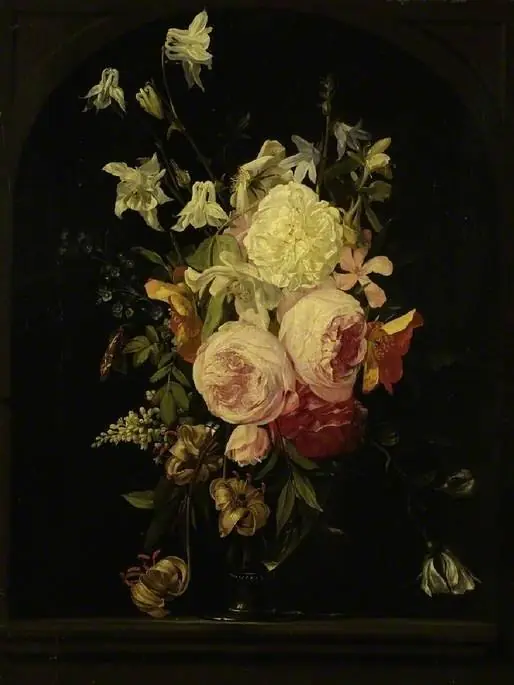
A vase of flowers is an oil painting by Jan Philip van Thielen. It dates from 1650 and is held in the collection of the Fitzwilliam Museum.
About this work
Overview
6 centimeters, the work belongs to the floral still life genre and depicts a dense bouquet arranged within a niche.
A Vase of Flowers is an oil on panel painting created around 1650 by the Flemish artist Jan Philip van Thielen, who is cited as the creator alongside his teacher, Daniel Seghers. Measuring 50.7 by 40.6 centimeters, the work belongs to the floral still life genre and depicts a dense bouquet arranged within a niche. It is currently held in the Fitzwilliam Museum in Cambridge, accessioned under the number PD.43-1975. The painting exemplifies the Antwerp floral tradition, demonstrating the meticulous handling and subdued palette for which Van Thielen was known during his successful career in the Spanish Netherlands.
Subject & Meaning
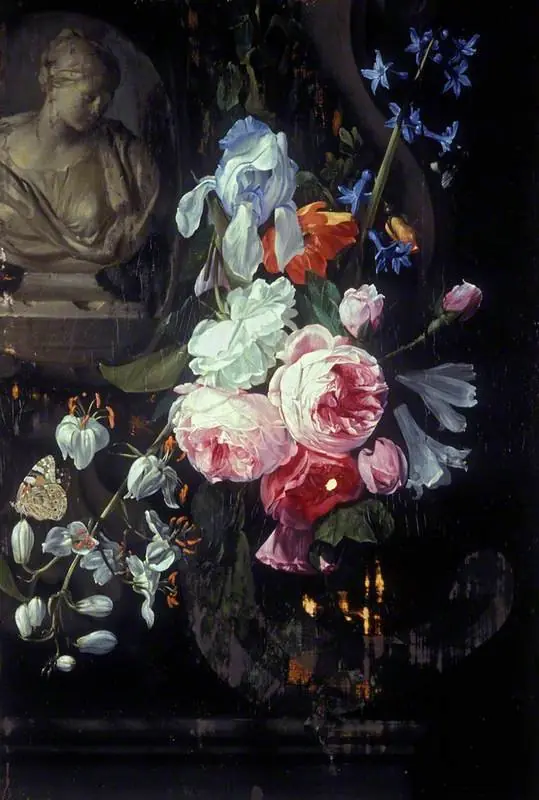
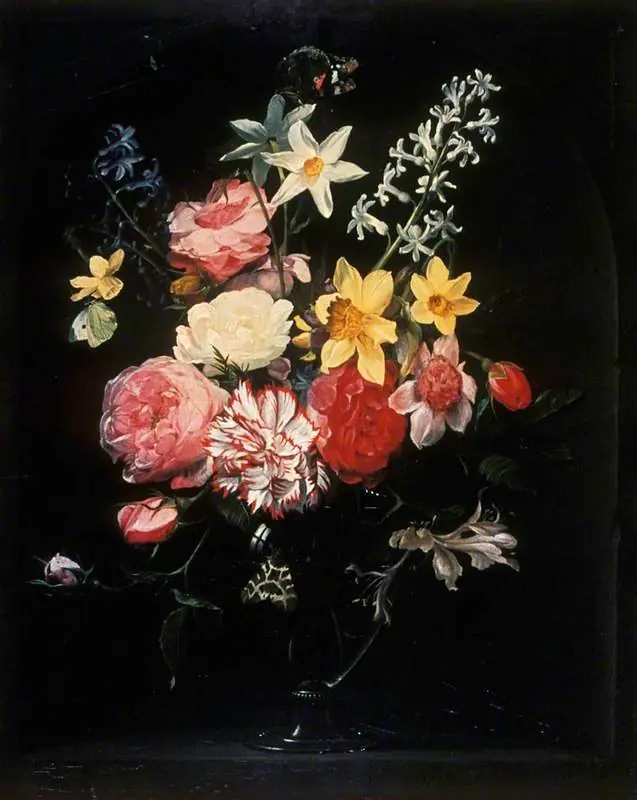
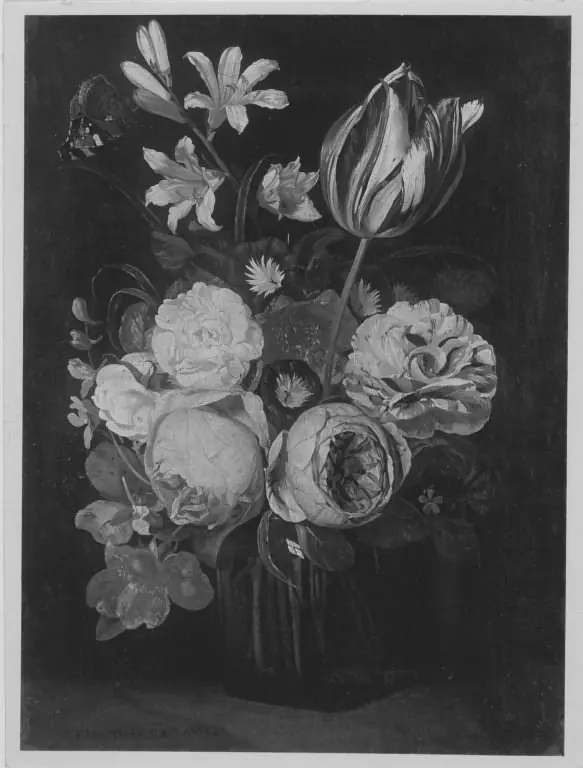
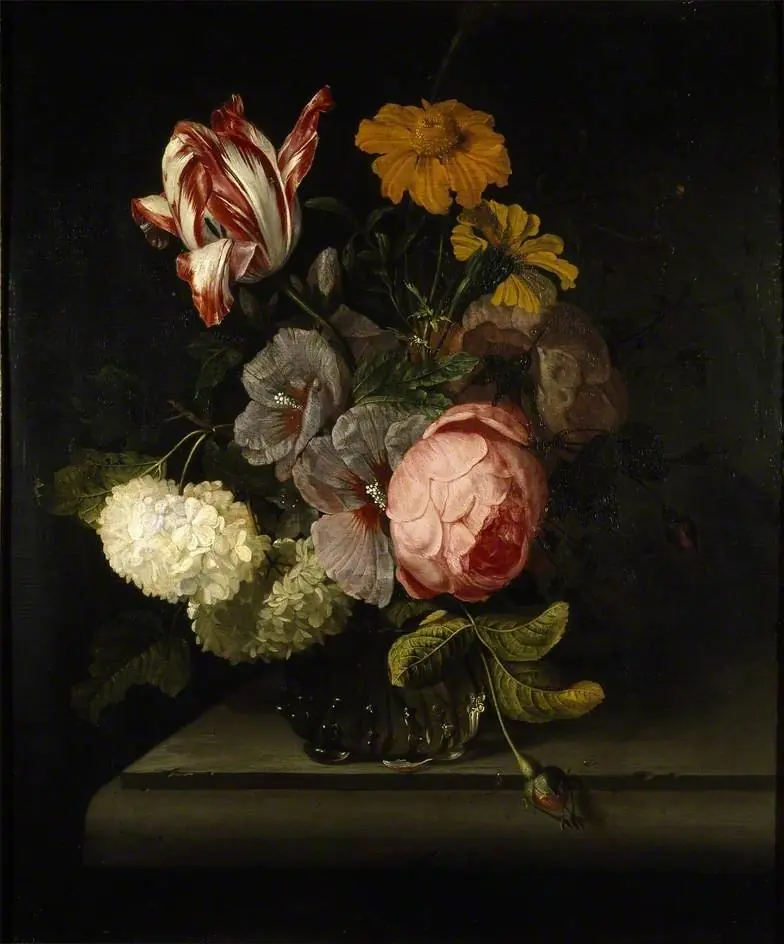
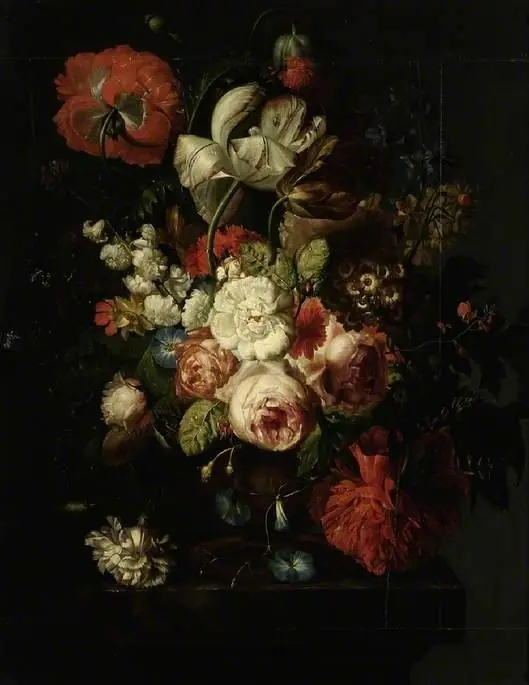
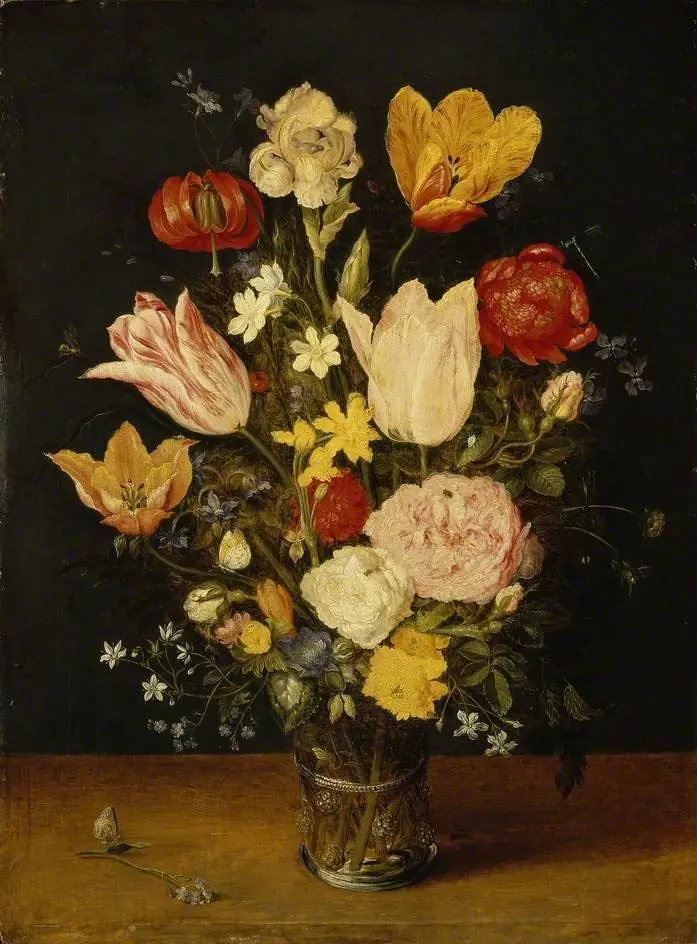
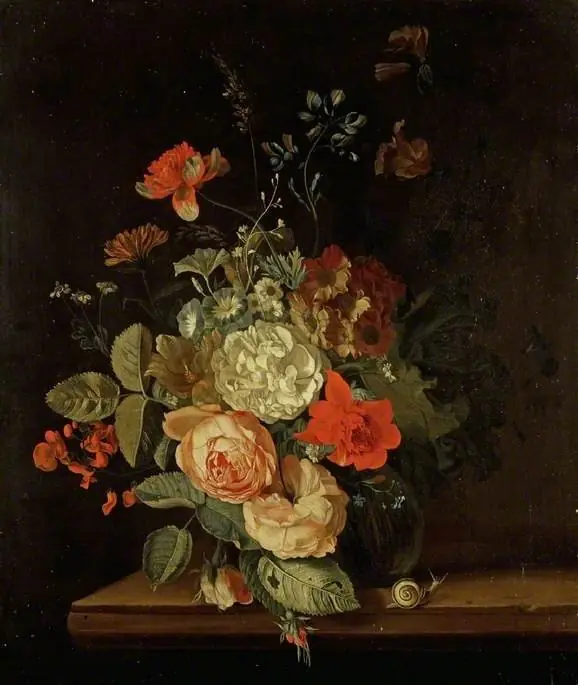
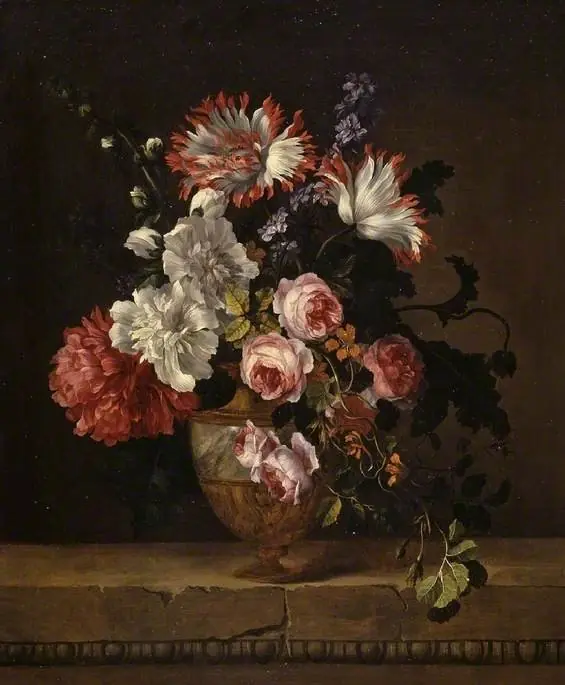
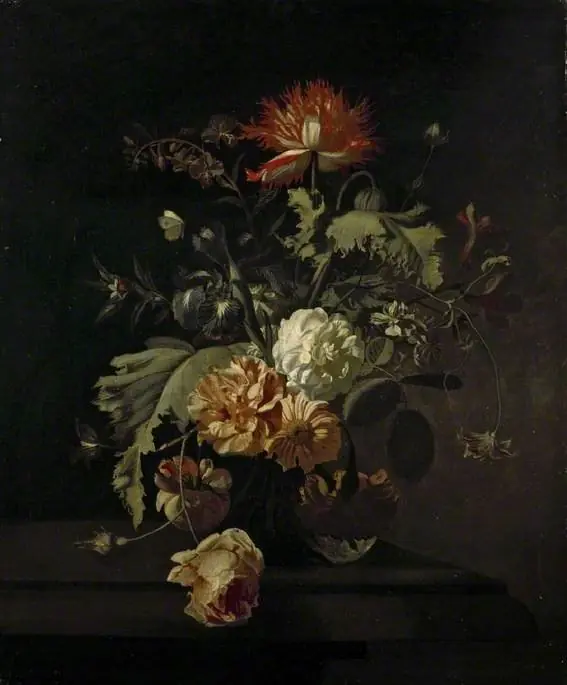
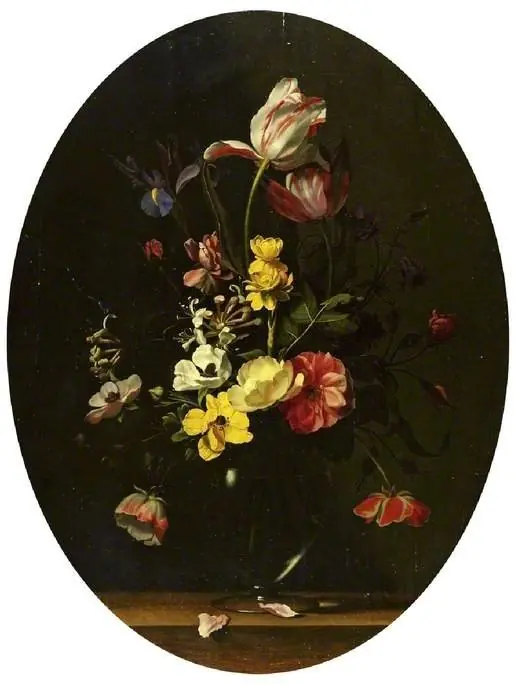
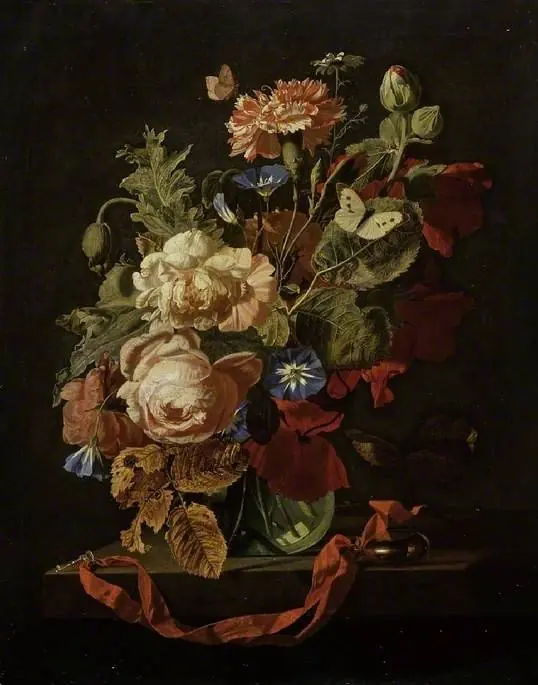
The composition centers on a clear glass vase holding a varied bouquet set within a stone niche. Botanical elements include a prominent pale pink rose, a white peony, a red rose, and a striped red and cream tulip, accompanied by smaller blue, yellow, and pale pink blossoms such as honeysuckle, lily, columbine, and cornflower. A small butterfly rests near the upper left. In the context of Flemish garland and flower painting, such insects often symbolize the resurrection and triumph over death, while specific blooms carry Marian and vanitas associations. The combination of spring and summer blooms creates an idealized, non-seasonal assembly that emphasizes divine creation over natural reality.
Technique & Style
Executed in oil on a wooden panel, the painting features smooth, controlled brushwork that carefully articulates the texture of individual petals and the transparency of the glass vase. Light falls from the upper left, illuminating the blooms and creating soft shadows within the dense cluster, while catching along the rim and curves of the vessel. The overall palette is subdued, with the bright floral colors emerging from a nearly black background. The surface shows fine cracking throughout. Stylistically, the arrangement is vertical and symmetrical, with flowers spreading outward and slightly downward at the edges. This approach reflects Van Thielen's characteristic tendency to isolate each flower so that it stands out individually, contrasting with the more blended, dynamic compositions of his master, Daniel Seghers.
History & Provenance
The painting is dated to 1650, a period when Van Thielen was active in Antwerp following his training with Seghers and his admission to the local Guild of Saint Luke in 1641. The work later entered the collection of Major the Hon. Henry Rogers Broughton, Second Lord Fairhaven. Upon his death in 1973, Broughton bequeathed the painting to the Fitzwilliam Museum, which received it in 1975, assigning it the accession number PD.43-1975. Van Thielen's practice of signing his works has allowed scholars to track his oeuvre, with signatures evolving from references to his mother's name in the 1640s to simpler formulations after 1650, such as the one likely appearing on this panel.
Context
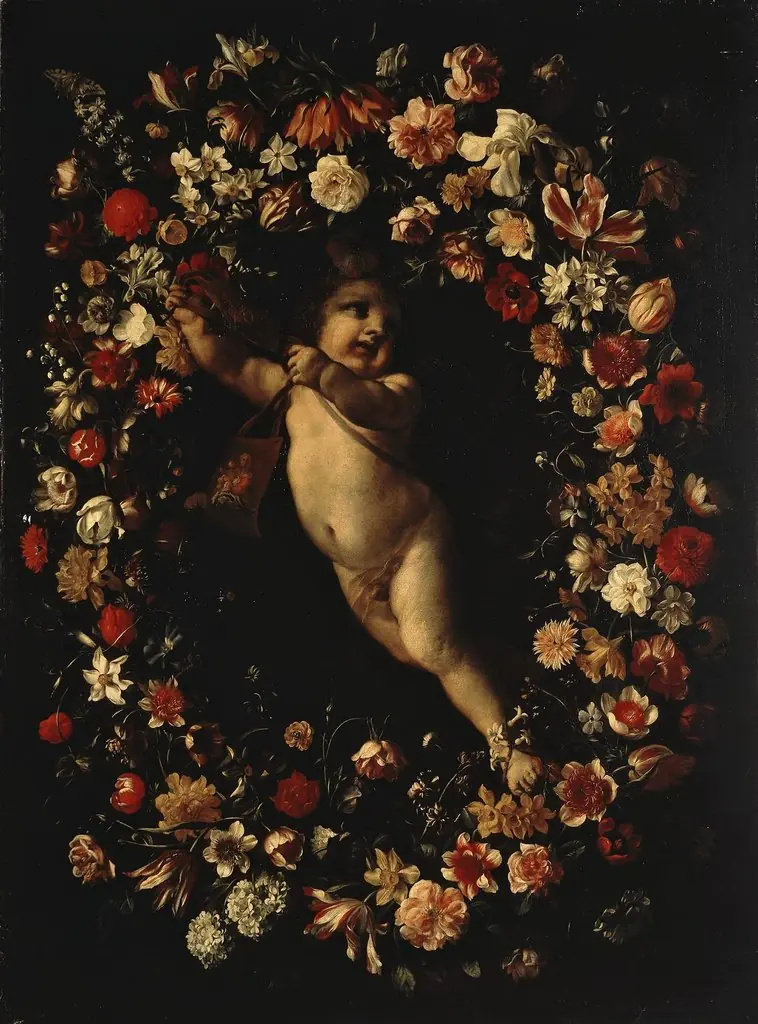
Jan Philip van Thielen was a prominent Flemish painter specializing in flower pieces and garland paintings, a genre developed in Antwerp by Jan Brueghel the Elder and Hendrick van Balen and initially tied to Counter-Reformation devotion. After training with the history painter Theodoor Rombouts, Van Thielen shifted to floral still lifes under Daniel Seghers. He became the most popular flower painter in Flanders, enjoying the patronage of figures like the Marquis of Leganés and the governor of the Spanish Netherlands, Leopold Wilhelm of Austria. He frequently collaborated with leading figure painters, including his brother-in-law Erasmus Quellinus II, Frans Francken the Younger, and Cornelis Schut, painting flower cartouches and garlands surrounding their religious and mythological scenes.
Artist & collection
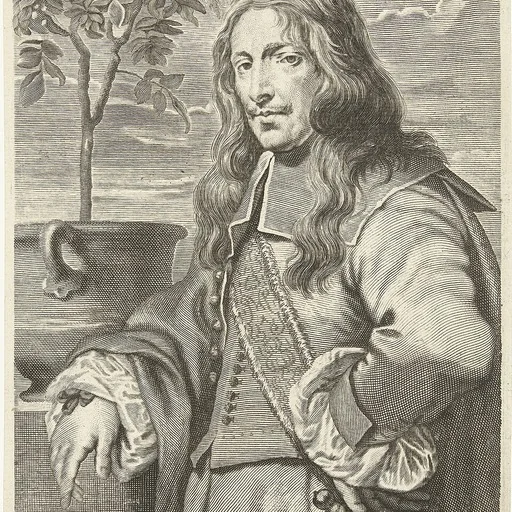
Artist
Jan Philip van Thielen or Jan Philips van Thielen (1618 in Mechelen – 1667 in Booischot) was a Flemish painter who specialized in flower pieces and garland paintings.