Artwork
A vase of flowers
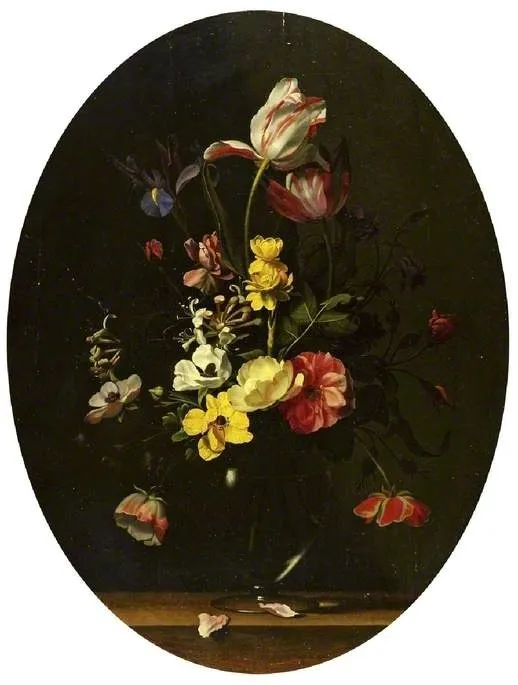
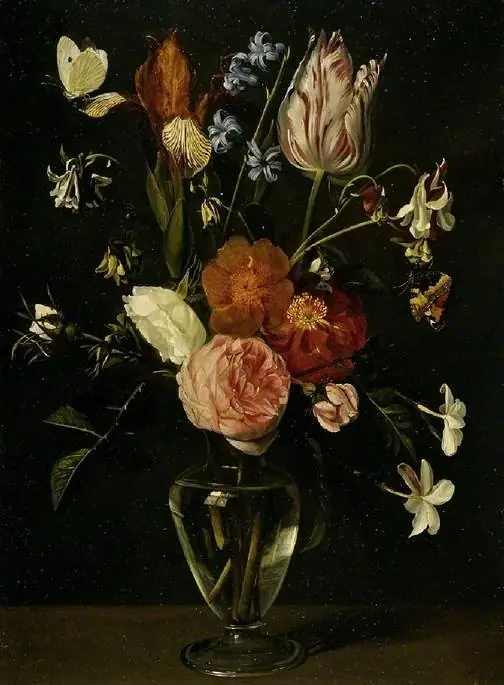
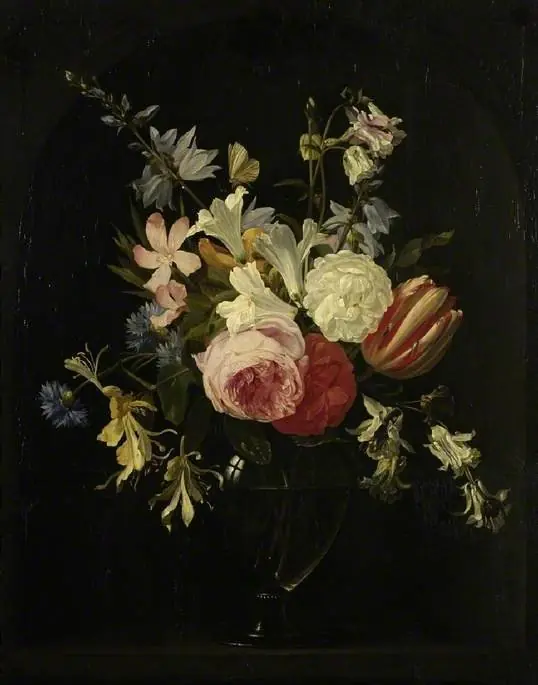
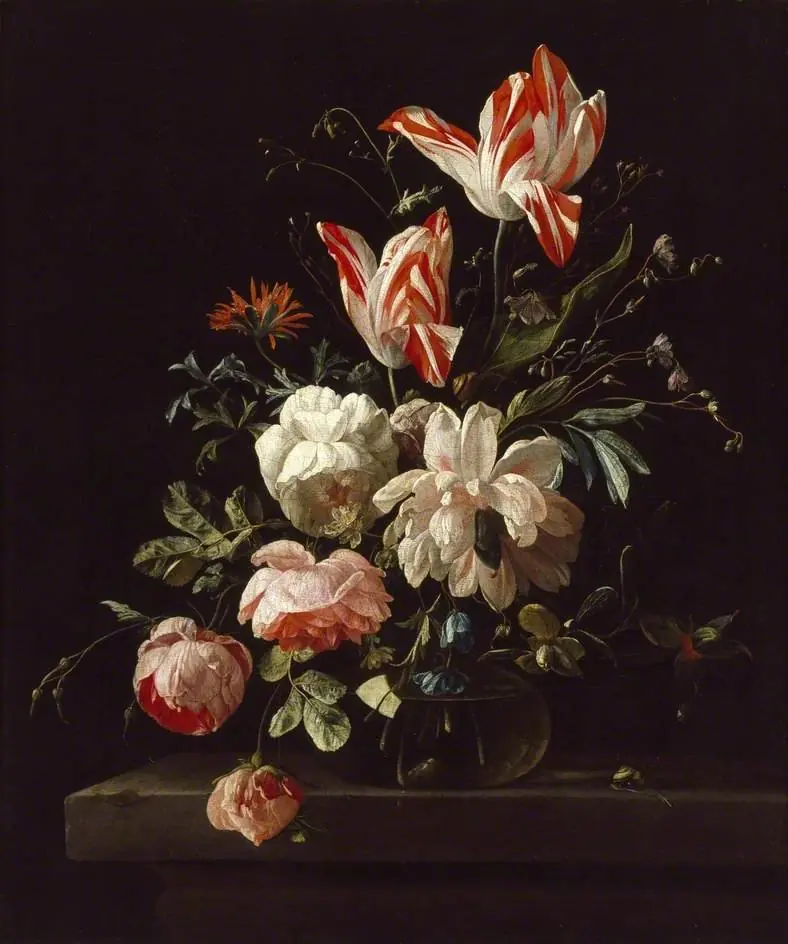
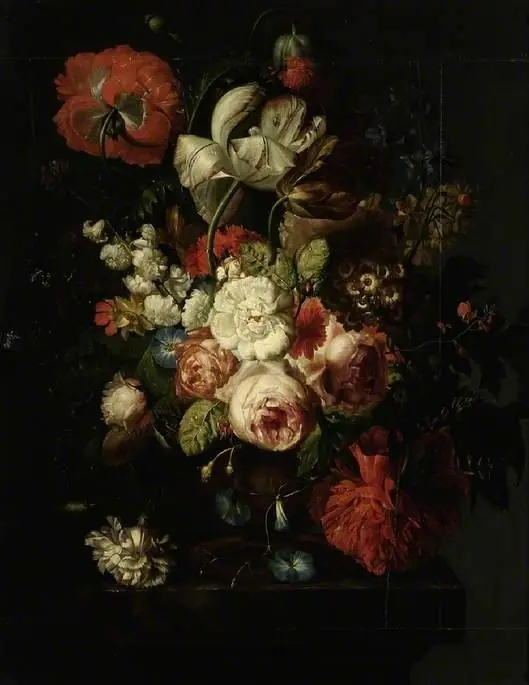
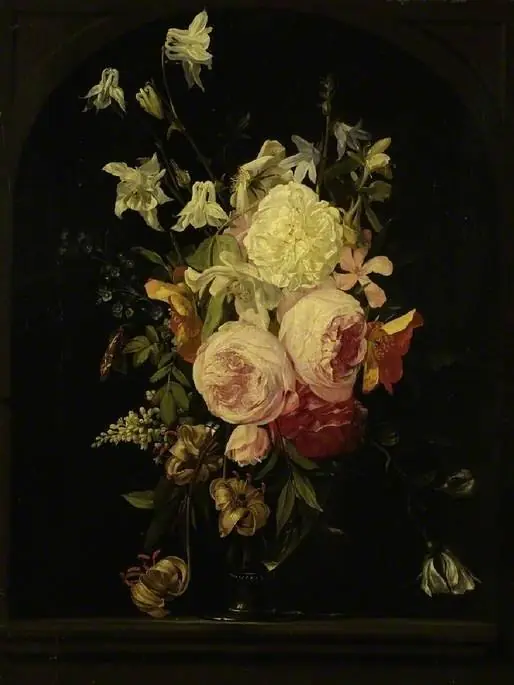
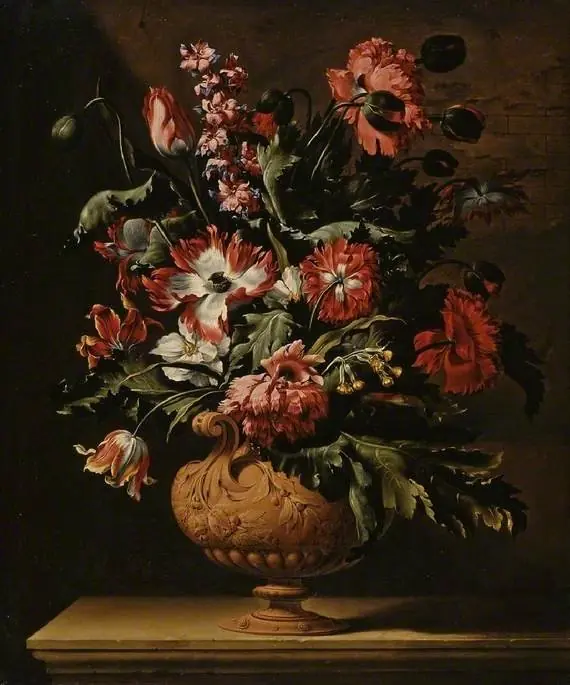
A vase of flowers is an oil painting by the French Classical Baroque artist Jean-Michel Picart. It dates from 1650 and is held in the collection of the Fitzwilliam Museum.
About this work
Overview
The painting is part of the floral still life genre and is currently held in the Fitzwilliam Museum in Cambridge, accessioned under the number PD.
A Vase of Flowers is an oil on panel painting by the Flemish-born French artist Jean-Michel Picart, dated to 1650. Measuring 50.1 by 38.5 centimetres, the work depicts a vibrant bouquet arranged in a glass vase set upon a wooden ledge against a dark background. The painting is part of the floral still life genre and is currently held in the Fitzwilliam Museum in Cambridge, accessioned under the number PD.37-1975. It represents a key example of Picart's mature style, demonstrating the shift toward more sumptuous and ornamental compositions that characterized his output from the 1650s onward.
Subject & Meaning
The composition features a dense, symmetrical bouquet rising vertically from a glass vase. A striped white and red tulip crowns the arrangement, accompanied by yellow and red roses, pink and white blooms, and a small blue iris. Several stems droop over the vase's rim, with two red and white flowers hanging near the bottom. Fallen petals rest on the wooden ledge. This juxtaposition of vibrant, living blossoms with drooping stems and scattered petals serves as a vanitas motif, alluding to the transience of delicate earthly displays and the inevitability of decay. The inclusion of cultivated specimens like tulips and roses also reflects the contemporary popularity of botanical gardens among the educated middle class and nobility in France, who prized such flowers for their varied colors and formations.
Technique & Style
Executed in oil on panel, the painting demonstrates Picart's precise brushwork and careful handling of translucent petals and reflective surfaces. Light enters from the upper left, illuminating the vivid yellows, reds, and whites of the flowers while casting shadows to the right, creating strong highlights on the glass vase and petals. The deep brown and black background uniformly emphasizes the illuminated central arrangement. By 1650, Picart's style had evolved from the economical, rustic simplicity of the peintres de la réalité toward a more sumptuous and ornamental manner. The balanced, symmetrical composition and the dramatic lighting show Picart at his best, allowing the various blossoms to tremble with life while contrasting their fragility with the solid, sculpted motifs of his other contemporary vases.
History & Provenance
Created in 1650, the painting was eventually bequeathed to the Fitzwilliam Museum in 1975 by Major the Hon. Henry Rogers Broughton, Second Lord Fairhaven. It remains in the museum's collection under accession number PD.37-1975. While the specific early ownership chain of this particular panel is not fully documented, the broader market for Picart's work involved prominent galleries and collectors. A comparable still life by the artist from the 1630s or 1640s passed through the hands of dealers such as Piet de Boer in Switzerland, the P. de Boer Gallery in Amsterdam, and collectors including H. Neuerburg in Cologne and Silvano Lodi in Campione d'Italia, before entering the Montreal Museum of Fine Arts in 2014. Such provenances illustrate the enduring commercial and collector interest in Picart's floral compositions.
Context
Born in Antwerp around 1600, Jean-Michel Picart likely received his early training in Flanders before moving to Paris by 1625, where he established a lucrative career. He settled in the Saint-Germain-des-Prés area, a hub for Flemish and Dutch artist emigrés, and worked primarily on lush flower and fruit pictures. In Paris, he developed his treatment of still life according to the manner of the peintres de la réalité, artists active in France in the first half of the seventeenth century whose work was characterized by clarity and simplicity. Some of Picart's sumptuous still lifes were historically misattributed to the French painter Jean-Baptiste Monnoyer, but scholarship, including a recognition in 2000, has reattributed such works to Picart, cementing his reputation within the tradition of Flemish emigré painters who shaped French floral painting.
Legacy
Picart's work exemplifies the critical transition in seventeenth-century French still life from the restrained realism of the peintres de la réalité to the more decorative, sumptuous style that would dominate the latter half of the century. His lush flower and fruit pictures, painted for a burgeoning class of collectors fascinated by botany and horticulture, helped establish a lasting market for the genre in Paris. The presence of his paintings in major institutions like the Fitzwilliam Museum and the Montreal Museum of Fine Arts today underscores his role in bridging Flemish traditions with French tastes, while the historical misattribution of his works to figures like Monnoyer highlights the evolving nature of scholarship surrounding emigré artists and their influence on the French school.
Artist & collection
Artist
Jean-Michel Picart or Jean-Michel Picard (Antwerp, c. 1600 – Paris, 24 November 1682) was a Flemish still life painter and art dealer active in France. After training in Antwerp, he moved to Paris where he had a…