Artwork
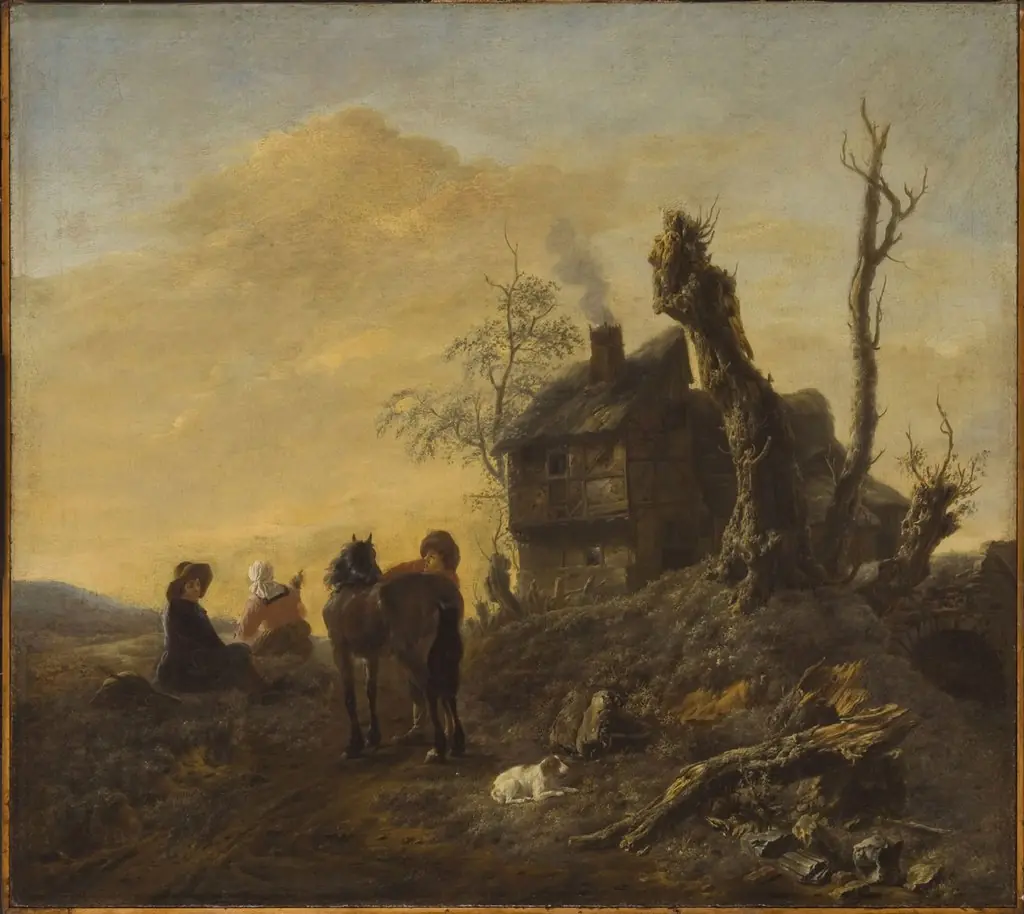
The spotted horse
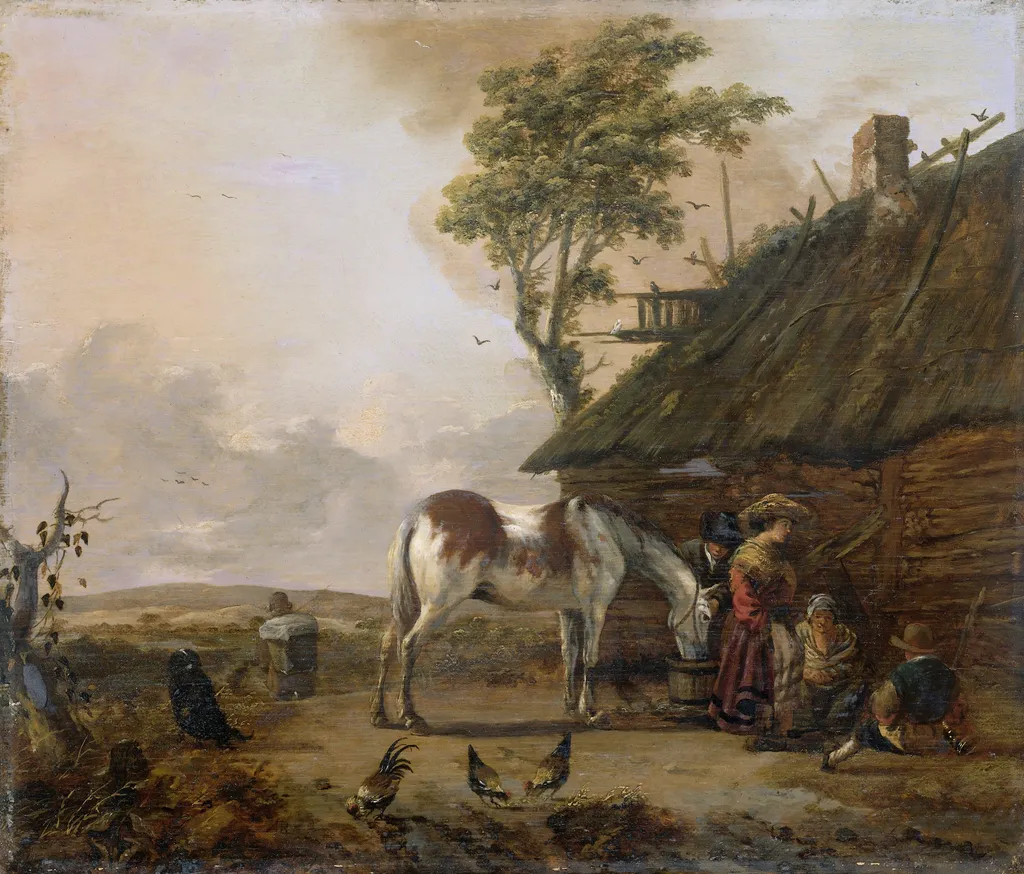
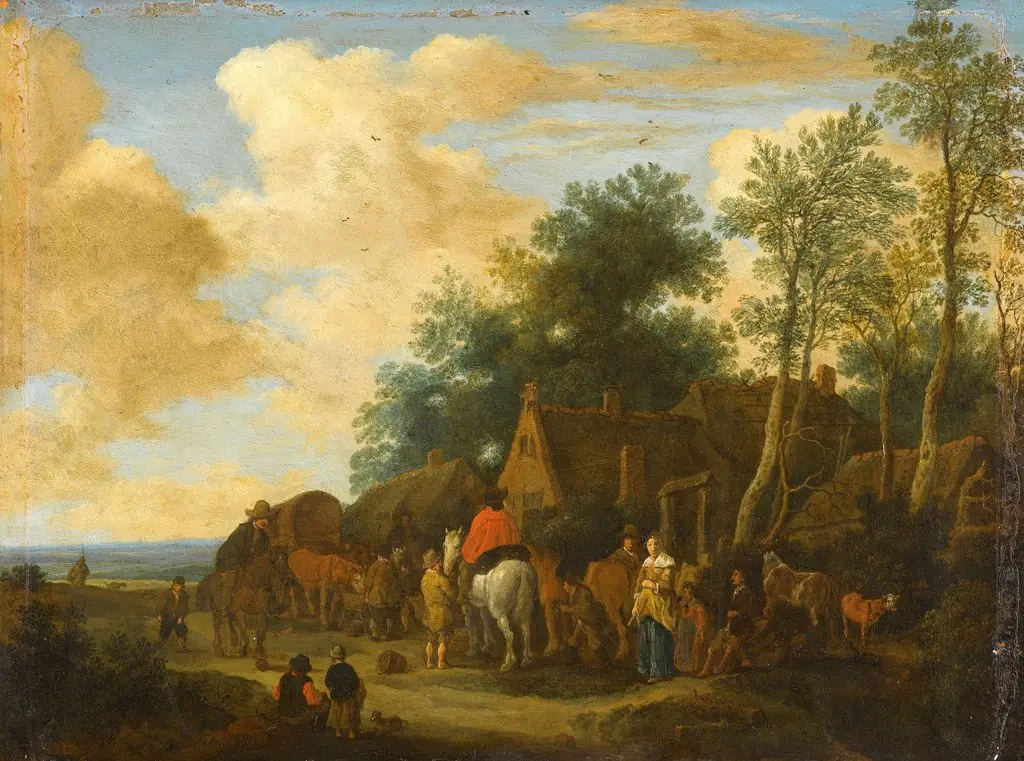
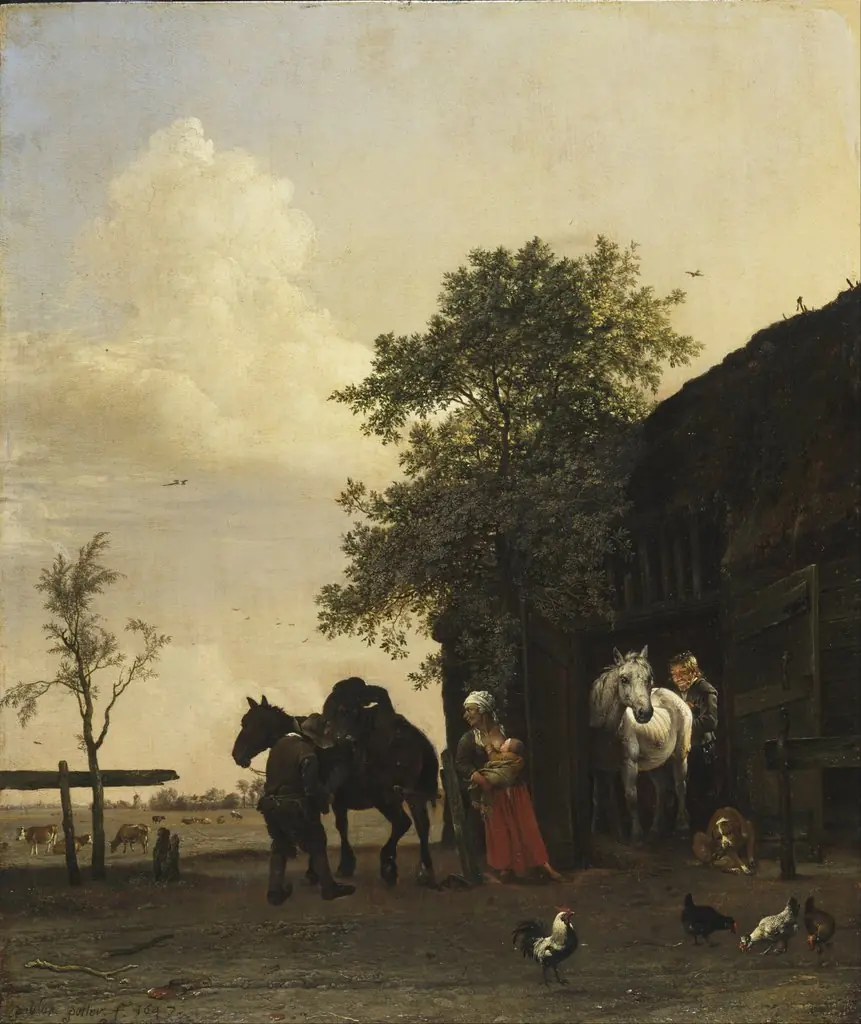
The spotted horse is an oil painting by Jan Wouwerman. It dates from 1660 and is held in the collection of the Rijksmuseum.
About this work
Technique & Style
The work is executed in oil paint on panel, a combination characteristic of mid-seventeenth-century Dutch cabinet pictures.
The work is executed in oil paint on panel, a combination characteristic of mid-seventeenth-century Dutch cabinet pictures. Its modest dimensions, 36 cm in height by 41.5 cm in width, situate it within the small-scale landscape format that allowed for finely detailed handling. The landscape genre classification reflects the painting's primary concern with setting and atmosphere rather than portraiture, with the horse functioning as a focal motif within that environment.
The use of a rigid wooden support rather than canvas would have supported the smooth, precise brushwork suited to a work of this size, and is consistent with the panel tradition favoured by Dutch painters of the period.
History & Provenance
The painting was created by Jan Wouwerman in 1660, as indicated by the work’s inception date recorded in the Rijksmuseum’s records.
It has been part of the Rijksmuseum’s holdings since at least the date of its cataloguing, where it is listed as a landscape painting executed in oil on panel. The painting measures 36 cm in height and 41.5 cm in width according to the museum’s documentation.
Overview
The Spotted Horse is a 1660 oil painting by Jan Wouwerman, a Dutch Golden Age artist from Haarlem. It is a landscape featuring a horse as its central subject.
Subject & Meaning
The painting depicts a serene rural scene: a spotted horse stands before a rustic farmhouse or stable, accompanied by a woman, a man, and a child. The atmosphere is peaceful, with the horse's lowered head suggesting it is drinking from a bucket held by the woman.
Own this work as a print
Artist & collection
Artist
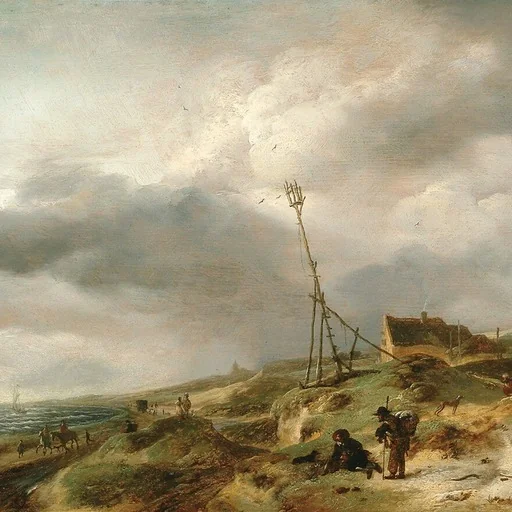
Jan Wouwerman (1629 in Haarlem – 1666 in Haarlem), was a Dutch Golden Age painter.