Artwork
Roman pilgrims
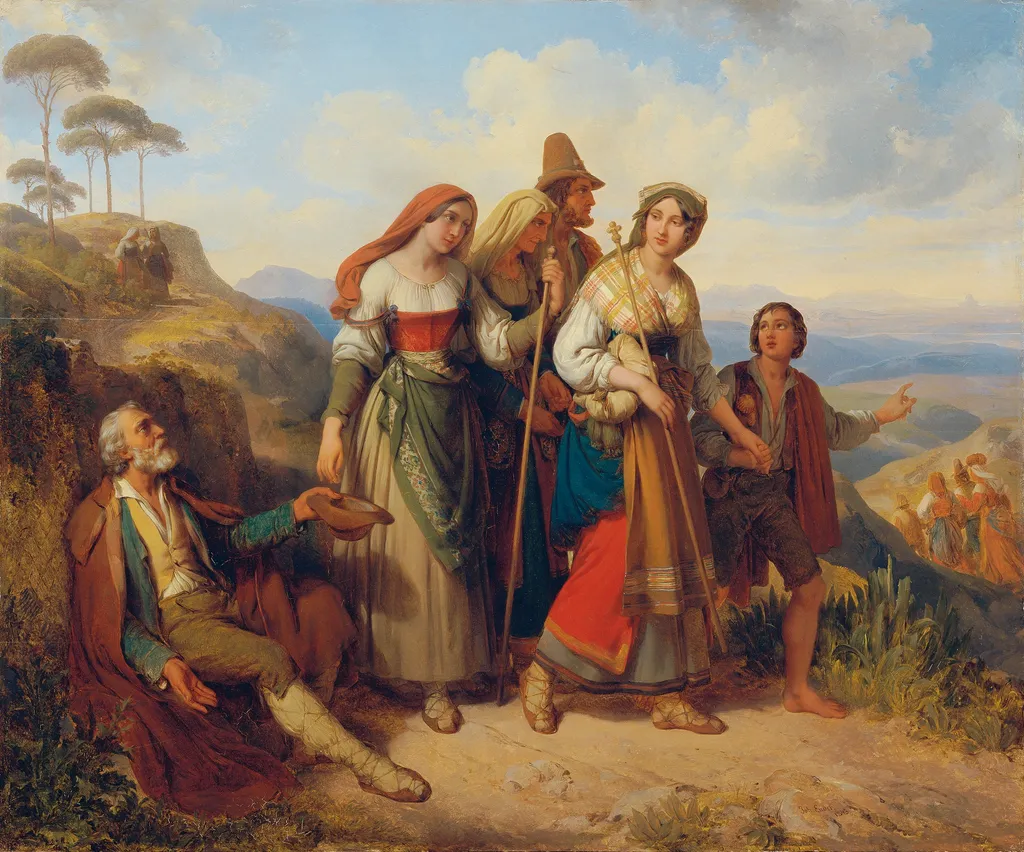
Roman pilgrims is an oil painting by the Biedermeier artist Johann Ender. It dates from 1843 and is held in the collection of the Belvedere.
About this work
Subject & Meaning
The painting depicts a group of Roman pilgrims en route to a sacred destination, rendered in the distinctive Ciociaro costume of the Lazio region.
The painting depicts a group of Roman pilgrims en route to a sacred destination, rendered in the distinctive Ciociaro costume of the Lazio region. Ender portrays the pilgrims with staffs and walking staves, emphasizing their journey’s physical and spiritual dimensions.
Symbolically, the work evokes themes of devotion, penance, and communal faith, aligning with mid-nineteenth-century European genre scenes that idealized religious pilgrimage as both cultural heritage and moral exemplar.
Technique & Style
Created in 1843, Roman pilgrims is an oil painting executed on a panel support. The work measures 76.5 cm in height and 94.5 cm in width. As a genre scene, it depicts figures identified as pilgrims wearing Ciociaro costumes, capturing the specific subject of a pilgrimage.
The artist, Johann Ender, utilized oil paint to render these formal qualities within the dimensions provided by the collection records.
History & Provenance
Roman pilgrims is an oil-on-panel genre painting created by Johann Ender in 1843. The work was produced during the artist's mature period and entered the collection of the Belvedere, where it remains held as part of the holdings of the Kunsthistorisches Museum. No additional commission records, intermediate owners, or earlier provenance details are documented in the available sources.
Overview
Johann Ender’s 1843 oil painting, titled Roman Pilgrims, presents a small group of travelers on a rocky hillside. Five figures, two women in striped garments, a man with a walking stick, a young boy, and an elderly seated figure, are arranged against a bright sky and distant mountains. The composition captures a moment of pause during a journey, emphasizing the landscape’s openness and the travelers’ anticipation.
Context
During the mid‑19th century, interest in regional folk attire and religious journeys grew across Europe, mirroring Romantic nationalism. Ender’s depiction of Ciociari pilgrims fits this trend, offering a visual record of traditional dress and the cultural practice of pilgrimage that linked rural communities to the sacred geography of Rome.
Own this work as a print
Artist & collection

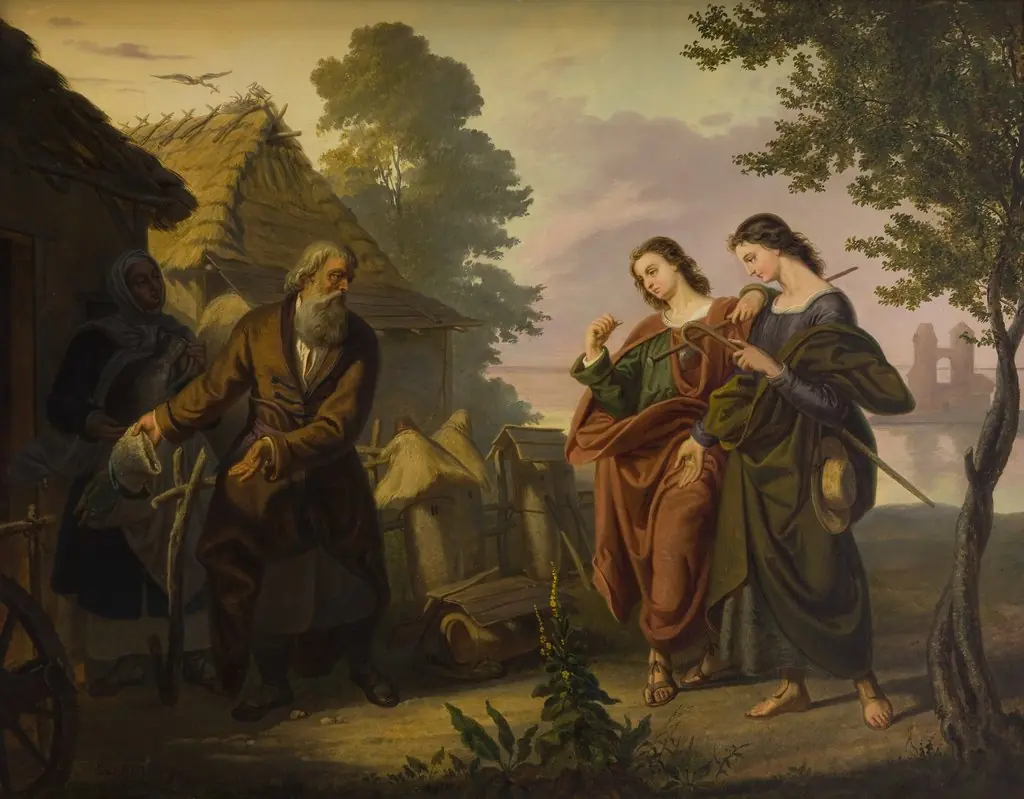 Pilgrims Visiting Piast
 Die Heimkehr des Landwehrmannes
 Eine Hirtenfamilie. Gewitter in der römischen Campagna
 Kirsten Svendsdatter Finds the Gold Horn at Gallehus on 20 July 1639
 The Foundling
 Surroundings of the Habsburg Ruin
 Romanian Family Heading for the Fair
 The Youth of future Pope Sixtus V
 Een van zin
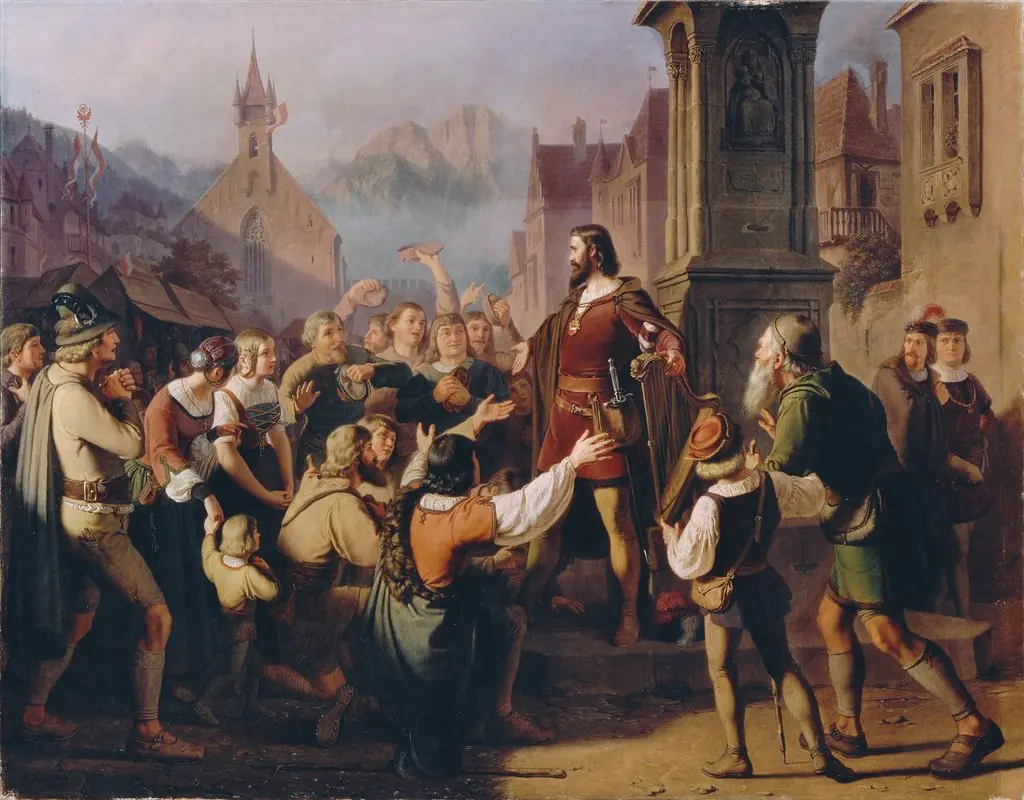 Der als Minnesänger verkleidete Herzog Friedrich IV. gibt sich auf der Flucht aus Konstanz seinen treuen Tirolern zu erkennen
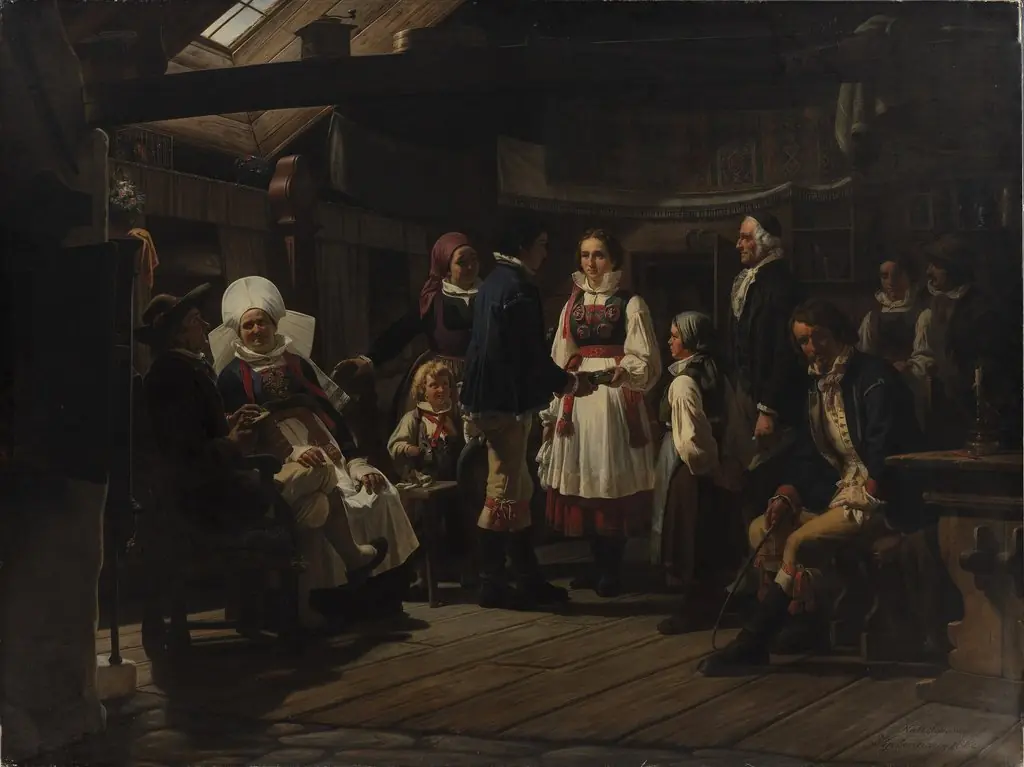 En trolovelse i Herrestad i Skåne
- Pilgrimage in the Roman Campagna