Artwork
En kurv med blomster, en kakadue og en frugtranke
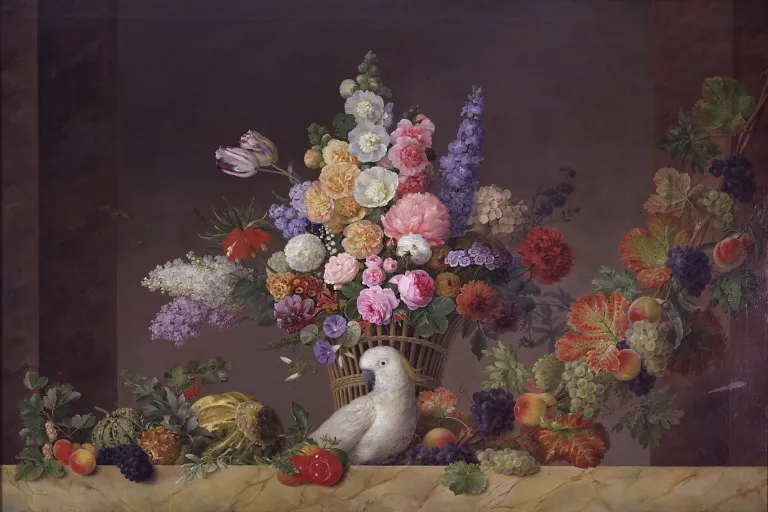
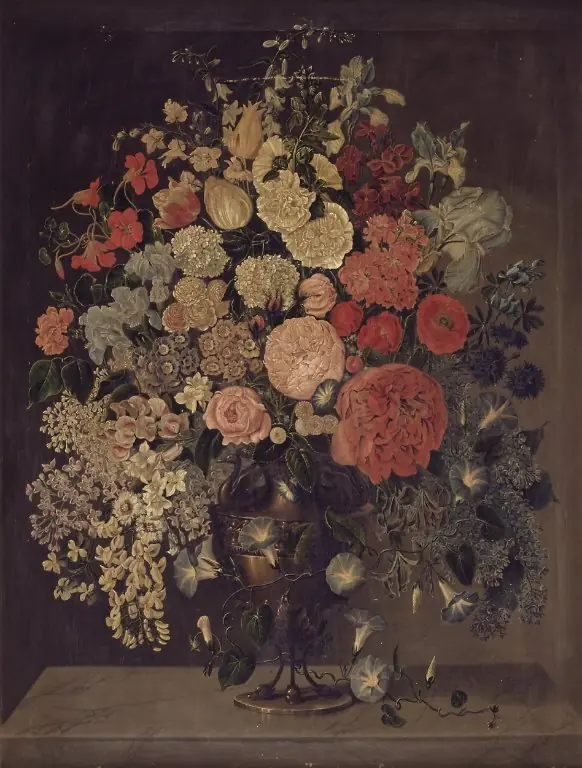
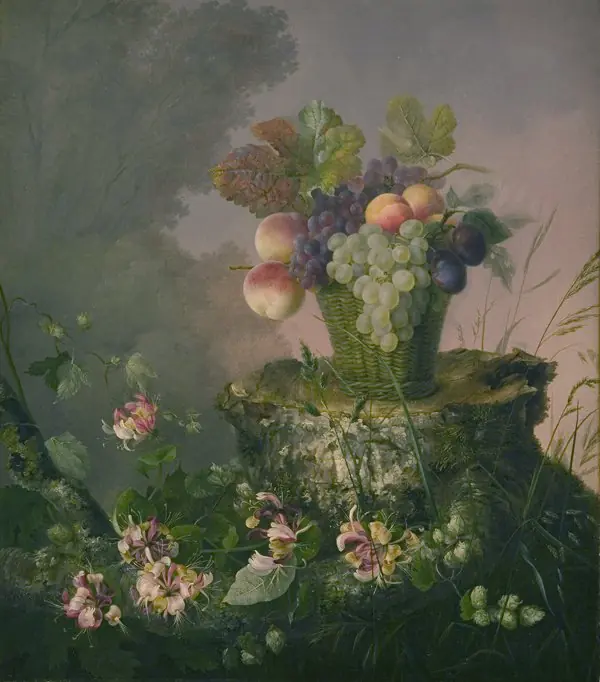
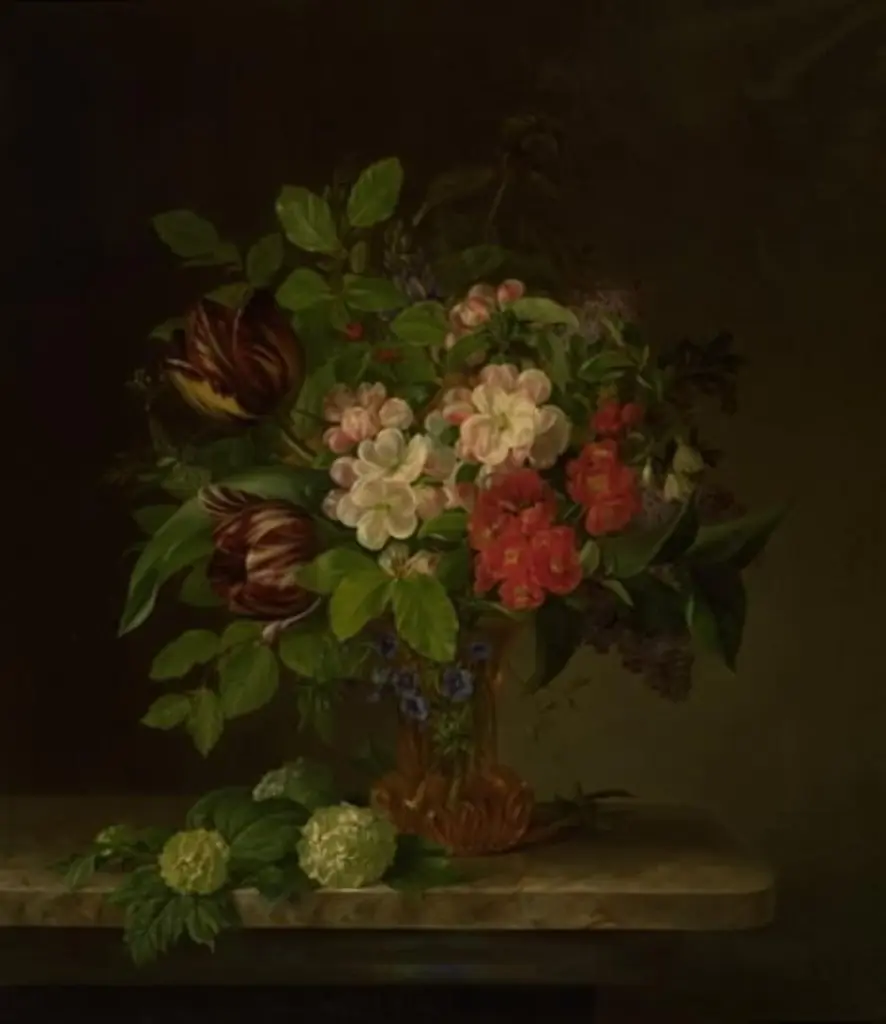
En kurv med blomster, en kakadue og en frugtranke is an oil painting by the Biedermeier artist Johannes Ludvig Camradt. It dates from 1829 and is held in the collection of the Statens Museum for Kunst.
About this work
Technique & Style
The painting is executed in oil on canvas, a medium typical of early nineteenth-century still-life practice.
The painting is executed in oil on canvas, a medium typical of early nineteenth-century still-life practice.
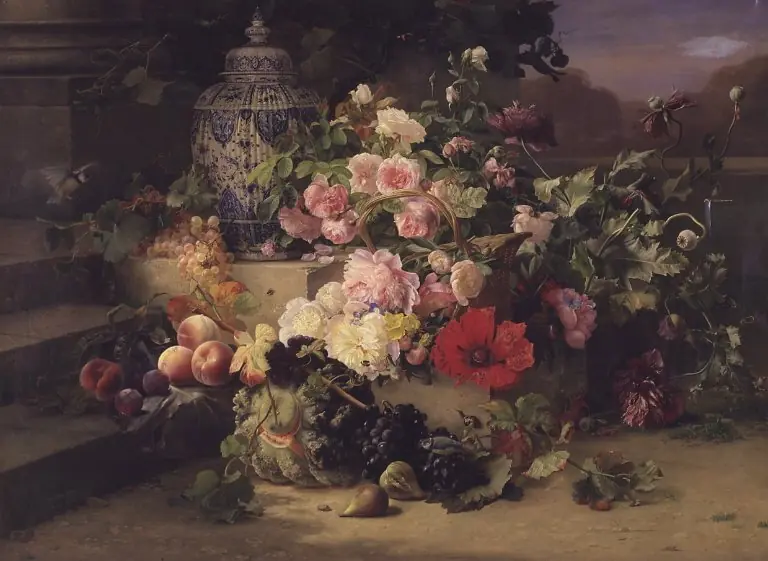
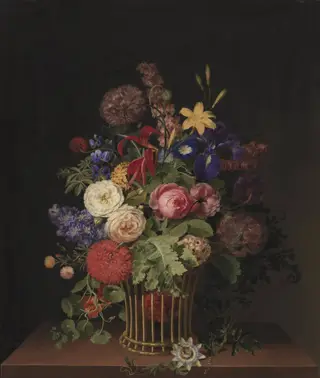
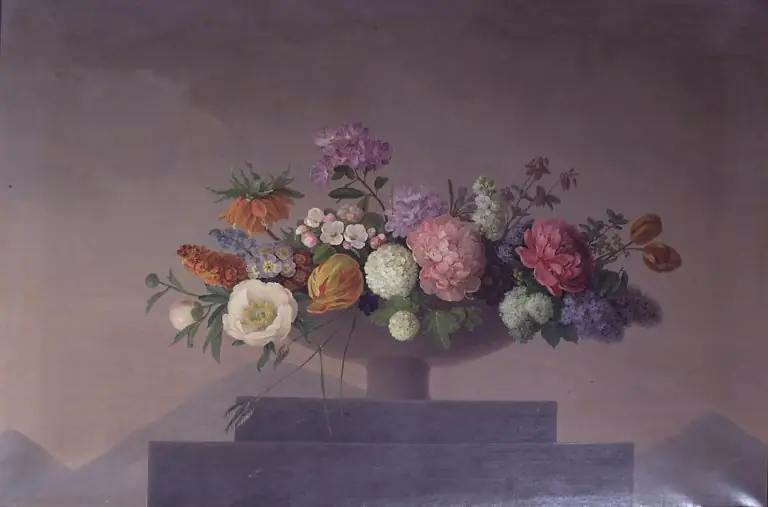
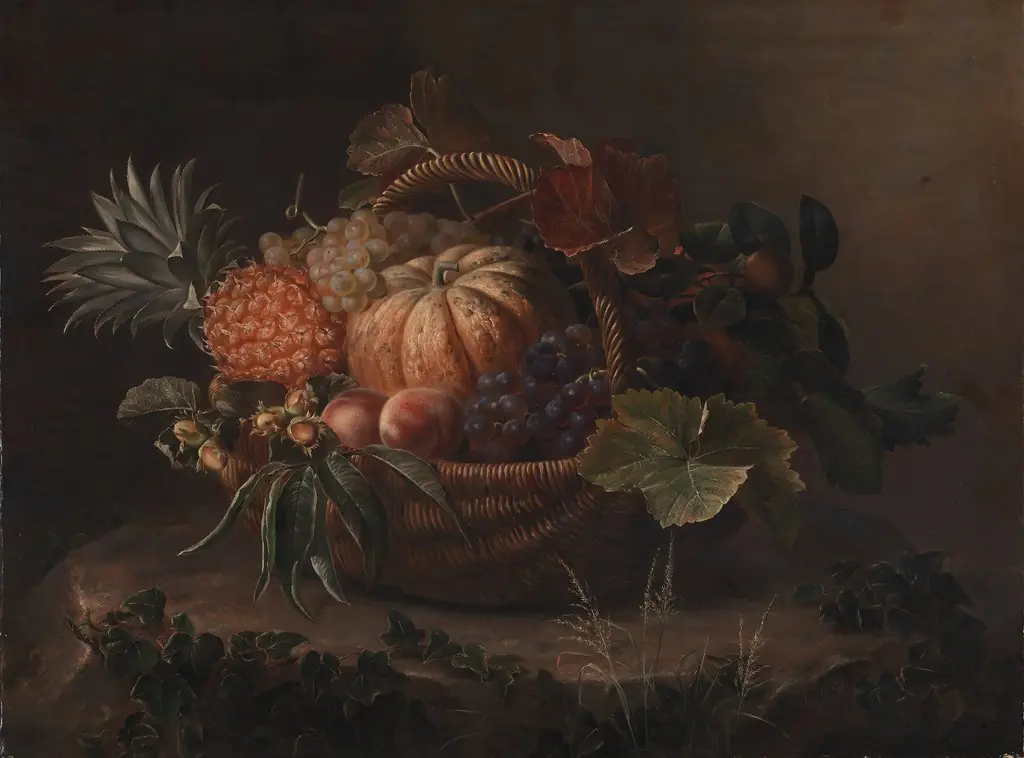
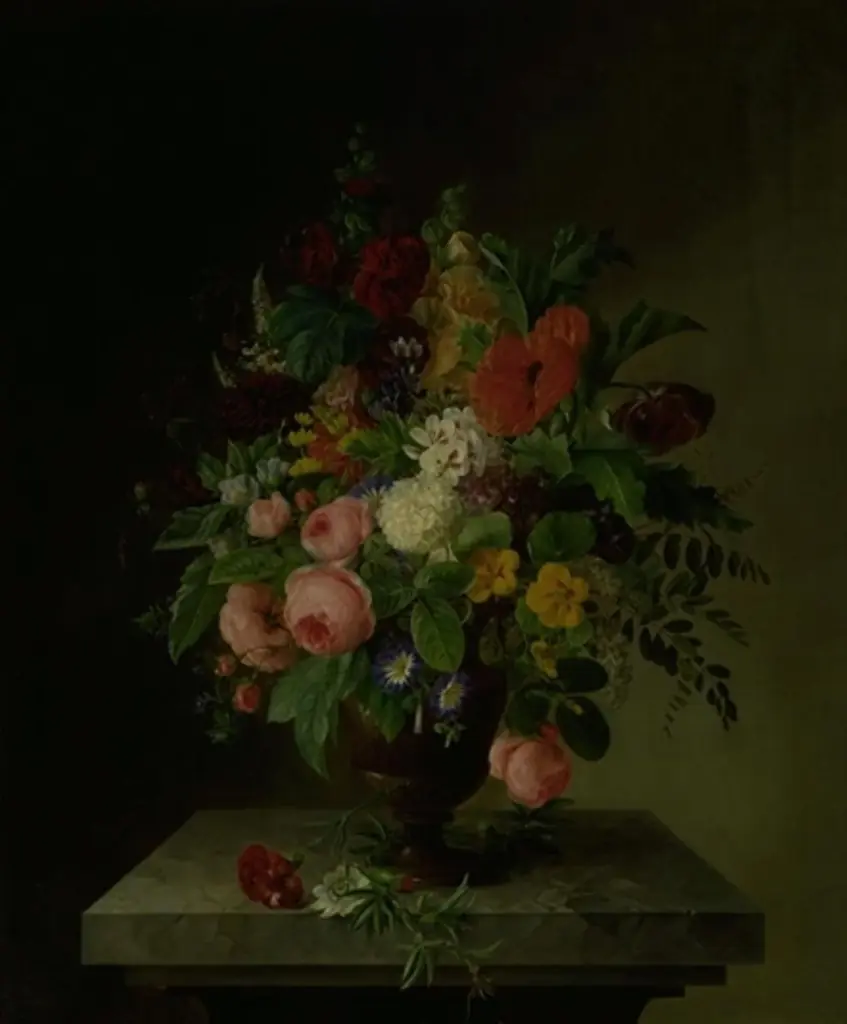
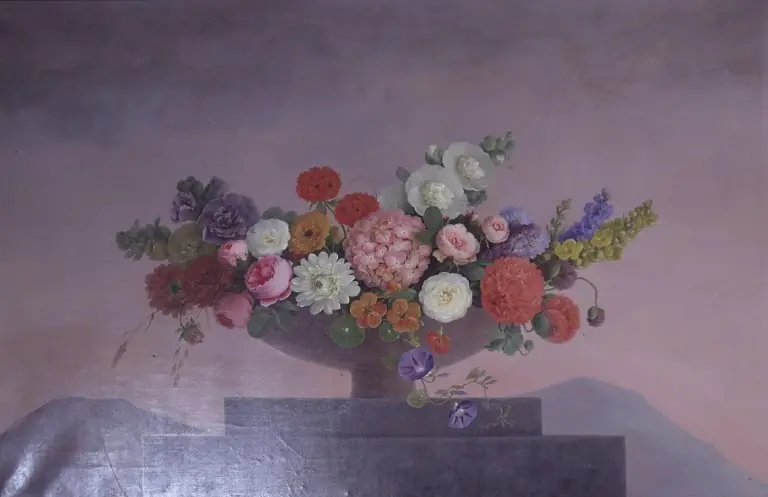
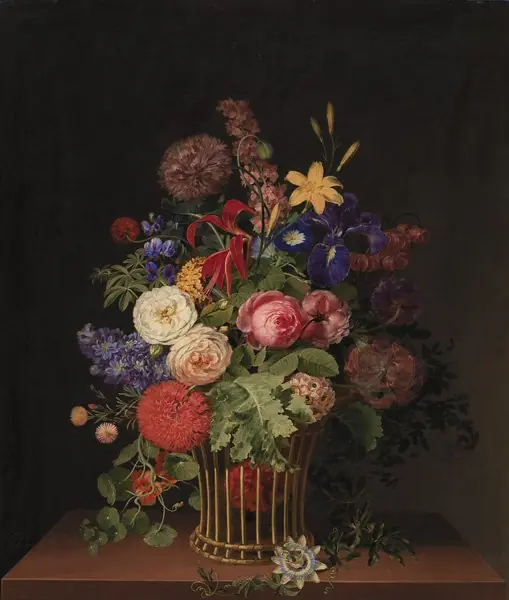
The composition is arranged on a horizontal format measuring 162.0 cm in width by 109.5 cm in height. Camradt’s handling emphasizes precise detail and smooth transitions, with careful modeling of light across petals, feathers, and fruit peel to create a convincing illusion of texture. The still-life genre conventions are evident in the careful staging of objects, a woven basket of flowers, a cockatoo, and a vine of fruit, within a shallow, planar space that directs the viewer’s focus inward rather than into depth.
History & Provenance
Johannes Ludvig Camradt created the oil painting En kurv med blomster, en kakadue og en frugtranke in 1829. The work is a still life depicting flowers, a cockatoo, and a fruit vine, executed on canvas. It is currently held in the collection of the Statens Museum for Kunst.
No specific details regarding the original commission, the initial owner, or the intermediate steps of the ownership chain are provided in the available records.
The painting En kurv med blomster, en kakadue og en frugtranke is held in the collection of the Statens Museum for Kunst. Created by Johannes Ludvig Camradt in 1829, the work remains part of this institution's holdings. The provided sources do not list a specific inventory or accession number for the piece, nor do they record any exhibition history.
Legacy
The painting's lasting impact stems from its botanical and zoological precision within early Danish academic still life. Camradt's meticulous rendering of diverse flora and fauna, exemplified by the bouquet of flowers, cockatoo, and fruit vine, influenced subsequent generations of Danish decorative artists seeking naturalistic detail. Its inclusion in the Statens Museum for Kunst collection cemented its status as a benchmark for 19th-century Danish still life, shaping museum curation and art historical narratives about the period's scientific illustration trends.
Overview
Johannes Ludvig Camradt’s 1829 oil painting, titled En kurv med blomster, en kakadue og en frugtranke, presents a richly arranged still life. A darkened backdrop accentuates a table laden with vivid blossoms, ripe fruit, and a generous basket brimming with roses and tulips, while a white cockatoo perches nearby, its calm gaze inviting the viewer’s attention.
Subject & Meaning
The composition juxtaposes natural abundance with domestic tranquility. The overflowing basket of flowers and the assortment of fruit suggest seasonal bounty, whereas the cockatoo, rendered with attentive detail, introduces an exotic element that hints at the era’s fascination with far‑away fauna and the interplay between cultivated and wild realms.
Artist & collection
Artist
Johannes Ludvig Camradt (1779–1849) was an artist, born in Copenhagen.