Artwork
Still Life: Flowers and Fruit
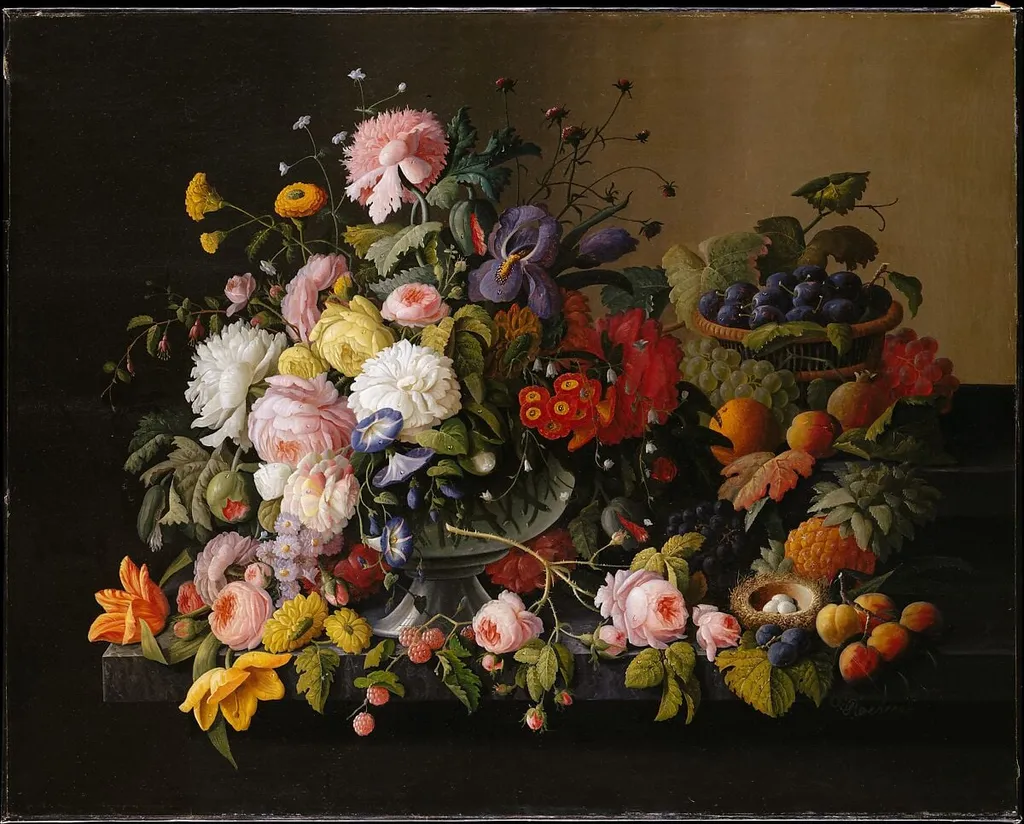
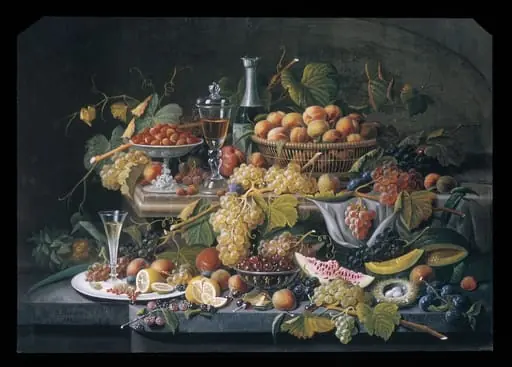
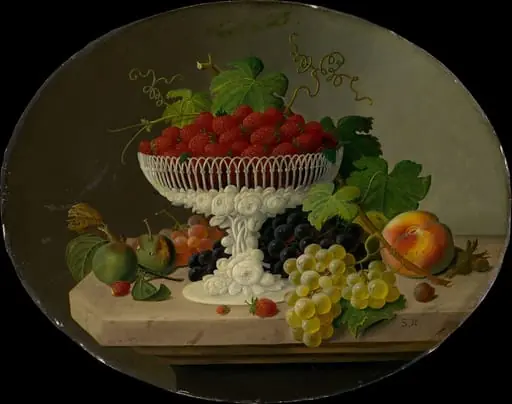
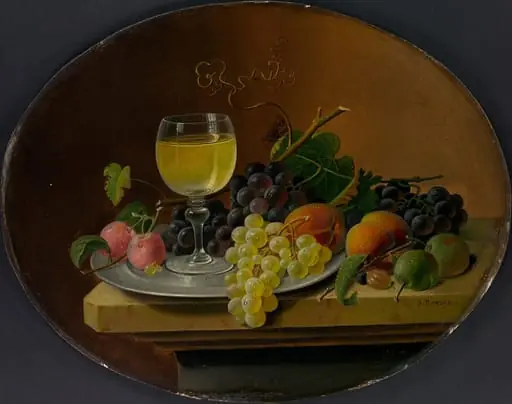
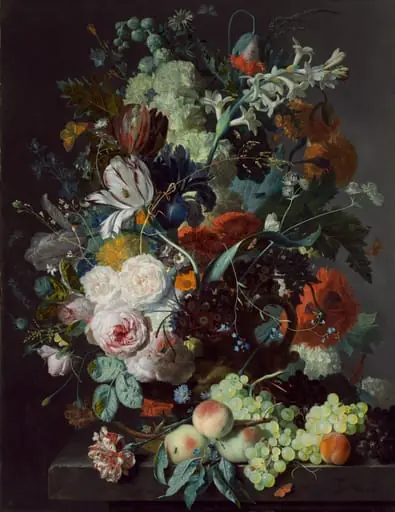
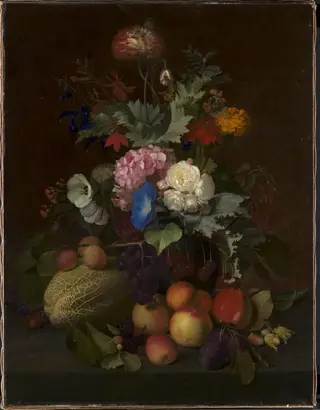
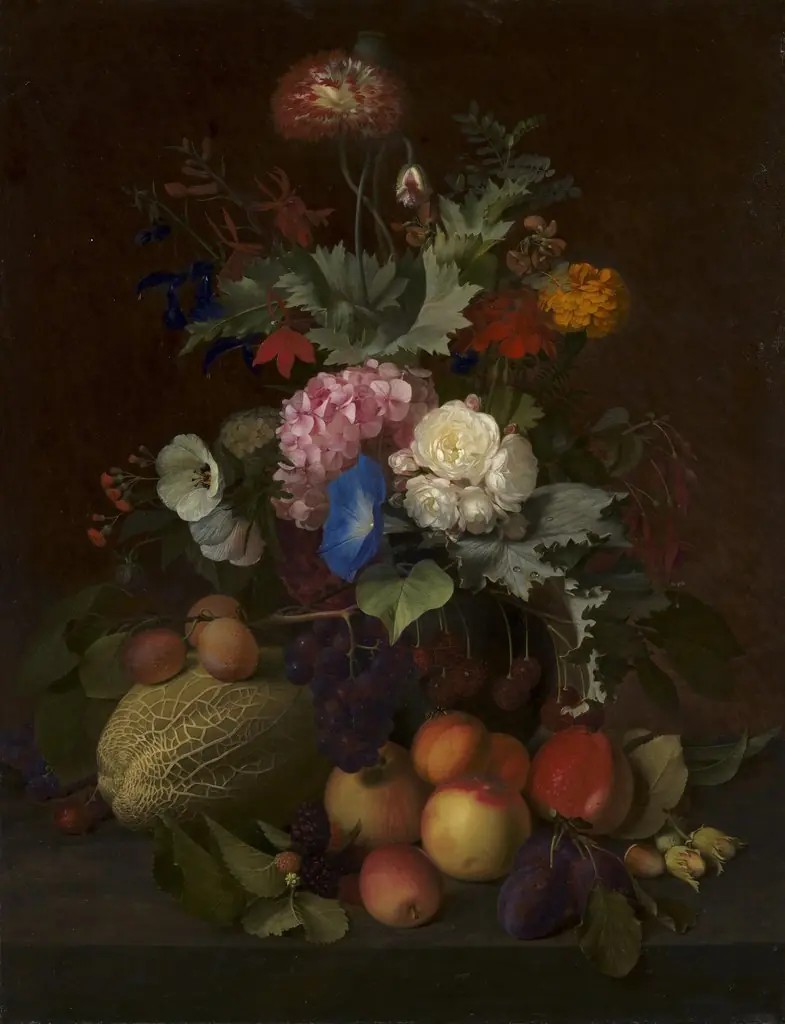
Still Life: Flowers and Fruit is an oil painting by the Biedermeier artist Severin Roesen. It dates from 1852 and is held in the collection of the Metropolitan Museum of Art.
- Accession no.
- 67.111
- Credit line
- Purchase, Bequest of Charles Allen Munn, by exchange, Fosburgh Fund Inc. and Mr. and Mrs. J. William Middendorf II Gifts, and Henry G. Keasbey Bequest, 1967
About this work
A pineapple and pomegranate sit among more than a dozen flowers and fruits in this large canvas Severin Roesen painted in New York in the early 1850s. The tropical produce reflects new shipping routes, and the crowded, precise arrangement recalls his earlier work as a Cologne porcelain painter. The Met acquired it in 1967.
Overview
Severin Roesen's Still Life: Flowers and Fruit, an oil on canvas created between 1850 and 1855, exemplifies the artist's signature style.
Severin Roesen's Still Life: Flowers and Fruit, an oil on canvas created between 1850 and 1855, exemplifies the artist's signature style. This substantial work, measuring 40 by 50 3/8 inches, features an abundant arrangement of over a dozen varieties of flowers and fruits. Painted during his early New York period, it showcases the meticulous detail and vibrant palette characteristic of his output. The Metropolitan Museum of Art acquired this piece in 1967.
Subject & Meaning
The canvas overflows with an opulent display of botanical forms, including a tropical pineapple and a pomegranate, alongside numerous other fruits and blossoms. This extravagant assortment reflects advancements in 19th-century agriculture and global trade, which made such diverse produce accessible. The inclusion of exotic items like the pineapple subtly suggests the burgeoning prosperity and potential abundance of the young American nation during this period.
Technique & Style
Roesen's approach to still life is characterized by its elaborate and densely packed compositions. The artist employed a brilliant color palette, rendering each element with exceptional clarity and precision. This meticulous attention to detail, evident in the textures of petals and fruit skins, reflects his earlier training as a porcelain painter in Cologne, where fine brushwork and exactitude were paramount.
History & Provenance
Painted shortly after Roesen's immigration to New York from Germany around 1848, this work dates to his initial, productive period in the United States. He quickly gained recognition, exhibiting eleven paintings with the American Art-Union between 1848 and 1852. The Metropolitan Museum of Art acquired this undated canvas in 1967 through a multi-faceted purchase involving several bequests and gifts, securing its place in a prominent public collection.
Context
Born in Boppard-am-Rhein in 1816, Roesen received training as a porcelain painter in Cologne. He immigrated to the United States in late 1847 or early 1848, seeking refuge from personal debts and the political unrest sweeping Europe during the 1848 revolutions. After establishing his career in New York, Roesen later relocated to various Pennsylvania towns, eventually settling in Williamsport around 1860 or 1861.
Artist & collection
Artist
Severin Roesen (c. 1815 in Boppard – c. 1872) was a Prussian-American painter known for his abundant fruit and flower still lifes, and is today recognized as one of the major American painters in that genre from the nineteenth century.