Artwork
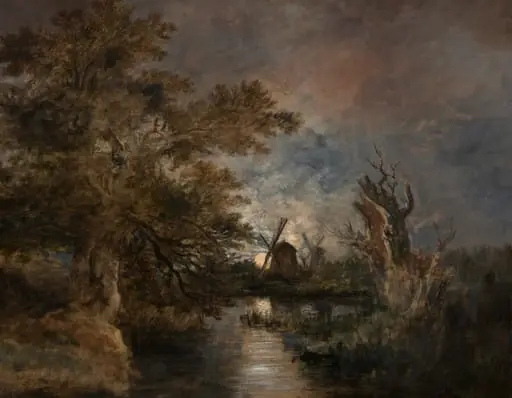
Moonlight, Blairlogie
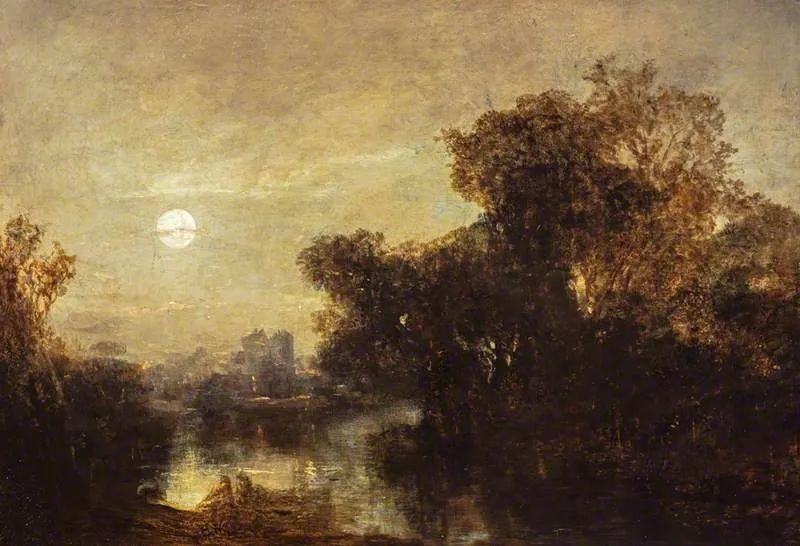
Moonlight, Blairlogie is an unspecified painting by the Plein Air artist John Crawford Wintour. It dates from 1875 and is held in the collection of the National Galleries Scotland.
About this work
Overview
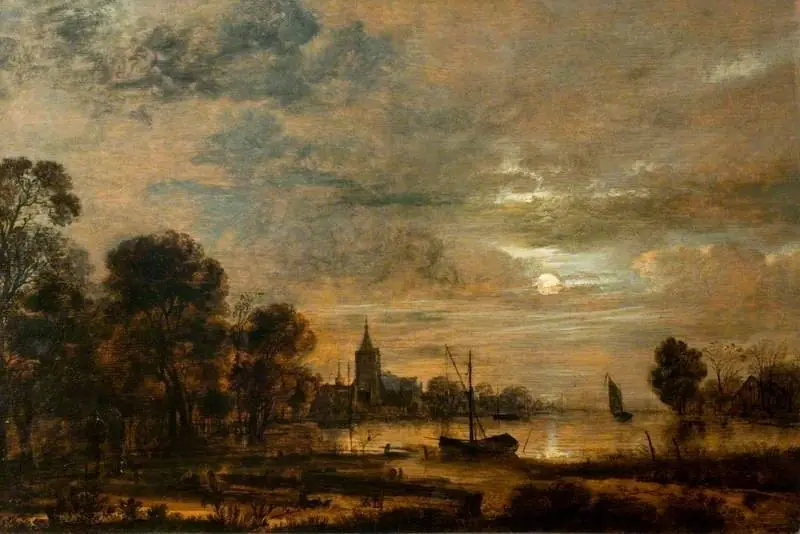
John Crawford Wintour’s 1875 oil painting Moonlight, Blairlogie is part of the Scottish National Gallery’s collection. The work depicts a quiet nocturnal scene in which moonlight illuminates a still water surface, while surrounding foliage recedes into darkness. Distant architectural silhouettes provide a sense of scale, and the overall composition conveys a calm, reflective atmosphere.
Subject & Meaning
The canvas presents a rural landscape bathed in lunar illumination, emphasizing the contrast between the bright, reflected moonlight and the enveloping shadows of trees and bushes. The tranquil water acts as a mirror for the celestial glow, suggesting themes of serenity and the subtle power of natural light to transform ordinary scenery into a contemplative space.
Technique & Style
Careful modulation of light and shadow creates a three‑dimensional effect, while the softened edges of distant structures enhance atmospheric perspective.
Wintour employs a restrained palette of deep greens and muted earth tones, punctuated by the silvery tones of the moon and its reflection. Careful modulation of light and shadow creates a three‑dimensional effect, while the softened edges of distant structures enhance atmospheric perspective. The handling of chiaroscuro highlights the interplay between illumination and darkness typical of late‑19th‑century landscape painting.
History & Provenance
Completed in 1875, Moonlight, Blairlogie entered the Scottish National Gallery’s holdings at an unspecified date, where it remains on display. The painting reflects Wintour’s interest in Scottish scenery and his participation in the broader Victorian tradition of capturing natural light effects in plein‑air works.
Context
Created during a period when Scottish artists were increasingly exploring the nation’s rural vistas, the work aligns with contemporary interests in atmospheric effects and the romanticization of the countryside. Its focus on moonlit scenery parallels the era’s fascination with nocturnal studies, a subject explored by peers such as James McNeill Whistler and the Glasgow School.
Artist & collection