Artwork
Indians Playing Cards
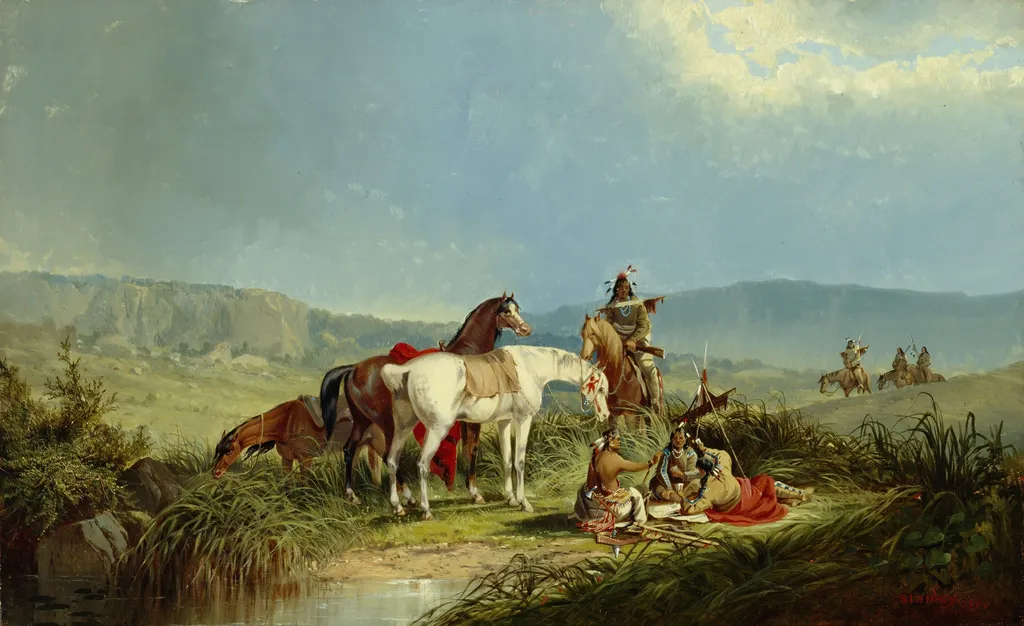
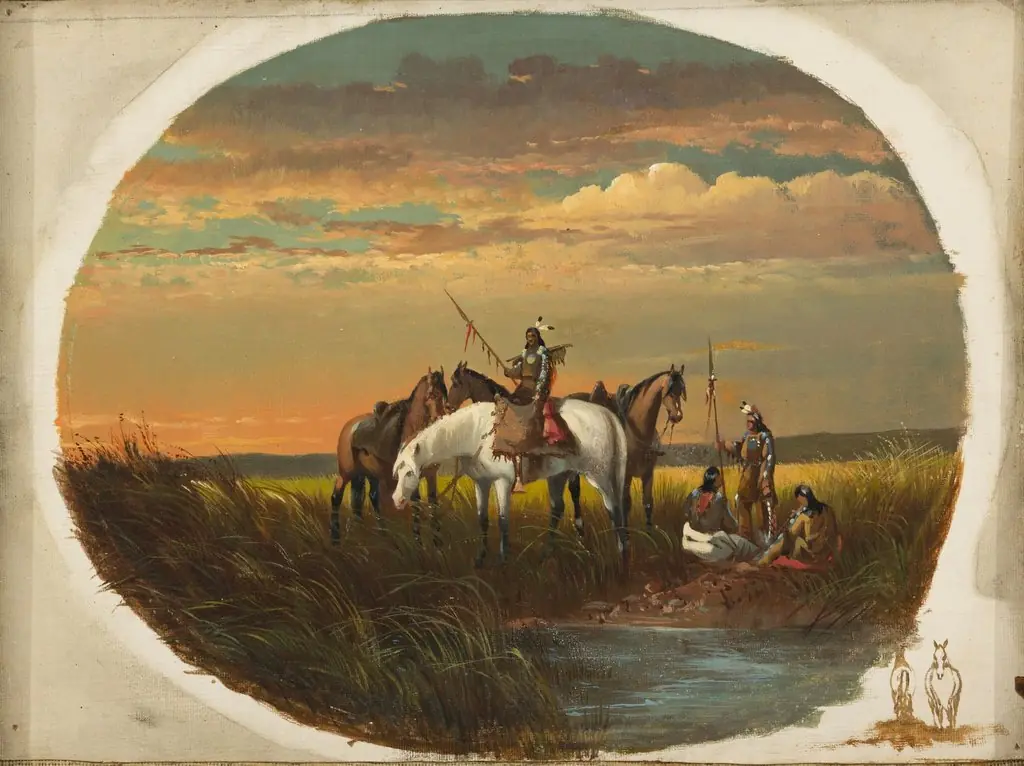
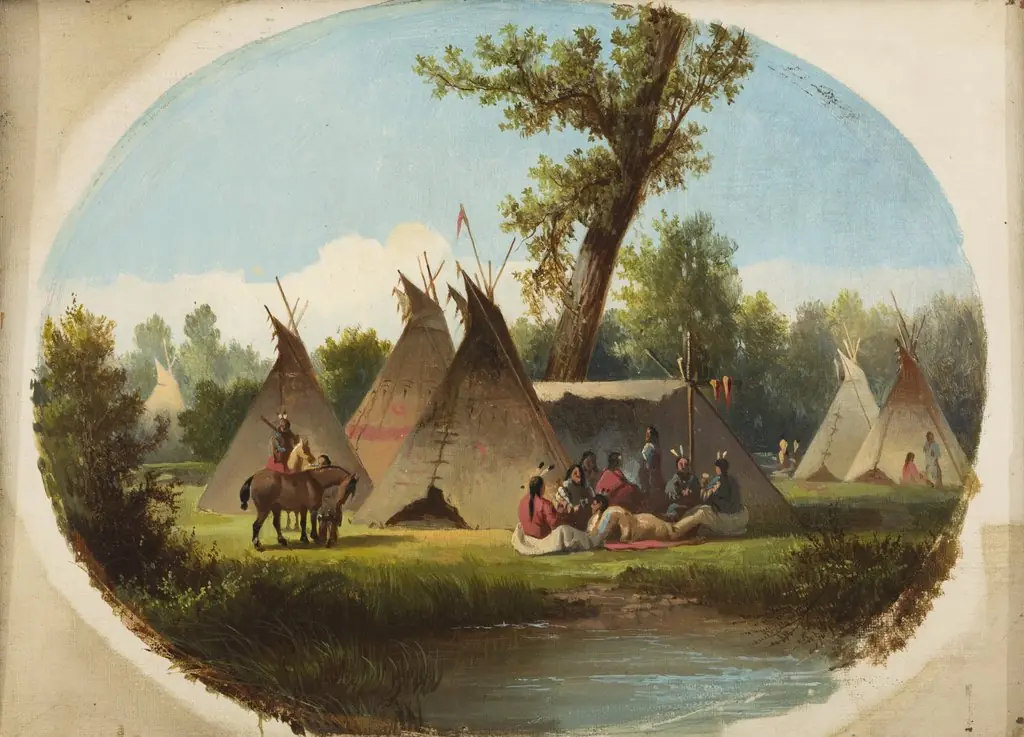
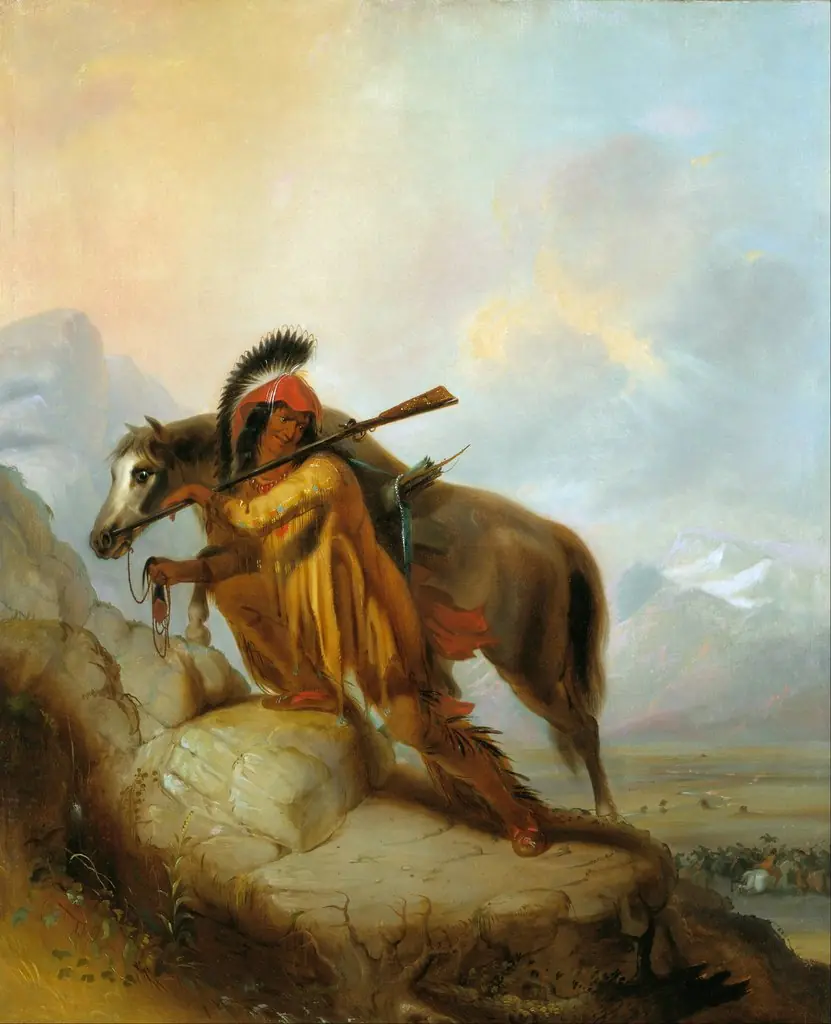
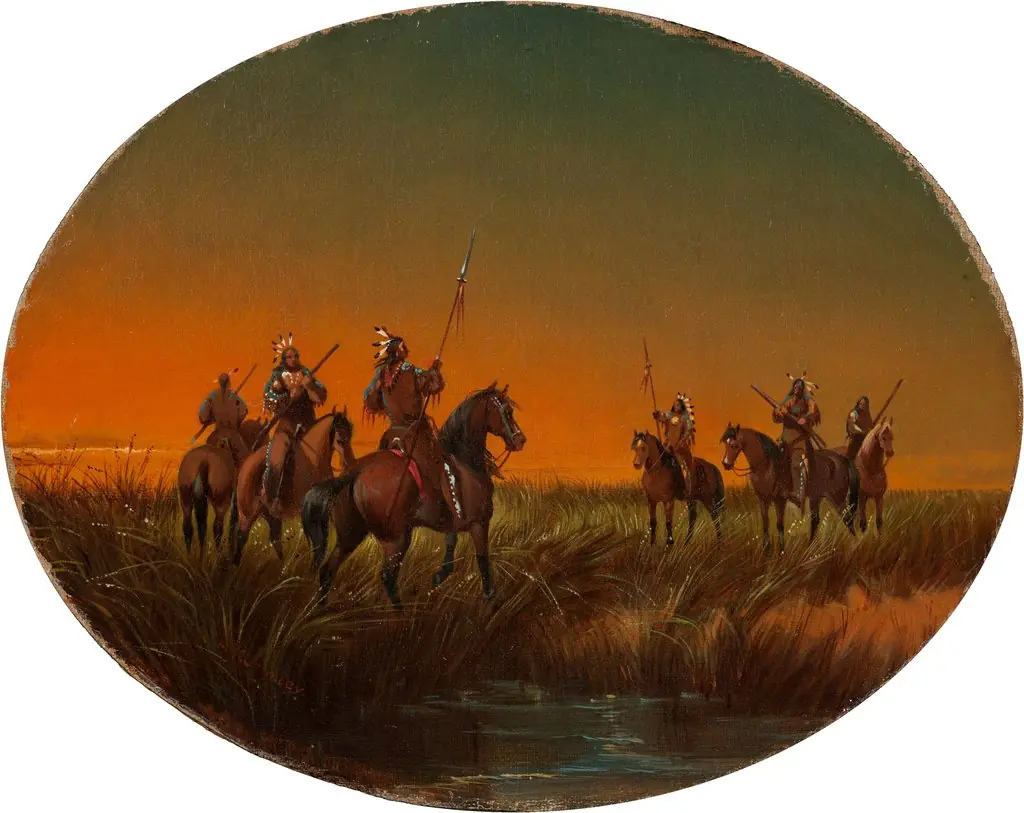
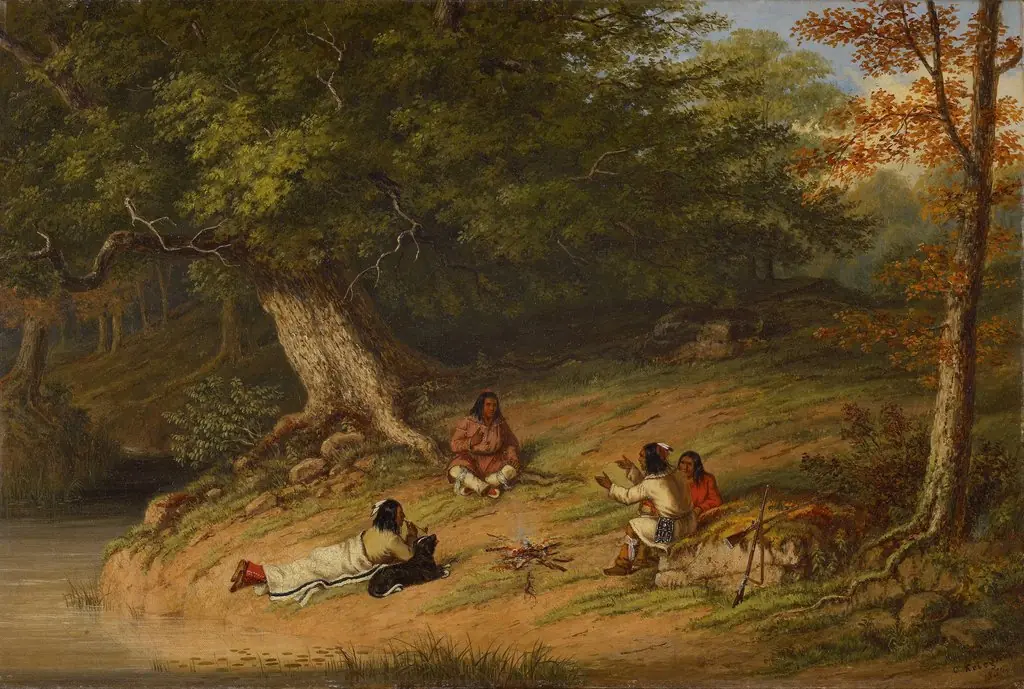
Indians Playing Cards is an oil painting by the American Impressionist artist John Mix Stanley. It dates from 1866 and is held in the collection of the Detroit Institute of Arts.
About this work
Subject & Meaning
The artwork is housed at the Detroit Institute of Arts, where it remains part of the institution's collection of American landscape paintings.
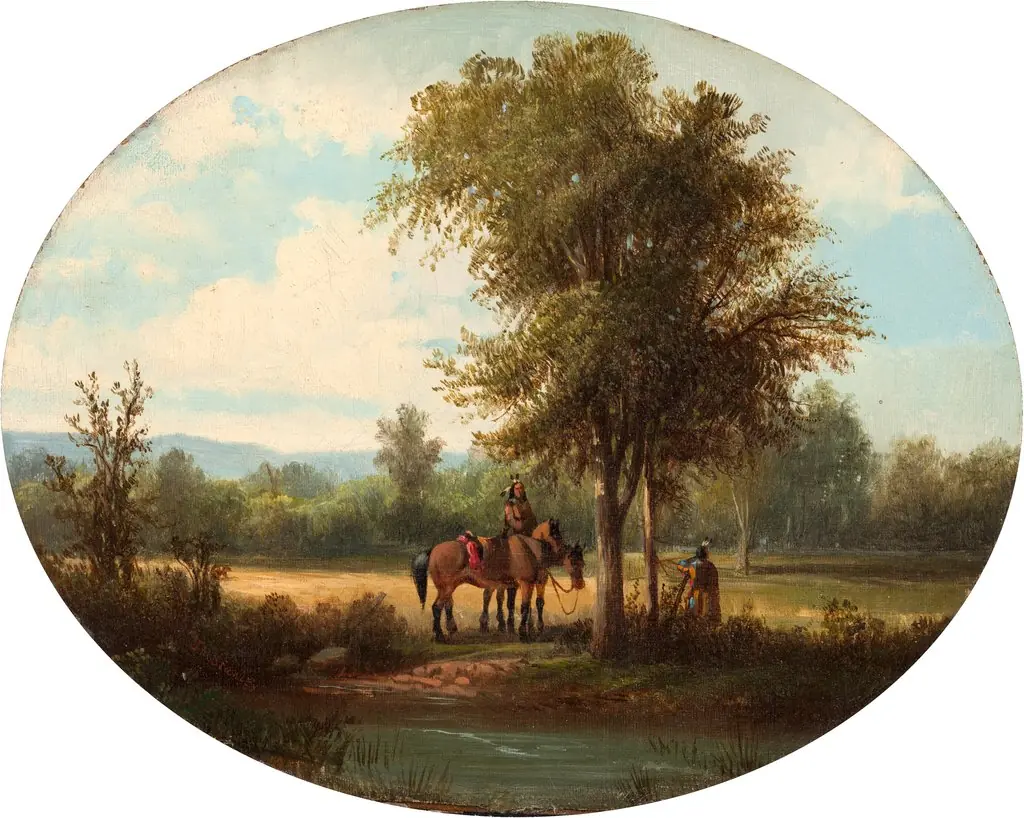
The painting depicts a group of Indigenous peoples mounted on horseback engaged in a card game, symbolizing cultural encounters on the frontier during the mid‑19th century. The horse, a later introduction to Native societies, conveys themes of adaptation and interaction with European influences. The work reflects contemporary 19th‑century perspectives that framed Indigenous life within a landscape of exploration and expansion.
Stanley's composition emphasizes narrative detail, portraying participants in traditional attire while incorporating elements of Western material culture such as playing cards, which underscores the blending of worlds. This scene serves as a visual record of a moment when Native communities navigated changing social dynamics amid westward settlement.
The artwork is housed at the Detroit Institute of Arts, where it remains part of the institution's collection of American landscape paintings.
Technique & Style
Executed in oil on canvas, the work measures 41.2 cm in height by 66 cm in width. The composition presents a narrative scene of Indigenous people gathered around a card game, rendered with careful attention to descriptive detail and local color. Brushwork is smooth and blended in passages depicting faces and hands, while broader areas of costume and setting employ broader, flatter strokes to define form and light.
The palette relies on earth tones punctuated by brighter accents in clothing and accoutrements, heightening the contrast between the figures and their subdued surroundings. Stylistically, the painting aligns with nineteenth-century genre traditions, emphasizing anecdotal clarity and anecdotal realism rather than atmospheric or painterly effects.
History & Provenance
The painting Indians Playing Cards was created in 1866 by John Mix Stanley, as recorded by both the artist’s dated work and the institution’s cataloging of the piece. The work entered the collection of the Detroit Institute of Arts, where it has remained since acquisition. The Detroit Institute of Arts lists the painting’s dimensions as 41.2 cm in height and 66 cm in width, consistent with its recorded genre as a landscape painting depicting Indigenous peoples of the Americas.
The painting is held by the Detroit Institute of Arts, accessioned as 1987.12.
It has been exhibited publicly at least once: in 1987 at the Detroit Institute of Arts as part of an installation titled “American Indian Painting in the 19th Century,” where the work was shown under its accession number.
Overview
Indians Playing Cards is a 1866 oil painting by John Mix Stanley, an artist known for documenting Native American life and landscapes.
Own this work as a print
Artist & collection
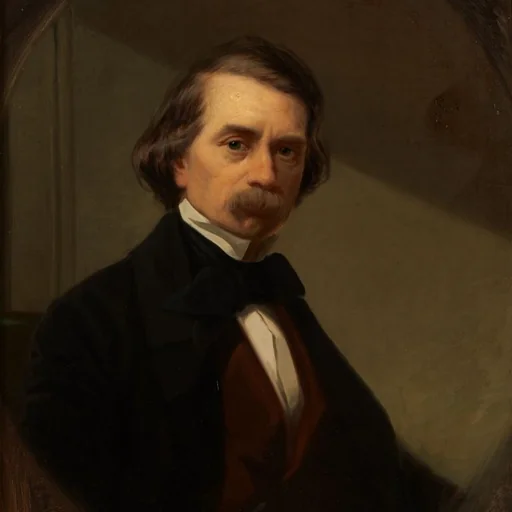
Artist
John Mix Stanley (January 17, 1814 – April 10, 1872) was an artist-explorer, an American painter of landscapes, and Native American portraits and tribal life.