Artwork
Conscience and the Recording Angel
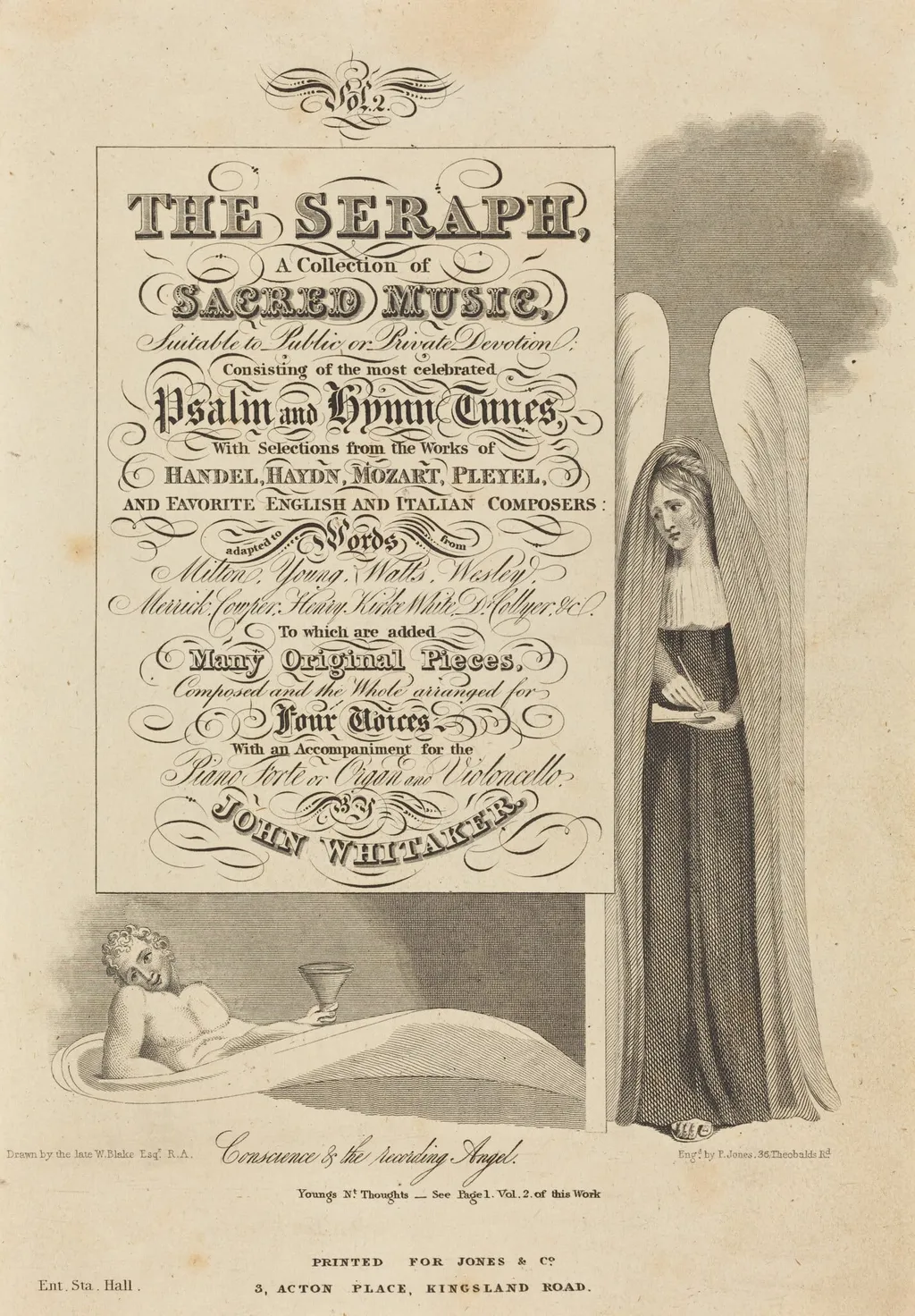
Conscience and the Recording Angel is an ink print by the Romanticist artist P. Jones. It dates from 1818 and is held in the collection of the National Gallery of Art. Created around 1818 by P.
- Inscription
- Inscribed:center center plate: Vol. 2 / THE SERAPH, / A Collection of / SACRED MUSIC, Suitable to Public or Private Devotion / Consisting of the most celebrated / Psalm and Hymn Tunes, / With Selections from the Works of / HANDEL, HAYDN, MOZART, PLEYEL, / AND FAVORITE ENGLISH AND ITALIAN COMPOSERS: / adapted to Words from / Milton, Young, Watts, Wesley, / Merrick, Comper, Heniy, Kirke, White, Dr. Collyer, ect. / To which are added / Many Original Pieces, / Composed and the Whole arranged for / Four voices, / With an Accompaniment for the / Piano Forte or Organ and Violincello. / JOHN WITTAKER / Drawn by the late W. Blake Esq.r R.A. Conscienceand the recording Angel. Eng.d by P. Jones. 36 Theobalds Rd. / [SEE COMMENTARY FOR CONTINUATION]
About this work
Overview
The work belongs to the tradition of didactic prints that visualized moral accountability in early 19th-century Britain.
Created around 1818 by P. Jones, this engraving on wove paper depicts a moral confrontation between a man in nightwear and a celestial figure. Rendered in fine black ink lines, the composition centers on emotional tension rather than narrative action. The angel’s presence is solemn, the man’s posture one of inner turmoil. The work belongs to the tradition of didactic prints that visualized moral accountability in early 19th-century Britain.
Subject & Meaning
The scene portrays a man overwhelmed by guilt, clutching his head as a robed angel, wings finely detailed, holds an open but blank ledger. The empty page suggests the moment before judgment, neither record nor absolution has been written. The man’s disheveled state and anguished expression imply recent transgression, while the angel’s stillness conveys inevitable, impartial observation. The image functions as a visual meditation on conscience and moral reckoning.
Technique & Style
Jones employed meticulous cross-hatching to model form and depth, using fine, intersecting lines to render fabric folds, wing feathers, and the man’s trembling posture. The contrast between the smooth, unmarked page and the densely worked surfaces of skin and robe heightens the emotional weight. The absence of color and the use of wove paper emphasize clarity and intimacy, aligning with the print’s introspective theme.
History & Provenance
The print was produced in England during a period when religious and moral imagery was widely circulated among the middle class. Though little is documented about the artist P. Jones, the work’s survival in institutional collections, including the National Gallery of Art in Washington, D.C., indicates its recognition as a representative example of early 19th-century moral engraving.
Context
In early 1800s Britain, prints like this were used to reinforce ethical behavior through visual allegory. The Recording Angel, drawn from Christian eschatology, was a familiar motif in sermons and illustrated tracts. Jones’s version strips away overt religious symbolism, focusing instead on psychological realism, reflecting a broader cultural shift toward internalized morality over external doctrine.
Legacy
Though not widely reproduced or celebrated in its time, the engraving endures as a quiet example of how visual art conveyed personal moral conflict in the pre-photographic era. Its restrained composition and psychological nuance anticipate later developments in narrative printmaking, offering insight into how ordinary viewers were encouraged to reflect on conscience through imagery.
Own this work as a print
Artist & collection

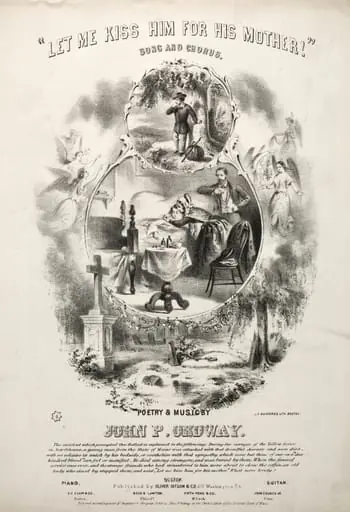
- Let me Kiss him for his Mothers - Sheet Music Cover
 H Beard Print Collection
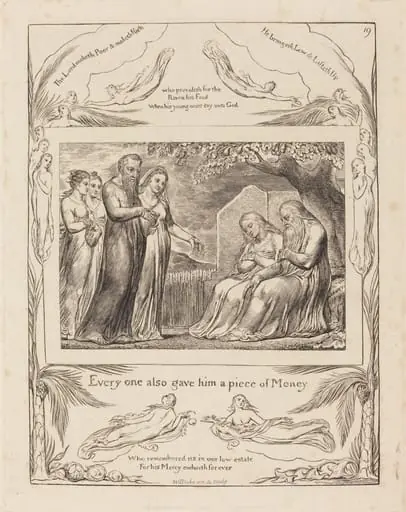 Job Accepting Charity
 H Beard Print Collection
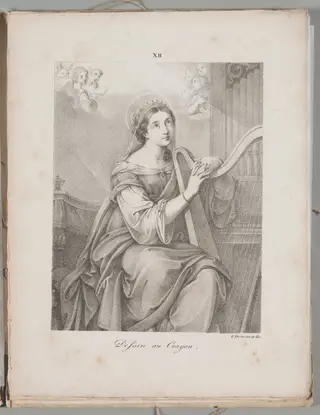 Art of the Lithograph: Saint Cecily, Plate XII
 H Beard Print Collection
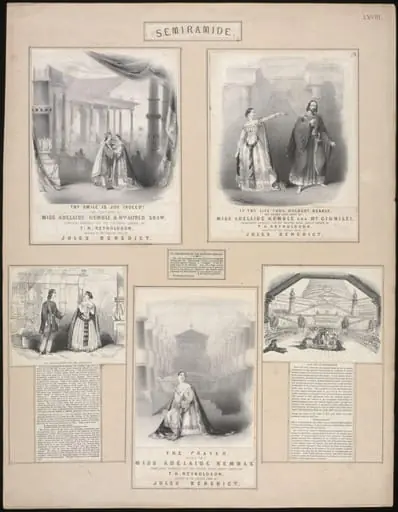 H Beard Print Collection
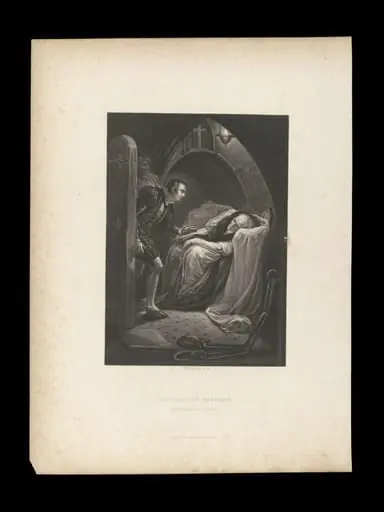 H Beard Print Collection
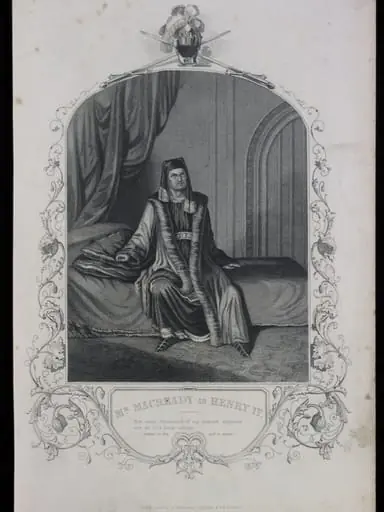 H Beard Print Collection
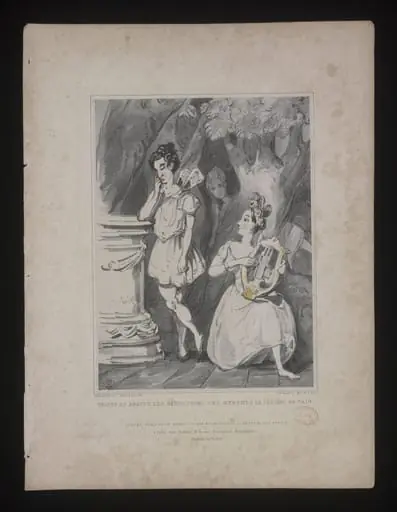 Triste et abattu les seductions des nymphes le tentent en vain
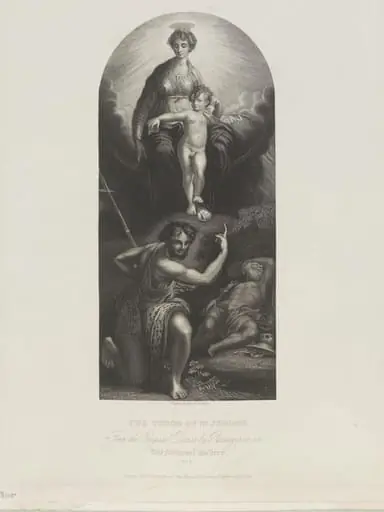 Vision of St. Jerome
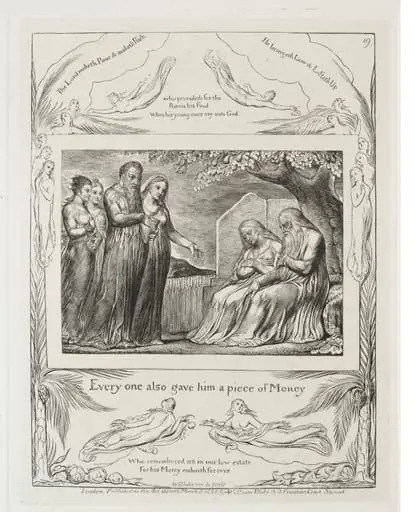 The Book of Job: Pl. 19, Every one also gave him a piece of money