Artwork
Untitled
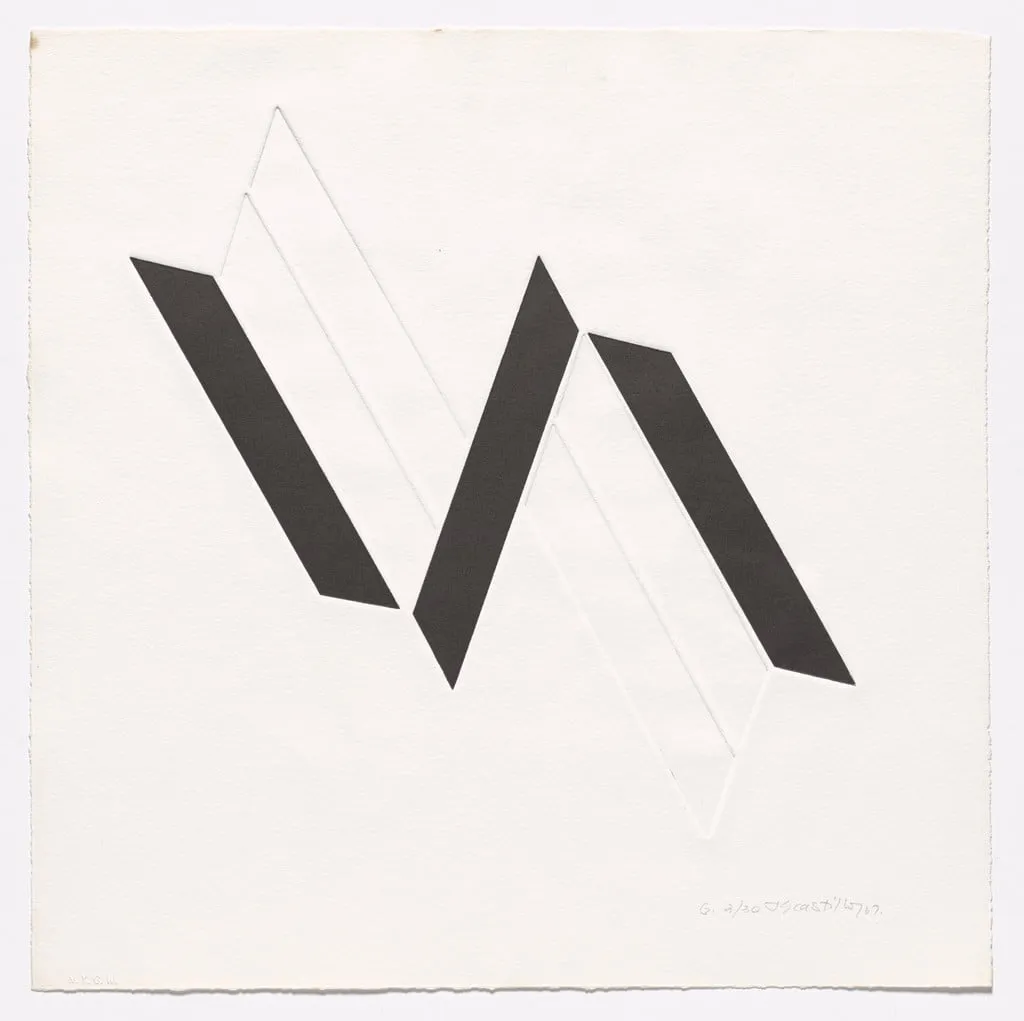
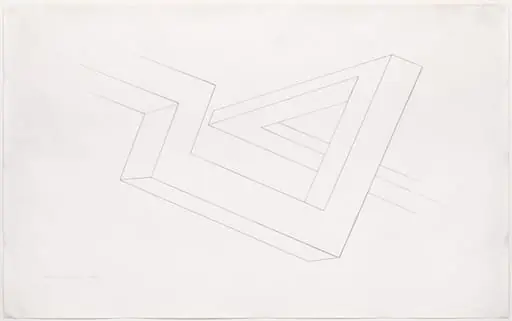
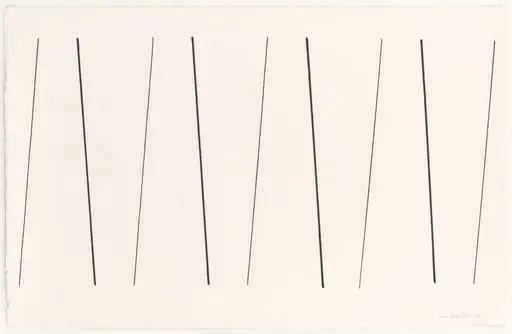
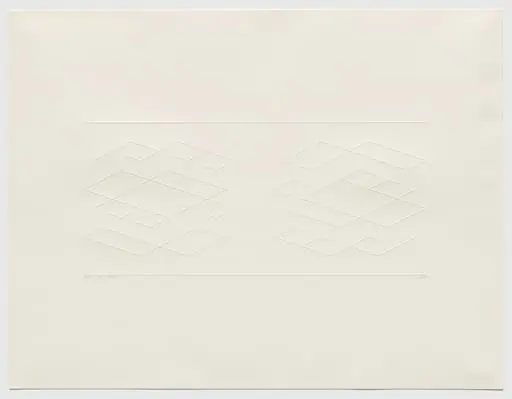
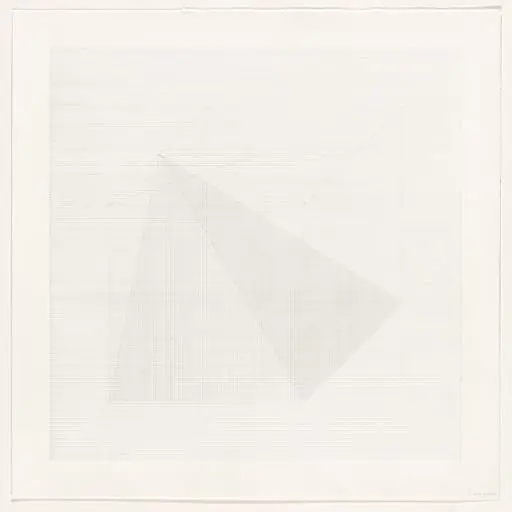
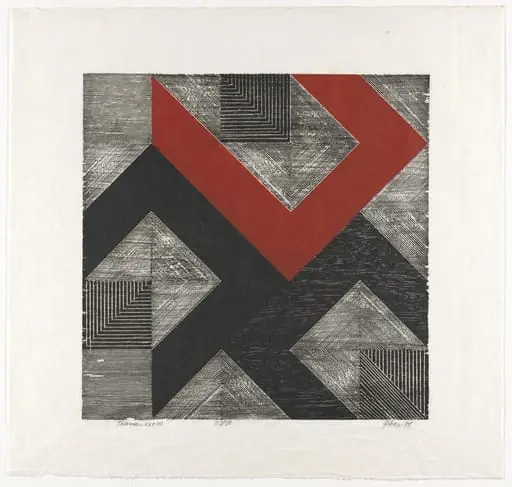
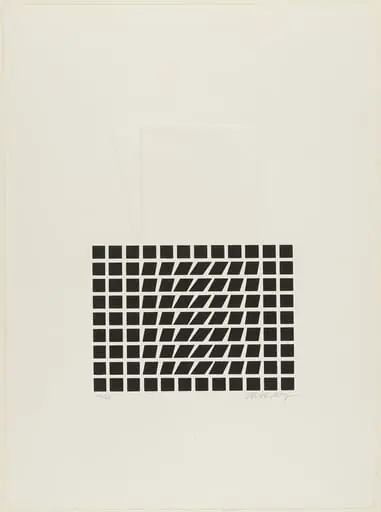
Untitled is an ink print by José Guillermo Castillo. It dates from 1967 and is held in the collection of the Museum of Modern Art.
About this work
Overview
The surfaces are subtly raised through embossing, giving the shapes a tactile presence that distinguishes them from flat inked areas.
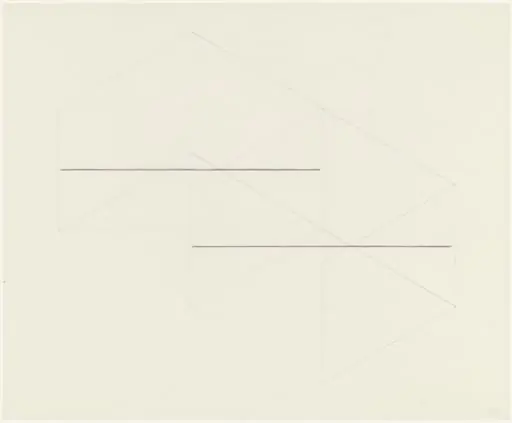
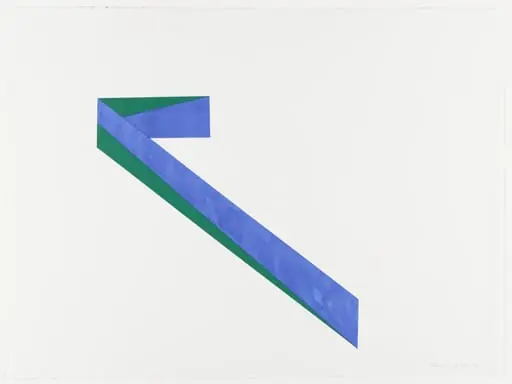
Created in 1967, this work is one of ten prints in a series by José Guillermo Castillo, combining etching and embossing techniques. It is part of The Museum of Modern Art’s collection. The composition features three abstract, tilted forms on a pale ground, arranged without symmetry.
The surfaces are subtly raised through embossing, giving the shapes a tactile presence that distinguishes them from flat inked areas.
Subject & Meaning
The forms lack clear representational references, suggesting geometric abstraction rather than narrative. Their uneven stacking and delicate connecting lines imply a fragile equilibrium, as if suspended in space. The absence of context or scale invites contemplation of balance, weight, and spatial relationships, reflecting mid-century concerns with form and perception.
Technique & Style
Castillo employed etching to incise fine lines into a metal plate, then added embossing to raise the paper surface where the forms appear. This dual process creates both visual contrast and physical texture. The thin, precise lines linking the shapes enhance the sense of levitation, while the embossed areas catch light differently, emphasizing their three-dimensionality without color or shading.
History & Provenance
The work was produced in 1967 during a period of experimental printmaking in Latin America. It entered The Museum of Modern Art’s collection shortly after its creation, likely through acquisition or donation. The series as a whole reflects Castillo’s engagement with international abstract movements while maintaining a distinct personal vocabulary rooted in tactile materiality.
Context
In the late 1960s, artists across Latin America explored non-representational forms as a means of distancing from political and social turmoil. Castillo’s work aligns with broader trends in geometric abstraction, yet his emphasis on physical texture through embossing sets it apart from purely graphic approaches. The prints respond to global modernist currents while asserting a quiet, material sensitivity.
Legacy
Castillo’s use of embossing in printmaking influenced later artists interested in the physicality of the printed surface. While not widely exhibited, this series remains a quiet example of how traditional techniques could be expanded to evoke spatial and tactile ambiguity. It continues to be studied for its subtle integration of process and perception in postwar printmaking.
Artist & collection