Artwork
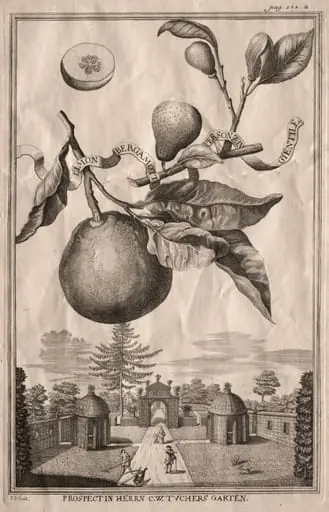
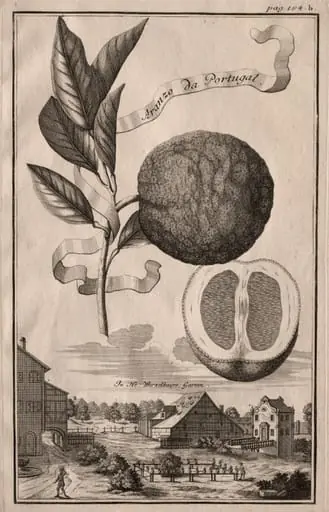
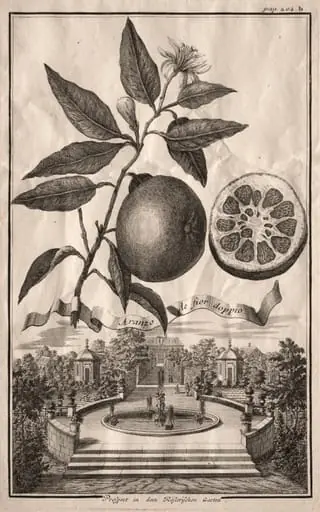
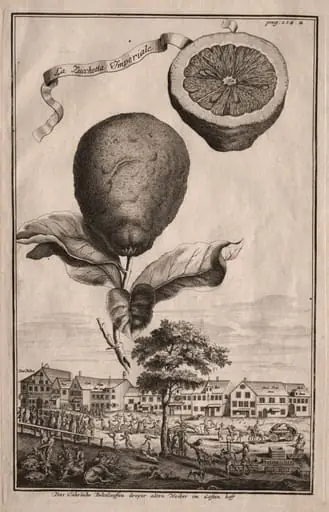
Nurnbergische Hesperides: No. 125 - Limon Ponzino da Neapoli. Palazzo del N. H. Cornaro à Fiesso
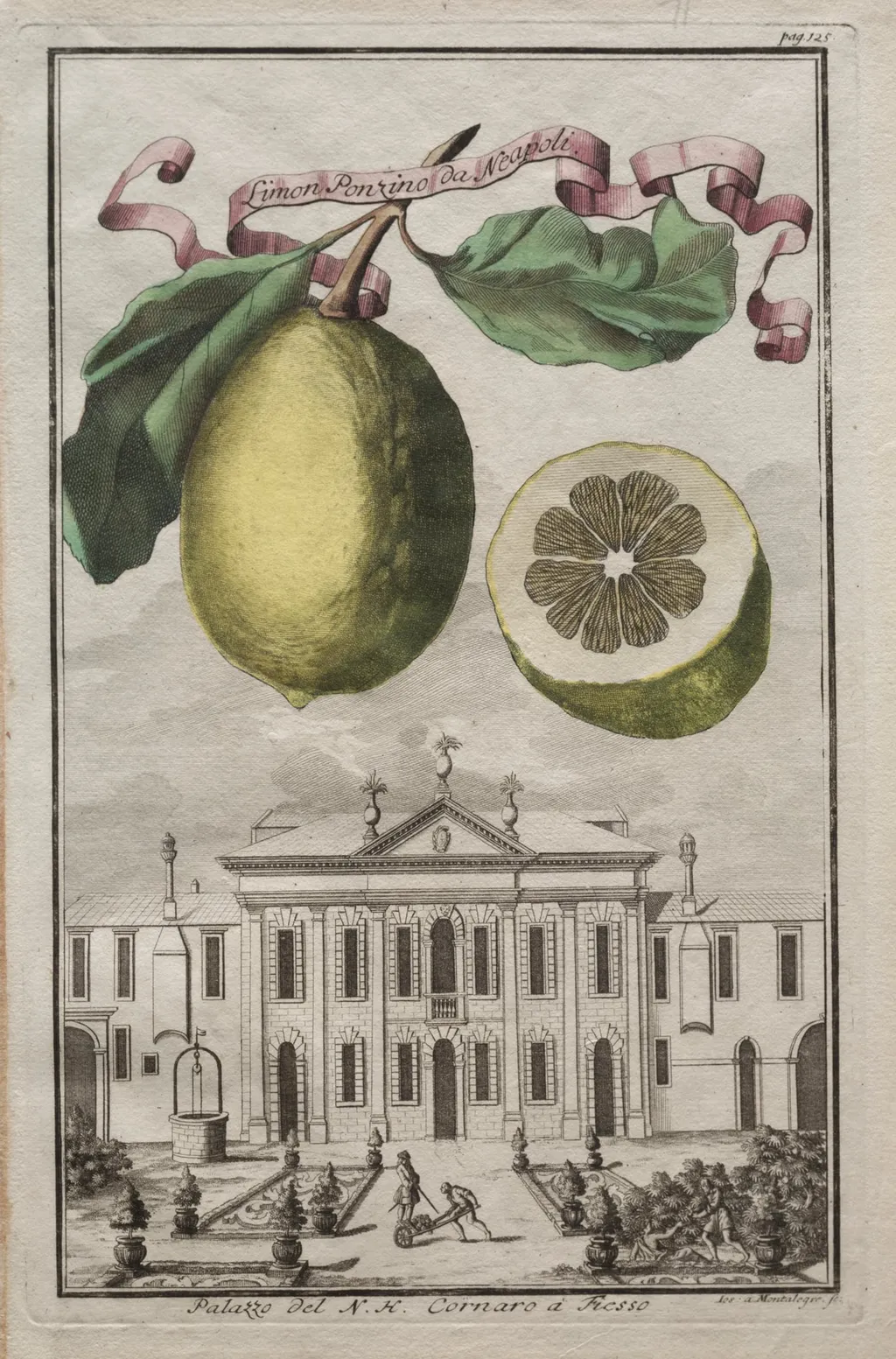
Nurnbergische Hesperides: No. 125 - Limon Ponzino da Neapoli. Palazzo del N. H. Cornaro à Fiesso is a print by the Baroque artist Joseph de Montalegre. It dates from 1708 and is held in the collection of the Cleveland Museum of Art. The print titled Nürnbergische Hesperides: No.
- Accession no.
- 1946.178
- Credit line
- Gift of Kennedy & Company, NY, for The Donald Gray Memorial Collection
About this work
Overview
The print titled Nürnbergische Hesperides: No. 125 – Limon Ponzino da Neapoli depicts a elegantly dressed woman holding a basket brimming with vivid oranges and lemons, while a small dog rests at her feet. The luminous fruit contrasts sharply with her dark attire, creating a striking visual focus on the citrus.
Subject & Meaning
The work’s title invokes the myth of Hercules and the Hesperides, the nymphs who guarded the golden apples. In early modern Europe the “golden apples” were often identified with Spanish oranges, a belief reflected in the artist’s choice to display these bright fruits as symbols of exotic abundance.
Technique & Style
Executed as a print, the image employs fine line work and delicate shading to render the textures of fabric, fur, and fruit. The artist’s handling of light emphasizes the glossy surfaces of the oranges and lemons, while the dark background enhances their visual impact.
History & Provenance
The piece forms part of a series catalogued in the Palazzo del N. H. Cornaro at Fiesso. It was produced in the eighteenth century, a period when Italian printers frequently celebrated rare produce, especially citrus, as markers of regional prestige.
Context
During the era of the print’s creation, citrus fruits were prized imports, and their depiction served both decorative and didactic purposes. The inclusion of a fashionable lady and a pet dog situates the fruit within a domestic, genteel setting, underscoring the social status associated with such exotic goods.
Own this work as a print
Artist & collection
Artist
Joseph de Montalegre (1672–1729) was a Hungarian artist, born in Prague.