Artwork
The Church of San Trovaso, Venice
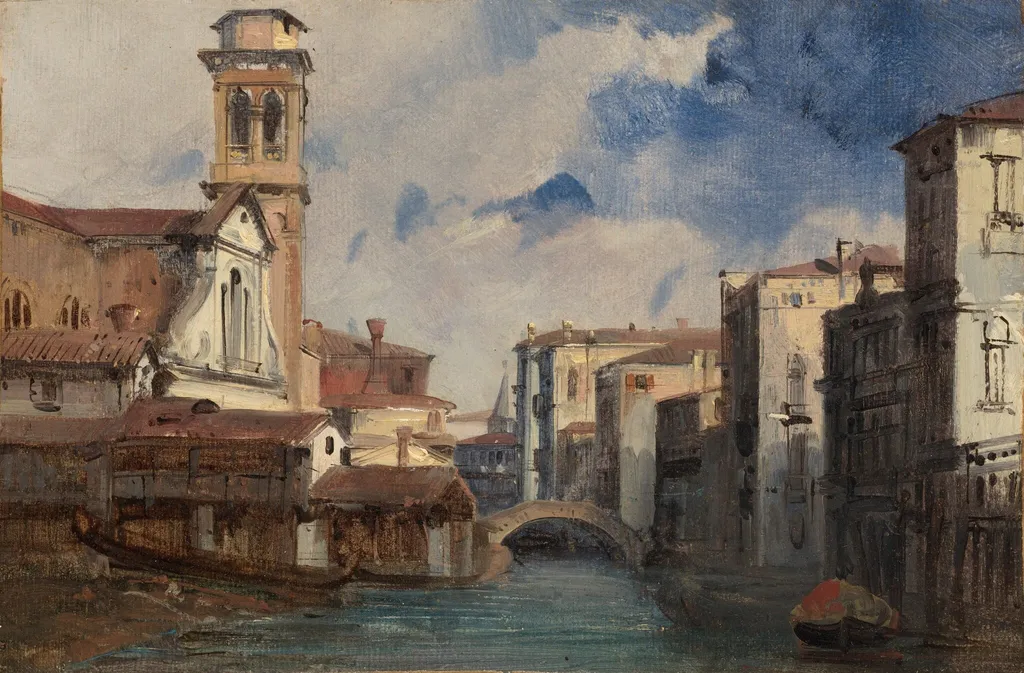
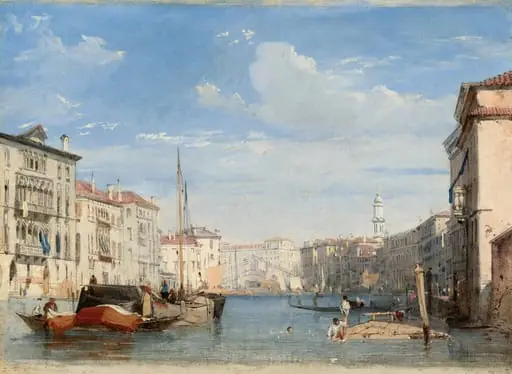
The Church of San Trovaso, Venice is an oil painting by the Romanticist artist Jules-Romain Joyant. It dates from 1830 and is held in the collection of the National Gallery of Art.
About this work
Subject & Meaning
The painting shows a boat, reflecting the everyday Venetian setting of the church of San Trovaso. It was created by Jules-Romain Joyant in 1830 in oil on paper laid on canvas and is part of the National Gallery of Art's collection in Washington, D.C.
Technique & Style
The painting is executed in oil on paper laid down on canvas, measuring 15.5 by 23.5 cm, and depicts a boat before the church of San Trovaso. Its small scale and paper-on-canvas support reflect the plein-air sketching practices of early nineteenth-century French painters working in Venice.
History & Provenance
It remained with the artist until his death in 1854 and appeared in his estate sale at the Hôtel Drouot, Paris, on 22–24 March 1855 (first day, lot 49).
The Church of San Trovaso, Venice was created by Jules-Romain Joyant in 1830 in oil on paper laid on canvas. It remained with the artist until his death in 1854 and appeared in his estate sale at the Hôtel Drouot, Paris, on 22–24 March 1855 (first day, lot 49). It subsequently passed through the London dealer James Mackinnon before being purchased in March 1997 by Frank Anderson Trapp of Pittsburgh, who donated it to the National Gallery of Art, Washington, D.C., in 2004, where it remains.
It was acquired together with a companion work (NGA 2004.166.25). The sources record no exhibition history beyond the 1855 estate sale.
Overview
Jules‑Romain Joyant’s early nineteenth‑century work portrays a solitary gondola moving through a narrow Venetian canal beneath the white façade of the Church of San Trovaso. The composition captures a fleeting moment of sunlight shimmering on the water, while the church’s dome rises sharply against a clear sky, emphasizing the city’s tranquil waterways.
Context
During the 1820s and 1830s, Venice attracted numerous foreign painters seeking to capture its unique light and architecture. Joyant’s depiction aligns with this trend, offering a quieter, less tourist‑filled perspective compared with contemporary grand vistas, and contributes to the broader Romantic fascination with atmospheric mood and historic locales.
Own this work as a print
Artist & collection


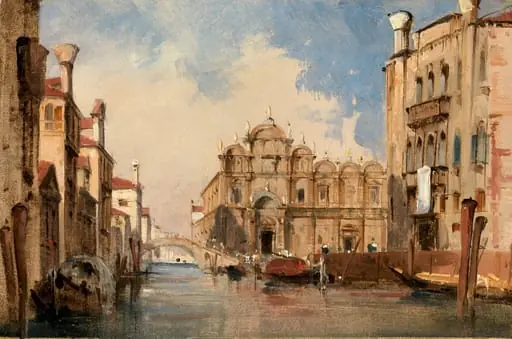 The Scuola di San Marco, Venice
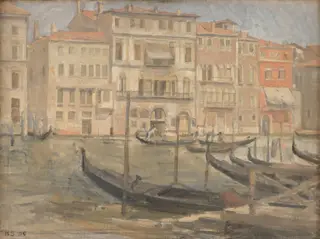 Ved Canal Grande i Venedig
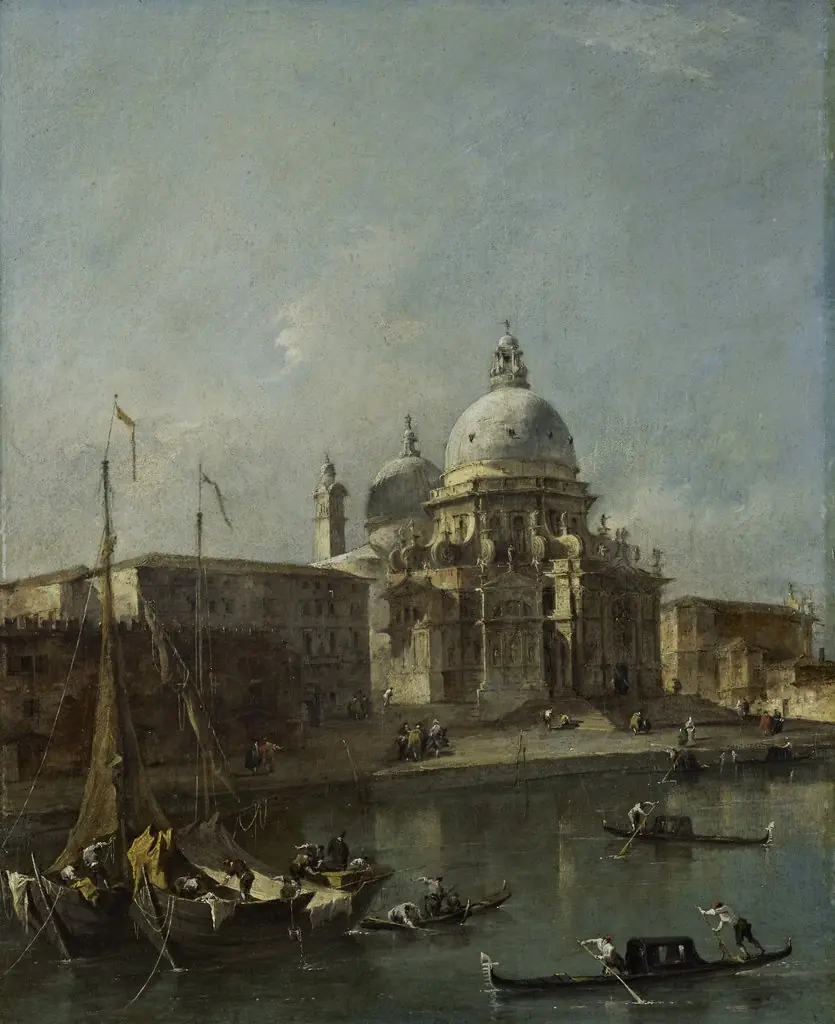 Santa Maria della Salute, Venice
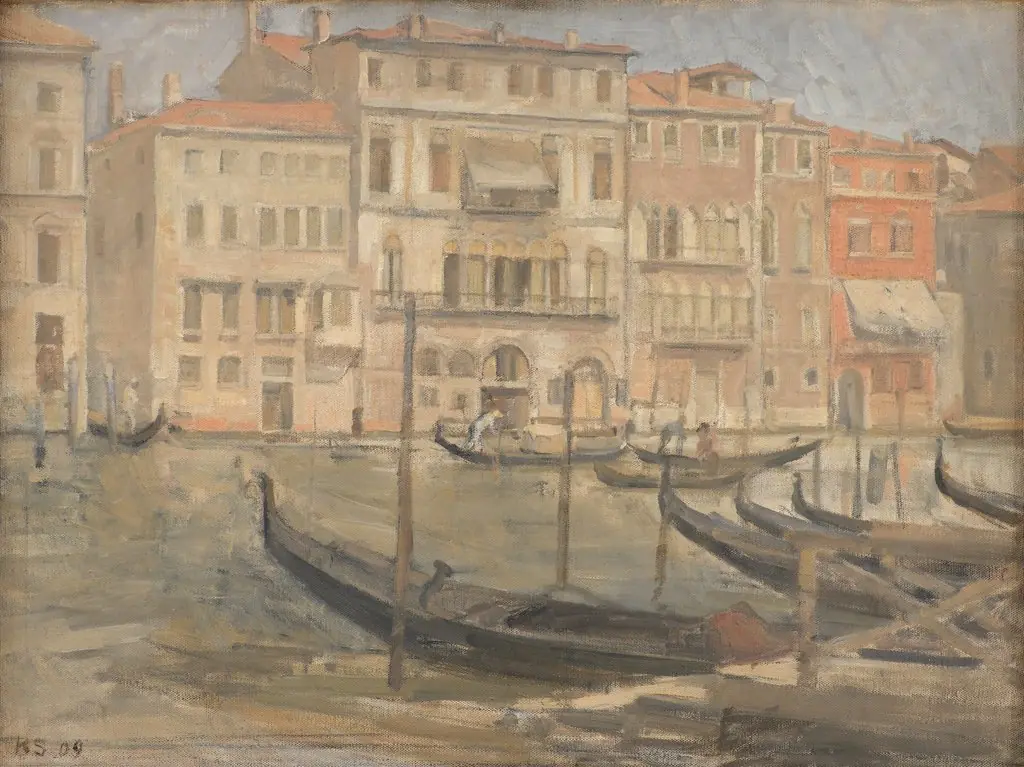 Ved Canal Grande i Venedig
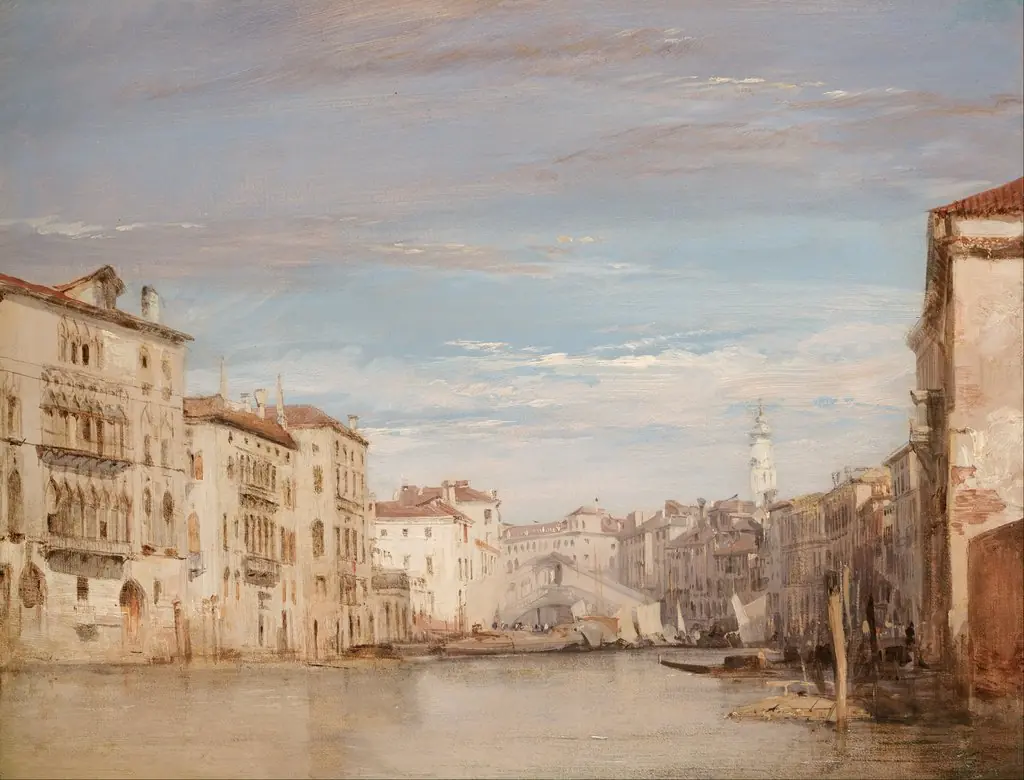 The Grand Canal, Venice, Looking Toward the Rialto
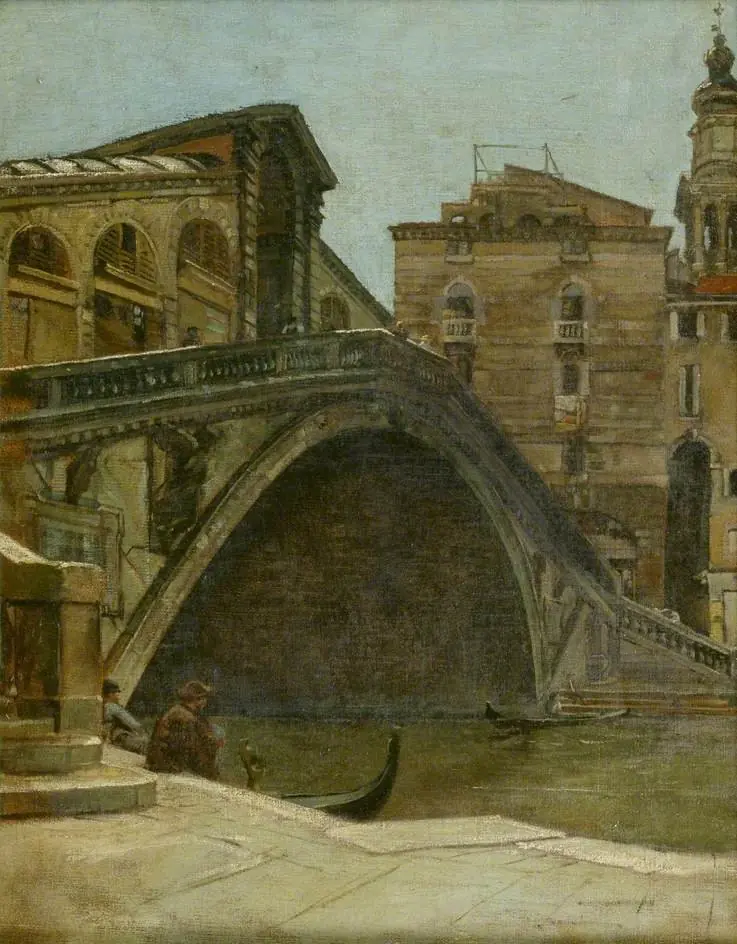 The Rialto, Venice
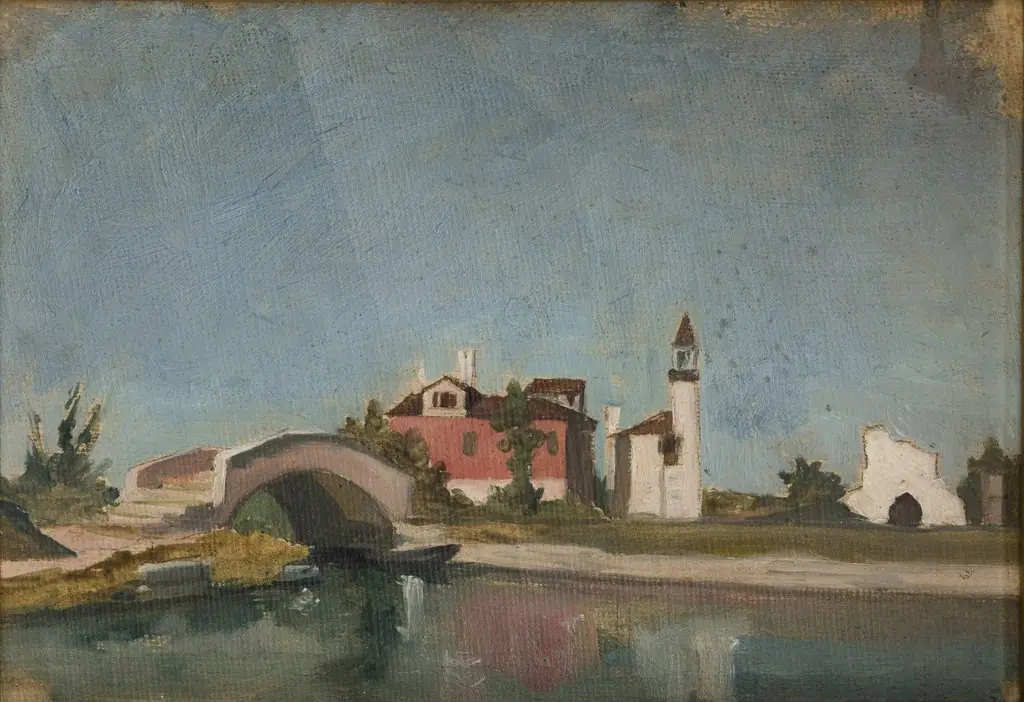 Oriental Landscape
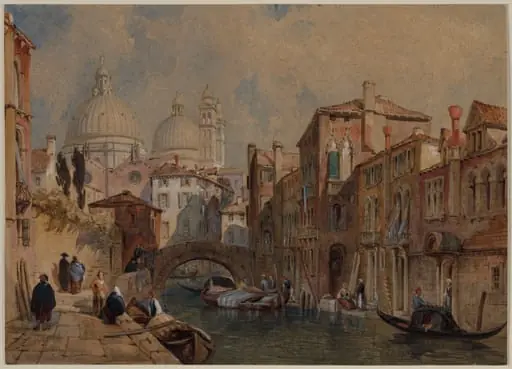 View of Venice: The Dome of Santa Maria della Salute Seen from the Rear of the Da Mula Palace, looking Eastward
 The Grand Canal