Artwork
The Grand Canal
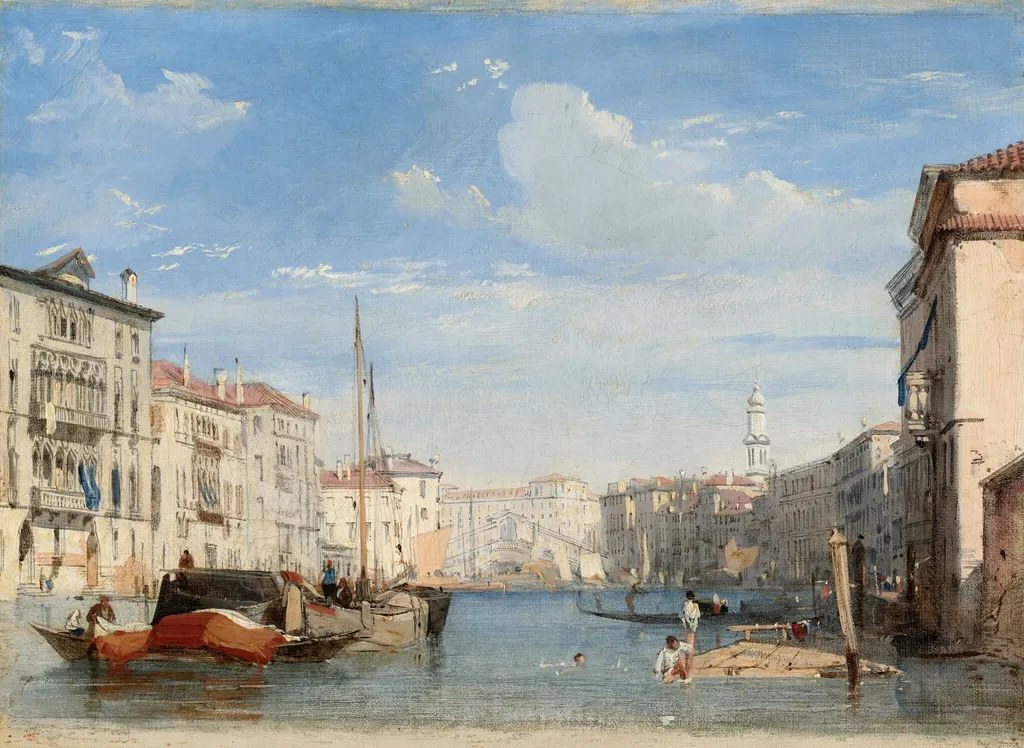
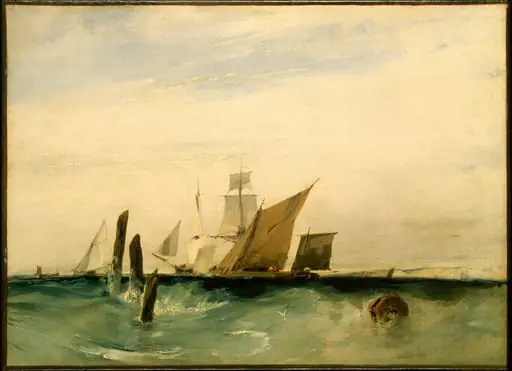
The Grand Canal is an oil painting by the Romanticist artist Richard Parkes Bonington. It dates from 1826 and is held in the collection of the National Gallery of Art.
- Markings
- Marked:on bottom strainer member: red wax seal
About this work
Technique & Style
As a landscape by Richard Parkes Bonington, the piece utilizes oil paint to render the Venetian waterway and its vessels.
Created in 1826, The Grand Canal is an oil painting executed on a canvas support. The work measures 26 cm in height and 34.7 cm in width, presenting a landscape genre scene that depicts a boat. As a landscape by Richard Parkes Bonington, the piece utilizes oil paint to render the Venetian waterway and its vessels. The medium and dimensions are consistent with the artist's practice during this period.
History & Provenance
The work was painted in 1826 by Richard Parkes Bonington. It remained with the artist’s father, Richard Bonington, before being sold at Christie & Manson, London, on 24 May 1834 as lot 148 in the artist’s posthumous sale. It entered the collection of Welbore Ellis Agar, 2nd Earl of Normanton, at Somerley in Hampshire and descended through the family to his great-great-grandson, Shaun James Christian Welbore Ellis Agar, 6th Earl of Normanton.
The painting was consigned by the family to Sayn-Wittgenstein Fine Art in New York and purchased by the National Gallery of Art, Washington, D.C., on 13 July 2001.
Richard Parkes Bonington's oil painting The Grand Canal (1826) is held by the National Gallery of Art in Washington, D.C. The work was acquired by the museum on 13 July 2001, following a period in the collection of the 6th Earl of Normanton, Shaun James Christian Welbore Ellis Agar. Prior to its arrival at the National Gallery, the painting passed through the hands of the artist's father, was sold at Christie & Manson in London in May 1834, and was later consigned through Sayn-Wittgenstein Fine Art, Inc. in New York. The provided sources do not list specific inventory numbers or a record of past exhibitions for this work.
Overview
Completed in 1826, The Grand Canal is an oil on canvas by the English Romantic landscape artist Richard Parkes Bonington. The work captures a narrow stretch of Venice’s principal waterway, focusing on the interaction of light, water, and architecture. A single gondola moves past towering façades while the sky reflects in rippling strokes, conveying a moment of everyday activity along the canal.
Subject & Meaning
The painting presents a contemporary view of Venice, emphasizing the bustling nature of the canal rather than its historic grandeur. By foregrounding a lone gondola amid tall buildings and swaying masts, Bonington suggests the city’s role as a living, working environment, where commerce and daily travel intersect with the city’s iconic waterways.
Context
In the early nineteenth century, many artists portrayed Venice as a timeless, romantic ruin. Bonington’s depiction diverges by focusing on the city’s present vitality, aligning with the Romantic interest in fleeting moments and the sensory experience of light and atmosphere. His approach reflects a broader shift toward capturing contemporary life in landscape painting.
Own this work as a print
Artist & collection
Artist
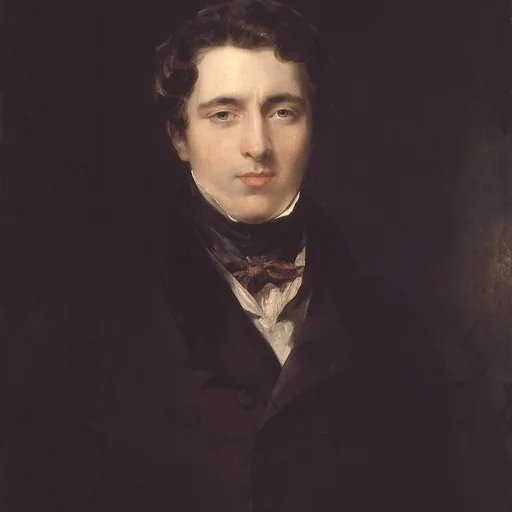
Richard Parkes Bonington (25 October 1802 – 23 September 1828) was an English Romantic landscape painter.

- The Grand Canal in Venice
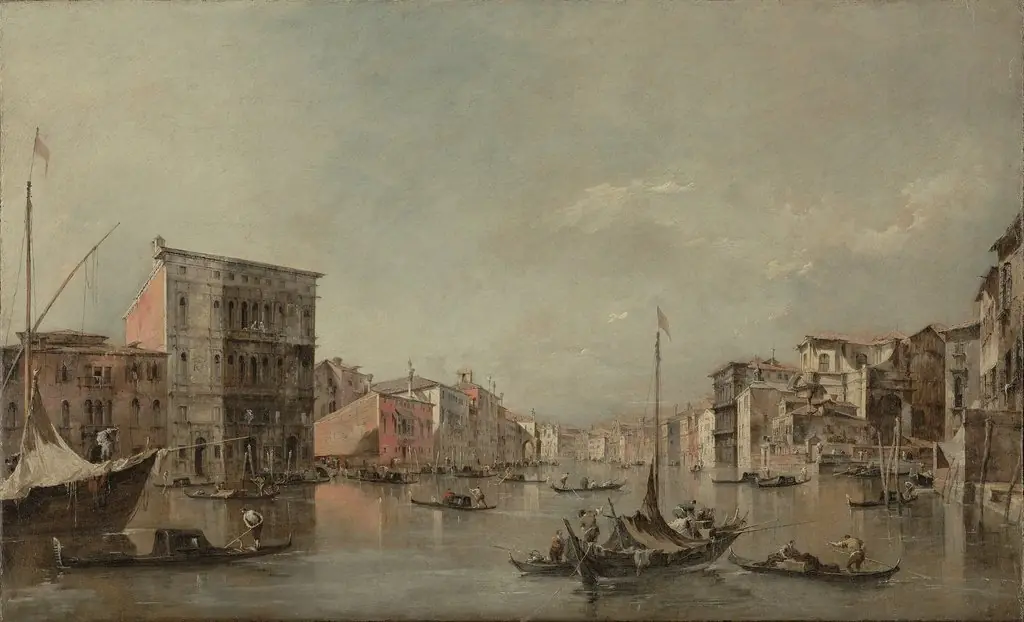 The Grand Canal in Venice with Palazzo Bembo
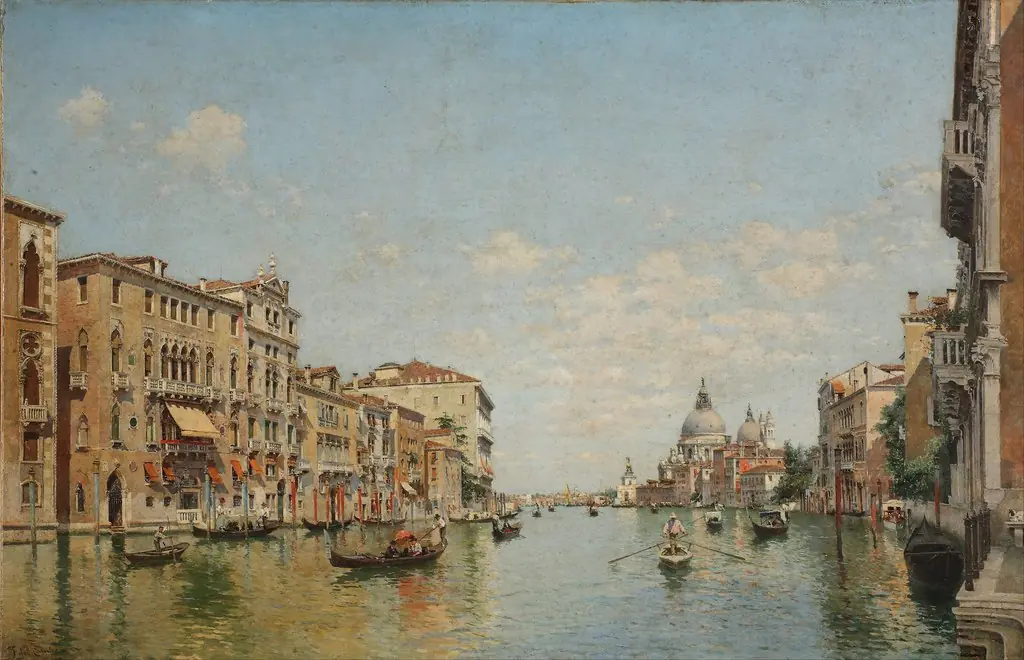 View of the Grand Canal of Venice
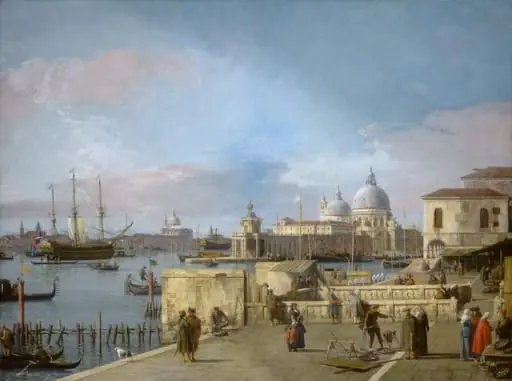 Entrance to the Grand Canal from the Molo, Venice
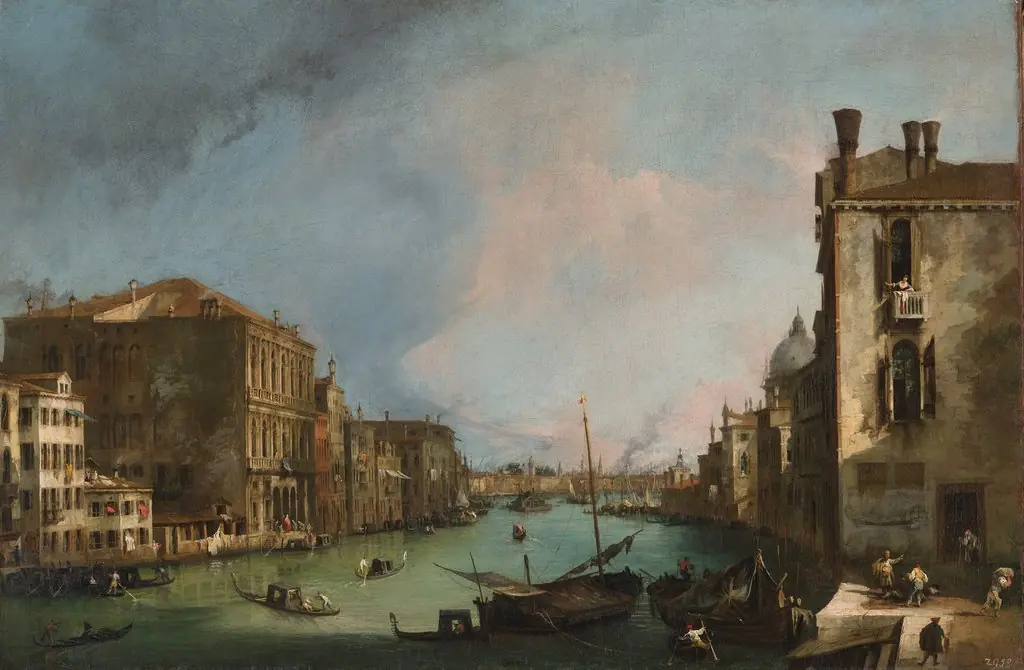 The Grand Canal in Venice with the Rialto Bridge
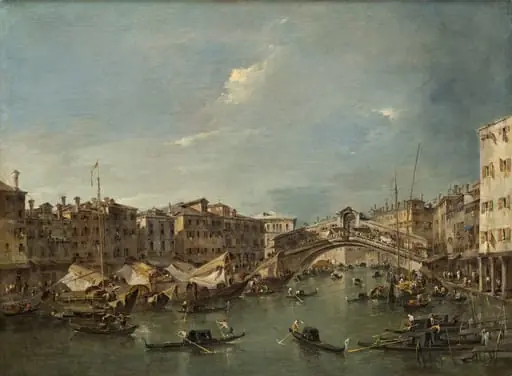 Grand Canal with the Rialto Bridge, Venice
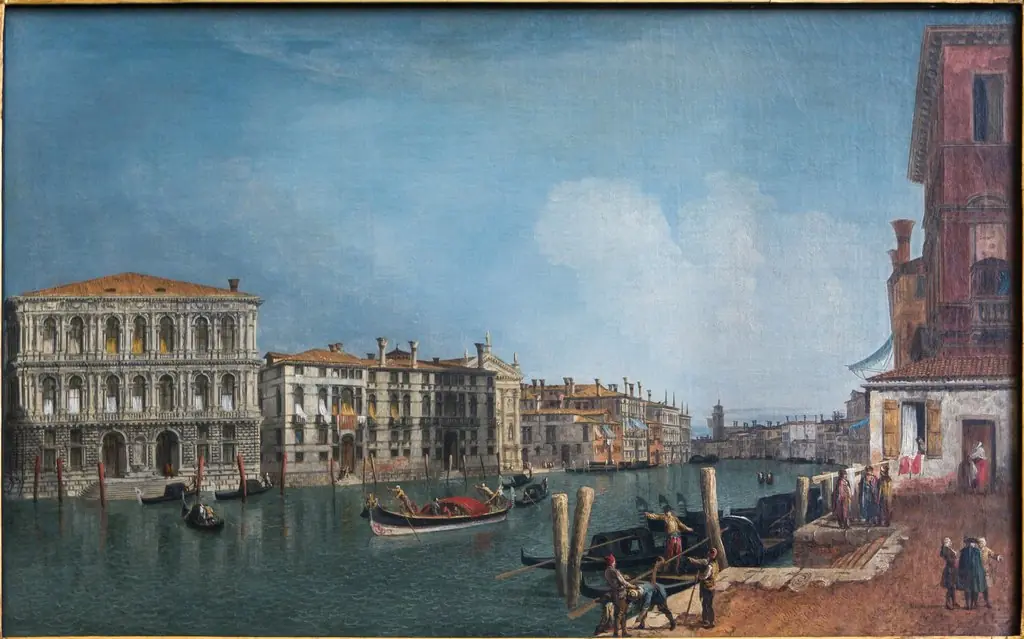 View of the Grand Canal near Cà Pesaro
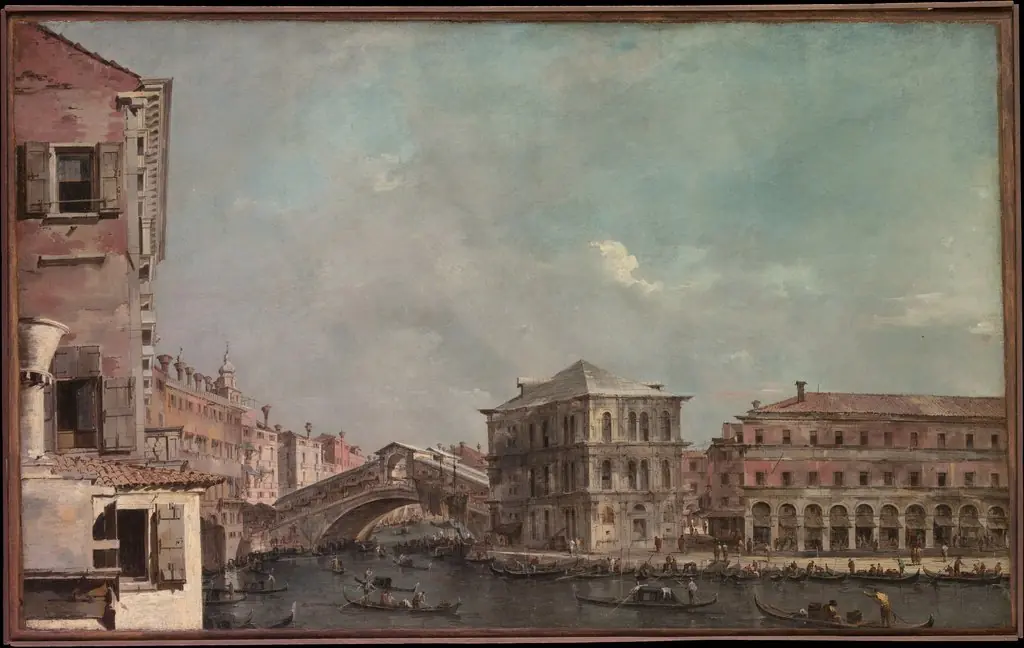 The Grand Canal above the Rialto
 A View at the Entrance of the Grand Canal, Venice
 The Grand Canal near the Rialto Bridge, Venice