Artwork
Untitled
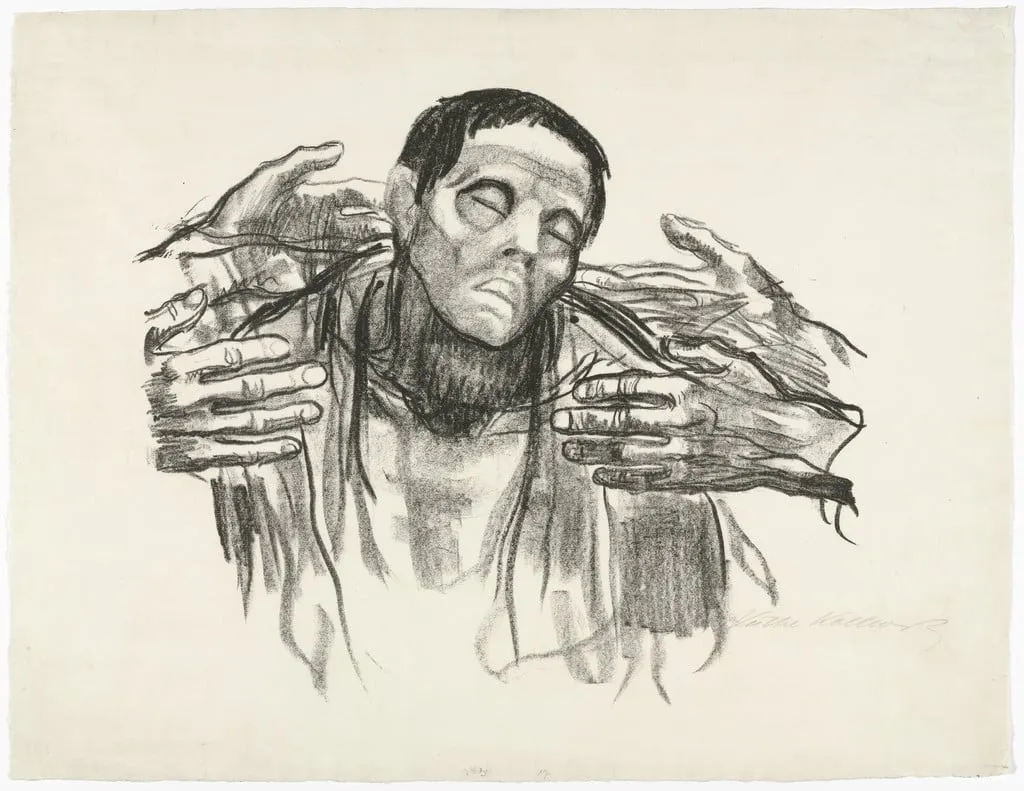
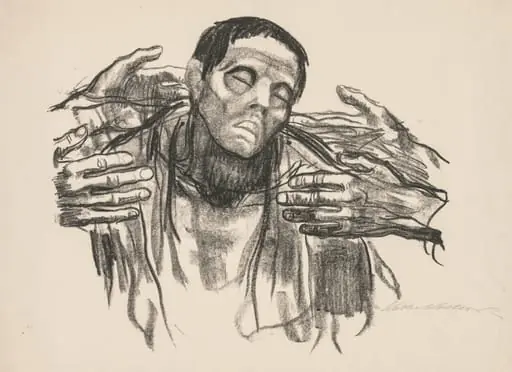
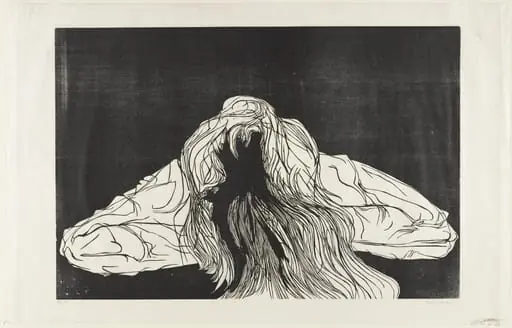
Untitled is an ink print by Käthe Kollwitz. It dates from 1921 and is held in the collection of the Museum of Modern Art.
About this work
Overview
The composition is intimate and claustrophobic, focusing entirely on the physical desperation of the subjects without background distraction.
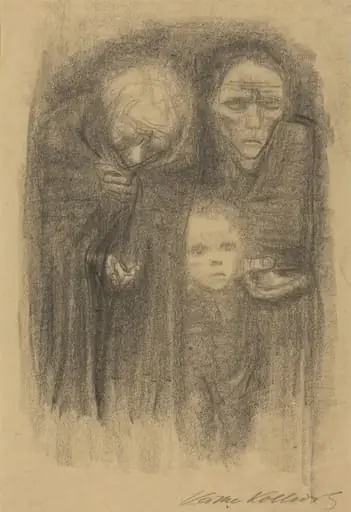
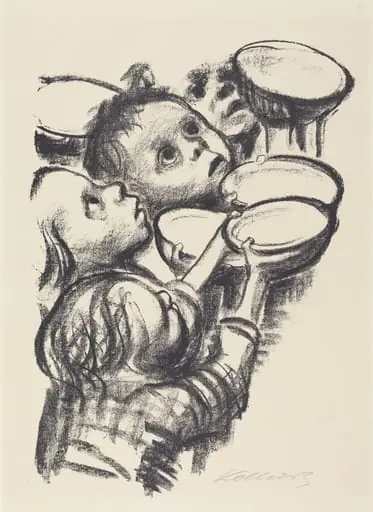
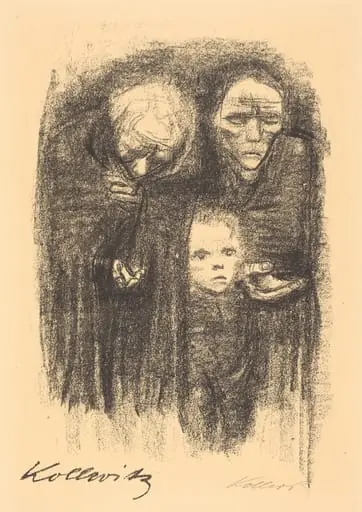
Created in 1921, this untitled lithograph by Käthe Kollwitz depicts a starving child pressed against a woman's chest, with the child's bony fingers clutching at empty air. The work was produced as part of a series intended to raise funds for famine relief in Russia following the devastation of World War I and the subsequent civil war. Kollwitz employs a stark, high-contrast technique characteristic of her expressionist style, utilizing rough, urgent lines to render the emaciated forms of the figures.
Every rib and hollow cheek is sharply defined, refusing to soften the reality of the suffering. The composition is intimate and claustrophobic, focusing entirely on the physical desperation of the subjects without background distraction. This piece exemplifies Kollwitz's commitment to social realism and political engagement, placing her within the broader context of German Expressionism and the Weimar Republic's artistic response to humanitarian crisis.
The work stands as a testament to her ability to convey profound human tragedy through the direct and unadorned medium of the lithograph.
Subject & Meaning
The composition centers on a gaunt child pressed against a woman's torso, her skeletal fingers reaching outward into emptiness. The juxtaposition of the child's vulnerability and the woman's desperate clutch conveys the acute anguish of famine, suggesting a universal plea for compassion and spiritual solace.
Technique & Style
Kollwitz employed a direct lithographic method, incising the image onto the stone with rapid, vigorous strokes. The resulting lines are uneven and aggressive, emphasizing the harsh contours of ribs and hollow cheeks, and reinforcing the work’s raw emotional impact.
History & Provenance
Created in response to the severe famine that afflicted Russia in the early 1920s, the print was intended to generate funds for relief efforts. After its initial charitable purpose, the work entered the Museum of Modern Art’s holdings, where it remains on display.
Context
The piece reflects Kollwitz’s broader engagement with social injustice and her commitment to using art as a vehicle for humanitarian aid. Its religious overtones align with her recurring exploration of suffering, redemption, and the moral responsibilities of society.
Artist & collection
Artist
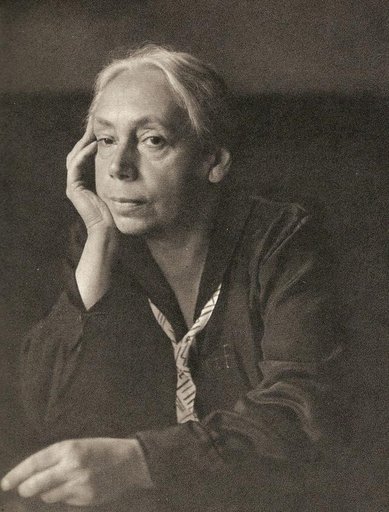
Käthe Kollwitz was a German artist who worked with painting, printmaking and sculpture.