Artwork
葛飾北斎画 燕子花|Grasshopper and Iris
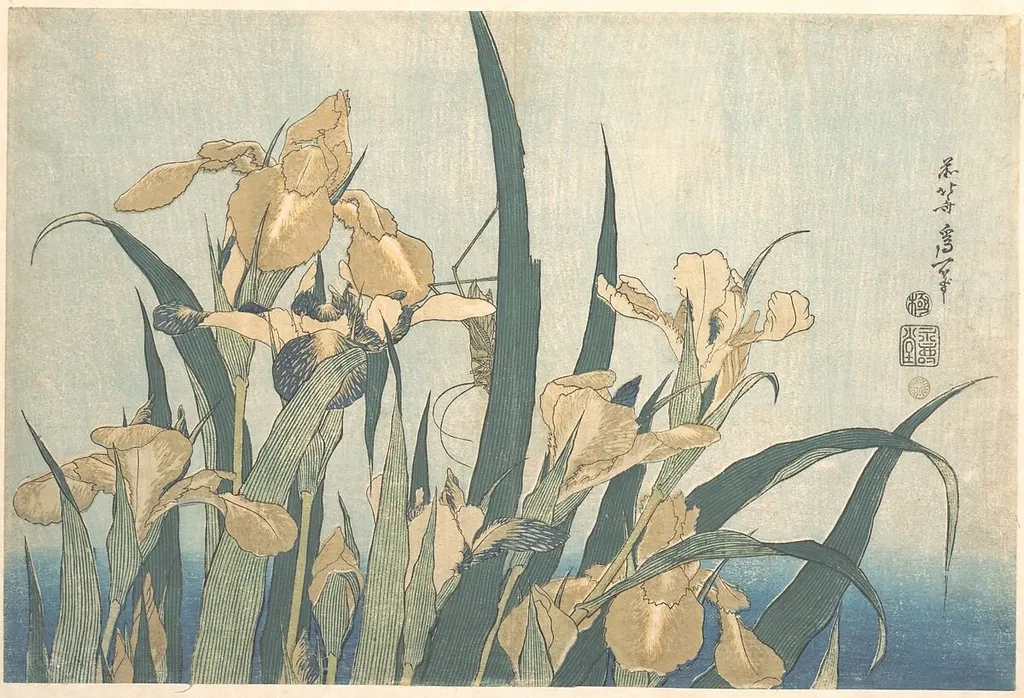
葛飾北斎画 燕子花|Grasshopper and Iris is an ink print by the Japonisme artist Katsushika Hokusai. It dates from 1824 and is held in the collection of the Metropolitan Museum of Art.
About this work
Overview
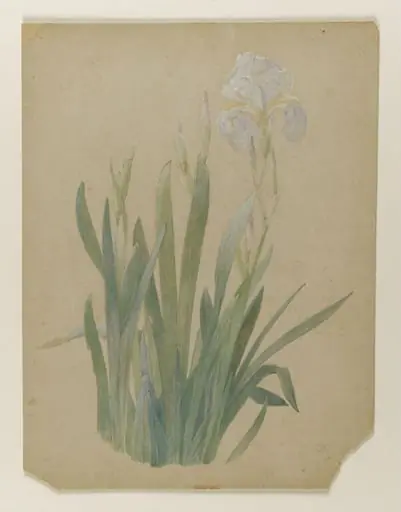
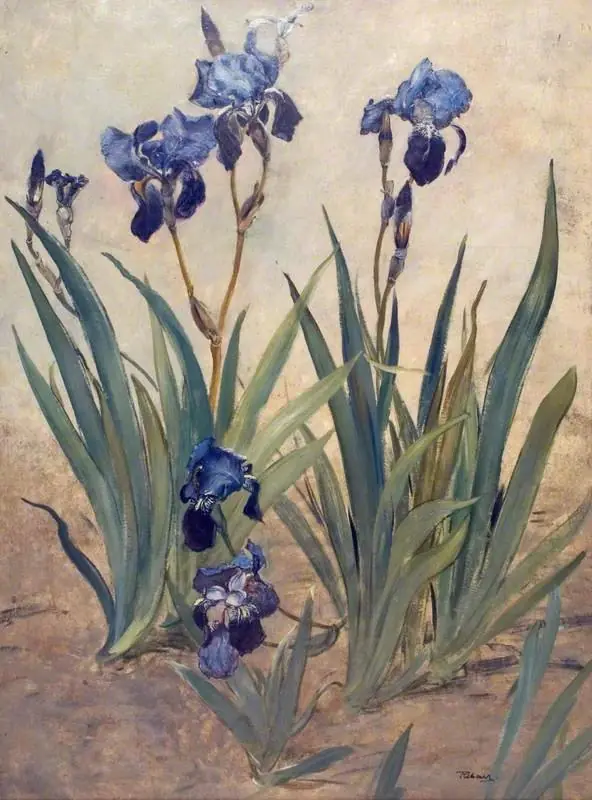
Created around 1824, this woodblock print by Katsushika Hokusai presents a close‑up view of a single iris flower accompanied by a vivid blue grasshopper. The composition is simple yet precise, focusing on the interaction between the insect and the plant’s curving petals.
Subject & Meaning
The image pairs a common garden insect with a cultivated iris, highlighting the everyday beauty of nature. By isolating these modest elements, Hokusai invites contemplation of the delicate balance between flora and fauna, a theme that recurs in his work on ordinary subjects.
Technique & Style
Executed with ink and multiple color woodblocks, the print employs a layered approach: each hue is applied separately, producing the striking contrast between the grasshopper’s cobalt blue and the iris’s deep violet. The lines are crisp, and the wave‑like curvature of the petals reflects Hokusian attention to natural form.
Context
The work belongs to the late Edo period, a time when Japan maintained a policy of national seclusion. While many contemporaries favored grand historical or literary scenes, Hokusai turned to quotidian motifs such as insects and flowers, expanding the range of subjects considered suitable for fine art.
Legacy
This print exemplifies Hokusai’s willingness to explore modest subjects with the same technical rigor applied to his more famous landscapes. It contributes to the broader appreciation of ukiyo‑e prints as documents of everyday Japanese life and natural observation.
Artist & collection

Artist
Katsushika Hokusai spent his life in Edo, now Tokyo, where he drew and carved prints for a living.