Movement
Japonisme
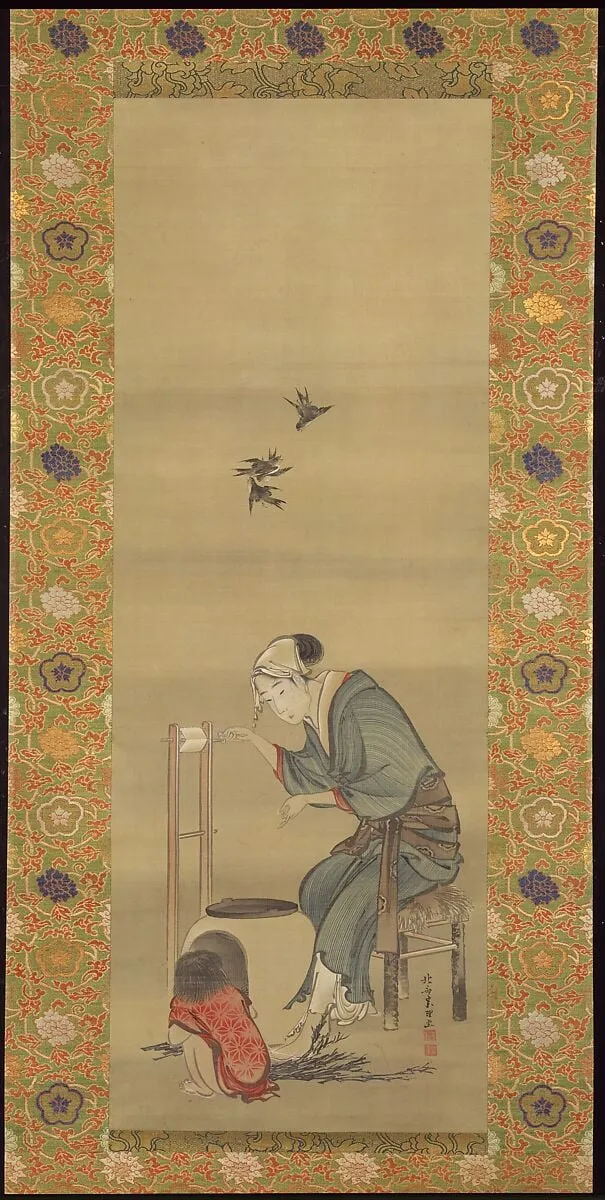
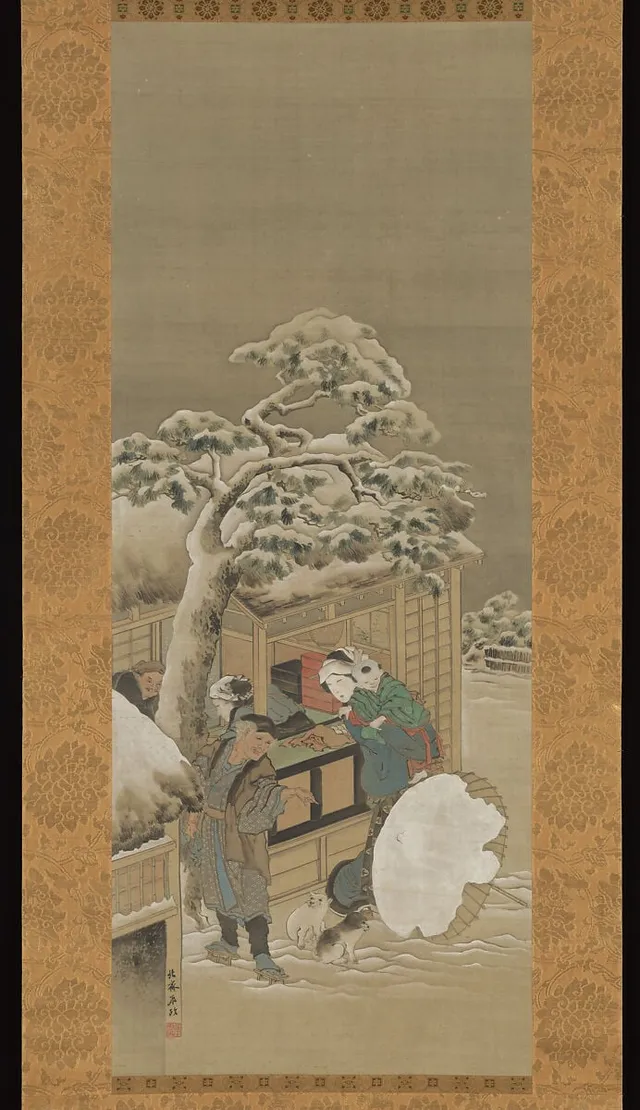
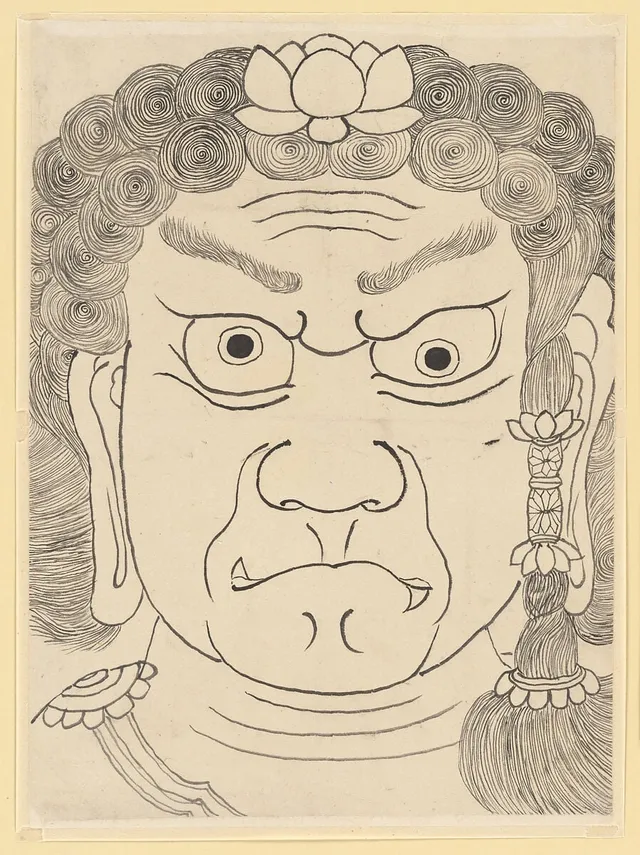
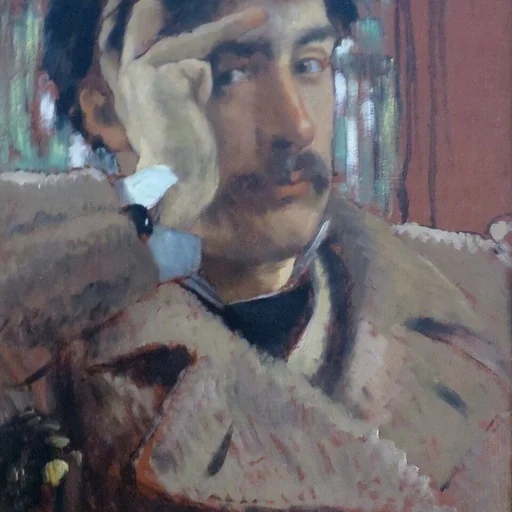
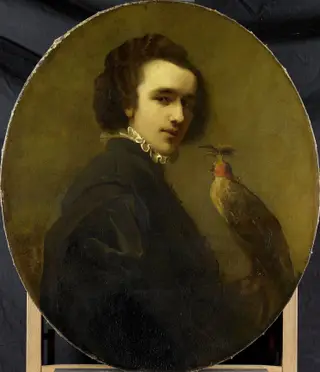
Japonisme is an art movement dating from 1858. The gallery holds 315 works in this movement, including works by James Tissot, Édouard Vuillard and Katsushika Hokusai. Browse Japonisme paintings, portraits, pictures and artworks from the world's public-domain museum collections.
Japonisme is the term for the pervasive influence of Japanese art and design on Western art during the latter half of the nineteenth century and into the twentieth. The French critic and collector Philippe Burty coined the word in 1872 to name the vogue then sweeping Paris. Its catalyst was political: after more than two centuries of self-imposed isolation, Japan was forced to reopen to foreign trade in 1858, and a flood of goods followed. Ceramics, lacquerware, fans, textiles and, above all, inexpensive ukiyo-e woodblock prints poured into European markets—by some estimates well over 100,000 prints reached Paris between the late 1850s and 1870. International exhibitions, especially the 1867 Exposition Universelle in Paris, gave the public its first concentrated exposure to Japanese aesthetics.
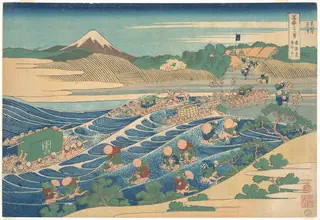
What artists absorbed was less a subject than a grammar. Ukiyo-e masters such as Katsushika Hokusai and Utagawa Hiroshige offered flat planes of unmodulated colour, bold asymmetrical compositions, steep or aerial viewpoints, abrupt cropping that pushed figures to the edge, expanses of empty space, and a frank delight in decorative pattern and everyday life. To European eyes trained on Renaissance perspective and academic finish, these conventions suggested a radically modern way of organising a picture.
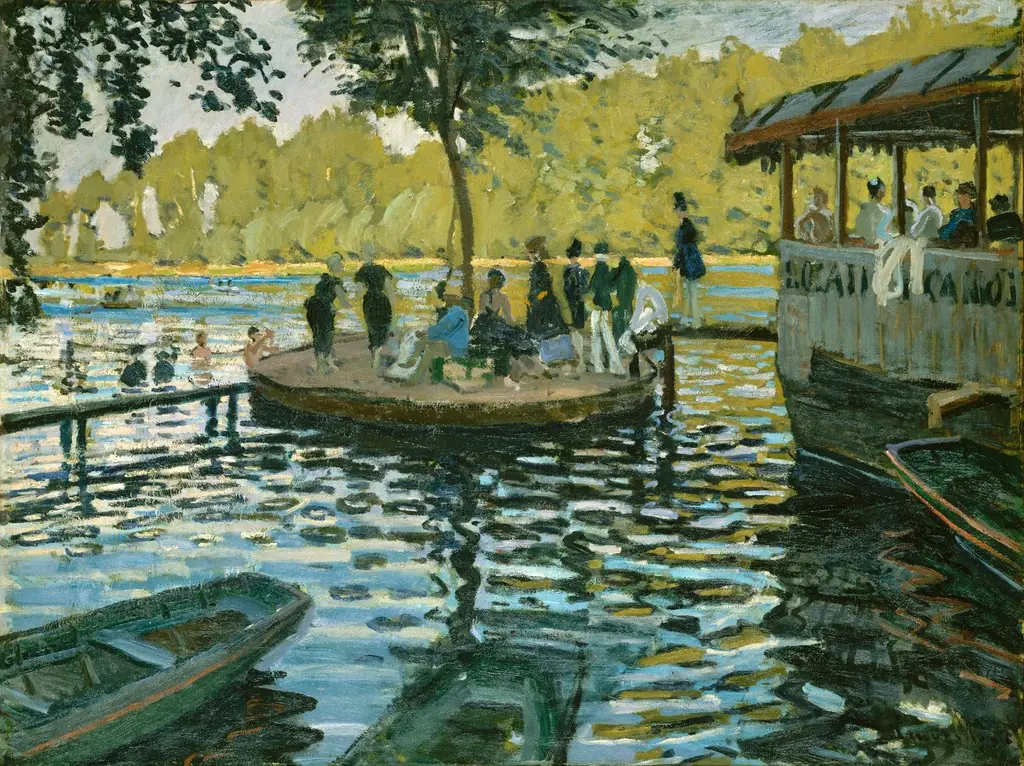
James McNeill Whistler was among the first Western painters to collect Japanese art, and works such as La Princesse du pays de la porcelaine (1863–64) and his Nocturnes translate that economy into tonal restraint. Édouard Manet embedded a Japanese print and screen in his Portrait of Émile Zola (1868); Claude Monet painted La Japonaise and later built the Japanese footbridge at Giverny; Edgar Degas and Mary Cassatt adopted its croppings and high vantage points. Vincent van Gogh went furthest, painting outright copies after Hiroshige such as Bridge in the Rain. James Tissot, also represented here, was both an avid collector and a painter of Japanese motifs.
Japonisme proved foundational to modern art. Its flattening and stylisation fed Impressionism and Post-Impressionism, shaped Toulouse-Lautrec's posters and the intimate interiors of the Nabis (Pierre Bonnard, Édouard Vuillard), and supplied Art Nouveau with its sinuous line and decorative surface—an exchange that ran in dialogue with the ukiyo-e tradition itself.
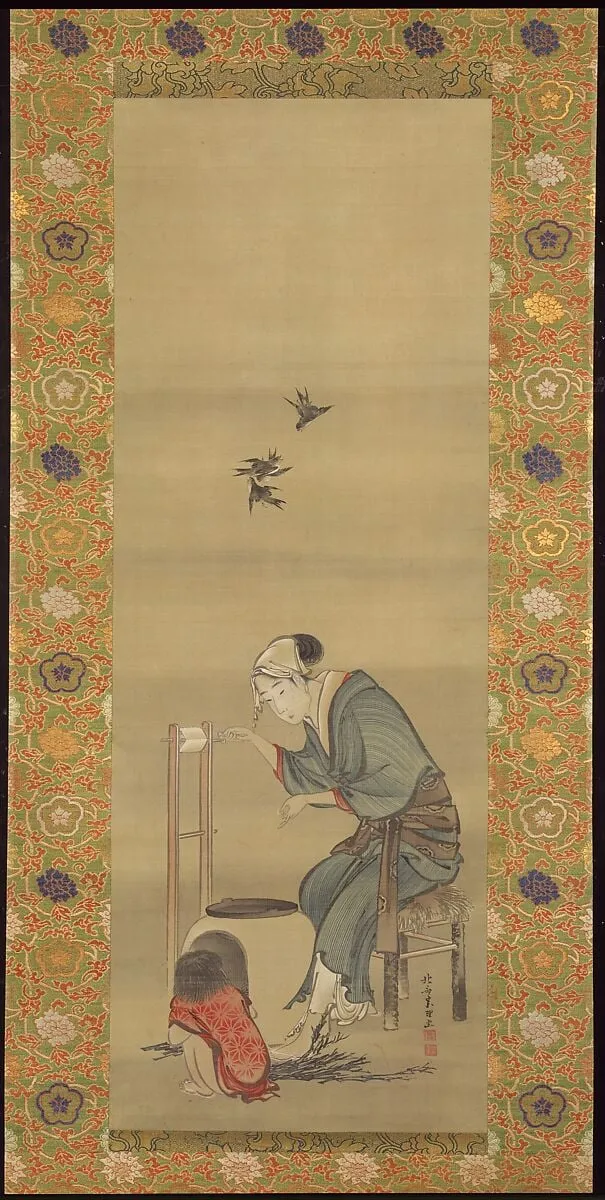
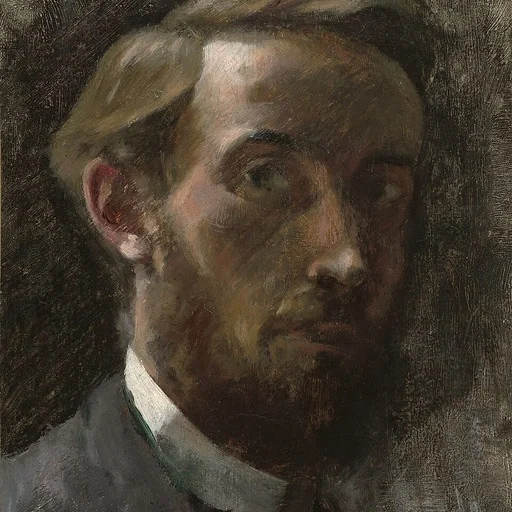
Key artists


Works
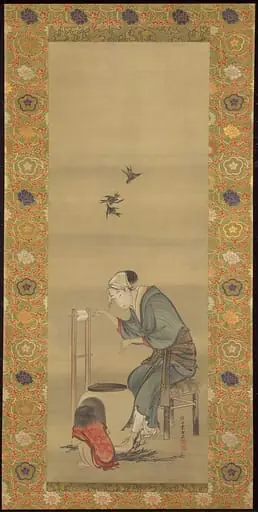 Untitled
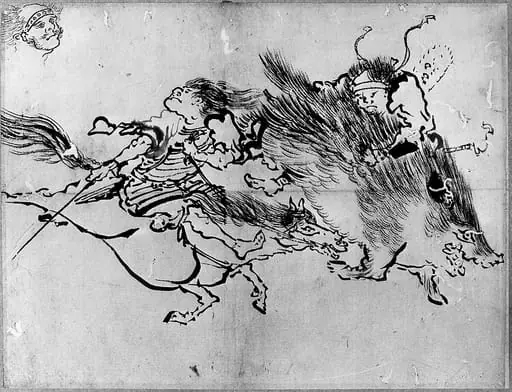 Untitled
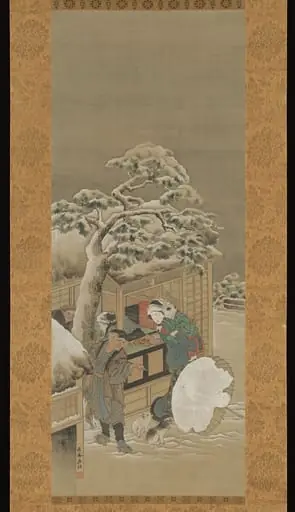 Untitled
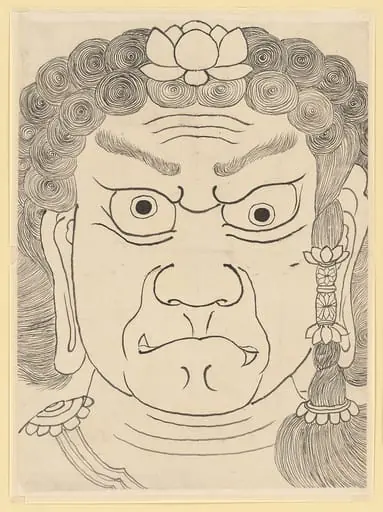 Untitled
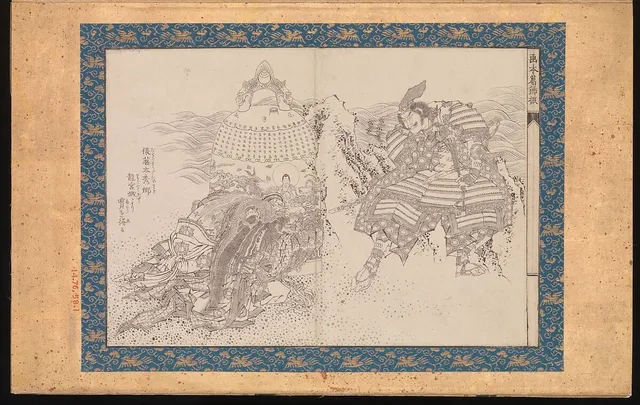
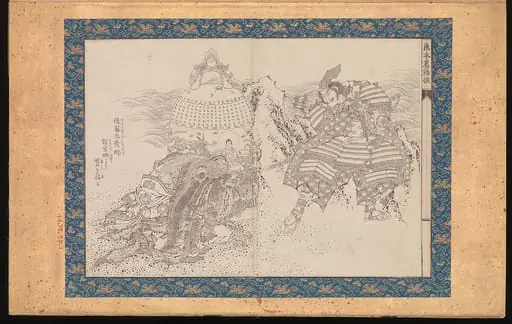 『画本葛飾振』|Picture Book in the Katsushika Style (Ehon Katsushika-buri)
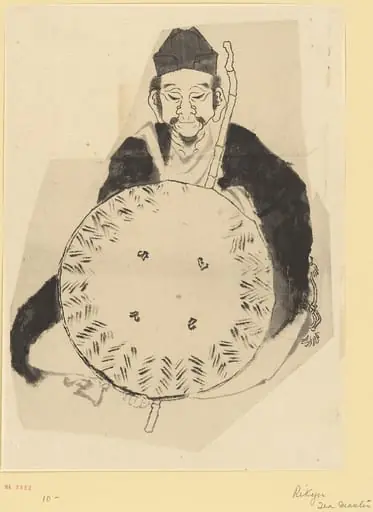 Untitled
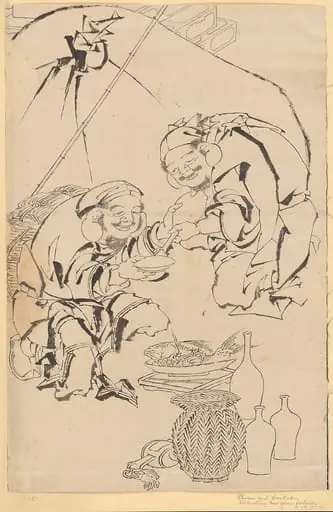 Untitled
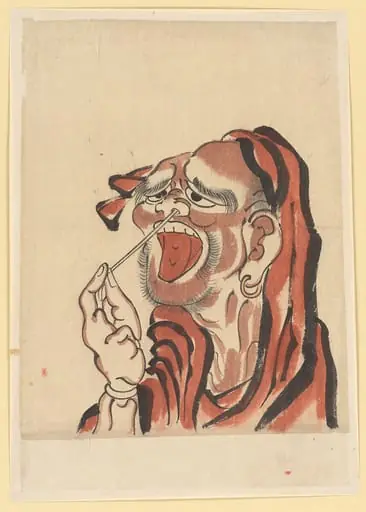 Untitled
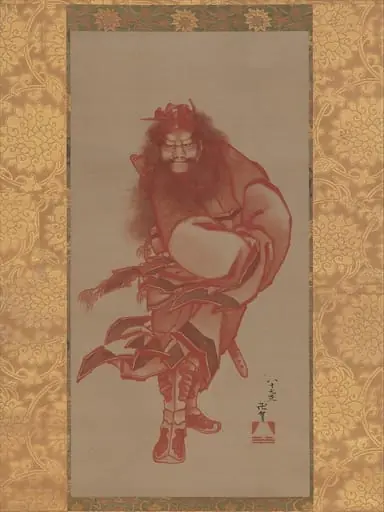 Untitled
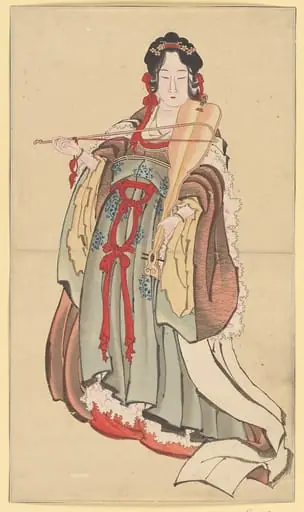 Untitled
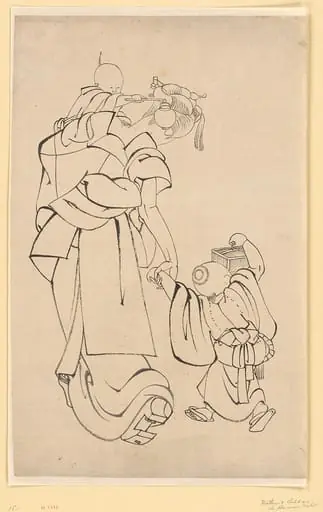 Untitled
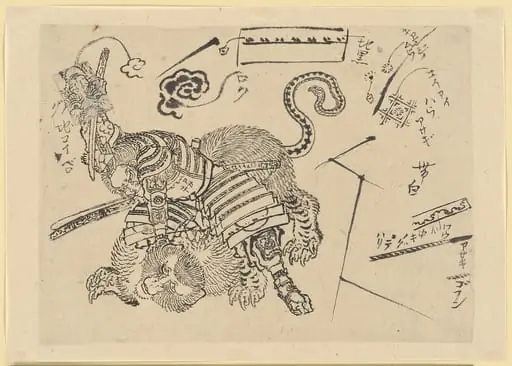 Untitled
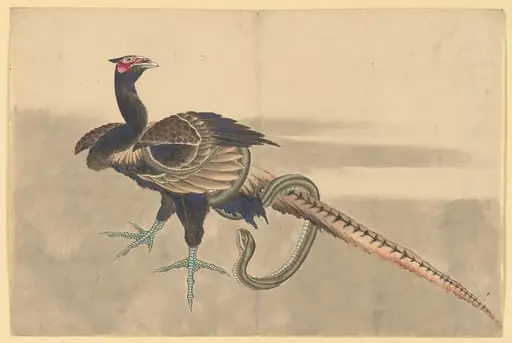 Untitled
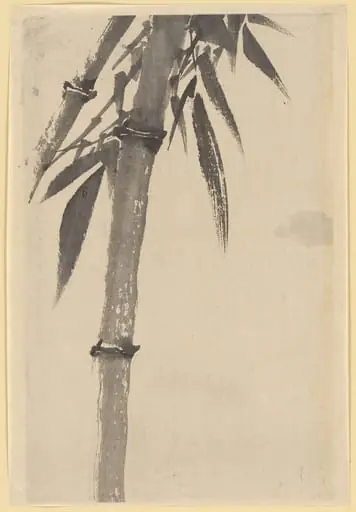 Untitled
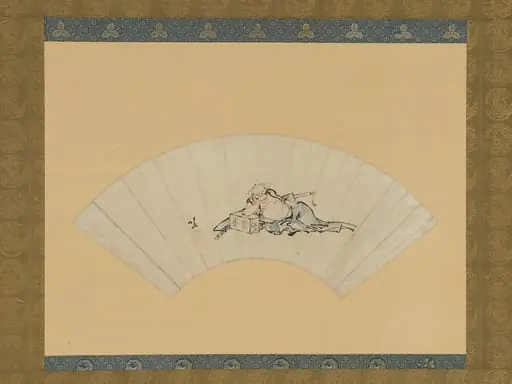 Untitled
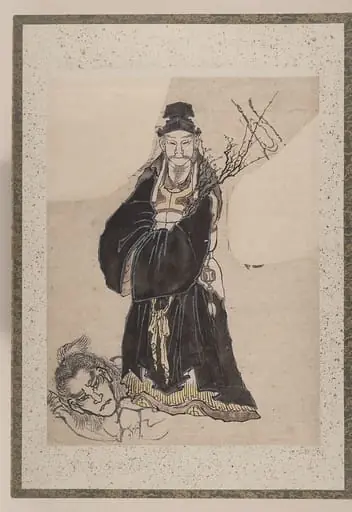 葛飾北斎筆 鶏と木材鶏図|Album of Sketches by Katsushika Hokusai and His Disciples
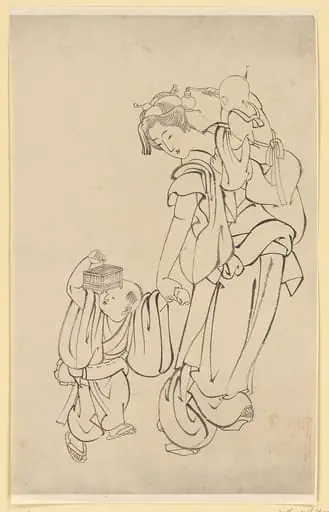 Untitled
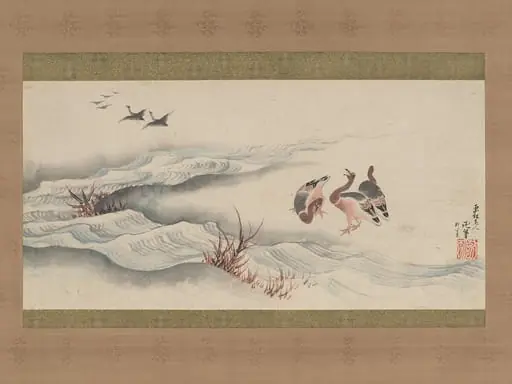 Untitled
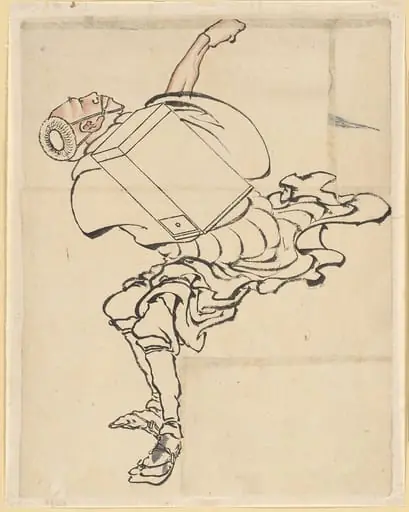 Untitled
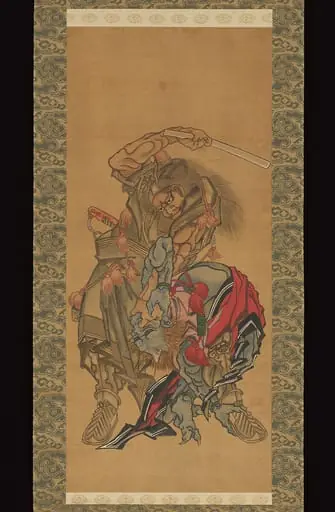 Untitled
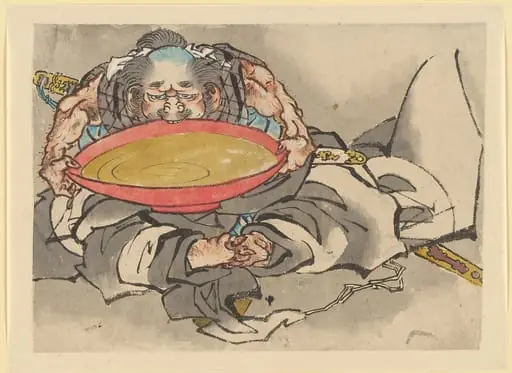 Untitled
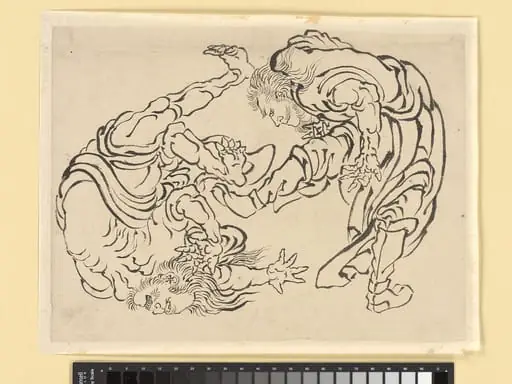 Untitled
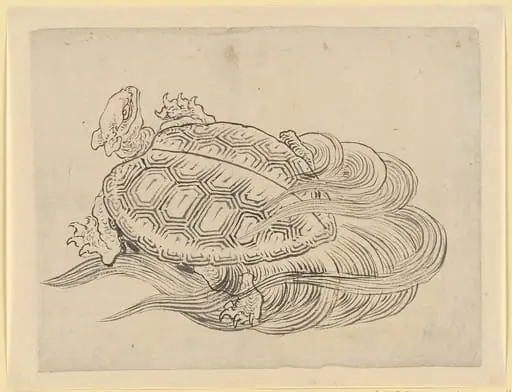 Untitled
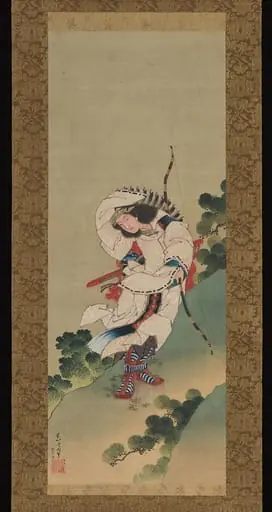 神功皇后図|The Legendary Empress Jingū
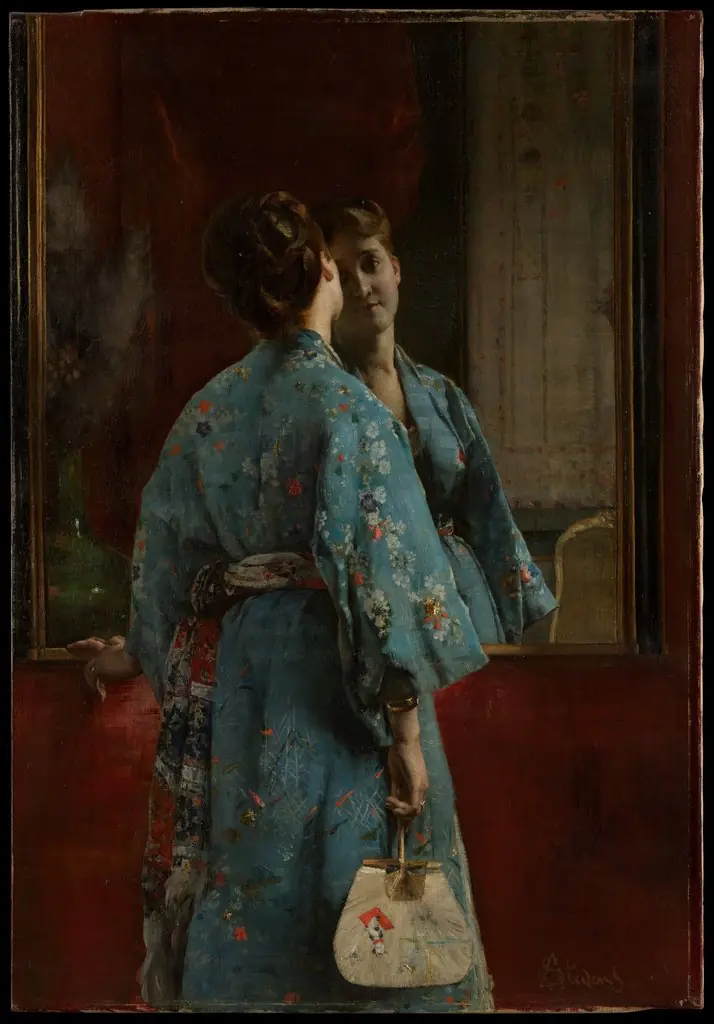 The Japanese Robe
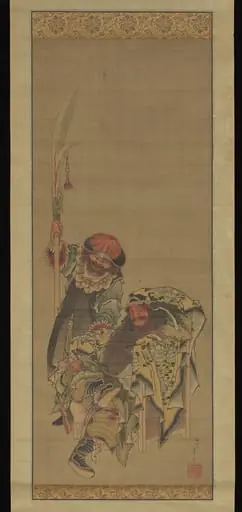 Untitled
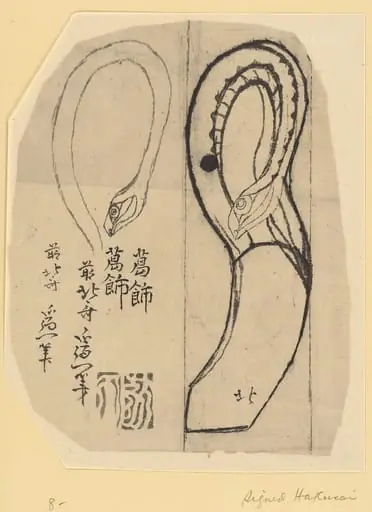 Untitled
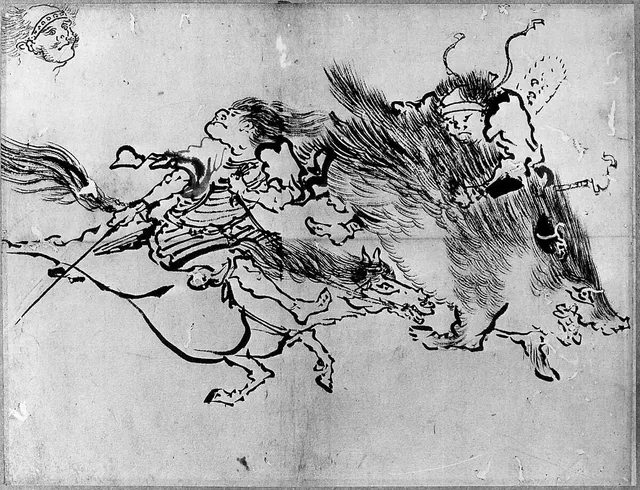
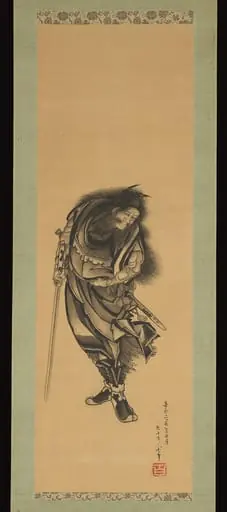 葛飾北斎筆 黒鍾馗|Black Shōki, the Demon Queller
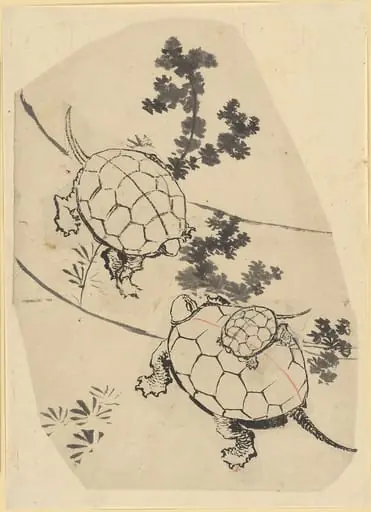 Untitled
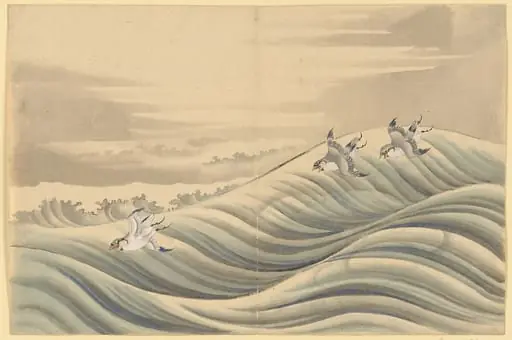 Untitled
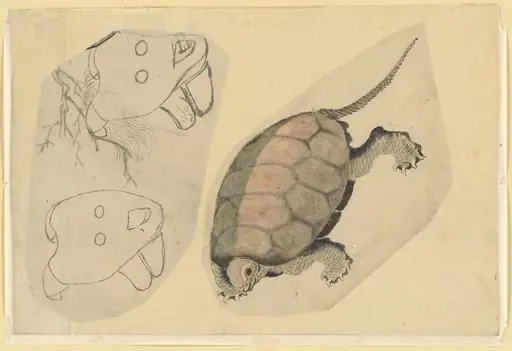 Untitled
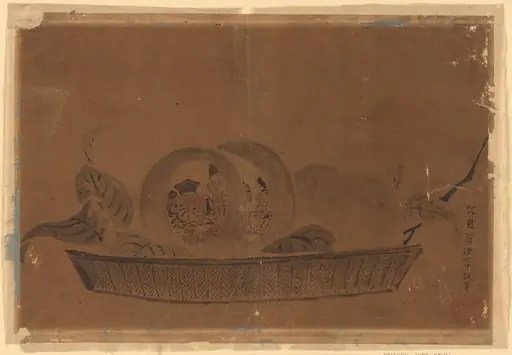 Untitled
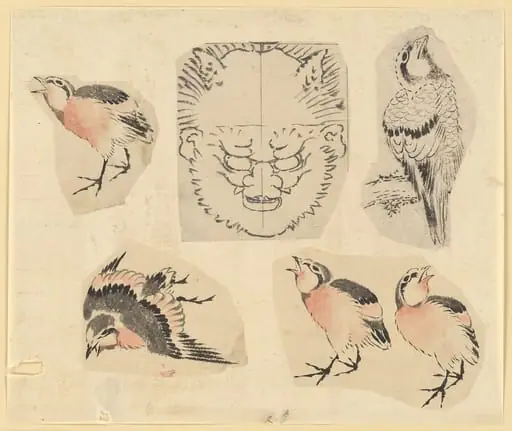 Untitled
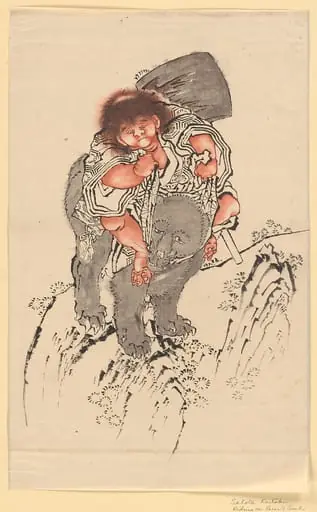 Untitled
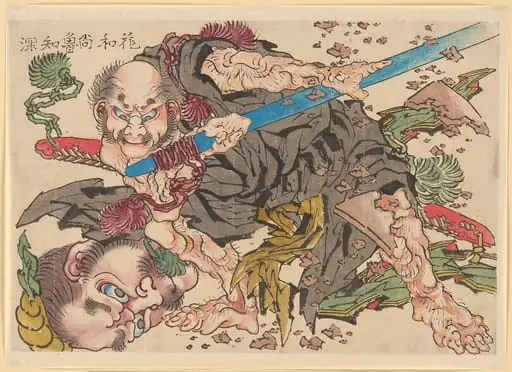 Untitled
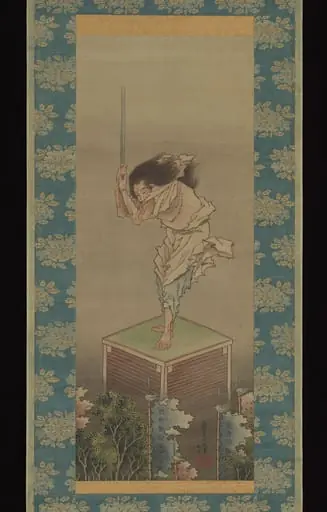 Untitled
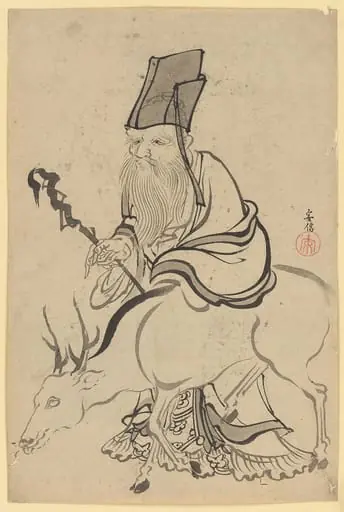 Untitled
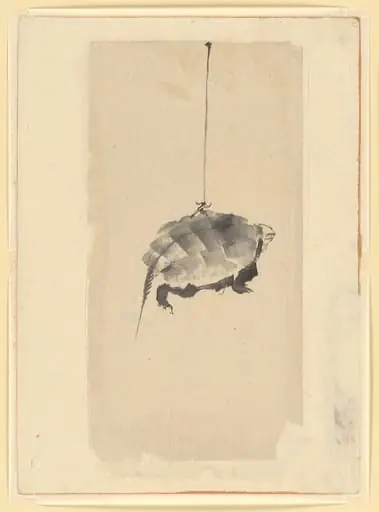 Untitled
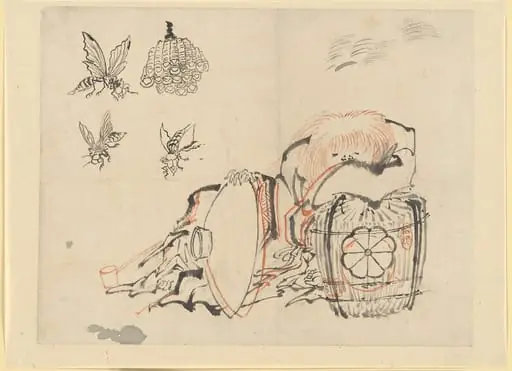 Untitled
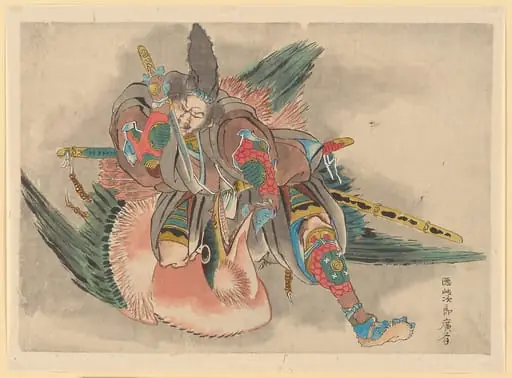 Untitled
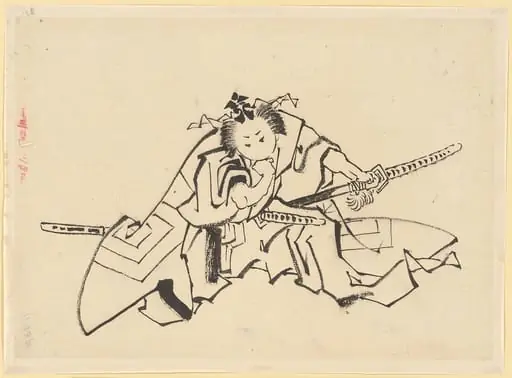 Untitled
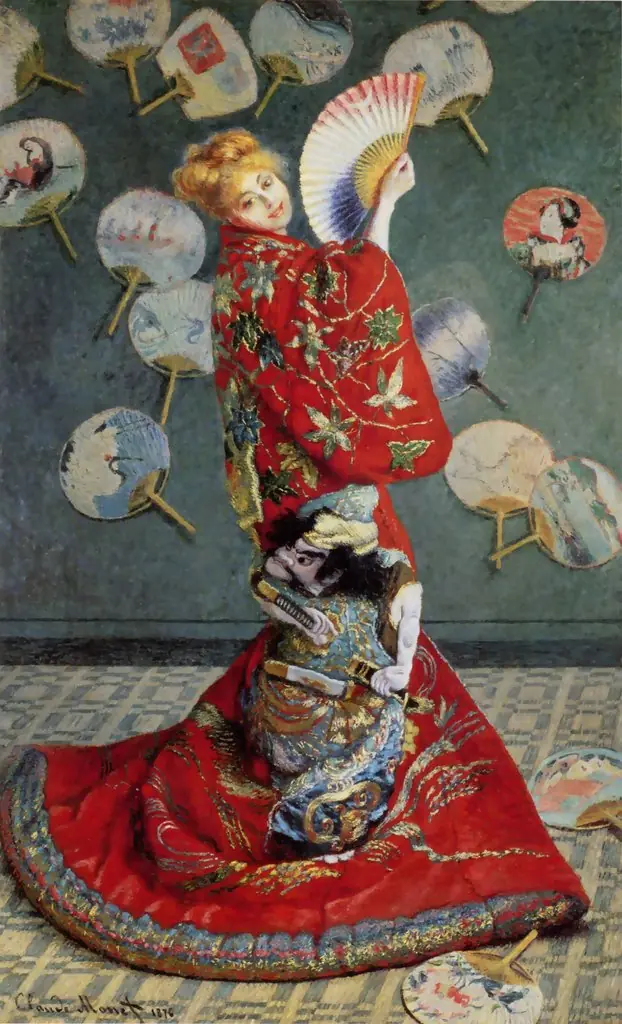 Madame Monet wearing a kimono
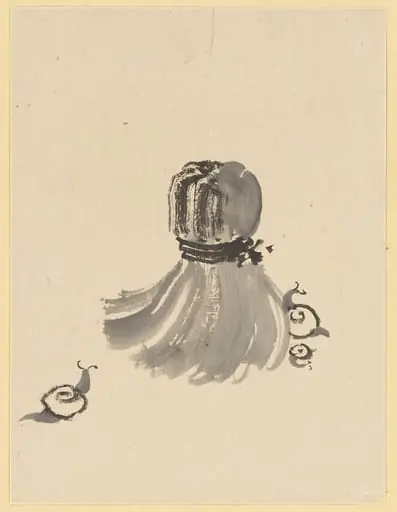 Untitled
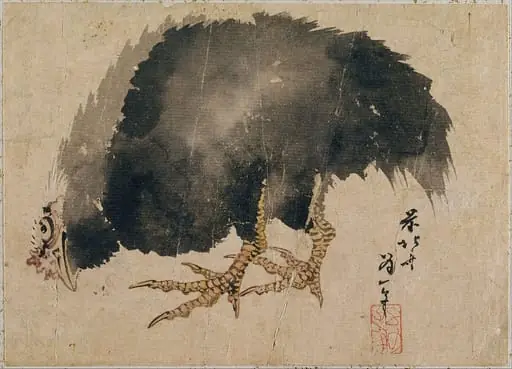 Untitled
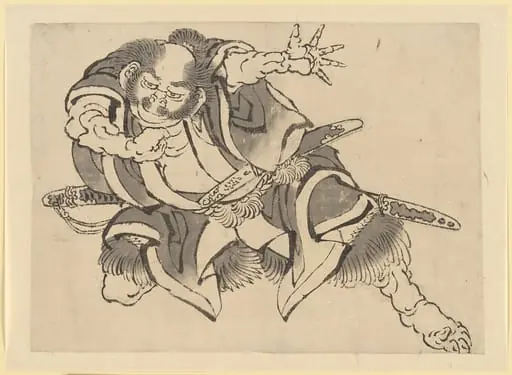 Untitled
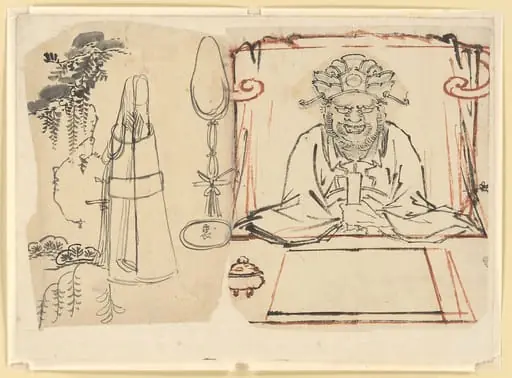 Untitled
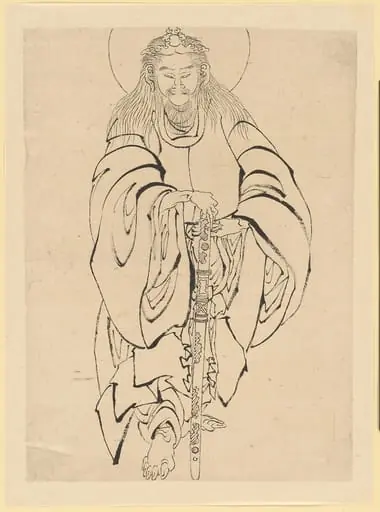 Untitled
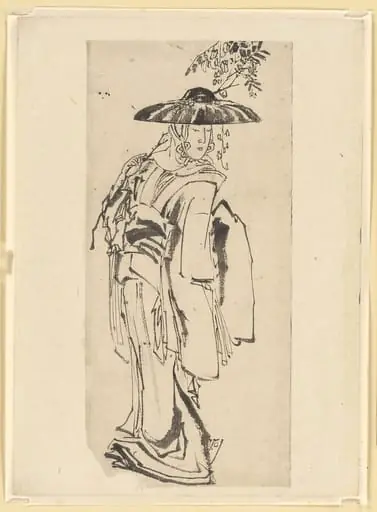 Untitled
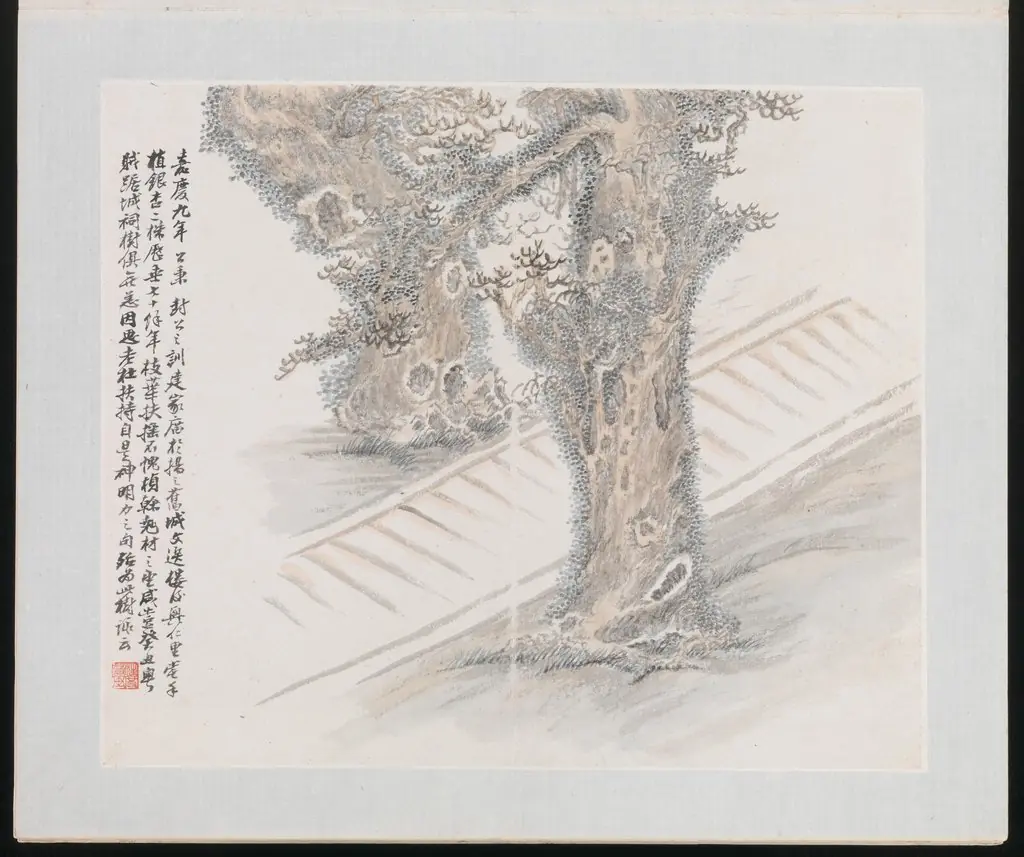 Ten Sites Associated with Ruan Yuan
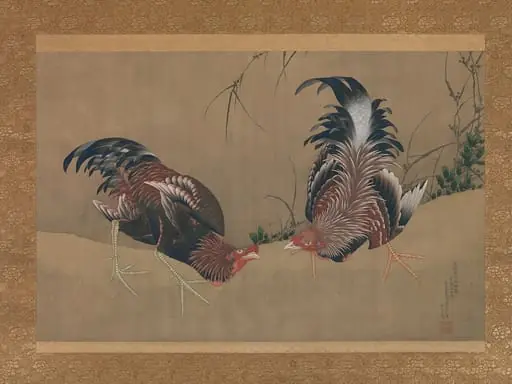 軍鶏図|Gamecocks
 Untitled
 Untitled
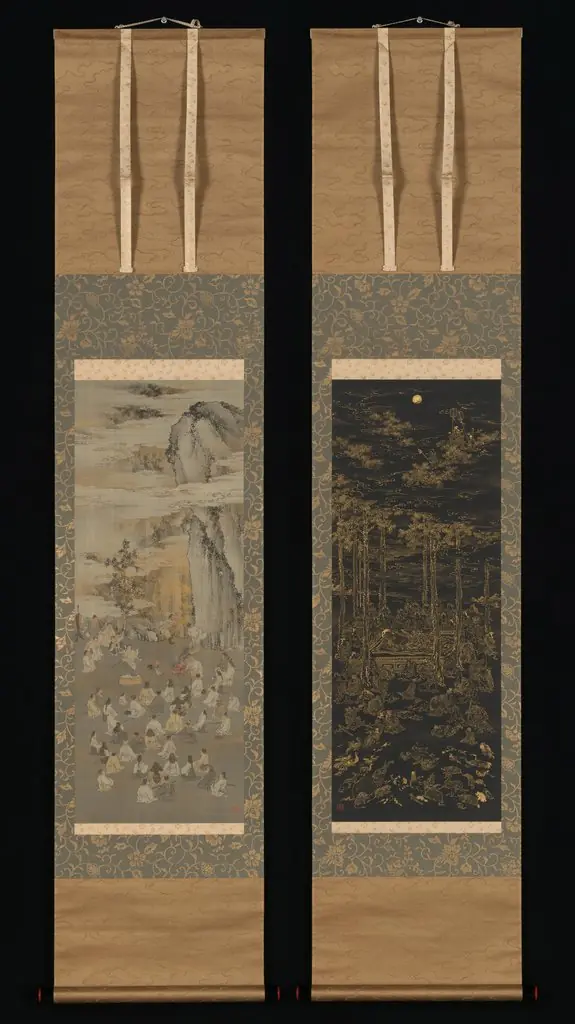 Luring the Sun Goddess Amaterasu Out of a Cave; Death of the Historical Buddha (Nehan-zu)
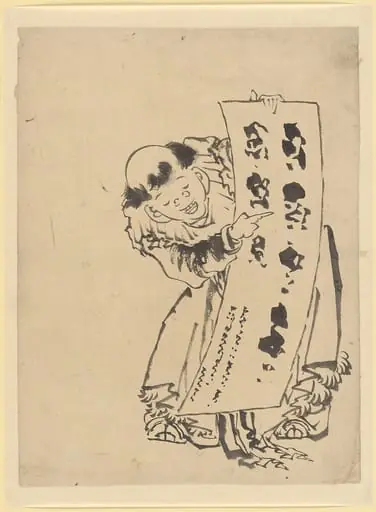 Untitled
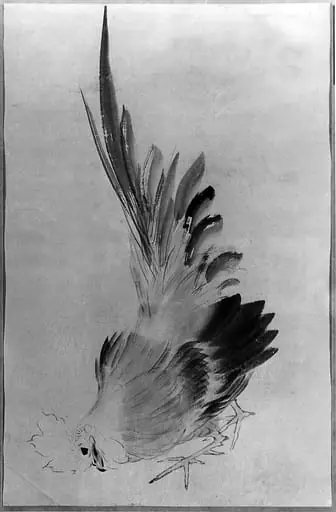 Untitled
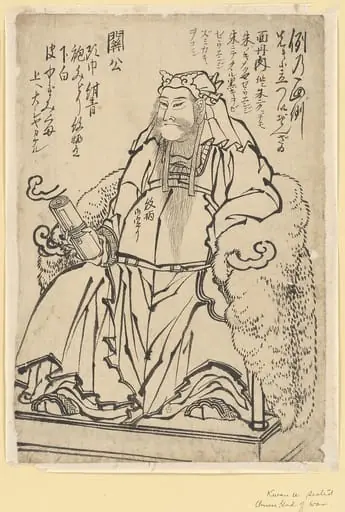 Untitled
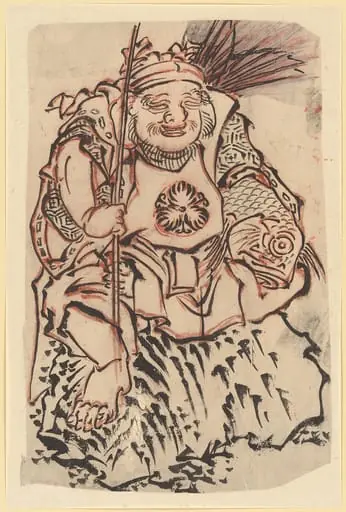 Untitled
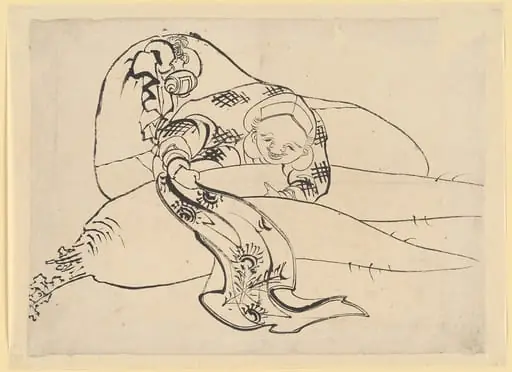 Untitled
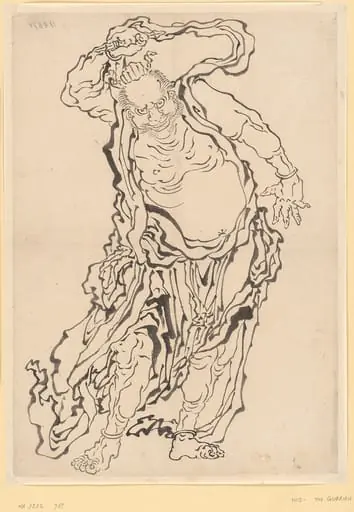 Untitled
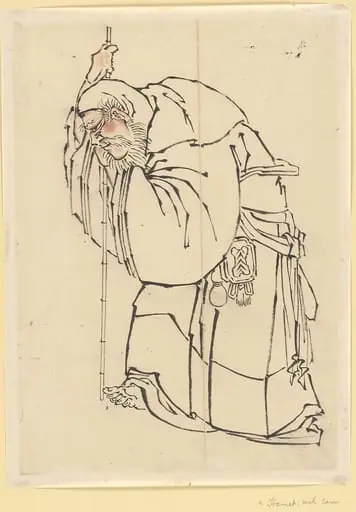 Untitled
 Untitled
 Untitled
 Untitled
 Untitled
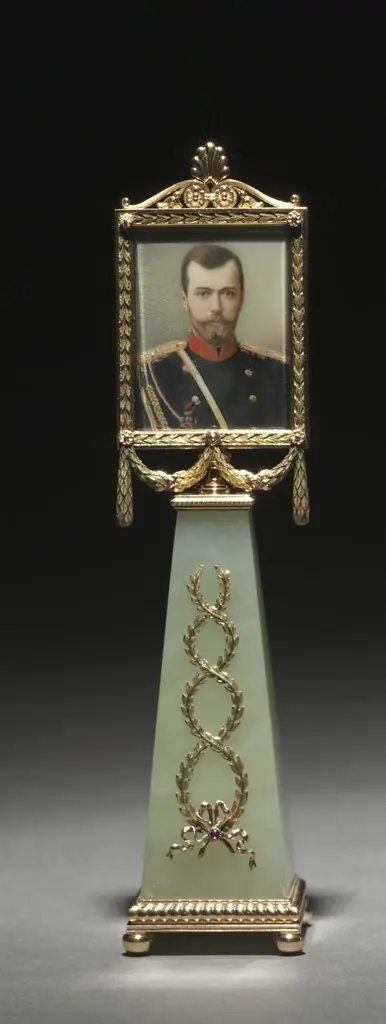 Imperial Framed Miniature of Tsar Nicholas II
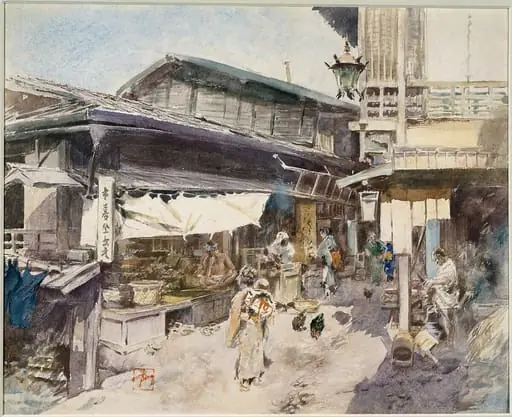 Street Scene in Ikao, Japan
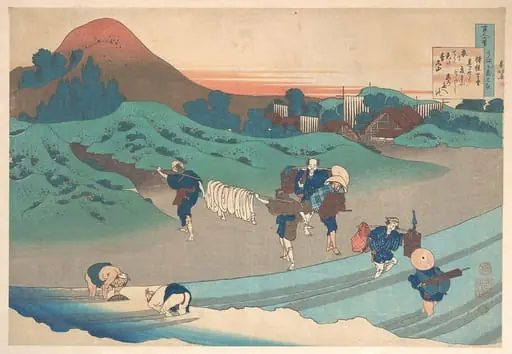 百人一首 うはかゑとき 持統天皇|Poem by Jitō Tenno (Empress Jitō), from the series One Hundred Poems Explained by the Nurse (Hyakunin isshu uba ga etoki)
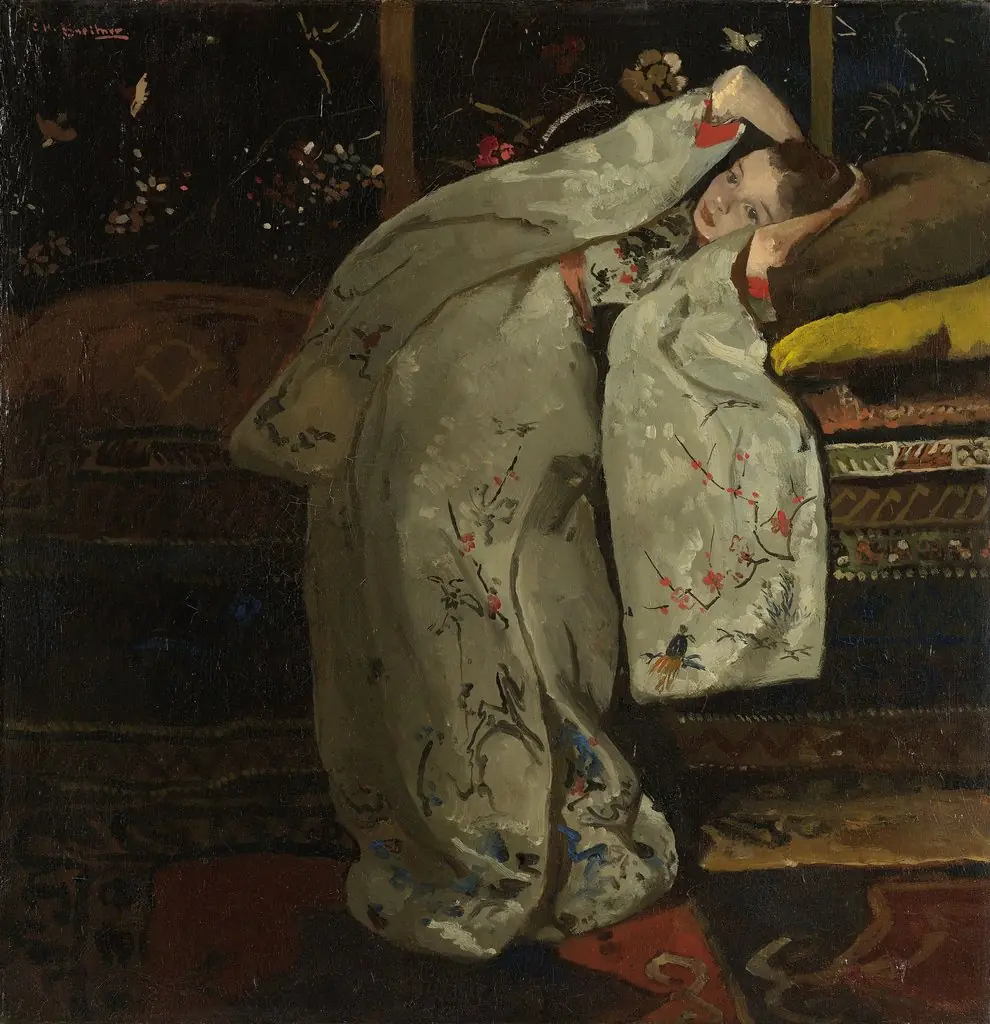 Girl in a White Kimono
 Untitled
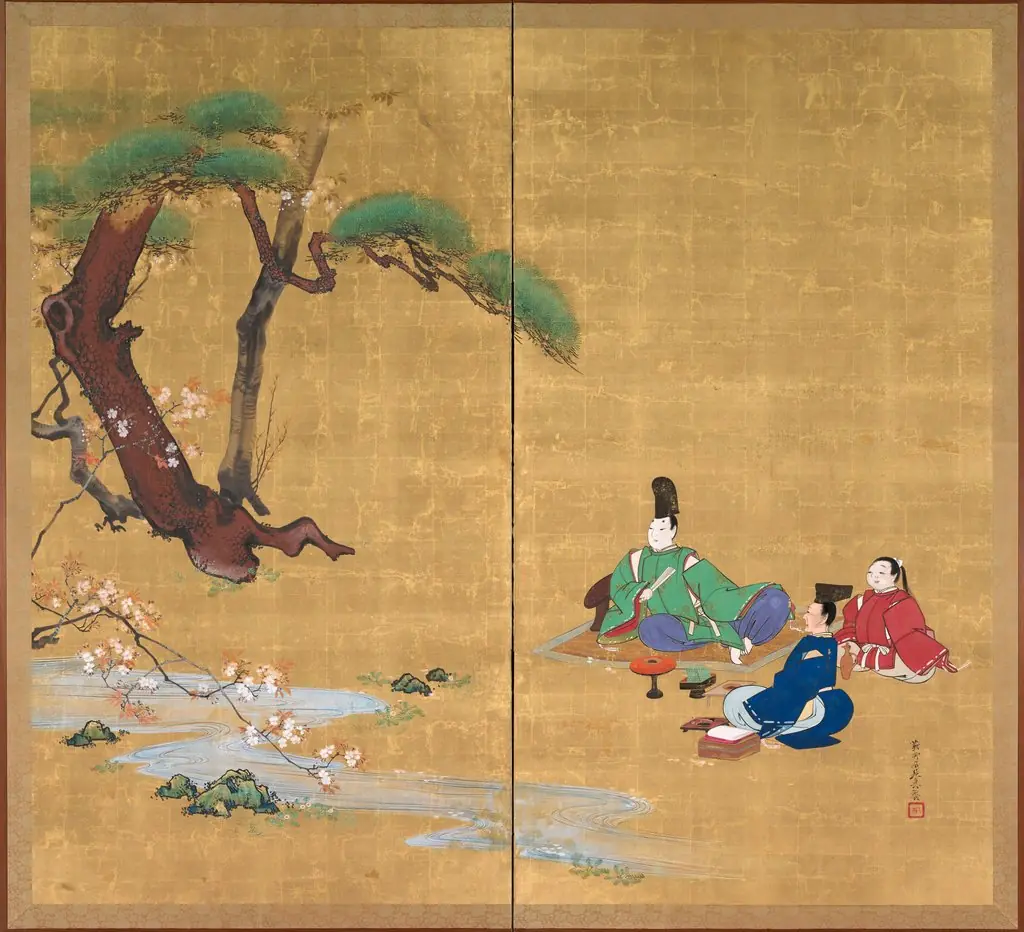 Nagisa Palace from the Tales of Ise
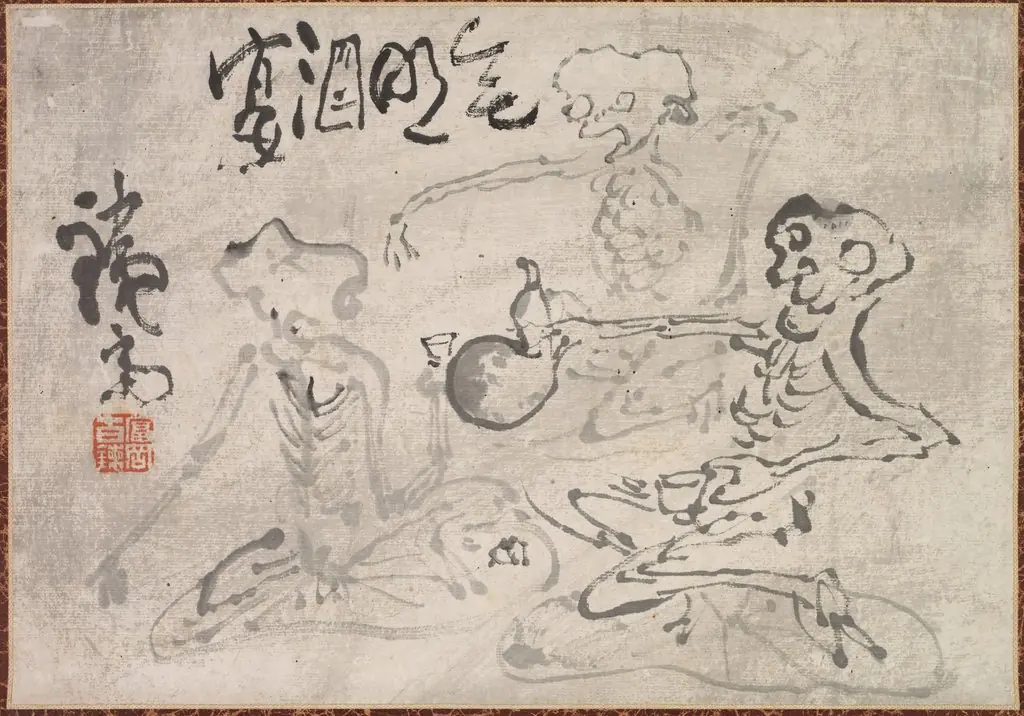 Sake Party with No Light
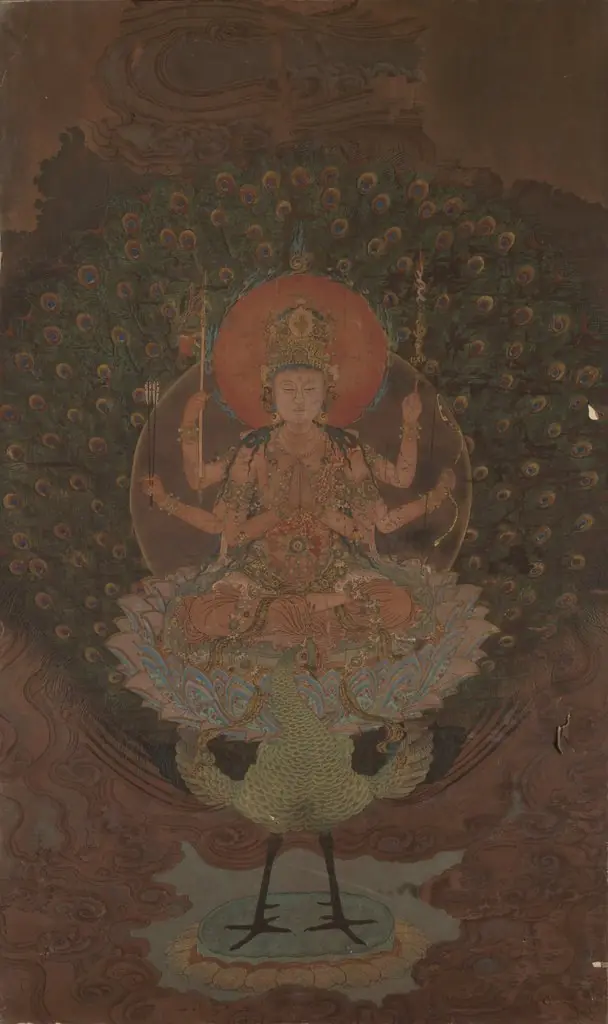 Mahamayuri (Kujaku Myoo)
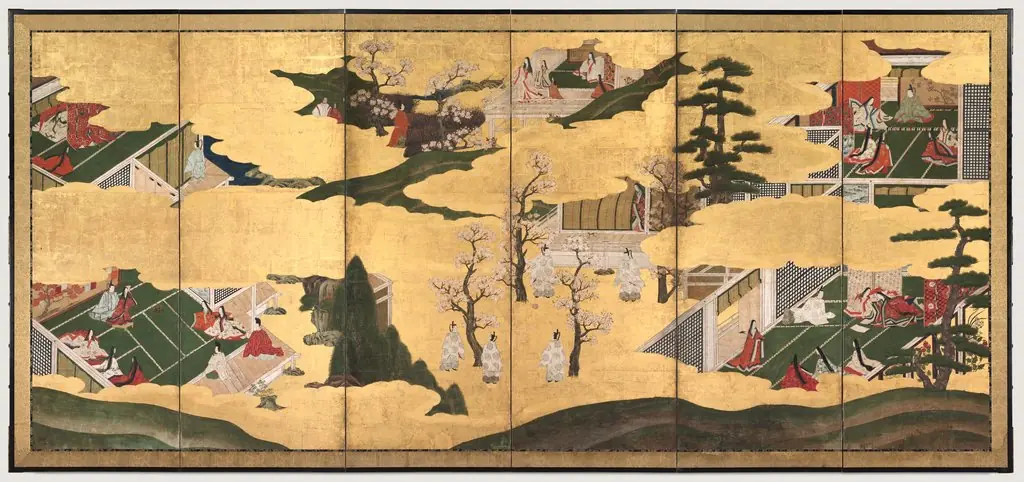 Scenes from the Tale of Genji
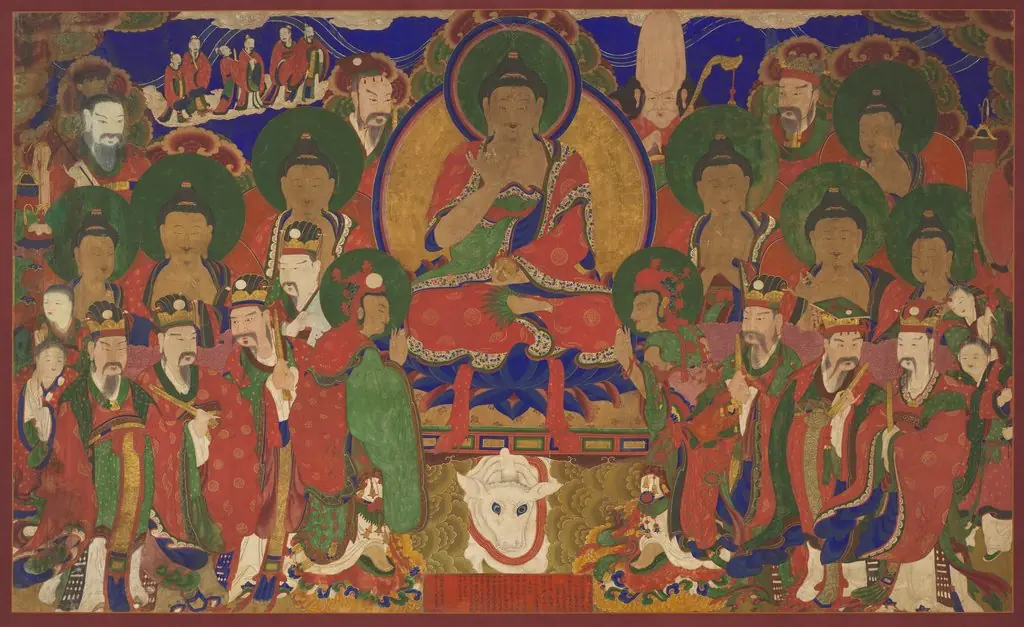 The Assembly of Tejaprabha Buddha
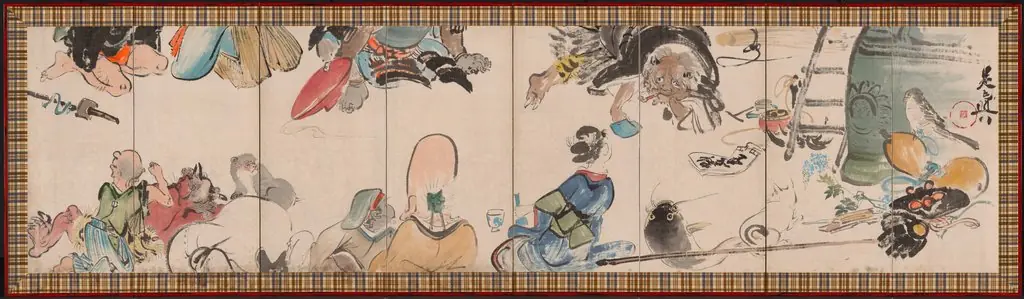 Gathering of Otsu-e Subjects
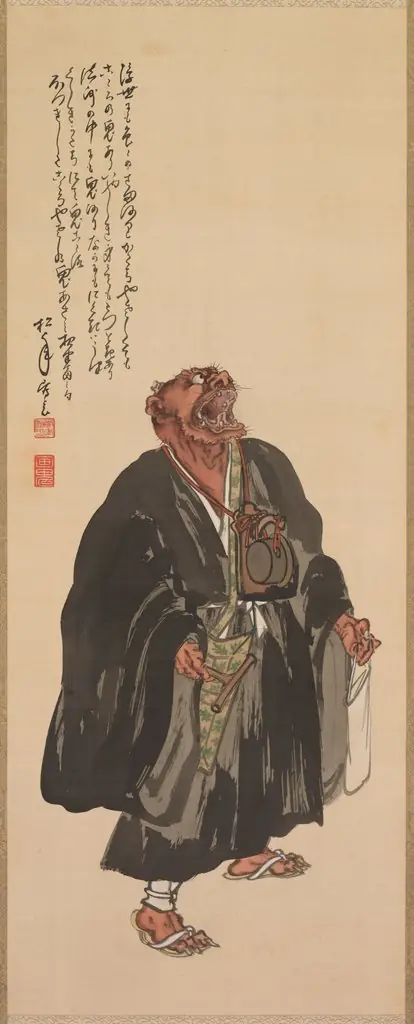 Demon Intoning the Name of the Buddha
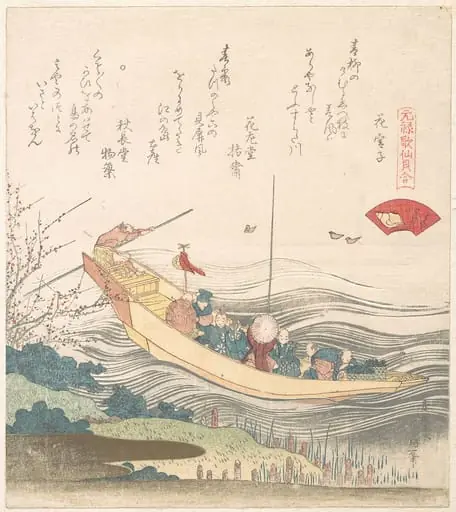 Miyako-gai|元禄歌仙貝合|Miyako Shell
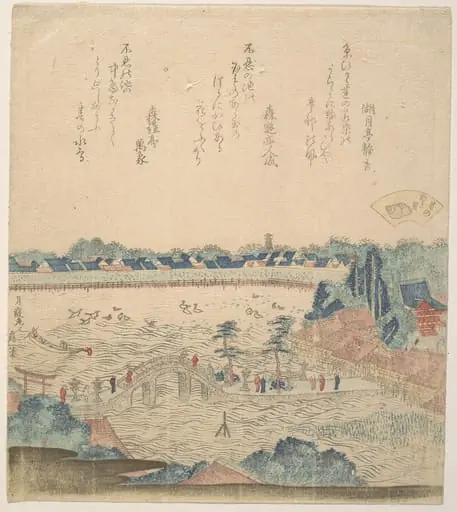 Untitled
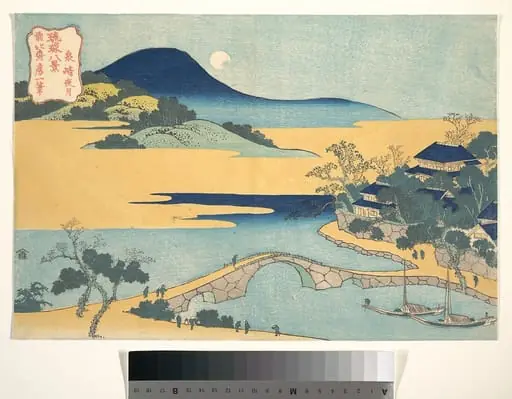 琉球八景 泉崎夜月|Evening Moon at Izumizaki (Izaumizaki yagetsu), from the series Eight Views of the Ryūkyū Islands (Ryūkyū hakkei)
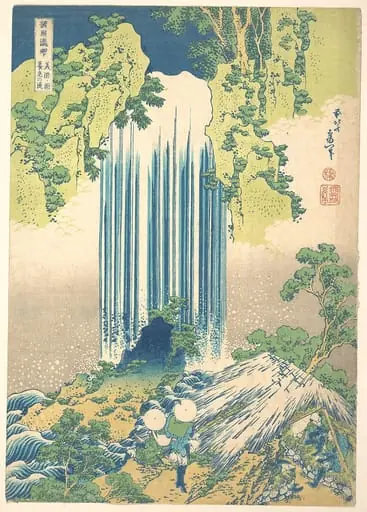 諸國瀧廻リ 美濃ノ国養老の滝|Yōrō Waterfall in Mino Province (Mino no Yōrō no taki), from the series A Tour of Waterfalls in Various Provinces (Shokoku taki meguri)
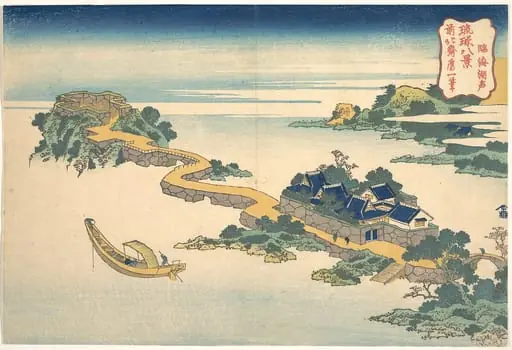 琉球八景 臨海潮(湖)聲|Sound of the Lake at Rinkai (Rinkai kosei), from the series Eight Views of the Ryūkyū Islands (Ryūkyū hakkei)
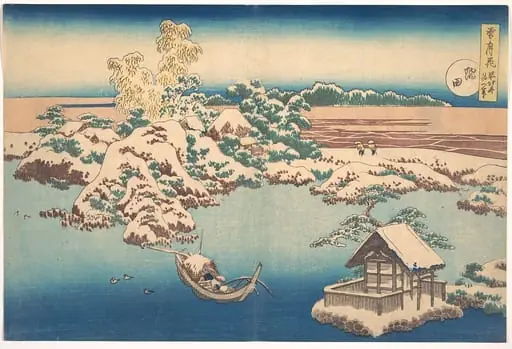 雪月花 隅田|Snow on the Sumida River (Sumida), from the series, Snow, Moon, and Flowers (Setsugekka)
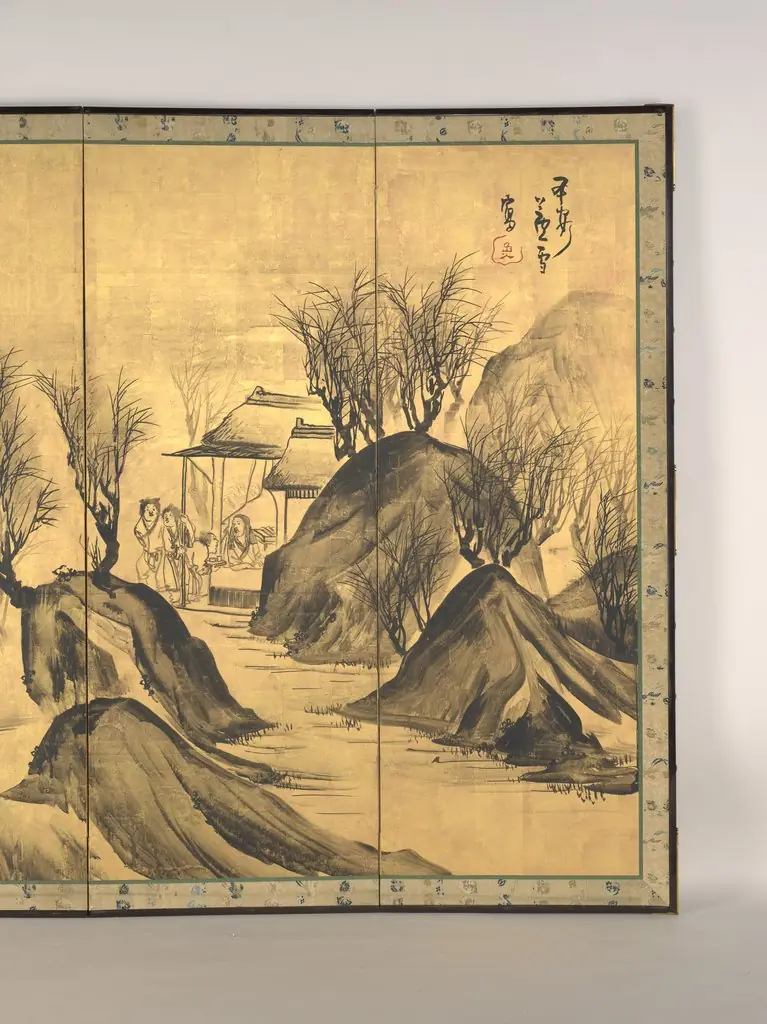 Mountain God with Tiger and Attendants
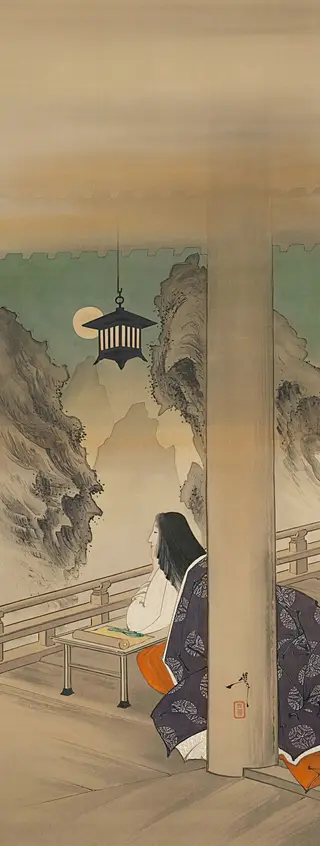 Murasaki Shikibu at Ishiyamadera Temple, based on the print “The Moon at Ishiyama,” from the series One Hundred Aspects of the Moon (Tsuki hyakushi: Ishiyama no tsuki)
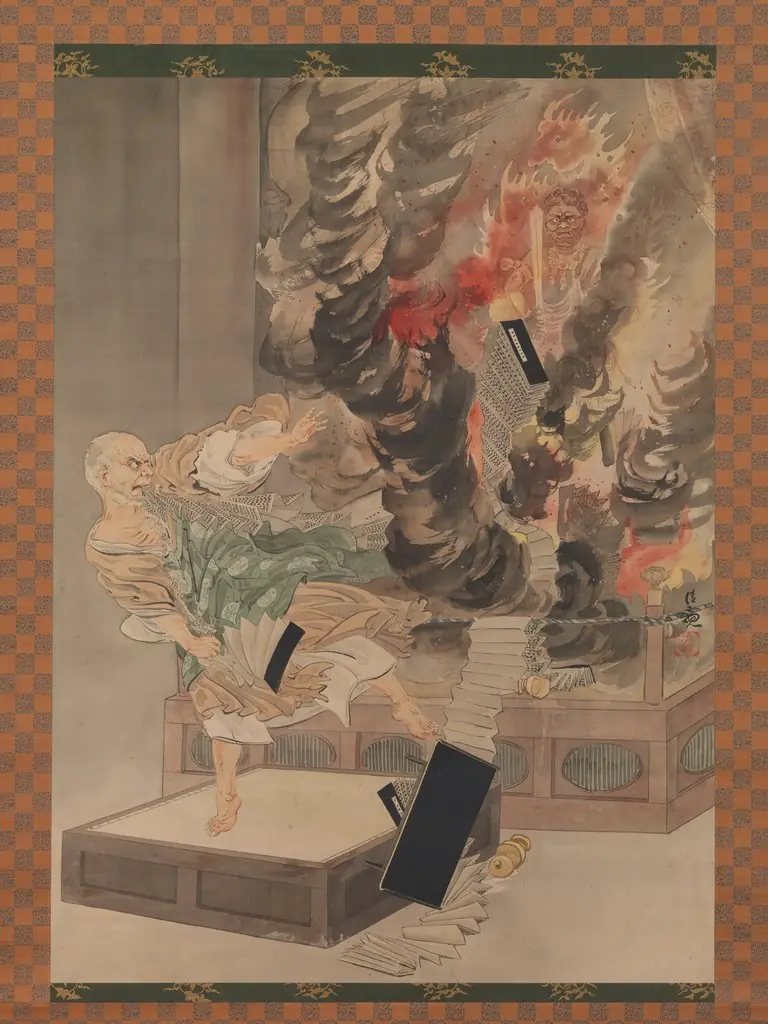 The Fury of Monk Raigō
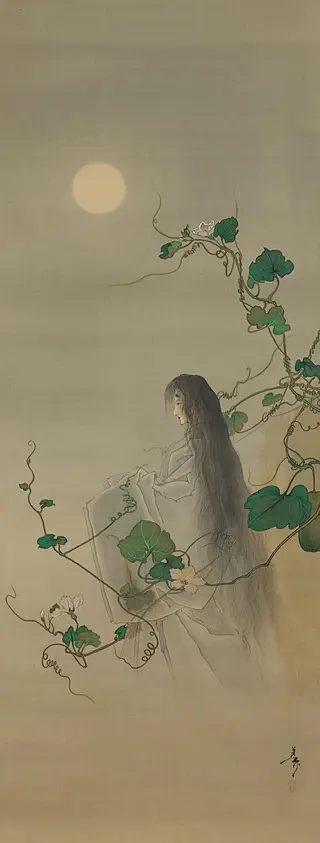 The Spirit of the Deceased Yūgao Entwined in Moonflower Vines, based on the print “The Lady of the Evening Faces,” from the series One Hundred Aspects of the Moon (Tsuki hyakushi: Genji Yūgao no maki)
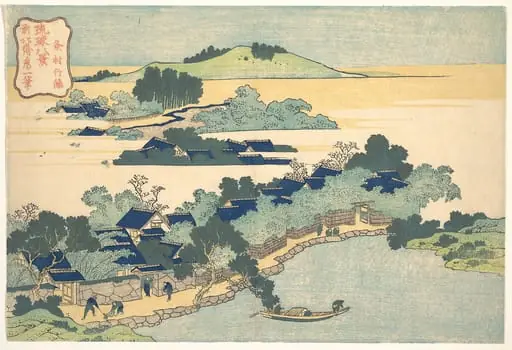 琉球八景 粂村竹籬|Bamboo Hedge at Kumemura (Kumemura chikuri), from the series Eight Views of the Ryūkyū Islands (Ryūkyū hakkei)
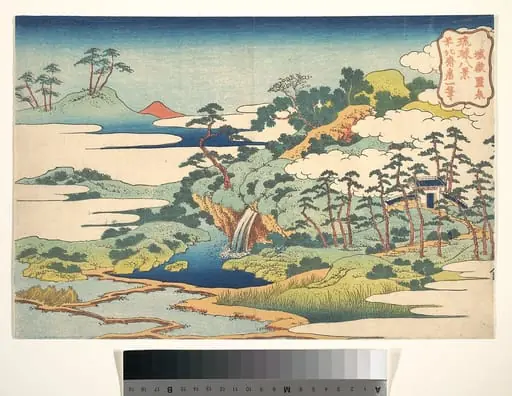 琉球八景 城嶽霊泉|The Sacred Spring at Jōgaku (Jōgaku reisen), from the series Eight Views of the Ryūkyū Islands (Ryūkyū hakkei)
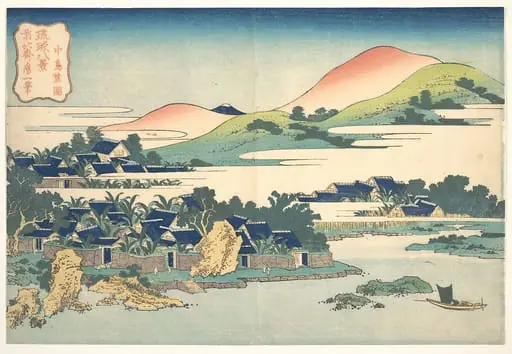 琉球八景 中島蕉園|Banana Garden at Nakashima (Nakashima shōen), from the series Eight Views of the Ryūkyū Islands (Ryūkyū hakkei)
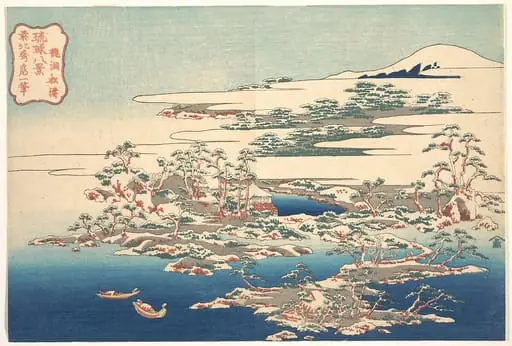 琉球八景 龍洞松濤|Pines and Waves at Ryūtō (Ryūtō shōtō), from the series Eight Views of the Ryūkyū Islands (Ryūkyū hakkei)
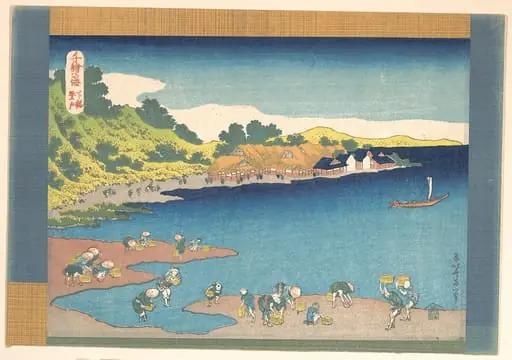 千絵の海 下総登戸|Noboto at Shimōsa (Shimōsa Noboto), from the series One Thousand Pictures of the Sea (Chie no umi)
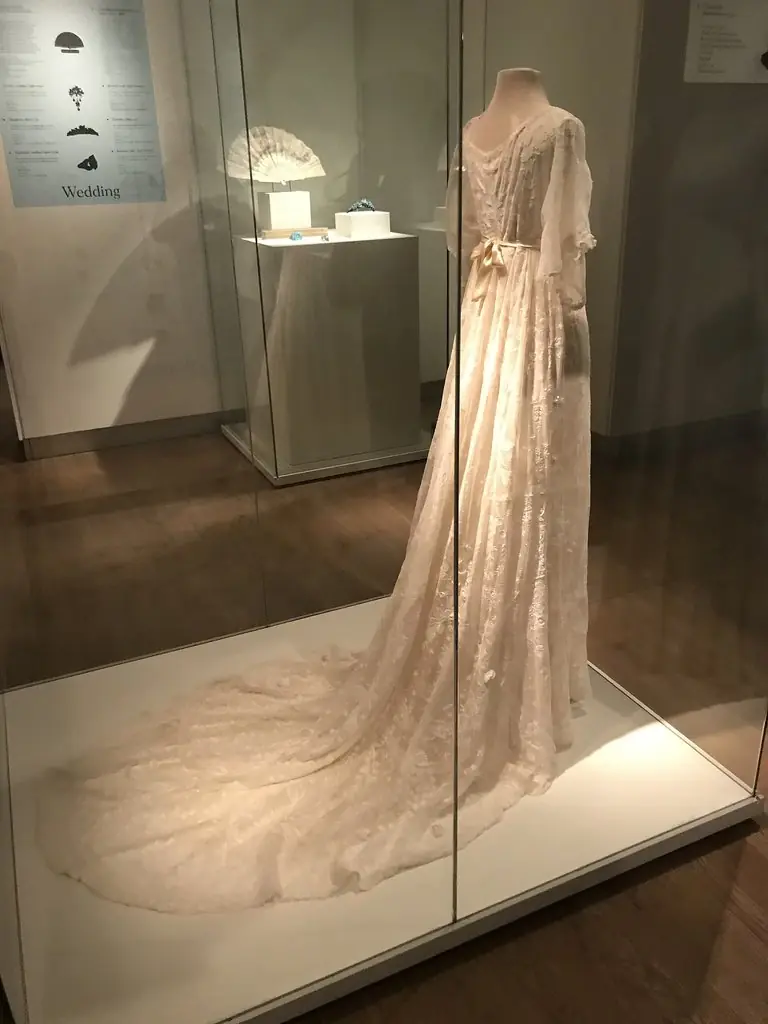 Wedding Fan Showing Flower Garland and Flying Pigeons, with Case
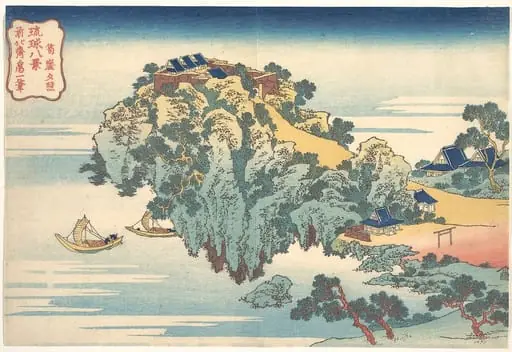 琉球八景 筍崖夕照|Evening Glow at Jungai (Jungai sekishō), from the series Eight Views of the Ryūkyū Islands (Ryūkyū hakkei)
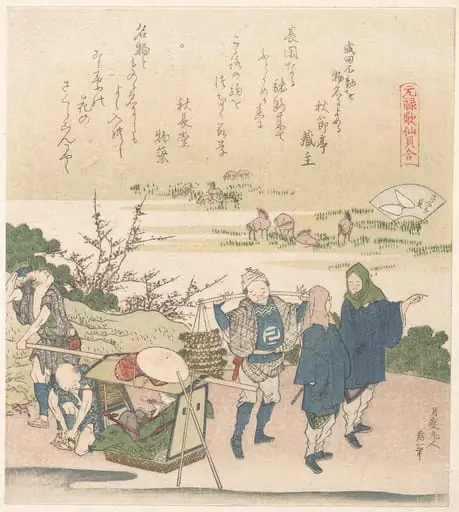 Sakura-gai|元禄歌仙貝合|Cherry Shell, from the series Genroku Poetry Shell Games
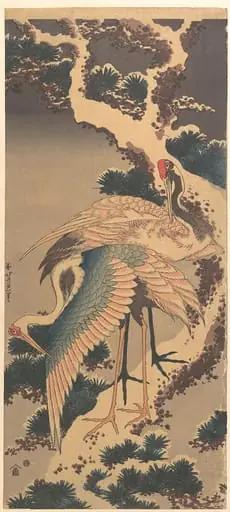 雪松に鶴|Cranes on Branch of Snow-covered Pine
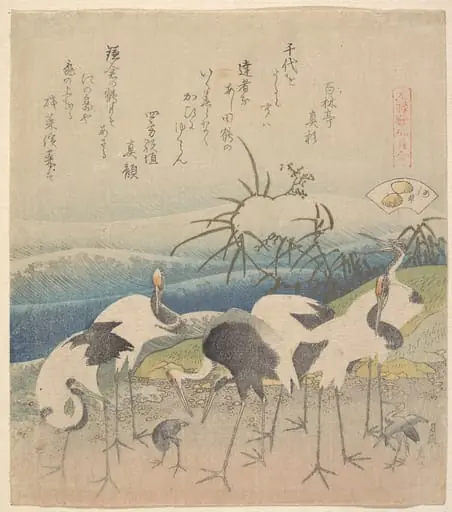 元禄歌仙貝合|Ashi Clam, from the series "Genroku Kasen Kai-awase"
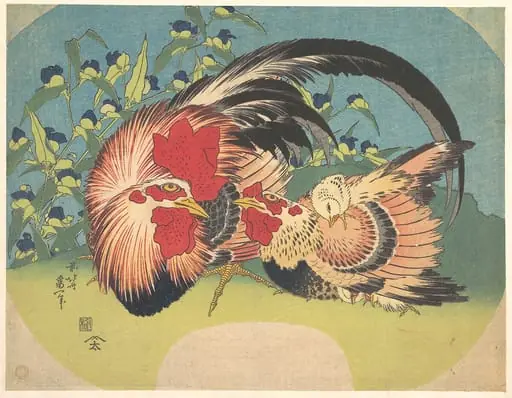 露草に鶏と雛|Rooster, Hen and Chicken with Spiderwort
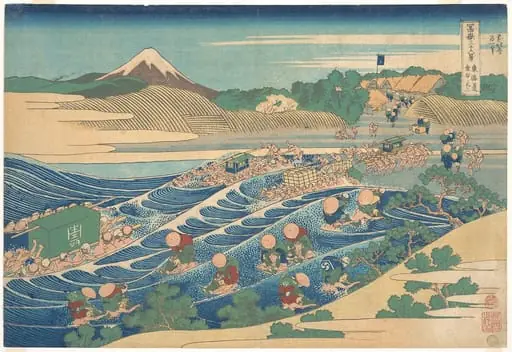 冨嶽三十六景 東海道金谷の不二|Fuji Seen from Kanaya on the Tōkaidō (Tōkaidō Kanaya no Fuji), from the series Thirty-six Views of Mount Fuji (Fugaku sanjūrokkei)
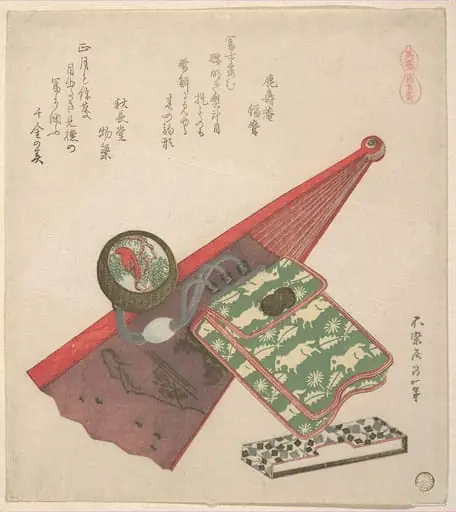 Untitled
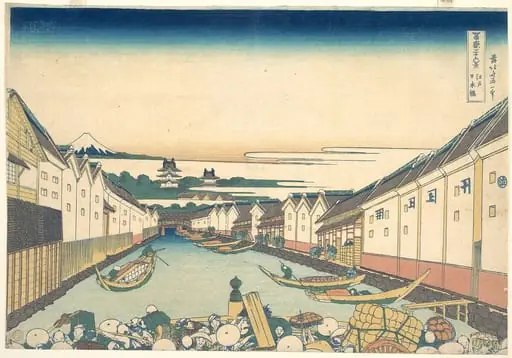 冨嶽三十六景 江戸日本橋|Nihonbashi in Edo (Edo Nihonbashi), from the series Thirty-six Views of Mount Fuji (Fugaku sanjūrokkei)
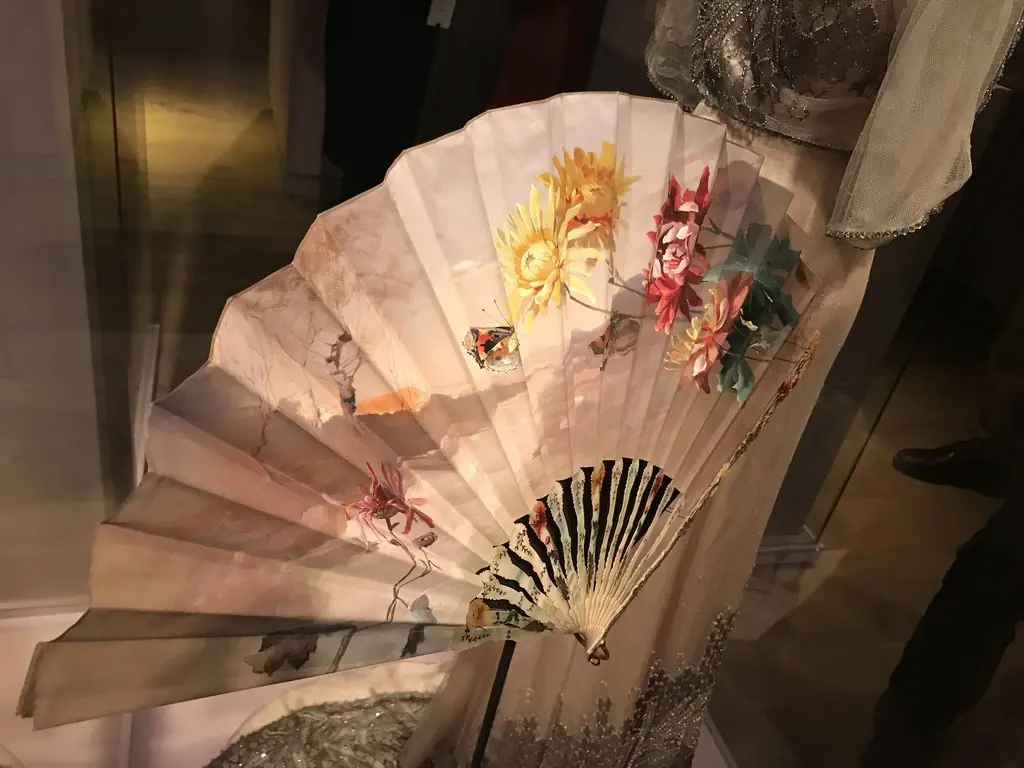 Folding Fan Depicting Chrysanthemums and Butterflies which belonged to Empress Maria Feodorovna
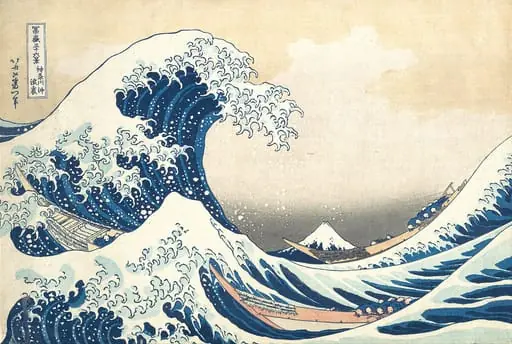 「富嶽三十六景 神奈川沖浪裏」|Under the Wave off Kanagawa (Kanagawa oki nami ura), also known as The Great Wave, from the series Thirty-six Views of Mount Fuji (Fugaku sanjūrokkei)
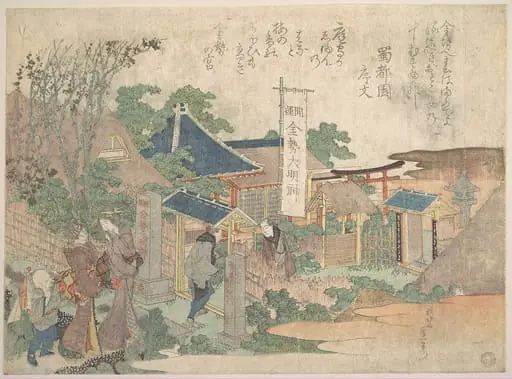 Untitled
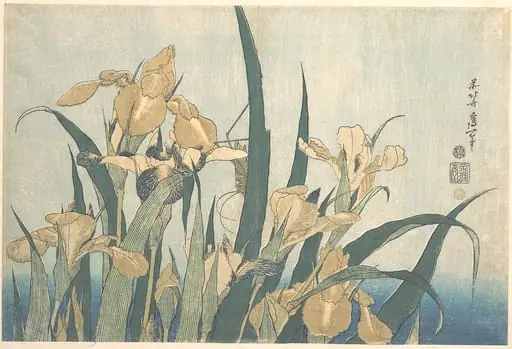 葛飾北斎画 燕子花|Grasshopper and Iris
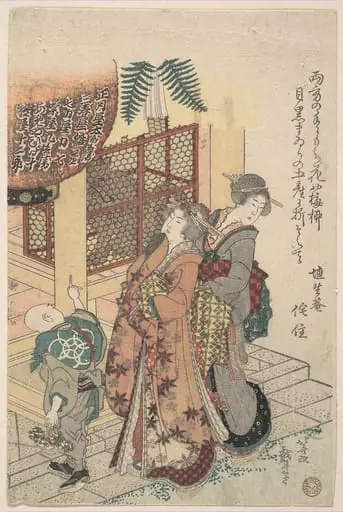 Untitled
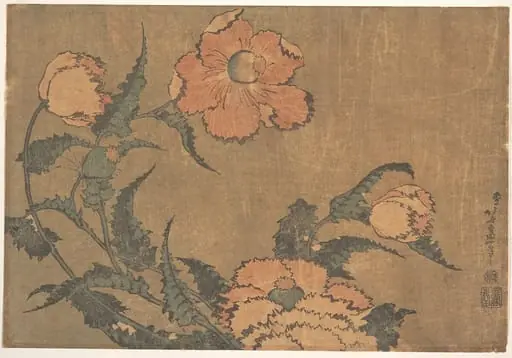 Untitled
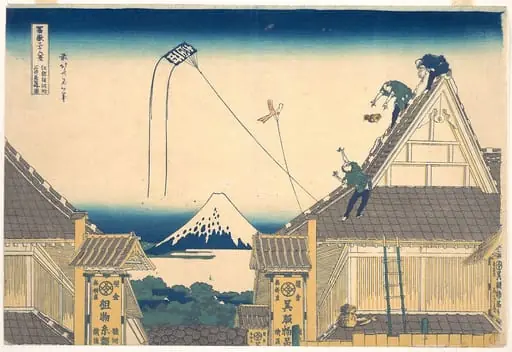 冨嶽三十六景 江都駿河町三井見世略図|Mitsui Shop at Surugachō in Edo (Edo Surugachō Mitsui mise ryaku zu), from the series Thirty-six Views of Mount Fuji (Fugaku sanjūrokkei)
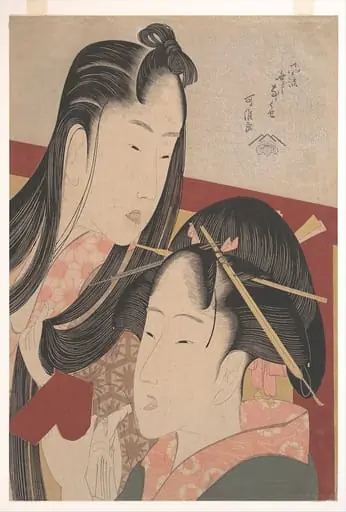 風流無くてななくせ|Squeaking a Ground Cherry, from the series Seven Fashionable Useless Habits (Furyu nakute nana kuse)
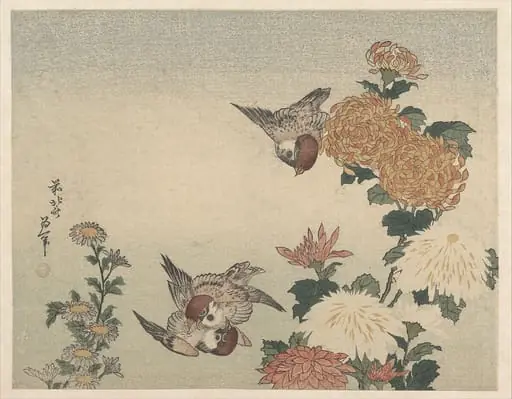 葛飾北斎画 菊に雀|Sparrows and Chrysanthemums
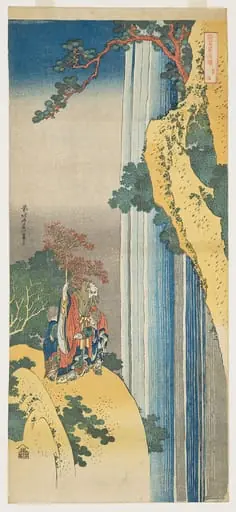 詩歌写真鏡 李白|Ri Haku from the series Mirrors of Japanese and Chinese Poems (Shiika shashin kyō)
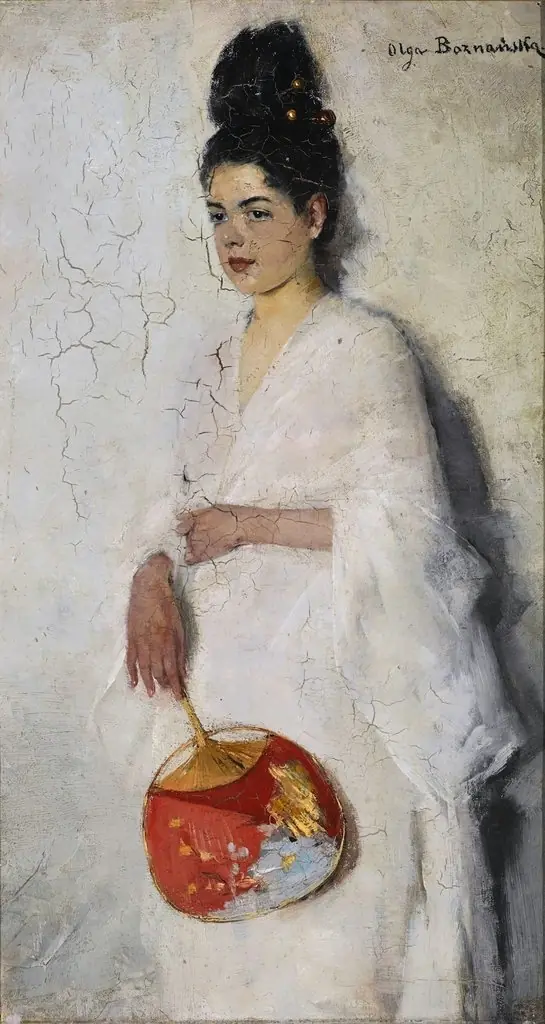 Japanese woman
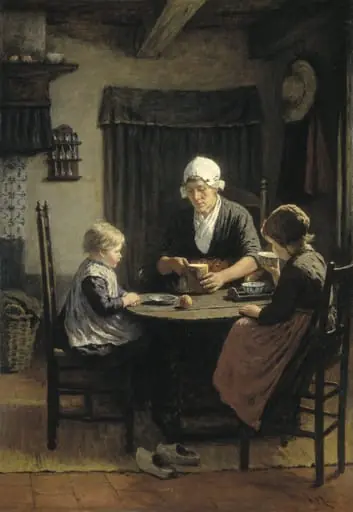 At Grandmother's
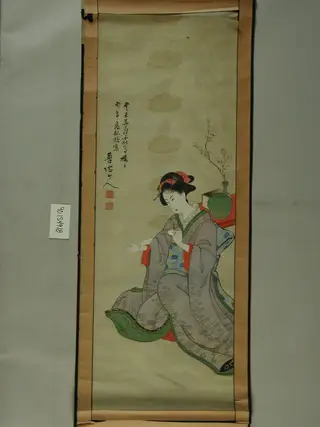 Kakemono
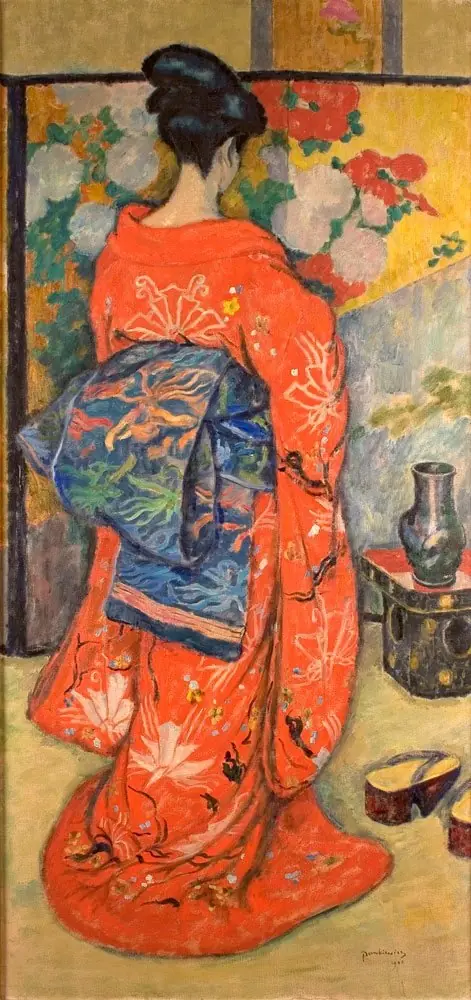 Japanese
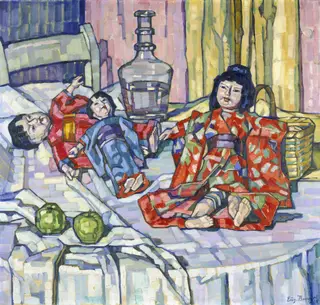 Japanese Dolls with Apples
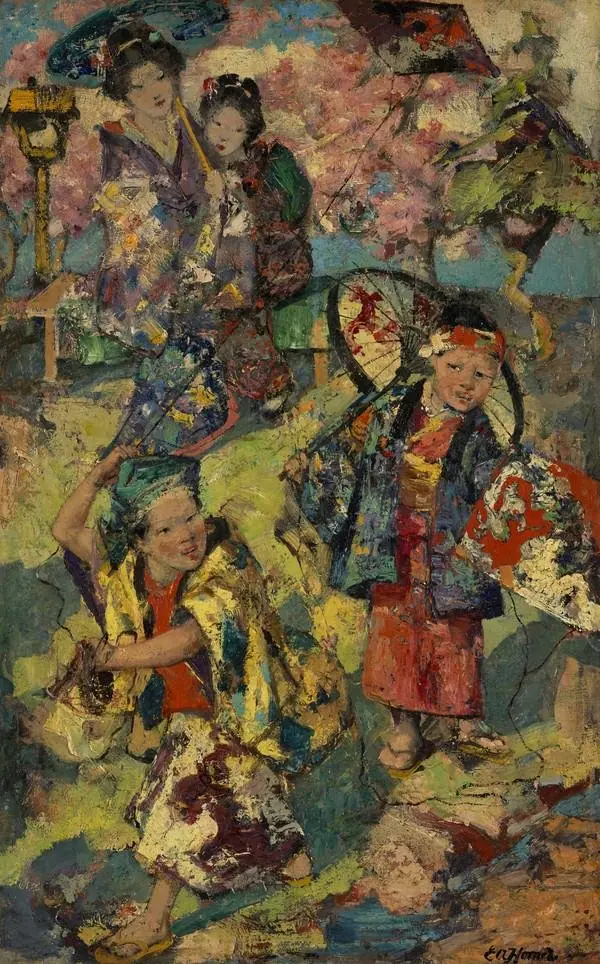 Kite Flying, Japan
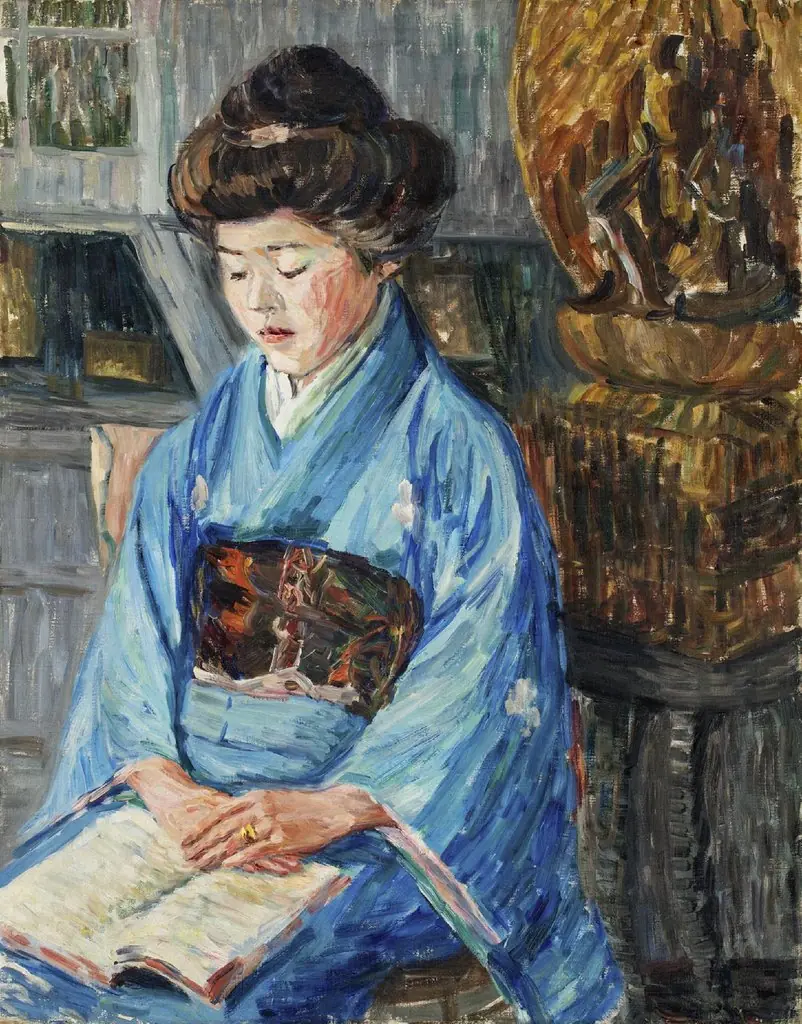 Japanese woma
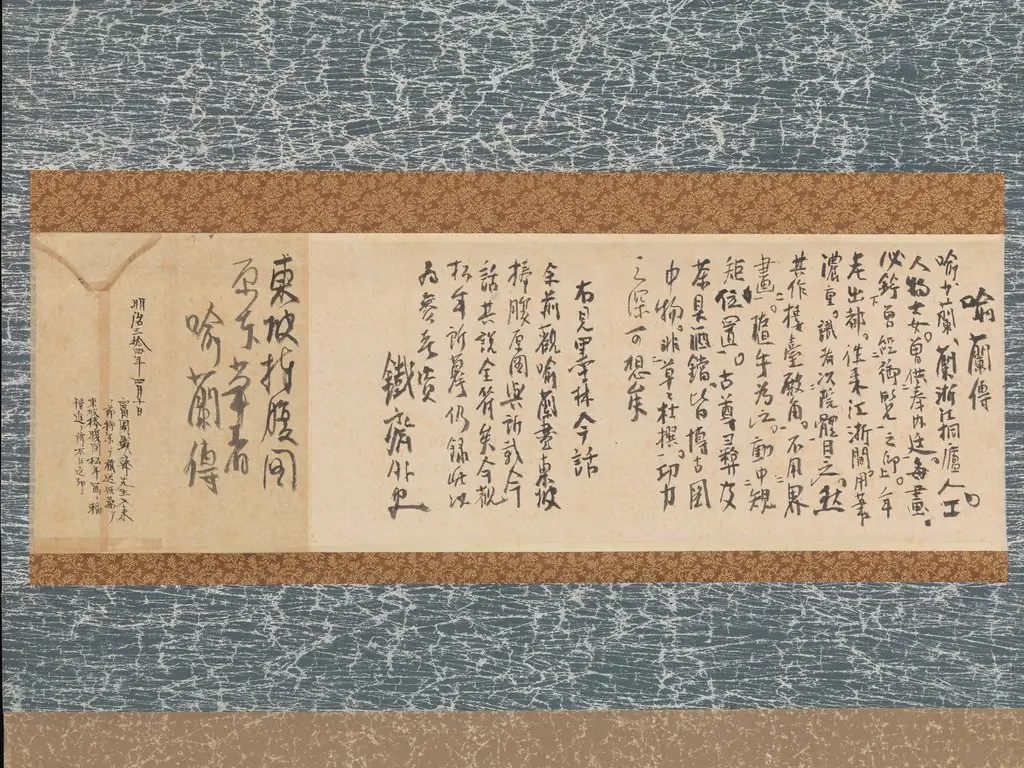 Su Dongpo Laughing
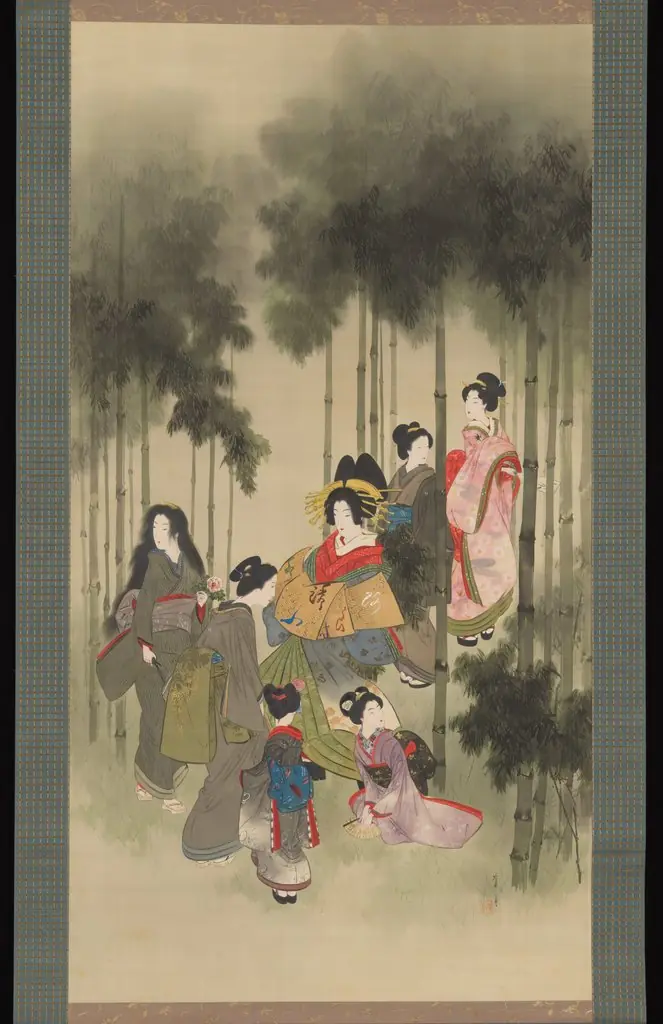 Seven Beauties of the Bamboo Grove
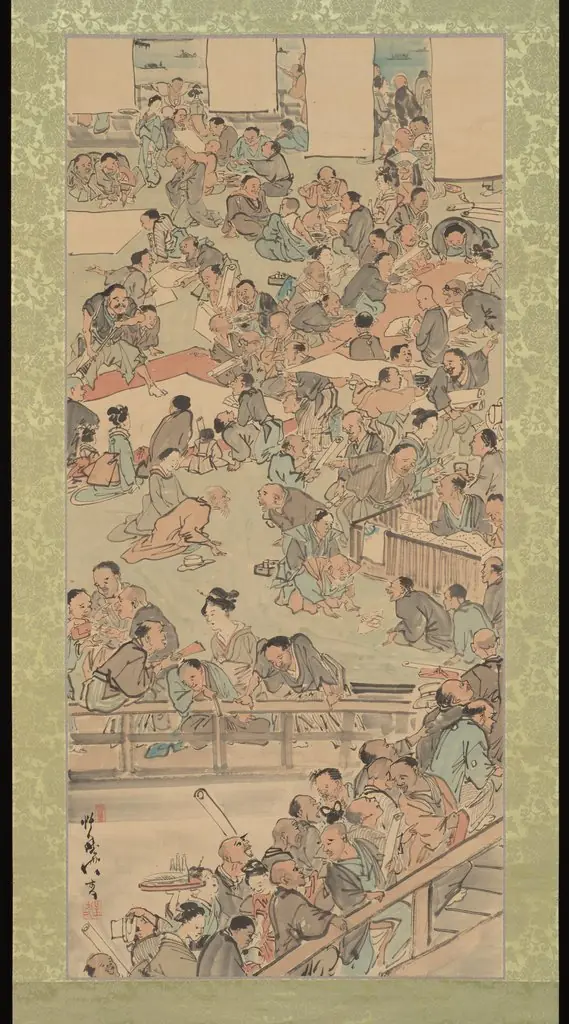 Painting and Calligraphy Gathering at the Nakamurarō in Ryōgoku 両国中村楼書画会之図 (Ryōgoku Nakamurarō shogakai no zu)
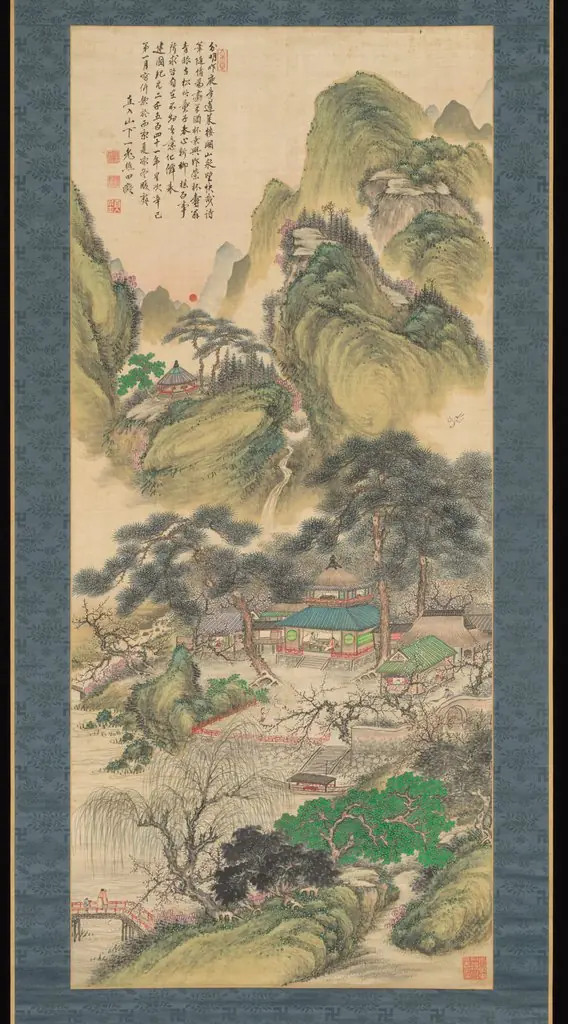 Spring Sunrise at Hōrai
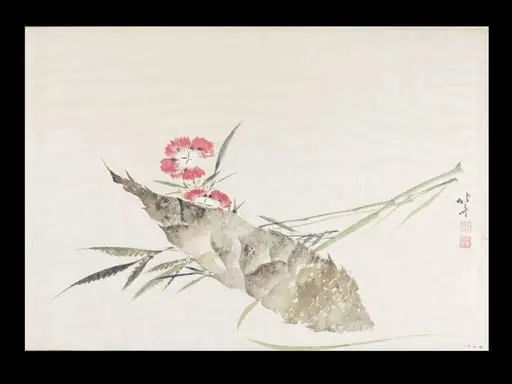 Bamboo Shoot
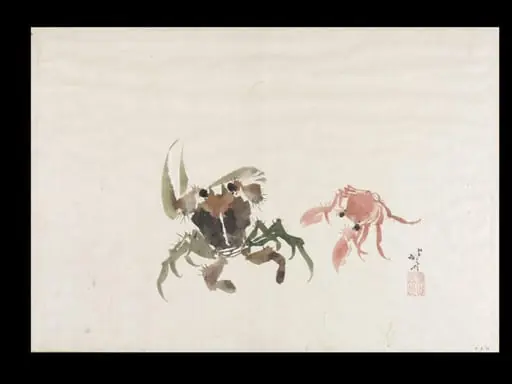 Crabs
Crabs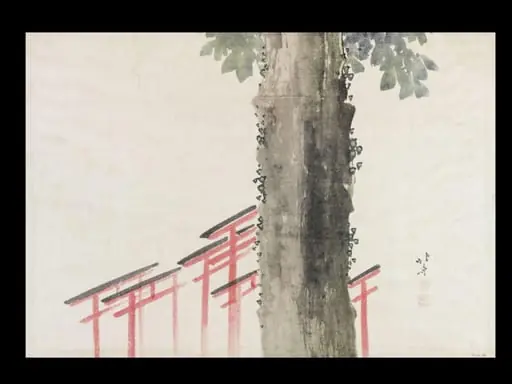 Giant Tree and Torii Gates
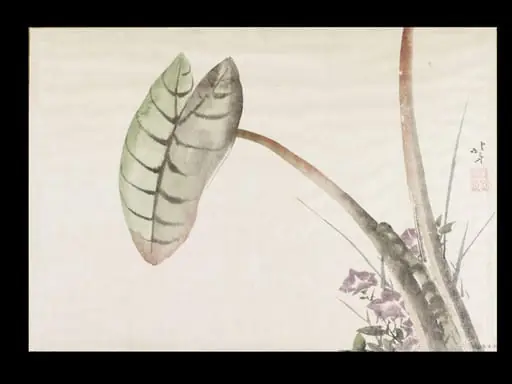 Taro Potato Leaf and Bellflowers
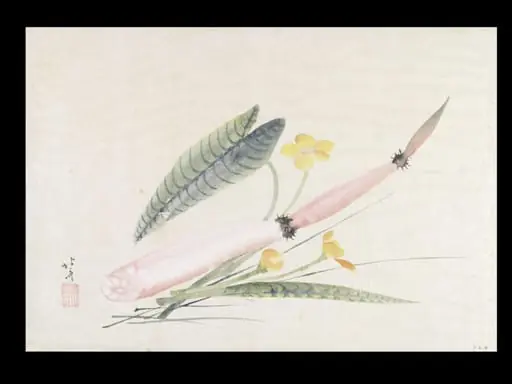 Lotus Root and Spatterdocks
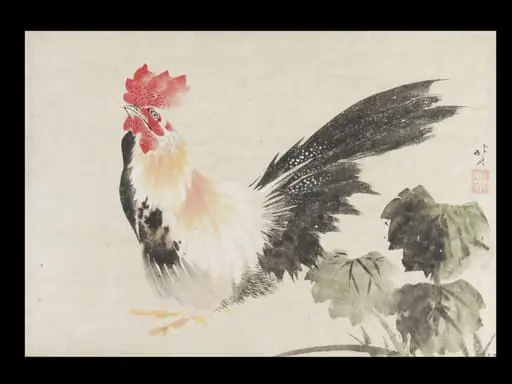 Rooster
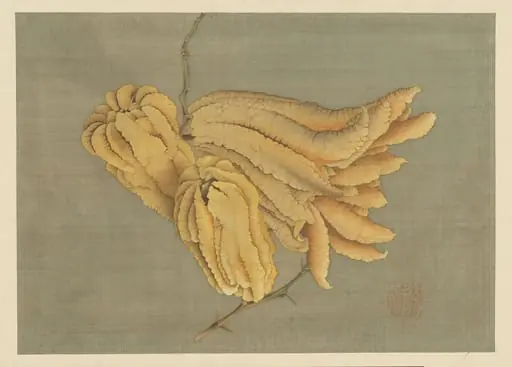 仏手柑図|Buddha’s Hand Citron (Busshukan)
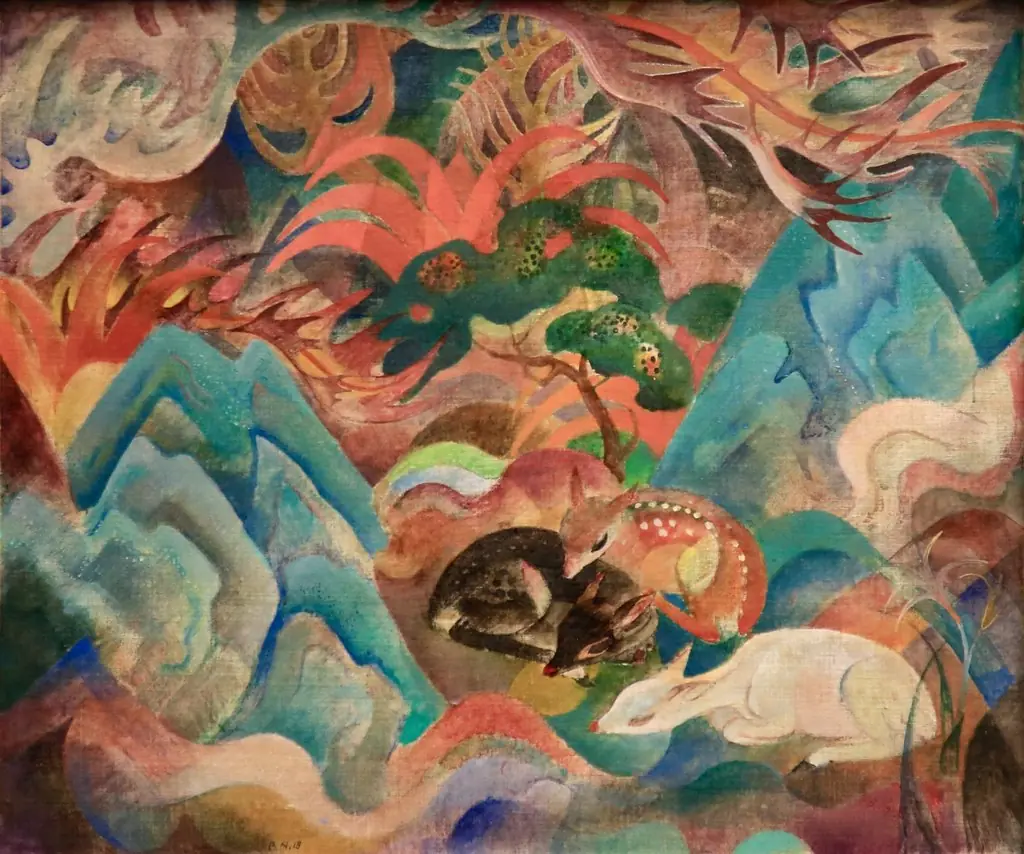 Deer in Japanese Landscape
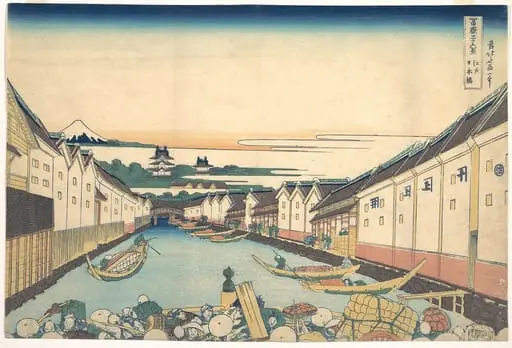 冨嶽三十六景 江戸日本橋|Nihonbashi in Edo (Edo Nihonbashi), from the series Thirty-six Views of Mount Fuji (Fugaku sanjūrokkei)
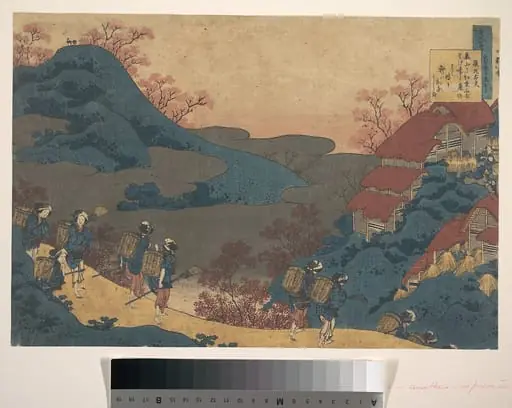 百人一首 乳母かゑとき 猿丸太夫|Poem by Sarumaru Dayū, from the series One Hundred Poems Explained by the Nurse (Hyakunin isshu uba ga etoki)
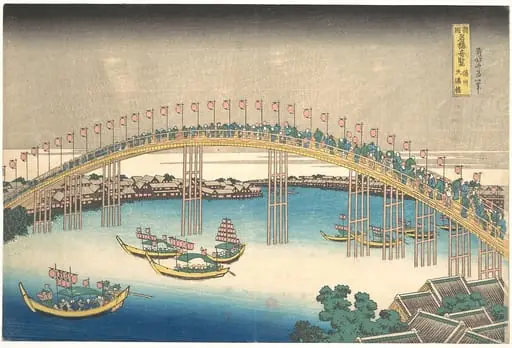 諸國名橋奇覧 摂洲天満橋|Tenman Bridge at Settsu Province (Sesshū Tenmanbashi), from the series Remarkable Views of Bridges in Various Provinces (Shokoku meikyō kiran)
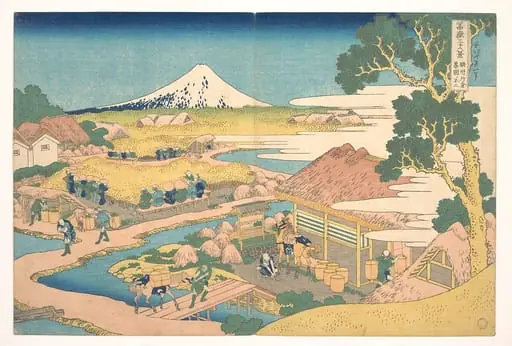 冨嶽三十六景 駿州片倉茶園の不二|Fuji from the Katakura Tea Fields in Suruga (Sunshū Katakura chaen no Fuji), from the series Thirty-six Views of Mount Fuji (Fugaku sanjūrokkei)
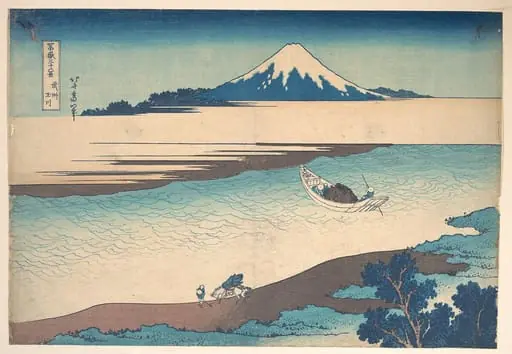 冨嶽三十六景 武州玉川|Fuji—The Tama River, Musashi Province, from the series Thirty-six Views of Mount Fuji (Fugaku sanjūrokkei)
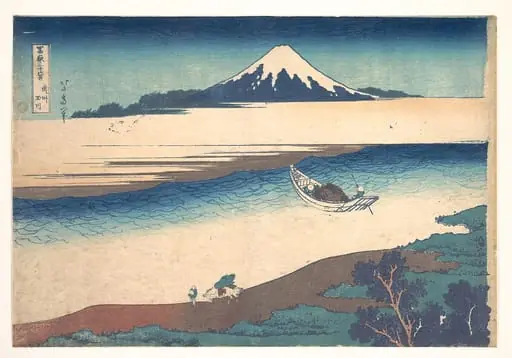 冨嶽三十六景 武州玉川|Tama River in Musashi Province (Bushū Tamagawa), from the series Thirty-six Views of Mount Fuji (Fugaku sanjūrokkei)
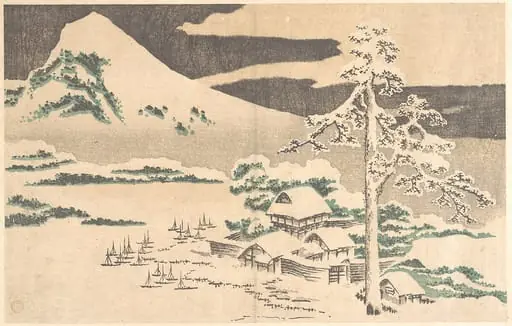 Untitled
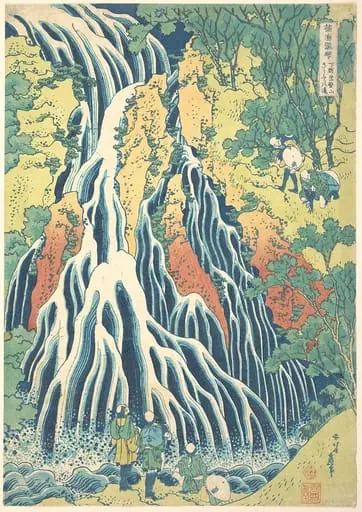 諸國瀧廻リ 下野黒髪山 きりふりの滝|Kirifuri Waterfall at Kurokami Mountain in Shimotsuke (Shimotsuke Kurokamiyama Kirifuri no taki), from the series A Tour of Waterfalls in Various Provinces (Shokoku taki meguri)
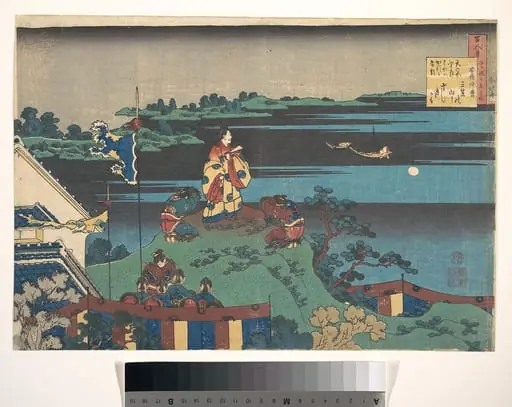 百人一首 宇波かゑとき 安部仲麿|Poem by Abe no Nakamaro, from the series One Hundred Poems Explained by the Nurse (Hyakunin isshu uba ga etoki)
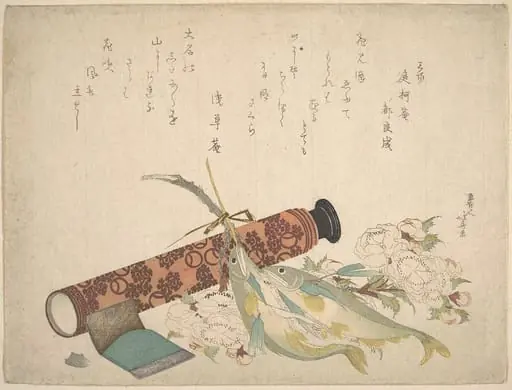 Untitled
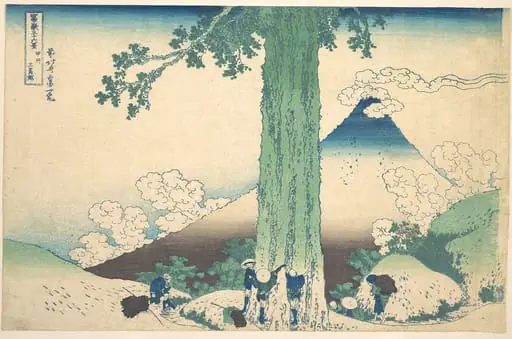 冨嶽三十六景 甲州三島越|Mishima Pass in Kai Province (Kōshū Mishima goe), from the series Thirty-six Views of Mount Fuji (Fugaku sanjūrokkei
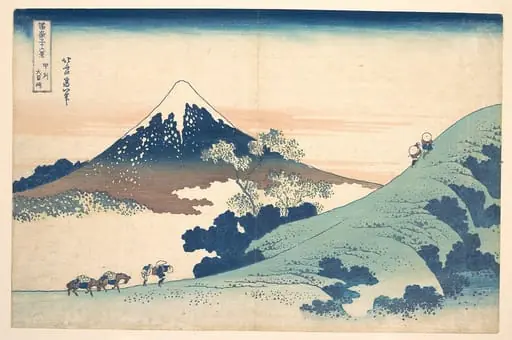 冨嶽三十六景 甲州犬目峠|Fuji from Inume (?) Pass
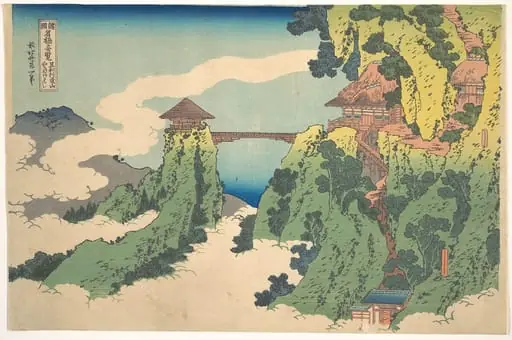 諸國名橋奇覧 足利行道山くものかけはし|The Hanging-cloud Bridge at Mount Gyōdō near Ashikaga (Ashikaga Gyōdōzan kumo no kakehashi), from the series Remarkable Views of Bridges in Various Provinces (Shokoku meikyō kiran)
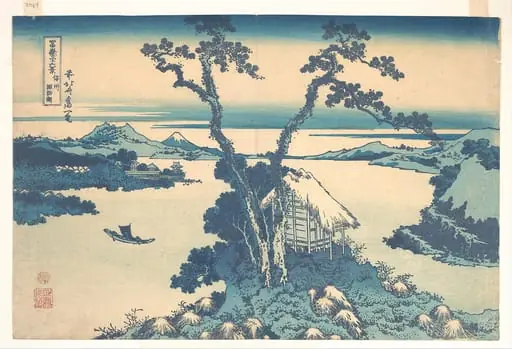 冨嶽三十六景 信州諏訪湖|Lake Suwa in Shinano Province (Shinshū Suwako), from the series Thirty-six Views of Mount Fuji (Fugaku sanjūrokkei)
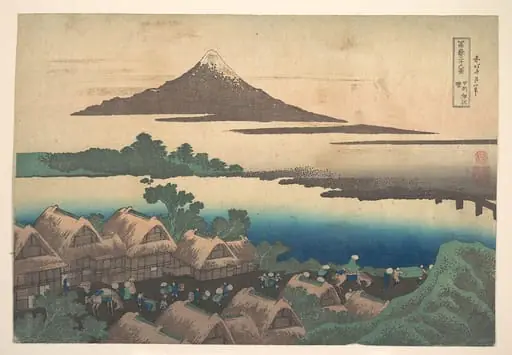 冨嶽三十六景 甲州伊沢暁|Dawn at Isawa in Kai Province (Kōshū Isawa no akatsuki), from the series Thirty-six Views of Mount Fuji (Fugaku sanjūrokkei)
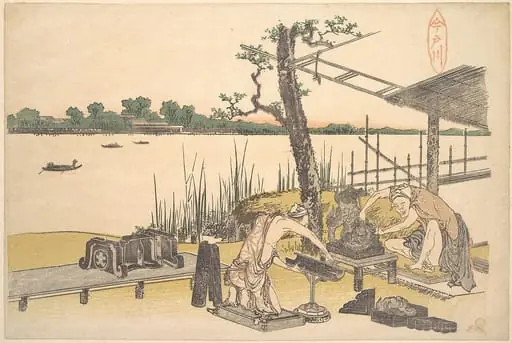 今戸川|Imadogawa
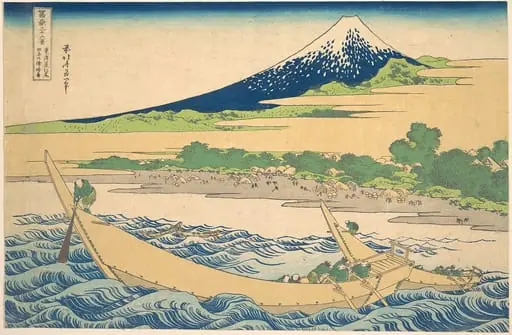 冨嶽三十六景 東海道江尻田子の浦略図|Tago Bay near Ejiri on the Tōkaidō (Tōkaidō Ejiri Tago no ura ryaku zu), from the series Thirty-six Views of Mount Fuji (Fugaku sanjūrokkei)
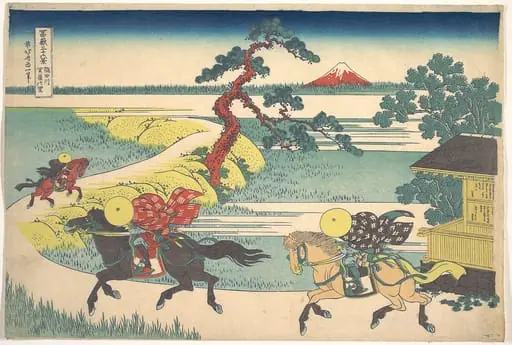 冨嶽三十六景 隅田川関屋の里|Sekiya Village on the Sumida River (Sumidagawa Sekiya no sato), from the series Thirty-six Views of Mount Fuji (Fugaku sanjūrokkei)
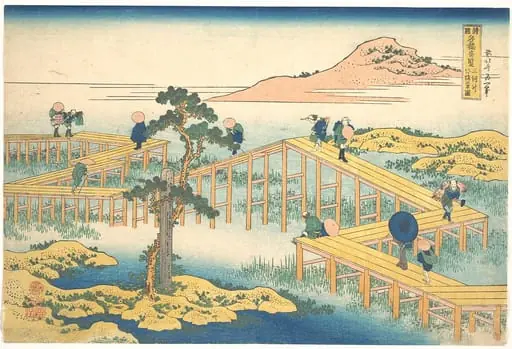 諸國名橋奇覧 三河の八ツ橋の古図|Ancient View of Yatsuhashi in Mikawa Province (Mikawa no Yatsuhashi no kozu), from the series Remarkable Views of Bridges in Various Provinces (Shokoku meikyō kiran)
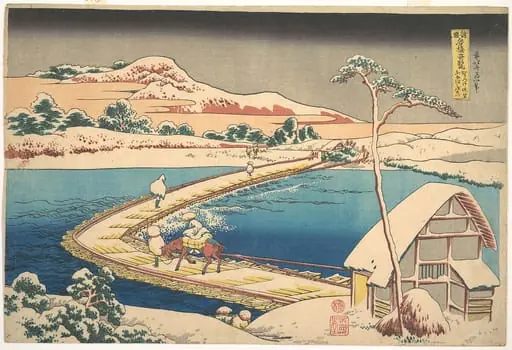 諸國名橋奇覧 かうつけ佐野ふなはしの古づ|Old View of the Boat-bridge at Sano in Kōzuke Province (Kōzuke Sano funabashi no kozu), from the series Remarkable Views of Bridges in Various Provinces (Shokoku meikyō kiran)
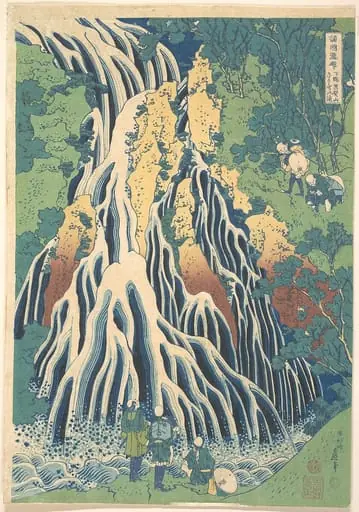 諸國瀧廻リ 下野黒髪山 きりふりの滝|Kirifuri Waterfall at Kurokami Mountain in Shimotsuke (Shimotsuke Kurokamiyama Kirifuri no taki), from the series A Tour of Waterfalls in Various Provinces (Shokoku taki meguri)
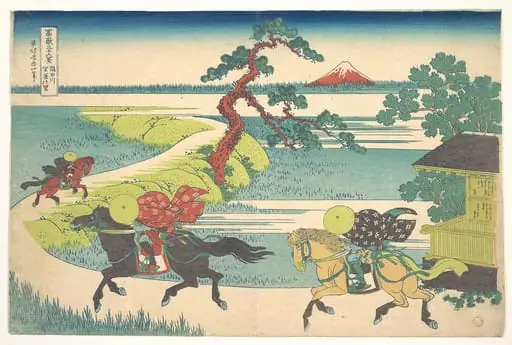 冨嶽三十六景 隅田川関屋の里|Sekiya Village on the Sumida River (Sumidagawa Sekiya no sato), from the series Thirty-six Views of Mount Fuji (Fugaku sanjūrokkei)
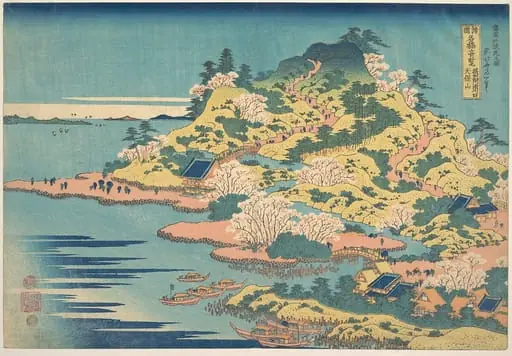 諸國名橋奇覧 摂洲阿治川口天保山|Tenpōzan at the Mouth of the Aji River in Settsu Province (Sesshū Ajikawaguchi Tenpōzan), from the series Remarkable Views of Bridges in Various Provinces (Shokoku meikyō kiran)
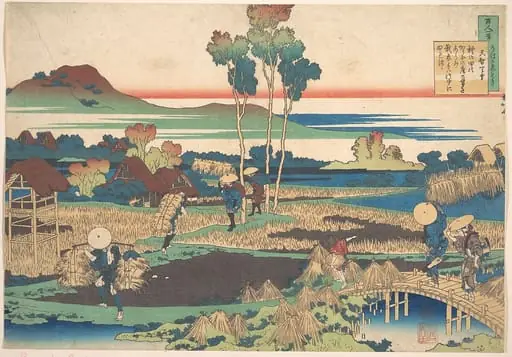 百人一首 うはかゑとき 天智天皇|Poem by Tenchi Tennō, from the series One Hundred Poems Explained by the Nurse (Hyakunin isshu uba ga etoki)
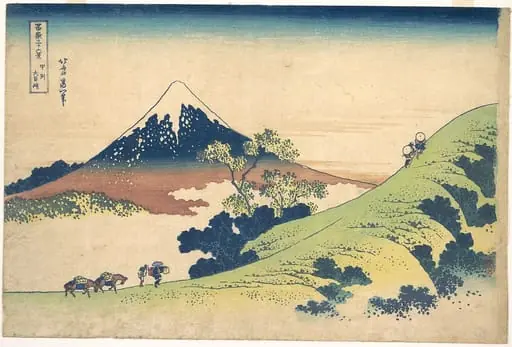 冨嶽三十六景 甲州犬目峠|The Inume Pass in Kai Province (Kōshū Inume tōge), from the series Thirty-six Views of Mount Fuji (Fugaku sanjūrokkei)
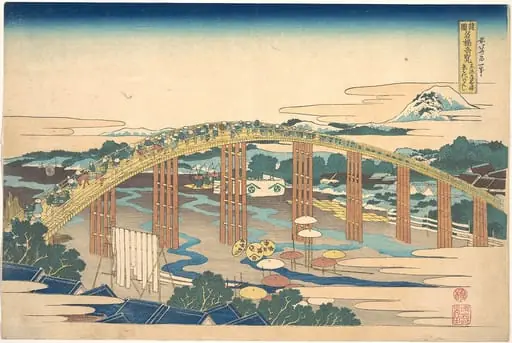 諸國名橋奇覧 東海道岡崎矢はぎのはし|Yahagi Bridge at Okazaki on the Tōkaidō (Tōkaidō Okazaki Yahagi no hashi), from the series Remarkable Views of Bridges in Various Provinces (Shokoku meikyō kiran)
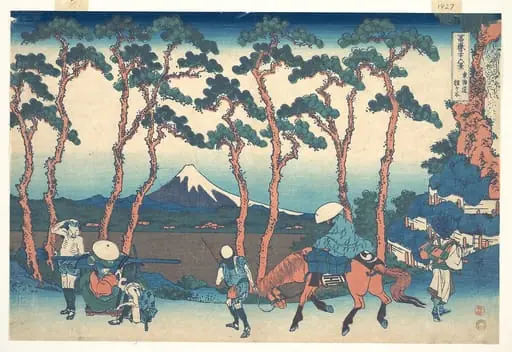 冨嶽三十六景 東海道保土ケ谷|Hodogaya on the Tōkaidō (Tōkaidō Hodogaya), from the series Thirty-six Views of Mount Fuji (Fugaku sanjūrokkei)
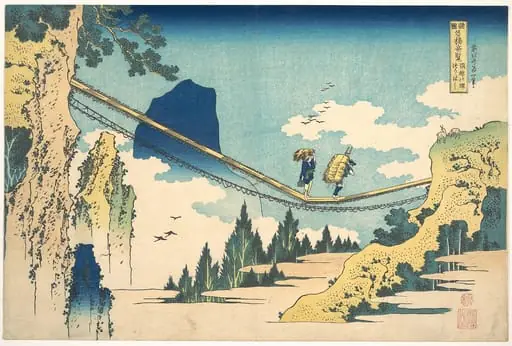 諸國名橋奇覧 飛越の堺つりはし|The Suspension Bridge on the Border of Hida and Etchū Provinces (Hietsu no sakai tsuribashi), from the series Remarkable Views of Bridges in Various Provinces (Shokoku meikyō kiran)
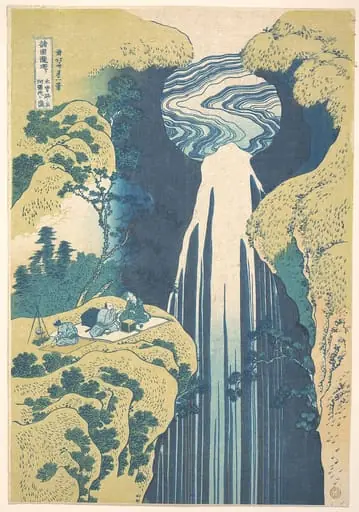 諸國瀧廻リ 木曽路ノ奥 阿彌陀ヶ瀧|The Amida Falls in the Far Reaches of the Kisokaidō Road (Kisoji no oku Amida-ga-taki), from the series A Tour of Waterfalls in Various Provinces (Shokoku taki meguri)
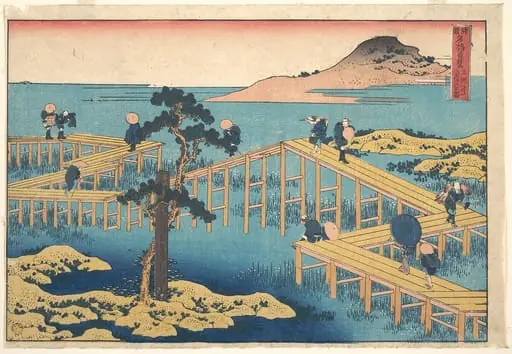 諸國名橋奇覧 三河の八ツ橋の古図|Ancient View of Yatsuhashi in Mikawa Province (Mikawa no Yatsuhashi no kozu), from the series Remarkable Views of Bridges in Various Provinces (Shokoku meikyō kiran)
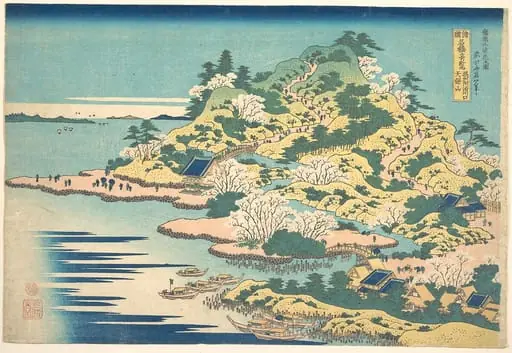 諸國名橋奇覧 摂洲阿治川口天保山|Tenpōzan at the Mouth of the Aji River in Settsu Province (Sesshū Ajikawaguchi Tenpōzan), from the series Remarkable Views of Bridges in Various Provinces (Shokoku meikyō kiran)
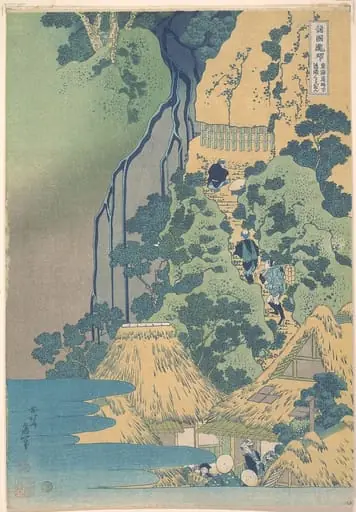 諸國瀧廻リ 東海道坂ノ下 清瀧くわんおん|Kiyotaki Kannon Waterfall at Sakanoshita on the Tōkaidō (Tōkaidō Sakanoshita Kiyotaki kannon), from the series A Tour of Waterfalls in Various Provinces (Shokoku taki meguri)
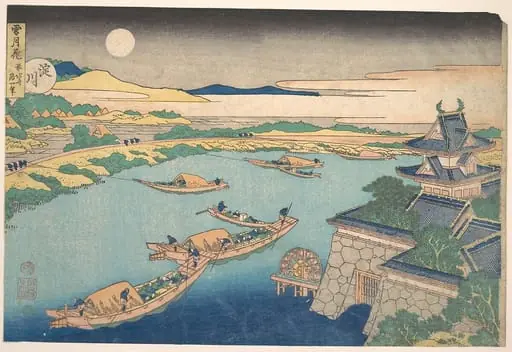 雪月花 淀川|Moonlight on the Yodo River (Yodogawa), from the series Snow, Moon, and Flowers (Setsugekka)
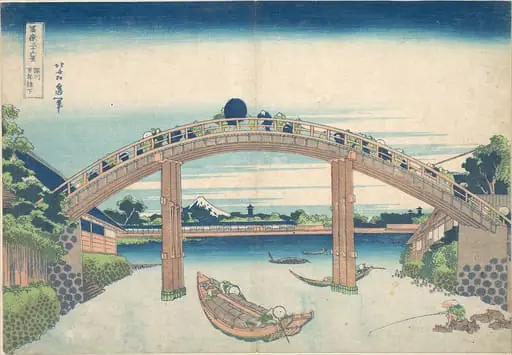 冨嶽三十六景 深川万年橋下|Under the Mannen Bridge at Fukagawa (Fukagawa Mannenbashi shita), from the series Thirty-six Views of Mount Fuji (Fugaku sanjūrokkei)
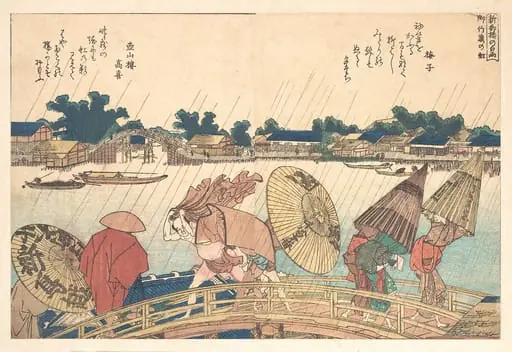 新柳橋の白雨|Shower at the New Yanagi Bridge
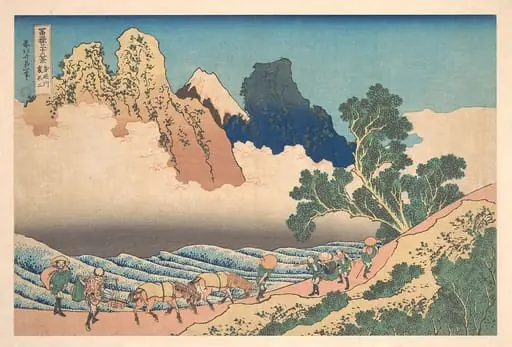 冨嶽三十六景 身延川裏不二|View from the Other Side of Fuji from the Minobu River (Minobugawa ura Fuji), from the series Thirty-six Views of Mount Fuji (Fugaku sanjūrokkei)
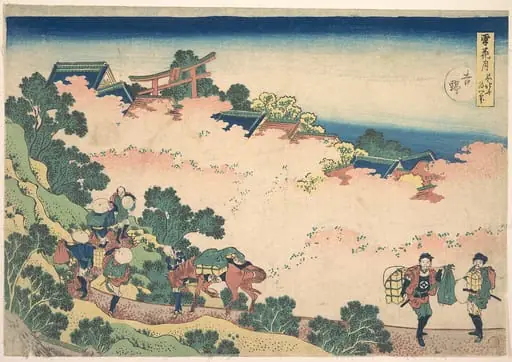 雪月花 吉野|Cherry Blossoms at Yoshino (Yoshino), from the series Snow, Moon, and Flowers (Setsugekka)
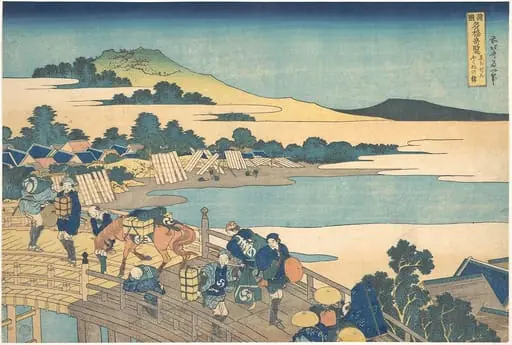 諸國名橋奇覧 ゑちぜんふくゐの橋|Fukui Bridge in Echizen Province (Echizen Fukui no hashi), from the series Remarkable Views of Bridges in Various Provinces (Shokoku meikyō kiran)
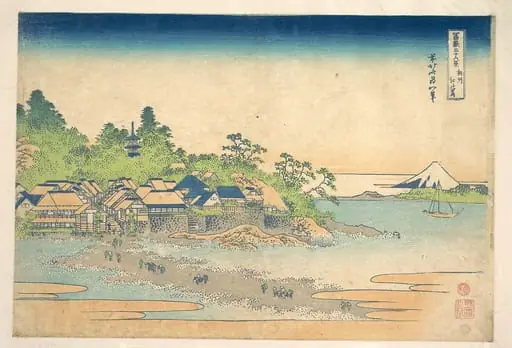 冨嶽三十六景 相州江の島|Enoshima in Sagami Province (Sōshū Enoshima), from the series Thirty-six Views of Mount Fuji (Fugaku sanjūrokkei)
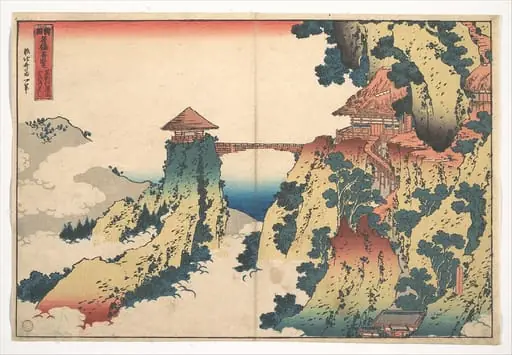 諸國名橋奇覧 足利行道山くものかけはし|The Hanging-cloud Bridge at Mount Gyōdō near Ashikaga (Ashikaga Gyōdōzan kumo no kakehashi), from the series Remarkable Views of Bridges in Various Provinces (Shokoku meikyō kiran)
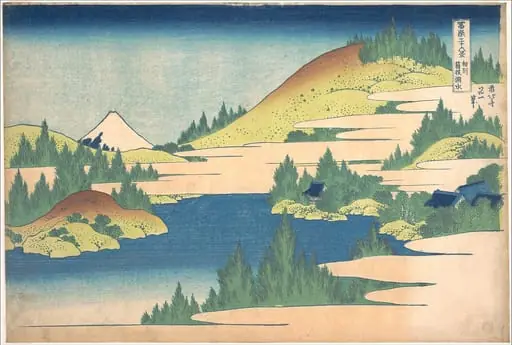 冨嶽三十六景 相州箱根湖水|The Lake at Hakone in Sagami Province (Sōshū Hakone kosui), from the series Thirty-six Views of Mount Fuji (Fugaku sanjūrokkei)
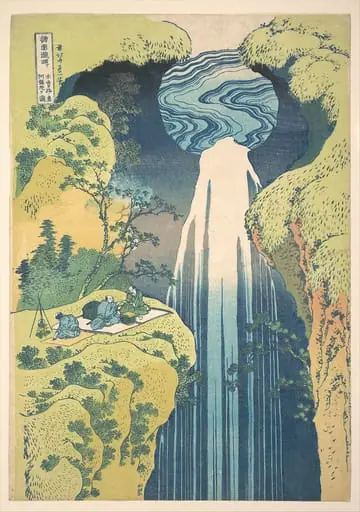 諸國瀧廻リ 木曽路ノ奥 阿彌陀ヶ瀧|The Amida Falls in the Far Reaches of the Kisokaidō Road (Kisoji no oku Amida-ga-taki), from the series A Tour of Waterfalls in Various Provinces (Shokoku taki meguri)
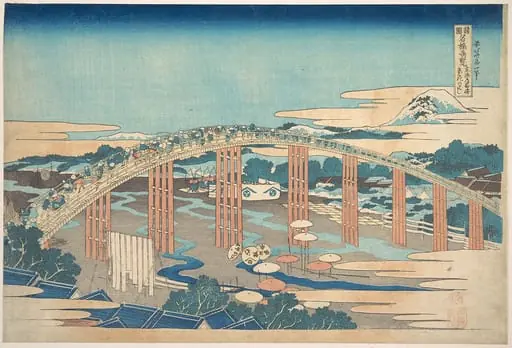 「諸國名橋寄覧 東海道岡崎 矢はぎのはし」|Yahagi Bridge at Okazaki on the Tōkaidō (Tōkaidō Okazaki Yahagi no hashi), from the series Remarkable Views of Bridges in Various Provinces (Shokoku meikyō kiran)
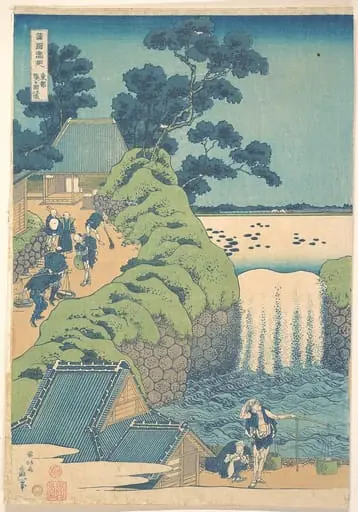 諸國瀧廻 東都葵ヶ岡の瀧|Fall of Aoiga Oka, Yedo
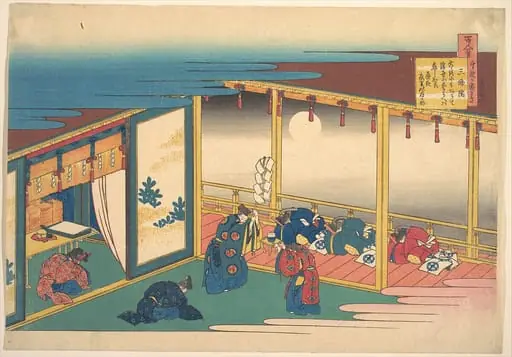 百人一首 うばがゑとき 三条院|Poem by Sanjō-in, from the series One Hundred Poems Explained by the Nurse (Hyakunin isshu uba ga etoki)
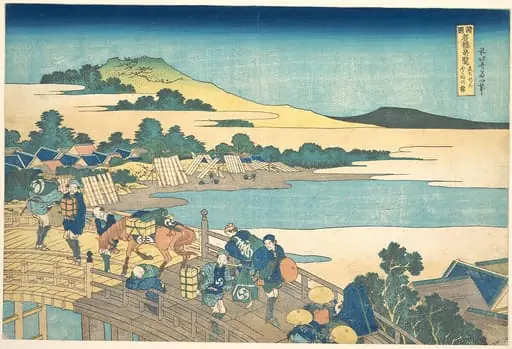 諸國名橋奇覧 ゑちぜんふくゐの橋|Fukui Bridge in Echizen Province (Echizen Fukui no hashi), from the series Remarkable Views of Bridges in Various Provinces (Shokoku meikyō kiran)
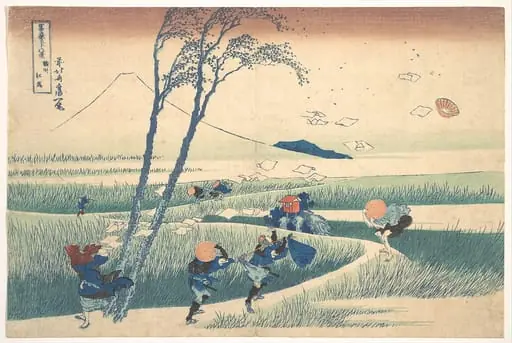 冨嶽三十六景 駿州江尻|Ejiri in Suruga Province (Sunshū Ejiri), from the series Thirty-six Views of Mount Fuji (Fugaku sanjūrokkei)
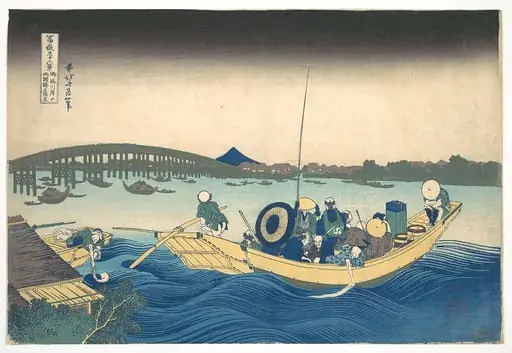 葛飾北斎画 冨嶽三十六景
御厩川岸より両国橋夕陽見|Viewing the Sunset over Ryōgoku Bridge from the Onmaya Embankment (Onmayagashi yori Ryōgokubashi sekiyō o miru), from the series Thirty-six Views of Mount Fuji (Fugaku sanjūrokkei)
葛飾北斎画 冨嶽三十六景
御厩川岸より両国橋夕陽見|Viewing the Sunset over Ryōgoku Bridge from the Onmaya Embankment (Onmayagashi yori Ryōgokubashi sekiyō o miru), from the series Thirty-six Views of Mount Fuji (Fugaku sanjūrokkei)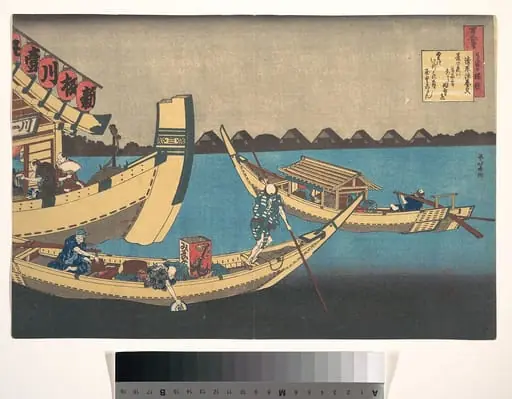 百人一首 うはか縁説 清原深養父|Poem by Kiyohara no Fukayabu, from the series One Hundred Poems Explained by the Nurse (Hyakunin isshu uba ga etoki)
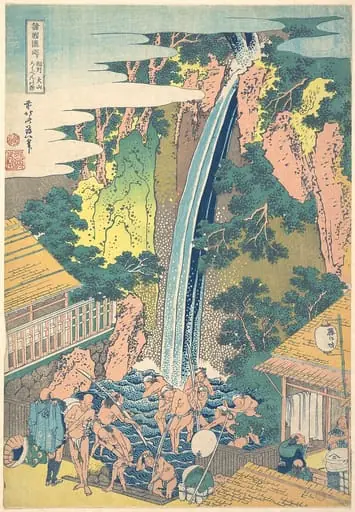 諸國瀧廻リ 相州大山ろうべんの瀧|Rōben Waterfall at Ōyama in Sagami Province (Sōshū Ōyama Rōben no taki), from the series A Tour of Waterfalls in Various Provinces (Shokoku taki meguri)
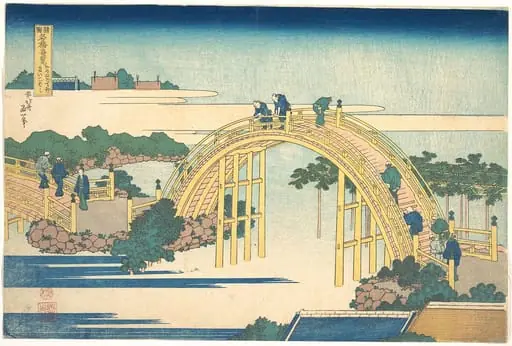 諸國名橋奇覧 かめゐど天神たいこはし|The Arched Bridge at Kameido Tenjin Shrine (Kameido Tenjin Taikobashi), from the series Remarkable Views of Bridges in Various Provinces (Shokoku meikyō kiran)
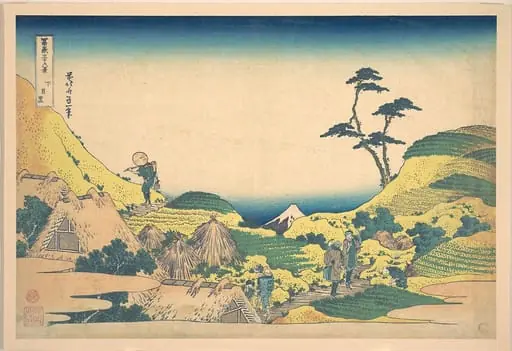 冨嶽三十六景 下目黒|Lower Meguro (Shimo Meguro), from the series Thirty-six Views of Mount Fuji (Fugaku sanjūrokkei)
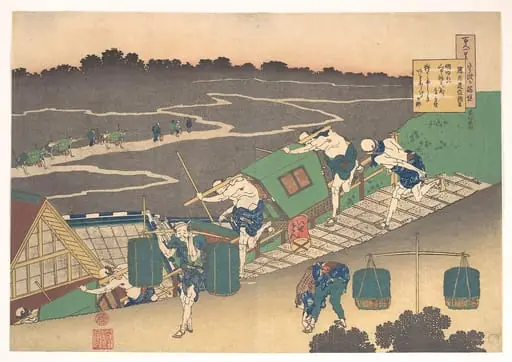 百人一首 宇波か縁説 藤原道信朝臣|Poem by Fujiwara no Michinobu Ason, from the series One Hundred Poems Explained by the Nurse (Hyakunin isshu uba ga etoki)
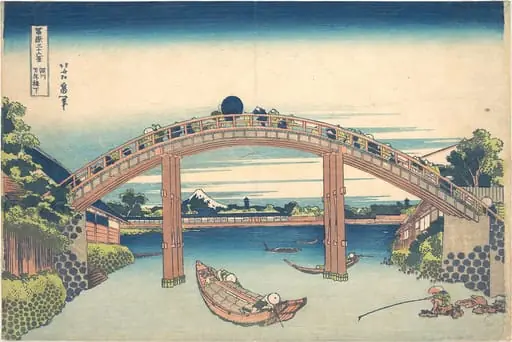 葛飾北斎画 冨嶽三十六景 深川万年橋下|Under the Mannen Bridge at Fukagawa (Fukagawa Mannenbashi shita), from the series Thirty-six Views of Mount Fuji (Fugaku sanjūrokkei)
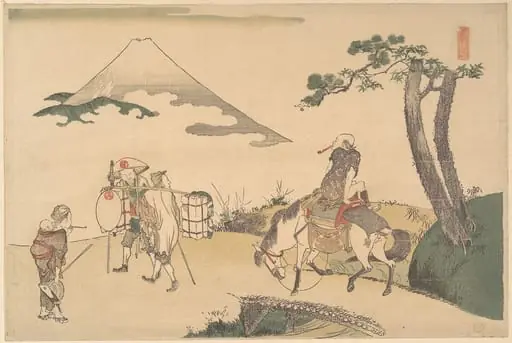 Fuji Tohō|The Top of Mount Fuji
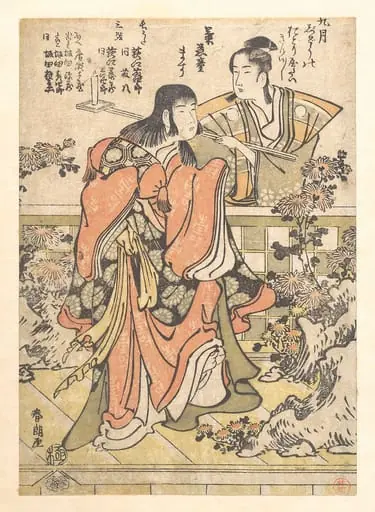 Untitled
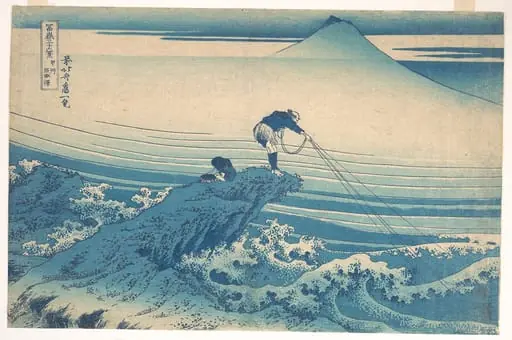 冨嶽三十六景 甲州石班沢|Kajikazawa in Kai Province (Kōshū Kajikazawa), from the series Thirty-six Views of Mount Fuji (Fugaku sanjūrokkei)
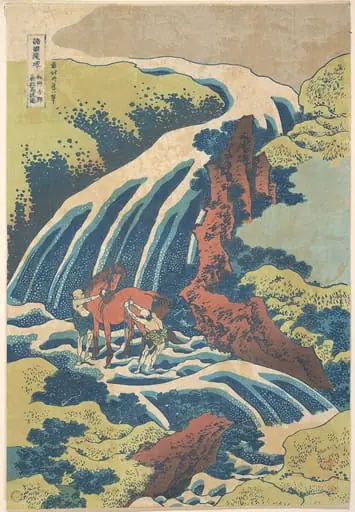 諸國瀧廻リ 和州吉野義経馬洗滝|The Waterfall Where Yoshitsune Washed His Horse at Yoshino in Yamato Province (Washū Yoshino Yoshitsune uma arai no taki), from the series A Tour of Waterfalls in Various Provinces (Shokoku taki meguri)
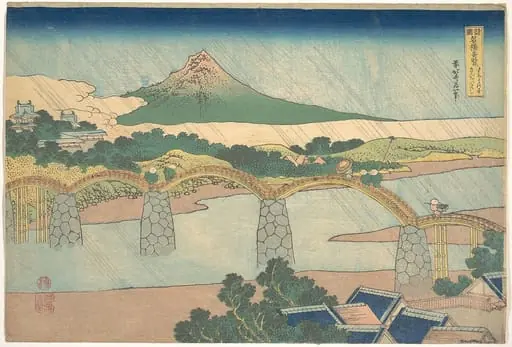 諸國名橋奇覧 すほうの国きんたいはし|Kintai Bridge in Suō Province (Suō no kuni Kintaibashi), from the series Remarkable Views of Bridges in Various Provinces (Shokoku meikyō kiran)
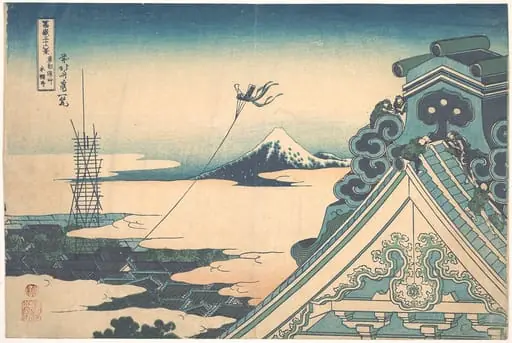 冨嶽三十六景 東都浅草本願寺|Honganji at Asakusa in Edo (Tōto Asakusa Honganji), from the series Thirty-six Views of Mount Fuji (Fugaku sanjūrokkei)
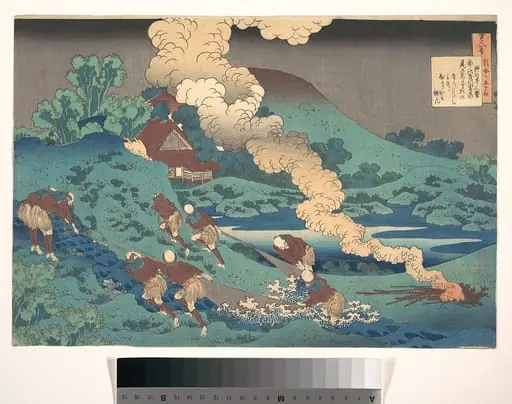 百人一首 乳母かゑとき 柿の本人麿|Poem by Kakinomoto Hitomaro, from the series One Hundred Poems Explained by the Nurse (Hyakunin isshu uba ga etoki)
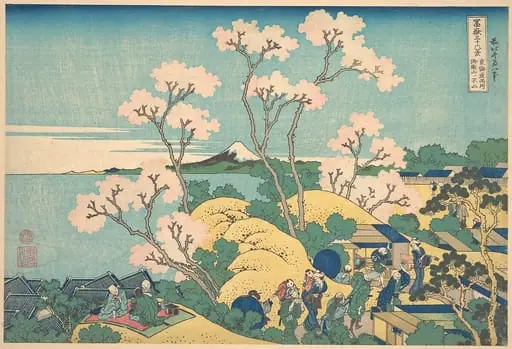 冨嶽三十六景 東海道品川御殿山の不二|Fuji from Gotenyama on the Tōkaidō at Shinagawa (Tōkaidō Shinagawa Gotenyama no Fuji), from the series Thirty-six Views of Mount Fuji (Fugaku sanjūrokkei)
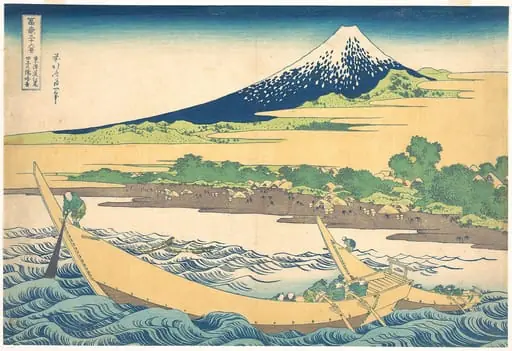 冨嶽三十六景 東海道江尻田子の浦略図|Tago Bay near Ejiri on the Tōkaidō (Tōkaidō Ejiri Tago no ura ryaku zu), from the series Thirty-six Views of Mount Fuji (Fugaku sanjūrokkei)
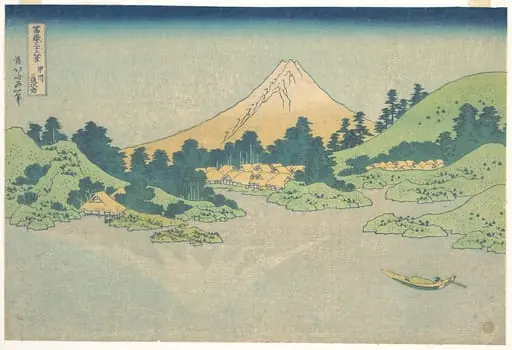 冨嶽三十六景 甲州三坂水面|Reflection in Lake at Misaka in Kai Province (Kōshū Misaka suimen), from the series Thirty-six Views of Mount Fuji (Fugaku sanjūrokkei)
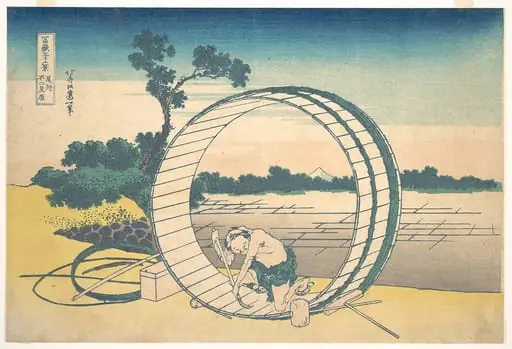 冨嶽三十六景 尾州不二見原|Fujimigahara in Owari Province (Bishū Fujimigahara), from the series Thirty-six Views of Mount Fuji (Fugaku sanjūrokkei)
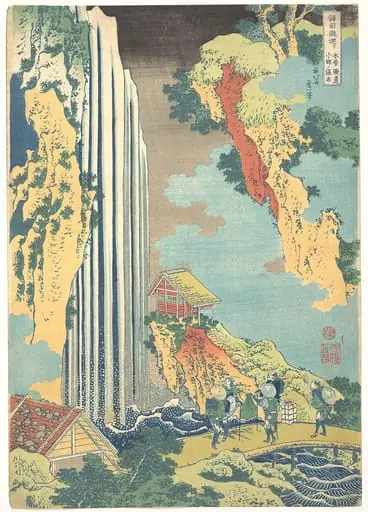 諸國瀧廻リ 木曾海道小野ノ瀑布|Ono Waterfall on the Kisokaidō (Kisokaidō Ono no bakufu), from the series A Tour of Waterfalls in Various Provinces (Shokoku taki meguri)
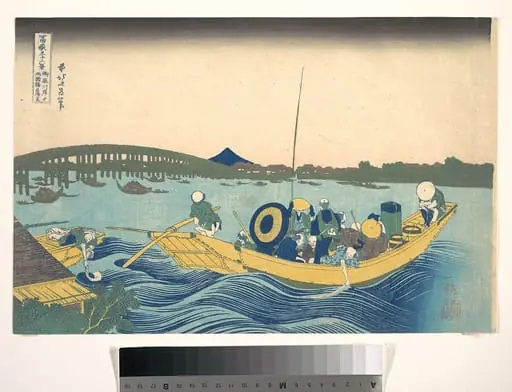 冨嶽三十六景 御厩川岸より両国橋夕陽見|Viewing the Sunset over Ryōgoku Bridge from the Onmaya Embankment (Onmayagashi yori Ryōgokubashi sekiyō o miru), from the series Thirty-six Views of Mount Fuji (Fugaku sanjūrokkei)
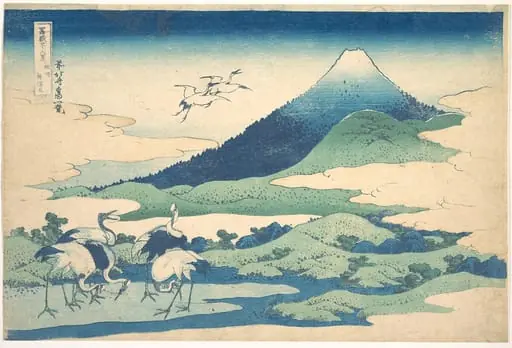 冨嶽三十六景 相州梅沢左|Umezawa Manor in Sagami Province (Sōshū Umezawa zai), from the series Thirty-six Views of Mount Fuji (Fugaku sanjūrokkei)
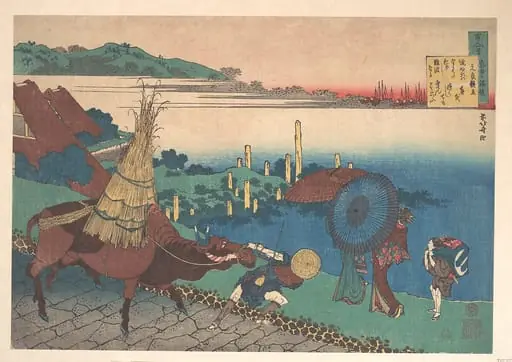 百人一首 乳母かえ説 元良親王|Poem by Motoyoshi Shinnō, from the series One Hundred Poems Explained by the Nurse (Hyakunin isshu uba ga etoki)
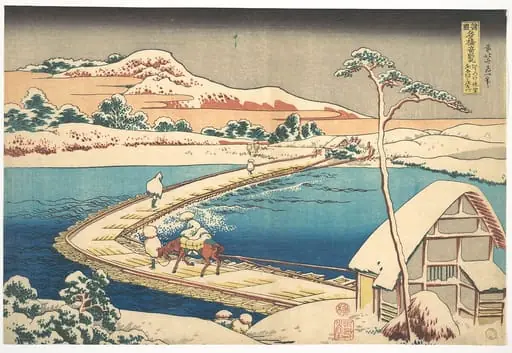 諸國名橋奇覧 かうつけ佐野ふなはしの古づ|Old View of the Boat-bridge at Sano in Kōzuke Province (Kōzuke Sano funabashi no kozu), from the series Remarkable Views of Bridges in Various Provinces (Shokoku meikyō kiran)
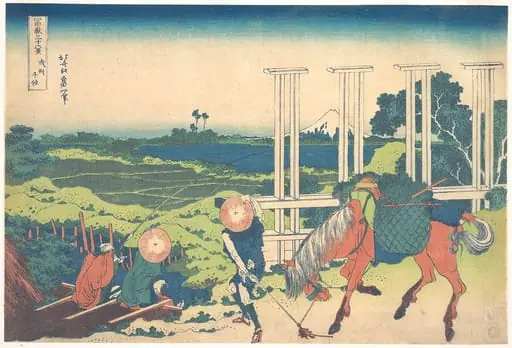 冨嶽三十六景 武州千住|Senju in Musashi Province (Bushū Senju), from the series Thirty-six Views of Mount Fuji (Fugaku sanjūrokkei)
Groups & collectives
Learn this movement
Frequently asked questions
What is Japonisme?
Japonisme is an art movement. The widespread European enthusiasm for Japanese art, especially woodblock prints, from the 1860s onward following Japan's reopening.
How many Japonisme works does Artifact World Gallery have?
Artifact World Gallery holds 315 public-domain Japonisme works, all free to view and download.
Who are the key Japonisme artists?
Key Japonisme artists in the collection include James Tissot, Édouard Vuillard and Katsushika Hokusai.
When did Japonisme take place?
Japonisme dates from around 1858.
Where can I see Japonisme works?
Japonisme works in the collection are held by Metropolitan Museum of Art, Victoria and Albert Museum and Cleveland Museum of Art.