Artwork
琉球八景 城嶽霊泉|The Sacred Spring at Jōgaku (Jōgaku reisen), from the series Eight Views of the Ryūkyū Islands (Ryūkyū hakkei)
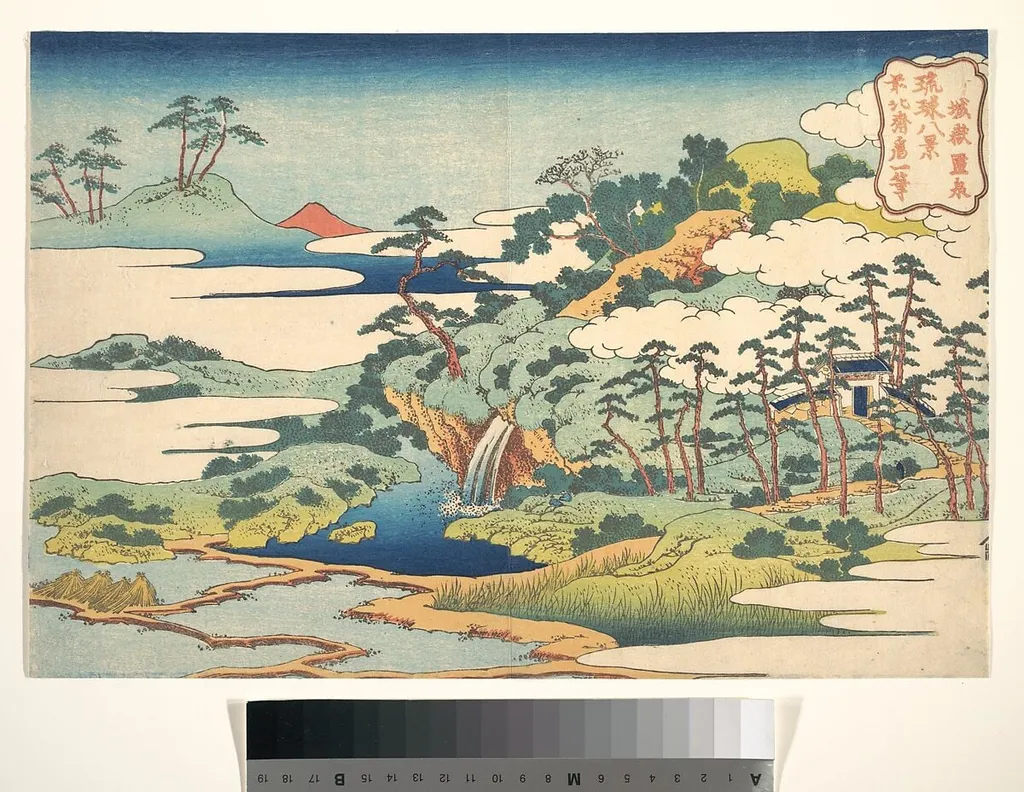
琉球八景 城嶽霊泉|The Sacred Spring at Jōgaku (Jōgaku reisen), from the series Eight Views of the Ryūkyū Islands (Ryūkyū hakkei) is an ink print by the Japonisme artist Katsushika Hokusai. It dates from 1832 and is held in the collection of the Metropolitan Museum of Art.
About this work
Subject & Meaning
The imagery aligns with the ukiyo-e tradition of depicting notable scenic spots, emphasizing the grandeur of the natural environment rather than human activity.
This woodblock print illustrates the Sacred Spring at Jōgaku, a specific location within the Ryūkyū Islands. The composition focuses on a landscape dominated by a mountain and a waterfall, which likely represents the titular spiritual water source. As part of the Eight Views of the Ryūkyū Islands series, the work functions as a meisho-e, or picture of a famous place, capturing the natural geography of the region.
The imagery aligns with the ukiyo-e tradition of depicting notable scenic spots, emphasizing the grandeur of the natural environment rather than human activity.
Technique & Style
The work is a woodblock print executed in ink and color on paper, a format consistent with the polychrome nishiki-e tradition of ukiyo-e landscape production. Classified within the prints medium, it belongs to the meisho-e genre of famous-place imagery, depicting a mountain and waterfall scene associated with the Ryūkyū Islands series.
Stylistically, the print draws on the conventions of Japanese landscape representation characteristic of Katsushika Hokusai's 1832 output, combining topographical subject matter with the decorative polychrome printing techniques of the period. The series format itself, presenting eight named views, reflects the established meisho-e compositional tradition of pairing specific locales with idealized pictorial formulas.
History & Provenance
Katsushika Hokusai’s The Sacred Spring at Jōgaku was created in 1832 as part of his Eight Views of the Ryūkyū Islands series. The work is a woodblock print executed in ink and color on paper, reflecting the artist’s engagement with meisho-e (pictures of famous places) and ukiyo-e printmaking traditions.
The Metropolitan Museum of Art currently holds the print in its collection, though earlier ownership details remain unrecorded in available sources. No specific commissioning patron or pre-Met provenance has been documented for this impression.
The woodblock print The Sacred Spring at Jōgaku (1832) by Katsushika Hokusai is held in the collection of the Metropolitan Museum of Art. The museum acquired this work as part of its holdings of ukiyo-e prints, specifically within the category of landscape paintings. While the specific accession number is not detailed in the provided records, the institution maintains the piece as a significant example of the Eight Views of the Ryūkyū Islands series. No specific exhibition history or loan records are documented in the available sources.
Overview
Created around 1832, this woodblock print by Katsushika Hokusai belongs to his series portraying eight scenic views of the Ryūkyū Islands. Executed with ink and color on paper, the image presents a steep mountain crowned by a cascading waterfall, rendered in muted blues, greens and a pale pink sky.
Context
The Eight Views series aligns with a broader Edo‑period fascination with distant lands, reflecting both curiosity about the southern islands and the market demand for exotic scenery. Hokusai’s treatment of the subject integrates his established landscape vocabulary with a sense of otherworldly distance.
Artist & collection

Artist
Katsushika Hokusai spent his life in Edo, now Tokyo, where he drew and carved prints for a living.

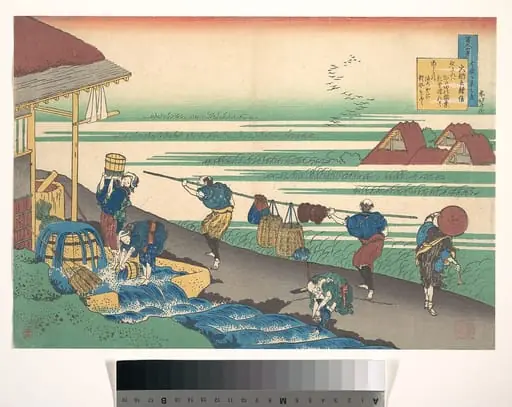 百人一首 うばがゑとき 大納言経信|Poem by Dainagon Tsunenobu (Minamoto no Tsunenobu, Katsura no Dainagon), from the series One Hundred Poems Explained by the Nurse (Hyakunin isshu uba ga etoki)
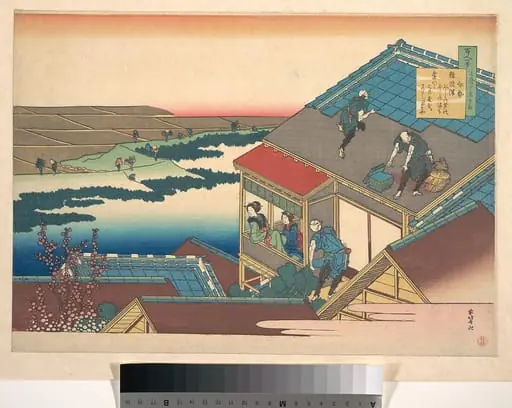 百人一首 うばがゑとき 伊勢|Poem by Ise, from the series One Hundred Poems Explained by the Nurse (Hyakunin isshu uba ga etoki)
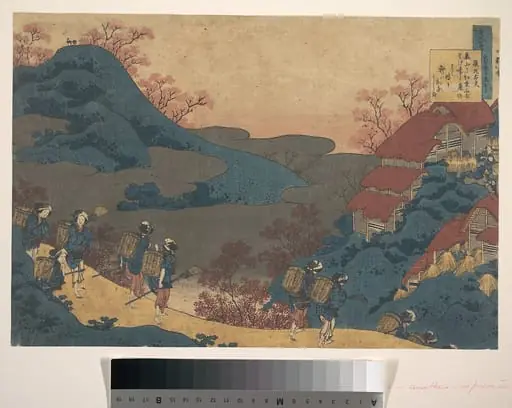 百人一首 乳母かゑとき 猿丸太夫|Poem by Sarumaru Dayū, from the series One Hundred Poems Explained by the Nurse (Hyakunin isshu uba ga etoki)
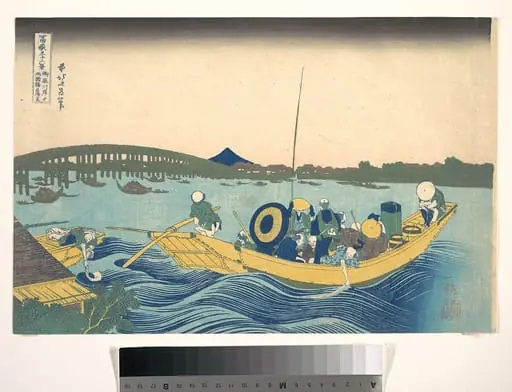 冨嶽三十六景 御厩川岸より両国橋夕陽見|Viewing the Sunset over Ryōgoku Bridge from the Onmaya Embankment (Onmayagashi yori Ryōgokubashi sekiyō o miru), from the series Thirty-six Views of Mount Fuji (Fugaku sanjūrokkei)
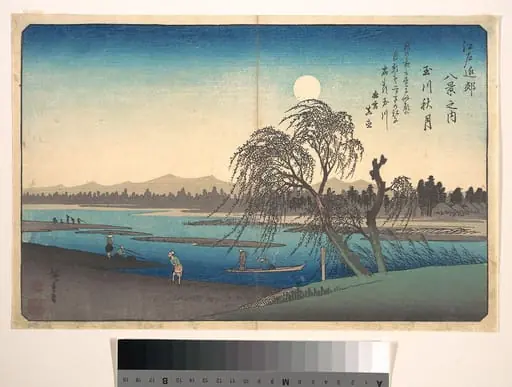 江戸近郊八景之内 玉川秋月|Autumn Moon on the Tama River
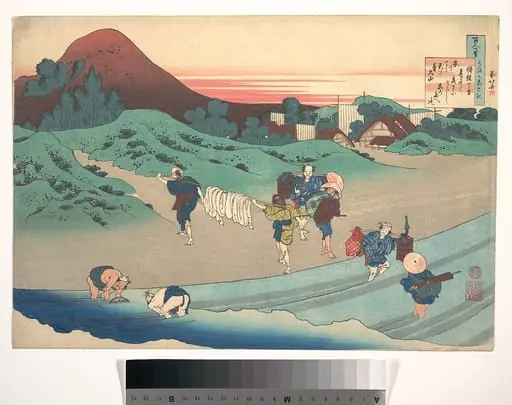 百人一首 うはかゑとき 持統天皇|Poem by Jitō Tenno (Empress Jitō), from the series One Hundred Poems Explained by the Nurse (Hyakunin isshu uba ga etoki)
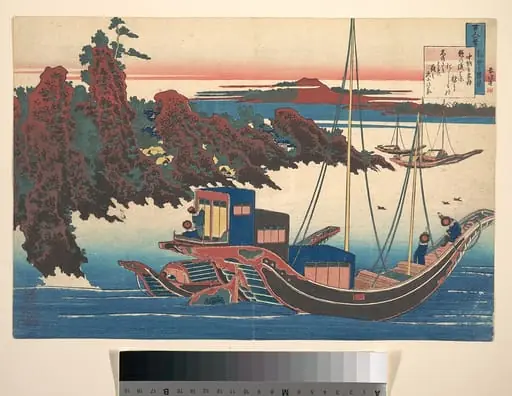 百人一首 乳母か縁説 中納言家持|Poem by Chūnagon Yakamochi (Ōtomo no Yakamochi), from the series One Hundred Poems Explained by the Nurse (Hyakunin isshu uba ga etoki)
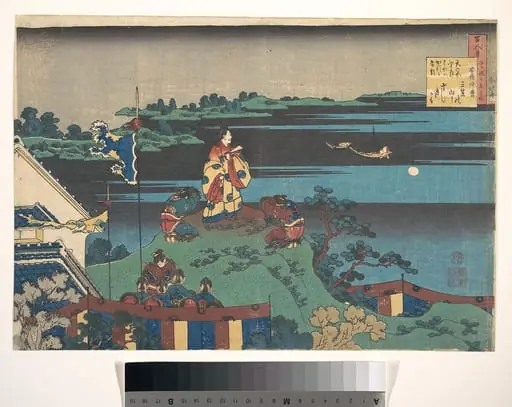 百人一首 宇波かゑとき 安部仲麿|Poem by Abe no Nakamaro, from the series One Hundred Poems Explained by the Nurse (Hyakunin isshu uba ga etoki)
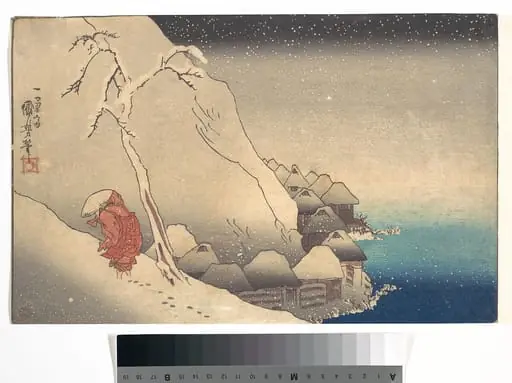 Untitled
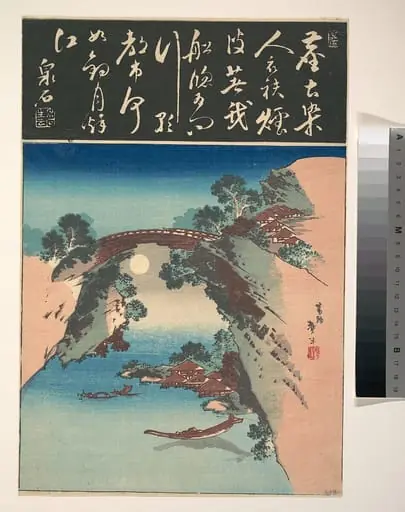 Untitled