Artwork
Untitled
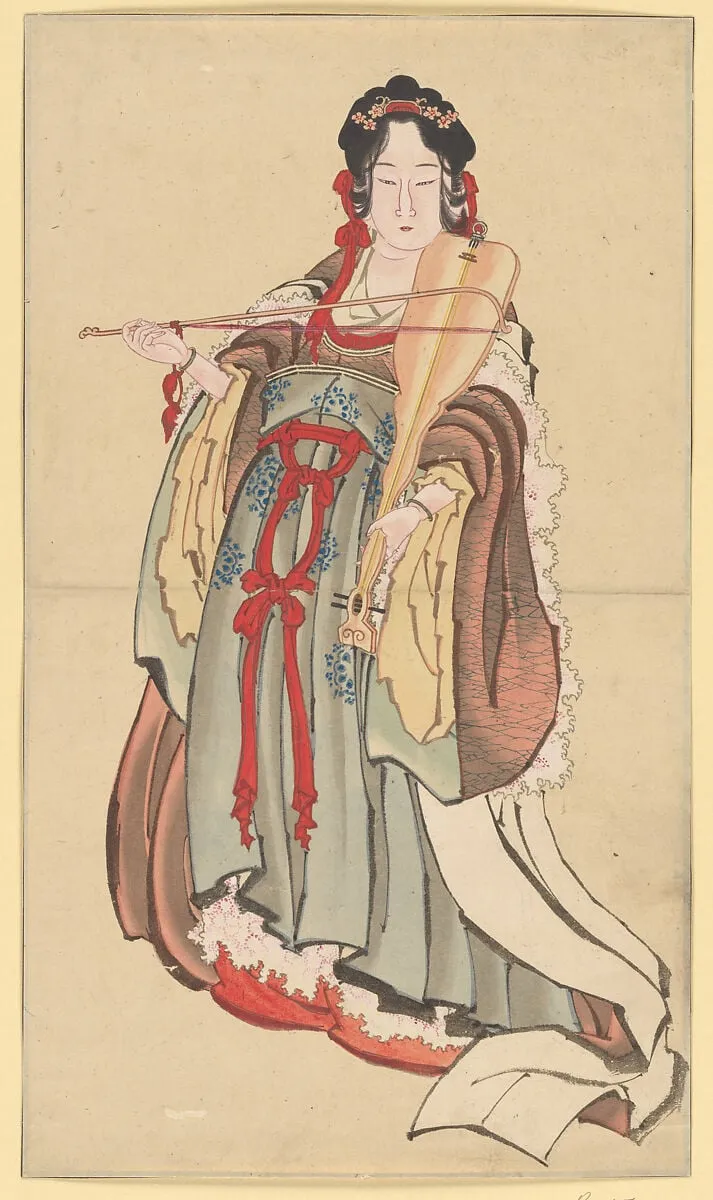
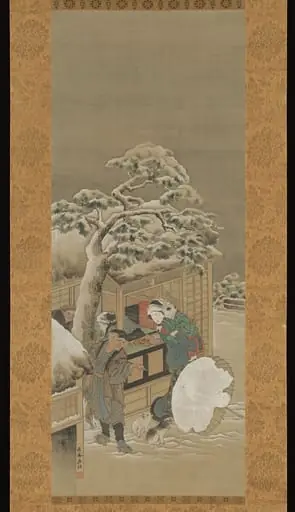
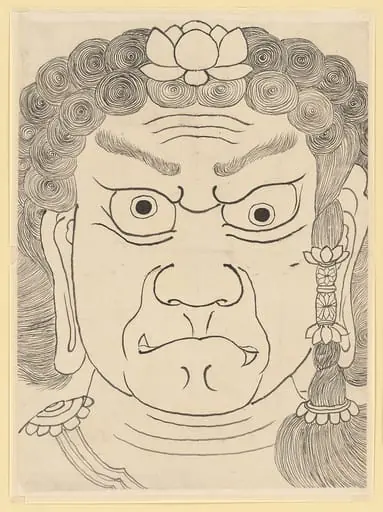
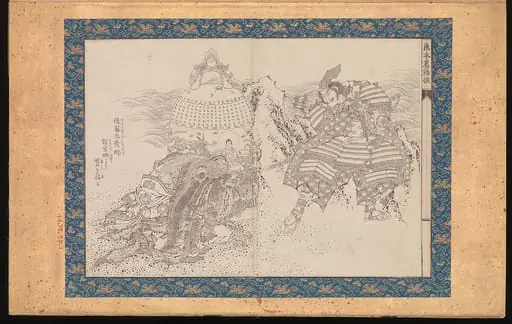
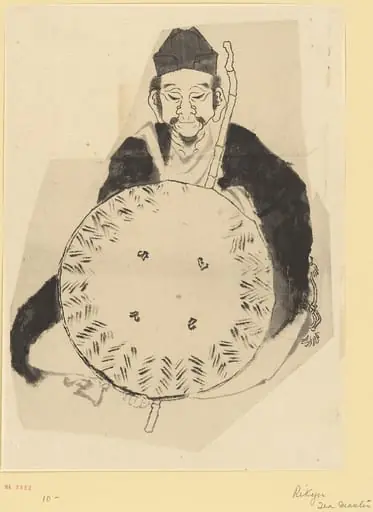
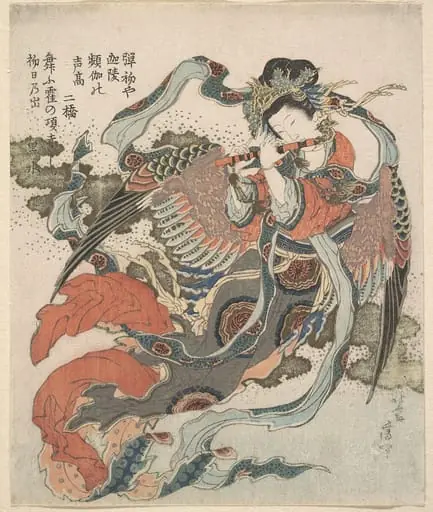
Untitled is an ink painting by the Baroque artist Katsushika Hokusai. It dates from 1799 and is held in the collection of the Metropolitan Museum of Art.
About this work
Subject & Meaning
Hokusai's 1799 ink and color painting on paper belongs to the genre of religious art and centers on a goddess as its principal subject.
Hokusai's 1799 ink and color painting on paper belongs to the genre of religious art and centers on a goddess as its principal subject. The figure is depicted alongside a musical instrument, an attribute that situates the work within the iconographic tradition of associating divine beings with music and performance. As a religious painting, the composition conveys spiritual meaning through this pairing of deity and instrument, a common visual formula in Japanese devotional imagery in which music signals sacred presence or ritual function.
The narrow vertical format (41 by 23.7 cm) supports the focused, iconic presentation of the goddess as an object of veneration.
Technique & Style
Created in 1799, this work by Katsushika Hokusai is executed using ink and color applied directly onto paper. As a religious painting originating in Japan, the piece measures 41 centimeters in height and 23.7 centimeters in width. The formal composition depicts a goddess accompanied by a musical instrument, adhering to the genre conventions of religious art.
The support material, paper, serves as the foundation for the ink and pigment application, characteristic of the artist's technique during this period. The physical dimensions and specific medium define the object's material presence within the Metropolitan Museum of Art's collection.
History & Provenance
The painting Untitled (1799) by Katsushika Hokusai is housed in the collection of the Metropolitan Museum of Art in New York. It entered the museum's holdings as part of the institution's assemblage of Japanese religious paintings, though the specific inventory or accession number is not disclosed in the available documentation. The work has not been identified in any published exhibition catalogues or schedules within the sources consulted, indicating that it has not been featured in public exhibitions to date.
Context
Untitled (1799) exemplifies Hokusai's early engagement with religious iconography, combining ink and color on paper to portray a goddess accompanied by a musical instrument. As part of the religious art genre, the work reflects Edo-period practices that integrated devotional imagery with everyday objects. Its inclusion in the Metropolitan Museum of Art collection underscores scholarly interest in Hokusai's mythological subjects and provides a key reference for studies of his synthesis of spiritual themes and compositional detail.
The piece contributes to the broader narrative of Hokusai's development from secular sketches to devotional paintings within the Japanese artistic tradition.
Overview
This untitled painting, executed in ink and color on paper, is attributed to the artist Hokusai. It portrays a celestial figure, a goddess, gracefully seated upon a cloud. She is depicted in the act of playing a long-necked lute, with a full moon partially obscured by mist forming a backdrop. The composition evokes a sense of tranquility and an ethereal setting.
Artist & collection

Artist
Katsushika Hokusai spent his life in Edo, now Tokyo, where he drew and carved prints for a living.

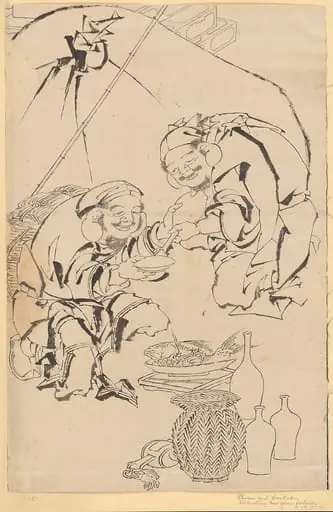
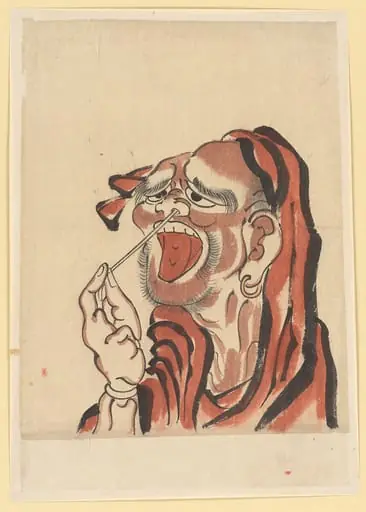
- Untitled
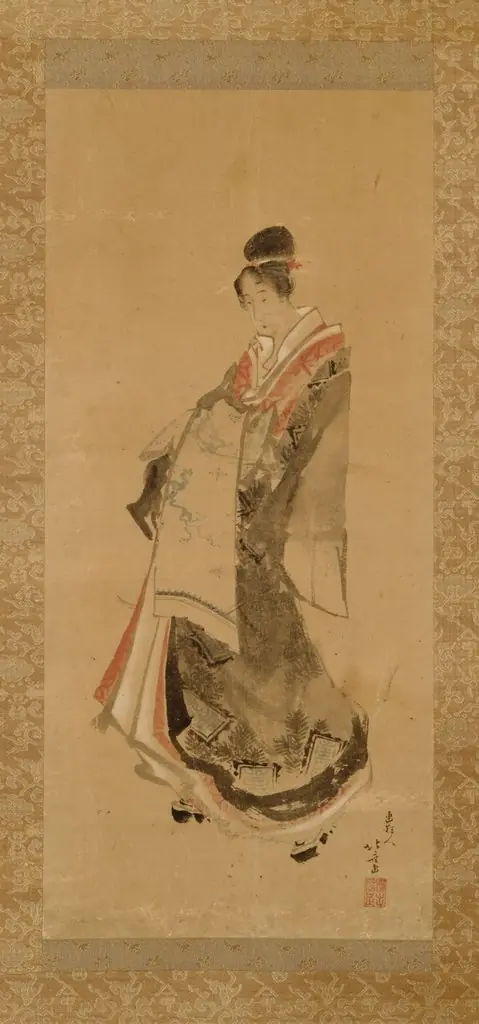 Walking Courtesan
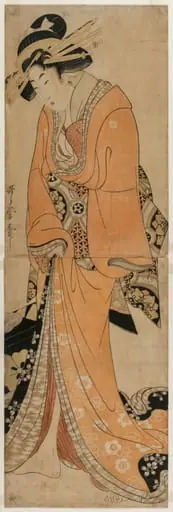 Geisha Standing Beside a Shamisen Case
 Untitled
 Child-bringing Goddess
 Untitled
 Untitled
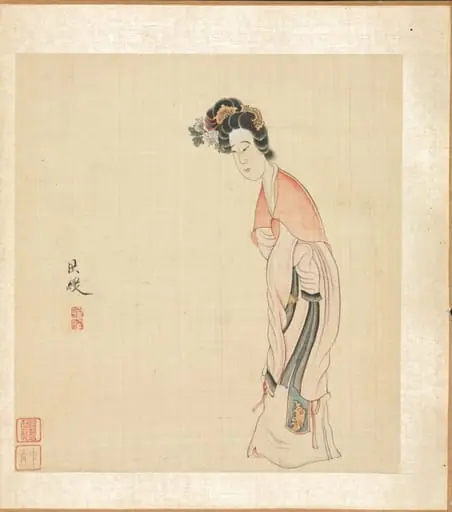 Paintings after Ancient Masters: A Lady
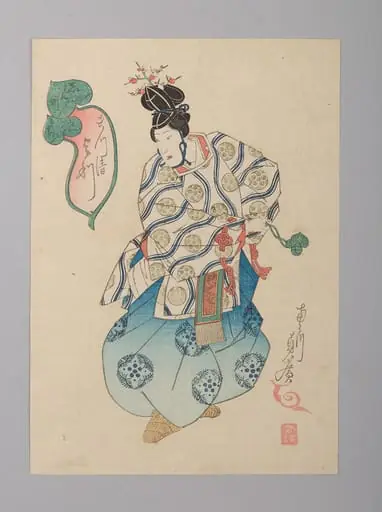 「しん町砂もち まつ清 よつ」|Yotsu of the Matsukiyo Brothel Performing as a Shirabyōshi, from the series Sacred Dances in Shinmachi
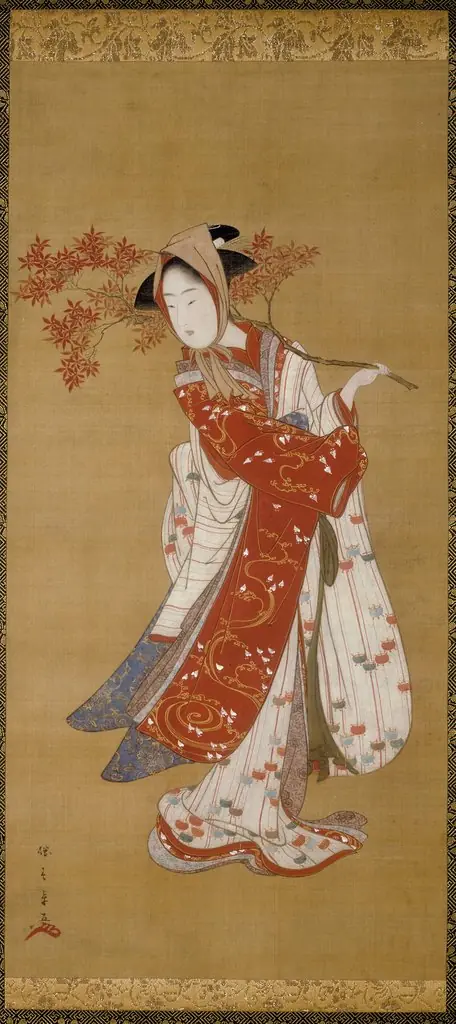 Dancer with a Maple Branch
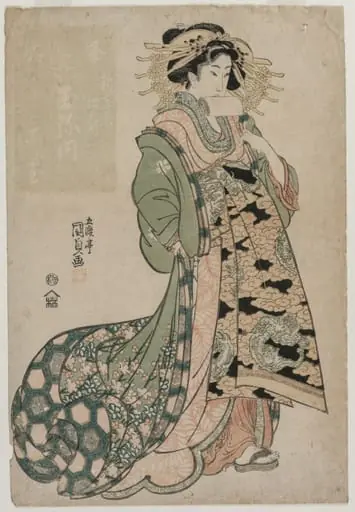 The Courtesan Shiratama of the Tamaya
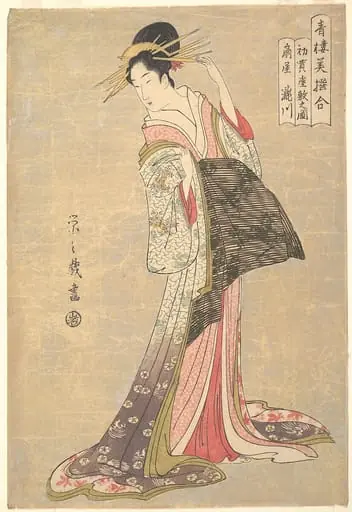 鳥文斎栄之画 「青楼美撰合 初売座敷之図 扇屋滝川」|Takigawa of the Ōgiya Brothel: The First Reception Room Appointment of the New Year (Hatsu-uri zashiki no zu: Ōgiya Takigawa), from the series A Comparison of Selected Beauties of the Pleasure Quarters (Seirō bisen awase)