Artwork
An Egyptian Peasant Woman and Her Child
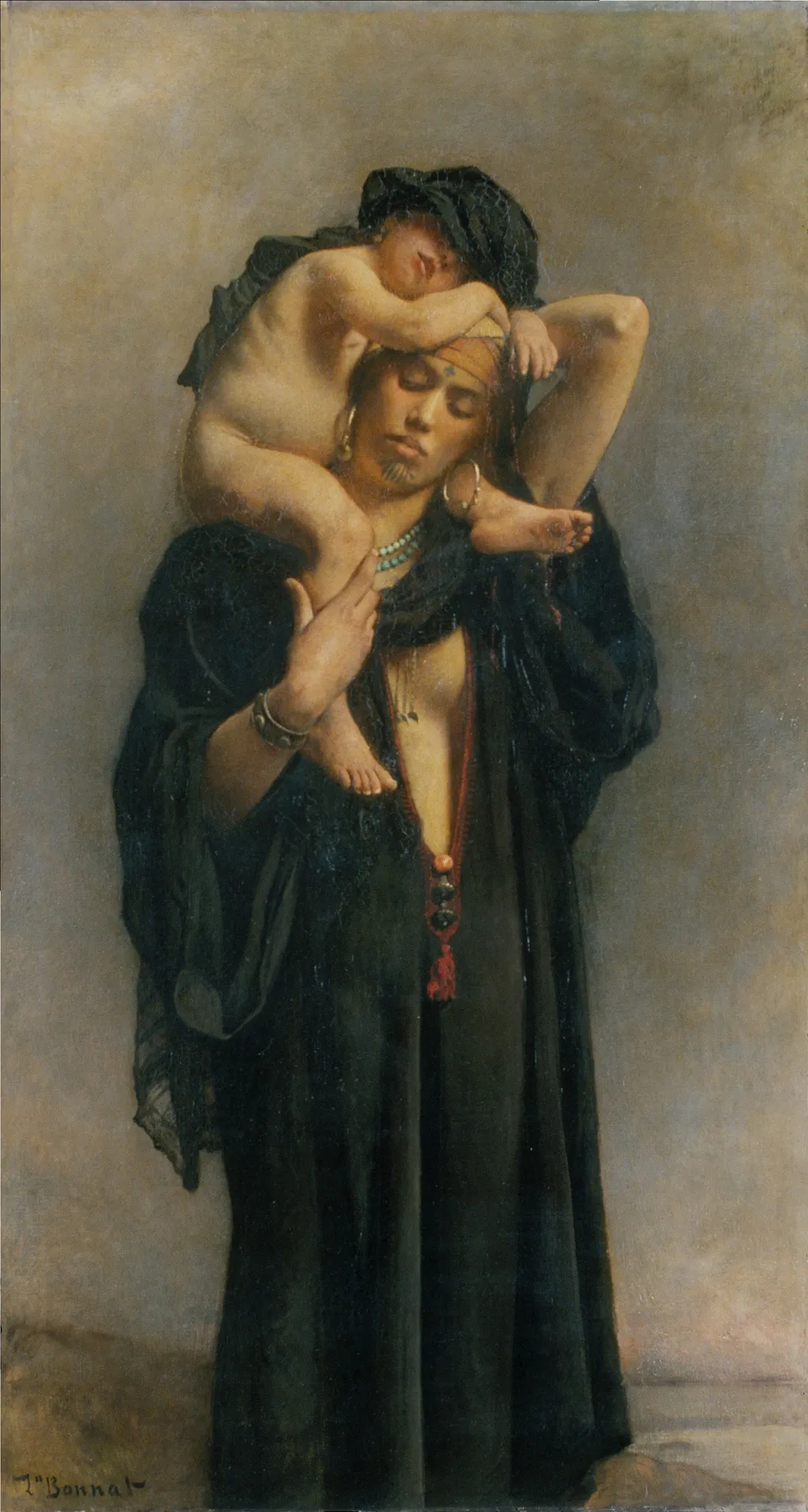
An Egyptian Peasant Woman and Her Child is an oil painting by the Orientalist artist Léon Bonnat. It dates from 1870 and is held in the collection of the Metropolitan Museum of Art.
About this work
Subject & Meaning
The painting's large format, nearly 187 centimeters in height, lends the everyday subject a dignified, almost monumental presence.
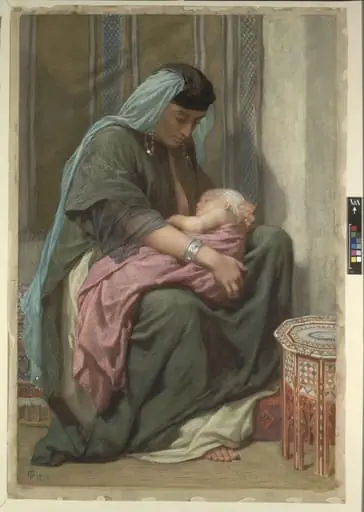
The painting portrays an Egyptian peasant woman with her child, rendered in oil on canvas. According to the Wikidata record, the work depicts a woman and a child and is classified as an Orientalist painting. Within this Orientalist framework, Bonnat presents a domestic scene centered on motherhood and rural Egyptian life, focusing on the bond between parent and offspring rather than on monumental or narrative subject matter.
The classification as Orientalist situates the work within a 19th-century European tradition of representing North African and Middle Eastern subjects, while the modest peasant setting distinguishes it from more grandiose Orientalist themes. The painting's large format, nearly 187 centimeters in height, lends the everyday subject a dignified, almost monumental presence.
Technique & Style
The painting was executed in oil on canvas in 1870 by Léon Bonnat. The work belongs to the Orientalist genre and was produced using the academic technique characteristic of Bonnat’s output, employing a naturalistic rendering of a peasant woman holding her child. The support is a stretched canvas, and the paint layer consists of oil pigments applied with controlled brushwork that emphasizes texture and detail.
The composition balances figure and space, reflecting the formal conventions of 19th‑century academic painting while presenting an ethnographic subject typical of Orientalist interest.
History & Provenance
According to the available records, the painting was created in 1870 by Léon Bonnat, executed in oil paint on canvas. Following its completion, the work entered the collection of Catharine Lorillard Wolfe, the noted American collector and philanthropist. The painting subsequently became part of the holdings of the Metropolitan Museum of Art, where it is currently housed.
No records of an intermediate commission history or earlier ownership transfers between the artist and Wolfe are documented in the cited sources.
Context
Léon Bonnat's 1870 oil on canvas titled An Egyptian Peasant Woman and Her Child depicts a mother and child in a domestic setting, a subject framed within the Orientalist genre that fascinated European artists of the period. The work entered the collection of the Metropolitan Museum of Art and was acquired by Catharine Lorillard Wolfe, underscoring its significance within Bonnat's oeuvre and the broader 19th‑century discourse on cross‑cultural representation. Art historians regard the painting as emblematic of Bonnat's technical mastery and his engagement with North African themes, situating it alongside other Orientalist works in major institutions.
Overview
Léon Bonnat, a French artist and academic, completed An Egyptian Peasant Woman and Her Child in 1870. This oil painting exemplifies the Orientalist trend prevalent in 19th-century European art, which focused on depicting subjects from North Africa and the Middle East. The work presents a mother and child, rendered with a detailed realism characteristic of the period, and is now part of The Metropolitan Museum of Art's collection.
Artist & collection

Artist
Léon Joseph Florentin Bonnat (French pronunciation:; 20 June 1833 – 8 September 1922) was a French painter, Grand Officer of the Légion d'honneur, art collector and professor at the Ecole des Beaux Arts.