Artwork
Bas-relief portion of a frieze of honeysuckle in terra cotta
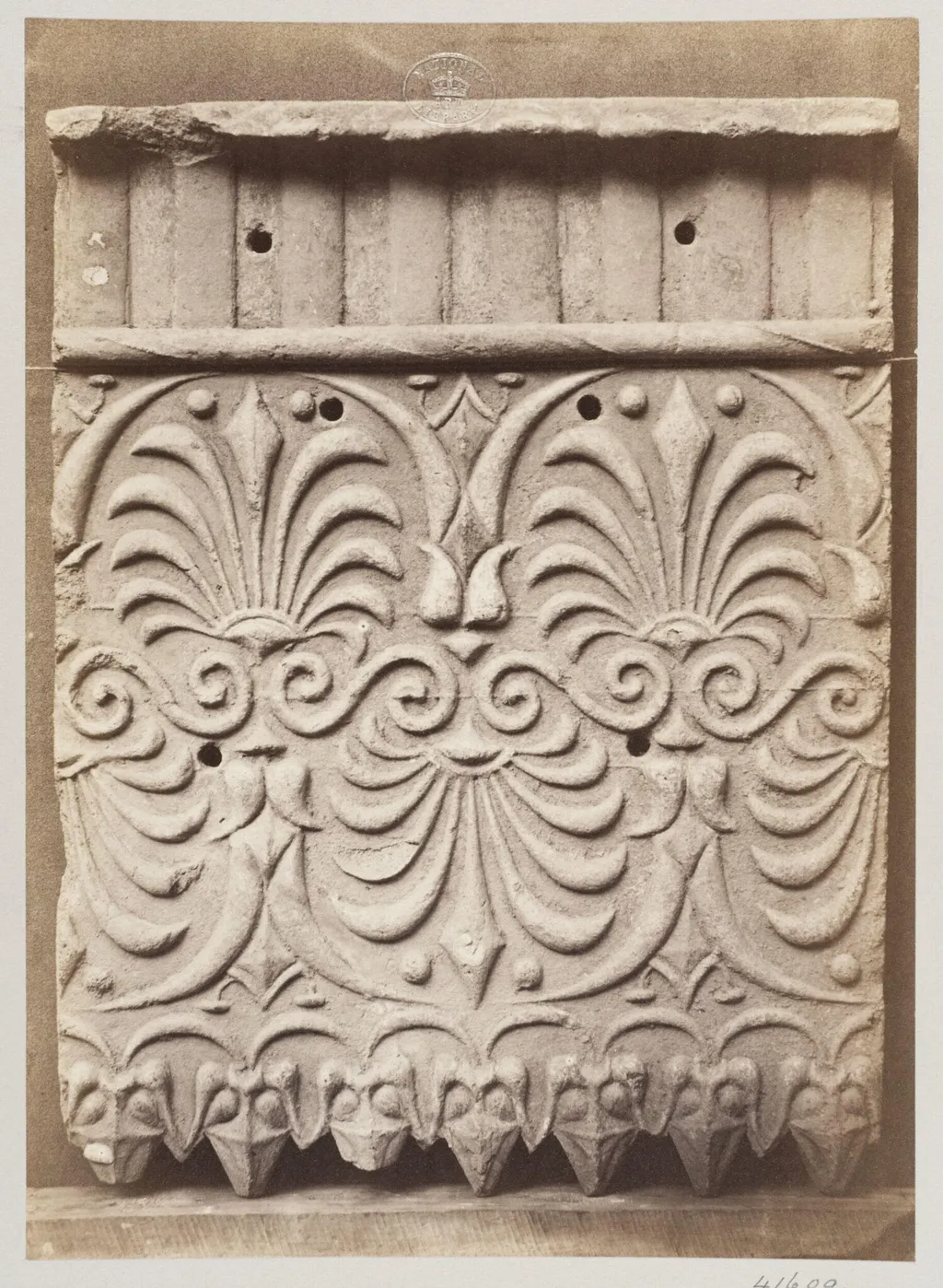
Bas-relief portion of a frieze of honeysuckle in terra cotta is a photographic photography by the Impressionist artist Louise Laffon. It dates from 1864 and is held in the collection of the Victoria and Albert Museum. This 1863–64 terra cotta bas-relief depicts a honeysuckle frieze fragment.
About this work
This photo shows a small clay relief of honeysuckle from 1863–64. The artist made it during the early years when the Victoria and Albert Museum first collected photographs.
This work was overlooked for years because many early female artists got less attention. It’s a tiny slice of art history that helps us see how photography grew alongside museums.
Check out the Victoria and Albert Museum.
Overview
This 1863–64 terra cotta bas-relief depicts a honeysuckle frieze fragment. The work is a small, overlooked example from the early period of the Victoria and Albert Museum’s photography collection.
Subject & Meaning
The honeysuckle motif is a common decorative element in art, symbolizing love, fidelity, and the beauty of nature. In this context, the piece may have served as a study model for artists and students, highlighting the museum’s educational focus.
Technique & Style
Crafted in terra cotta, the bas-relief demonstrates a traditional technique for creating low-relief sculptures. The style is characteristic of mid-19th-century decorative arts, emphasizing intricate, naturalistic designs.
History & Provenance
Originally part of the Campana Collection in the Musée Napoléon III (now the Louvre), this piece was photographed by Louise Laffon as part of a series acquired by the V&A in 1864. Laffon’s work was among 500 photographs purchased through agent Monsieur E. Cappe.
Context
The photograph of this terra cotta piece reflects the V&A’s pioneering role in collecting and exhibiting photography (starting in 1858) to support artistic education and research. Female photographers like Laffon played a significant, yet historically underrecognized, role in this effort.
Legacy
This photograph, once overlooked due to the marginalization of early female photographers, now contributes to a broader understanding of the interplay between 19th-century photography, museum development, and the contributions of women in these fields.
Artist & collection
Artist
Louise Laffon (1828–1885), was a French photographer and painter. She was one of the first female professional photographers in France. She had a studio in Paris between 1859 and 1876.

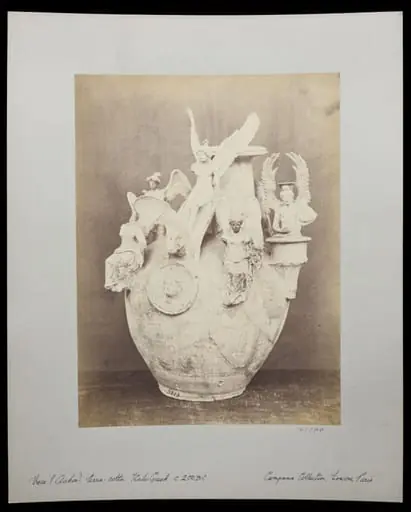 Perfume Burner in terra cotta
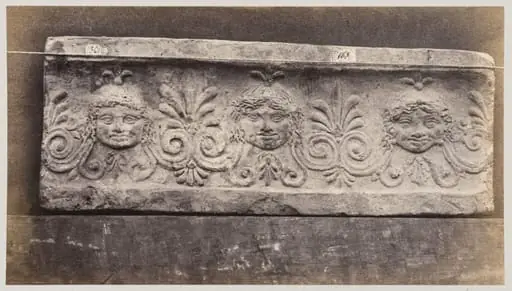 Three masques of gorgons in terra cotta
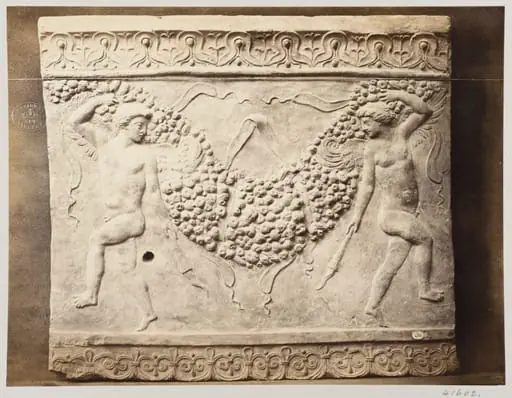 Bas-relief of portion of frieze of dancing figures with torches bearing festoon of fruit in terra cotta
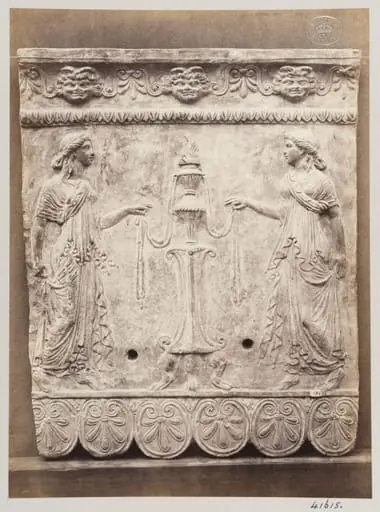 Bas-relief portion of a frieze of two draped females and an altar in terra cotta
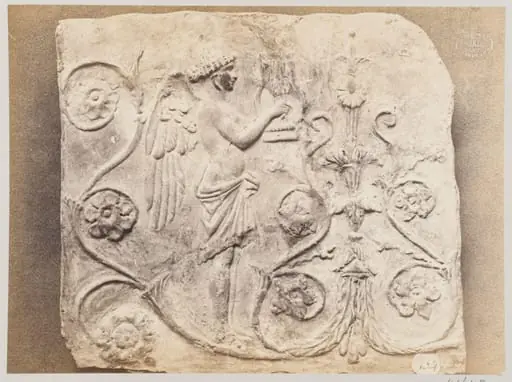 Bas-relief of a geni and a lyre in terra cotta
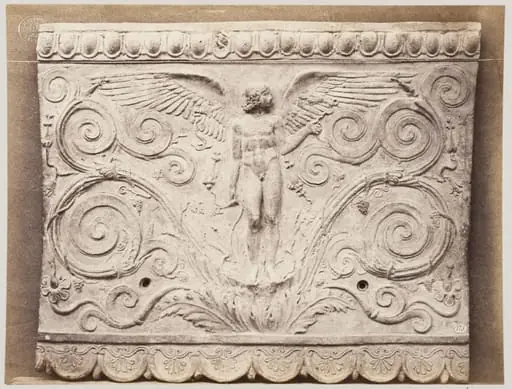 Bas-relief of a portion of frieze of Eros with scrollwork in terra cotta
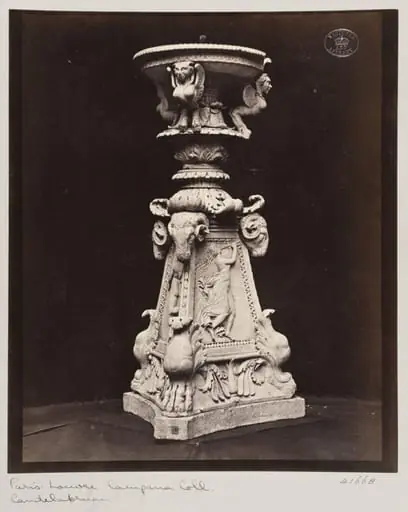 Marble sculptured fountain
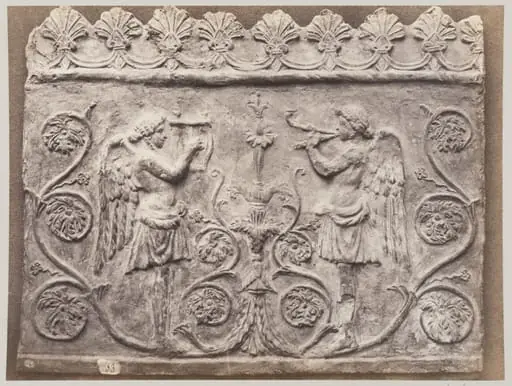 Bas-relief portion of frieze of Genii with double flutes and lyre
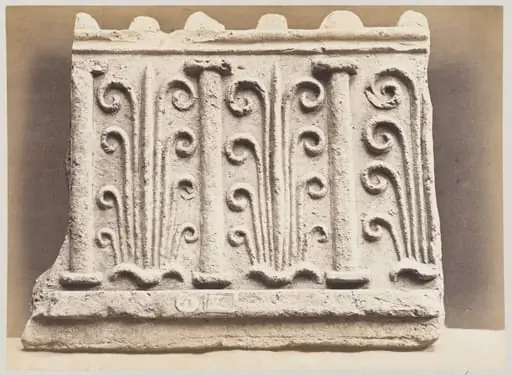 Bas-relief portion of frieze with palmettes and columns in terra cotta
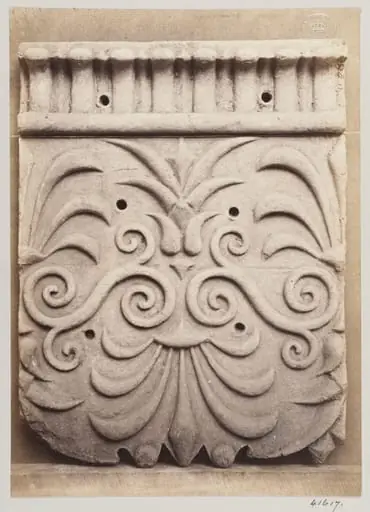 Bas-relief portion of a frieze in terra cotta
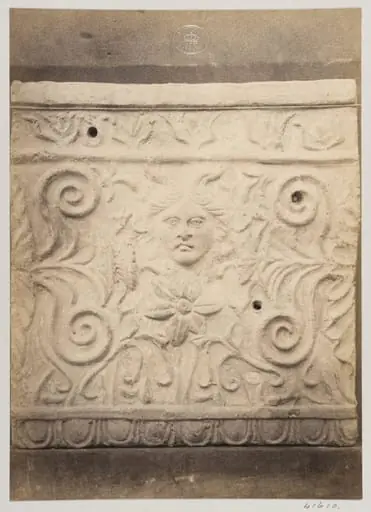 Bas-relief portion of a frieze with a mask in terra cotta
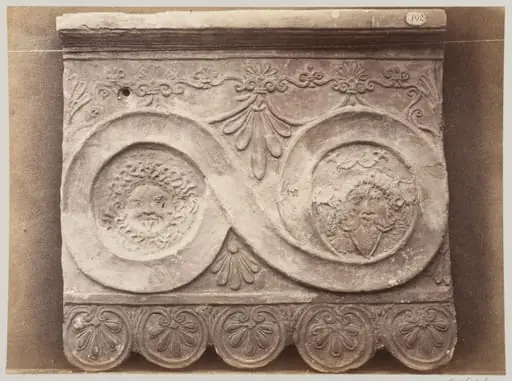 Bas-relief portion of a frieze of scrollwork with masks in terra cotta
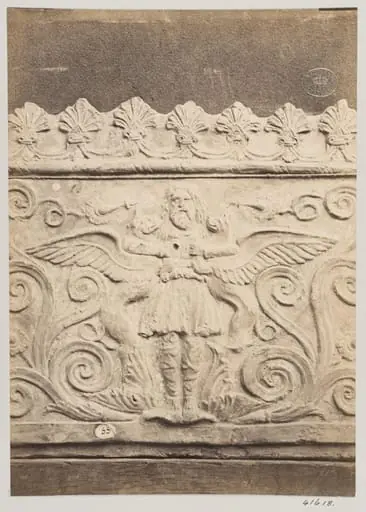 Bas-relief portion of a frieze of a flying genie in terra cotta
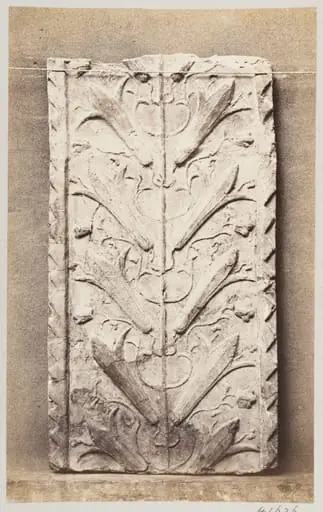
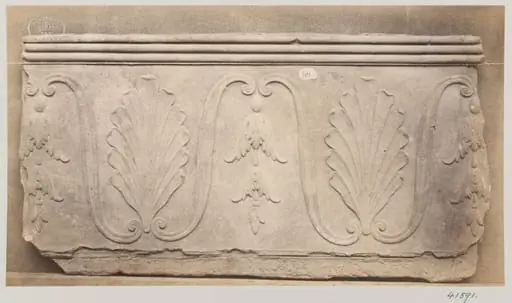 Bas-relief of a portion of a frieze depicting a palmetto and foliage in terra cotta
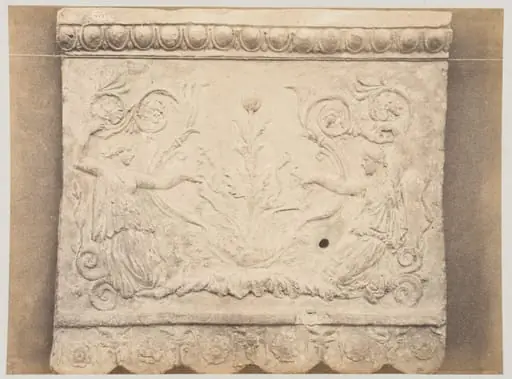 Bas-relief portion of frieze of nymphs with scrollwork in terra cotta
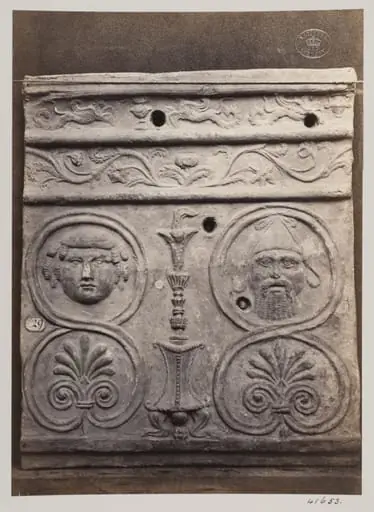 Bas-relief of a portion of a frieze of a thymiaterion and bacanallian masks in terra cotta
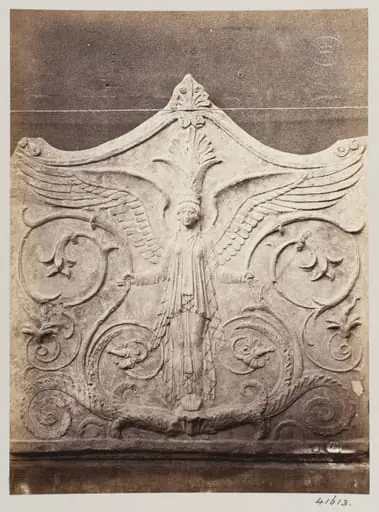 Bas-relief portion of a frieze of a winged figure with foliage in terra cotta