Artwork
Bas-relief portion of frieze with harvesting satyr in terra cotta
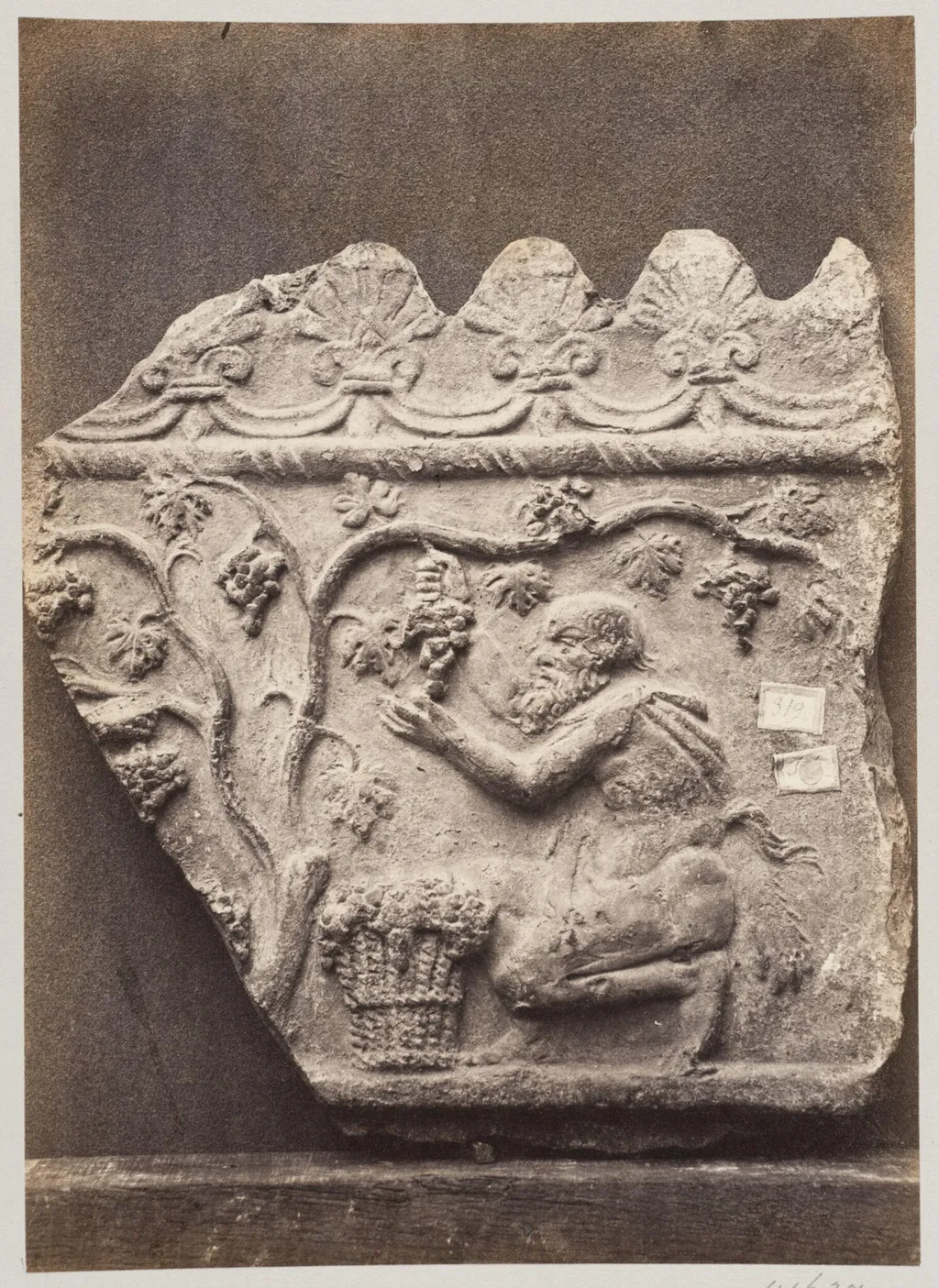
Bas-relief portion of frieze with harvesting satyr in terra cotta is a photographic photography by the Impressionist artist Louise Laffon. It dates from 1864 and is held in the collection of the Victoria and Albert Museum.
About this work
Louise Laffon made a photograph in 1863–64. It shows a bas-relief portion of a frieze carved with a harvesting satyr in terra cotta.
Laffon was French and also worked with photography at a time when museums were just starting to collect pictures. The Victoria and Albert Museum has held hers since the 1850s.
Look up the Victoria and Albert Museum next.
Overview
This 1863–64 photographic plate, taken by French photographer Louise Laffon, records a fragment of a terra‑cotta bas‑relief depicting a satyr engaged in harvest. The image forms part of the Victoria and Albert Museum’s early photographic holdings, reflecting the institution’s pioneering role in acquiring and exhibiting photographs during the mid‑nineteenth century.
Subject & Meaning
The relief portrays a mythological satyr, a creature associated with rustic revelry, shown amid agricultural activity. The figure’s dynamic pose and the surrounding motifs emphasize themes of fertility and the cyclical nature of harvest, linking classical iconography with everyday labor.
Technique & Style
Laffon employed the wet‑collodion process, the dominant photographic method of the 1860s, to capture fine tonal contrasts on glass. The resulting image renders the shallow carving depth and the subtle surface texture of the terra‑cotta, allowing viewers to discern the sculptural details despite the medium’s two‑dimensionality.
History & Provenance
The photograph entered the V&A’s collection shortly after its creation, when the museum was actively expanding its photographic archive. In 1864 the institution purchased a set of 500 images from Laffon through the dealer Monsieur E. Cappe, integrating them into the National Art Library’s resources for teaching and research.
Context
Laffon’s work exemplifies the early involvement of women photographers in museum documentation, a contribution often overlooked in nineteenth‑century histories. Her images served the V&A’s educational mission, providing artists, students, and curators with visual references that complemented traditional drawing and plaster casts.
Legacy
The plate remains a reference point for scholars studying both the Campana Collection’s classical artifacts and the development of museum photography. It illustrates how photographic reproduction expanded access to distant objects, shaping curatorial practice and art‑historical scholarship in the decades that followed.
Artist & collection
Artist
Louise Laffon (1828–1885), was a French photographer and painter. She was one of the first female professional photographers in France. She had a studio in Paris between 1859 and 1876.

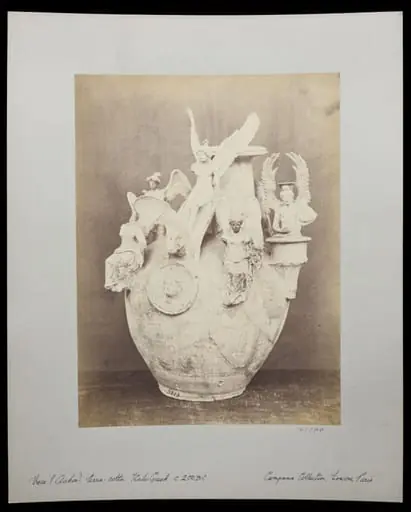 Perfume Burner in terra cotta
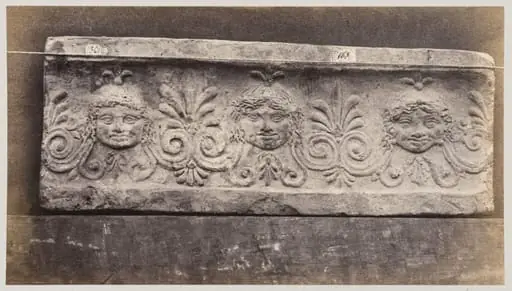 Three masques of gorgons in terra cotta
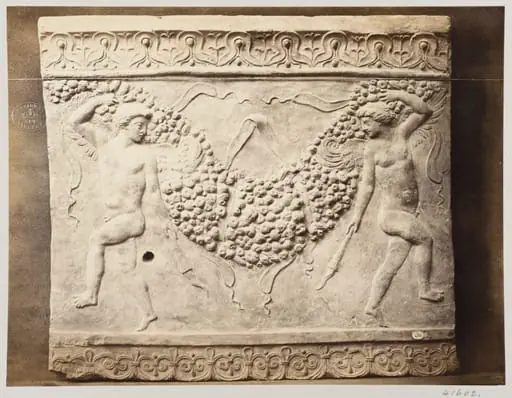
- Bas-relief of portion of frieze of dancing figures with torches bearing festoon of fruit in terra cotta
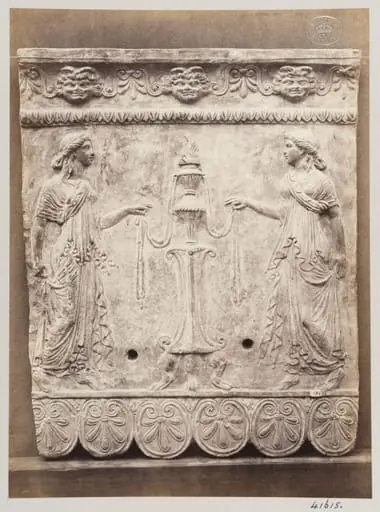 Bas-relief portion of a frieze of two draped females and an altar in terra cotta
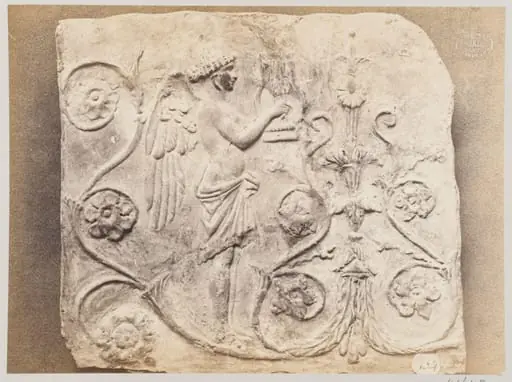 Bas-relief of a geni and a lyre in terra cotta
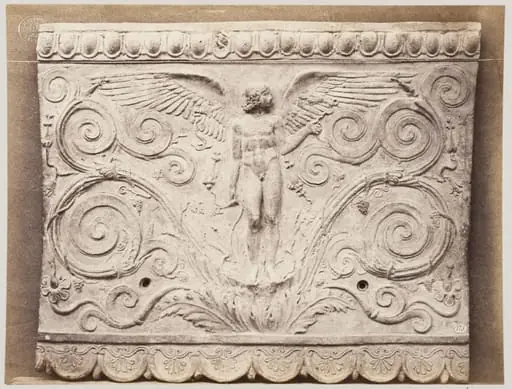 Bas-relief of a portion of frieze of Eros with scrollwork in terra cotta
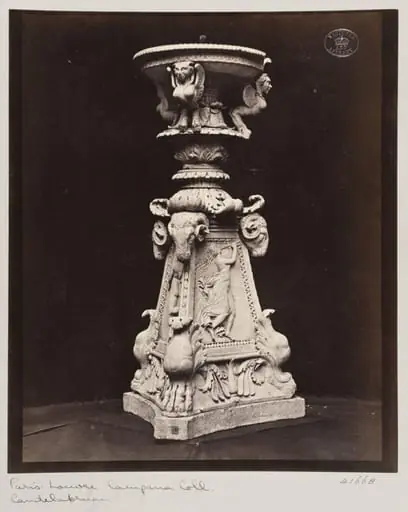 Marble sculptured fountain
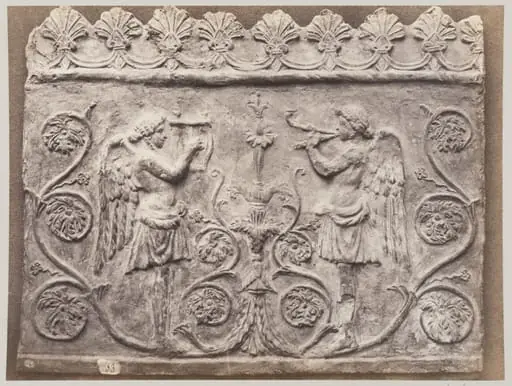 Bas-relief portion of frieze of Genii with double flutes and lyre
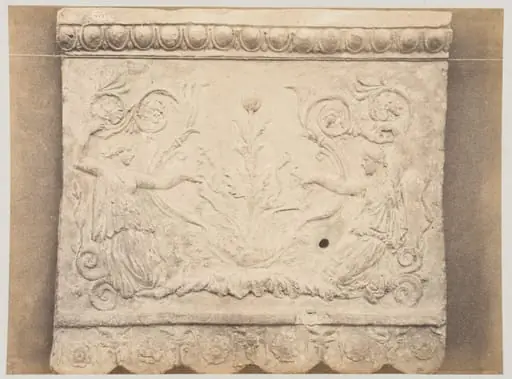 Bas-relief portion of frieze of nymphs with scrollwork in terra cotta
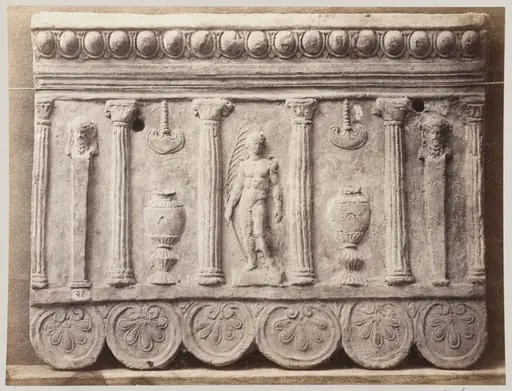 Bas-relief portion of a frieze of Hercules the conqueror in terra cotta
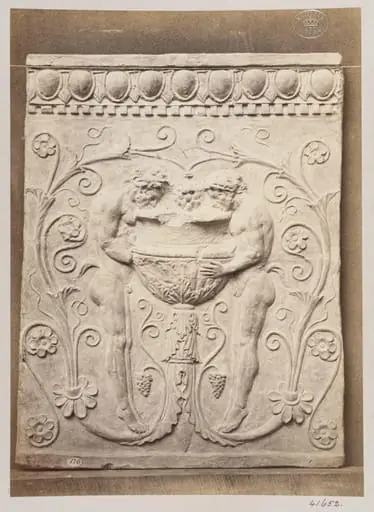 Bas-relief of a portion of a frieze showing two satyrs and a vessel in terra cotta
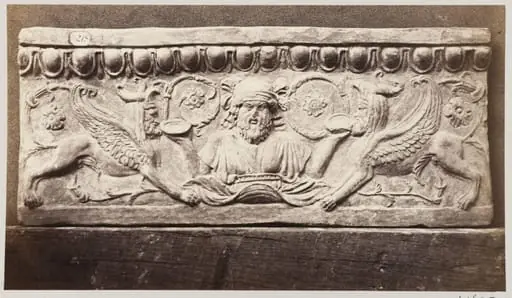 Bas-relief portion of frieze with the 'Libation of Asiatic Sphinx' in terra cotta
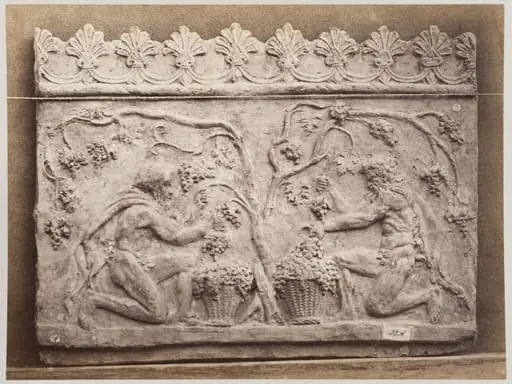 Bas-relief portion of a frieze of two satyrs in terra cotta
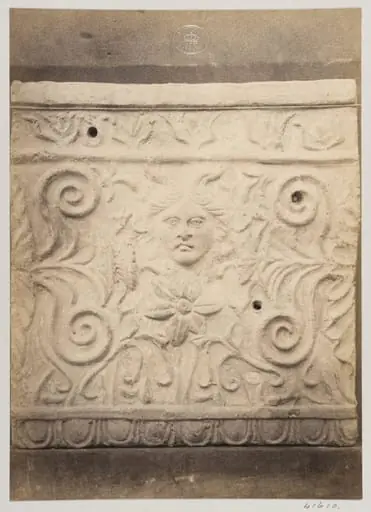 Bas-relief portion of a frieze with a mask in terra cotta
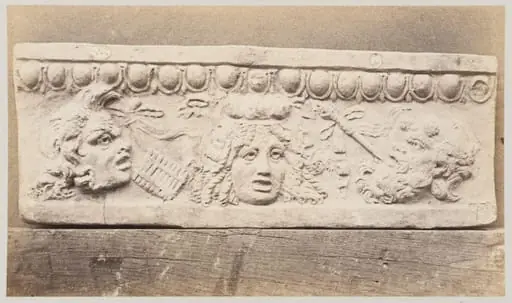 Bas-relief portion of frieze with theatrical masks in terra cotta
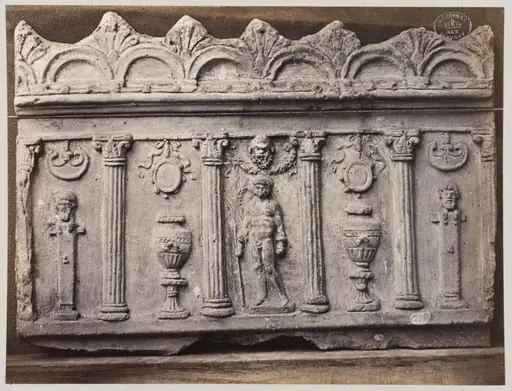 Bas-relief of a figure with bust, vessels and columns in terra cotta
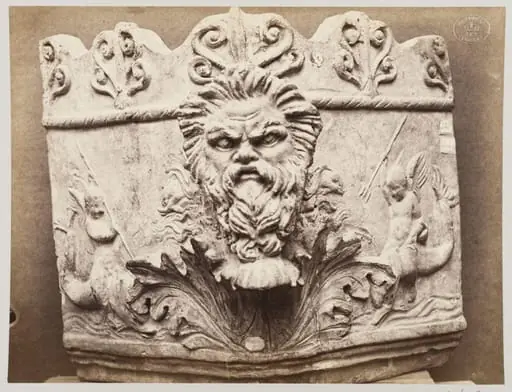 Bas-relief portion of frieze with mask of Satyr in terra cotta
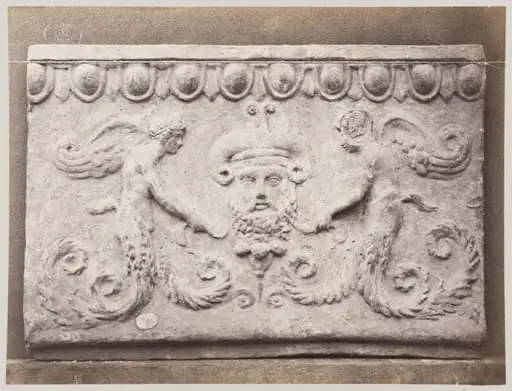 Bas-relief portion of frieze of masque of Ammon and genii in terra cotta