Artwork
Susåen. The Bridge and the Mill at Karrebæksminde
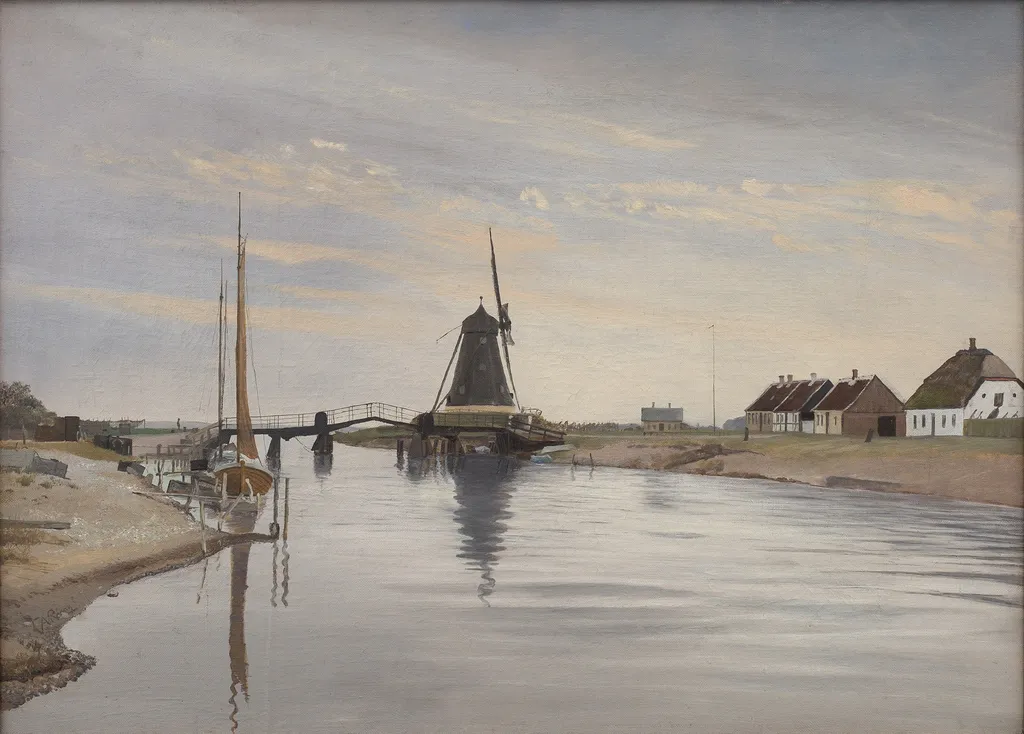
Susåen. The Bridge and the Mill at Karrebæksminde is an oil painting by the Post-Impressionist artist Laurits Andersen Ring. It dates from 1900 and is held in the collection of the Statens Museum for Kunst.
About this work
Subject & Meaning
The painting is a landscape depicting the Suså River at Karrebæksminde, where Laurits Andersen Ring combines several functional structures into a single scene.
The painting is a landscape depicting the Suså River at Karrebæksminde, where Laurits Andersen Ring combines several functional structures into a single scene. A bridge spans the waterway, linking the riverbanks, while a windmill stands nearby as a marker of the area's milling activity. A sailing ship occupies the river itself, indicating the waterway's continuing role in maritime transport, and a house anchors the settlement along the shore.
Together these elements, bridge, mill, vessel, and dwelling, present Karrebæksminde as a working Danish waterside community shaped by the Suså, rather than as an idealized natural vista.
The work's meaning lies in this synthesis of infrastructure and everyday rural life. By pairing the windmill and sailing ship, Ring captures two traditional Danish livelihoods operating side by side along the same river, while the bridge and house frame the scene as a lived-in locale rather than wilderness. The painting thereby represents Karrebæksminde as a place defined by the Suså and by the human activity gathered around it.
Technique & Style
Susåen. The Bridge and the Mill at Karrebæksminde is an oil painting executed on canvas by Laurits Andersen Ring in 1898. The work measures 60 cm in height and 82.2 cm in width, classifying it within the landscape genre.
It depicts the Suså River alongside a windmill, a sailing ship, and a house. The piece is currently held in the collection of the Statens Museum for Kunst.
History & Provenance
The work was painted in 1898 by Laurits Andersen Ring, now commonly known as L. A. Ring. It entered the collection of Statens Museum for Kunst (the National Gallery of Denmark) in Copenhagen, where it remains held by the museum under the Ministry of the State of Denmark. The museum records list the painting’s dimensions as 60 cm in height and 82.2 cm in width.
The painting Susåen. The Bridge and the Mill at Karrebæksminde is held in the collection of the Statens Museum for Kunst in Denmark. The work is administered by the Ministry of the State of Denmark.
While the specific inventory or accession number is not provided in the available records, the museum maintains the piece as part of its permanent holdings of landscape paintings by Laurits Andersen Ring.
No specific exhibition history is documented in the provided sources. The available information confirms the artwork's creation in 1898 and its current location within the Danish state collection, but does not list past or future public displays.
Context
Laurits Andersen Ring’s Susåen. The Bridge and the Mill at Karrebæksminde (1898) is recognized as a defining example of Danish late-nineteenth-century naturalism, aligning with the period’s emphasis on atmospheric realism and local subject matter. Contemporary critics situated the work within the broader turn toward plein-air painting in Danish art, linking it to the plein-air tradition that emphasized direct observation of light and landscape.
Its inclusion in the Statens Museum for Kunst’s holdings underscores its canonical status in Danish art history, where it is frequently cited as emblematic of Ring’s mature style and of the national landscape tradition.
Scholarship has interpreted the painting’s depiction of the Suså River and Karrebæksminde’s mill as a synthesis of natural observation and symbolic resonance, positioning it within broader discourses on modernity and rural life in Danish art. The work’s careful composition and subdued palette have been read as reflecting Ring’s engagement with contemporary aesthetic debates, including the influence of French naturalism filtered through Nordic sensibilities.
Overview
Created in 1900 by Danish painter Laurits Andersen Ring, this oil on canvas portrays a tranquil riverside at twilight. A modest wooden bridge spans the Suså River, leading to a stationary windmill on a grassy bank. Nearby, a sailing vessel is moored beside a dirt path, while simple thatched houses line the water’s edge, all under a pale, cloud‑dotted sky.
Own this work as a print
Artist & collection

Artist
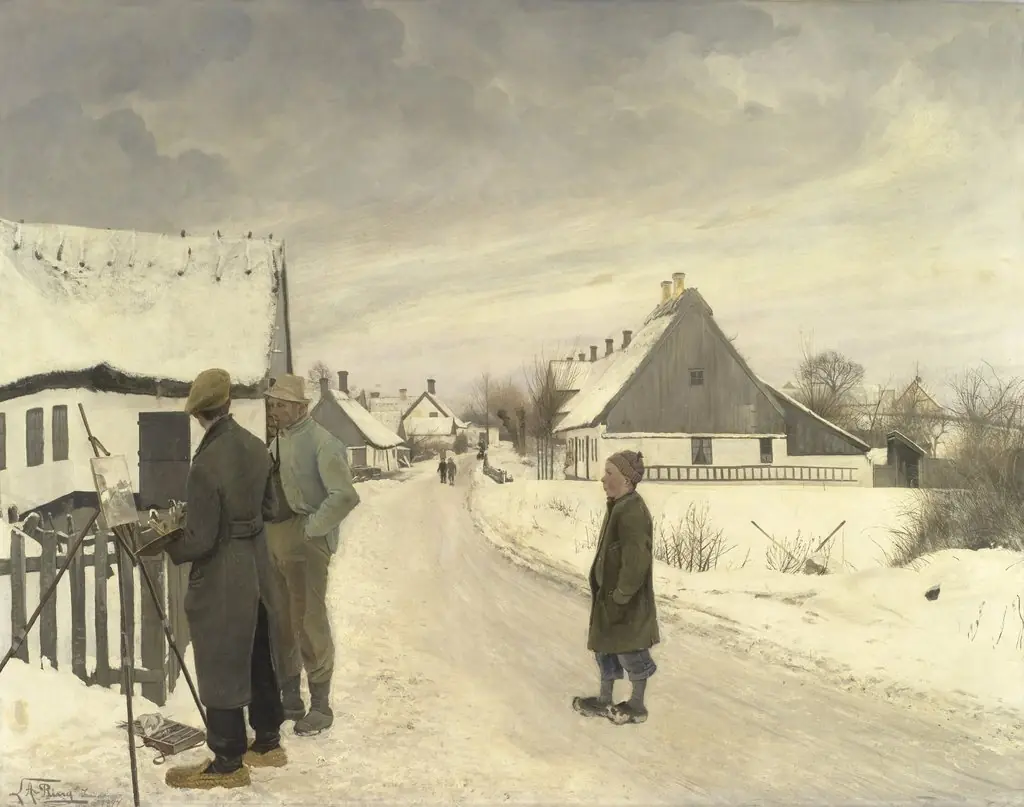
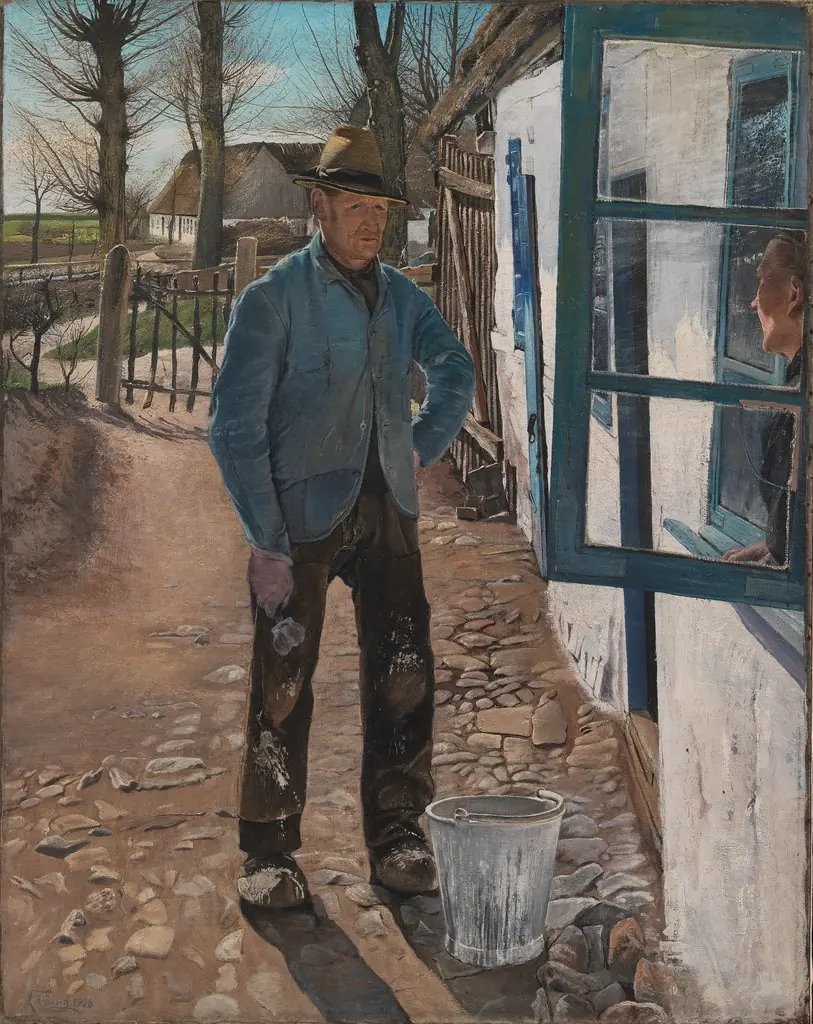
Laurits Andersen Ring (Danish pronunciation:; 15 August 1854 – 10 September 1933) was one of the foremost Danish painters of the turn of the 20th century, who pioneered both symbolism and social realism in Denmark.

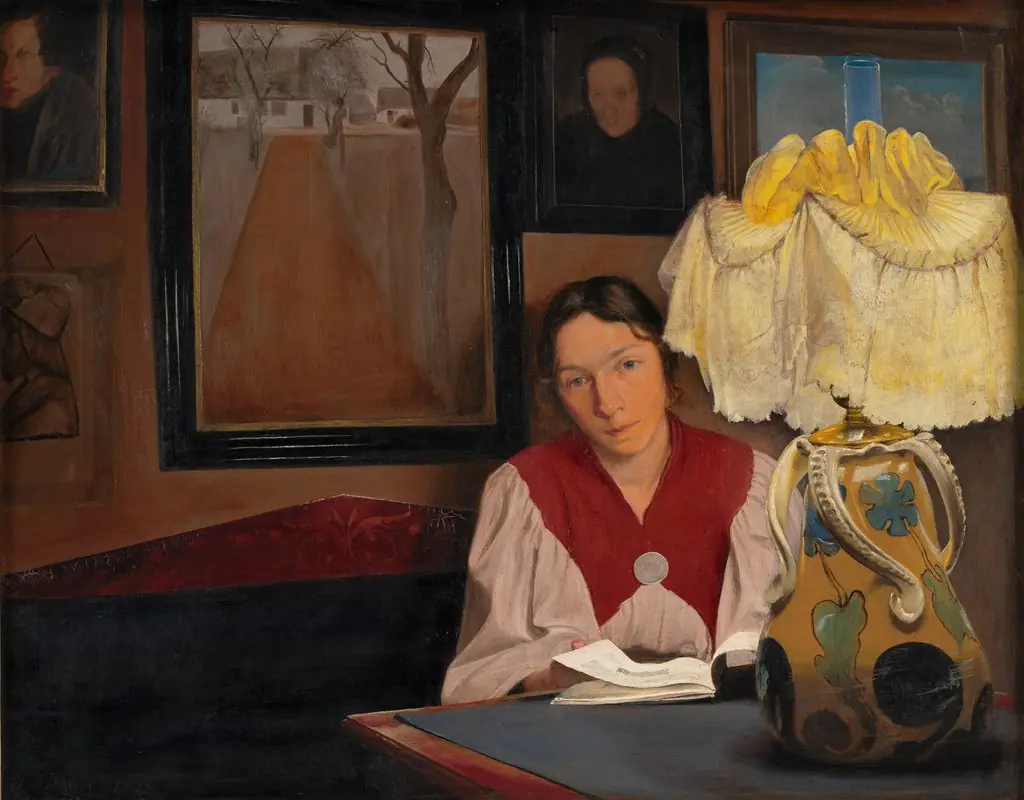

- The Scheldt in Mariekerke
 View of the Citadel Ramparts Looking Towards Langelinie and the Naval Harbour
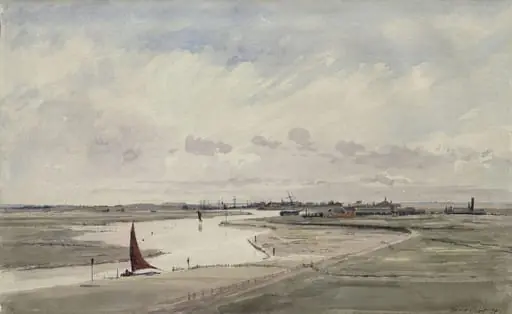 Rye Harbour, Sussex
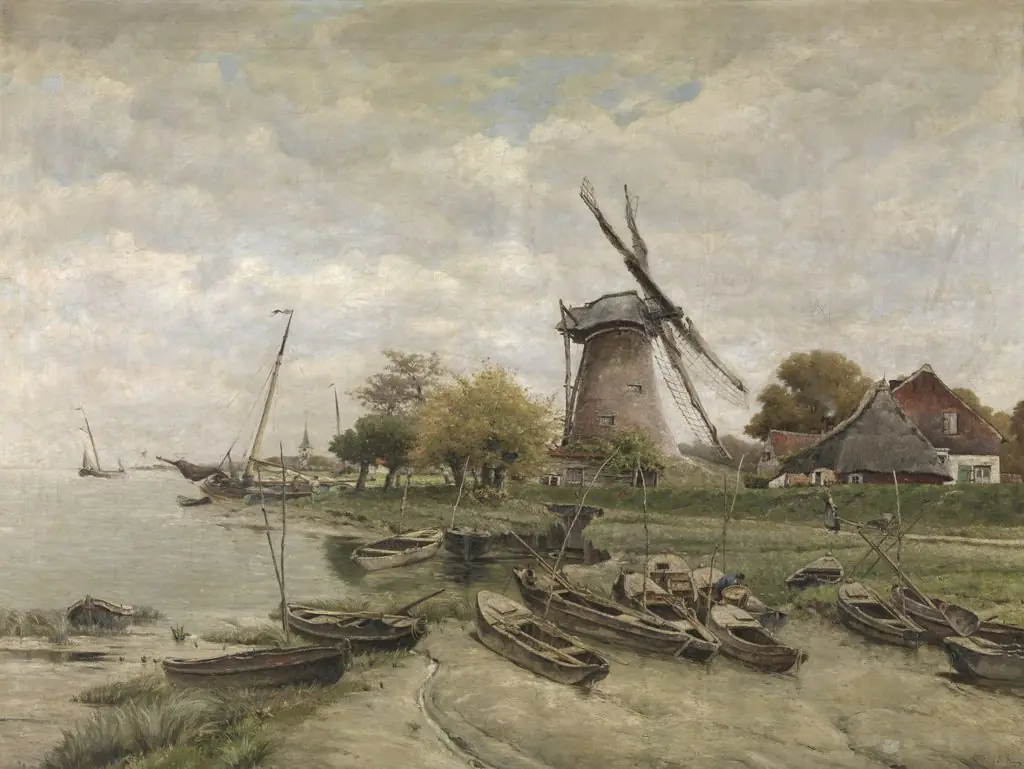
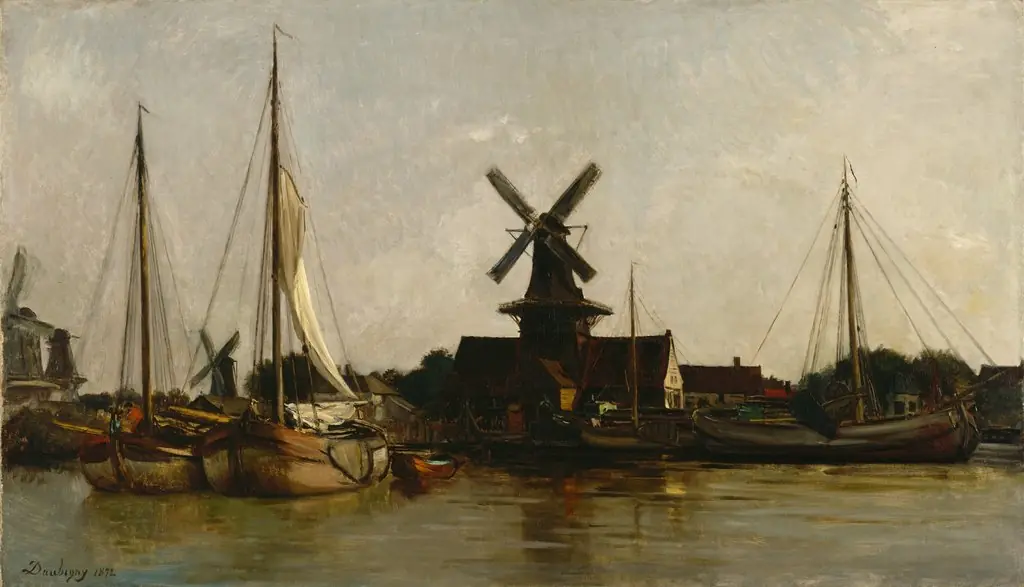 Mills at Dordrecht
 Windmill beside a frozen river
 Sail boats at the lakeside
 Hollandsk landskab. En pige vasker ved en kanal
 Waterway near the Baarsjes, Amsterdam
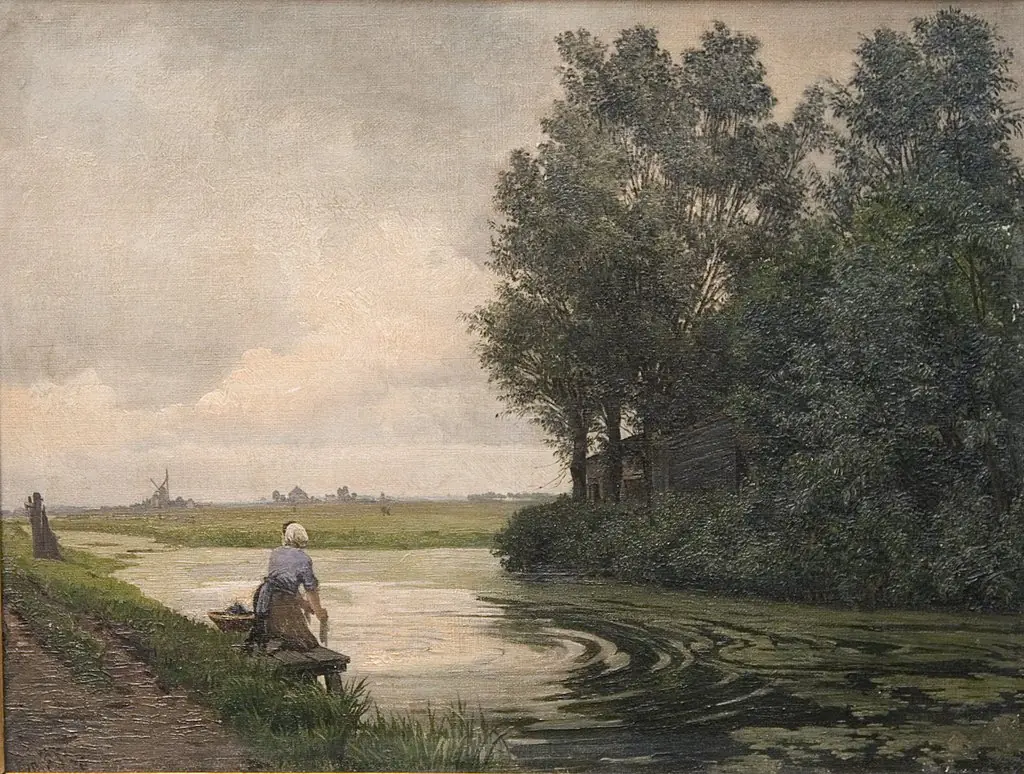 Hollandsk landskab. En pige vasker ved en kanal
 Gezicht op Den Haag
 Souvenir of the Zuiderzee
 The Trekvliet Shipping Canal near Rijswijk, known as the ‘View near the Geest Bridge’