Artwork
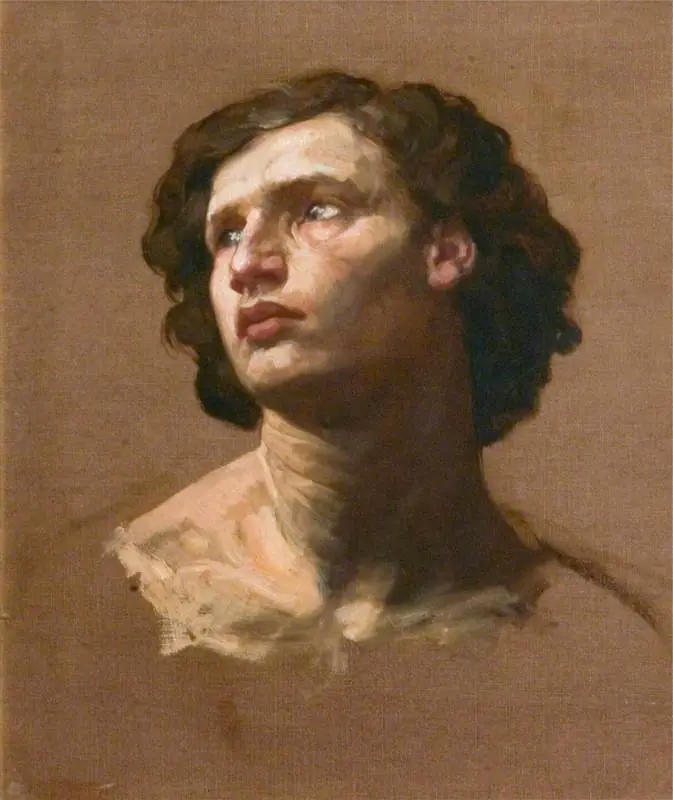
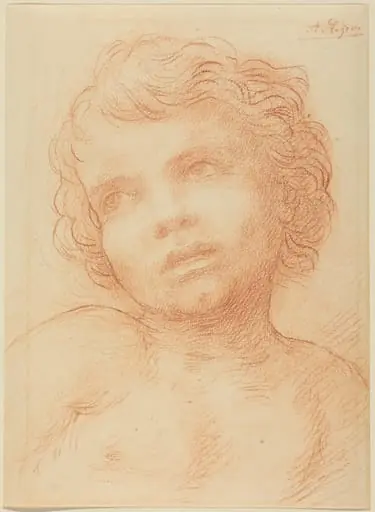
Bust of Nude Man
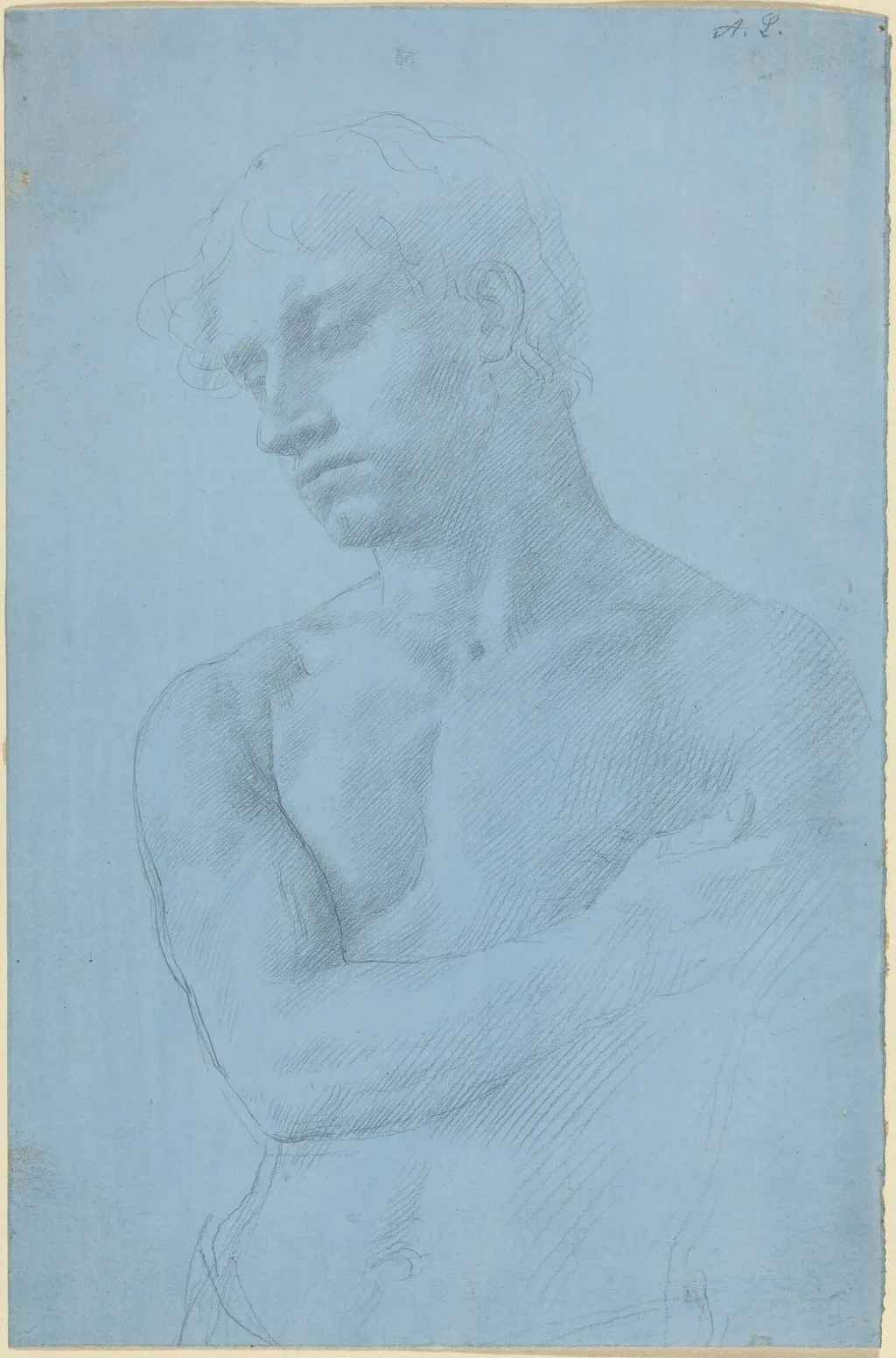
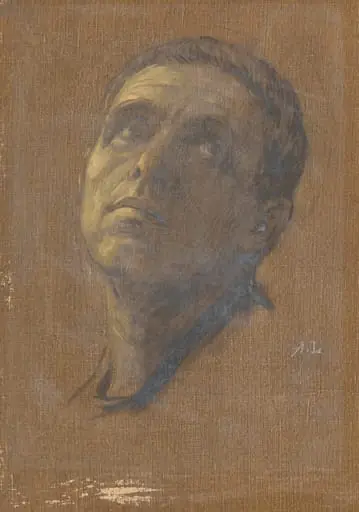
Bust of Nude Man is a graphite drawing by the Romanticist artist Alphonse Legros. It dates from 1874 and is held in the collection of the National Gallery of Art.
- Inscription
- Inscribed:upper right: A.L.; in later hand, center verso: 1325
About this work
Overview
Bust of Nude Man is a 1874 graphite drawing on blue hand-prepared paper by Alphonse Legros, a French-born artist who later worked in Britain.
Subject & Meaning
The drawing depicts a male nude from the waist up, with curly hair and a contemplative gaze to the left, his right shoulder raised and head turned accordingly.
Technique & Style
Rendered in a simple, restrained style with clean lines and minimal shading, the work emphasizes the contours of the subject's body, characteristic of Legros's closely observed studies.
Context
This drawing exemplifies Romanticism, an art movement that valued emotion and imagination, and reflects Legros's role in the British etching revival and his influence on the period's graphic arts.
Own this work as a print
Artist & collection

Artist
Alphonse Legros (French pronunciation:; 8 May 1837 – 8 December 1911) was a French, later British, painter, etcher, sculptor, and medallist.