Artwork
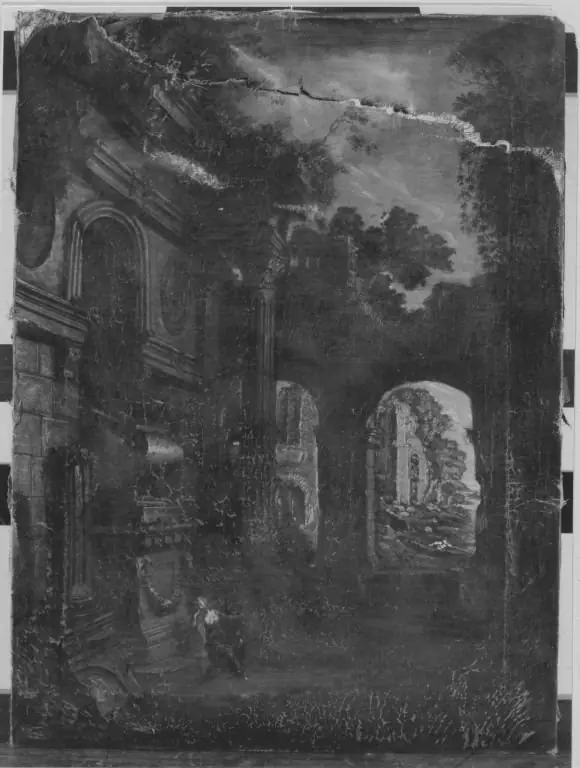
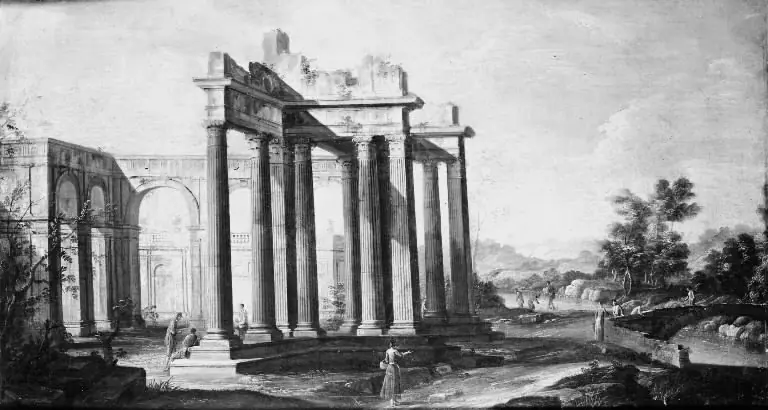
Capriccio of Ruins with Figures beneath an Archway
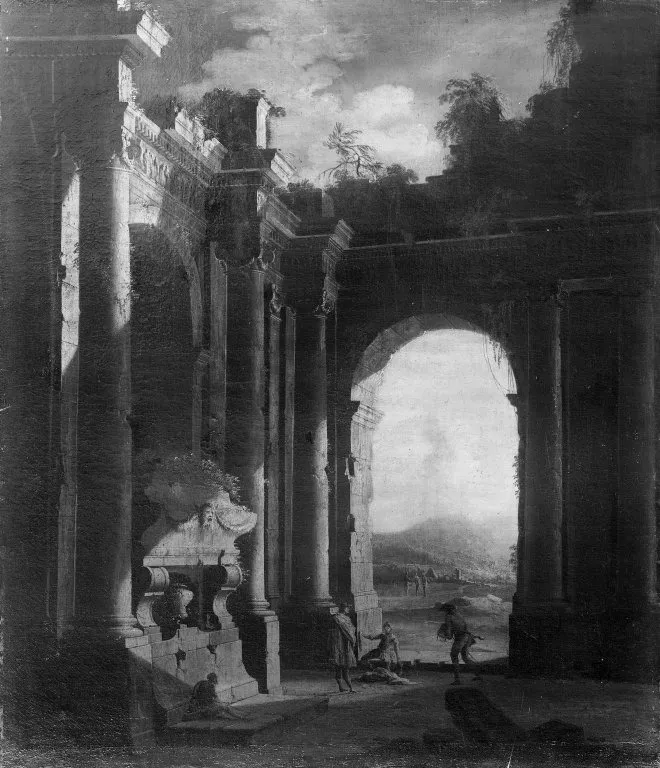
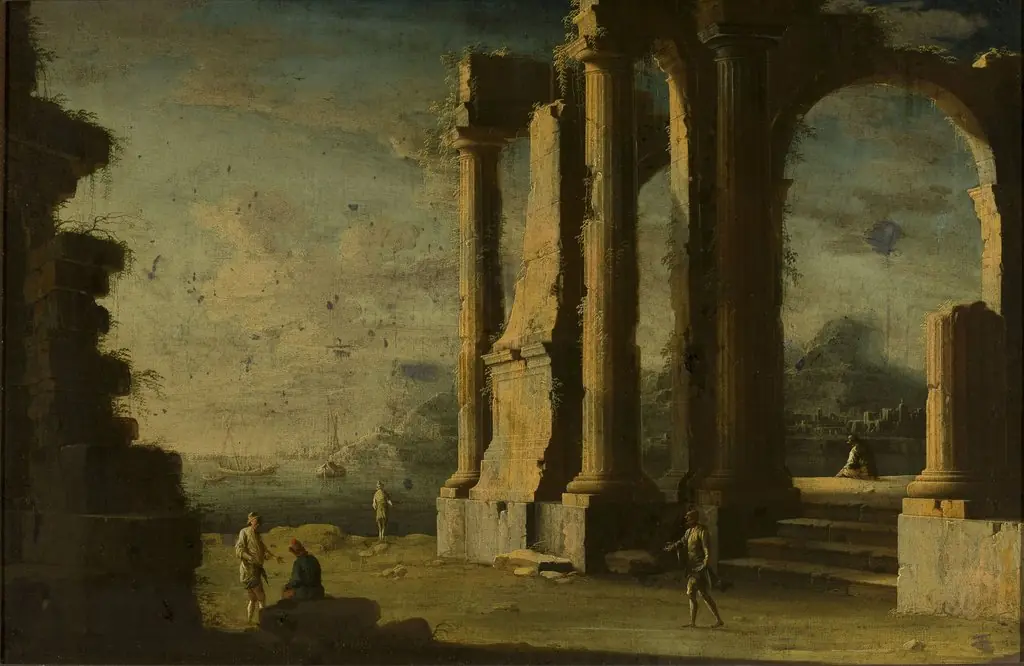
Capriccio of Ruins with Figures beneath an Archway is an oil painting by the Rococo painting artist Leonardo Coccorante. It dates from 1740 and is held in the collection of the Brooklyn Museum.
About this work
Subject & Meaning
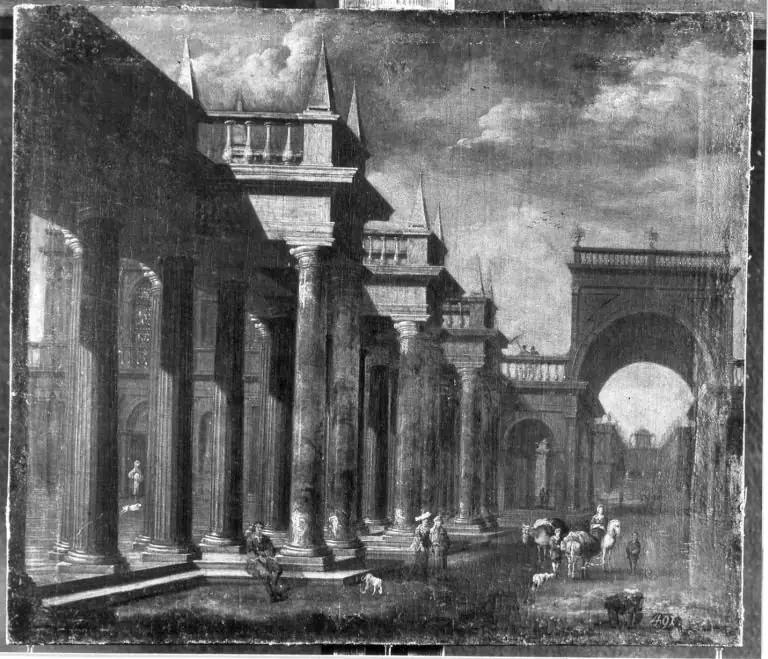
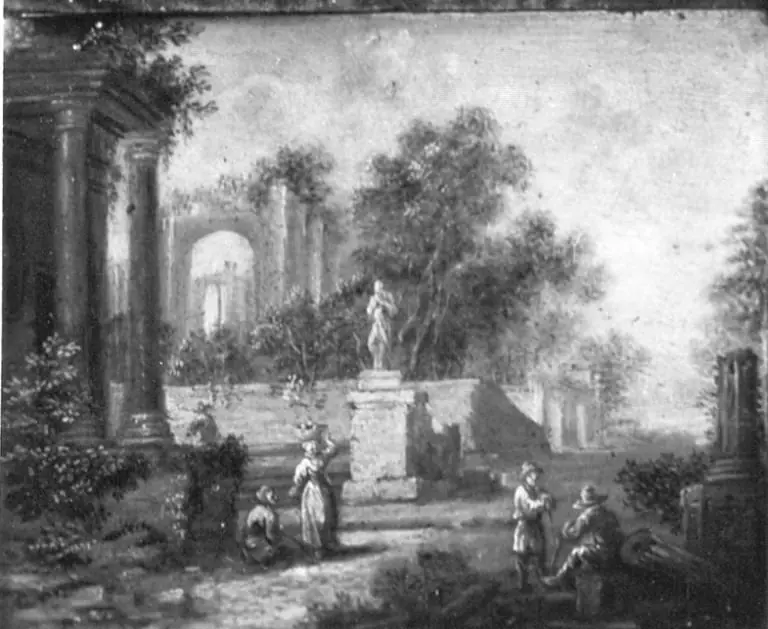
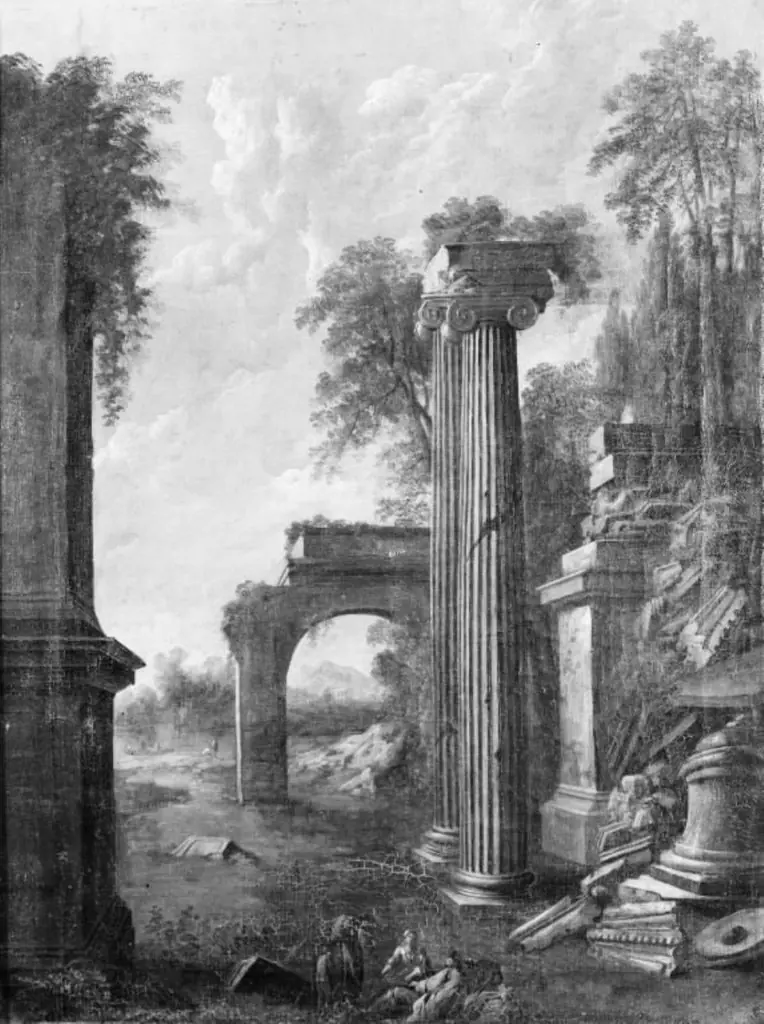
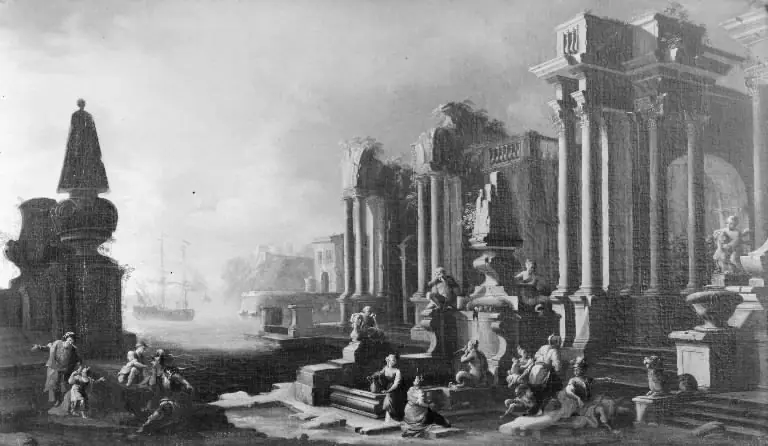
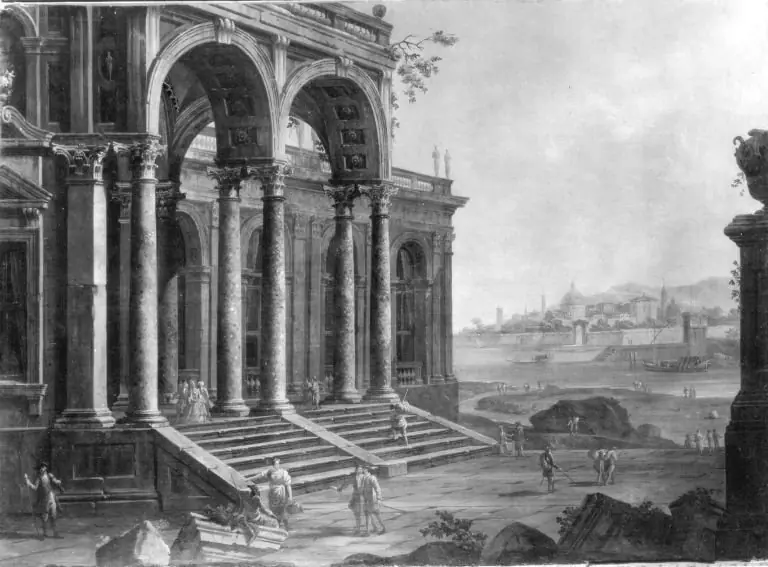
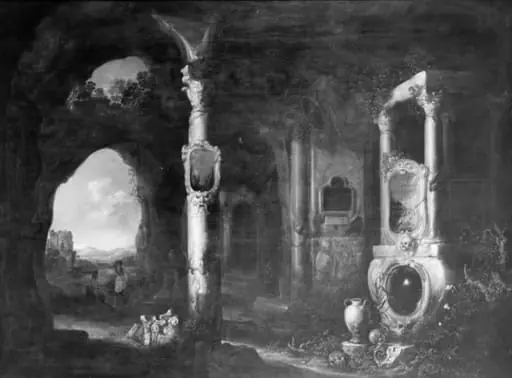
The work presents a fantastical arrangement of architectural fragments and classical figures beneath a prominent arch, embodying the genre of the capriccio that merges imagined antiquity with lively human activity. The depicted sky, ruins, column, cloud, man, hill, and arch serve as symbolic elements that evoke the grandeur of antiquity while suggesting the transience of human endeavors. Through this composition, the painting reflects an 18th‑century fascination with archaeological ruins as evocative settings for contemplation and artistic imagination.
Technique & Style
Capriccio of Ruins with Figures beneath an Archway is an oil painting on canvas created by Leonardo Coccorante in 1740.
Capriccio of Ruins with Figures beneath an Archway is an oil painting on canvas created by Leonardo Coccorante in 1740. Executed in the capriccio genre, it depicts a fantastical arrangement of architectural ruins, sky, clouds, a column, a hill, an arch, and figures beneath an archway, reflecting the artist’s interest in imaginative architectural compositions. The work measures 78.4 cm in height and 67.6 cm in width, as recorded by the Brooklyn Museum.
The formal qualities are defined by loose brushwork, dramatic chiaroscuro, and a compositional balance that juxtaposes crumbling classical structures with lively human activity, creating a sense of atmospheric depth and theatricality characteristic of 18th‑century capriccios.
History & Provenance
Leonardo Coccorante painted Capriccio of Ruins with Figures beneath an Archway in 1740, an oil on canvas work measuring 78.4 cm by 67.6 cm. The painting entered the collection of the Brooklyn Museum, where it remains on view. Its creation is documented as part of Coccorante’s oeuvre of capriccios, a genre of imaginative architectural fantasies. The work was catalogued with an inception date of 1740‑01‑01, confirming its 18th‑century execution.
Capriccio of Ruins with Figures beneath an Archway is held in the collection of the Brooklyn Museum, according to Wikidata records for the work. It is catalogued as an oil-on-canvas painting produced by Leonardo Coccorante in 1740, measuring 78.4 by 67.6 cm. The available sources do not provide a specific inventory or accession number, nor do they document any exhibition history for the painting.
The sources confirm the work's location at the Brooklyn Museum but offer no further details regarding accession registration or past displays.
Overview
Capriccio of Ruins with Figures beneath an Archway is an oil painting created by Italian artist Leonardo Coccorante in 1740. Characteristic of the Rococo style, it exemplifies the capriccio genre, blending fanciful elements with meticulous rendering.
Context
This work sits within the broader context of 18th-century European art's fascination with classical ruins and imaginative landscapes. Coccorante's style and subject matter align with contemporaneous artistic trends that romanticized antiquity.
Artist & collection
Artist
Leonardo Coccorante (1680–1750) was an Italian painter known for his capricci depicting imaginary landscapes with ruins of classical architecture.