Artwork
Untitled
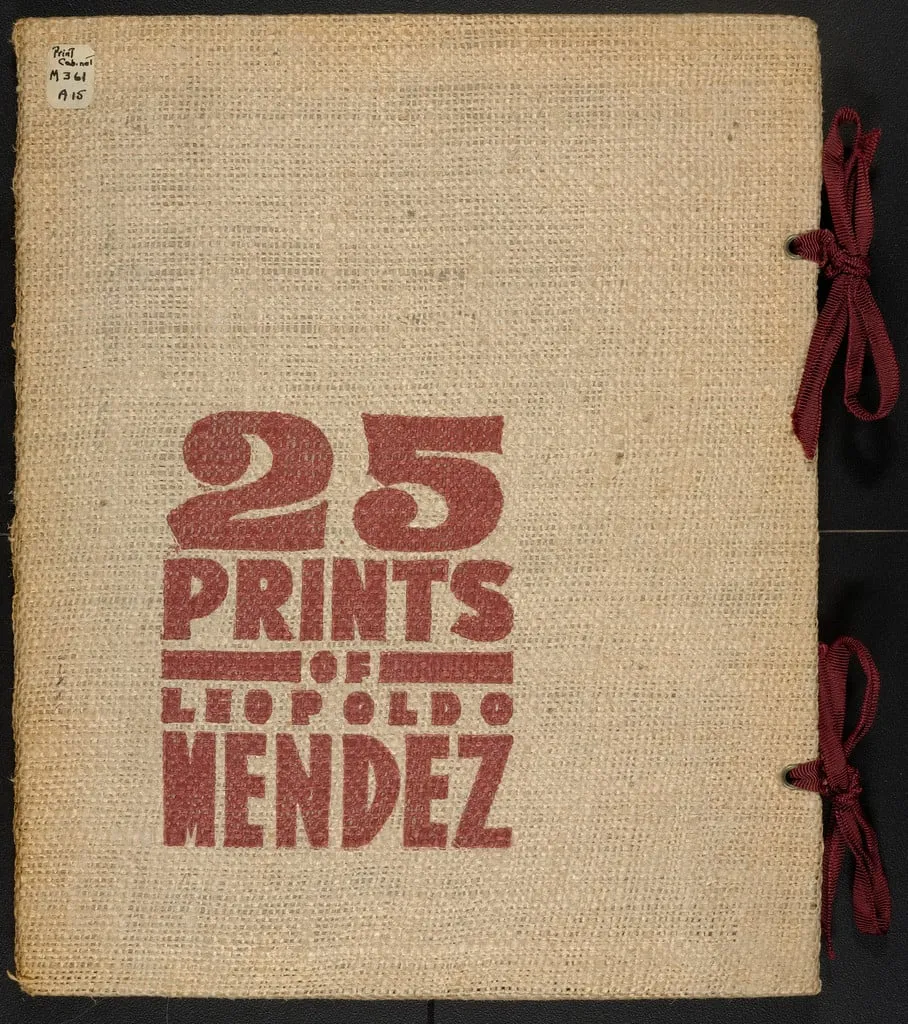
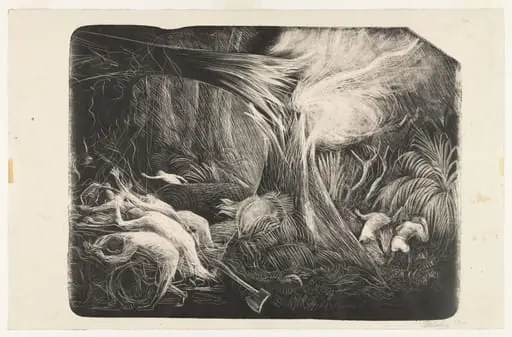
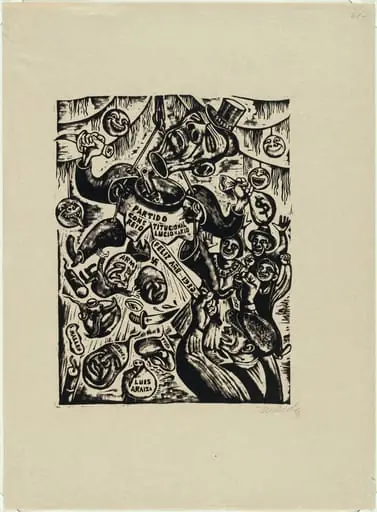
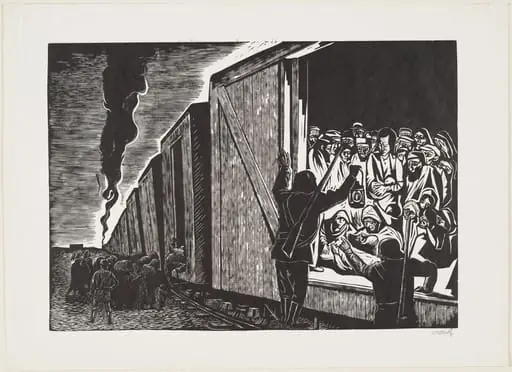
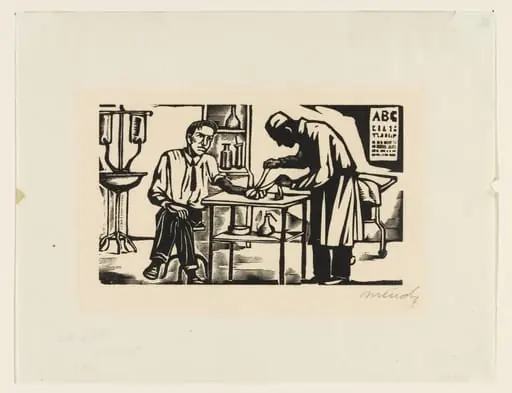
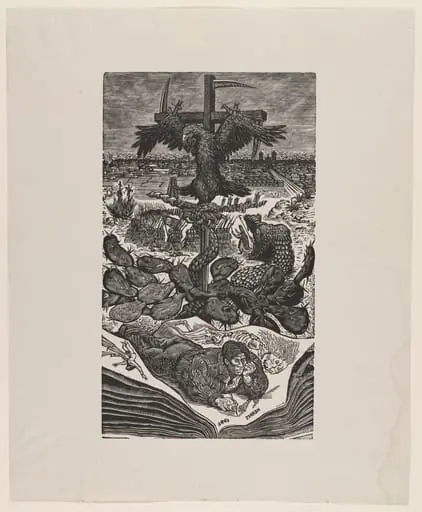
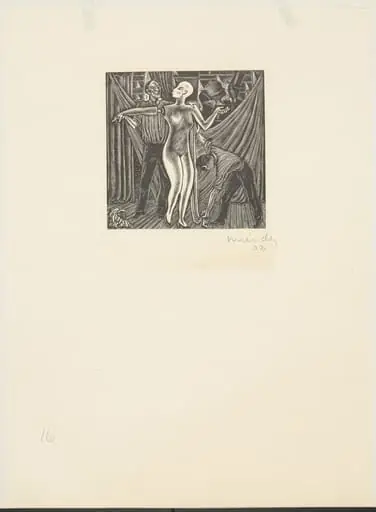
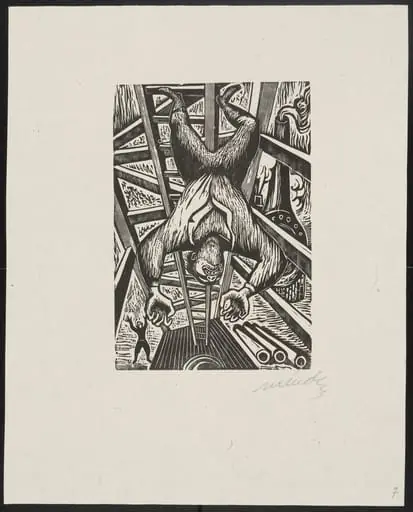
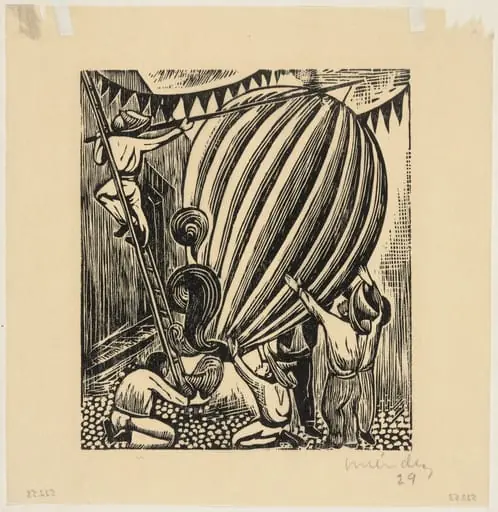
Untitled is an ink print by Leopoldo Méndez. It dates from 1943 and is held in the collection of the Museum of Modern Art.
About this work
Overview
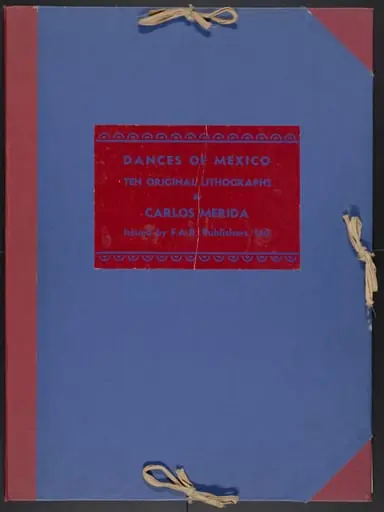
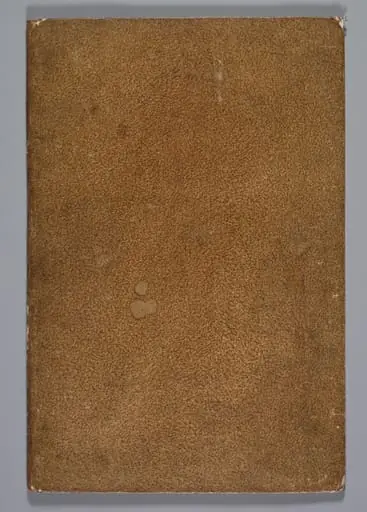
Bound simply in a beige cover and secured with a red string, the work was designed as a tactile, accessible object rather than a refined art object.
Created in 1943, this portfolio consists of twenty-five woodcut prints by Leopoldo Méndez, a central figure in Mexican printmaking. Bound simply in a beige cover and secured with a red string, the work was designed as a tactile, accessible object rather than a refined art object. The cover bears stamped red lettering, and each page features hand-stamped text and rough, unpolished paper, emphasizing its handmade character and functional intent.
Subject & Meaning
The portfolio does not depict a single narrative but gathers images rooted in social struggle, labor, and collective resistance. Méndez avoided overt symbolism, instead using direct, simplified forms to convey themes of justice and solidarity. These prints were not meant for private contemplation but for distribution, serving as visual tools in broader political education and mobilization efforts during a time of global conflict and domestic reform.
Technique & Style
Each image was carved into wood and printed by hand, preserving the grain and irregularities of the block. The surfaces are deliberately unrefined, ink sits unevenly, lines vary in thickness, and paper texture shows through. Stamped rather than mechanically printed text reinforces the handmade quality.
This aesthetic was intentional: it rejected commercial polish to align with the values of accessibility and authenticity central to Méndez’s practice.
History & Provenance
Produced during Méndez’s active years with the Taller de Gráfica Popular, the portfolio emerged from a collective workshop dedicated to politically driven printmaking. It was likely distributed among labor groups, schools, and political organizations. The Museum of Modern Art acquired it as part of its broader effort to document socially engaged art, preserving it not as a rare artifact but as a document of public practice.
Context
In 1943, Mexico was navigating post-revolutionary identity while the world was engulfed in war. Méndez’s work responded to both local inequalities and international fascism, aligning with leftist movements across the Americas. The portfolio’s modest format reflected the Taller’s belief that art should be portable, reproducible, and free from elite institutions, making it a practical instrument for grassroots change.
Legacy
Méndez’s approach influenced generations of printmakers who prioritized social purpose over aesthetic novelty. The portfolio’s survival in institutional collections underscores its role as a model of art as public service. Its unadorned form continues to be studied not for its visual refinement, but for how it embodied the idea that art’s power lies in its reach, not its rarity.
Artist & collection

Artist
Leopoldo Méndez (June 30, 1902 – February 8, 1969) was one of Mexico's most important graphic artists and one of that country's most important artists from the 20th century.