Artwork
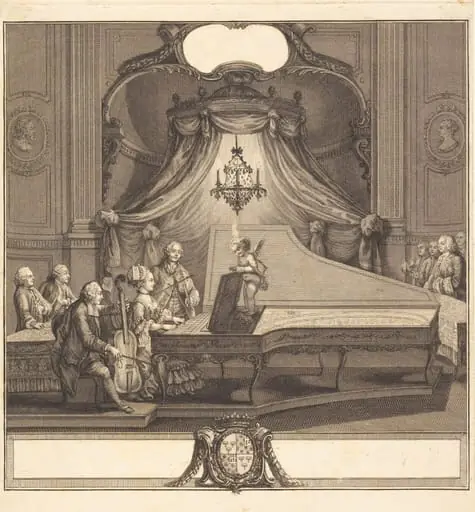
Concert Méchanique
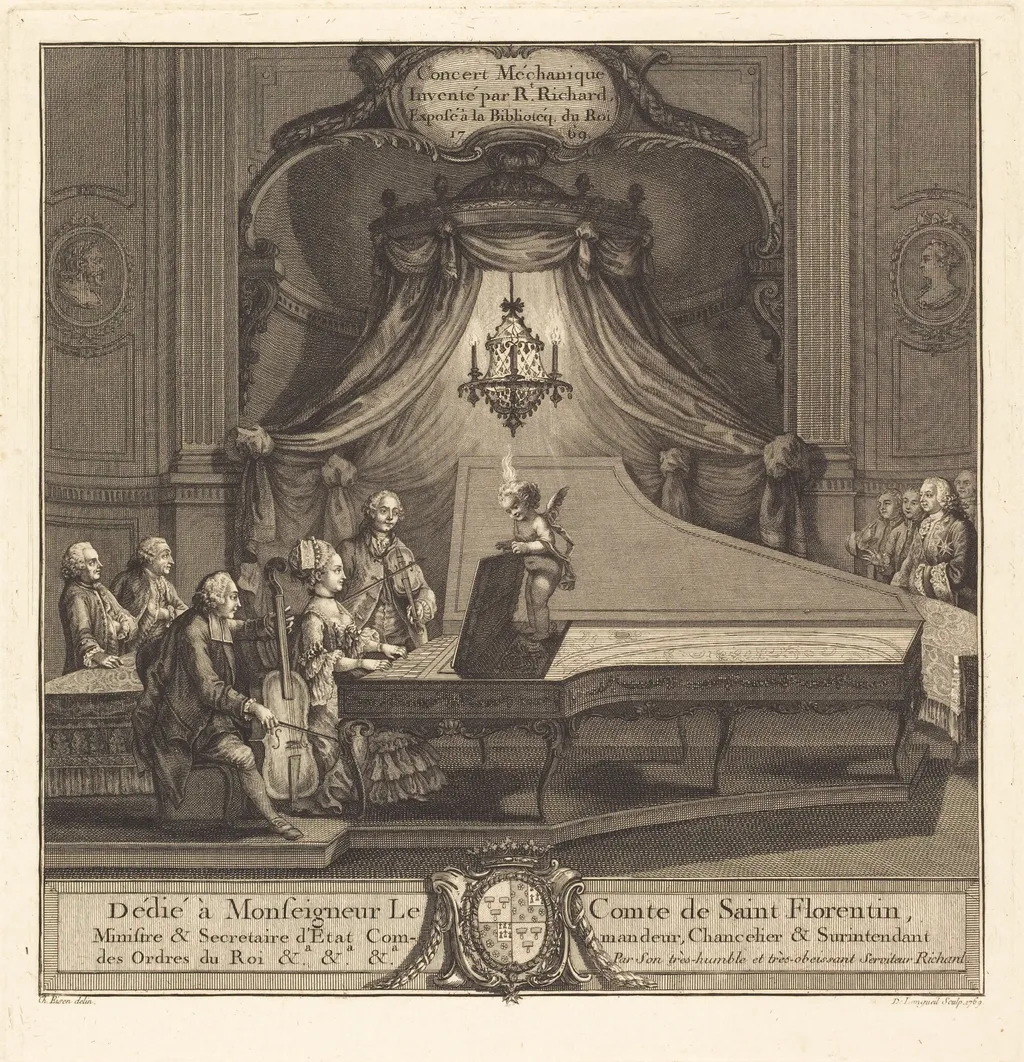
Concert Méchanique is an ink print by the Romanticist artist Joseph de Longueil. It dates from 1769 and is held in the collection of the National Gallery of Art.
- Inscription
- Inscribed:recto: in plate, in image, at top center: Concert Méchanique / Inventé par R.t Richard, / Exposé à la Bibliothèq. du Roi / 1769.; in plate, below image: Dédié à Monseigneur Le Comte de Florentein, / Ministre, & Secretaire d'Etat Com-mandeur, Chancelier & Surintendant / des Ordres du Roi. Par son très-humble et très-obeissant Serviteur Richard.; in plate, below image, at bottom left: Ch. Eisen delin.; in plate, below image, at bottom right: De Longueil Sculp. 1769; verso: at lower right in graphite in later hand: K123 [circled] / Fr. 303 / No. 8
- Markings
- Marked:none
About this work
This etching shows a strange machine drilling into a human head while two figures watch. The machine looks like a dentist’s tool but is way too big.
It’s from 1769, when people feared science would hurt more than help. The artist made the scene look real but twisted, maybe to warn folks about progress.
Check out more edgy prints by Goya, he did similar unsettling work.
Overview
Concert Méchanique is a print created by Joseph de Longueil in 1769 using etching and engraving techniques on laid paper.
Subject & Meaning
The print depicts a large mechanical device, resembling an oversized dentist's tool, drilling into a human head as two onlookers observe. The scene may be a commentary on the fears surrounding scientific progress during the late 18th century.
Technique & Style
The work combines etching and engraving, creating a detailed and realistic yet unsettling image. The artist's use of these techniques contributes to the print's sense of verisimilitude and unease.
Context
Created in 1769, Concert Méchanique reflects the anxieties of its time regarding the potential negative consequences of scientific advancements.
Own this work as a print
Artist & collection