Artwork
Egypt and Nubia, Volume I: Pompey's Pillar, Alexandria
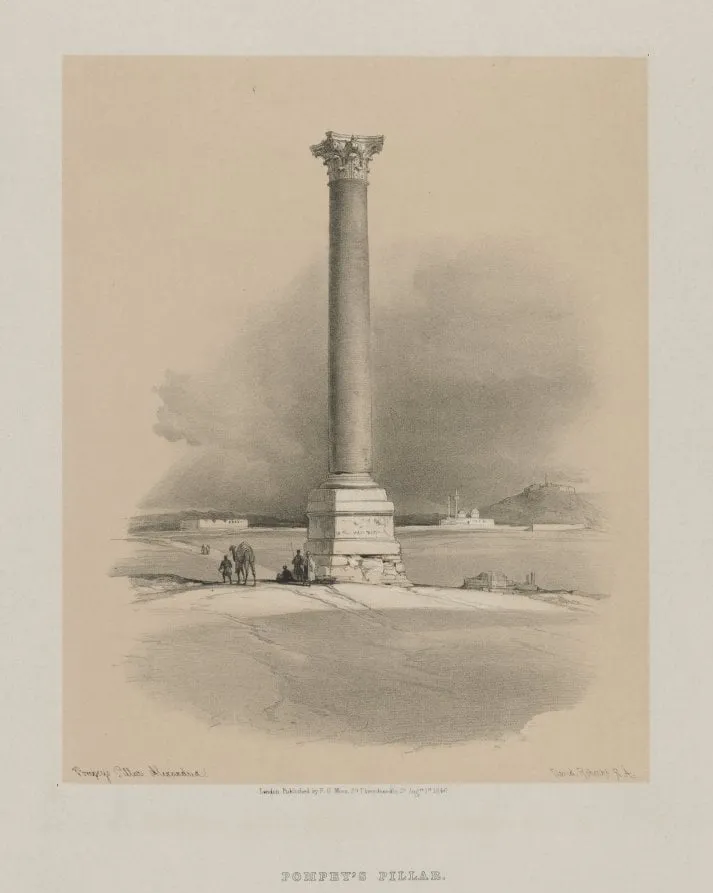
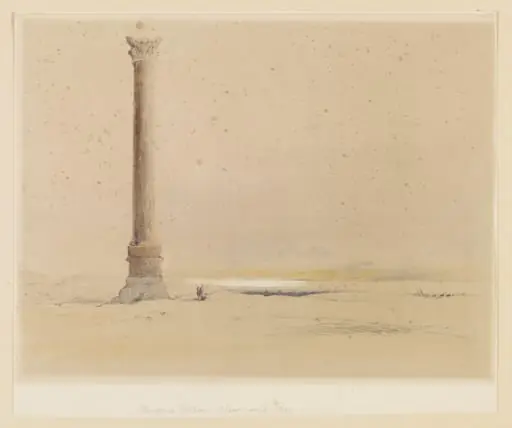
Egypt and Nubia, Volume I: Pompey's Pillar, Alexandria is a print by the Romanticist artist Louis Haghe. It dates from 1846 and is held in the collection of the Cleveland Museum of Art.
- Accession no.
- 2012.247
- Credit line
- Bequest of John Bonebrake
About this work
He often worked in watercolor, a tricky medium that demands quick, precise brushstrokes.
This watercolor shows a tall stone pillar rising above ruins near the sea. Sunlight catches the worn carvings on its sides. A few people walk near the base, small against the ancient height.
Louis Haghe traveled to Egypt and sketched the real Pompey’s Pillar in 1846. He often worked in watercolor, a tricky medium that demands quick, precise brushstrokes.
If you like this view, look up Louis Haghe at The Cleveland Museum of Art.
Overview
Egypt and Nubia, Volume I: Pompey's Pillar, Alexandria is a watercolor print created by Louis Haghe in 1846. It is part of a series documenting landscapes in Egypt and Nubia.
Subject & Meaning
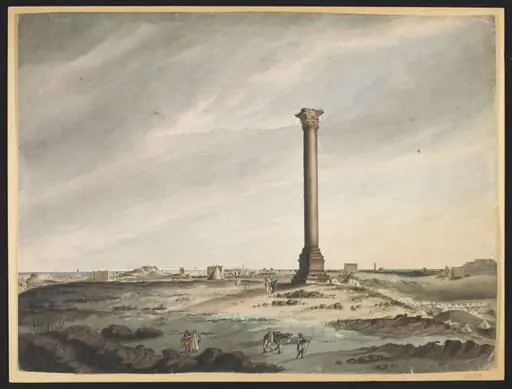
The print depicts Pompey's Pillar, a tall stone column in Alexandria, surrounded by ruins and the sea. The worn carvings on the pillar are highlighted by sunlight, while a few small figures walk at its base, emphasizing its scale.
Technique & Style
Haghe's watercolor showcases his skill with a demanding medium that requires quick and precise brushstrokes. The work captures the play of light on the ancient monument's weathered surface.
History & Provenance
Louis Haghe, a British lithographer and watercolorist, traveled to Egypt in 1846 to sketch Pompey's Pillar. He had established the firm Day & Haghe around 1830, after moving to England in 1823.
Artist & collection

Artist
Louis Haghe (17 March 1806 – 9 March 1885) was a lithographer and watercolourist from the Netherlands and then the United Kingdom.

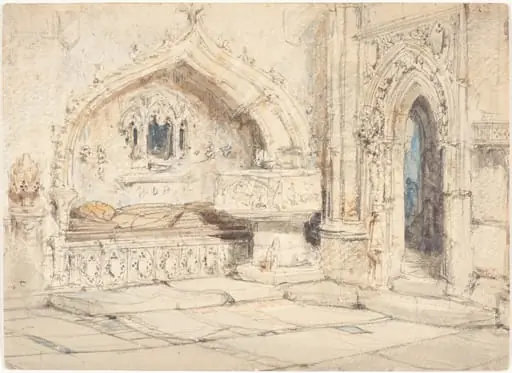 Interior of a Church with a Wall Tomb and Medieval Font
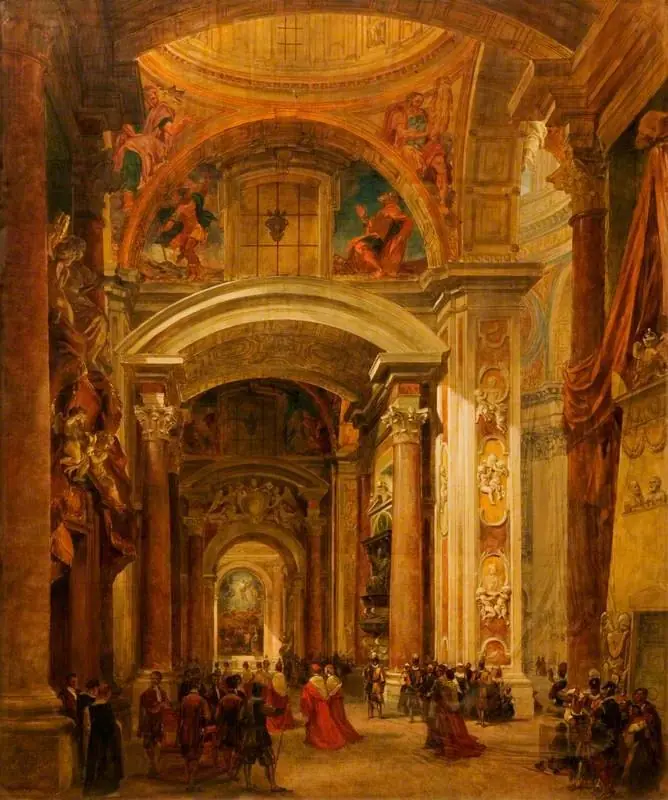 Interior of St Peter's, Rome
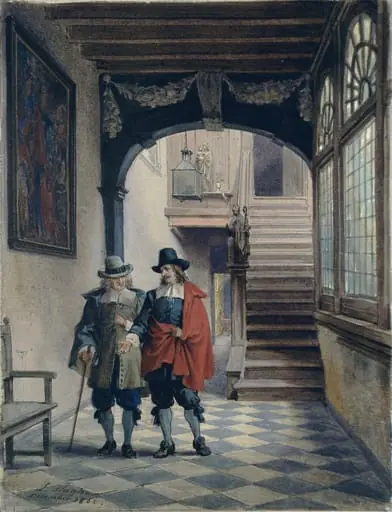 The Corridor, Brewer's Hall, Antwerp
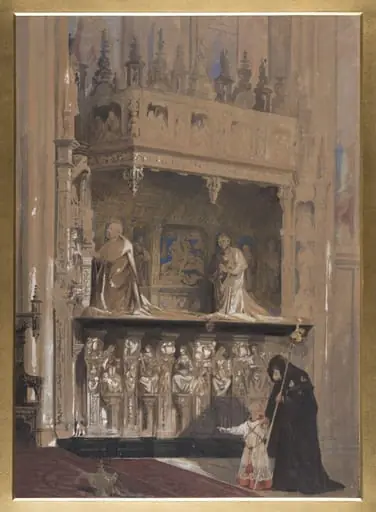 Monument of the Cardinald D'Amboise in Rouen Cathedral
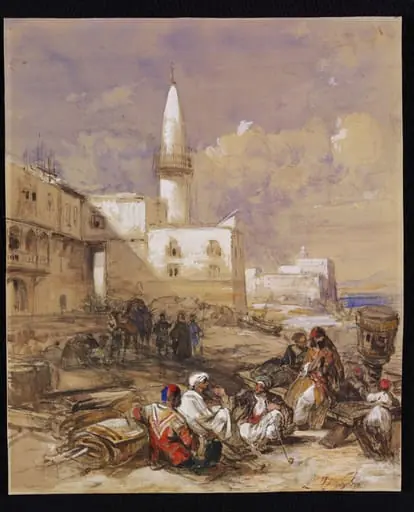 The Quay at Suez
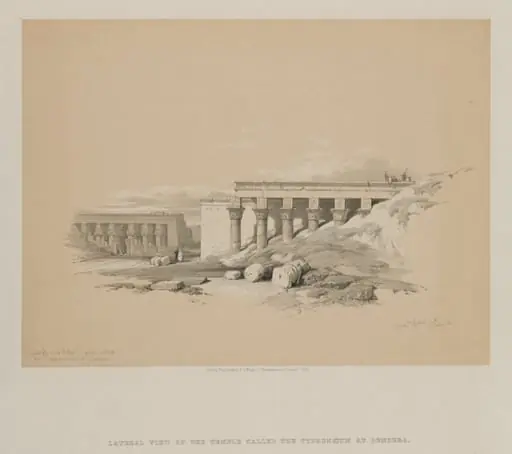 Egypt and Nubia, Volume II: Lateral View of the Temple called The Typhonoeum at Dendera
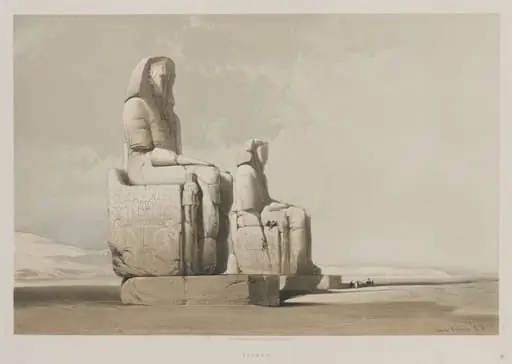 Egypt and Nubia, Volume I: Thebes
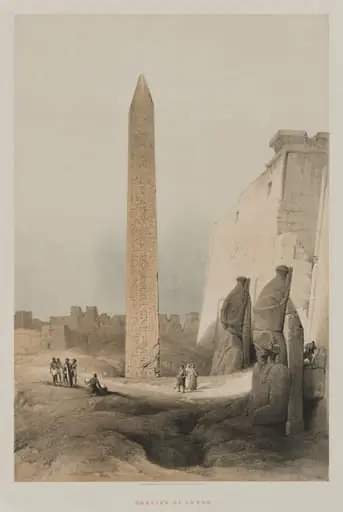 Egypt and Nubia, Volume I: Luxor