Artwork
Cossack Camp, 1813
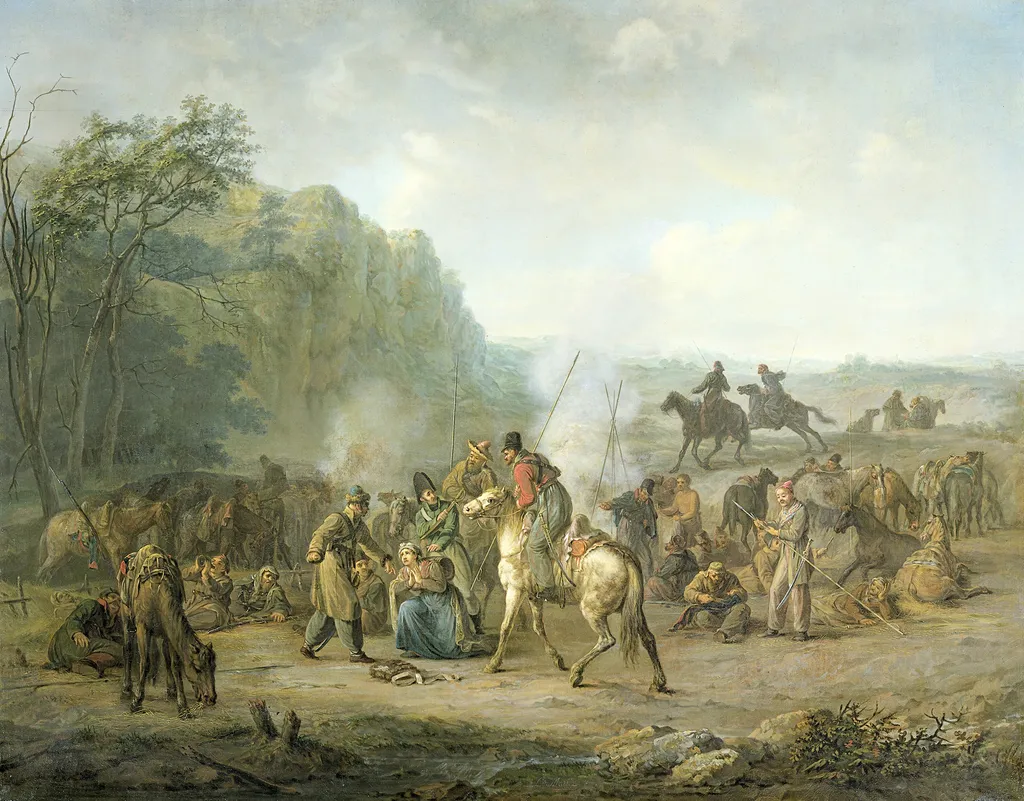
Cossack Camp, 1813 is an oil painting by the German Romanticist artist Louis Moritz. It dates from 1813 and is held in the collection of the Rijksmuseum.
About this work
Subject & Meaning
The painting shows a horse, a tree and a soldier, representing a typical Cossack encampment scene from the Napoleonic era.
The painting shows a horse, a tree and a soldier, representing a typical Cossack encampment scene from the Napoleonic era. The soldier’s uniform and equipment reference the cavalry of the Russian Empire, while the natural elements underscore the rugged, frontier setting associated with Cossack identity. By combining realistic detail with a romanticized landscape, the work conveys both the martial vigor and the pastoral autonomy attributed to the Cossacks in early 19th‑century Russian culture.
Technique & Style
The work is executed in oil paint on canvas, a standard support for 19th‑century European easel painting. The surface bears typical handling marks consistent with its age, and the composition emphasizes a dynamic arrangement of figures and landscape elements, reflecting the Romantic interest in narrative scenes. Formal qualities include a restrained palette and clear brushwork that delineate the horse, tree, and soldier, contributing to a balanced yet vigorous visual rhythm.
The painting’s dimensions measure 67.8 cm in height by 84.5 cm in width, as recorded in the cataloguing data.
The handling of light and shadow underscores the dramatic tension central to Moritz’s style, while the meticulous rendering of anatomical detail demonstrates his academic training. These formal choices align with the broader Neoclassical‑Romantic synthesis evident in early‑19th‑century Dutch art.
History & Provenance
Cossack Camp, 1813 is an oil painting by Louis Moritz created in 1813. It is part of the Rijksmuseum collection and was displayed at Villa Welgelegen. The work measures 67.8 cm in height and 84.5 cm in width. The painting depicts a horse, a tree, and a soldier, reflecting motifs associated with Cossack themes.
The provenance indicates that the artwork entered the Rijksmuseum collection shortly after its creation, remaining there as part of the museum's holdings. Its dating is based on the documented inception year of 1813, and its physical dimensions are recorded in centimeters as specified in the source material.
The painting Cossack Camp, 1813, by Louis Moritz, is held in the collection of the Rijksmuseum, specifically associated with Villa Welgelegen. Created in 1813, this oil on canvas work measures 67.8 cm in height and 84.5 cm in width. The provided sources do not contain specific inventory or accession numbers for the piece, nor do they list any exhibition history or past display records.
Overview
Louis Moritz’s 1813 oil painting titled Cossack Camp presents a compact military encampment set against a rocky landscape. The composition gathers mounted riders, foot soldiers, and a seated woman amid a cluster of trees, rendered in a muted palette of greens, browns and grays punctuated by occasional reds and a blue dress. The work is part of the Rijksmuseum’s collection.
Context
The early nineteenth century saw numerous depictions of Cossack units, reflecting their prominent role in the Napoleonic wars and subsequent Russian campaigns. Moritz’s portrayal aligns with contemporary interests in documenting military life, offering a glimpse into the daily routines of cavalry and infantry rather than focusing on battlefield heroics.
Own this work as a print
Artist & collection

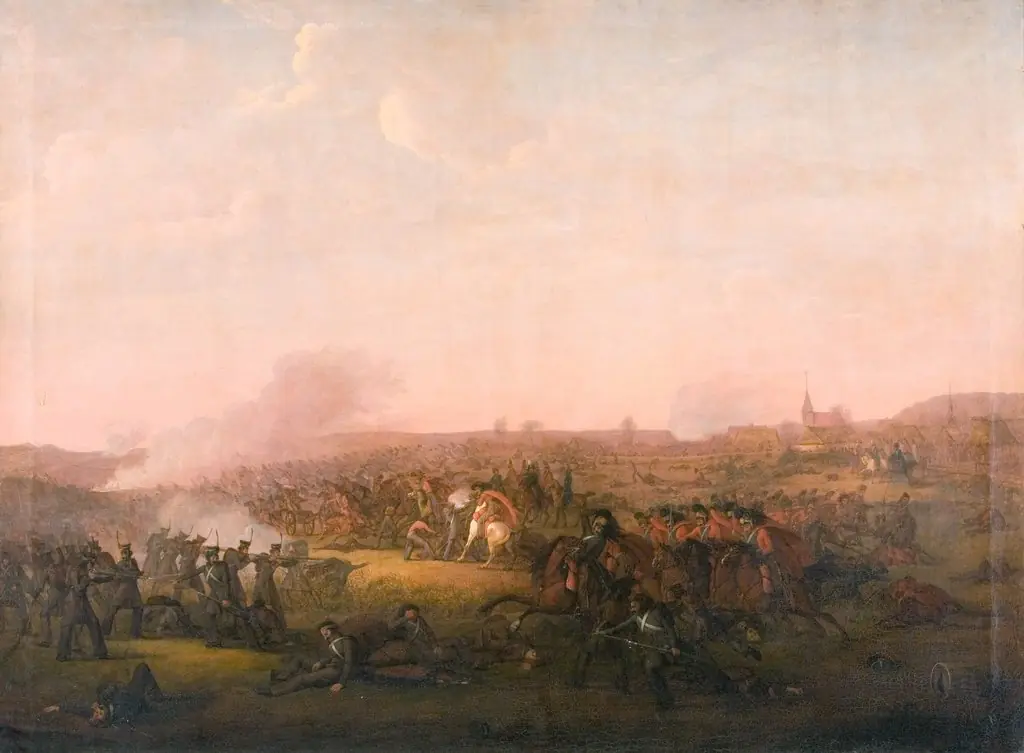 Slaget ved Sehested
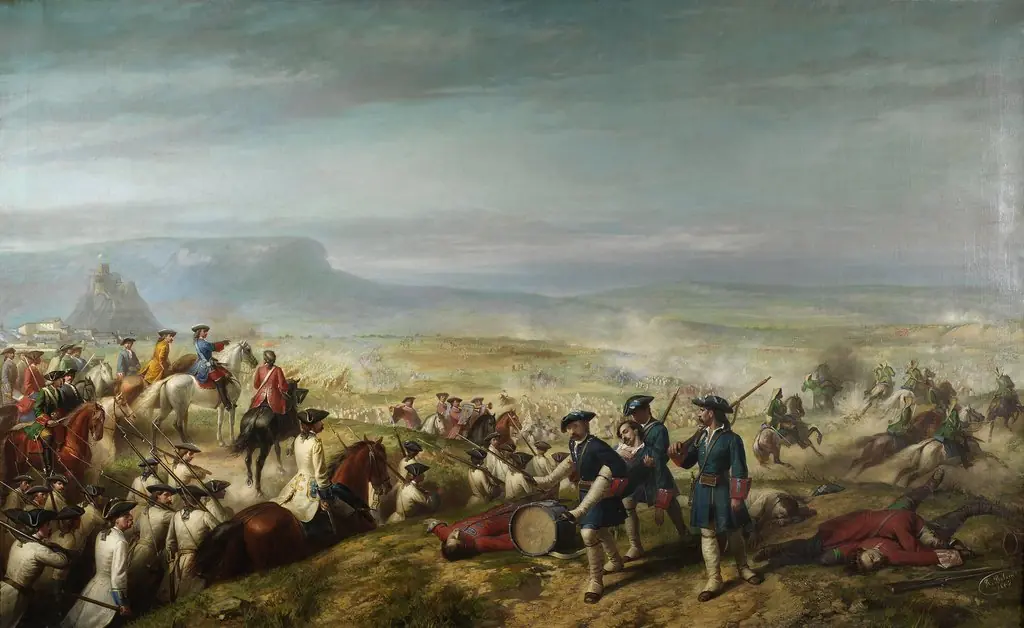 La Batalla de Almansa
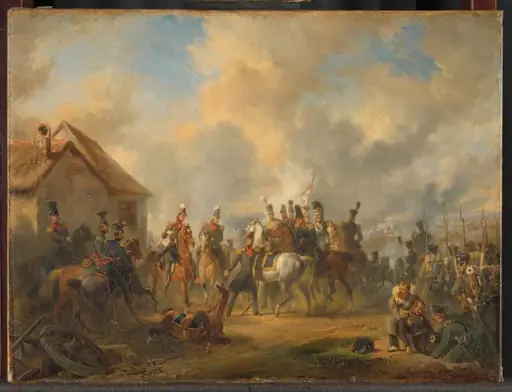 De Slag bij Bautersem, gedurende de Tiendaagse Veldtocht
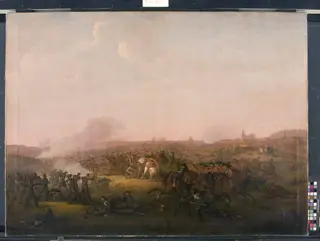 Slaget ved Sehested
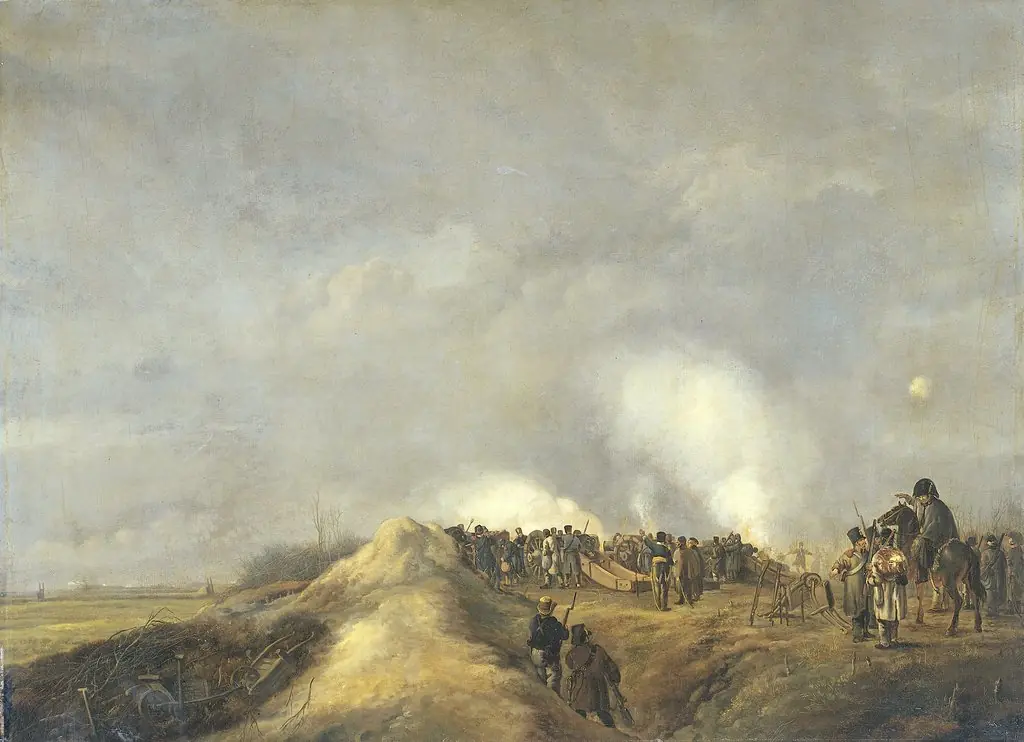 Bombardment of Naarden, April 1814
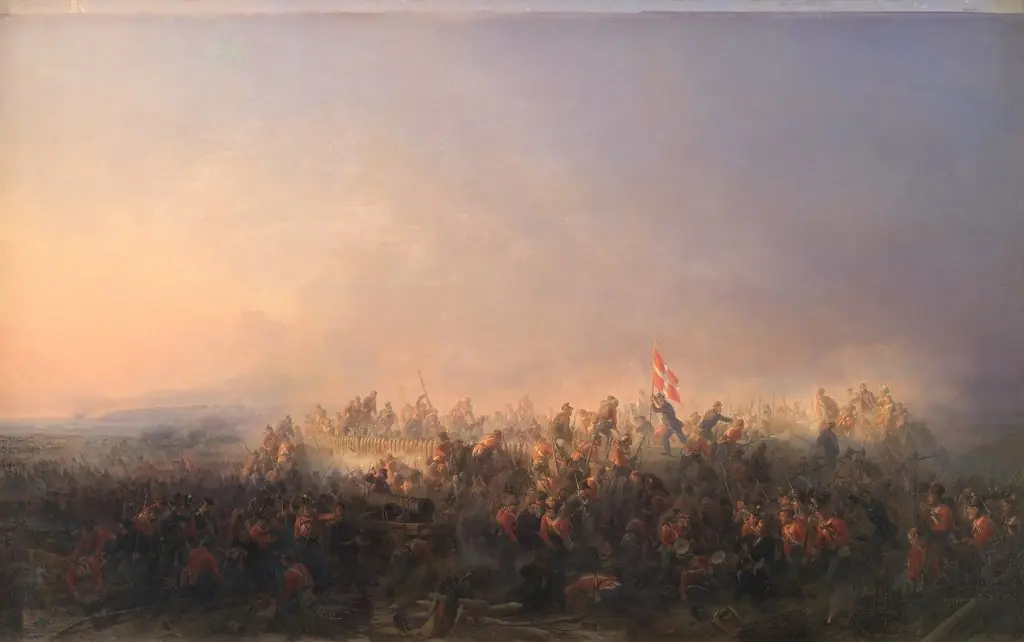 Slaget ved Fredericia den 6. juli 1849
 Camp
Camp Execution
 Execution
 Napoleon on a Hunt in the Forest of Compiegne
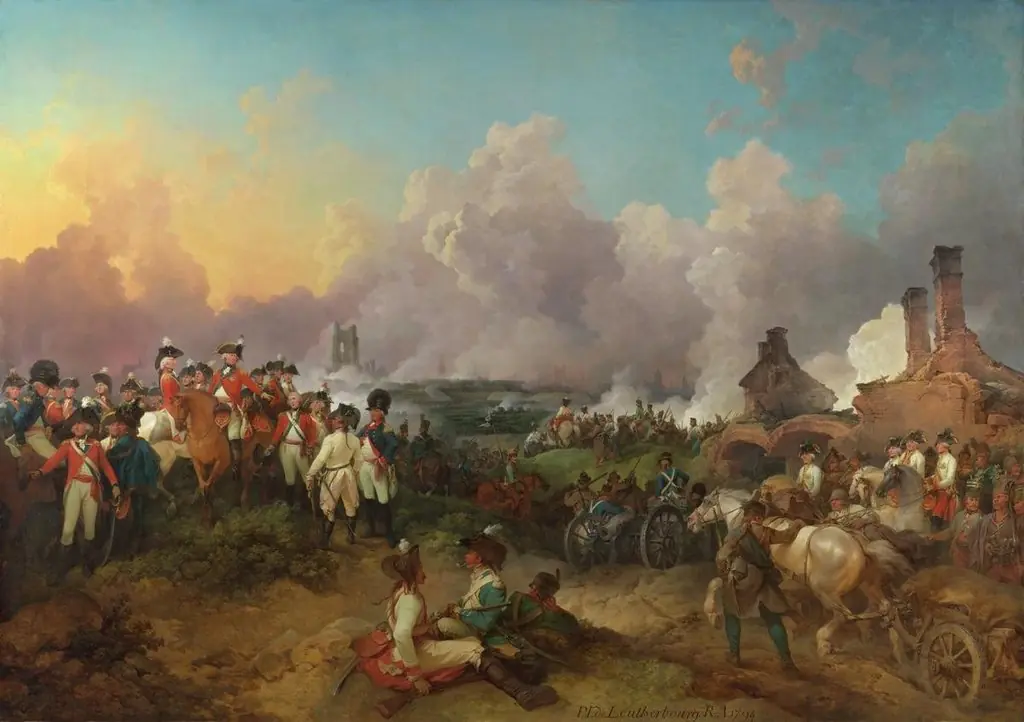 The Grand Attack on Valenciennes
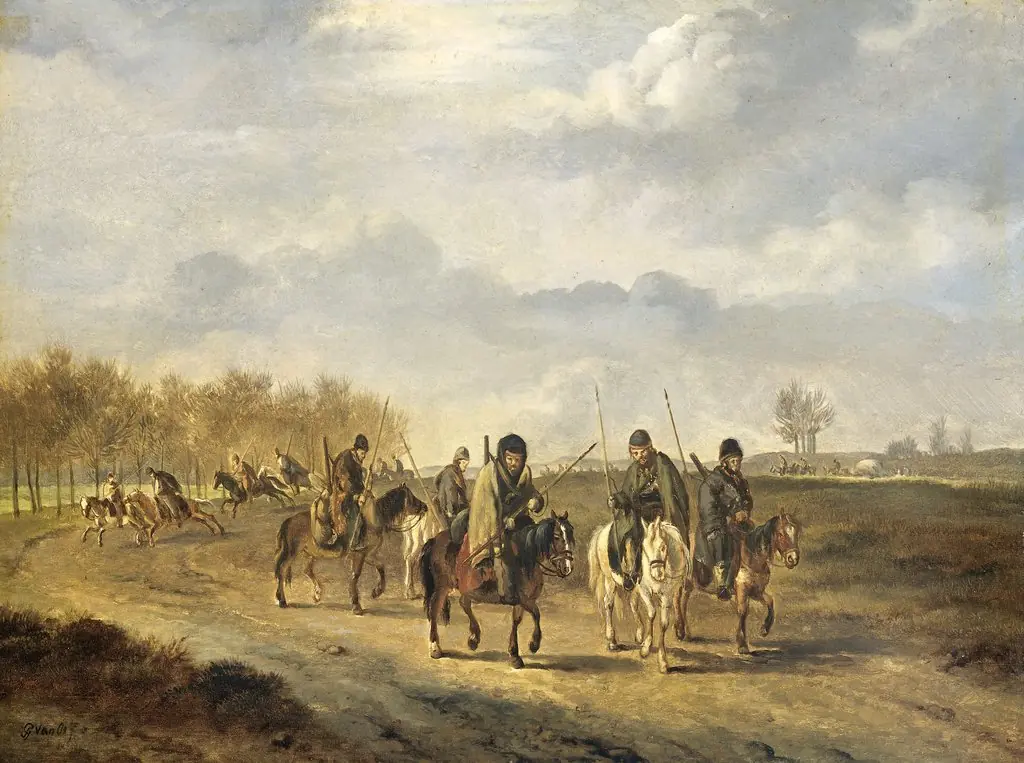
- Cossacks on a country Road near Bergen in North Holland, 1813