Artwork
Salome with the head of St John the Baptist
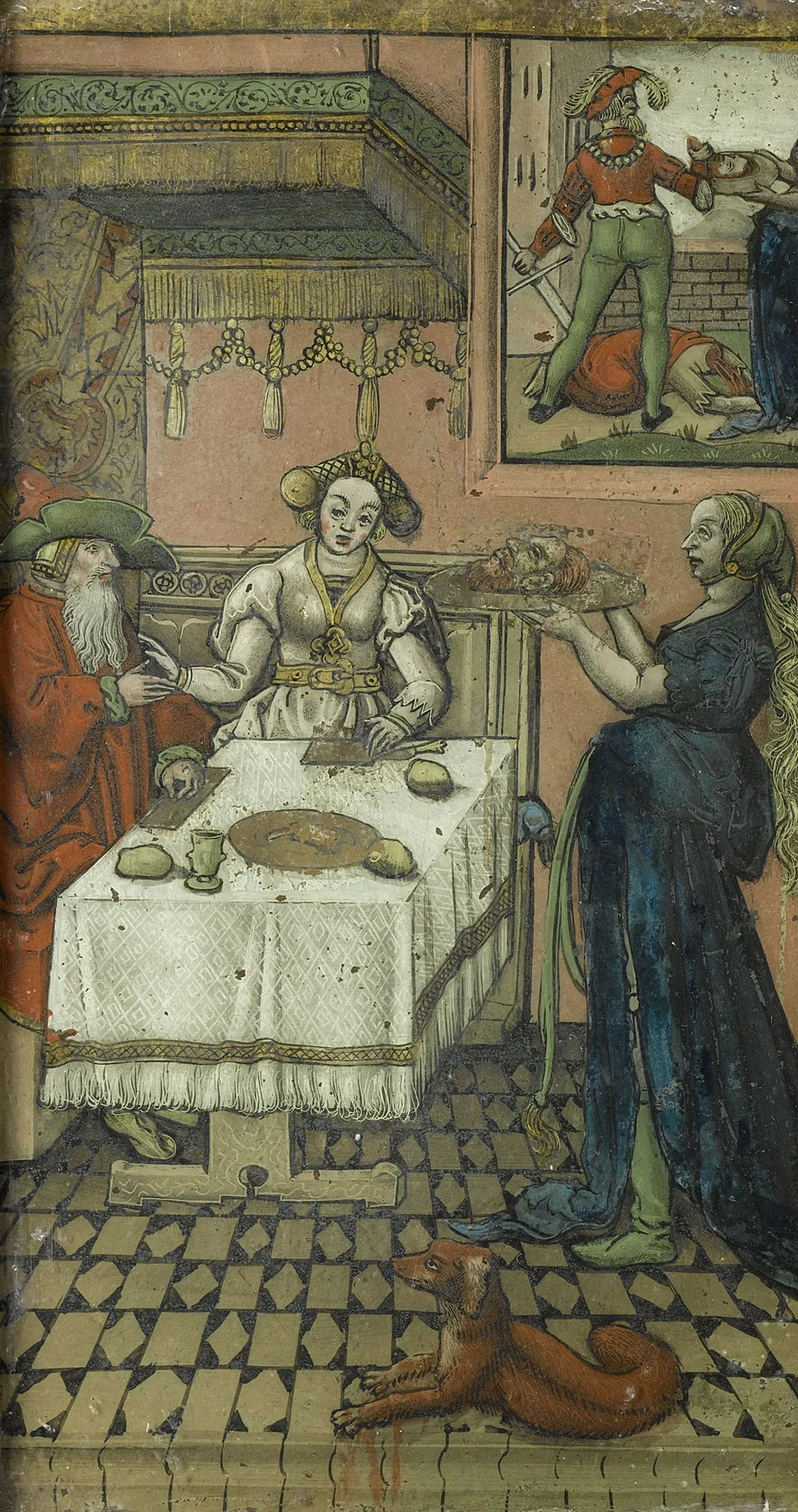
Salome with the head of St John the Baptist is an unspecified painting by the Northern Renaissance artist Lucas van Leyden. It is held in the collection of the Rijksmuseum.
About this work
Subject & Meaning
The use of verre églomisé intensifies the macabre luminosity, focusing attention on the confrontation between innocence and violence.
The subject centers on the biblical narrative of Salome presenting the severed head of John the Baptist on a tray, a moment drawn from the Gospel of Matthew (14:1–12). Lucas van Leyden renders the scene with concentrated gravity: Salome, depicted as a young woman, holds aloft the grisly relic while John’s decapitated head rests on a platter, evoking themes of martyrdom and female agency. The use of verre églomisé intensifies the macabre luminosity, focusing attention on the confrontation between innocence and violence.
Symbolically, the work underscores the cost of moral defiance and the performative power of Salome’s request, reflecting Renaissance preoccupations with sin, justice, and the limits of authority.
Technique & Style
The work is executed in verre églomisé, a reverse‑glass painting technique in which pigment and, often, gold leaf are applied to the back of a glass support. The medium and support are therefore both glass, allowing the artist to build up layers that produce a luminous, enamel‑like surface. Handling of the medium demands precise brushwork on the reverse side, yielding fine detail and a reflective quality typical of the method.
Stylistically, the painting belongs to the religious genre and shows Salome holding the severed head of John the Baptist on a tray, a subject rendered with the careful draftsmanship and restrained lighting characteristic of Lucas van Leyden’s output. Condition details are not provided in the sources.
History & Provenance
Lucas van Leyden executed this painting in 1575, employing the verre églomisé technique to render a biblical scene of Salome holding the severed head of John the Baptist.
The work belongs to the religious genre and was produced under the artist’s mature style, as documented in contemporary records.
It entered the Rijksmuseum collection and has been housed in Amsterdam since its acquisition, remaining on public view. The painting’s provenance is limited to its creation by van Leyden and subsequent inclusion in the museum’s holdings, with no earlier ownership details recorded.
Overview
Lucas van Leyden's Salome with the Head of St John the Baptist, created in 1575, is a notable example of Northern Renaissance artistry. This painting, executed in the specialized technique of verre églomisé, illustrates a dramatic biblical episode. It depicts Salome presenting the severed head of John the Baptist, a scene rendered with intricate detail and a distinctive luminous quality. The work is presently housed in the collection of the Rijksmuseum.
Artist & collection

Artist
Lucas van Leyden (1494 – 8 August 1533), was a Dutch painter and printmaker in engraving and woodcut. Lucas van Leyden was among the first Dutch exponents of genre painting and was a very accomplished engraver.

- Salome with the Head of John the Baptist
![A Courtier Standing Between Covetousness and Dissimulation [fol. 14 recto]](https://artifactworldgallery.com/img/a-courtier-standing-between-covetousness-and-dissimulation-f--2578f4fe9846edc2-w320.webp) A Courtier Standing Between Covetousness and Dissimulation [fol. 14 recto]
A Courtier Standing Between Covetousness and Dissimulation [fol. 14 recto] Lot and His Daughters
 Christ at the Table of Simon the Pharisee
![An Ape in Purple with a Sick Man, a Good Man, and a Miser [fol. 36 verso]](https://artifactworldgallery.com/img/an-ape-in-purple-with-a-sick-man-a-good-man-and-a-miser-fol--f90c3f2db638efb5-w320.webp) An Ape in Purple with a Sick Man, a Good Man, and a Miser [fol. 36 verso]
An Ape in Purple with a Sick Man, a Good Man, and a Miser [fol. 36 verso] Der Schatzbehalter: Moses Found by Pharaoh's Daughter (recto)
 Supper at Emmaus
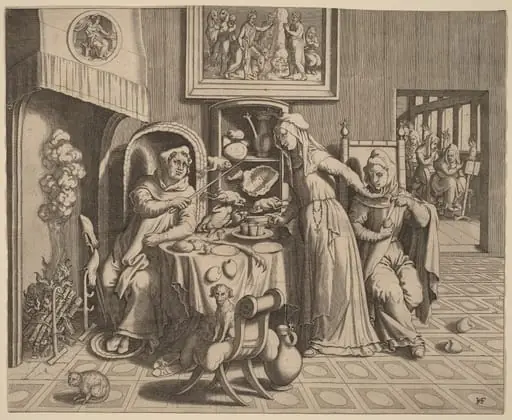 The Amorous Nun between the Abbot and the Monk
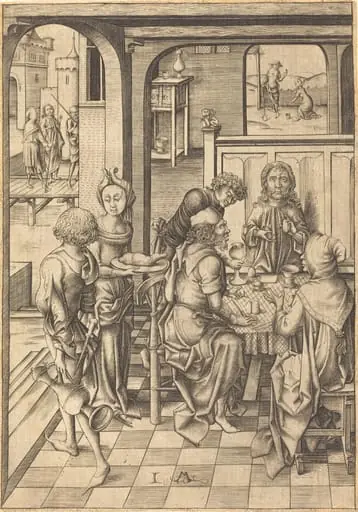 Christ at Emmaus
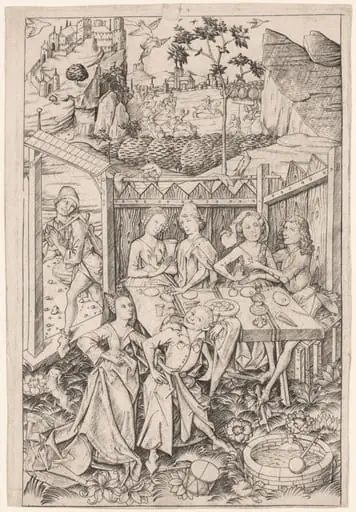 The Garden of Love (Large Plate)
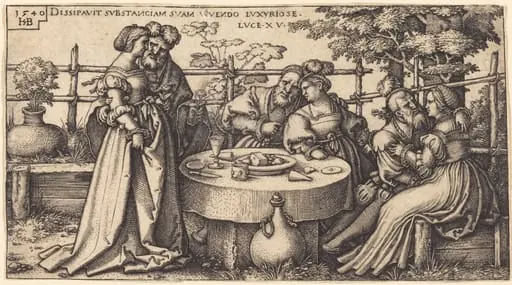 The Prodigal Son Wasting His Fortune
 Lot and His Daughters