Artwork
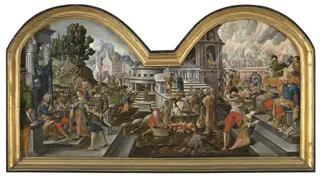
Worship of the Golden Calf
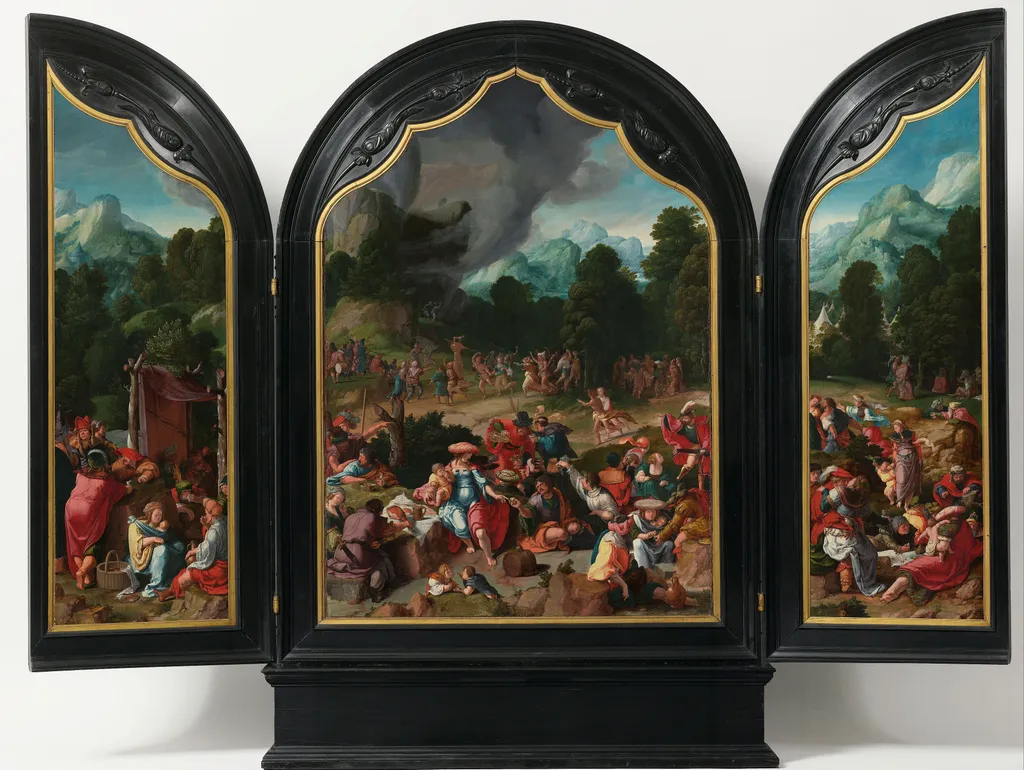
Worship of the Golden Calf is an oil painting by the Northern Renaissance artist Lucas van Leyden. It dates from 1530 and is held in the collection of the Rijksmuseum.
About this work
Technique & Style
Worship of the Golden Calf is an oil painting executed on an oak panel, a support typical of Netherlandish practice in the early sixteenth century.
Worship of the Golden Calf is an oil painting executed on an oak panel, a support typical of Netherlandish practice in the early sixteenth century. The work measures 92.5 cm in height by 127 cm in width. Its medium and classification as a religious painting are confirmed across both the catalogue entry and the associated structured data, which also record the panel support and oil-based pigment as the constituent materials.
Stylistically, the composition is anchored by a tree motif, a compositional device consistent with Lucas van Leyden's narrative handling of landscape elements within densely populated biblical scenes. The relatively large panel dimensions support the multi-figure staging characteristic of early Netherlandish religious painting.
History & Provenance
The painting Worship of the Golden Calf was created by Lucas van Leyden in 1530. Executed in oil on an oak panel, the work was produced in Leiden. Historical records indicate that the piece was once owned by Auguste du Blaisel. The artwork is currently held in the collection of the Rijksmuseum.
The painting Worship of the Golden Calf by Lucas van Leyden is held in the collection of the Rijksmuseum in Amsterdam. The work was created in 1530 and is executed in oil paint on an oak panel. Historical records indicate that the piece was previously owned by Auguste du Blaisel before entering the museum's holdings.
While the source confirms the artwork's current location and former private ownership, it does not provide a specific inventory or accession number for the work, nor does it detail a history of public exhibitions.
Overview
Created circa 1530 by the Dutch artist Lucas van Leyden, this oil painting belongs to the Northern Renaissance’s religious genre. The work is divided into three adjoining panels framed in dark wood with gold edging, and it is currently part of the Rijksmuseum’s collection.
Subject & Meaning
The composition portrays the biblical episode of Israelite worship of the golden calf. A bustling outdoor setting shows a multitude of figures, some standing, others kneeling, a few appearing distressed, gathered around a central altar under a storm‑filled sky, emphasizing the chaotic fervor of the idolatrous rite.
Context
During the early 16th century, Northern artists like van Leyden often illustrated biblical narratives to convey moral lessons. This work reflects contemporary concerns about religious devotion and the dangers of false worship, themes that resonated amid the Reformation’s growing scrutiny of ritual practices.
Own this work as a print
Artist & collection

Artist
Lucas van Leyden (1494 – 8 August 1533), was a Dutch painter and printmaker in engraving and woodcut. Lucas van Leyden was among the first Dutch exponents of genre painting and was a very accomplished engraver.

- Hieronymus altarpiece
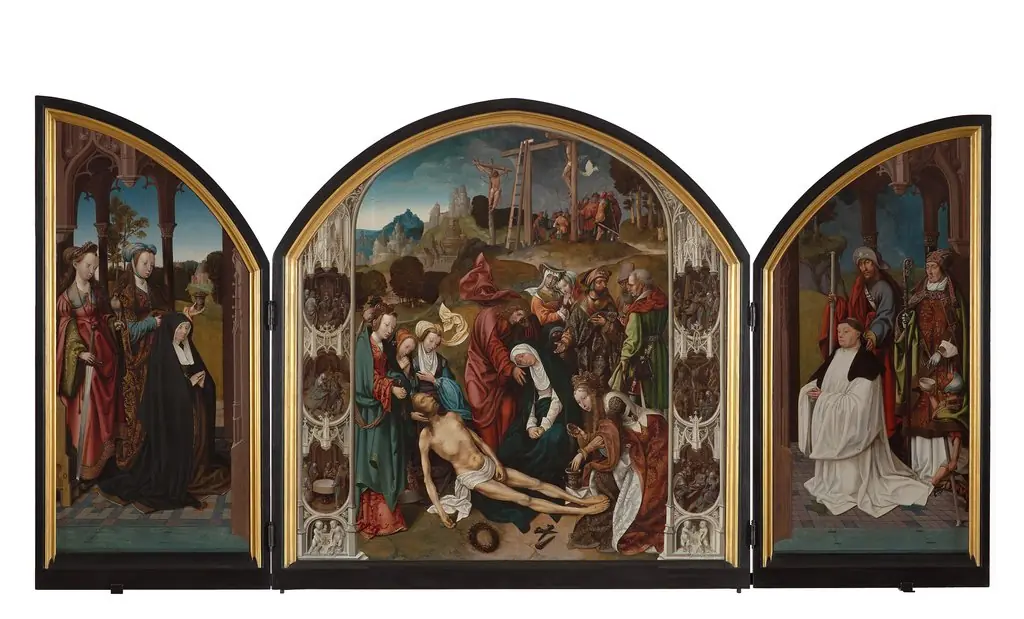 Ss Cecilia,Mary Magdalene with donatrix,lamentation flanked by other six Sorrows of Mary, Ss James Great,Martin of Tours an Augustine monk
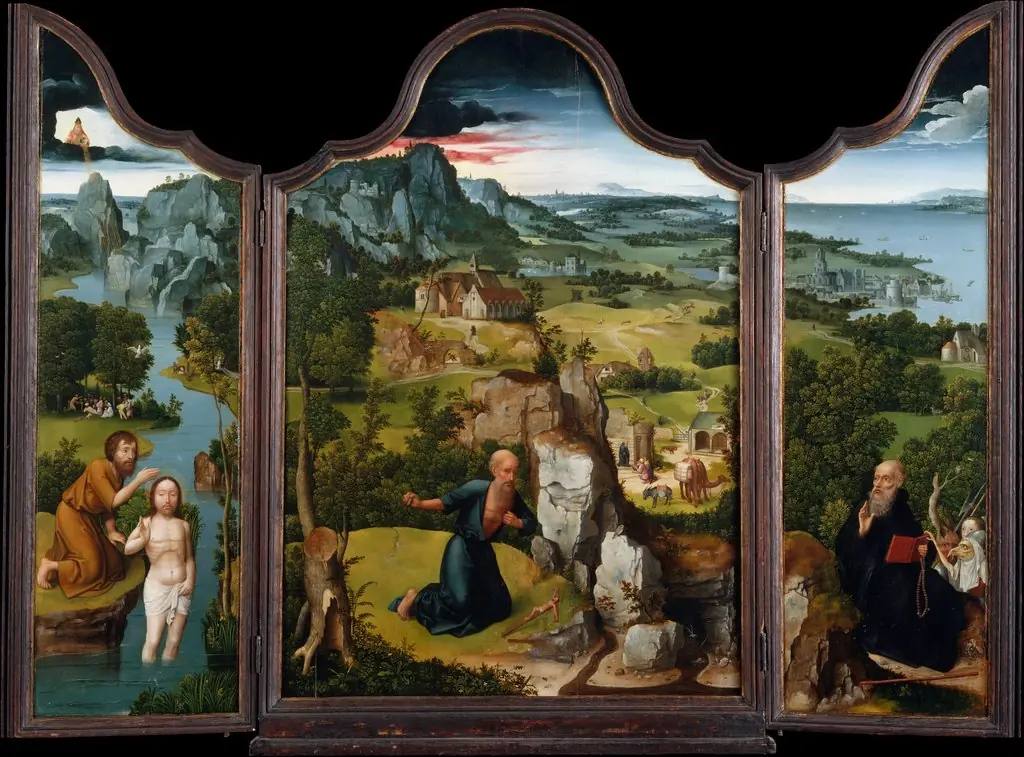 The Penitence of Saint Jerome
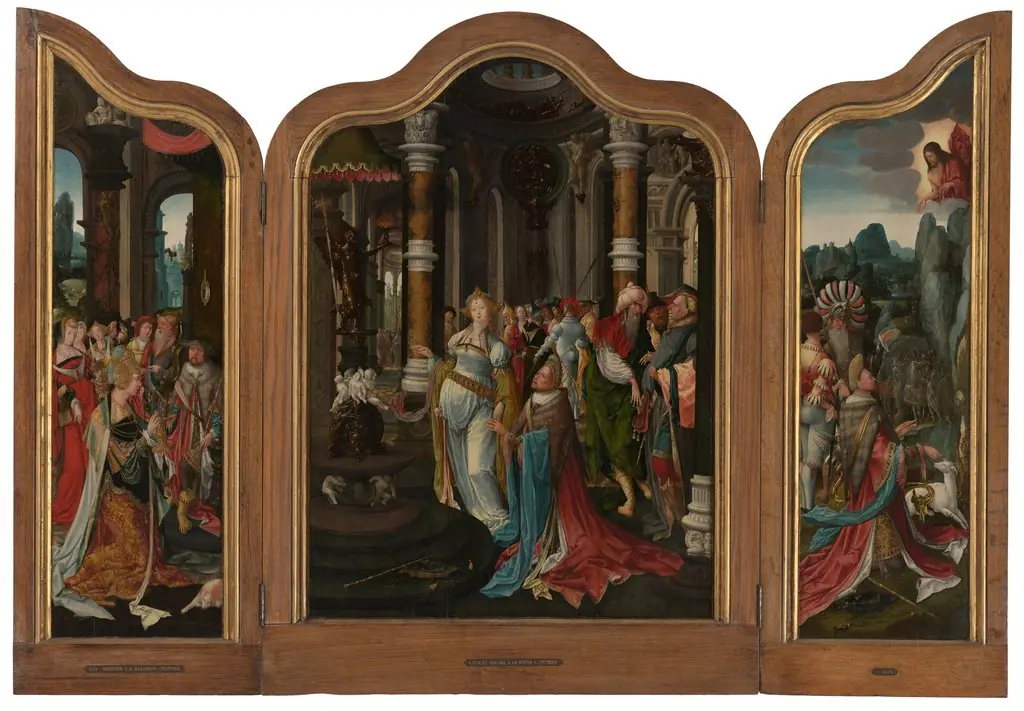 Triptych with the Life Story of Solomon
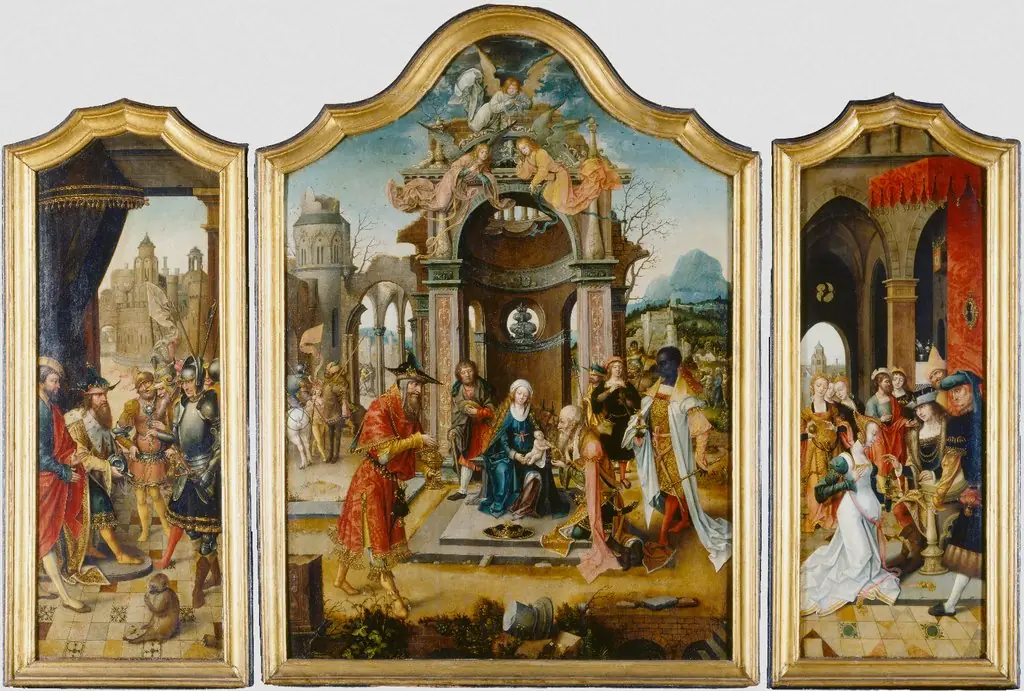 Triptych of the Adoration of the Magi
 Drieluik
 Legend of Saint George
 The Adoration of the Magi
 Flügelaltar der Donauschule
 Triptych: Rest on the Flight into Egypt
 The Life of Saint Margaret of Antioch
 Triptych with adoration by the Magi