Artwork
The Afternoon Meal (La Merienda)
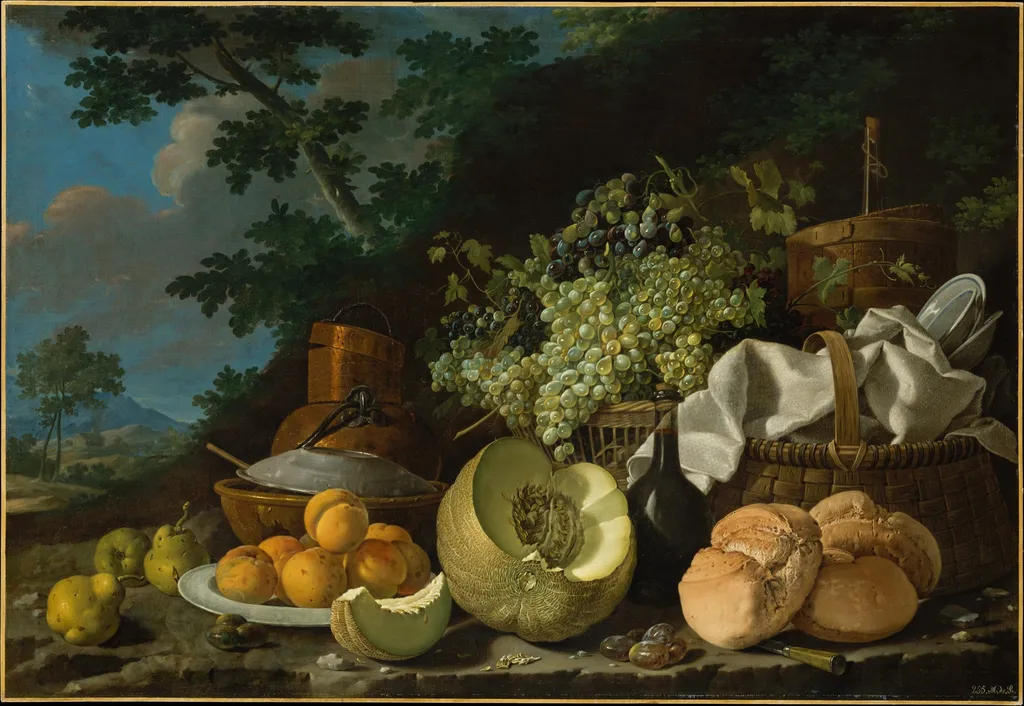
The Afternoon Meal (La Merienda) is an oil painting by the Academic Art artist Luis Egidio Meléndez. It dates from 1772 and is held in the collection of the Metropolitan Museum of Art.
About this work
Subject & Meaning
The composition features quinces, apricots, prunes, melon slices with scattered seeds, and a basket of grapes arranged alongside two round loaves of bread.
The Afternoon Meal depicts an outdoor picnic scene set during late summer, characterized by a specific assortment of seasonal produce and provisions. The composition features quinces, apricots, prunes, melon slices with scattered seeds, and a basket of grapes arranged alongside two round loaves of bread. These items rest on a flat rock or ground plane, accompanied by a red wine bottle, a copper pitcher reflecting light, and ceramic tableware identified as Puente de Arzobispo pottery and Alcorcón ware.
The background reveals a rural landscape with hills and a young tree under a slightly cloudy blue sky, establishing the setting as a countryside retreat. The arrangement of these objects, including a basket covered by a white cloth and a wooden spoon, suggests the immediate preparation for a midday repast. The work captures the atmosphere of a late-summer afternoon, emphasizing the abundance of the harvest through a geometric composition and a palette dominated by yellows, greens, and light browns.
Technique & Style
The Afternoon Meal (La Merienda) is executed in oil on canvas, a technique consistent with Meléndez’s late still-life practice. The composition is structured within a rectangular, straight-sided ogee frame featuring Rococo-inspired sculpted corners and shallow-relief detailing, as recorded by the holding institution. Stylistically, the work emphasizes volumetric clarity, with fruits and bread arranged in a controlled recession against a neutral background, illuminated by a raking light that enhances the tactile qualities of the forms.
The palette is anchored in warm ochres and golden hues, contrasted by muted greens and subtle browns, reflecting the artist’s academic approach to still life. No condition-related details are specified in the sources.
History & Provenance
Created around 1772 by Spanish artist Luis Egidio Meléndez, the oil-on-canvas painting The Afternoon Meal (La Merienda) was executed during the mid-eighteenth century. The work remained in the collection of the Marquis Gaspar de Remisa in Madrid until the mid-nineteenth century. Subsequently, it passed to his descendants, specifically residing with Madame de Moret by the early twentieth century, before entering the private holdings of Señor Don Salvador Moret.
The painting remained in private hands in Madrid through the mid-twentieth century. In 1982, the Metropolitan Museum of Art in New York acquired the work from the private collection of Jack and Belle Linsky, cataloging it under inventory number 1982.60.39.
The Afternoon Meal (La Merienda) is held by the Metropolitan Museum of Art in New York. Its accession number is 1982.60.39, assigned when the work entered the museum’s collection in 1982 from the private collection of Jack and Belle Linsky. Prior to acquisition, the painting belonged to the Spanish aristocrat Gaspar de Remisa and remained in his family until the mid‑20th century.
The work is documented in the museum’s catalogue and has been listed in the institution’s permanent collection displays, though it has not been featured in major traveling exhibitions.
Context
Luis Egidio Meléndez's The Afternoon Meal (c. 1772) stands as a significant example of Spanish academic still life, distinguished by its monumental scale and complex outdoor composition. Unlike traditional indoor bodegones, the work depicts a late-summer picnic scene with specific regional pottery from Puente de Arzobispo and Alcorcón, reflecting a detailed observation of material culture. The painting's historical trajectory is well-documented; it remained in the collection of the Marquis of Remisa in Madrid until the mid-twentieth century before entering the private Linsky collection.
Its acquisition by the Metropolitan Museum of Art in 1982 solidified its status in major international holdings. Scholarly attention, notably in Peter Cherry's 2006 monograph and earlier 1930s exhibition catalogs, highlights the work's geometric composition and chromatic contrasts as key elements of Meléndez's mature style within the eighteenth-century Spanish canon.
Overview
Luis Egidio Meléndez's oil painting, The Afternoon Meal (La Merienda), created around 1772, exemplifies the still life genre of the mid-eighteenth century. This work, rendered in oil on canvas, meticulously presents a collection of everyday foodstuffs and kitchen items. It is characterized by its detailed depiction of textures and the naturalistic arrangement of objects, inviting viewers to observe the simple beauty of a prepared repast.
Own this work as a print
Artist & collection
Artist
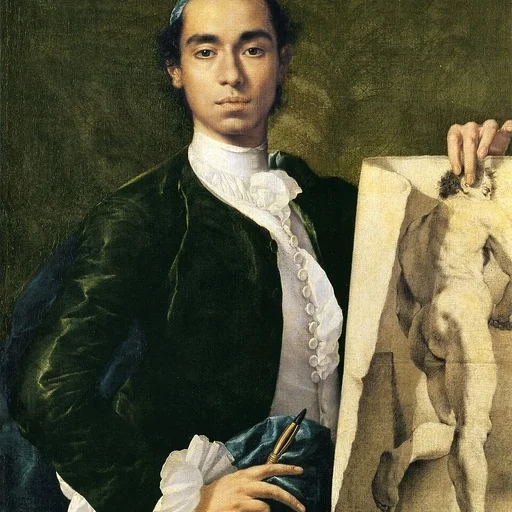
Luis Egidio Meléndez (1716–1780) was a Spanish painter. Though he received little acclaim during his lifetime and died in poverty, Meléndez is recognized as one of the greatest Spanish still-life painters of the 18th…

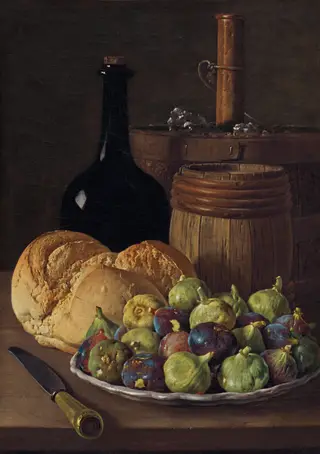 Still Life with Figs and Bread
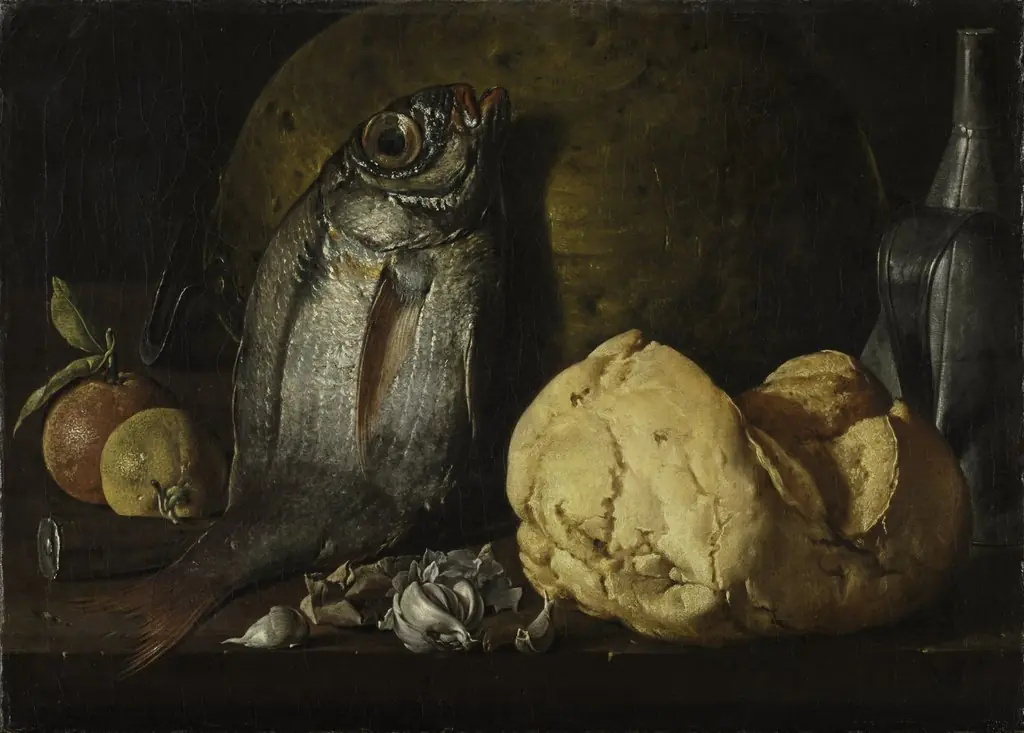 Still Life with Fish, Bread, and Kettle
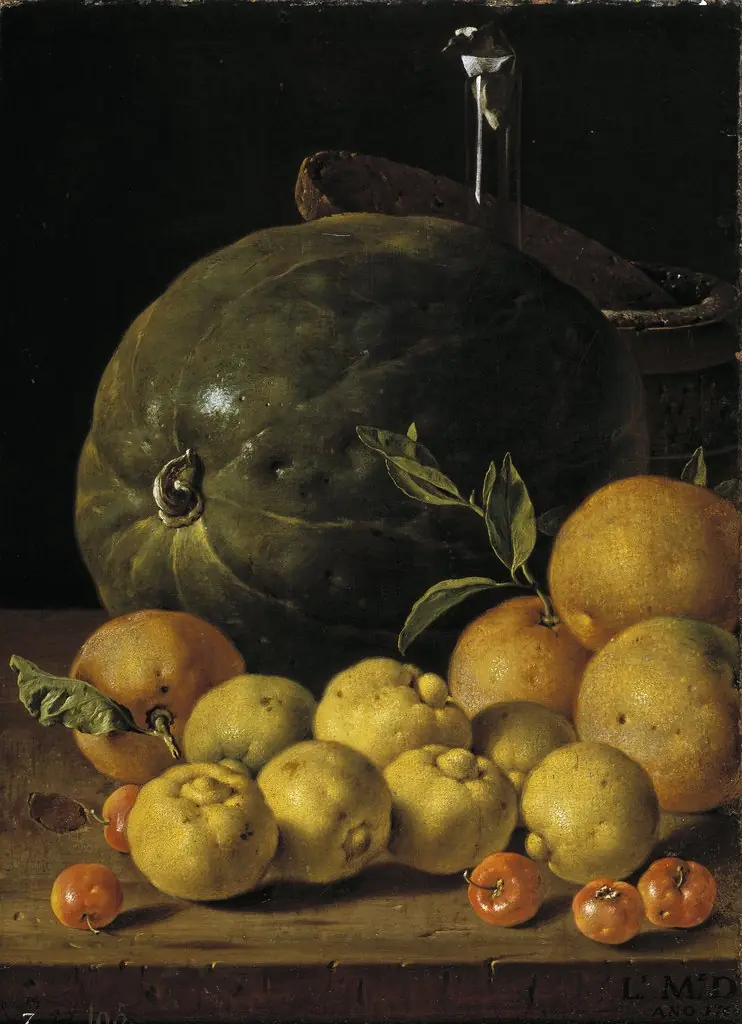 Still Life with Limes Oranges Haw Berries and Watermelon
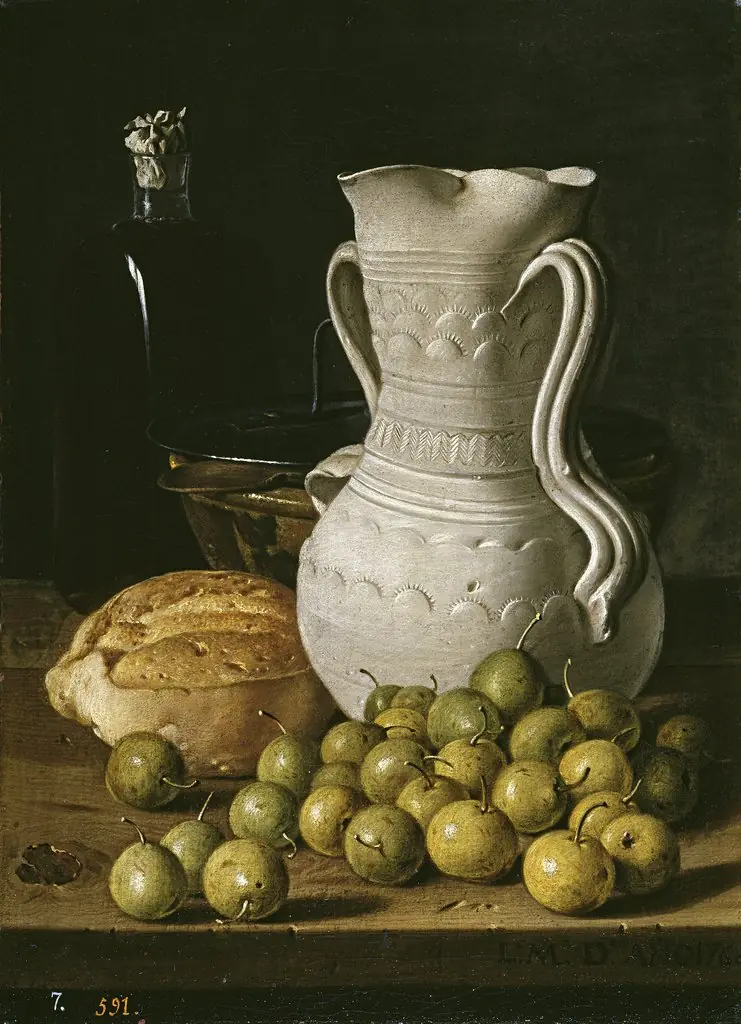 Still Life with Small Pears Bread Flask Bowl and Dry Leaves
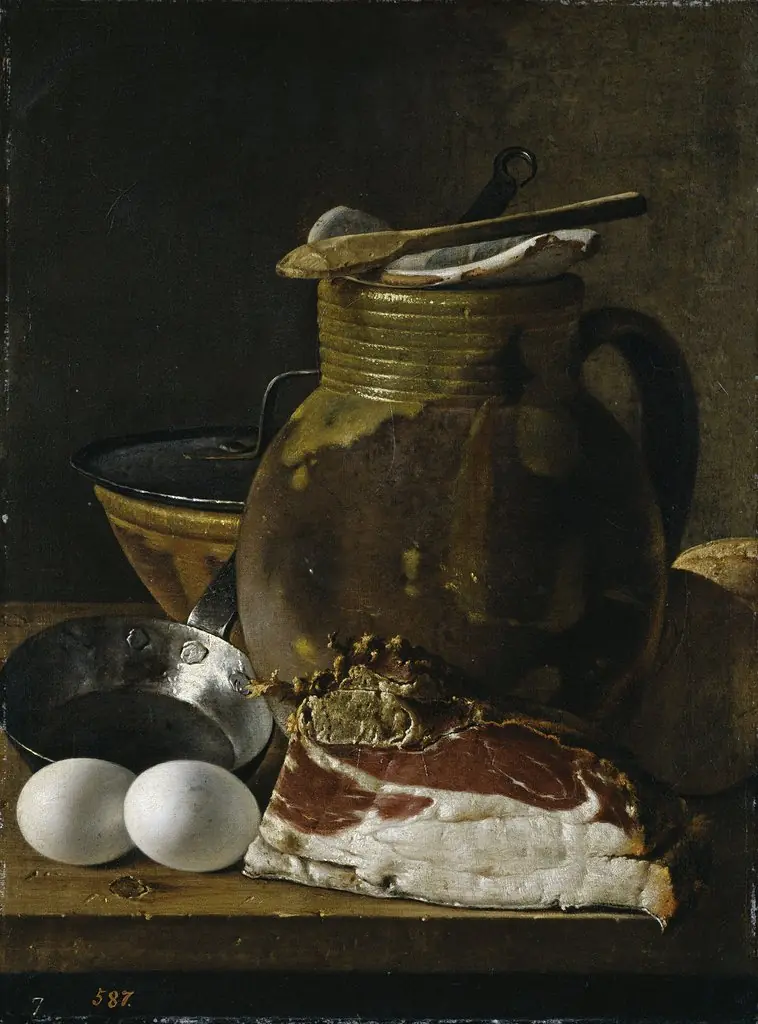 Still Life with Ham Eggs and Vessels
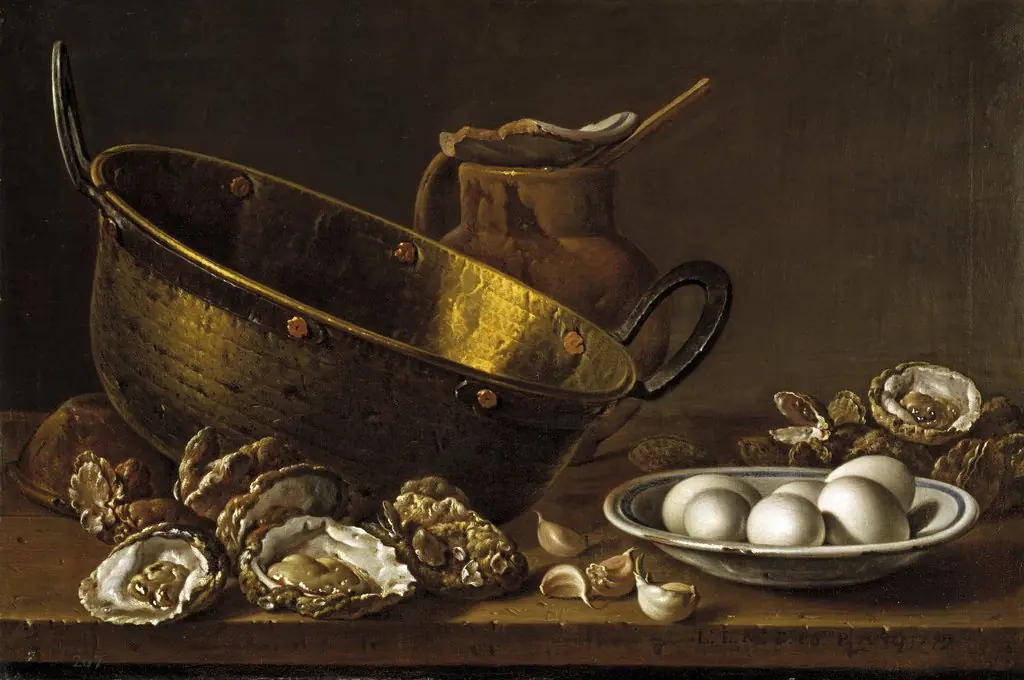 Still Life with Oysters Garlic Eggs Pot and Pan
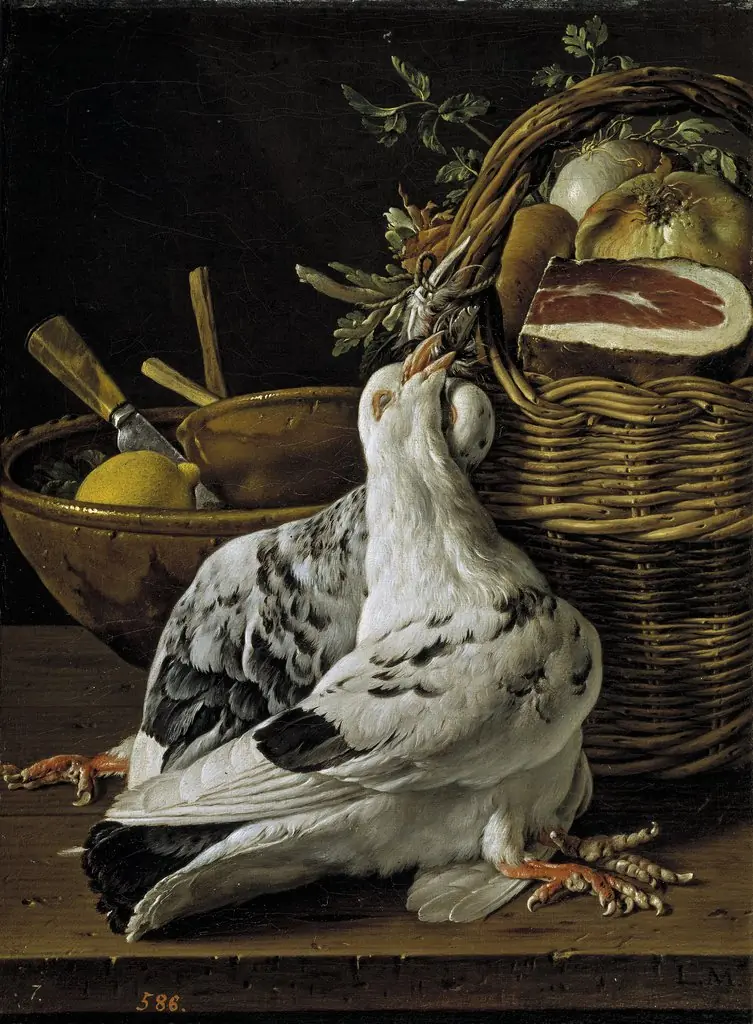 Bodegón con pichones cesta de comida y cuencos
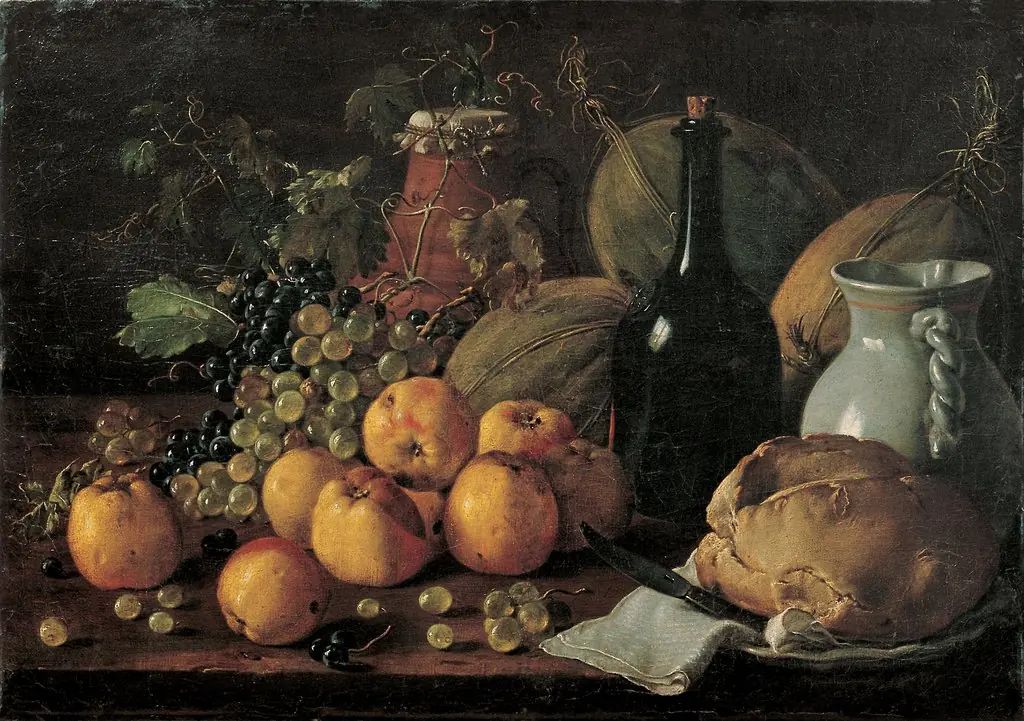 Still Life with Apples, Grapes, Melons, Bread, Jug and Bottle
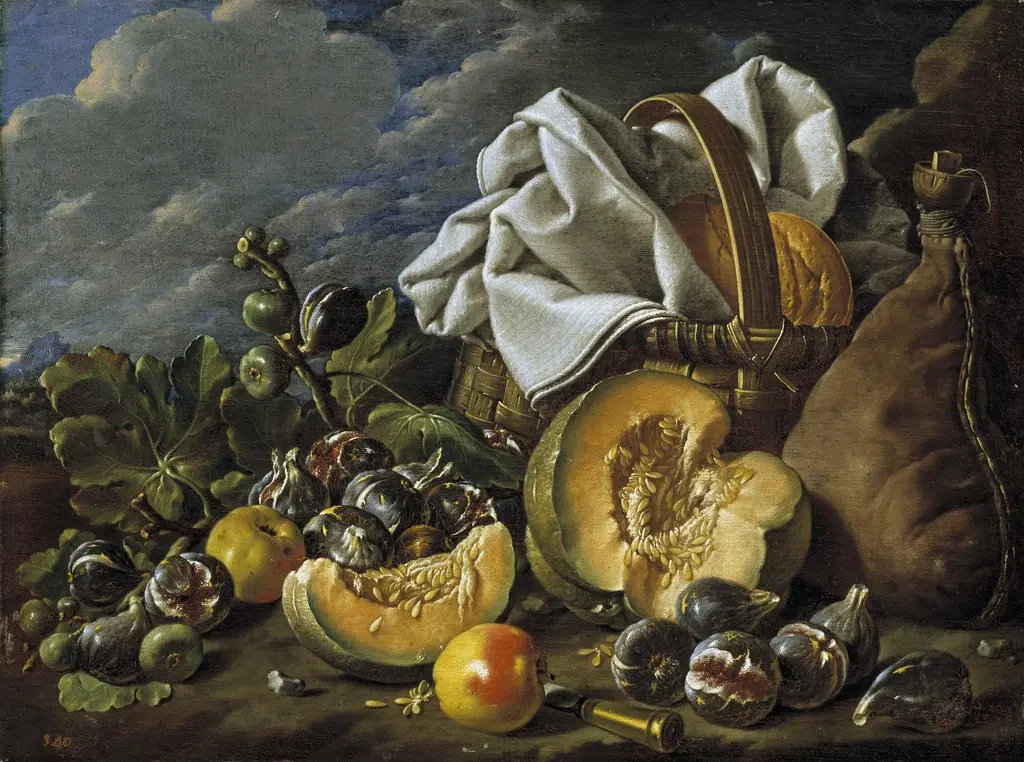
- Still Life with Melon Figs Apples Wineskin and Picnic Hamper in a Landscape
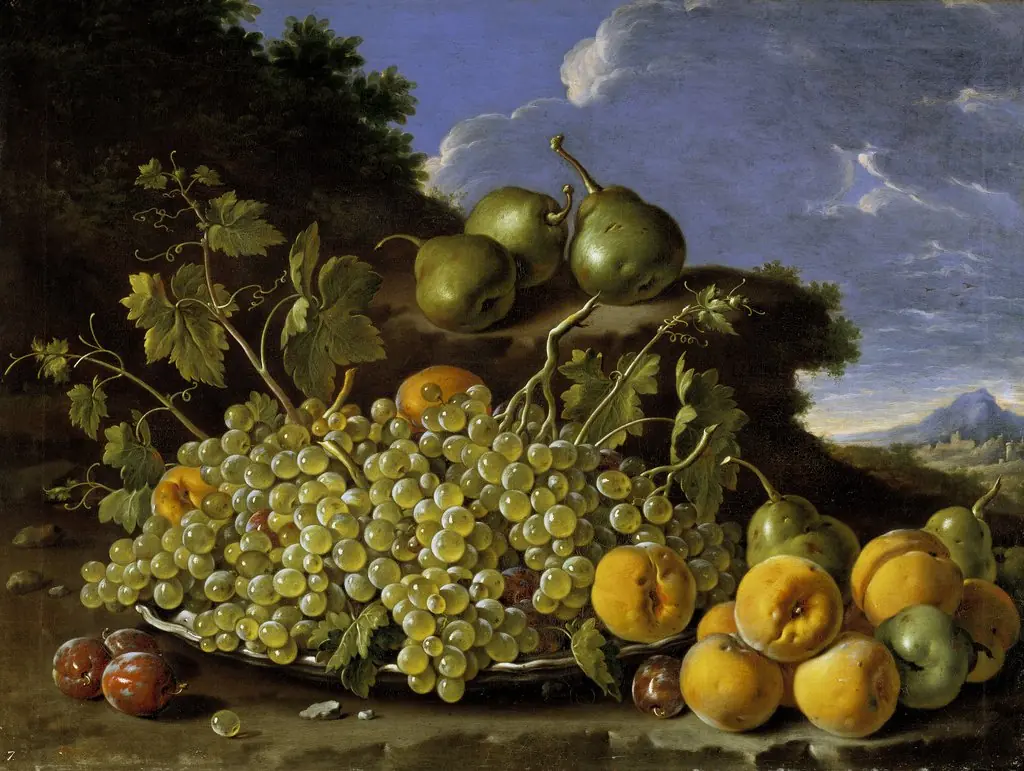 Still Life with Plate of Grapes Peaches Pears and Prunes in a Landscape
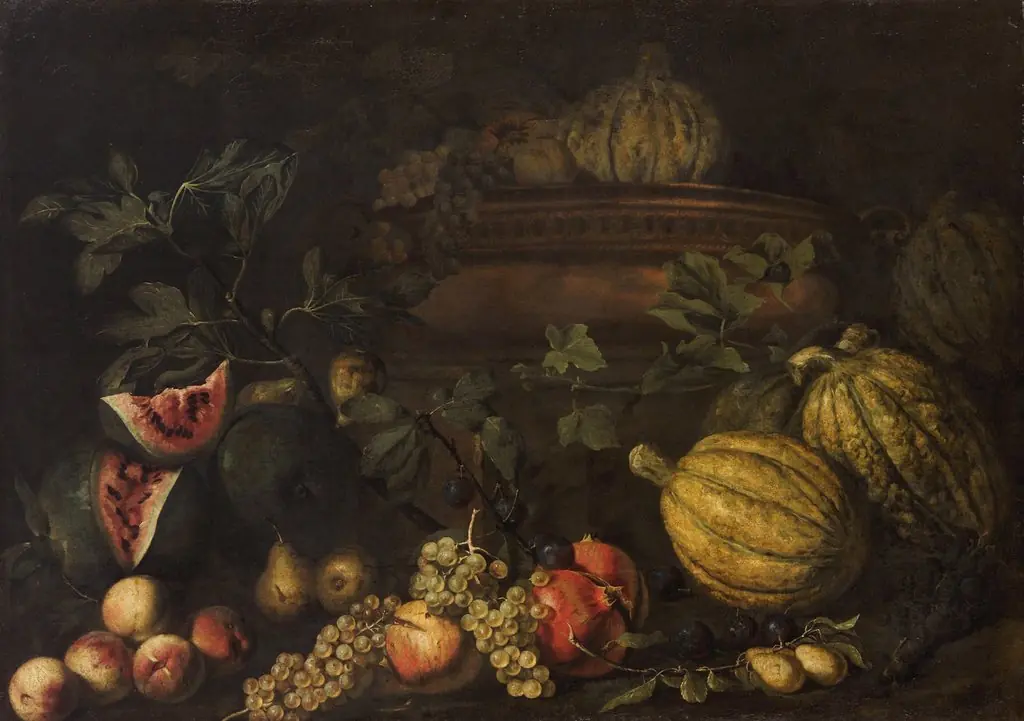 Früchtestilleben
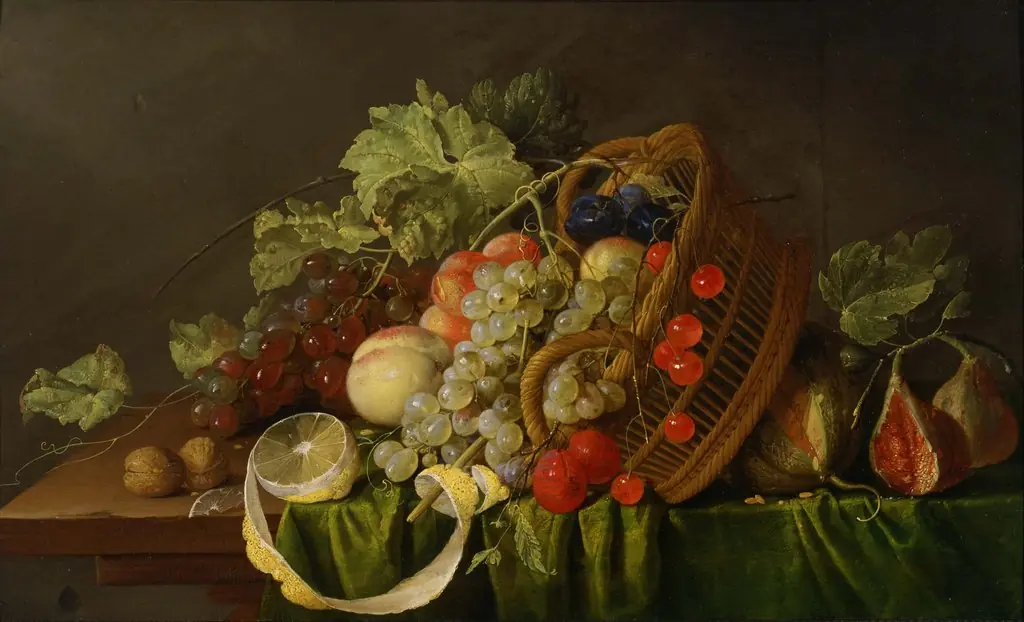 Still Life with a Basket of Fruit
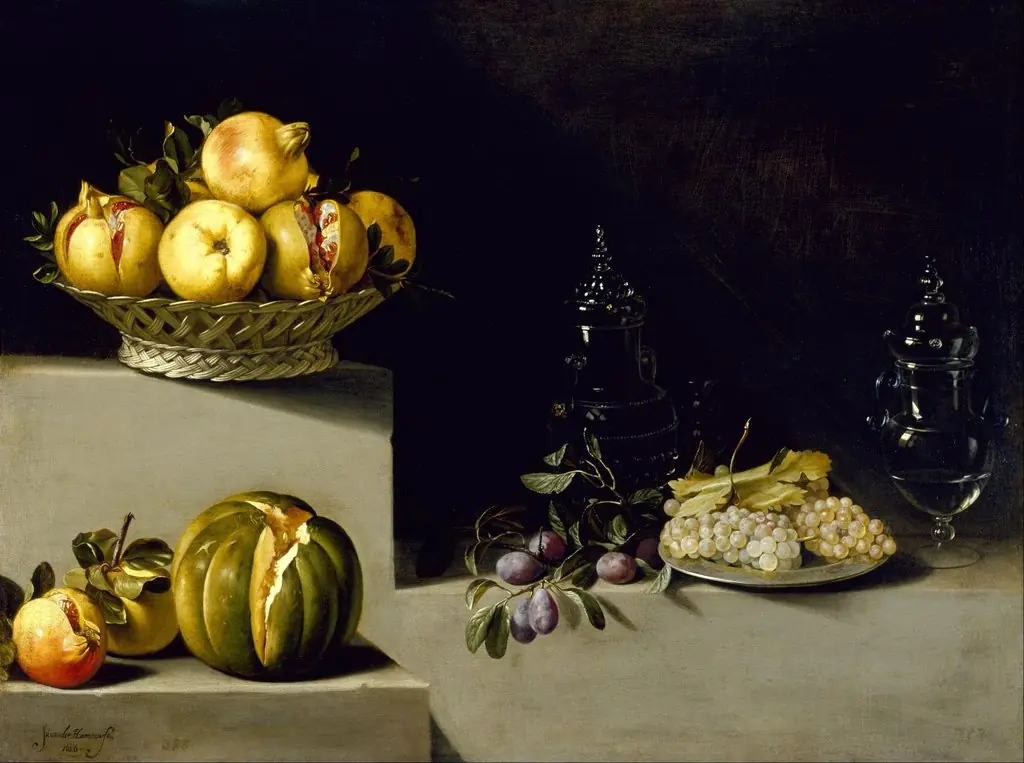 Still Life with Fruit and Glassware
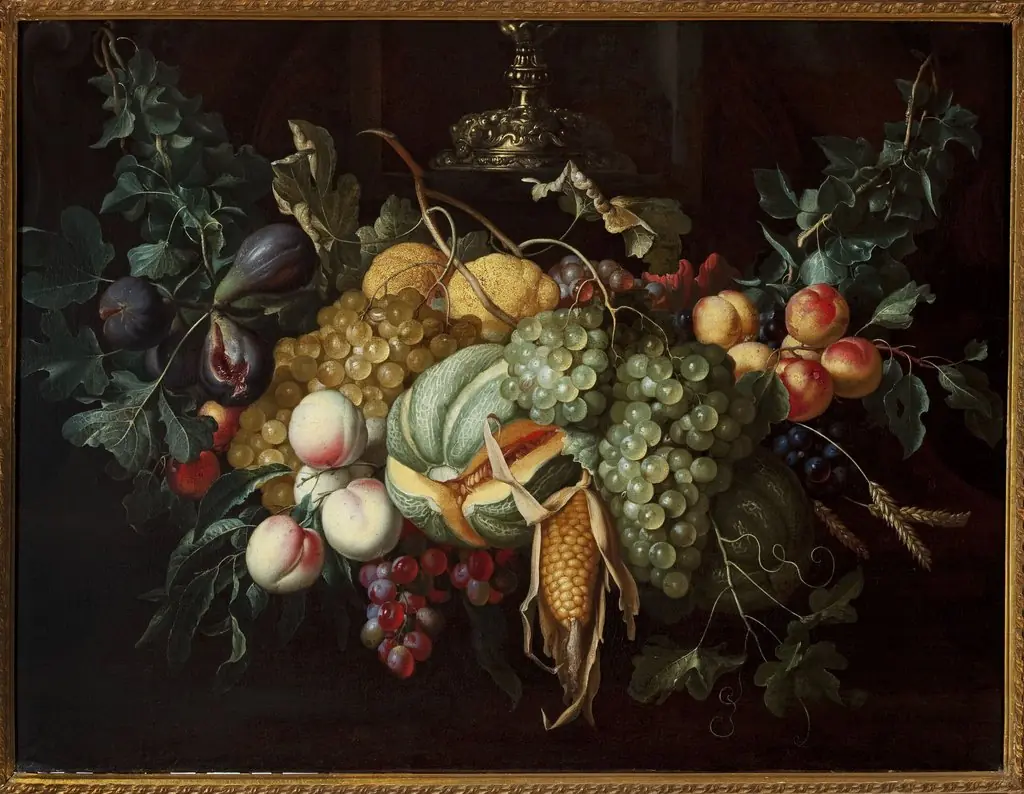 Still life with fruits and corn
 Vegetables and a Basket of Fruit on a Table
 Still Life with Melon and Pears
 Still Life
 Hedelmäasetelma
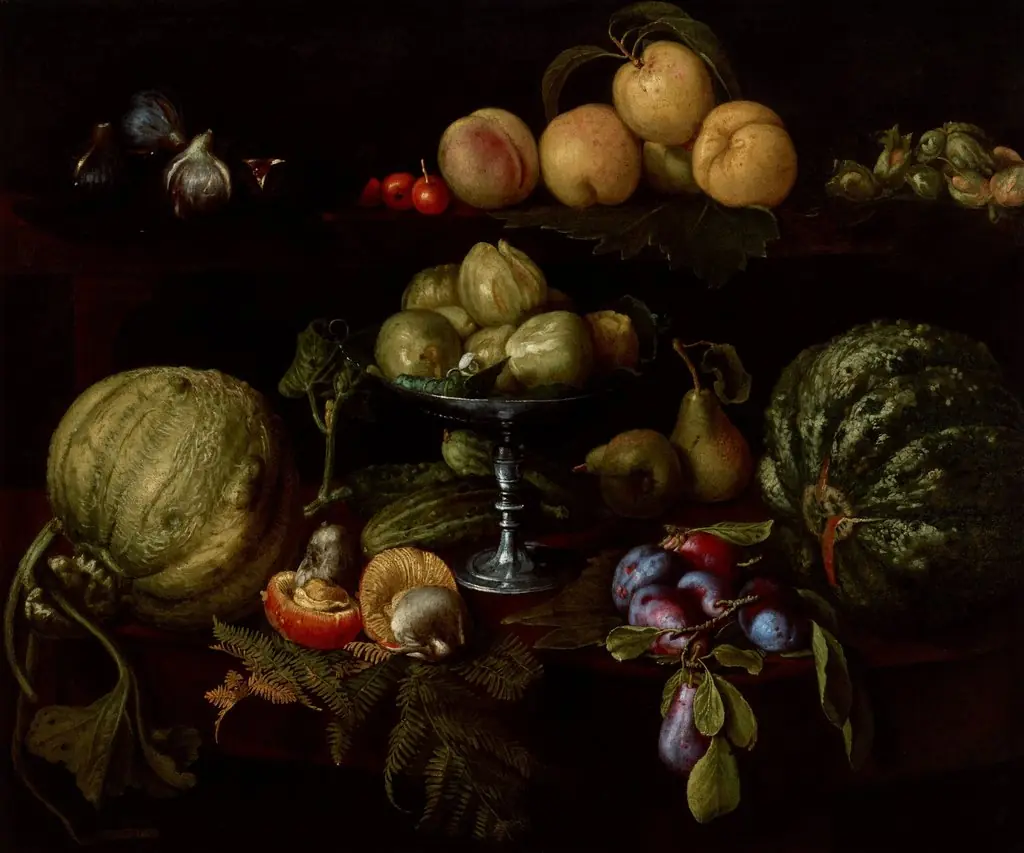 Figs on a Tazza with Pears, Quinces, Melons, Plums, Mushrooms on a Table, with Figs, Cherries, Peaches, and Acorns on a Ledge Above