Artwork
Pépita
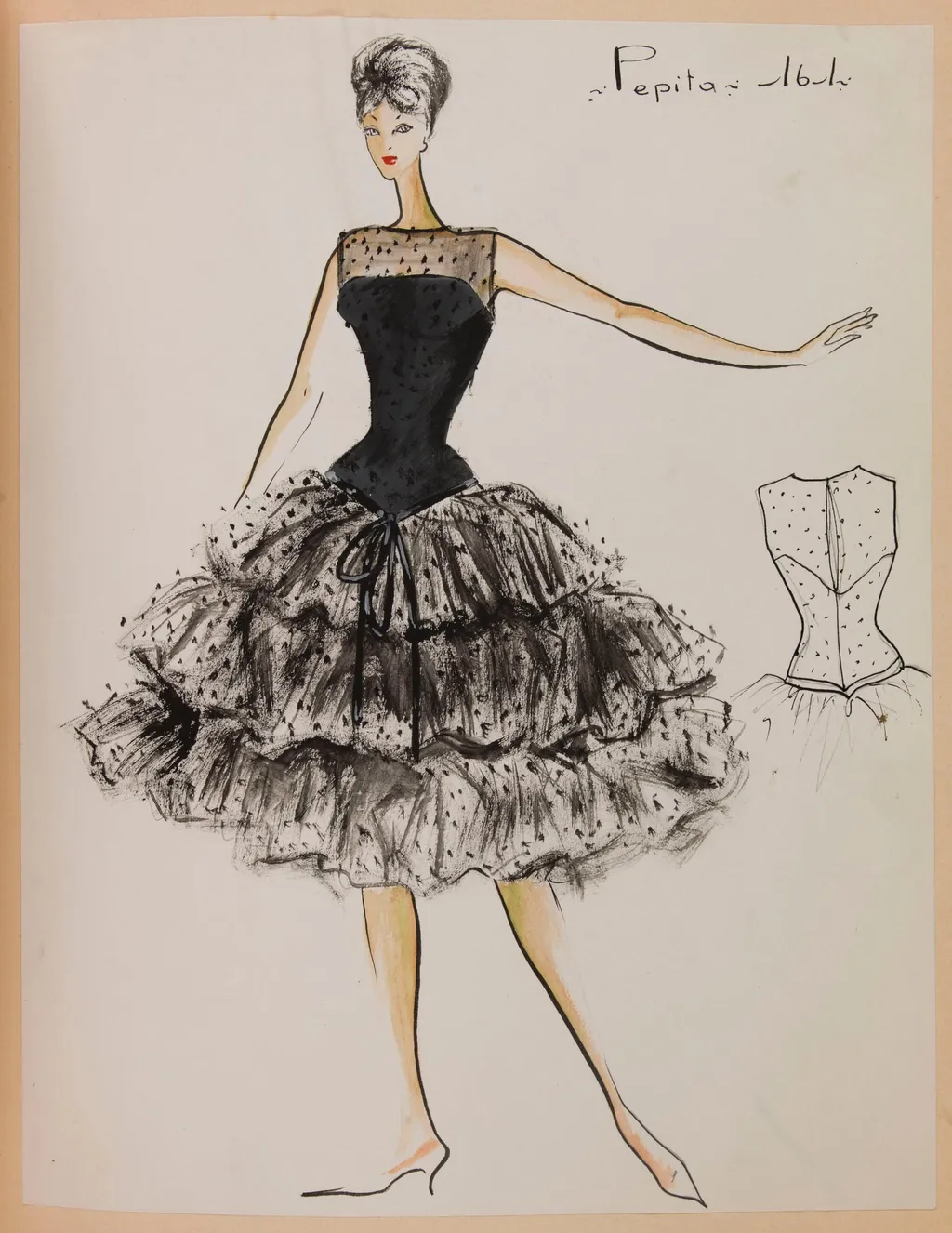
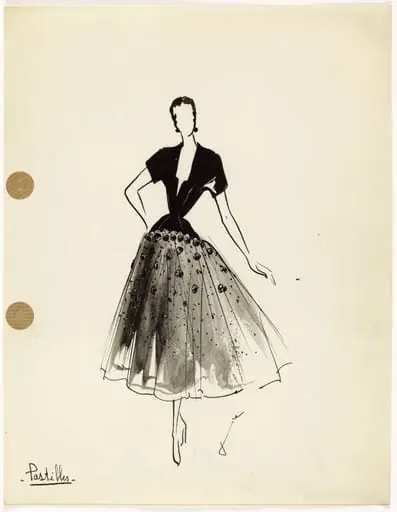
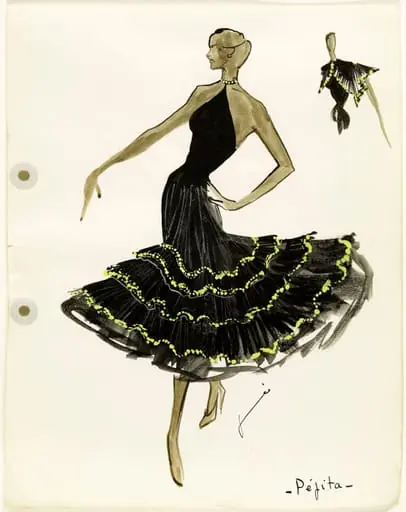
Pépita is a drawing by Marie-Louise Carven. It dates from 1958 and is held in the collection of the Palais Galliera - Musée de la Mode de la Ville de Paris.
About this work
Overview
Created around 1958 by French designer Marie-Louise Carven, Pépita is a fashion sketch that captures a minimalist evening dress. Carven, who founded her label in 1945, was an early advocate for ready-to-wear fashion. This drawing, part of the Museum of Ethnography’s collection, reflects her focus on elegant, wearable designs for smaller frames, blending couture sensibility with practicality.
Subject & Meaning
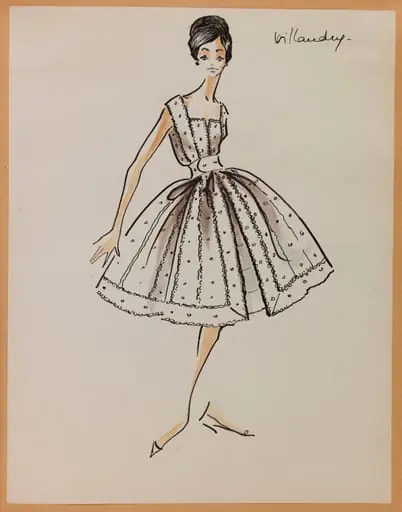
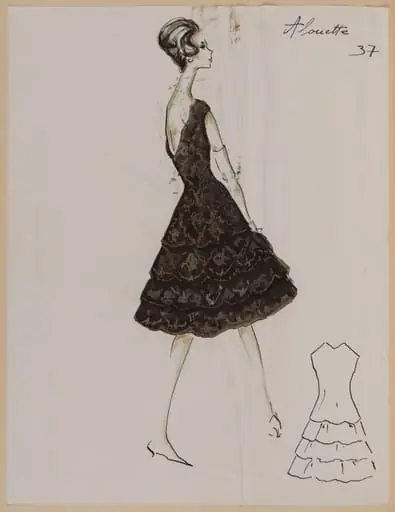
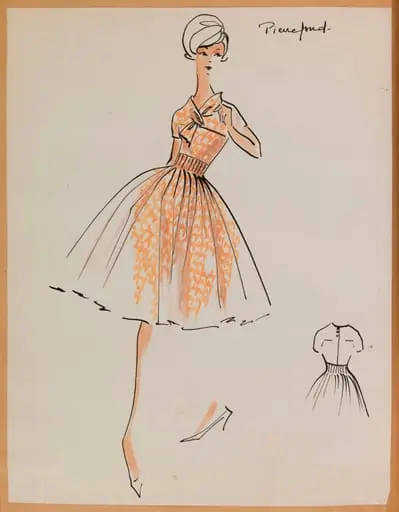
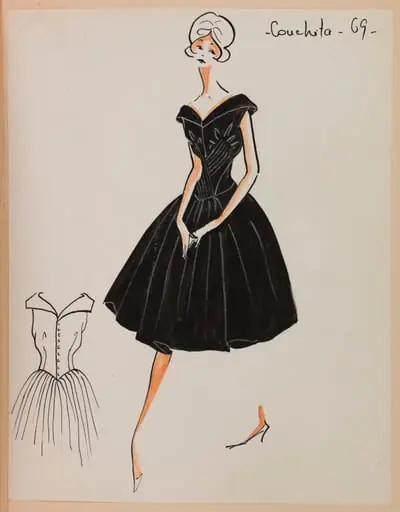
The sketch depicts a woman in a black dress with a tailored bodice and a voluminous ruffled skirt, adorned with fine dotted patterns.
The sketch depicts a woman in a black dress with a tailored bodice and a voluminous ruffled skirt, adorned with fine dotted patterns. Her poised posture, hair in a bun, one arm relaxed, conveys effortless grace. The inclusion of a small pattern detail suggests the design’s functionality and attention to textile structure, emphasizing Carven’s belief that beauty lies in thoughtful construction rather than ornamentation.
Technique & Style
Rendered in loose, fluid lines, the sketch has a spontaneous, handwritten quality. The dress’s texture is suggested through delicate dotting, while the ruffles are indicated with swift, overlapping strokes. A separate panel shows the dot pattern’s layout, revealing Carven’s methodical approach to design.
The absence of heavy shading or color highlights the drawing’s role as a working document, not a finished illustration.
History & Provenance
The sketch entered the Museum of Ethnography’s collection as part of a broader effort to document 20th-century fashion as cultural artifact. Carven’s work, particularly her early prêt-à-porter designs, was recognized for bridging haute couture and mass production. This piece survives as a tangible record of her design process during the late 1950s, a pivotal moment in modern fashion history.
Context
In postwar Europe, fashion was shifting toward accessibility and simplicity. Carven’s designs responded to changing lifestyles, favoring lightweight fabrics and streamlined silhouettes. Pépita aligns with this movement, reflecting a growing emphasis on individual expression within ready-to-wear. Its sketch form also mirrors the industry’s transition from exclusive ateliers to more democratic design workflows.
Legacy
Carven’s integration of practicality and elegance influenced later designers who prioritized wearable art. Pépita stands as an example of how fashion sketches functioned not merely as aesthetic previews but as technical guides. Its preservation in a museum of ethnography underscores fashion’s role as a cultural practice, rooted in daily life and material innovation.
Artist & collection
Artist
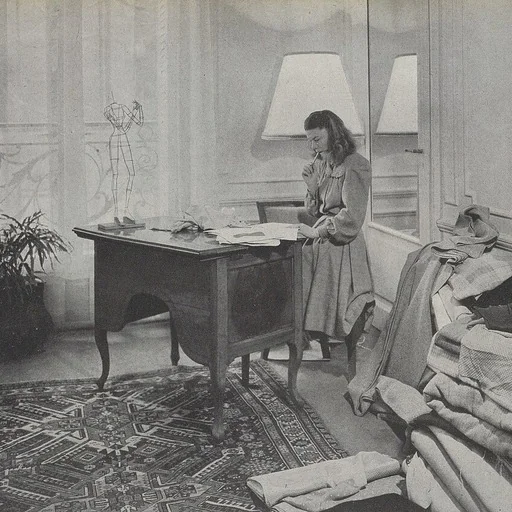
Marie-Louise Carven (31 August 1909 – 8 June 2015), born Carmen de Tommaso, was a French fashion designer who founded the house of Carven in 1945.
Museum
Palais Galliera - Musée de la Mode de la Ville de Paris
Continue through works from the same source collection.
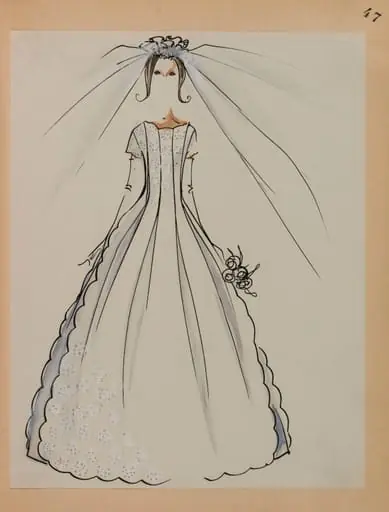 Robe de mariée festonnée et son voile
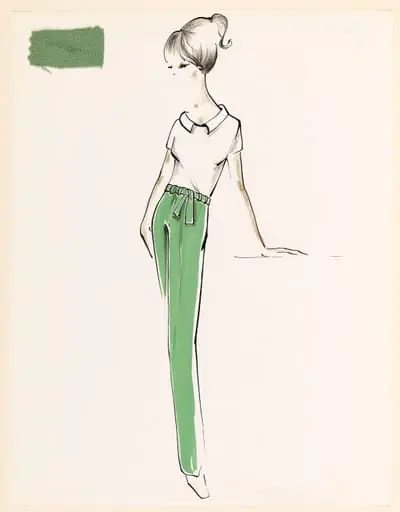 Haut blanc à manches courtes et pantalon vert à ceinture nouée
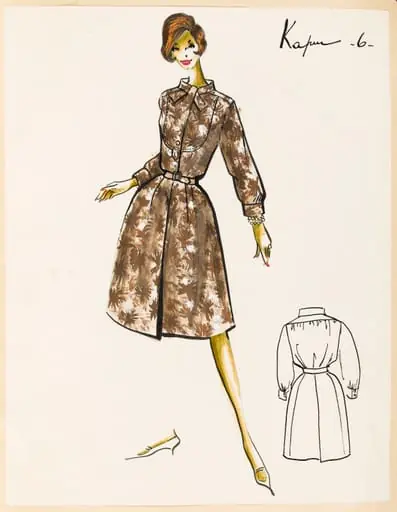 Kapur
Kapur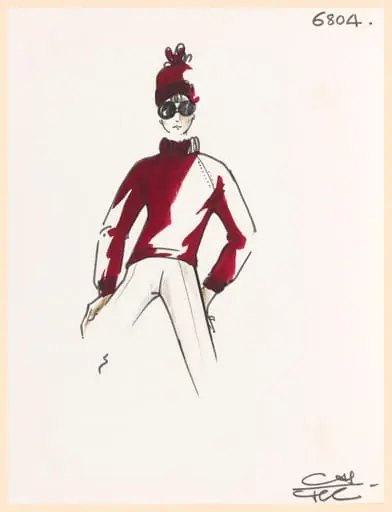 Pull-over à manches longues pourpre, bonnet assorti, pantalon et lunettes de soleil
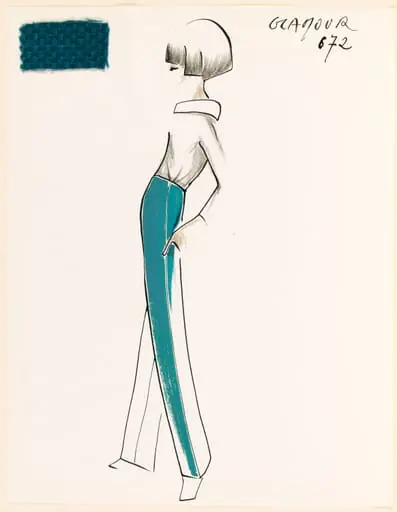 GLAMOUR
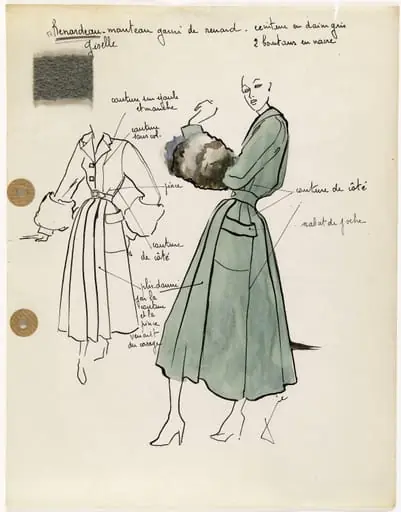 'Renardeau'
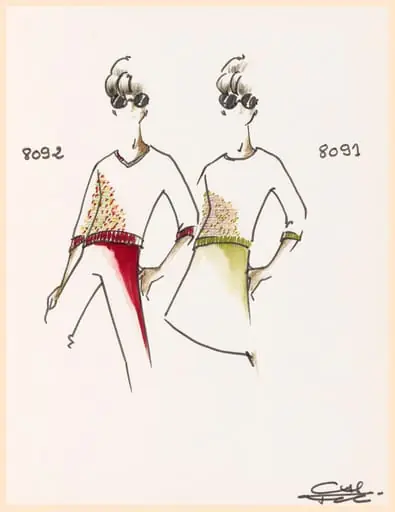 Pull-over à manches trois quarts et à encolure V à motifs multicolores, pantalon cerise et lunettes de soleil
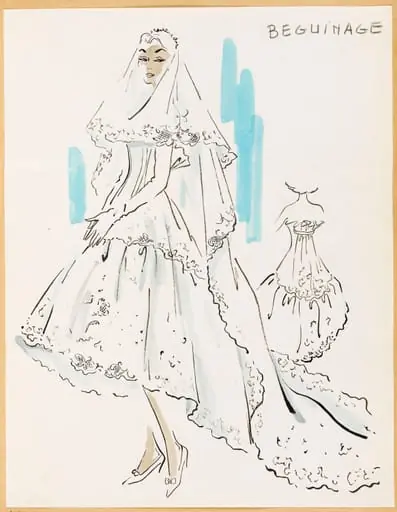 Béguinage