Artwork
Paisaje
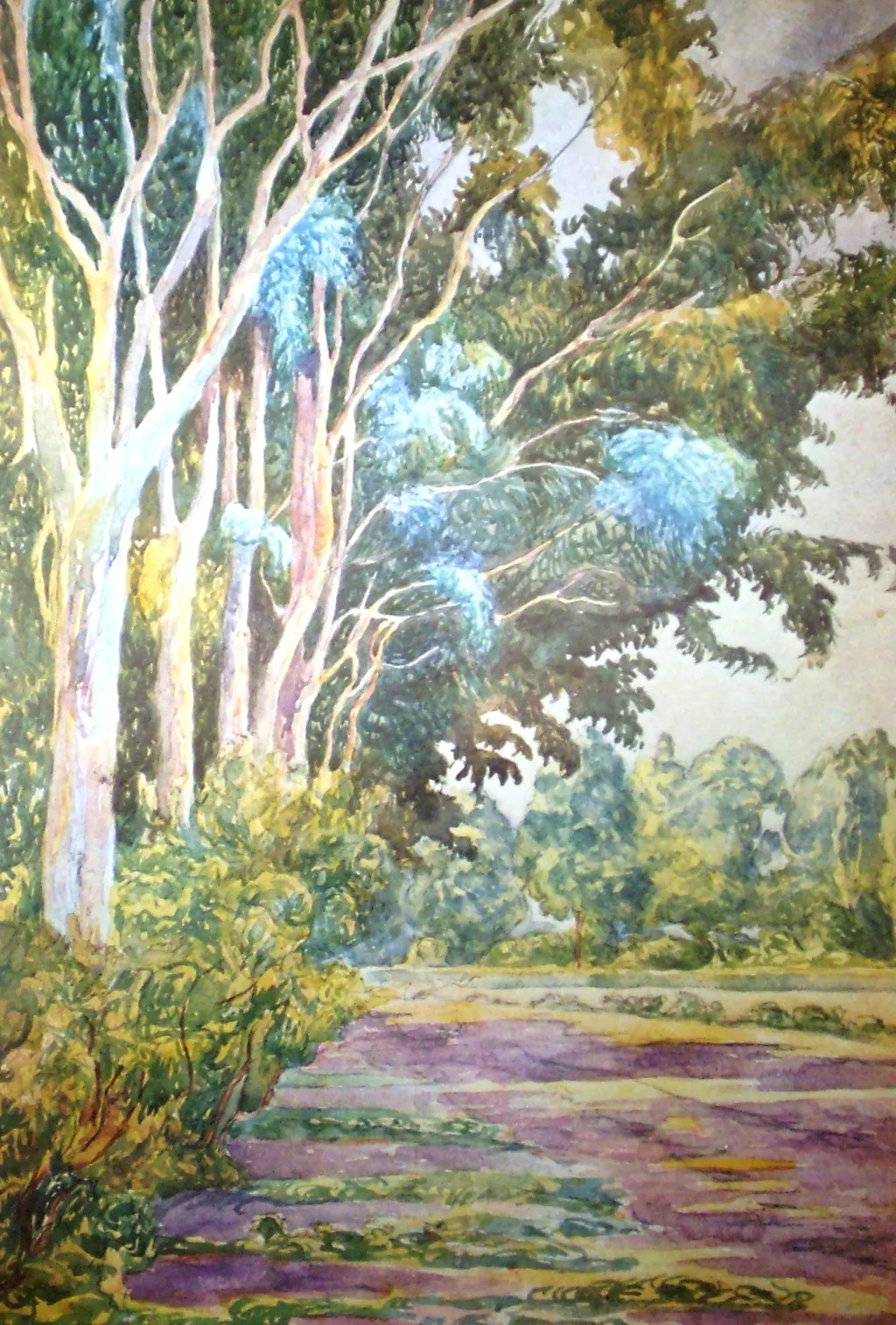
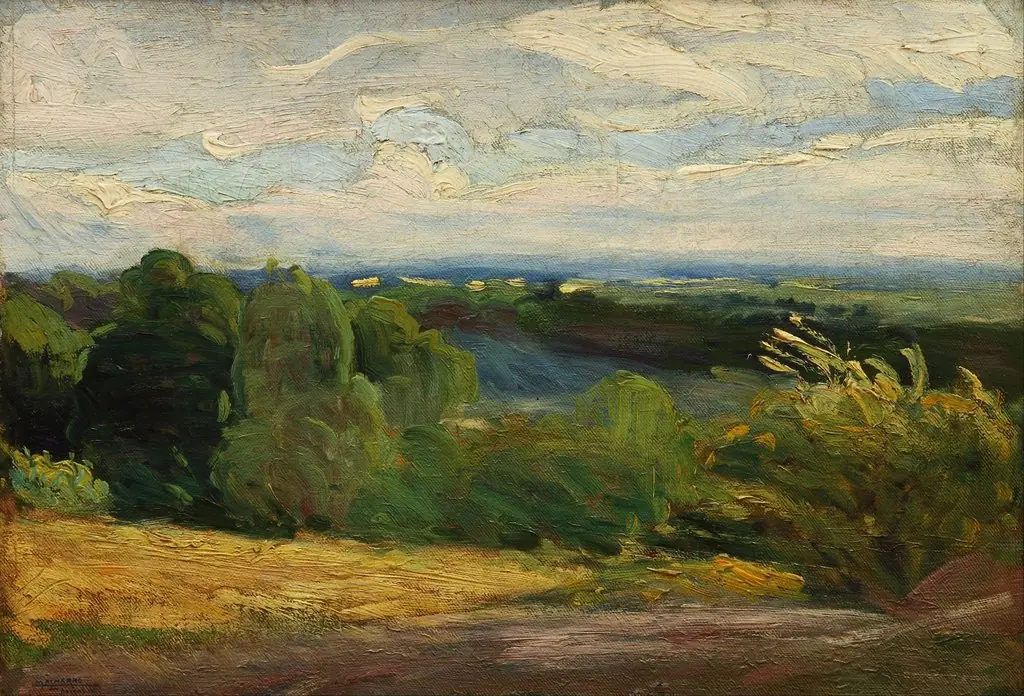
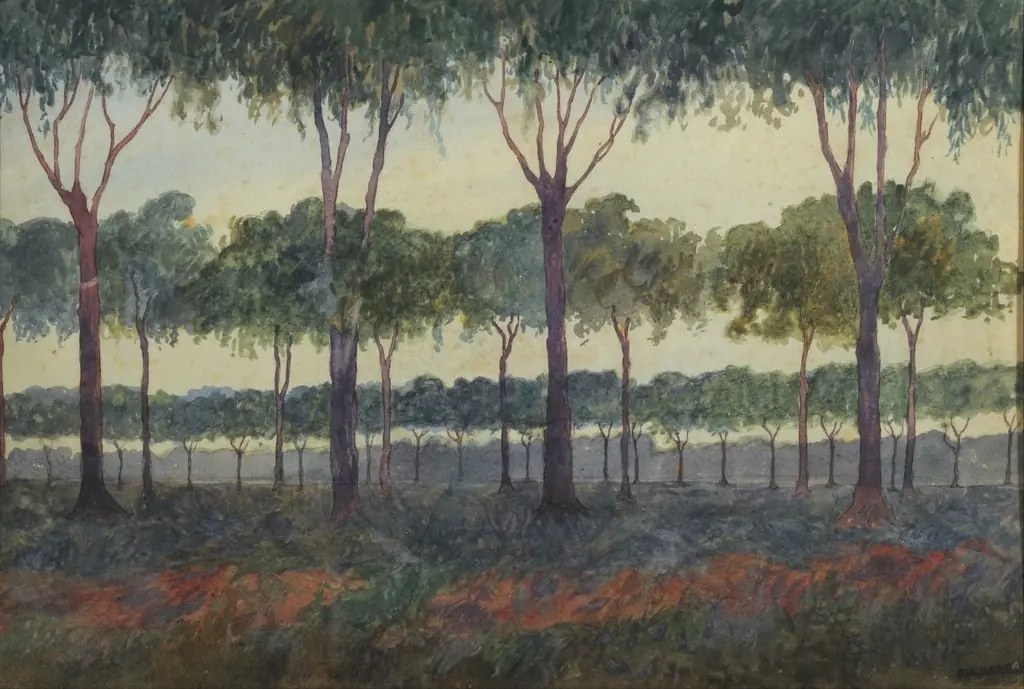
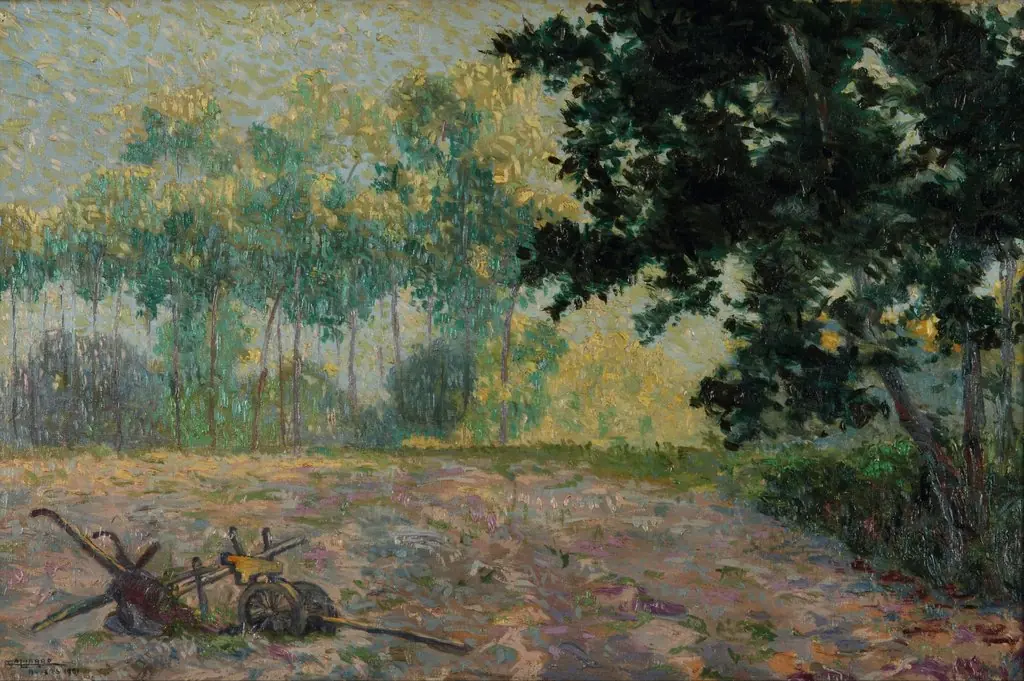
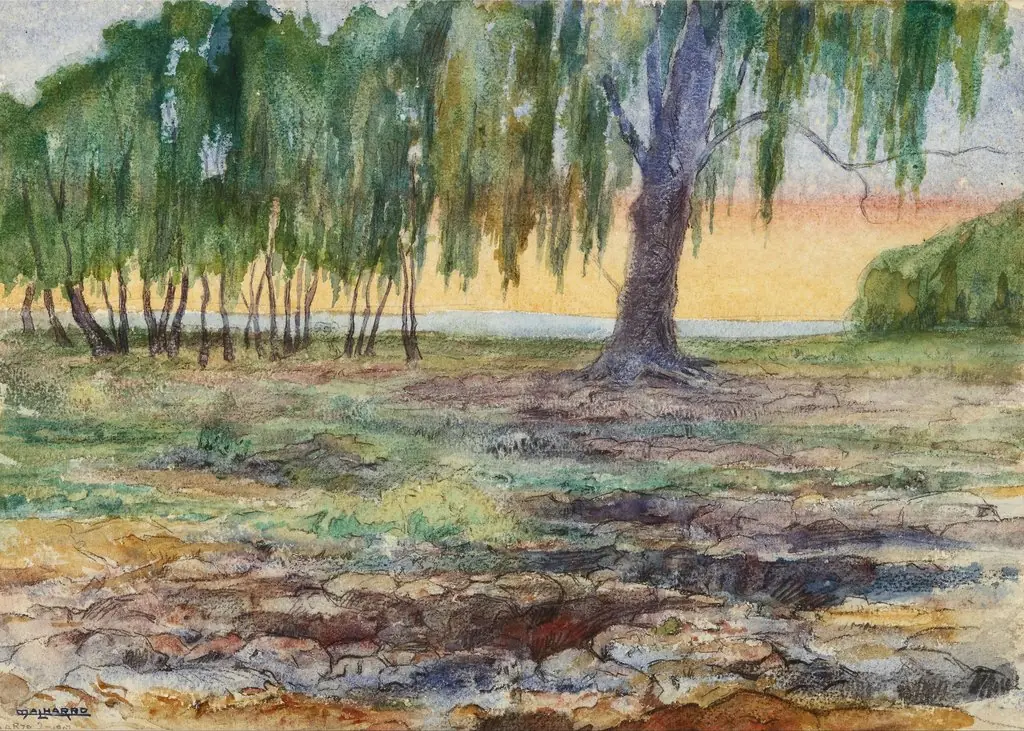
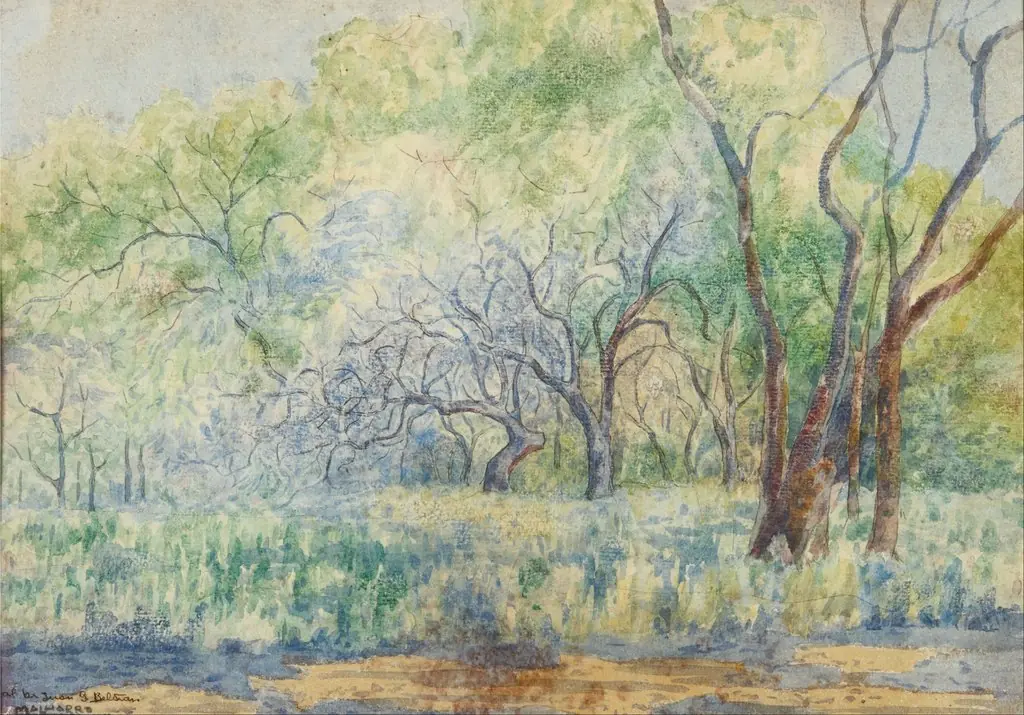
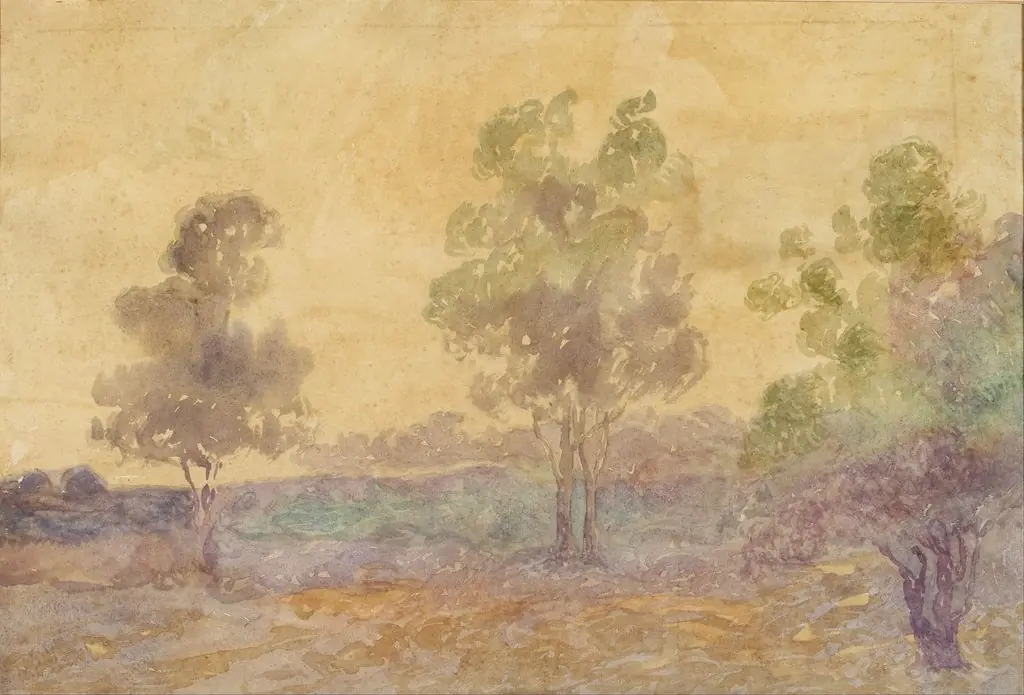
Paisaje is a watercolor painting by Martín Malharro. It dates from 1898 and is held in the collection of the National Museum of Fine Arts, Argentina.
About this work
Overview
The work reflects his role in bringing Impressionist approaches to Argentine art during a period of cultural transition.
Martín Malharro painted Paisaje around 1898 in watercolor, capturing a quiet Argentine landscape. The work reflects his role in bringing Impressionist approaches to Argentine art during a period of cultural transition. Its delicate medium and subdued palette distinguish it from the more rigid academic styles dominant at the time.
The painting resides in the National Museum of Fine Arts in Buenos Aires, where it represents an early example of local engagement with European artistic trends.
Subject & Meaning
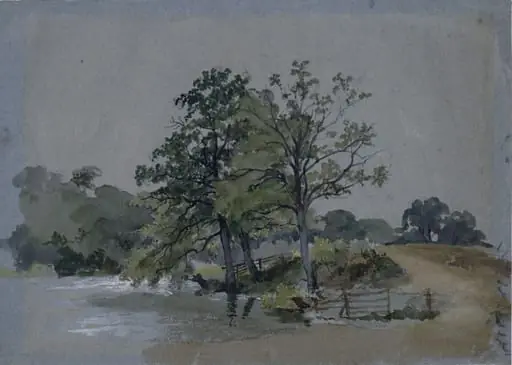
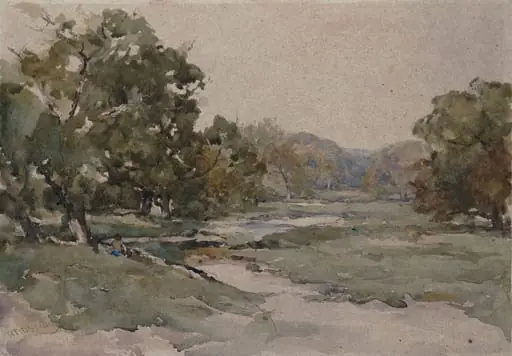
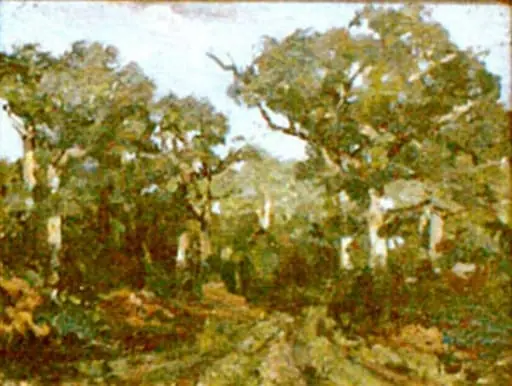
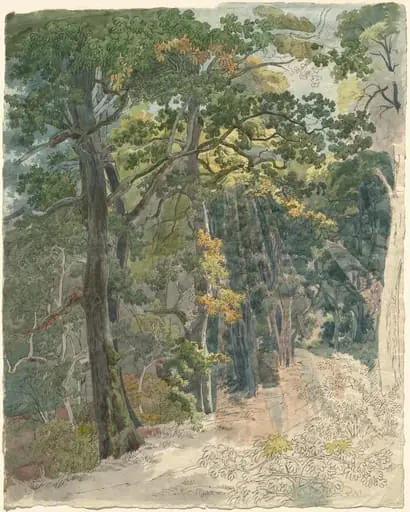
The scene depicts a narrow path winding through a grove of slender trees, their white trunks rising against a soft gray sky. Bushes line the edges of the trail, suggesting a quiet, unspoiled natural setting. There is no human presence, and the composition invites contemplation rather than narrative.
The absence of dramatic elements emphasizes tranquility, aligning with Impressionist interests in fleeting moments and atmospheric mood over storytelling.
Technique & Style
Malharro employed watercolor with layered glazing to achieve subtle transitions of tone and light. The pigment’s transparency allows underlying washes to show through, lending depth to the foliage and sky. Delicate brushwork defines the trees and undergrowth without sharp outlines, creating a sense of softness and diffusion. The technique avoids heavy detail, favoring atmospheric effects that evoke a hushed, contemplative environment.
History & Provenance
Created in the late 1890s, Paisaje emerged during Malharro’s most active period as a proponent of Impressionism in Argentina. It entered the collection of the National Museum of Fine Arts in Buenos Aires in the early 20th century, likely through acquisition or donation. Its preservation in a public institution underscores its recognized significance in the development of modern Argentine painting, though little is documented about its early ownership.
Context
In late 19th-century Argentina, artists were increasingly exposed to European movements through travel and reproduction. Malharro, influenced by French Impressionists, adapted their emphasis on light and outdoor observation to local scenery. Paisaje reflects this synthesis, neither fully European nor traditionally academic, it marks a shift toward personal, sensory responses to the Argentine landscape, distinct from colonial or historical themes.
Legacy
Malharro’s use of watercolor in Paisaje helped legitimize the medium in Argentine fine art, previously associated with sketching or illustration. His approach influenced later generations who sought to capture local environments with sensitivity and nuance. While not widely exhibited today, the work remains a touchstone in discussions of Argentina’s artistic modernization and the quiet revolution of Impressionist aesthetics in the Southern Cone.
Own this work as a print
Artist & collection
Artist
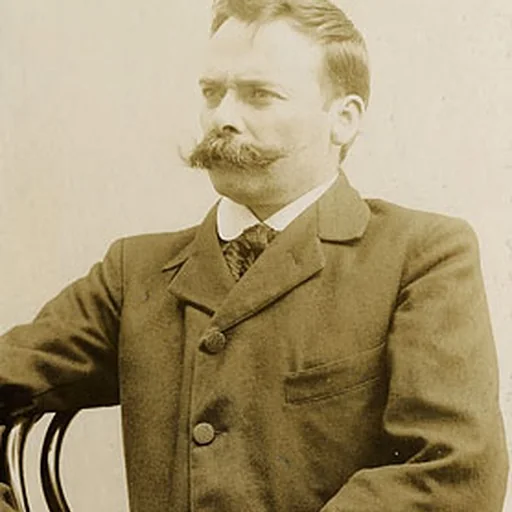
Martín Malharro (1865–1911) was an Argentine painter who introduced Impressionism in the country in the early 20th century.

Museum
National Museum of Fine Arts, Argentina
Continue through works from the same source collection.