Artwork
Sibylla Agrippa
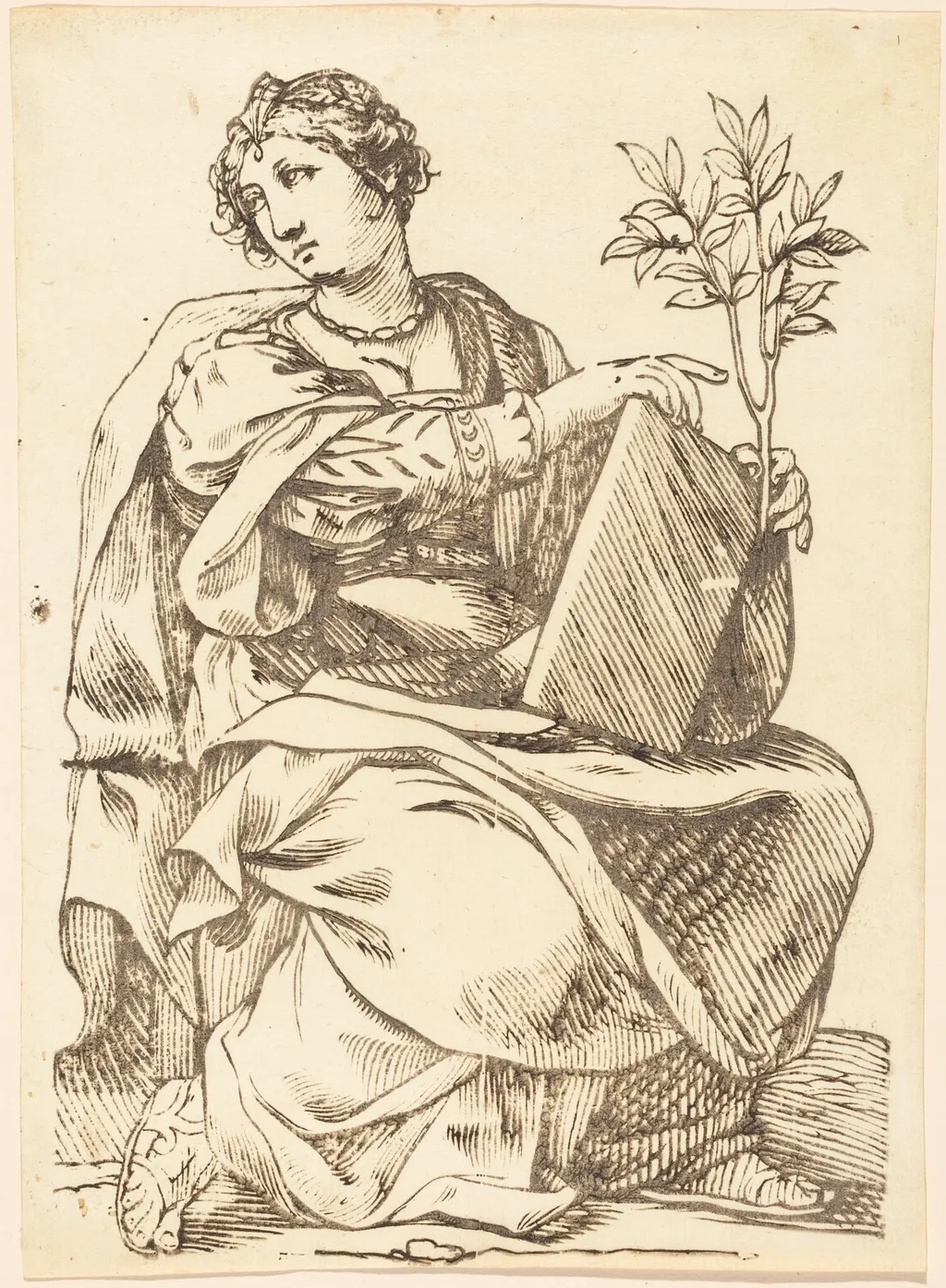
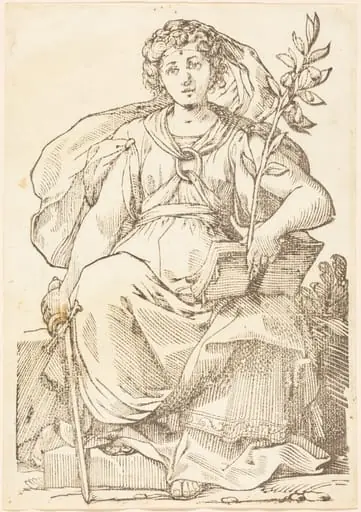
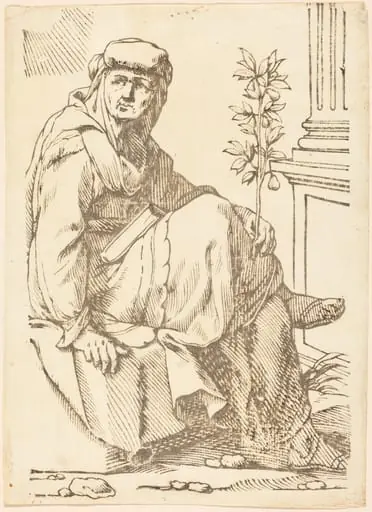
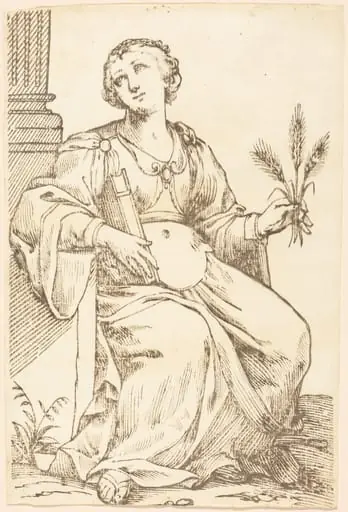
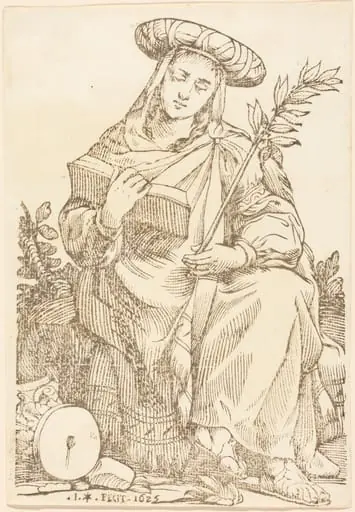
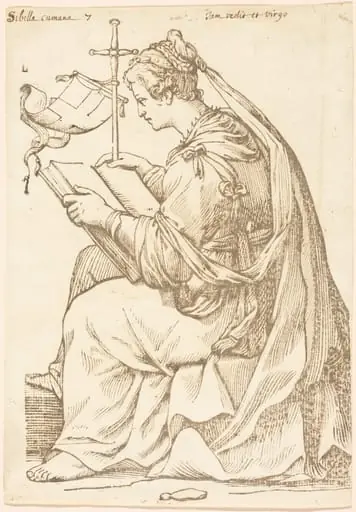
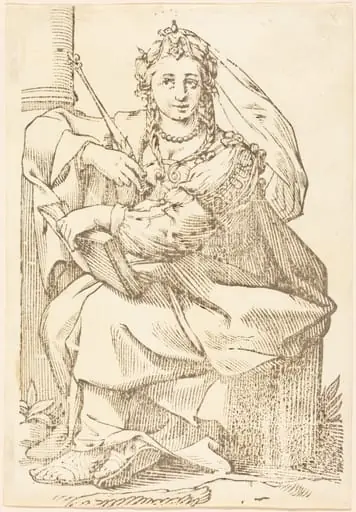
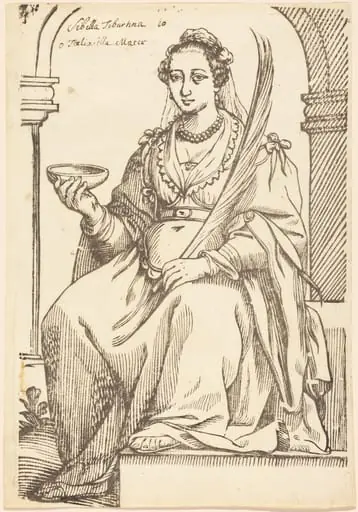
Sibylla Agrippa is an ink print by the Baroque artist Paul Maupin. It dates from 1625 and is held in the collection of the National Gallery of Art.
- Inscription
- Inscribed:recto: none; verso: at bottom left, in graphite, in later hand: 11.
- Markings
- Marked:none
About this work
Overview
Paul Maupin’s woodcut entitled Sibylla Agrippa, executed around 1625, presents a solitary female figure rendered in black ink on laid paper. The image measures roughly the size of a typical early‑modern print and is presently held by the National Gallery of Art in Washington, D.C. The composition centers on a woman in a flowing gown, her gaze directed outward, holding a scroll in her left hand.
Subject & Meaning
The figure is identified as Sibylla Agrippa, a legendary prophetess whose name combines the classical sibyl tradition with a later, obscure literary source. By depicting her with a scroll, the print alludes to her role as a bearer of divine or prophetic knowledge, while the distant stare suggests contemplation or revelation beyond the immediate scene.
Technique & Style
Maupin employs the woodcut medium, carving fine, intersecting lines that define both the delicate contours of the woman’s flesh and the broader folds of her attire. The contrast between crisp, sharply cut outlines and softer tonal shading creates a subtle modeling effect, characteristic of early‑17th‑century printmaking that sought to balance precision with a sense of atmospheric depth.
History & Provenance
Created in the early 1620s, the print reflects a period when European artists frequently revisited mythological and prophetic subjects for both scholarly and decorative purposes. After its production, the work entered various private collections before being acquired by the National Gallery of Art, where it has been catalogued as part of the museum’s early modern print holdings.
Context
The early seventeenth century saw a resurgence of interest in classical sibyls, who were often invoked in religious and allegorical art to legitimize contemporary ideas. Maupin’s choice of Sibylla Agrippa aligns with this trend, merging ancient prophetic archetypes with the burgeoning market for printed images that could be disseminated widely across Europe.
Own this work as a print
Artist & collection