Artwork
Bacchanal
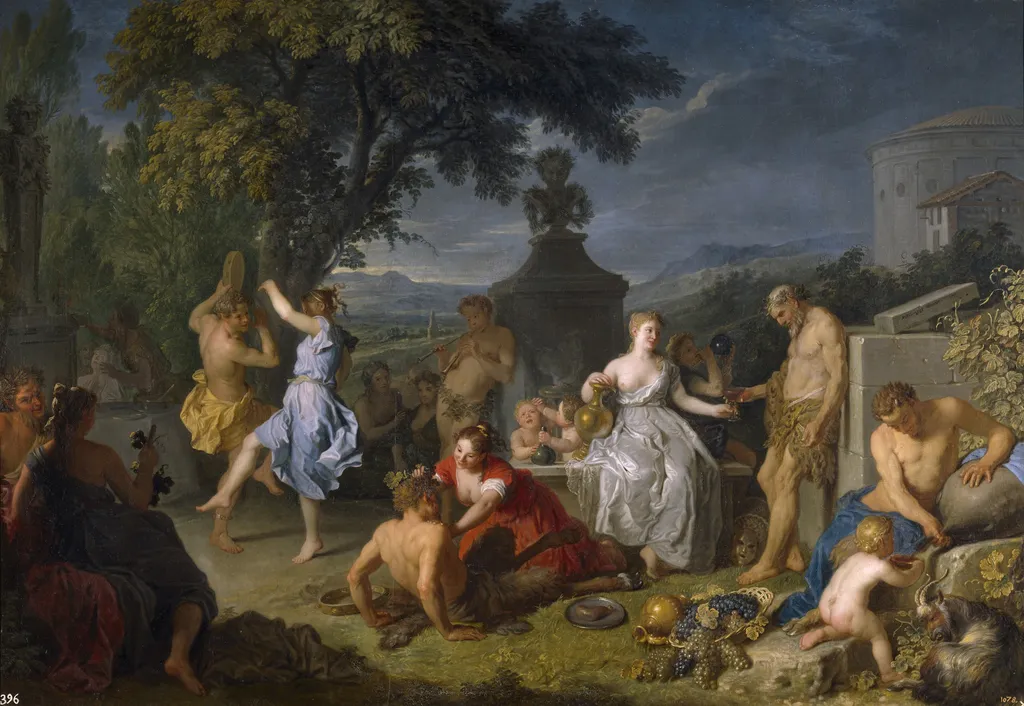
Bacchanal is an oil painting by the Rococo painting artist Michel Ange Houasse. It dates from 1719 and is held in the collection of the Museo del Prado.
About this work
Subject & Meaning
The artwork visually explores themes of revelry and earthly indulgence associated with these ancient celebrations.
Michel Ange Houasse’s 1719 painting belongs to the mythological genre, depicting a Bacchanal, a scene representing the festivities and rites dedicated to Bacchus, the classical god of wine. The artwork visually explores themes of revelry and earthly indulgence associated with these ancient celebrations. Among the symbolic and descriptive elements within the composition, the work specifically depicts basketry, which alludes to the harvest and the gathering of natural bounty central to Bacchic iconography.
Technique & Style
Michel-Ange Houasse executed Bacchanal in 1719 using oil paint applied to a canvas support. The work measures 125 cm in height and 180 cm in width, adhering to the physical dimensions recorded for the piece. Stylistically, the painting is classified as a mythological genre work that depicts scenes involving basketry.
The medium and material composition are consistent with the oil-on-canvas technique typical of the period, as documented in the collection records of the Museo del Prado.
History & Provenance
Bacchanal is an oil-on-canvas painting created by Michel Ange Houasse in 1719. The work entered the Spanish royal collections during the early eighteenth century, passing through the ownership of three successive Spanish monarchs. It was held by Philip V of Spain and subsequently by Ferdinand VII of Spain, before being acquired by Charles III of Spain.
The painting ultimately entered the holdings of the Museo del Prado, where it remains part of the museum's collection.
Bacchanal is held in the collection of the Museo del Prado in Madrid. Its inventory number is P00968. The painting has been exhibited at the Museo del Prado as part of its permanent collection displays.
The work was created in 1719 by Michel-Ange Houasse using oil on canvas. It has been part of the Spanish royal collection, owned by Charles III, Philip V, and Ferdinand VII, and remains in the Museo del Prado's holdings.
The painting measures 180 cm in width and 125 cm in height.
Overview
Created in 1719 by French artist Michel Ange Houasse, this oil painting belongs to the Rococo period and is part of the Museo del Prado’s collection. Executed while Houasse served at the Spanish court of Philip V, the work presents a festive, mythological gathering set in an open garden.
Context
Houasse’s style reflects his training in his father’s workshop and the influence of Flemish Baroque, merged with the pastoral and festive subjects favored by the Spanish court. The work illustrates the cross‑cultural artistic exchange between France and Spain in the early eighteenth century, aligning with the court’s taste for lighthearted mythological subjects.
Own this work as a print
Artist & collection
Artist
Michel Ange Houasse (1680–1730) was a French painter, most of whose career was spent at the court of Philip V of Spain, who summoned him to the court in Madrid in 1715 whilst he was still Philip of Anjou.

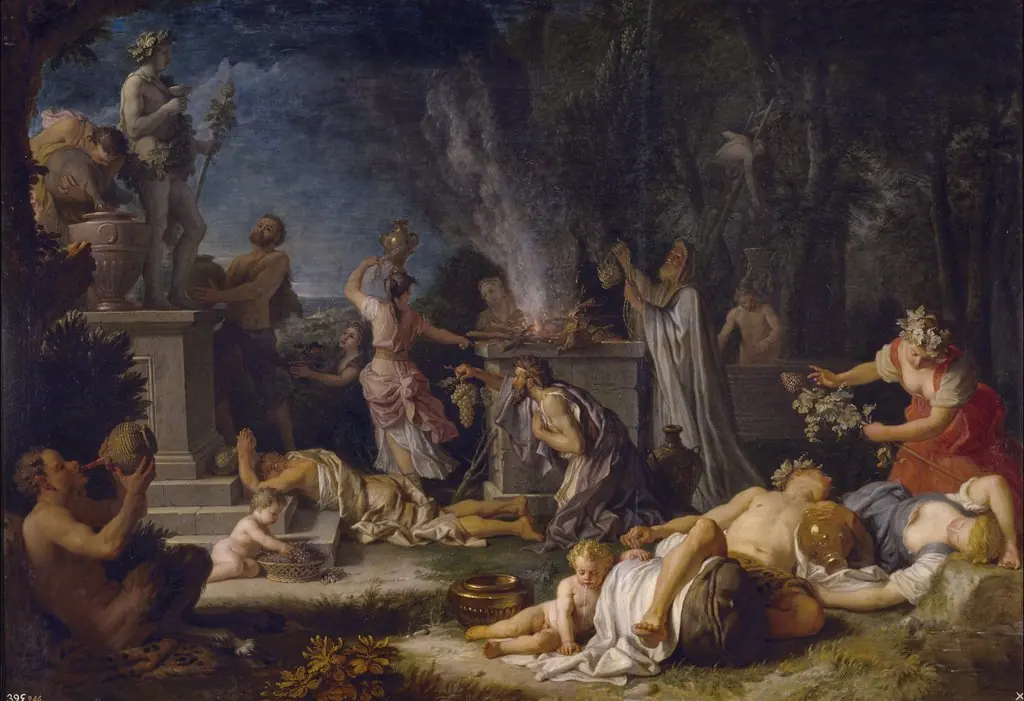 Offering to Bacchus
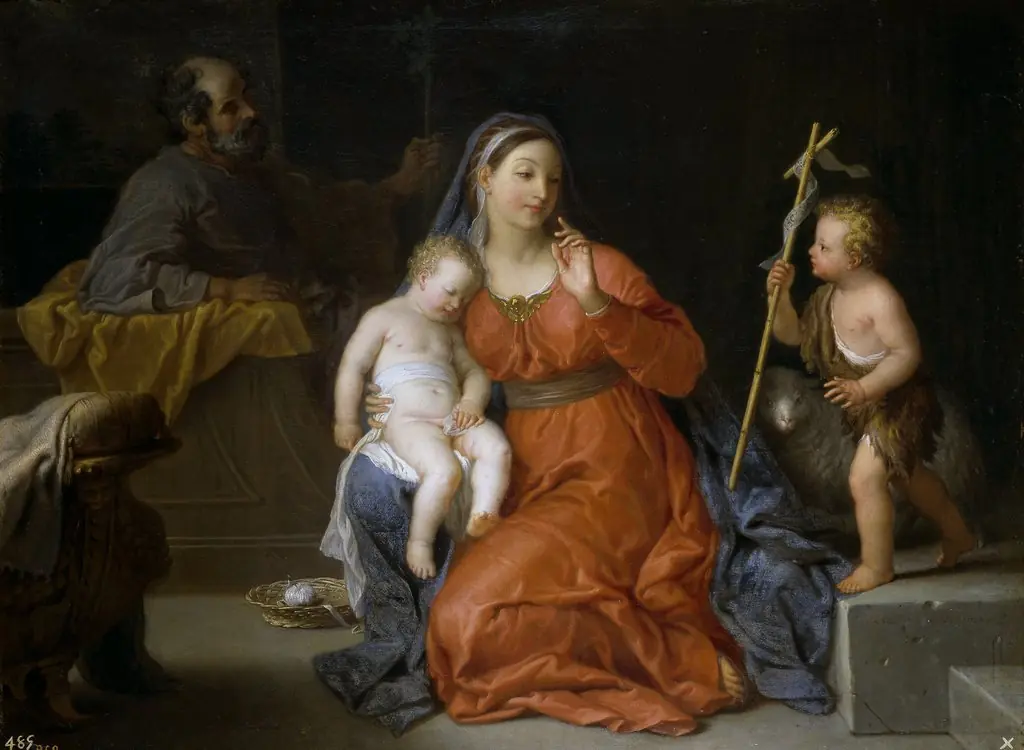 The Holy Family with the Infant Saint John the Baptist
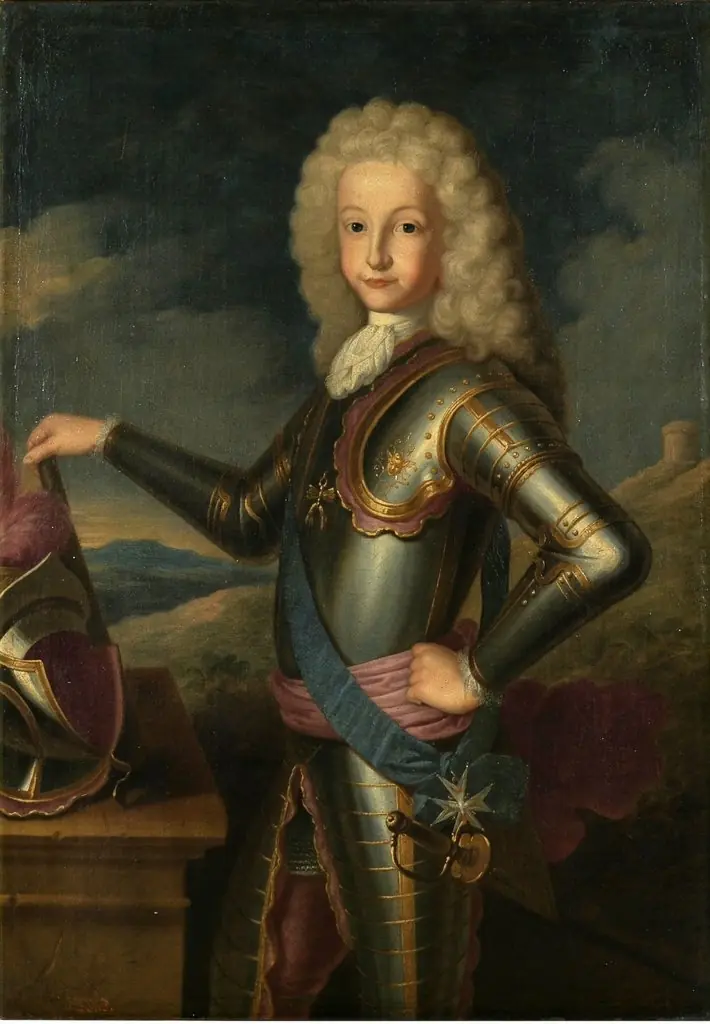 Luis I con armadura a los 10 años
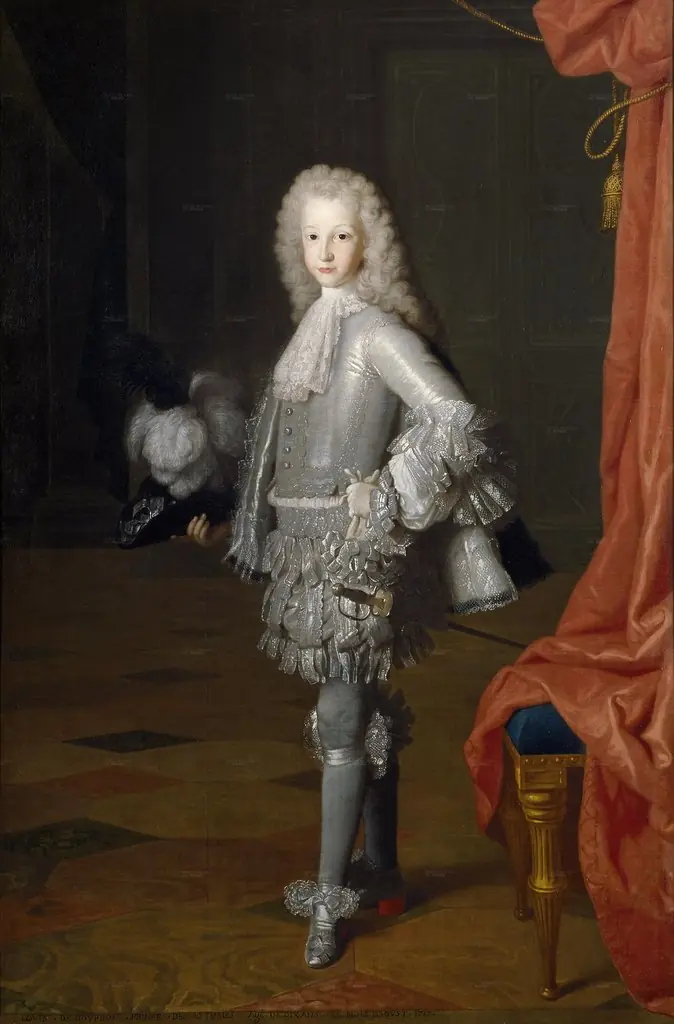 Louis I, Prince of Asturias
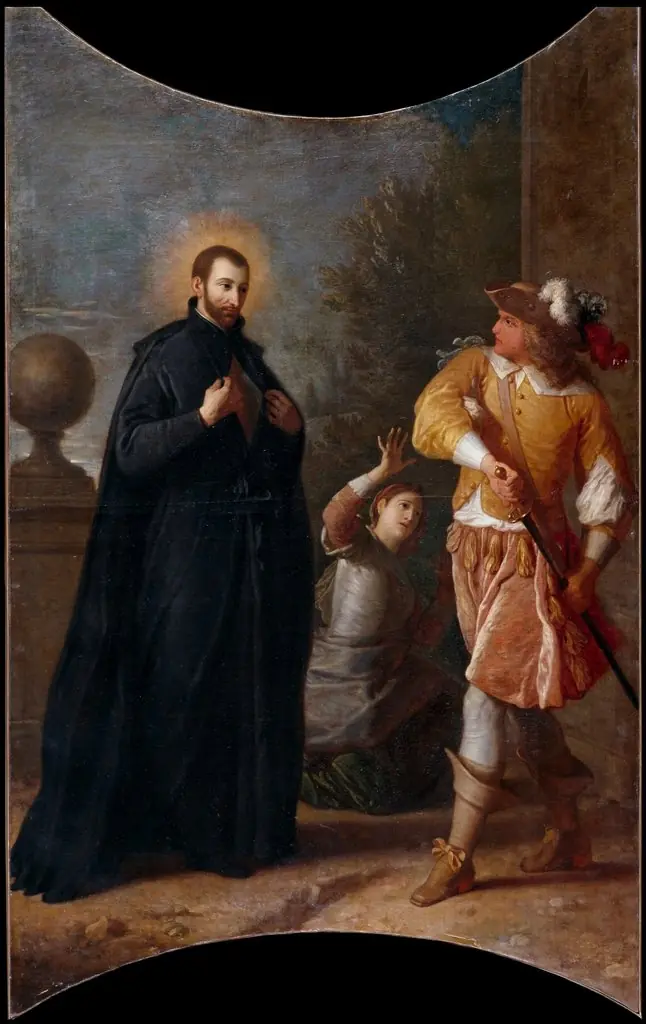 Milagro de san Francisco de Regis
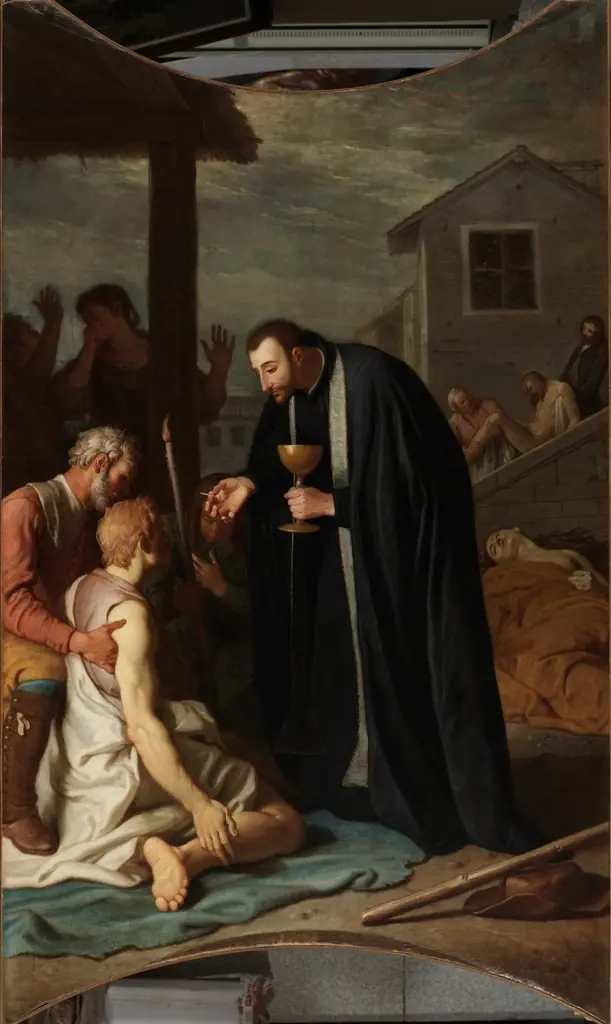 San Francisco de Regis dando la comunión a un tullido
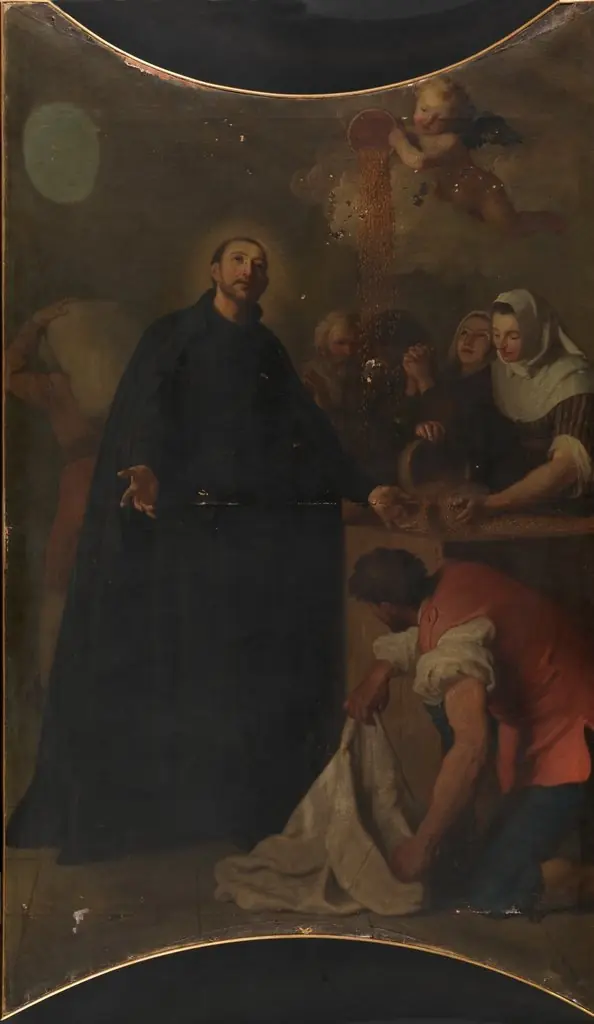 Multiplicación del trigo en la ciudad de Puy por san Francisco de Regis
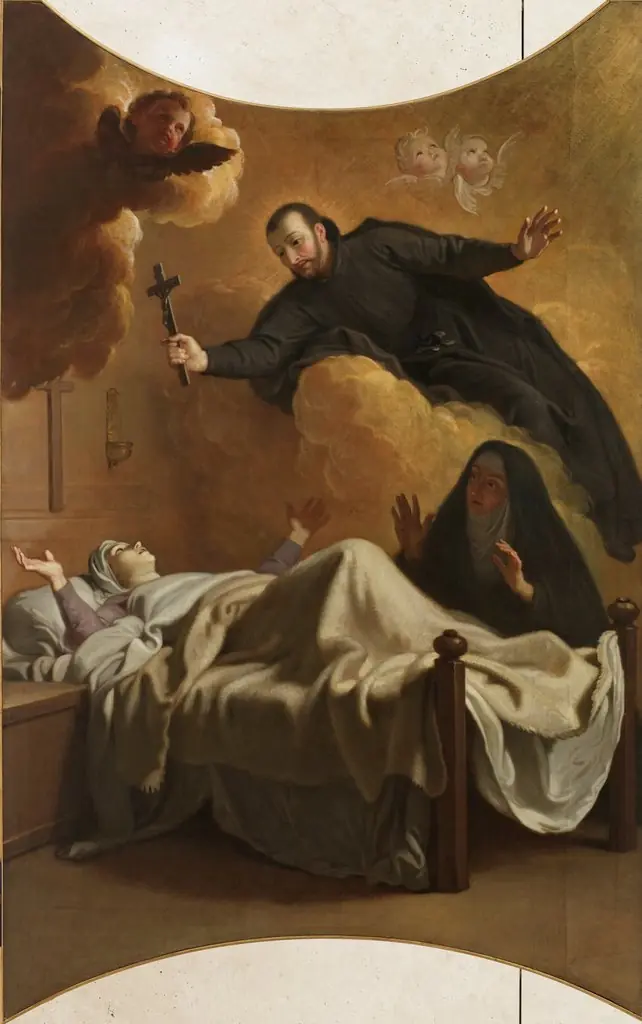 Aparición de san Francisco de Regis a la madre Momplaisant