Artwork
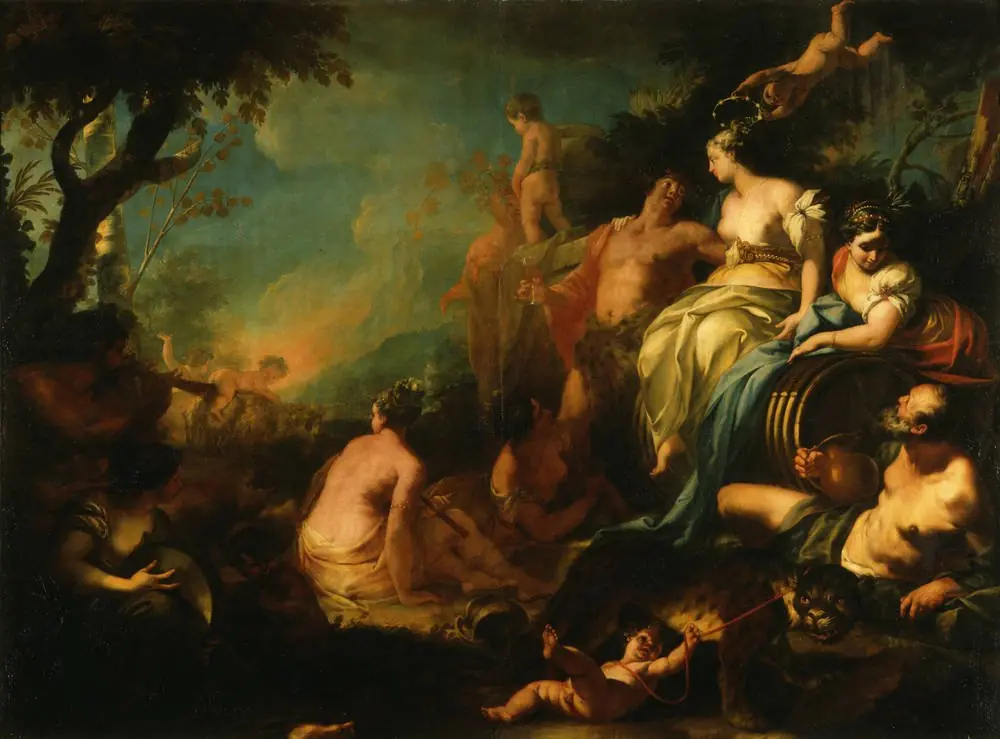
Offering to Bacchus
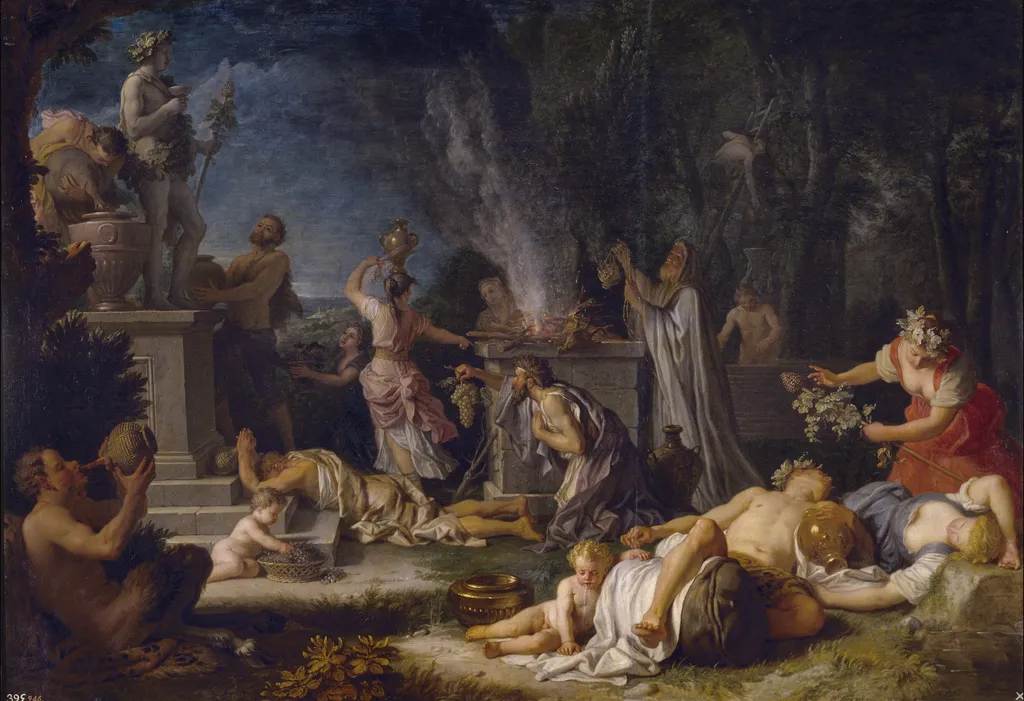
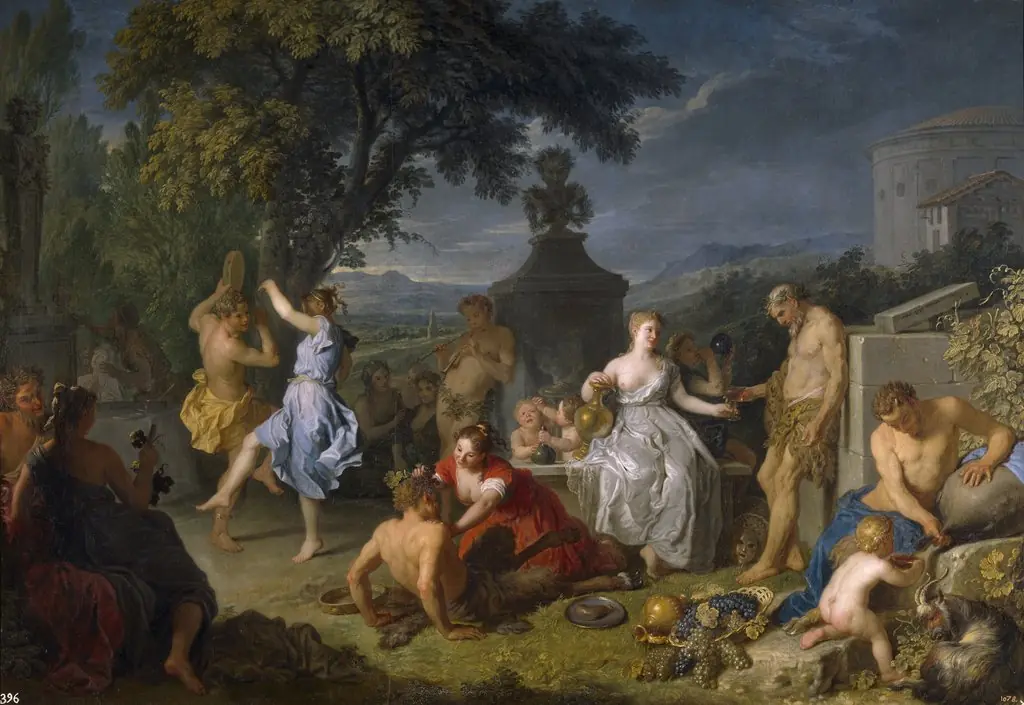
Offering to Bacchus is an oil painting by the Rococo painting artist Michel Ange Houasse. It dates from 1720 and is held in the collection of the Museo del Prado.
About this work
Subject & Meaning
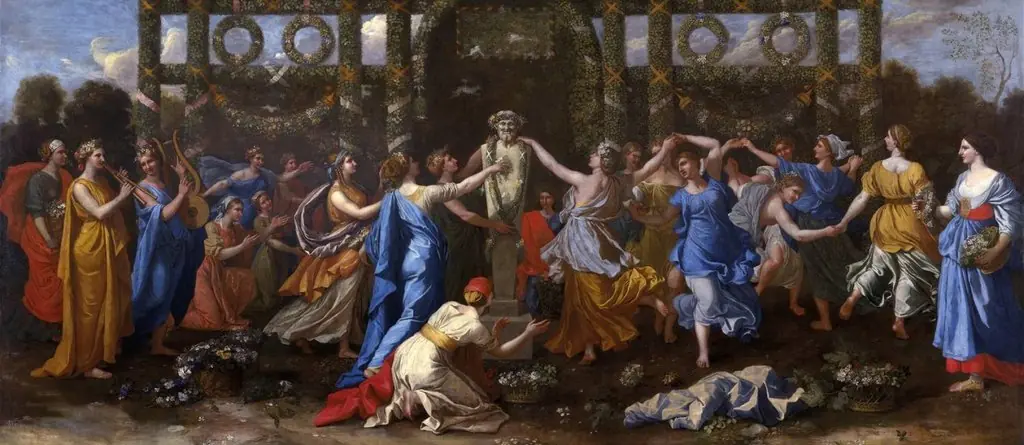
The painting presents a mythological scene centered on Bacchus, the Roman god of wine, shown amid an act of devotion or tribute.
The painting presents a mythological scene centered on Bacchus, the Roman god of wine, shown amid an act of devotion or tribute. Surrounding the deity are attributes associated with his cult and domain: a bottle, basketry, and a ladder, each reinforcing the rustic, viticultural character of the offering. Together these elements frame Bacchus as the recipient of a ritual presentation, transforming a still-life grouping of vessels and tools into a devotional tableau rooted in classical mythology.
By combining the god's portrait with everyday objects of wine production and storage, the work blurs the boundary between sacred offering and genre depiction, suggesting that the act of giving, whether wine, vessels, or labor, is itself a form of honoring Bacchus.
Technique & Style
Offering to Bacchus is an oil painting executed on canvas by Michel-Ange Houasse in 1720. The work measures 125 cm in height and 180 cm in width. As a mythological painting, it depicts figures associated with Bacchus alongside specific objects including a bottle, a basket, and a ladder.
The medium of oil paint on canvas was the standard support for large-scale mythological narratives of the period, allowing for the detailed rendering of the depicted scene.
History & Provenance
Michel Ange Houasse executed the mythological painting Offering to Bacchus in 1720. Created using oil paint on canvas, the work measures 125 cm in height and 180 cm in width.
The painting entered the Spanish royal collection, where it was successively owned by monarchs Philip V, Charles III, and Ferdinand VII. It is currently held in the collection of the Museo del Prado.
Offering to Bacchus is held in the Museo del Prado, where it is recorded under the inventory number P00968. The work entered the Spanish royal collection through the patronage of Charles III, later passing to Philip V and Ferdinand VII before becoming part of the museum's permanent holdings. It has been displayed in various Prado exhibitions focusing on 18th‑century Spanish painting and mythological subjects, including the 1995 retrospective on Houasse and the 2018 exhibition on Spanish Baroque and Rococo art.
The painting measures 125 cm in height and 180 cm in width, executed in oil on canvas in 1720. Its provenance traces back to the Spanish crown, reflecting a continuous ownership from Charles III through his successors to the museum.
Context
Michel-Ange Houasse's 'Offering to Bacchus' (1720) occupies a pivotal position within early 18th-century French mythological painting, reflecting the era's fascination with classical themes and aristocratic patronage. The work, housed in the Museo del Prado, exemplifies the decorative elegance characteristic of the period while depicting Bacchus surrounded by symbolic objects including a bottle, basketry, and a ladder. Its provenance traces back to Spanish royalty, having been owned by Charles III, Philip V, and Ferdinand VII, underscoring its significance within European art collecting practices of the time.
Scholarly analysis situates the painting within Houasse's broader oeuvre, highlighting his role in bridging French Baroque traditions with evolving Rococo sensibilities in mythological subjects.
Legacy
The painting's influence is noted through its presence in the collection of Charles III of Spain and its continued attribution to Michel-Ange Houasse in museum records, reflecting the work's enduring recognition within Spanish royal circles. Its legacy is anchored in the Museo del Prado's holdings, where it remains part of the institution's mythological painting collection, ensuring visibility for scholarly study and public engagement with 18th-century French-Italian artistic exchanges.
Overview
Michel-Ange Houasse’s Offering to Bacchus (1720) is an oil painting that presents a convivial outdoor gathering. Figures mingle around a fire and a table, some disrobing, others draped, while a statue of the god presides. Warm hues dominate the scene, punctuated by a blue sky, and a woman in red carries a basket of grapes, suggesting a festive libation.
Own this work as a print
Artist & collection
Artist
Michel Ange Houasse (1680–1730) was a French painter, most of whose career was spent at the court of Philip V of Spain, who summoned him to the court in Madrid in 1715 whilst he was still Philip of Anjou.