Artwork
Blacksmiths
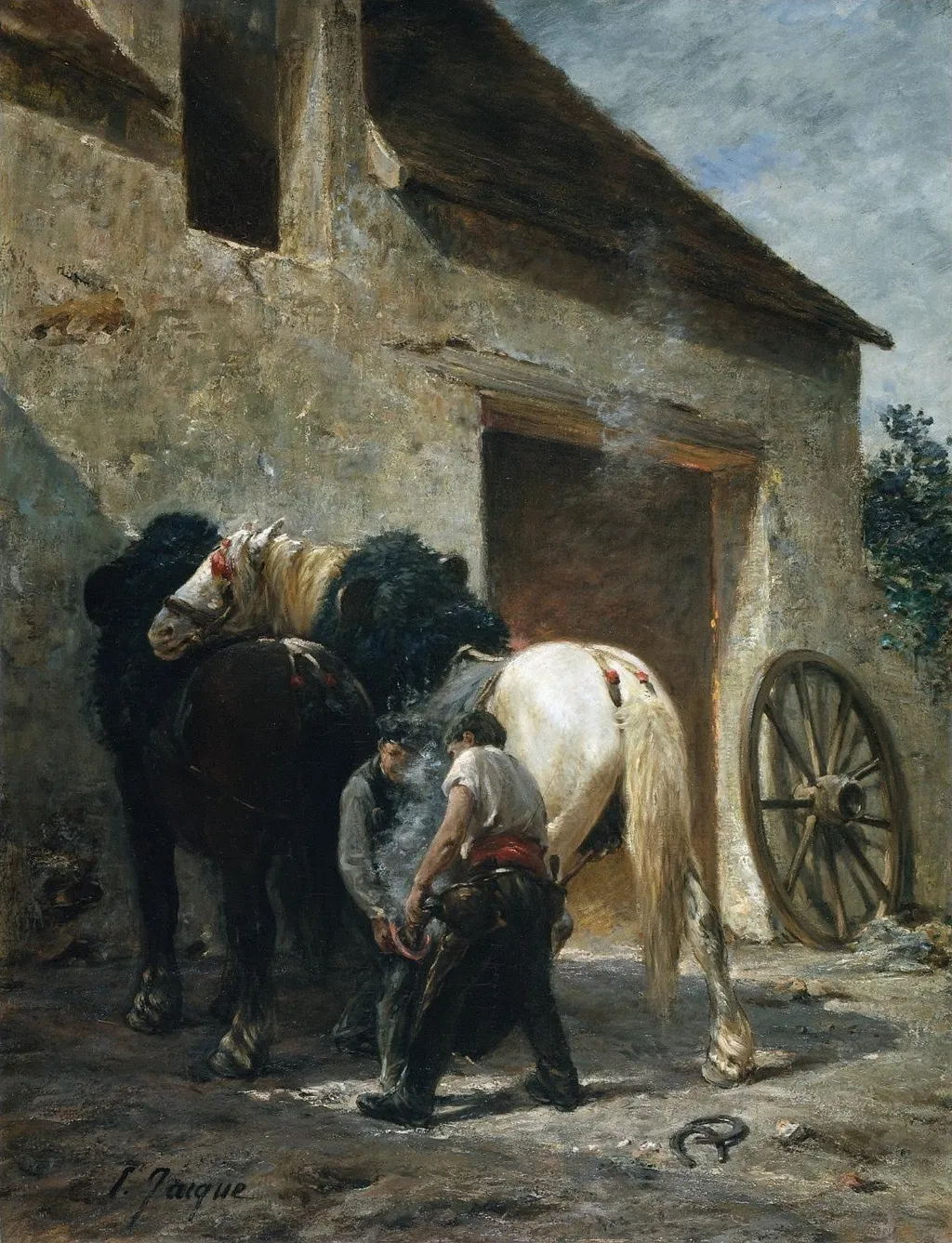
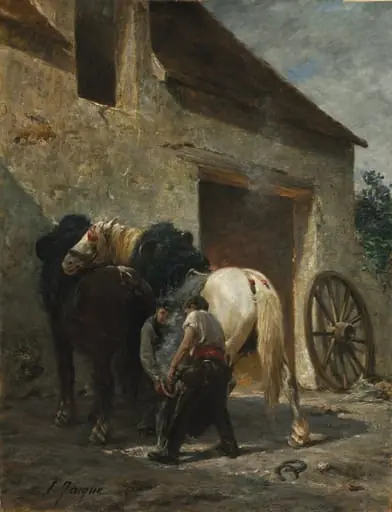
Blacksmiths is an oil painting by the Post-Impressionist artist Jacques-Émile Blanche. It dates from 1896 and is held in the collection of the Cleveland Museum of Art.
About this work
Technique & Style
The medium of oil paint on a wooden support allowed for smooth blending and fine detail, hallmarks of late-19th-century French naturalism.
The painting is executed in oil on panel, measuring 116.4 by 89.9 cm. Jacque worked in the academic realist tradition, depicting blacksmiths at labor with careful attention to the physicality of their work and the play of light on figures and forge. The medium of oil paint on a wooden support allowed for smooth blending and fine detail, hallmarks of late-19th-century French naturalism. The composition centers on the human figure and the dignity of manual labor, consistent with genre painting of the period.
History & Provenance
Émile Jacque executed the oil painting Blacksmiths in 1892. Created in France, the work was painted on a panel support rather than canvas. The piece entered the collection of the Cleveland Museum of Art, where it is cataloged under the accession number 1973.184, indicating its acquisition by the institution in 1973.
No specific details regarding the original commissioner or the ownership chain prior to the museum's acquisition are provided in the available records.
Émile Jacque's 1892 painting Blacksmiths is part of the Cleveland Museum of Art's collection, listed under inventory number 1973.184. It has been displayed in exhibitions at the museum, including its 1973 acquisition exhibition and subsequent rotations of the European paintings galleries. The work is cataloged as an oil painting on panel measuring 116.4 cm in height and 89.9 cm in width, created in France. Its provenance and exhibition record are documented within the institution's archives and public collection database.
Context
Émile Jacque's painting Blacksmiths (1892) exemplifies his realist depictions of rural labor, reflecting the broader 19th-century French interest in agrarian scenes and the dignity of manual work. The work was created in France and is part of the Cleveland Museum of Art's collection, where it has been studied as representative of Jacque's graphic sensibility and narrative focus on peasant life, situating it within the realist tradition that influenced later artists like Millet and Van Gogh.
Scholarship on the painting emphasizes its technical precision in rendering light and texture, with curatorial notes highlighting its significance as a bridge between Jacque's graphic output and his painterly practice. The work's composition and subject matter align with contemporary critiques of industrialization, offering a nuanced view of rural existence during a period of social change.
Overview
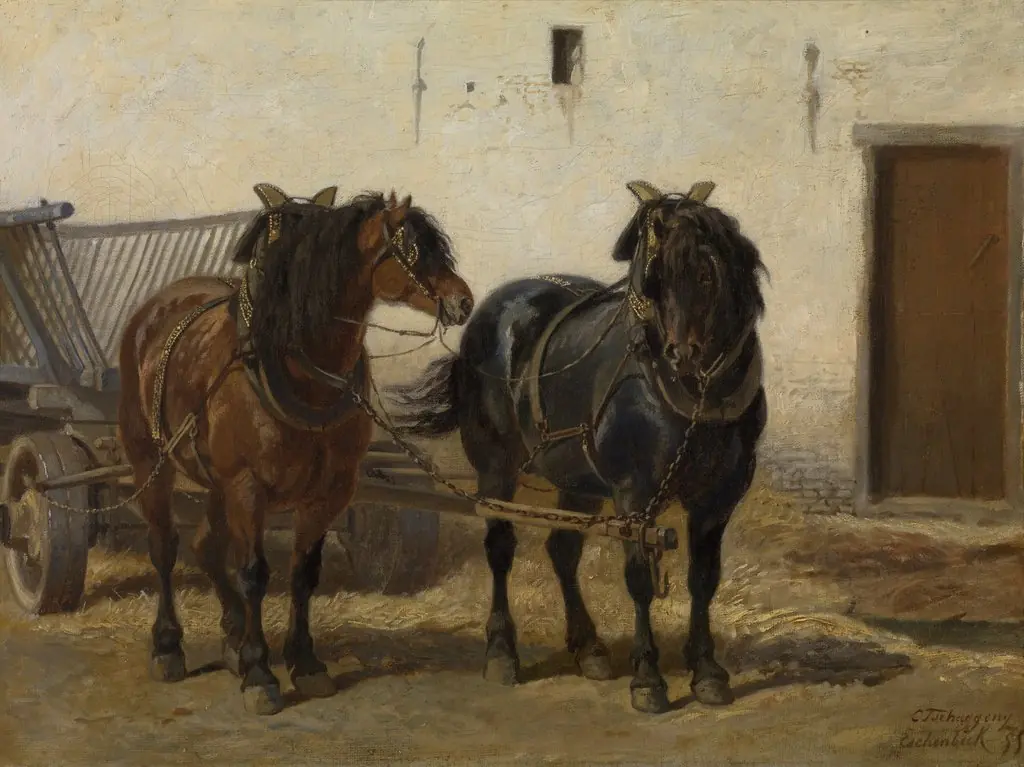
Created in 1896, Blacksmiths is an oil painting that captures a moment of work inside a dimly lit stable. The composition centers on three figures attending to two horses, one white and one dark, while rough stone walls and a wooden wagon wheel frame the scene. The work reflects the post‑impressionist interest in everyday labor and the tactile qualities of paint.
Subject & Meaning
The picture presents a straightforward narrative of rural industry: a man guides a white horse out of a doorway, another restrains a darker horse by its bridle, and a third crouches to rinse the white animal’s legs. The emphasis on the wet legs catching light suggests a focus on the physicality of work and the interaction between human effort and animal strength.
Artist & collection
Artist
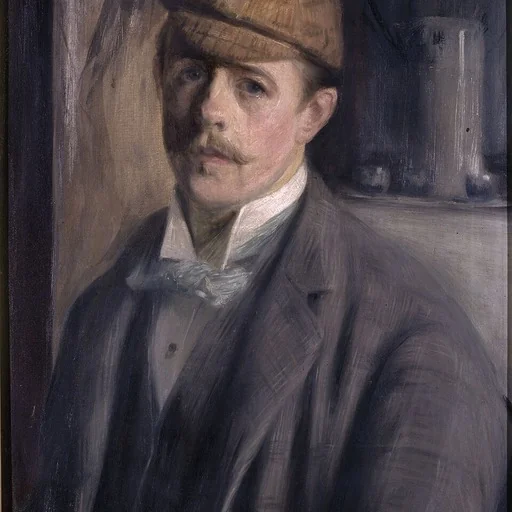
Jacques-Émile Blanche (French:; (1 January 1861 – 30 September 1942) was a French artist, largely self-taught, who became a successful portrait painter, working in London and Paris.